The reason people bounce off fantasy is almost never the dragons. It is page nine, when four characters with apostrophes in their names discuss a war between two kingdoms you have not been introduced to, in a language the book will explain in appendix C. That is not difficulty. That is a book front-loading its admin, and you are allowed to find it exhausting.
So I ranked these sixteen by homework: roughly how many names, places and invented words you have to carry in your head before chapter five. Number one asks for about three. Number sixteen asks for something like twenty, spread across four viewpoints and two continents, with a map you will keep flipping back to. Every other book falls somewhere between those two poles.
Homework is not quality. The best book on this page sits at fifteen and the one I would give my cousin sits at three. What the order buys you is a ladder: start where the load is light, finish a book, then take on a heavier one while your appetite is still up.
The counts are my own estimates from rereading the opening chapters, rounded to the nearest handful, and I say what the load is made of in each entry, because ten familiar Greek names are easier than four invented ones. Every book also gets a skip line, because a beginner deserves to know what will annoy them before they pay for it.
How I picked these
- Ranked by opening load, not by greatness: names, places and invented words you must hold before chapter five, which is where most beginners quit.
- Standalones and clean first books got priority. Six of these end where they end, so nobody is trapped in a nine-volume commitment on day one.
- Every title was checked through Google Books and Open Library, real editions with real covers, no ghost listings.
- I left out The Lord of the Rings and A Game of Thrones on purpose. Both are worth reading and neither is a beginner book, one for its appendices and the other for its body count of viewpoint characters.
- One Indian entry is here on merit and with its flaws stated plainly, because pretending otherwise helps nobody.
- Where an author's public conduct has made readers uncomfortable, I say so once and move on, rather than pretending the question does not exist.
The whole list at a glance
All 16 books, in order
| # | Book | Author | Year | Vibe | Best for |
|---|
| 1 | Legends & Lattes | Travis Baldree | 2022 | warm, gentle, cosy | readers who hate homework |
| 2 | Good Omens | Terry Pratchett and Neil Gaiman | 1990 | funny, English, affectionate | comedy readers |
| 3 | Percy Jackson and the Lightning Thief | Rick Riordan | 2005 | fast, funny, mythic | young readers and stalled adults |
| 4 | Harry Potter and the Philosopher's Stone | J.K. Rowling | 1997 | warm, brisk, familiar | the few who missed it |
| 5 | The Hobbit | J.R.R. Tolkien | 1937 | cosy, adventurous, sly | readers starting at the source |
| 6 | Circe | Madeline Miller | 2018 | slow, lonely, elegant | literary readers |
| 7 | Piranesi | Susanna Clarke | 2020 | strange, calm, haunting | patient, curious readers |
| 8 | A Wizard of Earthsea | Ursula K. Le Guin | 1968 | spare, serious, wise | readers who like short classics |
| 9 | Six of Crows | Leigh Bardugo | 2015 | sharp, plotty, addictive | heist and YA readers |
| 10 | The Lies of Locke Lamora | Scott Lynch | 2006 | funny, cruel, stylish | readers who like heists |
| 11 | Mistborn: The Final Empire | Brandon Sanderson | 2006 | clever, systematic, satisfying | beginners who like rules |
| 12 | The Name of the Wind | Patrick Rothfuss | 2007 | lyrical, self-mythologising, immersive | prose lovers |
| 13 | The Immortals of Meluha | Amish Tripathi | 2010 | brisk, mythic, plain | Indian readers starting out |
| 14 | The Poppy War | R. F. Kuang | 2018 | furious, dark, ambitious | readers who want it hard |
| 15 | The Fifth Season | N. K. Jemisin | 2015 | furious, cold, brilliant | graduating beginners |
| 16 | The Priory of the Orange Tree | Samantha Shannon | 2019 | sweeping, political, dragon-filled | readers with a long holiday |
The list
The books, ranked
1
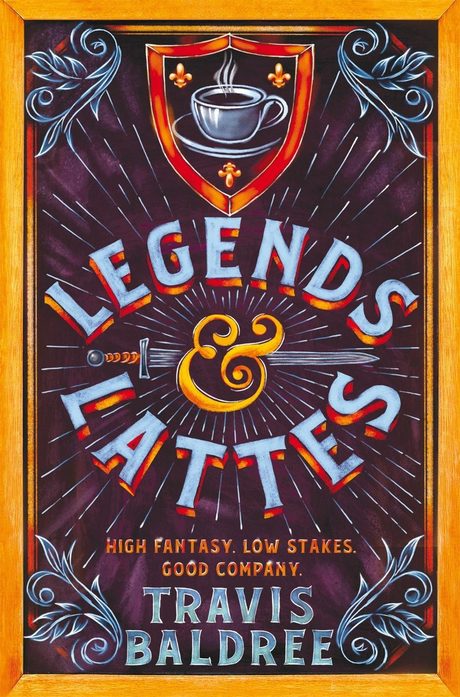
Homework: about 3 names, no map
Legends & Lattes
Travis Baldree2022about 309 pages
An orc barbarian retires from adventuring, moves to a strange city and opens a coffee shop nobody understands.
Viv has spent two decades swinging a sword for money and is finished with it. She sells what she owns, arrives in the city of Thune, and starts turning an old stable into the first coffee shop the place has ever seen, which means explaining to every single customer what coffee is. The obstacles are a leaky roof, a protection racket, a menu that needs a baker, and a romance she does not notice arriving. Almost nothing is at stake, and that is the entire design of the book.
Why it is at 1
First because it carries the lightest load in fantasy: a handful of names, no map, no prophecy, no politics, and every unfamiliar word explained the moment it turns up. This is the book people point to when cosy fantasy comes up, and it works as a doorway precisely because it borrows the shape of a small-business story rather than a quest.
Read it ifyou want a warm, low-stakes story with good coffee in it
Skip it ifyou need danger, because very little here threatens anybody
warm, gentle, cosyBest for: readers who hate homeworkcozy fantasyromancestandalone
2

Homework: about 4 names, our own world
Good Omens
Terry Pratchett and Neil Gaiman1990about 434 pages
An angel and a demon who have grown fond of Earth try to stop the apocalypse, largely because they like the restaurants.
Aziraphale and Crowley have been posted to Earth since the beginning and have quietly become friends, which is against the rules on both sides. When the Antichrist is delivered to the wrong family, the end of the world proceeds on schedule with the wrong boy in position. Around that, Pratchett and Gaiman assemble witches, witchfinders, a book of prophecies that is always accurate and never useful, and the Four Horsemen on motorbikes. The footnotes are half the pleasure and the jokes never stop arriving.
Why it is at 2
Second because the setting is our own world, so the only names you must hold are the two leads, the boy and the witch. What it asks instead is a taste for English comic timing and patience with a large cast that turns up late and all at once. If you have seen the television version, the book is still worth your time, because the jokes are denser on the page.
Read it ifyou like comedy, footnotes and mild blasphemy
Skip it ifjokes about religion make you uncomfortable
funny, English, affectionateBest for: comedy readerscomic fantasyapocalypsestandalone
3
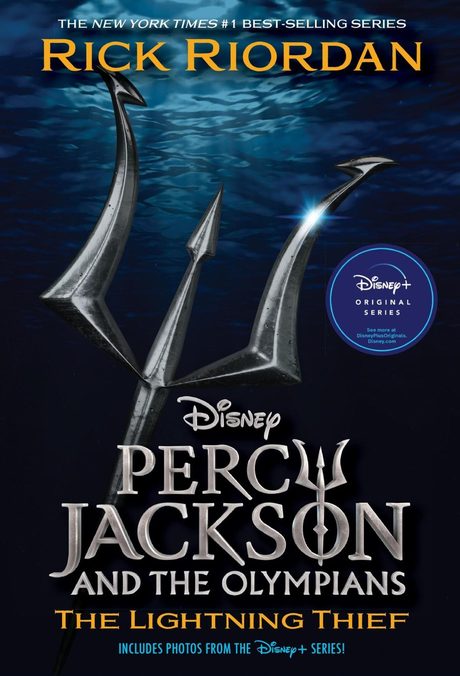
Homework: about 5 new names, plus gods you already know
Percy Jackson and the Lightning Thief
Rick Riordan2005about 493 pages
A twelve-year-old learns his father is a Greek god and gets ten days to stop a war on Olympus.
Percy Jackson is failing school, being expelled at regular intervals, and about to discover that his dyslexia and his attention problems are side effects of a brain wired for Ancient Greek. His mother sends him to a summer camp for demigods, Zeus's lightning bolt goes missing, and Percy has ten days to cross America and give it back. Riordan first told a version of this to his own son, and the pacing shows it: short chapters, a joke on every page, monsters at dependable intervals.
Why it is at 3
Third because half its vocabulary was installed in you during school. Zeus, Poseidon and Hades need no introduction, so the genuinely new names come down to Percy, Grover, Annabeth and Chiron. Yes, it is written for twelve-year-olds. Read it anyway if fantasy has never taken hold, because it teaches the basic moves of the genre at a speed nobody could stall at.
Read it ifyou want Greek myth delivered at chase-scene speed
Skip it ifa middle-grade narrator sets your teeth on edge
fast, funny, mythicBest for: young readers and stalled adultsmythologymiddle gradeseries
4

Homework: about 8 names, one school, no map
Harry Potter and the Philosopher's Stone
J.K. Rowling1997about 225 pages
A boy living in a cupboard learns he is a wizard and goes to a boarding school where the staircases move.
You know this plot even if you have never opened the book, which is an odd position for a novel to occupy. What gets lost in all the noise is how efficient the first one is: three hundred pages, one school year, a mystery that actually pays off, and a world explained through a boy who knows nothing, so every explanation is aimed at you as much as at him. It is the smallest book in the series by some distance, and the warmest.
Why it is at 4
Fourth because the homework is a list of names inside a single school and nothing beyond that. No map, no politics, no invented languages, no family trees. If you already read it as a child, skip it and take a place further down this list instead. One thing worth stating plainly: Rowling's public statements about trans people have made many readers stop buying her books, and a library copy settles that question.
Read it ifyou somehow missed it as a child and want to see what the fuss was
Skip it ifyou reread it every winter already, or you would rather not fund the author
warm, brisk, familiarBest for: the few who missed itschoolclassicseries
5
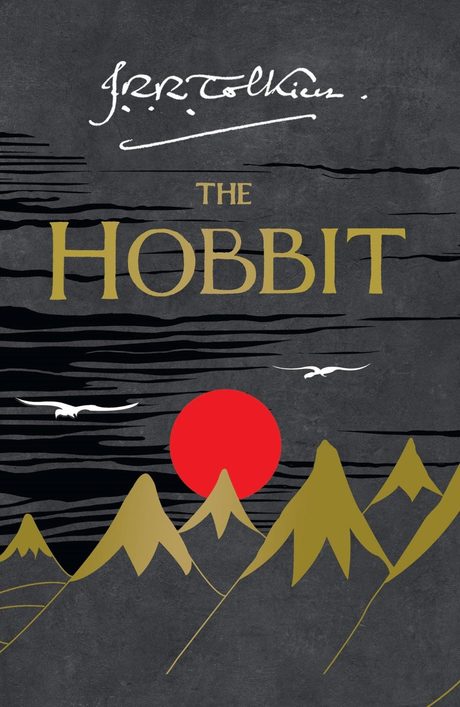
Homework: 16 names on one page, map included and useful
The Hobbit
J.R.R. Tolkien1937about 329 pages
A comfortable hobbit is bullied into a dragon heist by a wizard and thirteen dwarves who invite themselves to tea.
Bilbo Baggins wants breakfast and quiet. What arrives instead is a wizard, thirteen dwarves in his living room, and a contract to burgle a dragon's hoard on the far side of a very large map. The journey runs through trolls, goblins, a riddle game in the dark that is the finest scene Tolkien ever wrote, and an ending about greed that is much less cosy than the opening chapters promise. The narrator is a grandfather telling you a story and interrupting himself to explain what hobbits eat.
Why it is at 5
Fifth, and the ranking is decided by one page: thirteen dwarves arriving in a lump near the start. You are not required to remember which is which, and knowing that in advance saves the whole reading. Past that page the story runs in a straight line with a map you will genuinely use. Far lighter homework than The Lord of the Rings, which is exactly why that one is not on this list.
Read it ifyou want the founding text without the appendices
Skip it ifyou dislike a narrator who talks over his own story
cosy, adventurous, slyBest for: readers starting at the sourceclassicqueststandalone
6
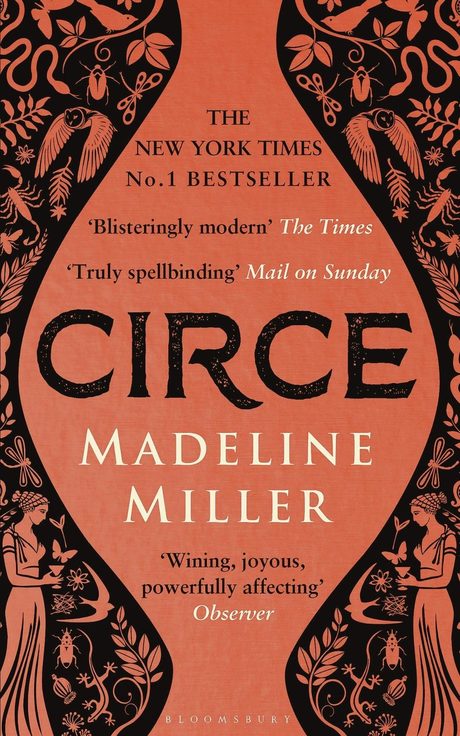
Homework: about 8 names, most of them already familiar
Circe
Madeline Miller2018about 353 pages
The witch who turned Odysseus's men into pigs tells her own life, and the gods come out of it badly.
Circe is born to the sun god Helios and disappoints everybody: not beautiful enough, not powerful enough, not interesting to her own family. She discovers witchcraft, is exiled to an island for it, and spends centuries there while famous names wash up on her shore. Miller writes gods as gorgeous and shallow, and mortals as the only ones whose choices cost them anything. The prose is the plainest kind of lovely, and the loneliness of the middle stretch is the best thing in the book.
Why it is at 6
Sixth because Greek names come pre-installed for most readers and the story runs in one straight chronological line from birth onwards. The real ask is patience: this is a life rather than a quest, so the pace is slow by design. It carries slightly more load than Percy Jackson because the family tree of the gods matters here and Miller never stops to explain it twice.
Read it ifyou want myth retold from the woman's side of it
Skip it ifyou want a plot with a deadline attached
slow, lonely, elegantBest for: literary readersmythologyretellingstandalone
7
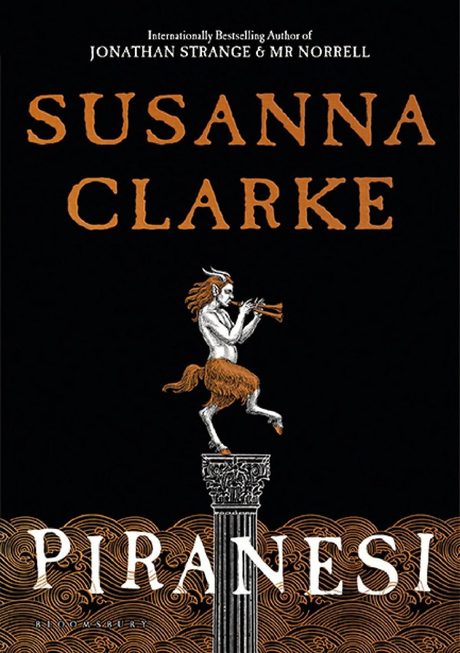
Homework: 2 names, but the geography is the puzzle
Piranesi
Susanna Clarke2020about 289 pages
A man lives alone in an endless house of statues and tides, keeps careful notes, and never once questions it.
Piranesi lives in a house of infinite halls, with an ocean in the lower floors, clouds in the upper ones and thousands of statues in between. He fishes, charts the tides, maintains his journals, and meets the only other living person twice a week. He is perfectly content. The reader works out, slowly and well before he does, that something is badly wrong with the arrangement. It is short, strange, and written as journal entries that hold some of the loveliest sentences of the last decade.
Why it is at 7
Seventh, and it bends my own scale in a useful way. There are two names to hold, which by the count alone should put it first, but the disorientation here is structural: you spend fifty pages unsure where you are or what kind of book you are holding. If being lost is a pleasure for you, move it up to number one. If you need footing, come back to it later.
Read it ifyou like puzzles and can sit inside confusion for a while
Skip it ifyou need to know what is happening at all times
strange, calm, hauntingBest for: patient, curious readersstandalonemysteryliterary fantasy
Heads up: psychological manipulation and long isolation
8
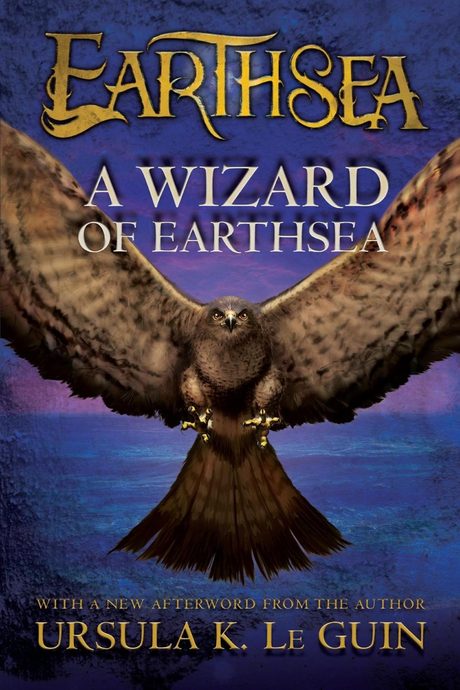
Homework: about 6 names, and names are the magic system
A Wizard of Earthsea
Ursula K. Le Guin1968about 267 pages
A gifted young wizard shows off, releases something that should not exist, and spends the book chasing it.
Ged is a goatherd with too much power and far too little patience. Sent to a school for wizards on an island, he lets pride push him into a spell that tears something loose, and the rest of the novel is a chase across an archipelago where pursuer and pursued keep swapping places. Le Guin's magic runs on true names: learn a thing's real name and you can command it, which makes education and deception the same subject. Under two hundred pages, with no fat anywhere on it.
Why it is at 8
Eighth because the load is small in count and heavy in weight. Few names, but each one carries meaning, and Le Guin writes in a formal register that some readers find cold for the first thirty pages. It sits above Circe because you also have to hold the geography of an island chain. Nothing in the top half repays slow reading better.
Read it ifyou want the original wizard school, told seriously
Skip it ifyou want banter, because this book is grave from first page to last
spare, serious, wiseBest for: readers who like short classicsclassicwizardscoming of age
9
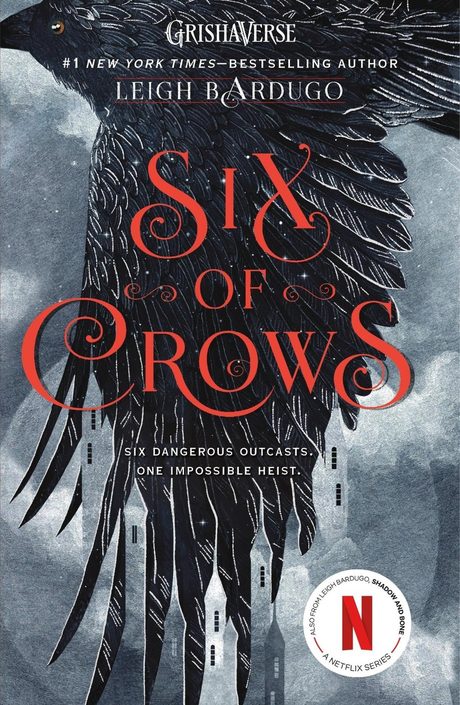
Homework: about 10 names, six of them viewpoints
Six of Crows
Leigh Bardugo2015about 479 pages
A teenage crime boss assembles five specialists to break into the most secure prison in the world.
Kaz Brekker runs a gang in the canal city of Ketterdam and is offered enough money to retire if he can steal a scientist out of an impenetrable fortress. He picks a crew: a sharpshooter, a spy, a soldier, a heartrender and a runaway, each carrying a debt or a wound that explains them. The chapters rotate through their heads, the flashbacks fill in why none of them trusts anybody, and the heist keeps folding into new shapes. Think of it as a fantasy Ocean's Eleven with deeper injuries.
Why it is at 9
Ninth because six viewpoints is a real load: you meet the crew quickly, the city runs on its own slang, and there is a magic system inherited from Bardugo's earlier trilogy that she explains only in passing. Push through fifty pages and the names stick by themselves. You do not need to have read the Grisha books first, whatever the internet insists.
Read it ifyou want a heist with a crew you will get attached to
Skip it ifrotating viewpoints irritate you
sharp, plotty, addictiveBest for: heist and YA readersheistyaduology
Heads up: violence, drug addiction, and references to sexual exploitation
10
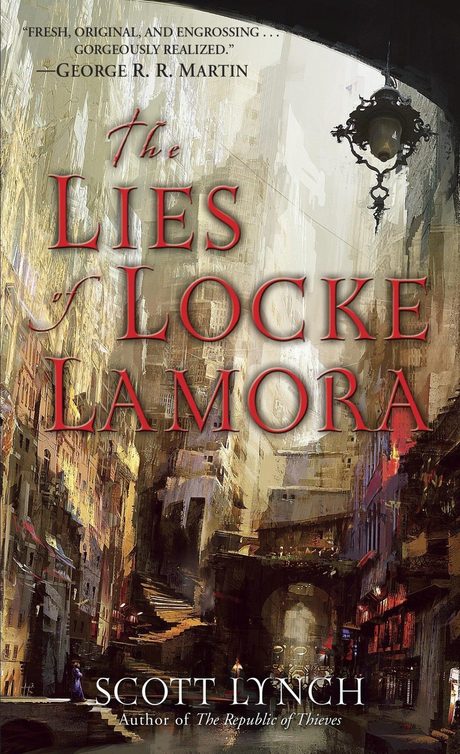
Homework: about 12 names, city slang, two timelines
The Lies of Locke Lamora
Scott Lynch2006about 754 pages
A gang of con artists in a Venice-like city runs an elaborate scam and picks the worst possible week to do it.
Locke Lamora leads the Gentleman Bastards, thieves who break their city's underworld truce by robbing the nobility through long, patient confidence games. The novel alternates between the current scam and Locke's childhood training under a priest who taught orphans to lie professionally. Camorr is the finest invention here: glass towers nobody understands, sharks in the harbour for public entertainment, and a criminal etiquette stricter than the aristocracy's. It is also far crueller than the opening chapters lead you to expect.
Why it is at 10
Tenth because two timelines and a pile of invented slang run together from page one, and Lynch never pauses to define anything for you. The payment for that work is the funniest dialogue in the top half of this list. It carries a heavier load than Six of Crows because the city is bigger and the flashbacks are longer, and a lighter one than Mistborn because there is no system to memorise.
Read it ifyou want con artists, banter, and a city you can smell
Skip it ifconstant swearing and sudden brutality are not your thing
funny, cruel, stylishBest for: readers who like heistsheistcrimeseries
Heads up: graphic violence and torture
11
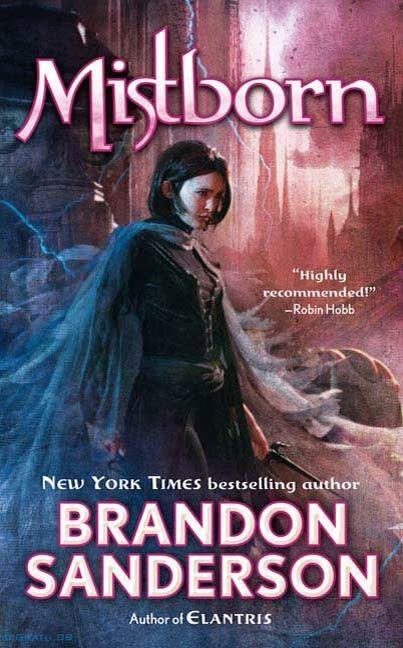
Homework: about 12 names plus a table of metals
Mistborn: The Final Empire
Brandon Sanderson2006about 686 pages
A street thief learns she can swallow metals for power and joins a crew planning to kill an immortal god-emperor.
The Lord Ruler has held the world for a thousand years, ash falls from the sky every day, and the working class lives as property. Vin is a distrustful teenage thief until Kelsier, a charming survivor of the empire's worst prison, works out what she is and recruits her into a heist crew with a revolution in mind. The magic runs on metals: swallow one, burn it, get a specific power. Sanderson sets out the rules exactly, then builds fight scenes that obey them to the letter.
Why it is at 11
Eleventh because you are learning a system here, not merely names. There is a metal table, the plot treats it as a rulebook, and readers split hard on whether that feels clever or mechanical. The prose is functional rather than lovely. It earns its place because nothing else teaches you how modern fantasy thinks about magic this clearly, and because the ending pays off every rule it set up.
Read it ifyou want magic with hard rules and a heist plot on top
Skip it ifyou read mainly for style, because this one is engineered
clever, systematic, satisfyingBest for: beginners who like rulesmagic systemheisttrilogy
12
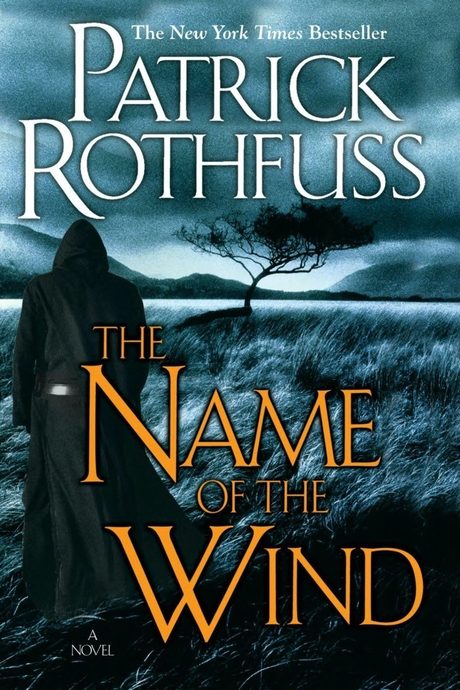
Homework: about 10 names plus a frame story
The Name of the Wind
Patrick Rothfuss2007about 674 pages
A legendary hero, now an innkeeper hiding under a false name, sits down to tell his own life over three days.
Kvothe is running an inn in a quiet village under a borrowed name when a chronicler tracks him down and asks for the true version of events. This book is day one of that telling: a travelling troupe, a childhood ended violently, years starving on city streets, and a university where students pay their fees in cleverness. Rothfuss writes gorgeous sentences and set pieces you will remember for years, and the frame keeps reminding you that the narrator is a man building his own legend as he speaks.
Why it is at 12
Twelfth for structure rather than vocabulary: a story inside a story, told out of sequence, by someone who may well be flattering himself. There is a larger problem to disclose and it is not the book's fault. The third volume has not appeared and may never, so you are reading two thirds of something. Read it for the pages themselves, which are good enough to justify the gamble.
Read it ifyou want lovely prose and a magic school written for adults
Skip it ifan unfinished series will genuinely annoy you
lyrical, self-mythologising, immersiveBest for: prose loversmagic schoolframe storyunfinished series
13

Homework: about 14 names, half of them already yours
The Immortals of Meluha
Amish Tripathi2010about 362 pages
A Tibetan tribal chief migrates to a perfect kingdom and is told he is the saviour its people have awaited for centuries.
Shiva leads his tribe out of the mountains into Meluha, a spotless empire running on rules, canals and a drink that halts ageing. When the drink turns his throat blue, the Meluhans identify him as the Neelkanth of prophecy, the outsider who will save them from their enemies. Amish takes the myth and runs it as history, so gods behave like generals, engineers and politicians with budgets. The writing is plain and occasionally clumsy, and the central idea is strong enough to carry it anyway.
Why it is at 13
Thirteenth on load because Indian readers already know Shiva, Sati and Nandi, while the invented geography and the Sanskrit terminology still need holding. Placed honestly: this has the weakest prose on the list and the dialogue can be flat. It earns its slot because it got a whole generation of Indian readers to pick up fantasy at all, and because the question underneath it, what if the gods were men whose deeds got amplified, is a very good one.
Read it ifyou want Indian myth rebuilt as a political thriller
Skip it ifmodern slang in ancient mouths will bother you
brisk, mythic, plainBest for: Indian readers starting outindian fantasymythologytrilogy
14
Homework: about 12 names, an academy, an empire and a pantheon
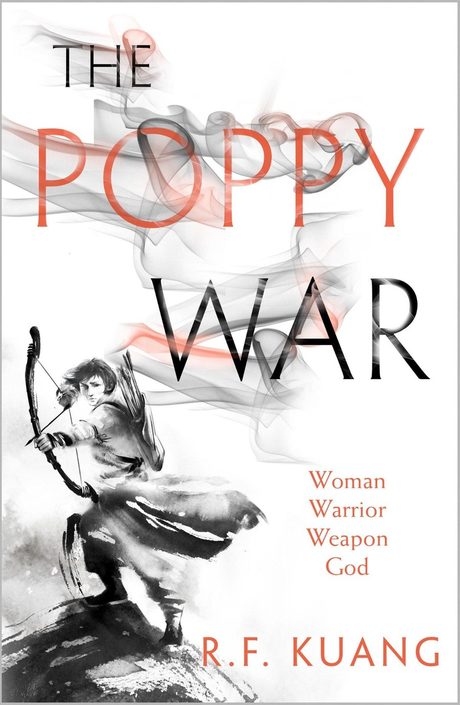
The Poppy War
R. F. Kuang2018about 511 pages
A war orphan tests into an elite military academy, then the war she trained for arrives and the book changes species.
Rin is a war orphan in a southern province, taken in by a couple who deal opium, and she studies herself sick to pass the empire's entrance exam and escape being married off. The first half is a school story: rivalries, an eccentric teacher, and the discovery that she can call on something old and dangerous. The second half is an invasion drawn from real twentieth-century atrocity, and Kuang refuses to look away from any part of it. Very few novels change register this violently, and she absolutely means the whiplash.
Why it is at 14
Fourteenth because the load is an academy plus an empire plus a pantheon, all arriving quickly. The stronger reason it sits this low is the content: the war chapters draw openly on the Nanjing massacre and they are as brutal as that suggests, so this is not a book to hand somebody casually. If you can take it, it is the most ambitious thing on this page.
Read it ifyou want a school story that turns into a war novel
Skip it ifyou cannot read detailed atrocity, because the second half does not let up
furious, dark, ambitiousBest for: readers who want it hardmilitary fantasywartrilogy
Heads up: genocide, sexual violence, self-harm, drug addiction and graphic war violence
15
Homework: about 12 names, three timelines, a new vocabulary
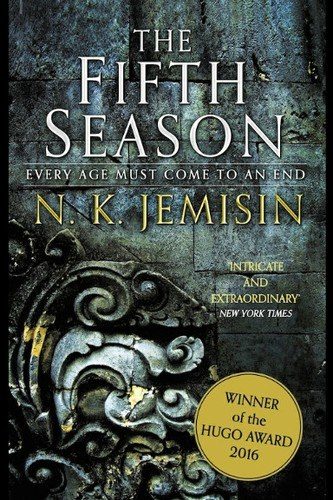
The Fifth Season
N. K. Jemisin2015about 512 pages
The world ends every few centuries, and the people who can stop earthquakes are hunted, collared and used.
A continent called the Stillness suffers apocalypses on a schedule. Orogenes can quiet the earth with their minds, which makes them necessary and hated, so they are taken young and trained into obedience. The novel runs three threads: a woman whose son has just been murdered, a girl removed from her family, and a trained orogene sent on a coastal mission with a senior she cannot stand. One thread is written in the second person, and by the last chapter you will understand exactly why.
Why it is at 15
Fifteenth because it asks for everything at once: three timelines, invented terms with no glossary, a second-person voice, and a structure whose entire point is a connection withheld until late. This is the hardest book here and, in my opinion, the best one. Do not make it your first fantasy novel. Make it your fifth, and it will spoil the easier ones for you.
Read it ifyou want the genre at its most demanding and most alive
Skip it ifyou want comfort, because this is a book about grief and ownership
furious, cold, brilliantBest for: graduating beginnersapocalypsesecond persontrilogy
Heads up: child death, slavery and sustained abuse
Pairs with: The Poppy War at fourteen, if you want two books that use fantasy to write about real historical cruelty
16

Homework: about 20 names, four viewpoints, two continents, map essential
The Priory of the Orange Tree
Samantha Shannon2019about 849 pages
Two continents that despise each other's religions must cooperate when an ancient dragon stirs, and nobody wants to.
A queen has to produce an heir to keep a sealed dragon asleep. Her secret bodyguard belongs to an order her own church calls heretical. Across the sea, a dragon rider trains for a war her culture remembers in the opposite way, while an exiled alchemist chases a secret that people on both sides would kill for. Shannon runs all four threads across eight hundred pages in a single standalone volume, with dragons in the Western tradition and the Eastern one, and a religious schism sitting at the centre of the plot.
Why it is at 16
Last because of sheer volume: four viewpoints, two continents, two religions, a long invented history, and a map you will consult constantly. None of it is difficult on its own, there is simply a great deal of it arriving at once. I put it at the bottom rather than calling it advanced, because the sentences are welcoming even when the cast is not, and finishing it is the quickest way to stop being a beginner.
Read it ifyou want one enormous standalone instead of another series
Skip it ifeight hundred pages is not a commitment you feel like making
sweeping, political, dragon-filledBest for: readers with a long holidaydragonsstandaloneepic
Worth knowing
How the name count works
The number in each label is roughly how many names, places and invented words the book expects you to be carrying by chapter five. I got them by rereading the opening chapters and counting what a first-time reader would have to hold, then rounding to the nearest handful, so treat them as estimates rather than a census.
Two things matter as much as the count. The first is familiarity: ten Greek names in Circe are easier than four invented ones in Le Guin, because you met Poseidon in school and you have never met Ogion. The second is whether the book hands you the world or makes you assemble it. Sanderson hands it over with a rulebook. Jemisin makes you build it from fragments and withholds the instructions on purpose, which is why she sits fourteen places lower despite a similar number of names.
Worth knowing
What to do when the names start blurring
Read the first fifty pages in one sitting rather than ten pages a night. Fantasy openings are dense on purpose, and the load only feels heavy when you keep restarting cold. Do not try to memorise anybody. The names that matter will repeat until they stick, and the ones that do not repeat were scenery.
Use the map only when you are actually lost, ignore the glossary until something confuses you twice, and never look up a wiki mid-book, because that is how you meet a spoiler for chapter thirty. If you are still floundering at page eighty, the book is not wrong and neither are you. Move one rung up this list, take an easier load, and come back to it in a year.
People also ask
Questions, answered
Which fantasy book should a beginner read first?
Legends & Lattes if you want something gentle with almost nothing to memorise, or Percy Jackson and the Lightning Thief if you want speed and jokes and already know the Greek gods. Both give you a finished story inside a week, which matters more than prestige at the start. Save the famous heavy titles for your fourth or fifth book, when your appetite for names has grown.
Is The Lord of the Rings a good place to start fantasy?
No, and it is not a criticism of the book. Tolkien opens with a long essay about hobbits, then moves through songs, invented languages and a geography that assumes you care before you do. Start with The Hobbit instead, which tells the same kind of story in a third of the space with a narrator who is on your side. If you love that one, the trilogy will be waiting and it will feel earned.
Do I have to commit to a whole series?
Not at all. Six books here finish where they finish: Legends & Lattes, Good Omens, The Hobbit, Circe, Piranesi and The Priory of the Orange Tree, and A Wizard of Earthsea reads perfectly well alone even though sequels exist. Series get recommended more loudly because publishers like them, not because standalone fantasy is worse. Start with a book that ends, then decide whether you want more.
What is the easiest fantasy book to actually finish?
Legends & Lattes, because there are about three names to hold, no map, no politics, and a plot that fits inside a coffee shop. A Wizard of Earthsea is a close second on length, under two hundred pages, though its tone is far more serious. If your problem is stalling rather than difficulty, choose by page count first and prestige never.
Which Indian fantasy book should I start with?
The Immortals of Meluha by Amish Tripathi, with your expectations set correctly. The prose is plain and the dialogue can be clumsy, but the idea driving it, that our gods might have been extraordinary people whose deeds grew in the retelling, carries the whole trilogy. It also reads quickly, and half its vocabulary is already yours, which makes it one of the lightest loads on this list for an Indian reader.
Is Harry Potter still worth reading as an adult?
If you missed it as a child, the first book holds up as a tidy school mystery with an unusually efficient introduction to its world. If you already know it well, your reading time is better spent further down this list. Worth knowing before you buy: Rowling's public statements about trans people have led many readers to borrow rather than purchase, and a library copy answers that neatly.
Before you go
What to read tonight
Pick by the load you can carry this week, not by the title with the biggest reputation. If your reading has gone quiet for months, start at number one tonight and let a small book restart the habit. If you already finish novels regularly and want the genre to show you what it can do, start at eight, then nine, then fifteen, and give yourself a fortnight between the last two.
When you finish something and want more of it, follow the flavour rather than the ranking: heists lead from Six of Crows to Locke Lamora to Mistborn, myth leads from Percy Jackson to Circe to Meluha, and strangeness leads from Piranesi to Earthsea to Jemisin. That is three separate ladders hiding inside one list, and any of them will take you out of beginner territory within a month.
Keep going
Lists that pair with this one
Genre
16 Sci Fi Books for Beginners, Ordered by Difficulty
Ranked one to sixteen by how much each book asks of you, easiest first, with a bail point on every entry.
Trending
14 Cozy Fantasy Books, Ranked by How Much World They Let In
Cozy is a promise about safety, not a lack of stakes, so I have sorted these by how far each book leaves the door open.
Trending
The 15 Best Romantasy Books, Ranked by Romance to Fantasy Ratio
Fifteen books arranged from almost all romance to almost all fantasy, with an honest spice note on each, so you land in the right one first time.
Trending
14 Books Like Fourth Wing, Ranked by the Three Things You Came For
A school that can kill you, a rival worth kissing, and a romance that does not make you wait three books: here is which readalike keeps which.
Genre
14 Best Book Series to Read (And Where Each One Sags)
Fantasy, crime, historical and Indian series, each with its book count, its finished or unfinished status, and the exact volume where most readers put it down.