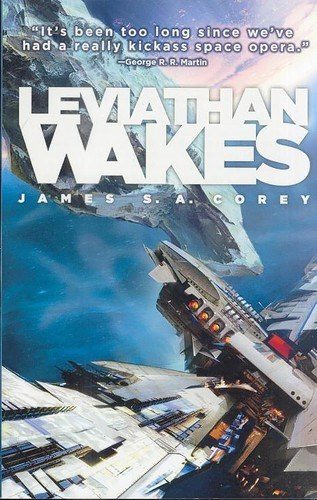
My first go at science fiction was Dune, borrowed from a hostel neighbour in second year, and I quit on page sixty with a headache and a private theory that the genre was not built for people like me. The theory was wrong. The book was simply the wrong first step, a bit like learning to swim by being pushed off a boat in open sea.
Science fiction has an entry problem: the most famous titles are often the hardest ones, so beginners keep starting at the deep end and concluding they cannot swim. This list fixes the order. It runs from the book that asks almost nothing of you to the book that asks for everything, and the ask is measured in two currencies: how much invented vocabulary you must carry, and how much emotional weight the book drops on you.
Which means rank one is not the best book here. Rank one is the safest place to stand. My actual favourite sits at eight, and the two I would defend hardest sit at twelve and fourteen.
Every entry also carries a bail point, the exact spot where you are allowed to shut the book and walk away with a clear conscience if it is not working. Nobody gives out medals for finishing novels you hate. If you have never completed a sci fi novel, start at number one and climb. If you have read two or three and want the genre at full strength, jump straight to twelve.
How I picked these
- Ordered by ask, not by greatness: how much strange vocabulary, patience and grief a book demands in its first fifty pages decides its position, so beloved classics sit low and easy books sit high.
- Standalone novels got priority. A beginner should not have to sign up for a nine-book series on day one, so most of these end where they end.
- Every title was checked through Google Books and Open Library, with a real cover from a real edition, no ghost print-on-demand listings.
- I cut most of the golden-age names on purpose. Asimov and Clarke matter historically, but their sentences have aged badly enough to lose a new reader in a week.
- One Indian entry earned its slot on merit rather than quota, and it will feel closer to home than any alien planet on this list.
- The famously hard books are still here, at the bottom, with warnings instead of reverence.
The whole list at a glance
All 16 books, in order
| # | Book | Author | Year | Vibe | Best for |
|---|
| 1 | The Martian | Andy Weir | 2011 | funny, tense, practical | total beginners |
| 2 | Project Hail Mary | Andy Weir | 2021 | warm, clever, fast | readers who liked The Martian |
| 3 | Dark Matter | Blake Crouch | 2016 | fast, anxious, cinematic | thriller readers crossing over |
| 4 | Ender's Game | Orson Scott Card | 1985 | cold, tactical, sad | strategy lovers |
| 5 | The Hitchhiker's Guide to the Galaxy | Douglas Adams | 1979 | silly, dry, philosophical | comedy readers |
| 6 | Flowers for Algernon | Daniel Keyes | 1966 | tender, plain, devastating | readers who want feeling |
| 7 | Fahrenheit 451 | Ray Bradbury | 1953 | feverish, poetic, angry | short classic hunters |
| 8 | Never Let Me Go | Kazuo Ishiguro | 2005 | quiet, melancholy, ruthless | literary readers |
| 9 | Station Eleven | Emily St. John Mandel | 2014 | elegiac, gentle, roaming | literary readers |
| 10 | Leila | Prayaag Akbar | 2017 | claustrophobic, angry, close | Indian readers wanting local sf |
| 11 | Binti | Nnedi Okorafor | 2015 | brief, tense, fresh | one evening readers |
| 12 | Kindred | Octavia E. Butler | 1979 | brutal, clear, unforgettable | readers who want weight |
| 13 | Children of Time | Adrian Tchaikovsky | 2015 | vast, patient, surprising | readers ready for big ideas |
| 14 | The Left Hand of Darkness | Ursula K. Le Guin | 1969 | cold, thoughtful, humane | patient readers |
| 15 | The Three-Body Problem | Cixin Liu | 2008 | cold, cerebral, enormous | readers wanting hard sf |
| 16 | Dune | Frank Herbert | 1965 | dense, political, hypnotic | graduating beginners |
The list
The books, ranked
1

Rung 1, bail after the first log entry
The Martian
Andy Weir2011about 388 pages
An astronaut is left for dead on Mars and decides to science his way home, one problem at a time.
Mark Watney is stranded on Mars after his crew evacuates in a storm and writes him off as dead. What follows is a survival diary kept by a man who stays funny because panic is not a usable option. He needs water, food and a radio, and he solves each one with chemistry, duct tape and a running commentary on his crewmates' taste in music. The science is solid enough that engineers still argue about it online, but you never have to follow the maths to enjoy the book. Skip a formula, keep reading, nothing is lost. Weir put it out himself in 2011 before a publisher came for it.
Why it is at 1
First because it asks almost nothing of you. There is no invented vocabulary, no politics to track, no timeline games, just one man and a list of ways to die. The voice sounds like your funniest friend narrating a disaster in real time. If science fiction has ever felt like homework, this is the cure, which is why it outranks every more famous book below.
Read it ifyou like survival stories and jokes told under pressure
Skip it ifyou want big ideas about society, because this is an engineering problem with a pulse
funny, tense, practicalBest for: total beginnerssurvivalmarsfunny
2
Rung 1, bail midway through chapter three
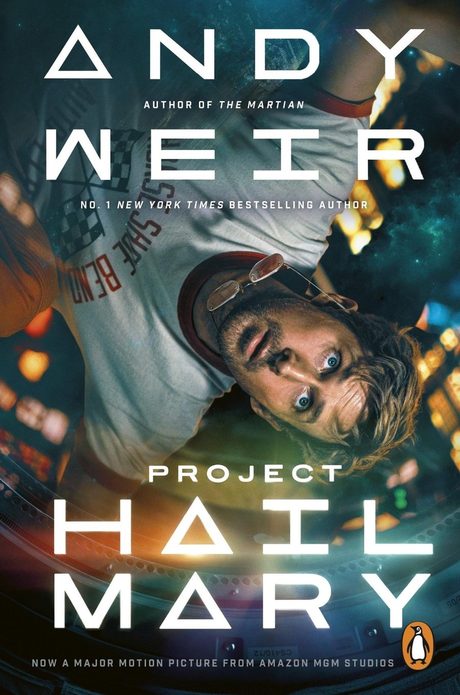
Project Hail Mary
Andy Weir2021about 497 pages
A man wakes alone on a spaceship with no memory of his own name and no idea why the sun is dying.
Ryland Grace comes round on a ship millions of kilometres from home, with two dead crewmates and a brain that has misplaced his own name. His memory returns in flashbacks while the present-day problem gets worse: something is eating the sun and Earth has a few decades left. Then, about a third of the way in, the book does something I refuse to spoil, except to say it turns a survival puzzle into the warmest friendship story I have read in years. Same engineering pleasure as The Martian, higher stakes, more heart.
Why it is at 2
Second because it works exactly like number one and asks slightly more: the amnesia structure takes three chapters to settle, and the physics runs a little hotter. If The Martian went down easily, this is the obvious next step. If you only ever read one Weir, read this one for what happens in the middle, and read the other one for the voice.
Read it ifyou want a science puzzle with real warmth inside it
Skip it ifyou need your space fiction solemn and your narrators serious
warm, clever, fastBest for: readers who liked The Martianspacefirst contactfriendship
3
Rung 1, bail at chapter five
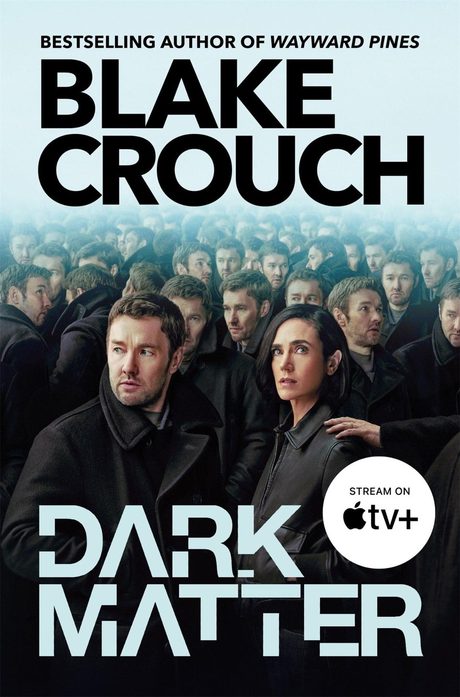
Dark Matter
Blake Crouch2016about 354 pages
A physics professor is kidnapped and wakes up in a version of his life where he made the other choice.
Jason Dessen teaches physics at a small college, has a wife he loves and a son he likes, and quietly wonders about the career he traded away. One night a masked man who knows his name abducts him, and he wakes in a laboratory where strangers congratulate him on an experiment he never ran. The chase that follows moves at thriller speed, but the engine underneath it is the question you have probably asked yourself at two in the morning about the road you did not take.
Why it is at 3
Third because it reads like an airport thriller and thinks like science fiction, which is the cheapest entry ticket this genre sells. Crouch explains only what the plot needs and never once lectures you. It sits below the Weir books because the prose is plain and the ending splits readers, mine included, but nothing here turns pages faster.
Read it ifyou want thriller pace with one big idea underneath
Skip it ifyou read for sentences, because this one is built purely for speed
fast, anxious, cinematicBest for: thriller readers crossing overmultiversethrillerregret
4
Rung 2, bail after the first battle room
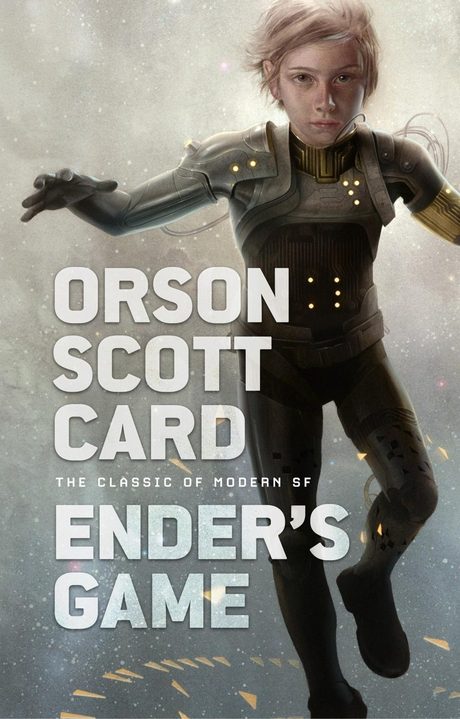
Ender's Game
Orson Scott Card1985about 448 pages
A six-year-old is taken to a military school in orbit and trained through games to command a war he barely understands.
Earth has survived two attacks by an alien species and is now breeding commanders for the third. Ender Wiggin is small, brilliant and deliberately kept isolated by adults who believe loneliness produces better strategists. Most of the novel is him playing war games in a zero-gravity room against older boys, and Card writes those games so clearly that you start thinking in three dimensions yourself. The tone is cold, the cruelty done to children is real and constant, and the last thirty pages rearrange everything you thought you were reading.
Why it is at 4
Fourth because it is easy to read and hard to sit with. No science vocabulary is needed, the sentences are short, the plot runs in a straight line. It ranks above Adams because it never wanders, and below Crouch because the moral weight lands late and heavily. One honest note: Card's public positions on gay rights have upset a lot of readers over the years, so borrow rather than buy if that matters to you.
Read it ifyou like strategy, training arcs and a twist that earns its keep
Skip it ifyou cannot stomach adults manipulating children for an entire book
cold, tactical, sadBest for: strategy loversmilitary sfclassiccoming of age
Heads up: sustained bullying and violence involving children
5
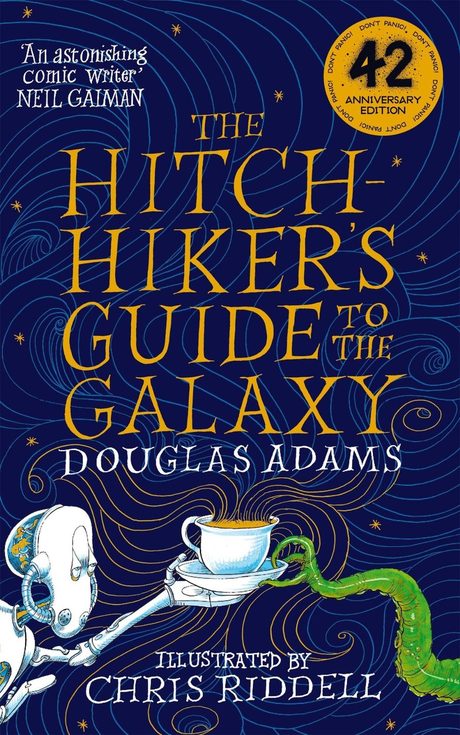
Rung 2, bail at the Vogon poetry
The Hitchhiker's Guide to the Galaxy
Douglas Adams1979
Earth is demolished to make way for a bypass and one Englishman survives in a dressing gown, carrying a towel.
Arthur Dent's house is being knocked down on the same morning the planet is, which tells you the scale of joke Adams is working at. His friend Ford Prefect turns out to be an alien researcher, and the two of them hitch a ride off Earth minutes before it goes. What follows is less a plot than a sequence of superb digressions about bureaucracy, depression, mice, whales and the number forty-two. The comedy is dry, thoroughly English, and funnier than almost anything published this year.
Why it is at 5
Fifth, with an honest catch: the ask here is not vocabulary, it is patience with nonsense. The story wanders because wandering is the joke, so readers who need a plot heading somewhere often stall around chapter six. That is why it sits under the straight-line books above. If the first ten pages make you laugh out loud, you will love all four of the sequels too.
Read it ifyou like dry British comedy and do not mind a plot that strolls
Skip it ifyou want a story that travels in one direction
silly, dry, philosophicalBest for: comedy readerscomedyclassicspace
6
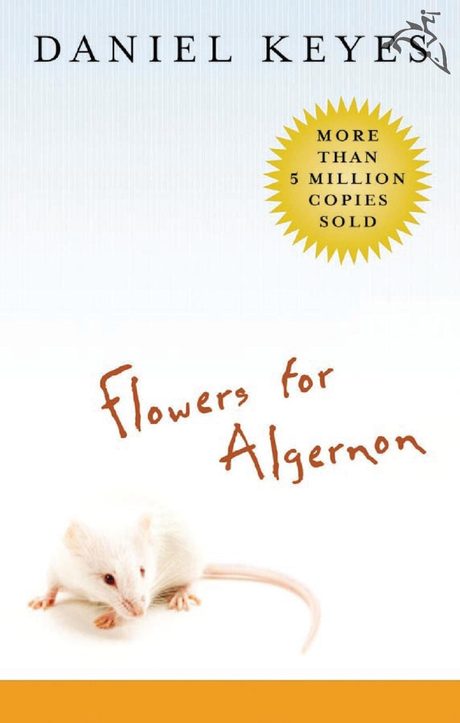
Rung 2, bail after ten progress reports
Flowers for Algernon
Daniel Keyes1966about 328 pages
A man with an intellectual disability has surgery that makes him a genius, and writes down everything that happens next.
Charlie Gordon is thirty-two, works in a bakery, and wants to be smart more than he wants anything else in the world. Scientists who have already run their procedure on a mouse called Algernon choose him for the first human trial. The entire novel is Charlie's own progress reports, so the spelling, the punctuation and the sentence length all change as his mind changes, which means the shape of the book tells the story alongside the plot. It is short, it looks simple, and it will take something out of you.
Why it is at 6
Sixth because the reading is easy while the feeling is not. There is no world to learn: one man, one laboratory, one year. I placed it here rather than lower because the emotional bill is high and a beginner deserves fair warning. Of everything on this list, this is the book most likely to make you cry in a public place.
Read it ifyou want one simple idea followed all the way to its end
Skip it ifyou are having a fragile week, because the last quarter is merciless
tender, plain, devastatingBest for: readers who want feelingclassicdisabilityscience ethics
Heads up: ableist cruelty, and a decline in the final act that many readers find hard
7
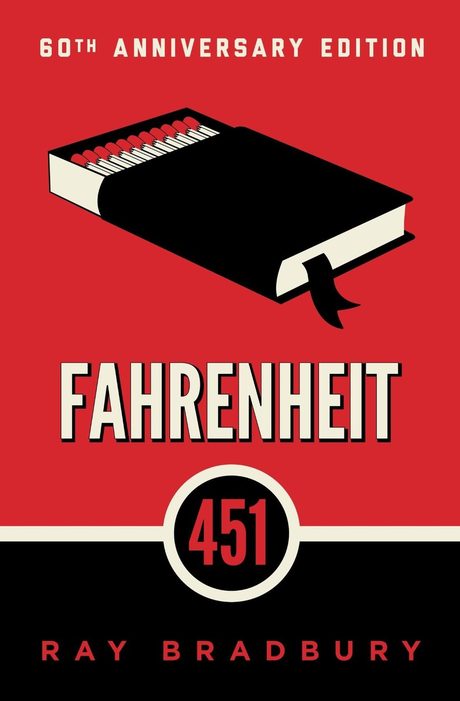
Rung 2, bail at the end of part one
Fahrenheit 451
Ray Bradbury1953about 272 pages
A fireman whose job is burning books starts wondering what is written inside them.
Guy Montag burns books for a living in an America that decided reading made people unhappy. His wife spends her days with wall-sized screens and little shells in her ears, a detail Bradbury wrote in 1953 that now reads like a description of most of our evenings. Then a girl on his street asks whether he is actually happy, and the question refuses to leave him alone. The prose runs hot and strange, closer to poetry than to plot, and the whole thing is short enough for two sittings.
Why it is at 7
Seventh because the ideas are simple but the sentences are not: Bradbury writes in images that sometimes need a second pass. It sits above Never Let Me Go because it is a third of the length and its argument sits on the surface. Read it for how accurate the guesses turned out to be, not for the story, which is thin by modern standards.
Read it ifyou want a short classic that predicted your screen time
Skip it ifyou want a tight plot, because this is a mood with a story attached
feverish, poetic, angryBest for: short classic huntersdystopiaclassiccensorship
8

Rung 2, bail at page one hundred if the calm defeats you
Never Let Me Go
Kazuo Ishiguro2005about 305 pages
Three friends grow up at an English boarding school that is quietly hiding what they were made for.
Kathy narrates her childhood at Hailsham, a school in the English countryside with peculiar rules about art, health and the future. She tells it the way people actually tell you about school: small jealousies, a lost cassette tape, a friendship triangle that keeps rearranging itself. The science fiction sits underneath all of it, and Ishiguro lets you work out the truth early instead of saving it for a reveal. The horror comes from how calmly everyone involved accepts the arrangement.
Why it is at 8
Eighth on the ladder and, if you want my honest opinion, the best book on this page. The ask is patience: nothing explodes, the narrator circles her own memories, and the first hundred pages read like an ordinary school story. Stay anyway. The final fifty pages are the most upsetting thing here, and they manage it without a single raised voice.
Read it ifyou like quiet books that turn your stomach slowly
Skip it ifyou need momentum, or a hero who fights back
quiet, melancholy, ruthlessBest for: literary readersliterary sfschoolgrief
Heads up: sustained sadness, illness, and hard questions about consent
Pairs with: Flowers for Algernon at number six, if you want two books that use science to break your heart by opposite methods
9
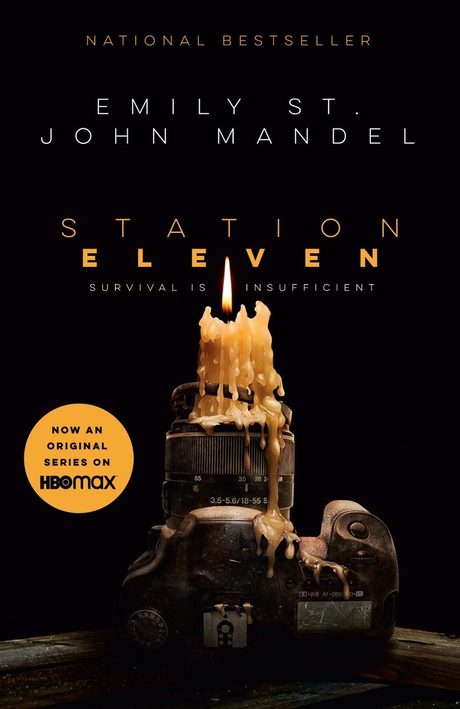
Rung 3, bail at the end of the first section
Station Eleven
Emily St. John Mandel2014
A flu erases most of the world, and twenty years later a travelling troupe performs Shakespeare for whoever is left.
It opens with an actor dying on stage during King Lear on the night a pandemic reaches Toronto. Then the book splits in two: one thread follows the last normal week on Earth, the other follows a caravan of musicians and actors walking between settlements two decades later. Mandel cares about what people keep rather than how they die, so there are more conversations about comic books and orchestras than there are gunfights. Reading it after 2020 is a strange experience, and mostly a gentle one.
Why it is at 9
Ninth because the timeline jumps and you have to hold four or five lives in your head before they finally connect. That is the entire homework. The reward is the best writing on this list and an end of the world that is sad without being grim. It edges above the classics because its structure asks a little more of you than theirs do.
Read it ifyou want an apocalypse that is more elegy than action
Skip it ifpandemic fiction still sits too close to the bone
elegiac, gentle, roamingBest for: literary readerspost apocalypsepandemicart
Heads up: pandemic illness and mass death, described calmly
10

Rung 3, bail at chapter four
Leila
Prayaag Akbar2017about 122 pages
In a near-future Indian city sorted into walled sectors, a mother spends sixteen years searching for her stolen daughter.
Shalini's city has arranged itself into communities behind walls, each one policed for purity, with the poor living in the gaps between. She married outside her group, and on her daughter Leila's third birthday everything is taken from her. The novel follows her search through camps and colonies while she remembers the years that led there. Akbar builds his future entirely out of things already visible in Indian cities: gated societies, water queues, mountains of garbage, and the everyday snobbery of people who consider themselves liberal.
Why it is at 10
Tenth because the strangeness is local, which cuts both ways. Nothing needs explaining to an Indian reader, and that is exactly why it may unsettle you more than any alien planet here. The narrative moves between past and present without announcing itself, so it asks slightly more attention than the books above. Netflix made a series out of it, though the novel is colder and better.
Read it ifyou want a dystopia built from things you already pass on your commute
Skip it ifyou want hope, because this book hands out none
claustrophobic, angry, closeBest for: Indian readers wanting local sfdystopiaindiamotherhood
Heads up: communal violence, segregation, and the loss of a child
11
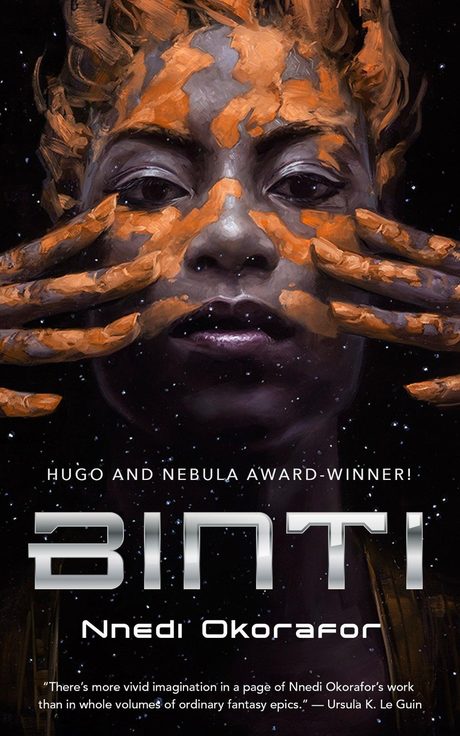
Rung 3, bail at page thirty
Binti
Nnedi Okorafor2015about 62 pages
A Himba girl leaves home in secret for a galactic university, and her transport ship is attacked on the way.
Binti is the first of her people offered a place at Oomza University, and accepting it means leaving a family who will treat the decision as betrayal. She carries her culture with her, from the otjize clay on her skin to the mathematics she does to steady her nerves. Partway through the journey her ship is boarded by the Meduse, and the story becomes a negotiation conducted by a teenager armed with nothing but her hands and her manners. It runs about ninety pages, so it fits inside one evening.
Why it is at 11
Eleventh, and by some distance the shortest book here. The ask is small but real: the vocabulary is Himba, the customs are unfamiliar, and Okorafor refuses to translate everything for your convenience. Sit inside that confusion for ten pages and it settles. If you want to find out whether space opera is for you before committing three hundred pages, this is the cheapest test on the market.
Read it ifyou have one evening and want a complete story inside it
Skip it ifyou want a full novel, because this is a novella and it finishes fast
brief, tense, freshBest for: one evening readersnovellaafricanfuturismfirst contact
Heads up: a massacre described early in the book
12
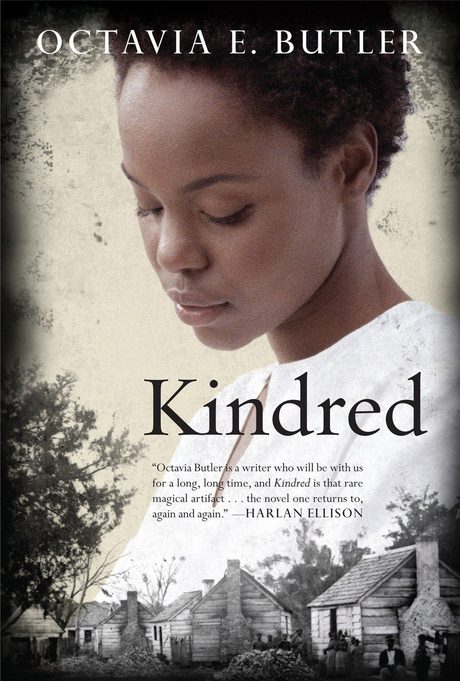
Rung 3, bail at the second time jump
Kindred
Octavia E. Butler1979
A Black woman in 1976 California is pulled back to a Maryland plantation, again and again, to keep a white boy alive.
Dana is unpacking boxes in her new apartment when she is yanked across time to a river in antebellum Maryland where a child is drowning. She saves him, snaps home, and learns the rules the hard way: she returns whenever he is in danger, she stays until her own life is threatened, and the boy turns out to be her ancestor. Butler wastes no energy explaining the mechanism, because the mechanism is not the subject. The plantation is, and a modern woman with a modern education has to survive there as property.
Why it is at 12
Twelfth because the reading level is easy and the experience is anything but. No jargon, no spaceships, no technology, just one impossible rule and its consequences. I put it above Station Eleven because the emotional ask is the steepest here after Flowers for Algernon. It is also the book on this list I still think about years later, usually at inconvenient hours.
Read it ifyou want time travel used as a weapon rather than a toy
Skip it ifyou are not ready to read slavery described in close detail
brutal, clear, unforgettableBest for: readers who want weighttime travelslaveryclassic
Heads up: slavery, whipping, rape and racist violence throughout
13
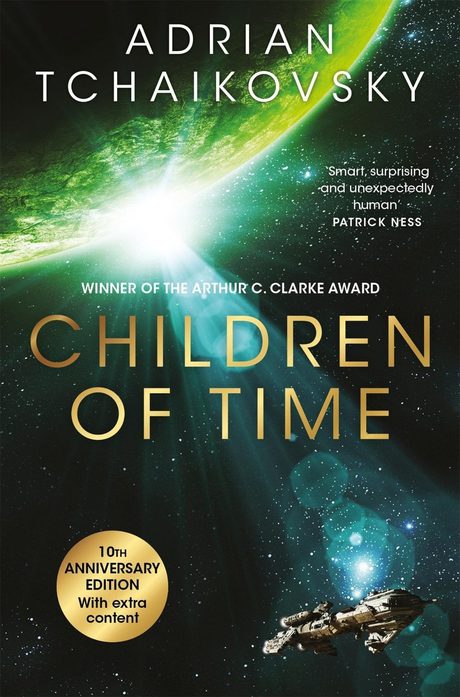
Rung 4, bail after the second spider chapter
Children of Time
Adrian Tchaikovsky2015about 609 pages
A dying human fleet hunts for a new home while, on a terraformed planet, spiders slowly evolve into a civilisation.
A scientist's experiment goes wrong and a virus designed to raise monkeys into intelligence lands on spiders instead. The novel then runs two clocks. On the planet, generation after generation of spiders build language, religion and technology. In space, the last humans wake from cold sleep every few centuries to make progressively worse decisions. Tchaikovsky writes the spiders as engineers rather than monsters, and somewhere in the middle you will notice you are rooting for them over your own species.
Why it is at 13
Thirteenth because this is where the genre starts asking for actual work: two timelines, deep time, and non-human minds that think nothing like yours. The spider chapters lose some readers early, so give them three before you decide. The payoff is the most satisfying big-idea ending on this list. It also won the Arthur C. Clarke Award, which the edition I checked prints on the cover.
Read it ifyou want the genre at full strength without impossible prose
Skip it ifspiders genuinely frighten you, because they are half of this book
vast, patient, surprisingBest for: readers ready for big ideasspaceevolutionfirst contact
14
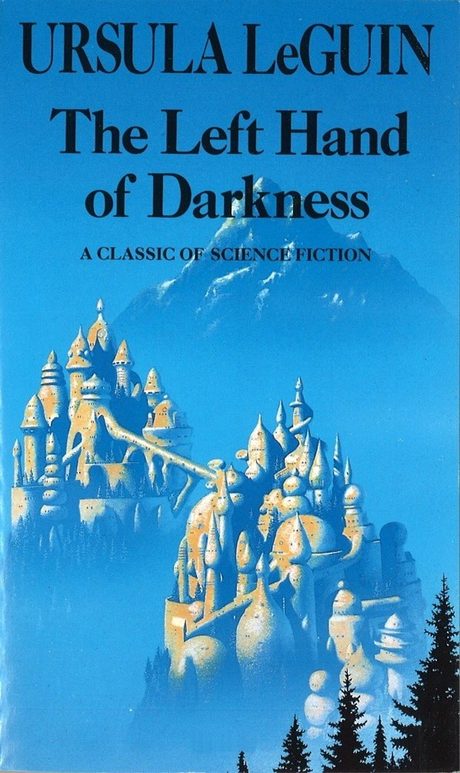
Rung 4, bail at the end of chapter three
The Left Hand of Darkness
Ursula K. Le Guin1969about 251 pages
An envoy lands alone on an ice planet where nobody has a fixed gender, and misreads almost everyone he meets.
Genly Ai is sent to Gethen, a world locked in winter, to invite it into a federation of planets. Gethenians take on sex only for a few days each month, so their society has no wars fought over manhood and none of the assumptions Genly knows how to read. He misreads the politics, distrusts the one person genuinely helping him, and ends up on a months-long walk across a glacier with that same man. That walk is among the finest sequences anyone has written in this genre.
Why it is at 14
Fourteenth because Le Guin makes you do anthropology: invented calendars, folk tales dropped between chapters, and a narrator who is unreliable purely through ignorance. The first sixty pages are the work. I placed it here rather than at the very bottom because the prose is clean and the reward is enormous, but nobody should make this their first science fiction novel.
Read it ifyou want the book that changed what this genre was allowed to think about
Skip it ifyou want pace, because the middle is a long cold walk
cold, thoughtful, humaneBest for: patient readersclassicgenderanthropological sf
15
Rung 4, bail at the end of the first game sequence
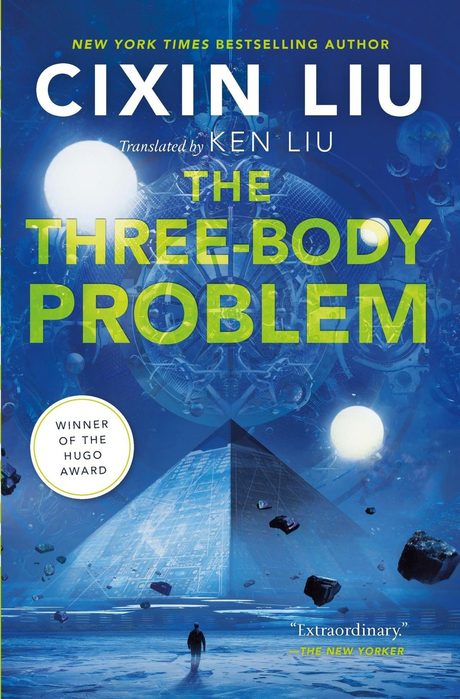
The Three-Body Problem
Cixin Liutranslated by Ken Liu2008about 400 pages
A physicist's suicide, a strange video game, and a signal sent from China in the 1960s that somebody answered.
It opens during the Cultural Revolution with a physicist beaten to death in front of his daughter, and that daughter grows up to work at a secret radio installation pointed at the sky. Decades later scientists are killing themselves, physics experiments are returning nonsense, and a nanomaterials researcher is drawn into an investigation that runs through a virtual reality game set on a planet with three suns. The scale keeps widening until the human characters feel small, which is precisely Liu's argument. First published in China in 2008, in English in 2014.
Why it is at 15
Fifteenth because the ask is genuine: physics you cannot skim, characters who exist mainly to carry ideas, and a structure that withholds the link between its parts for two hundred pages. Ken Liu's translation is excellent and carries footnotes on Chinese history that are worth reading rather than skipping. Start this one only after two or three books above it have gone down easily.
Read it ifyou want hard science fiction with a history lesson attached
Skip it ifyou read for characters, because these ones are thin by design
cold, cerebral, enormousBest for: readers wanting hard sfhard sfchinafirst contact
Heads up: political violence in the opening chapter
16
Rung 4, bail at the end of book one
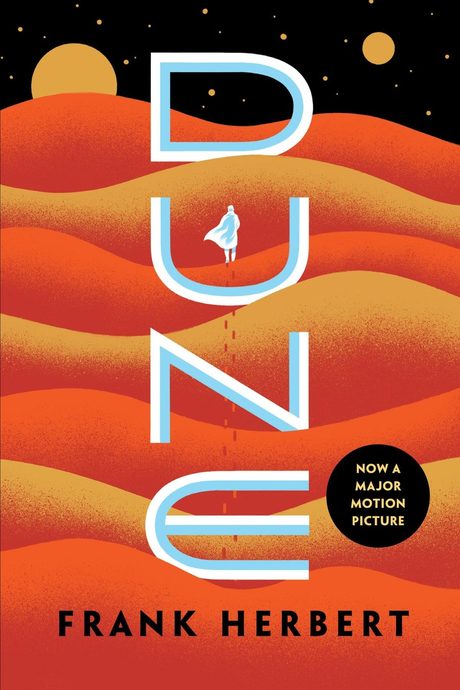
Dune
Frank Herbert1965
A noble family is handed a desert planet that produces the most valuable substance in the universe, and it is a trap.
Paul Atreides moves with his family to Arrakis, a planet of sand, enormous worms and a drug called spice that makes interstellar travel possible. The politics are Byzantine, the ecology is worked out down to the last drop of recycled water, and the religion humming underneath everything was planted deliberately, generations earlier. Herbert writes half the book inside people's heads, so you read their calculations alongside their words. There is a glossary at the back and you will be using it.
Why it is at 16
Last because it asks for the most: hundreds of invented terms, four scheming houses, prophecy, ecology, and an opening hundred pages that read like a briefing document. It is also the most complete world anybody has built in this genre, once it opens up. Do not begin here. Arrive after four or five of the books above, and the difficulty stops being difficulty and turns into the pleasure.
Read it ifyou want the deep end and have already finished a few of these
Skip it ifglossaries irritate you, because this one is not optional
dense, political, hypnoticBest for: graduating beginnersclassicepicpolitics
Pairs with: Children of Time at thirteen, if you want another book that plays with deep time and ecology
Worth knowing
How the ladder works
The four rungs measure the ask, not the quality. Rung one books need nothing from you except attention, and they hand back story from the first page. Rung two books are still easy to read but charge you emotionally, or write in images that need a second pass. Rung three books ask you to hold multiple timelines or unfamiliar words in your head while the story assembles itself. Rung four books want vocabulary, patience and a tolerance for being confused on purpose for fifty pages.
This is why Dune finishes last while The Martian opens the list, even though Dune is the more important novel by a wide margin. Difficulty and greatness are separate axes, and confusing them is how beginners end up thinking they hate science fiction when what they actually hate is starting on rung four.
Worth knowing
The bail rule, and why it is on every entry
Each book here carries a bail point, a specific place where you may stop without guilt if the book is not working for you. It is usually the moment by which the book has shown you its real hand: the first battle room in Ender's Game, the Vogon poetry in Adams, the second spider chapter in Tchaikovsky. Reach that point, feel nothing, and close it. You have my permission, for whatever that is worth.
Two things worth knowing about bailing. It is not a verdict on the genre, only on that pairing of book and week. And books come back around: I abandoned Dune at nineteen and finished it happily at thirty-one, having climbed most of this list in between without planning to.
People also ask
Questions, answered
Which science fiction book should a beginner read first?
The Martian by Andy Weir. It has no invented vocabulary, no politics to track and no timeline tricks, just an astronaut stranded on Mars solving one lethal problem after another in a voice that keeps making you laugh. If you want the same pleasure with more emotional payoff, read Project Hail Mary by the same author instead. Either one tells you within twenty pages whether this genre is going to work for you.
Is Dune a good first science fiction book?
No, and I say that as someone who loves it. Dune opens with hundreds of invented terms, four feuding houses, a prophecy, a drug economy and an ecology lecture, all before the plot properly starts. It rewards the patience it demands, but that patience is easier to find once you have finished four or five other novels. Read it fifth or sixth, not first, and keep the glossary open.
Do I need to understand science to read science fiction?
Not at all. Most of the books here run on one idea explained in plain language, and the two that carry real physics, The Martian and The Three-Body Problem, can be read straight past the equations without losing the story. Skimming a technical paragraph is normal practice, even among lifelong readers of the genre. If a book cannot survive you skipping a formula, that is the book's problem.
What is the shortest science fiction book for a beginner?
Binti by Nnedi Okorafor, at around ninety pages, which is one evening with a cup of tea. Flowers for Algernon and Fahrenheit 451 are next, both finishable across two sittings. Short does not mean light: Binti opens with a massacre and Flowers for Algernon is the saddest book on this page, so pick your evening with some care.
Are there good Indian science fiction novels?
Yes, and Leila by Prayaag Akbar is the one I would start with: a near-future India sorted into walled communities, seen through a mother searching for her daughter. Worth knowing that Indian science fiction is far older than the current English publishing boom suggests. Rokeya Sakhawat Hossain wrote Sultana's Dream, a feminist utopia, in English in 1905, and Bengali literature has had a science fiction tradition for over a century.
Is it okay to abandon a science fiction book halfway?
Yes, and doing it early is better than grinding through in resentment. Every entry on this list carries a bail point for exactly that reason. If you reach it and feel nothing, the pairing of that book and this month is wrong, which is different from the genre being wrong for you. Move one rung down the ladder and try something with a smaller ask.
Before you go
What to read tonight
If you take nothing else from this page, take the order. Start on rung one tonight, ideally with The Martian, and notice how quickly the reading goes when a book is not asking you to memorise anything. Two books later you will be ready for the ones that carry weight, and a few after that the deep end will feel less like homework and more like a place you chose to go.
If you are torn between two, pick by the week you are having. Rough week, take Dark Matter or Hitchhiker's, because both move fast and neither will hurt you. Steady week with room to feel something, take Never Let Me Go or Kindred, and clear an evening afterwards, because you will not want to start anything else immediately.
Keep going
Lists that pair with this one
Genre
16 Fantasy Books for Beginners, Ranked by Homework
Ordered by how many names you have to hold in your head before chapter five, lightest load first.
Genre
16 Horror Novels for Beginners, Ordered Gentlest to Most Brutal
This is a ladder, not a ranking: number one will not cost you any sleep, number sixteen might, and every entry tells you which kind of fear it uses.
Mood & Life
20 Best Short Novels Under 200 Pages, Ranked by Length
Every book here is under 200 pages in the edition we link, and the list runs shortest first, so you can pick by the hours you actually have left tonight.
Mood & Life
18 Books for People Who Don't Like Reading (Short and Fast)
Sorted by how much of your evening they ask for, starting with books you can finish tonight.
Genre
14 Best Book Series to Read (And Where Each One Sags)
Fantasy, crime, historical and Indian series, each with its book count, its finished or unfinished status, and the exact volume where most readers put it down.