A friend asked me for one series he could disappear into for a month, and I gave him the honest version rather than the popular one, which is that most series ask for forty hours and repay you for maybe twenty eight of them. Somewhere in the middle sits a book where the author is visibly buying time. Every reader hits it, most of us blame ourselves for losing interest, and a lot of half-read trilogies die right there on the bedside table.
So this list does the thing series roundups never do. For each one you get the book count, whether the story is actually finished or still hostage to a writer's schedule, and the sag point, which is the specific volume where the series slows and readers walk away. You can plan around a sag when you know it is coming. Nobody plans around a surprise. The other thing this page refuses to do is pretend a binge means fantasy, so there is crime, history, a Naples friendship and a Mumbai detective in here alongside the dragons.
The order runs on commitment safety, which is how good a series is multiplied by how much of it you will realistically finish. Series with an ending come first, because a decent story that closes beats a better one that stops. The risk sits at the bottom of the page: one series still being written a book at a time, and one that has been stalled since 2011 and is marked here like wet paint. Quick picks are below if your chai is getting cold.
How I picked these
- Sag point over hype: I named the weak book in every series here, including the ones I love, and where I could not find one I said so.
- Finished beats brilliant: a complete run outranks an unfinished masterwork, because you are handing over months of your life.
- Genre spread on purpose. This page used to be nearly all fantasy, which is not what a binge is. Four fantasy series came off it, Mistborn, Six of Crows, The Broken Earth and Kingkiller, and crime, historical and Indian detective series went on in their place. The four that left are all on the fantasy beginners list, which is where somebody hunting them will actually look.
- Entry point matters: for Discworld I send you to book four instead of book one, and I explain exactly why.
- Every first book verified through Google Books and Open Library with a real cover, so there are no ghost editions on this page.
The whole list at a glance
All 14 books, in order
| # | Book | Author | Year | Vibe | Best for |
|---|
| 1 | Harry Potter and the Philosopher's Stone | J. K. Rowling | 1997 | cosy, then dark | new readers building the habit |
| 2 | The Hunger Games | Suzanne Collins | 2008 | urgent, close, bleak | a long weekend or a flight |
| 3 | Leviathan Wakes | James S. A. Corey | 2011 | grown-up space opera | long commutes and long months |
| 4 | My Brilliant Friend | Elena Ferrante | 2011 | envious, exact, addictive | a literary binge |
| 5 | Northern Lights | Philip Pullman | 1995 | cold, brave, argumentative | readers who liked Potter and want bite |
| 6 | The Girl with the Dragon Tattoo | Stieg Larsson | 2005 | cold, procedural, angry | crime readers starting a series |
| 7 | Wolf Hall | Hilary Mantel | 2009 | cold, clever, close | readers who want difficulty |
| 8 | The Last Kingdom | Bernard Cornwell | 2004 | muddy, blunt, propulsive | readers who want a long war |
| 9 | Mort | Terry Pratchett | 1987 | funny, angry, humane | dipping in for years |
| 10 | The Cuckoo's Calling | Robert Galbraith | 2013 | london, procedural, patient | dipping in over years |
| 11 | The Lightning Thief | Rick Riordan | 2005 | loud, funny, fast | teenagers and reluctant readers |
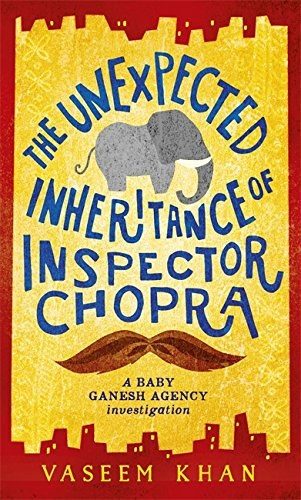
| 12 | The Unexpected Inheritance of Inspector Chopra | Vaseem Khan | 2015 | warm, mumbai, easy | a gentle week of reading |
| 13 | The Immortals of Meluha | Amish Tripathi | 2010 | mythic, argumentative, plain | readers new to fiction |
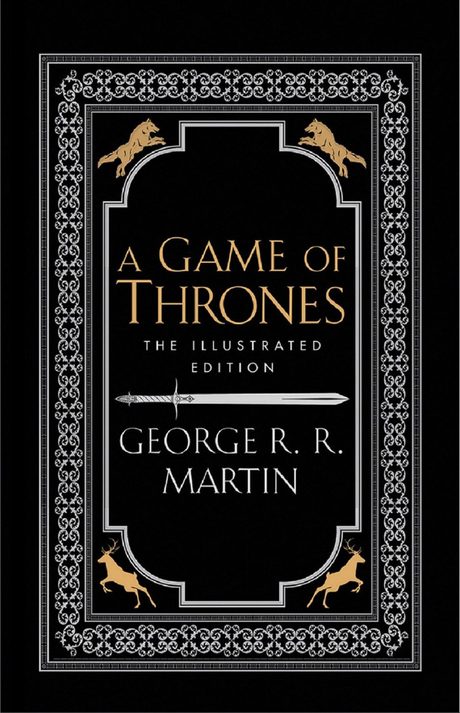
| 14 | A Game of Thrones | George R. R. Martin | 1996 | vast, brutal, stalled | patient readers with time |
The list
The books, ranked
1

7 books, complete, sags in book 5
Harry Potter and the Philosopher's Stone
J. K. Rowling1997about 225 pages
An unwanted boy learns he is famous in a world he has never seen, and the school he joins darkens every year.
You already know the plot. What is worth saying is how the thing is built: seven books, one school year each, and a tone that ages alongside the reader, so book one is a children's adventure about a magic castle and book six is about a teenager being handed a job that will probably kill him. The early volumes are short and warm. Rowling's habit of hiding the answer in plain sight in chapter two runs through every book, which is why rereading them is a different sport from reading them the first time.
Why it is at 1
First because nothing else here is this safe a commitment. Seven complete books, no writer's health to wait on, a first volume short enough to finish on one train journey, and a series that teaches you how to read a series. The sag is real. Order of the Phoenix is eight hundred pages of an angry teenager in a castle, and it is where most rereaders quietly stop. Push through, because book six is the best one.
Read it ifyou never got around to it, or you want a series with training wheels
Skip it ifyou have tried twice and bounced, because attempt three will go the same way
cosy, then darkBest for: new readers building the habitfantasyschoolcomplete series
2
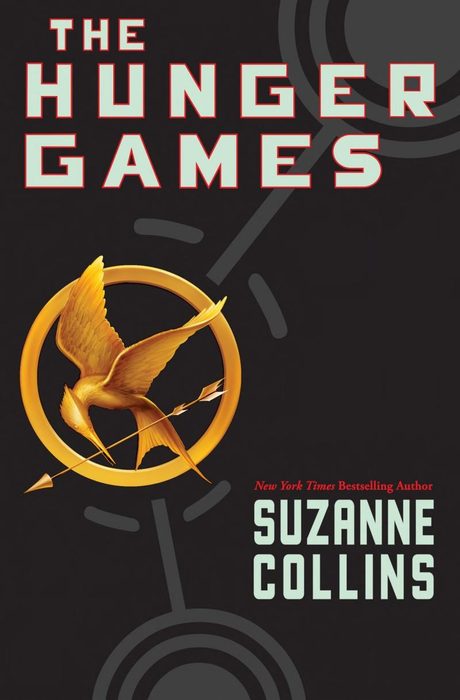
3 books, complete, sags in book 3
The Hunger Games
Suzanne Collins2008about 386 pages
A girl volunteers to die on live television so that her sister will not have to, and a whole country watches.
Panem keeps its districts obedient by making their children fight to the death on television, and Katniss Everdeen takes her younger sister's place in the arena. Collins writes in first person present tense, which sounds like a trick and works like an engine, since you learn every fact at the same moment she does. Book one is the tightest thriller on this list, and book two, Catching Fire, is better than book one, which almost never happens in a trilogy. The politics underneath it all are considerably sharper than the films let on.
Why it is at 2
Second because the ratio is hard to beat: three short books, two of them excellent, one finished story. It sits under Harry Potter only because the third book disappoints a lot of readers, including me. Mockingjay trades the arena for a war room, the pace drops through the floor, and the ending refuses to satisfy on purpose. Read it anyway, since that refusal is the argument Collins was making all along.
Read it ifyou want a complete trilogy inside one long weekend
Skip it ifviolence involving children is a hard no for you
urgent, close, bleakBest for: a long weekend or a flightdystopiayacomplete series
Heads up: children killing children, sustained violence, war injuries
3
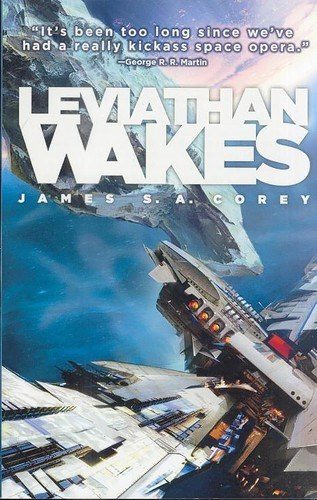
9 books, complete, sags in book 4
Leviathan Wakes
James S. A. Corey2011about 592 pages
Humanity has colonised the solar system, and one missing girl leads two men to the thing that will change all of it.
Earth, Mars and the mining stations of the asteroid belt are one bad week away from war. A ship's officer named Holden finds a derelict and broadcasts what he sees to everybody, while a detective named Miller goes looking for a rich family's runaway daughter. The threads meet, and nine books follow what happens when people find something older and smarter than they are. Corey writes competent adults doing difficult jobs under pressure, which is far more satisfying than it sounds, and every volume ends where a volume should end.
Why it is at 3
Third because it is the best long-haul commitment on the list. Nine books, all published, all readable, and a finale that lands rather than fizzles. The sag is book four, Cibola Burn, in which everyone stands around a muddy colony planet arguing about mining rights. It is a chore next to the two before it, and readers who tap out there miss the strongest stretch of the whole series, which starts in book five.
Read it ifyou want a finished space series you can live inside for two months
Skip it ifyou want ideas over plot, since this is politics and engineering, not philosophy
grown-up space operaBest for: long commutes and long monthssci-fispace operacomplete series
4

4 books, complete, sags in book 3
My Brilliant Friend
Elena Ferrantetranslated by Ann Goldstein2011about 320 pages
Two girls grow up in a poor Naples neighbourhood, and their friendship is also a fight neither will ever name.
Elena and Lila meet as children in a violent Naples neighbourhood in the 1950s, and four novels follow them for the next sixty years. One escapes through education, the other stays and burns brighter anyway, and the narrator spends her entire life measuring herself against her friend. Ferrante writes envy the way other novelists write love, which is to say honestly and without flattering anybody involved. The cast list at the front of each book looks alarming and you stop needing it around page eighty. Ann Goldstein's English is plain, quick and never in the way.
Why it is at 4
Fourth, and the only reason it is not higher is that it asks for patience where the books above it hand you a plot on page ten. Four novels that read like one long one, complete, with the strongest ending of any series here. Book three is where people stall, since the marriage and the union politics slow everything down. Book four repays that stretch in full.
Read it ifyou want a friendship written without a single drop of sweetness
Skip it ifyou need a plot engine, because this is sixty years of ordinary life
envious, exact, addictiveBest for: a literary bingeliteraryfriendshiptranslated
5
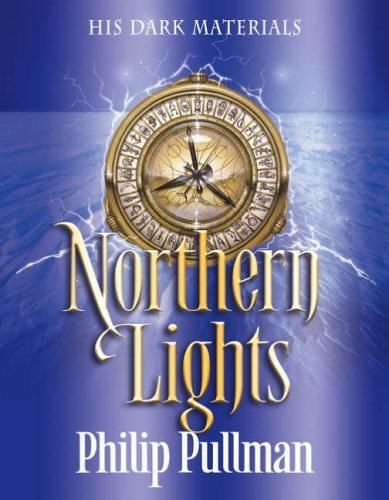
3 books, complete, sags in book 3
Northern Lights
Philip Pullman1995
A half-wild girl travels north to find stolen children and finds a hole cut in the sky instead.
Lyra grows up running loose in an Oxford that is not ours, a place where every person's soul walks beside them as an animal called a daemon. Children are vanishing, she goes north after them, and what she uncovers turns a children's adventure into an argument with organised religion. Pullman writes armoured bears and airship crossings with total conviction, and this first book comes close to perfect. The trilogy grows stranger and angrier as it goes. American editions call it The Golden Compass, which is the same novel with a worse title.
Why it is at 5
Fifth because the first book is better than the series around it. Northern Lights on its own would sit at the top of this page, and then The Amber Spyglass spends a long stretch with wheeled creatures explaining how the universe works, which is where a generation of readers quietly gave up. The ending is worth that stretch. Read all three, but go in knowing the shape of the thing.
Read it ifyou want a children's series with grown-up arguments buried inside it
Skip it ifa fantasy novel attacking organised religion will irritate you
cold, brave, argumentativeBest for: readers who liked Potter and want bitefantasychildrencomplete series
6

3 books by Larsson, complete, sags in book 3
The Girl with the Dragon Tattoo
Stieg Larsson2005about 658 pages
A disgraced financial journalist is hired to solve a forty year old disappearance, and the researcher who investigated him invites herself onto the case.
Blomkvist has just lost a libel case and most of his reputation when an ageing industrialist hires him to find out what happened to a niece who vanished from a locked island in the sixties. Salander is the researcher who was paid to investigate Blomkvist before he was hired: a hacker with a photographic memory, a court-appointed guardian, and no interest in explaining herself to anybody. The two threads run apart for a long time and the book only catches fire when they meet. Larsson writes paperwork and corporate fraud with a reporter's patience.
Why it is at 6
Sixth because it is the most bingeable crime series here, and it makes you earn the first hundred pages before it starts paying. Once Salander is on the case the trilogy runs like a machine. It is complete: Larsson died before publication and left exactly three books. Book three sags in the middle, where the story becomes a court case and a surveillance operation and the pace goes with it. Other writers have continued the series since, and that is a separate decision.
Read it ifyou want a crime trilogy with a genuinely strange lead in it
Skip it ifa hundred pages of financial journalism will lose you early
cold, procedural, angryBest for: crime readers starting a seriescrimetranslatedcomplete series
Heads up: graphic sexual violence, abuse of women, and torture
7

3 books, complete, sags in book 3
Wolf Hall
Hilary Mantel2009about 657 pages
Thomas Cromwell climbs from blacksmith's son to the man who runs England, and you watch it from inside his head.
Henry the Eighth wants a new wife and a new church, and the man who arranges both is a lawyer with no family name, no gentleman's education, and a memory like a filing cabinet. Mantel writes Cromwell in close present tense, so you sit behind his eyes while he counts every debt and weakness in the room. The famous difficulty is the pronoun: for long stretches, he means Cromwell even when another man has just spoken. Give it fifty pages and your ear adjusts, and then it becomes the most alive historical fiction I have read.
Why it is at 7
Seventh because it is the hardest entry here, not the weakest. The trilogy is finished and the second book, Bring Up the Bodies, is the best thing in it, a tight courtroom of a novel about how fast a queen can be destroyed. The Mirror and the Light runs to nearly nine hundred pages and it sags badly in the middle, which is where most readers stop after loving the first two.
Read it ifyou want historical fiction that reads like a thriller about power
Skip it ifyou want clear speech tags, since this prose makes you work for them
cold, clever, closeBest for: readers who want difficultyhistoricaltudorcomplete series
8
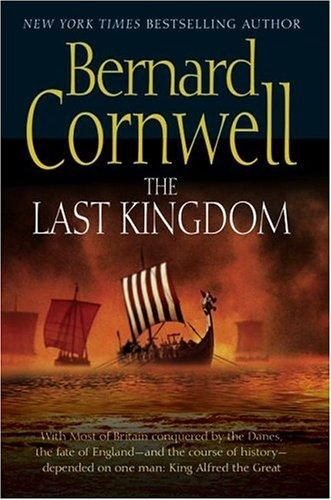
13 books, complete, sags around books 6 and 7
The Last Kingdom
Bernard Cornwell2004about 416 pages
A Saxon boy is captured and raised by Danes, then spends thirteen books fighting for a country he is not sure he belongs to.
Uhtred is born in Northumbria, orphaned in a raid, and brought up by the Danes who killed his father, which leaves him permanently on the wrong side of everybody he meets. Cornwell then walks him through the making of England: Alfred, the wars, the shield walls, the treaties broken within a chapter of being sworn. The pleasure is consistency. Every book has a battle, a betrayal and a plan, Uhtred narrates in the dry voice of an old man looking back, and the history underneath is solid enough that you finish knowing how a kingdom got built.
Why it is at 8
Eighth because it is the most dependable long series on this page. Thirteen books, all published, one real ending, and not a single volume that will confuse you. The cost is repetition: somewhere around books six and seven the pattern becomes very visible, the same broken oath and the same shield wall in a different county. Read those two quickly rather than carefully, and the last stretch is worth the mud.
Read it ifyou want history, battles and one voice for thirteen books
Skip it ifyou need variety, because the formula repeats on purpose
muddy, blunt, propulsiveBest for: readers who want a long warhistoricalvikingscomplete series
Heads up: battlefield violence and casual brutality throughout
9

41 books, complete, start at book four
Mort
Terry Pratchett1987
Death takes on an apprentice, and the boy promptly wrecks reality by refusing to let a princess die on schedule.
Discworld is a flat world carried by four elephants standing on a turtle, and the joke that keeps working is that it runs exactly like ours. Mort is a gangly teenager nobody wants as a farmhand, so he ends up apprenticed to Death, who speaks in capital letters and decides mid-book to find out what fun is. Left in charge of the rounds, Mort saves a princess who was supposed to die, and history starts folding in on itself. Pratchett is funny on the surface and quietly furious underneath, mostly about power and who gets stood on.
Why it is at 9
Ninth on commitment safety, first if you rank by lifetime value. Forty one novels is less a series than a country, and it is closed, since Pratchett died in 2015. The sag sits right at the start: The Colour of Magic and The Light Fantastic are early parody, weaker than nearly everything after them, and beginning there is how most people decide Discworld is not for them. Mort is book four and the first properly great one.
Read it ifyou want comedy that grows more serious the longer you stay with it
Skip it ifyou want one continuous plot, since these are separate stories in one world
funny, angry, humaneBest for: dipping in for yearscomedyfantasydiscworld
10

Open series, one case per book, sags in book 5
The Cuckoo's Calling
Robert Galbraith2013about 560 pages
A broke private detective with one leg takes the case nobody thinks is a case: a supermodel who went off a balcony.
Cormoran Strike is sleeping in his office, owes money he cannot pay, and has one temp he cannot afford when a lawyer walks in convinced that his sister did not jump. Robin is that temp, and she turns out to be the best investigator in the room. Galbraith is a pen name of J. K. Rowling, which is either irrelevant or the whole conversation depending on who you ask. The books themselves are old-fashioned detective novels: long, procedural, London-shaped, with a will-they thread running underneath the cases and each volume solving its own crime.
Why it is at 10
Tenth because it is the series to start if you want something to dip into for years without ever being stranded mid-story. Every book closes its own case, so the commitment is genuinely one book at a time. The sag is book five, which runs past nine hundred pages and would be a better novel two hundred shorter. Worth knowing before you buy: the author's public positions have put some readers off the whole series, and that is a decision to make in the shop rather than at book four.
Read it ifyou want long detective novels with one case each
Skip it ifnine hundred page crime novels are not a holiday for you
london, procedural, patientBest for: dipping in over yearscrimedetectiveopen series
11

5 books, complete, formula shows in book 3
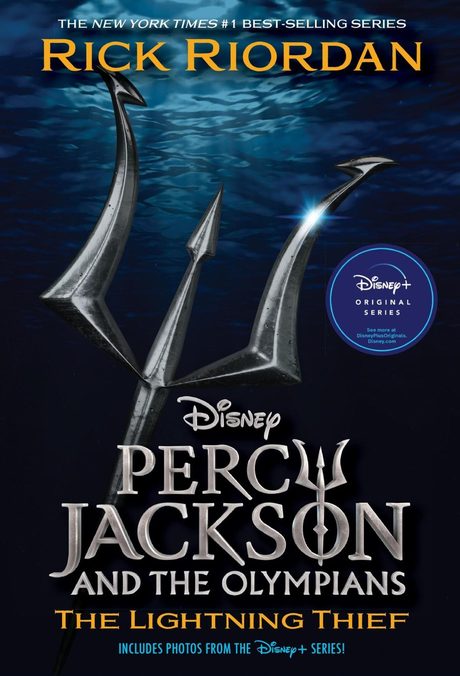
The Lightning Thief
Rick Riordan2005about 400 pages
A boy with dyslexia and a short temper discovers his father is Poseidon, and Olympus has a custody problem.
Percy Jackson gets thrown out of yet another school, learns that the monsters bothering him are real, and lands at a summer camp for the children of Greek gods. Zeus's lightning bolt has gone missing, Percy is blamed for it, and he crosses America with a satyr and a daughter of Athena to sort it out. Riordan puts jokes on every page and titles his chapters like a class clown. He built the story for a son with dyslexia and ADHD, which is why the hero's difficulties read as equipment rather than damage.
Why it is at 11
Eleventh because it is the easiest series here to finish and the least demanding to read. Five books, complete, each a quest with a deadline attached. The formula is visible by book three, when you can predict the shape of the trip before anybody packs, though the last two get bigger and better. If you are buying for a twelve year old who insists reading is boring, buy this one.
Read it ifyou want mythology delivered as adventure comedy that never drags
Skip it ifyou are an adult who cannot enjoy a book written for children
loud, funny, fastBest for: teenagers and reluctant readersmythologymiddle gradecomplete series
12
5 books, complete, no real sag
The Unexpected Inheritance of Inspector Chopra
Vaseem Khan2015
A Mumbai inspector is retired against his will, inherits a baby elephant by post, and takes the one case he was told to drop.
Ashwin Chopra is a decent policeman being pushed out over a heart condition, and on the same morning a letter arrives leaving him an elephant. He opens a small agency, keeps the elephant in the compound, and works the death of a boy that his old station has already filed as an accident. Khan writes Mumbai as a working city rather than a postcard: the traffic, the resettlement colonies, the deference money buys inside a police station. The tone stays warm, the crimes do not, and the two sit together better than they have any right to.
Why it is at 12
Twelfth because it is the gentlest adult series on this page, five books that each solve their own case and never ask you to remember anything from the last one. It is here for a specific reader: somebody who wants an Indian series that is neither mythology nor literary fiction, and a detective they can spend a week with. The elephant is a device, Khan knows it is a device, and the books are honest enough about that to get away with it.
Read it ifyou want an Indian crime series with a light touch
Skip it ifyou want hard-edged crime with real menace in it
warm, mumbai, easyBest for: a gentle week of readingcrimeindiancomplete series
13

3 books, complete, sags in book 3
The Immortals of Meluha
Amish Tripathi2010about 362 pages
Shiva arrives in a perfect kingdom as a Tibetan tribal chief and gets handed a god's job description.
The premise is the best thing here: what if Shiva was a real man, a tribal leader from near Mansarovar, whose deeds were retold so often that they hardened into scripture? He walks into the Meluhan empire, drinks something that turns his throat blue, and is greeted as the saviour of a prophecy he has never heard of. The books argue about good and evil the way an engineer would, laying out systems rather than mysteries. The prose is functional and sometimes clumsy, the debates run long, and the idea carries you regardless.
Why it is at 13
Thirteenth, and it earns the slot on reach rather than craft. This is the trilogy that pulled a lot of Indian readers into fiction in the 2010s, and for plenty of people it was the first long series they ever finished. Book two closes on a cliffhanger that feels like a marketing meeting, and book three is bloated. Read it for the idea, not for the sentences.
Read it ifyou want Indian mythology rebuilt as a thriller with stated rules
Skip it ifclumsy sentences ruin a book for you no matter how good the idea is
mythic, argumentative, plainBest for: readers new to fictionmythologyindiancomplete series
14
5 of 7 published, unfinished, sags in book 4
A Game of Thrones
George R. R. Martin1996about 803 pages
Everyone you like is in danger and the map is far bigger than you think, which is either the appeal or the problem.
A king rides north to make an old friend his chief adviser, and that one favour starts a civil war that eats a continent. Martin tells it from inside a rotating set of heads, including people you were trained to hate in chapter one, so the moral arithmetic keeps shifting under you. The first three books are one of the great runs in modern fantasy. Then the cast triples in size, two volumes split the characters between them, and the pace turns glacial. The most recent novel appeared in 2011.
Why it is at 14
Last, and the placement is a warning rather than a verdict on the writing. A Storm of Swords, the third book, is the finest single fantasy novel on this list. A Feast for Crows is where an enormous number of readers stopped, since it removes most of your favourite characters for an entire volume. There is no publication date for book six, so start this knowing the television ending may be the only ending you get.
Read it ifyou want political fantasy at full scale and can live without closure
Skip it ifyou need a finished story, or graphic violence and sexual assault put you off
vast, brutal, stalledBest for: patient readers with timefantasypoliticalunfinished
Heads up: graphic violence, sexual violence and child harm throughout
Worth knowing
How the sag point works
Every long series has a book where the writer is holding the middle open. Sometimes that is a contract, sometimes the story has outgrown the original plan, and sometimes book two exists so that book three can happen at all. I have named that volume for each series here, and it is not an insult, it is a map. If you know Order of the Phoenix will feel like wading, you read it in smaller portions and keep going instead of deciding you have outgrown the series.
The quit point is a different animal from the sag. The sag is where the book slows down. The quit point is where readers actually stop, and the two usually sit a hundred pages apart, because almost nobody abandons a book at the moment it disappoints them. We abandon it three weeks later, while still telling people we are reading it.
Worth knowing
Open series and unfinished series are not the same risk
This is the distinction that decides where a series lands on this page. An open series keeps publishing, but every book closes its own story, so you can stop after any volume and lose nothing. Cormoran Strike works that way, Discworld worked that way for forty one books, and Inspector Chopra does too. An unfinished series is one long arc with no ending written yet, which on this page means A Song of Ice and Fire, and off it means Kingkiller. That is why a series still being written sits comfortably in the middle here while Martin sits at the bottom. One is a shelf you can visit. The other is a road that stops in a field.
One workaround helps with the second kind. Read an unfinished series between finished ones rather than back to back, so a closed story is always waiting on the other side. The frustration is much smaller when the next book on your shelf is guaranteed to have a last page.
People also ask
Questions, answered
What is the best book series to binge right now?
Harry Potter, if you want one answer and no caveats: seven complete books, a short first volume, and no risk of being stranded. If you have already done that one, pick by what you need. The Hunger Games for speed, The Expanse for scale, the Millennium trilogy if you would rather have crime than magic, and the Neapolitan novels if you want the best writing on this page.
Which book series are actually finished?
On this list, everything except A Song of Ice and Fire, plus Cormoran Strike which is open rather than unfinished, since each book solves its own case. Harry Potter, The Hunger Games, His Dark Materials, Percy Jackson, the Millennium trilogy, the Wolf Hall trilogy, the Neapolitan novels, the Last Kingdom books, the Baby Ganesh mysteries and the Shiva trilogy are all complete. The Expanse closed at nine books in 2021, and Discworld ended when Terry Pratchett died in 2015.
How long does it take to read a whole series?
Rough arithmetic, at an ordinary pace of forty pages an hour: the Hunger Games trilogy takes about thirty hours, the Millennium trilogy about forty five, Harry Potter around a hundred, and The Expanse and The Last Kingdom both closer to a hundred and thirty. Divide by the reading you actually do in a week, not the reading you plan to do, and you get an honest finish date instead of a fantasy.
Should I read Discworld in publication order?
No, and this is the most common reason people give up on Pratchett. The first two novels are early parody and much weaker than what follows. Start with Mort, which is where the series first becomes properly good, or jump into the City Watch run if you would rather have a police story. Discworld is built as several linked sequences rather than one long chain, so you can follow whichever thread you enjoyed and ignore the rest.
Is A Song of Ice and Fire worth starting if it may never be finished?
Only if you can make peace with that at the start rather than at book five. The first three books are superb and the writing is the best political fantasy in print. After that you get one book of characters you did not choose, one book of the ones you missed, and a long silence since 2011. Readers who accept the deal early tend to enjoy it. Readers who accept it late get angry.
What series is good for someone who does not read much?
Percy Jackson or The Hunger Games. Both move fast, both are short, and both finish. Percy Jackson suits younger or nervous readers because the jokes keep arriving and the chapters are tiny. The Hunger Games suits an adult who wants something serious without a heavy page count. If you would rather have crime than fantasy, the Inspector Chopra books do the same job at the same speed.
Before you go
What to read tonight
If you want to start tonight, buy the first book and nothing else. Series shopping is where money quietly dies, and fifty pages tells you more about the fit than any list, this one included. Read fifty of Harry Potter and fifty of The Girl with the Dragon Tattoo, then keep whichever one you are still thinking about at breakfast.
If you already know you finish nothing, start with The Hunger Games and give yourself the win. Three short books is a real series with a real ending, and once you have one behind you the seven-book stuff stops looking impossible. And if you do take on the unfinished one at the bottom of the page, say it out loud once before you begin: you may never find out how this ends. That sentence costs nothing now and saves a lot of temper later.
Keep going
Lists that pair with this one
Genre
16 Fantasy Books for Beginners, Ranked by Homework
Ordered by how many names you have to hold in your head before chapter five, lightest load first.
Genre
18 Best Crime Thriller Books of All Time, Ranked Honestly
Ranked by what is left of the book once you already know the ending, with a straight answer on every twist.
Mood & Life
20 Unputdownable Books, Ranked by the Engine That Hooks You
I ranked these on one thing: how hard each book made it to stop reading, and which mechanic does the pulling.
Mood & Life
16 Best Books for Long Flights and Train Journeys, by Hours
Every book here is timed: roughly how many hours it fills, and how well it survives being put down for the meal trolley.
Genre
16 Sci Fi Books for Beginners, Ordered by Difficulty
Ranked one to sixteen by how much each book asks of you, easiest first, with a bail point on every entry.