I finished a YA romance on a Sunday last month, in one sitting, and then lied about it to a friend who believes reading only counts if it hurts. That reflex is the reason this category gets patronised. A book written for a sixteen year old has to do something most adult fiction never manages, which is make an ordinary Tuesday feel like the most important day of somebody's life.
The books that survive past their target age all have one thing in common, and it is not the couple. It is the house. The ones you can still read at thirty are the ones that got the parents right, or the siblings, or the specific humiliation of being new somewhere, and the romance sits on top of that. The ones that fade are the ones where the crush was the whole building.
So each entry carries an age fit and a straight answer to the reread question, and the ranking follows that test rather than sales or popularity. Sixteen books, four with South Asian leads, content notes on everything, because YA hides domestic violence, grief and coming out behind pastel covers and nobody warns you at the till. The most famous title on the list is at number sixteen, with reasons.
How I picked these
- The reread test decides the ranking: does the book still hold when you are no longer the age it was written for, or does it only work once.
- Age fit is stated plainly, because a thirteen year old and a seventeen year old want very different books and shops shelve them together.
- Four South Asian leads, and none of them are here to fill a slot: Menon, Jaigirdar, Taslim and Sharma are all doing something the imports do not.
- Content notes on every entry. This genre routinely handles abuse, illness and outing, and the covers give you no clue.
- Cut: fantasy romance, which has its own list, and anything where the adults exist only to be obstacles, because that is the fastest way to date a YA novel.
The whole list at a glance
All 16 books, in order
| # | Book | Author | Year | Vibe | Best for |
|---|
| 1 | Aristotle and Dante Discover the Secrets of the Universe | Benjamin Alire Sáenz | 2012 | tender, sunlit, thoughtful | readers who say they hate YA |
| 2 | Simon vs. the Homo Sapiens Agenda | Becky Albertalli | 2015 | funny, warm, bright | a bad week |
| 3 | When Dimple Met Rishi | Sandhya Menon | 2017 | bright, funny, warm | readers who never saw themselves |
| 4 | I'll Give You the Sun | Jandy Nelson | 2014 | vivid, messy, emotional | art students |
| 5 | Eleanor & Park | Rainbow Rowell | 2013 | 1980s, tender, tense | older teenagers |
| 6 | The Sun Is Also a Star | Nicola Yoon | 2016 | urban, fast, philosophical | one sitting |
| 7 | The Henna Wars | Adiba Jaigirdar | 2020 | warm, angry, irish | queer south asian readers |
| 8 | Better Than the Movies | Lynn Painter | 2021 | funny, familiar, cosy | a bad sunday |
| 9 | The Love Match | Priyanka Taslim | 2023 | warm, busy, communal | fans of Sandhya Menon |
| 10 | Anna and the French Kiss | Stephanie Perkins | 2010 | romantic, homesick, parisian | travel daydreamers |
| 11 | Tweet Cute | Emma Lord | 2020 | light, online, quick | younger teenagers |
| 12 | My So-Called Bollywood Life | Nisha Sharma | 2018 | filmi, bright, referential | hindi film fans |
| 13 | P.S. I Like You | Kasie West | 2016 | clean, sweet, easy | first romance readers |
| 14 | The Summer I Turned Pretty | Jenny Han | 2009 | summery, nostalgic, aching | series readers |
| 15 | They Both Die at the End | Adam Silvera | 2017 | urgent, sad, tender | readers who want a cry |
| 16 | The Fault in Our Stars | John Green | 2012 | smart, sad, quotable | first-time criers |
The list
The books, ranked
1
Age fit 15+ / rereads at 30: yes
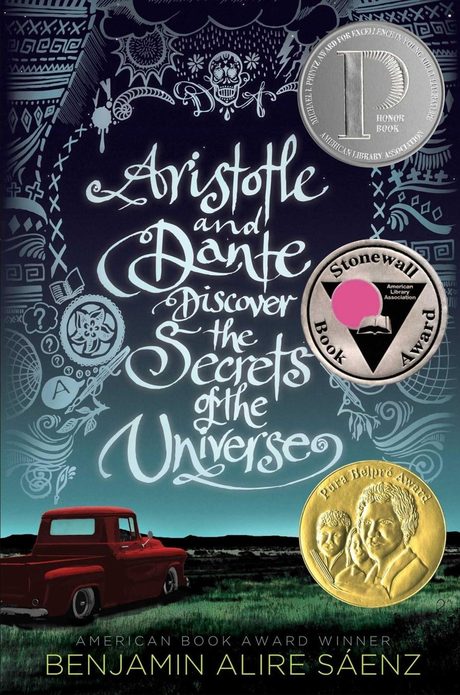
Aristotle and Dante Discover the Secrets of the Universe
Benjamin Alire Sáenz2012about 368 pages
Two Mexican American boys meet at a swimming pool in 1980s El Paso and spend two summers working out what they are to each other.
Ari is fifteen and angry in a way he cannot explain, with a brother in prison nobody at home will discuss and a father who came back from Vietnam and went quiet. Dante is open, funny, certain of himself, and teaches Ari to swim. The novel runs across two El Paso summers in the late 1980s, mostly through conversations, letters and long drives in the desert. Sáenz writes teenage loneliness with more respect than almost anybody, and the parents here are full characters rather than furniture.
Why it is at 1
First because it is the one book on this list that gets better as the reader gets older. The romance is slow and largely unspoken, so what you are actually reading is a boy learning to name things, and the fathers in it will catch adult readers somewhere they were not defending. If you are buying one YA romance for someone who claims to hate YA, buy this one.
Read it ifyou want quiet, literary YA where the parents matter as much as the couple
Skip it ifyou want banter and pace, because this is slow and lives inside one boy's head
tender, sunlit, thoughtfulBest for: readers who say they hate YAqueer romance1980sliterary ya
Heads up: a violent homophobic attack, family trauma, a brother in prison
2

Age fit 14+ / rereads at 30: yes
Simon vs. the Homo Sapiens Agenda
Becky Albertalli2015about 293 pages
He is emailing a boy from his school whose name he does not know, and a classmate with screenshots wants a favour.
Simon Spier is not out at school and has been writing to an anonymous boy called Blue, who is somewhere in the same building. Then he leaves himself logged in on a library computer, and Martin, a deeply unfunny classmate, uses the screenshots to make Simon set him up with a friend. What lifts the book above its plot is everything around it: the school play, the Oreos, a friendship group quietly drifting apart, and a family who love Simon and still manage to get it wrong.
Why it is at 2
Second because it is the funniest book here and it lands the sharpest argument, the one about why only queer kids are expected to announce themselves. Readers quote that passage years later. It sits behind Sáenz only on depth, since Albertalli keeps the whole thing at comedy pace even in the moments that could have carried more weight.
Read it ifyou want funny and warm with a guessing game running underneath
Skip it ifyou want high stakes, because the worst outcome here is school embarrassment
funny, warm, brightBest for: a bad weekqueer romanceepistolaryschool
Heads up: outing without consent, blackmail
3
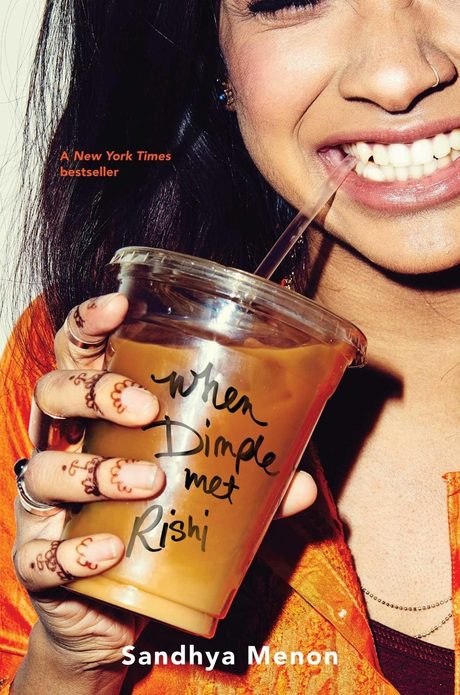
Age fit 13+ / rereads at 30: yes
When Dimple Met Rishi
Sandhya Menon2017about 432 pages
She wants a coding career and no husband. He arrives at summer camp already knowing their parents have discussed marriage.
Dimple Shah escapes to a web development programme in San Francisco expecting six weeks of code and freedom from her mother's opinions about her hair. Rishi Patel turns up with good manners and the knowledge that both families have quietly arranged for the two of them to meet. He is a romantic who wants the tradition. She throws iced coffee at him. Menon writes second generation Indian American life without explaining it to anybody, so the culture is simply the water everyone in the book swims in.
Why it is at 3
Third because it takes an arranged introduction seriously instead of playing it as either a joke or a tragedy, which almost no Western YA manages. Dimple's ambition is never sanded down to make her more likeable. It is lighter than the two above it and the camp competition subplot is thin, though the two leads carry the whole thing comfortably.
Read it ifyou want Indian American teenagers written from the inside
Skip it iffast chemistry puts you off, because these two connect early
bright, funny, warmBest for: readers who never saw themselvesindian americansummer camparranged setup
4
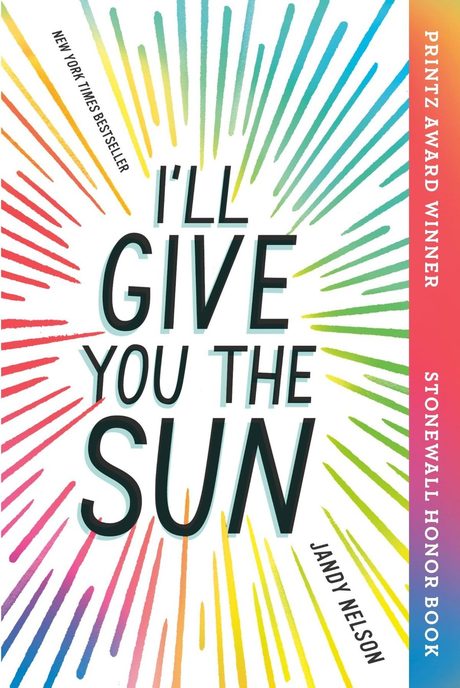
Age fit 15+ / rereads at 30: yes
I'll Give You the Sun
Jandy Nelson2014
Twins narrate the same story from two different years, and neither of them is holding the whole truth.
Noah tells the years when he and Jude were thirteen, inseparable, and both in love with things they could not say aloud. Jude tells sixteen, when the twins barely speak, the family has broken apart, and every sculpture she makes shatters. The two halves lock together like a puzzle, and there are real romances inside both, but the engine is the sibling relationship. Nelson writes in high colour, metaphors stacked three deep, which readers either fall for completely or abandon within ten pages.
Why it is at 4
Fourth because it is the most ambitious book on the list and the most divisive. When the style works, nothing else in YA feels like it. When it does not, it reads as overwritten, and both reactions are reasonable. It ranks above several crowd-pleasers because a teenager who loves this one will still be thinking about it at forty.
Read it ifyou want art, grief and prose that takes big swings
Skip it ifflorid writing irritates you, because this is dense with imagery
vivid, messy, emotionalBest for: art studentstwinsgriefqueer romance
Heads up: parental death, grief, an unwanted sexual encounter
5

Age fit 15+ / rereads at 30: mixed
Eleanor & Park
Rainbow Rowell2013about 325 pages
Comics and mixtapes shared on a school bus in 1986 Omaha, while one of them goes home every evening to something frightening.
Eleanor is big, red-haired, badly dressed and new, and she lives with a stepfather who runs the house on fear. Park is half Korean, quiet, and lets her read his comics over his shoulder on the bus until eventually they start talking. Rowell writes first love at the level of the hand and the wrist, the physical shock of sitting close to somebody at sixteen. The situation at Eleanor's house sits under every scene, and the ending refuses to tidy itself up for anyone.
Why it is at 5
Fifth, and the caveat belongs right here rather than in a footnote. The book has drawn sustained criticism for how it describes Park's Korean features and for some of its language around race, and that is worth reading up on before handing it to a teenager. What it gets right, the bus, the tapes, the fear at home, it gets more right than almost anything else here.
Read it ifyou want first love written physically and without decoration
Skip it ifyou want a clean ending, or a book where home is safe
1980s, tender, tenseBest for: older teenagers1980sabuse at homefirst love
Heads up: domestic abuse, sexual harassment, racial slurs, body shaming
6

Age fit 14+ / rereads at 30: yes
The Sun Is Also a Star
Nicola Yoon2016
One day in New York: she is being deported tonight, he is on his way to an interview he does not want.
Natasha is Jamaican, undocumented, and has hours left before her family is removed from the country. Daniel is Korean American, secretly a poet, heading to an alumni interview arranged by parents who want a doctor in the family. They collide on the street and he sets out to prove, on a schedule, that he can make her fall in love before the day ends. Yoon cuts the story with short chapters from strangers, a security guard, a lawyer's secretary, so the whole city ends up implicated.
Why it is at 6
Sixth because the twenty four hour clock gives it a pressure most YA romance never builds, and Natasha's flat refusal to believe in fate keeps the book from turning sentimental. The structure is the achievement here. The immigration story is handled without melodrama, and the ending is more grown up than the premise promises.
Read it ifyou want one day, one city, and two people arguing about fate
Skip it iflove at first sight annoys you, because the entire book is a bet on it
urban, fast, philosophicalBest for: one sittingone dayimmigrationnew york
7

Age fit 13+ / rereads at 30: no
The Henna Wars
Adiba Jaigirdar2020about 287 pages
Two girls at a Dublin school launch rival henna businesses, and one of them has just come out to her Bangladeshi parents.
Nishat is Bangladeshi, Muslim and gay, living in Dublin, and she tells her parents the truth about herself early in the book rather than saving it for the final chapter. Then a school business competition puts her up against Flávia, a Brazilian Irish girl she likes, who starts selling henna art with no cultural claim to it at all. The argument about appropriation happens between two teenagers instead of being delivered as a lesson, and Nishat's older sister is the best supporting character on this list.
Why it is at 7
Seventh because it attempts two difficult things at once and flinches at neither: a queer Muslim daughter in a household that is not ready, and a real fight over who owns a tradition. The prose is plainer than the top of the list and the school plot is thin. Nishat's family is written with enough love that neither problem reduces the book to a message.
Read it ifyou want a queer South Asian lead and an argument with two real sides
Skip it ifyou want polished writing, because this is competent rather than beautiful
warm, angry, irishBest for: queer south asian readersqueer romancebangladeshiireland
Heads up: homophobia, racism, outing
8

Age fit 13+ / rereads at 30: no
Better Than the Movies
Lynn Painter2021about 384 pages
She recruits the neighbour she cannot stand to help her land her childhood crush, a plan with one very obvious flaw.
Liz Buxbaum has loved romcoms since her mother died, because they were her mother's films and watching them is how she visits her. So she has a plan for senior year: get Michael, newly returned to town, to ask her to prom. Wes, the irritating boy next door, agrees to help in exchange for something he wants. Every chapter opens with a line from a romcom, the banter genuinely moves, and the grief for Liz's mother runs underneath the comedy without taking it over.
Why it is at 8
Eighth because it is the most straightforwardly enjoyable book here and the most familiar. Every beat is one you have seen before, done properly rather than reinvented, and Wes and Liz work because they are actually funny together. It will not change your life and it will rescue a bad Sunday, which is a fair trade.
Read it ifyou love romcoms and want the novel version of one
Skip it ifpredictability bothers you, because you will call every turn in advance
funny, familiar, cosyBest for: a bad sundayneighboursgriefromcom
Heads up: grief for a dead parent
9

Age fit 13+ / rereads at 30: no
The Love Match
Priyanka Taslim2023about 400 pages
Her mother arranges a match with a suitable boy, which is inconvenient, because she likes the one she works with.
Zahra Khan works shifts at a tea shop in New Jersey to keep her widowed mother's household going, and college is quietly slipping out of reach while she does it. Her mother sets up a match with Harun, whose family has money, and the two teenagers quickly realise they both want out, so they fake the courtship to buy themselves time. Nasir at the tea shop complicates all of it. The Bangladeshi community here is specific rather than generic, and money is a constant presence.
Why it is at 9
Ninth because it is the most economically honest book on the list. Zahra's choices are shaped by rent and shift patterns as much as by feelings, and YA romance rarely bothers with any of that. The love triangle is the weak part and the ending resolves in a hurry. It is the natural next read after When Dimple Met Rishi.
Read it ifyou want a South Asian teenager whose problems include the bills
Skip it iflove triangles irritate you, because this one runs the full distance
warm, busy, communalBest for: fans of Sandhya Menonbangladeshi americanfake datingfamily
10

Age fit 15+ / rereads at 30: mixed
Anna and the French Kiss
Stephanie Perkins2010about 353 pages
Shipped off to boarding school in Paris against her will, she falls for a boy who already has a girlfriend.
Anna's father, a writer of precisely the sort of weepie this site keeps arguing about, sends her to an American school in Paris for her final year. There she meets Étienne St. Clair, who is charming, English, shorter than she expected, and taken. The book is very good on the specific loneliness of being new in a city you did not choose, and on how a friendship group assembles itself around a dining table. The Paris is a tourist's Paris and it works anyway.
Why it is at 10
Tenth because the romance runs on a boy staying with a girlfriend he no longer wants while getting closer to Anna, and that reads considerably worse now than it did in 2010. The writing about homesickness and new friendship is excellent. If emotional cheating will spoil a book for you, and it does for plenty of readers, start somewhere else on this list.
Read it ifyou want boarding school, a foreign city, and a slow shift from friendship
Skip it ifyou cannot stand a lead who will not end things with his girlfriend
romantic, homesick, parisianBest for: travel daydreamersboarding schoolparisfriends to lovers
11
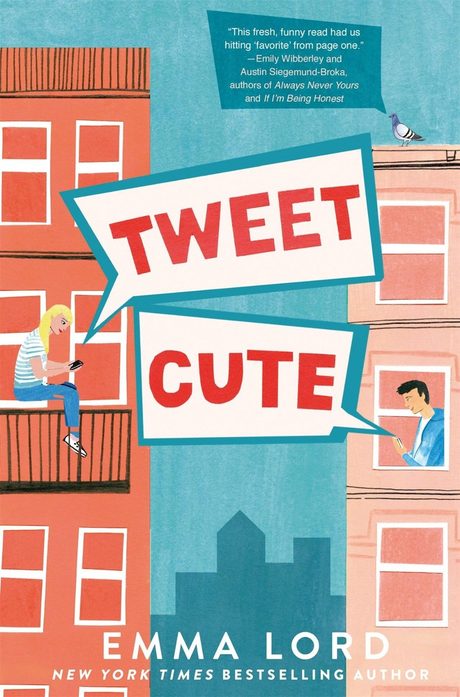
Age fit 12+ / rereads at 30: no
Tweet Cute
Emma Lord2020about 354 pages
Two classmates run their families' rival food accounts online and start a very public fight about a grilled cheese.
Pepper's family runs a fast food chain and has handed her the social media account. Jack's family owns a small New York deli that insists the recipe was stolen from them, and he is running their replies. Neither knows who the other is online, which is the anonymous correspondence setup rebuilt with a school messaging app. The food writing is good, Jack's twin brother subplot is better than the romance, and the pressure Pepper's mother puts on her is drawn with real sympathy.
Why it is at 11
Eleventh because the gimmick is fun and the book knows exactly how long to run it before it wears out. This is the lightest thing on the list, aimed squarely at younger teenagers, and the adults are mostly cardboard. As a gateway book for somebody who does not read, it does the job very well.
Read it ifyou want fast, funny and low stakes
Skip it ifyou want depth, because this is a snack rather than a meal
light, online, quickBest for: younger teenagersrivalsfoodsocial media
12

Age fit 13+ / rereads at 30: no
My So-Called Bollywood Life
Nisha Sharma2018
A pandit named her future husband at her birth, and she has been organising her whole life around that prediction.
Winnie Mehta is a film obsessive who runs her school's movie festival and believes the birth chart that names the man she will marry, down to the first letter. Then her boyfriend cheats, the prophecy starts looking unreliable, and Dev, who argues with her about films constantly, becomes the complication. Sharma builds the entire book out of Hindi film architecture, so the plot turns where a film would turn, including a proper interval-shaped reversal in the middle.
Why it is at 12
Twelfth because the Bollywood scaffolding is a genuinely original idea and the execution only occasionally matches the concept. Winnie is difficult to like in places, which I respect more than I enjoyed. An Indian reader will get roughly twice as much from this as anyone else will, and that alone earns it a spot here.
Read it ifyou grew up on Hindi films and want that woven into the plot
Skip it ifyou have never watched Bollywood, because half the jokes will pass you by
filmi, bright, referentialBest for: hindi film fansindian americanbollywoodschool
13
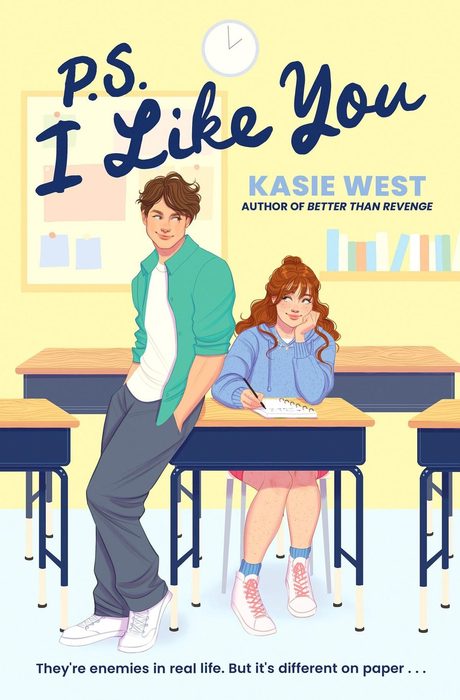
Age fit 12+ / rereads at 30: no
P.S. I Like You
Kasie West2016about 313 pages
Two students trade anonymous notes on a chemistry desk all term, and neither works out who the other is.
Lily writes songs, has no money, and lives in a loud house full of siblings, so she is bored in chemistry and scribbles a lyric on the desk. Somebody answers. The correspondence runs for weeks and becomes the most honest conversation either of them is having, while in the classroom Lily is busy disliking the obvious candidate. West writes clean contemporary romance with no explicit content anywhere, and the family here is warm rather than a set of obstacles to escape.
Why it is at 13
Thirteenth because it is the gentlest book on this list and it is competent rather than surprising. You will guess the identity long before Lily does, and the book is not really trying to hide it. For a younger reader, or a parent buying a first romance for a thirteen year old, this is the lowest risk purchase here.
Read it ifyou want a clean, sweet, note-passing romance with a warm family
Skip it ifyou want stakes or a twist, because there are none on offer
clean, sweet, easyBest for: first romance readersepistolaryclean romanceschool
14

Age fit 13+ / rereads at 30: yes, for the mothers
The Summer I Turned Pretty
Jenny Han2009about 306 pages
The same beach house every summer with the same two brothers, until the summer both of them finally look at her properly.
Belly has spent every summer of her life at Cousins Beach with her mother's oldest friend and that friend's two sons, Conrad and Jeremiah. This year she is sixteen and something has shifted. The love triangle is the engine, and it is the reason the internet still argues about this series, but the part that lasts is the friendship between the two mothers and the thing the adults are carefully not discussing in front of the children.
Why it is at 14
Fourteenth as a romance and considerably higher as a book about a family. The triangle is frustrating by design, Belly is written as an actual teenager rather than a wise one, and Conrad's behaviour would irritate anybody over twenty five. Read it for the summers, and for what the mothers are holding while the teenagers squabble.
Read it ifyou want beach summers and a triangle you will take sides in
Skip it ifyou need a resolution, because this is the first of three books
summery, nostalgic, achingBest for: series readerslove trianglebeachseries
Heads up: cancer in the family
15
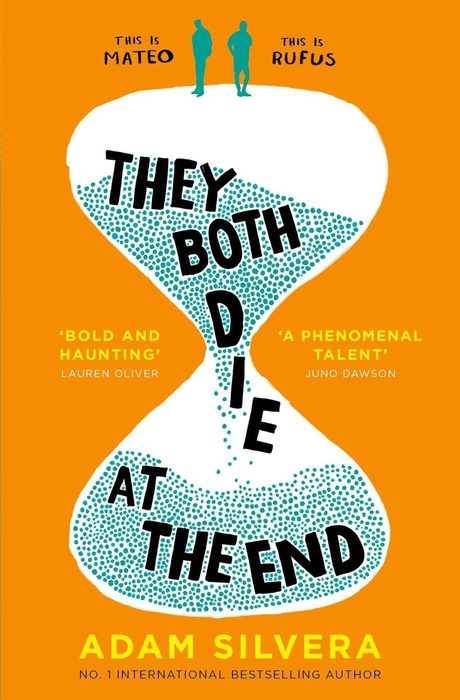
Age fit 14+ / rereads at 30: yes
They Both Die at the End
Adam Silvera2017about 265 pages
Two strangers learn they have a day left to live, so they use an app to find somebody to spend it with.
In a version of New York where a service phones you at midnight to say this is your last day, Mateo and Rufus both get the call and find each other through an app built for exactly that purpose. Mateo has spent his life indoors being careful. Rufus is grieving and in trouble with people who are looking for him. The day the two of them spend together is the entire book, and the title removes the suspense deliberately, so you watch rather than hope.
Why it is at 15
Fifteenth on romance and very high on everything else. This is barely a love story, because the two of them get one day, so what grows is a mixture of friendship, panic and tenderness rather than a relationship with a future. It is on the list because teenagers name it constantly when asked about YA romance, and because it will take you apart.
Read it ifyou want a premise that removes all suspense and hurts more because of it
Skip it ifyou want a couple with a future, because the title is not a metaphor
urgent, sad, tenderBest for: readers who want a cryqueer romanceone dayspeculative
Heads up: death, grief, gang violence
16

Age fit 14+ / rereads at 30: no
The Fault in Our Stars
John Green2012about 337 pages
The book everybody names first, and the one that changes most between fifteen and thirty.
Hazel has thyroid cancer and lungs that do not work properly, and she meets Augustus at a support group in a church basement she attends under protest. They bond over a novel that stops mid-sentence and talk their way to Amsterdam to confront its author about the ending. Green writes teenagers who speak in finished paragraphs, which is either the charm or the problem depending on your age, and he is genuinely hard on the idea that sick children exist to inspire healthy adults.
Why it is at 16
Last, and still worth reading. At fifteen this book feels like the truest thing ever written. At thirty the dialogue sounds like a clever adult doing an impression of teenagers, and the Amsterdam section creaks audibly. Since the whole list is ranked on how a book survives the reread, that puts it here rather than in the top five where its reputation would place it.
Read it ifyou are fifteen, or you want to understand why everybody quotes it
Skip it ifcancer stories are sitting too close to your own life right now
smart, sad, quotableBest for: first-time criersillnessgriefmodern classic
Heads up: terminal cancer, death of a teenager
Worth knowing
The reread test, and what passes it
Take any YA romance you loved at sixteen and read forty pages of it now. The ones that fall apart are the ones where the crush was the entire structure, because at thirty you can see the machinery: the misunderstanding that exists only to fill chapters, the parents who are absent so the plot can happen. The ones that survive built something underneath the romance, usually a family. Ari's father in the Sáenz, the two mothers in the Jenny Han, Eleanor's stepfather in the Rowell.
That is why the ranking here looks unusual next to the bestseller charts. The Fault in Our Stars is at sixteen not because it is bad but because its pleasures are age-locked, and Aristotle and Dante is first because a thirty five year old reading it on a Sunday afternoon will get more from it than a teenager will. If you are buying for a teenager, read the age fit line and ignore my ranking. If you are buying for yourself, the ranking is the whole point.
Worth knowing
Age fit, spelled out
Twelve plus means clean: no sex on the page, mild language, nothing frightening at home. That is Tweet Cute and P.S. I Like You. Thirteen plus means kissing, some swearing, and one serious subject handled carefully, which covers most of the middle of this list. Fifteen plus means the book deals with abuse, assault or grief directly enough that a younger reader should not meet it alone.
None of these are explicit in the way adult romance is explicit, so if you are a parent worrying about that specifically, you can relax about all sixteen. The thing worth checking is the content note rather than the heat level. Eleanor & Park is the one I would read first before passing on, because the house Eleanor lives in is genuinely frightening and the racial descriptions have aged poorly.
People also ask
Questions, answered
What is the best YA romance book of all time?
Aristotle and Dante Discover the Secrets of the Universe, at number one here, and the reason is simple: it is the only one that gets better when you are older. The romance is slow and mostly unspoken, and underneath it is a portrait of a family that will not talk about the hard things. If you want the most fun rather than the best, Simon vs. the Homo Sapiens Agenda is the answer, and it takes an afternoon.
What YA romance should a 13 year old read?
P.S. I Like You by Kasie West is the safest first pick: clean, gentle, anonymous notes in chemistry class, a warm family and nothing a parent needs to discuss afterwards. Tweet Cute works for the same age and is funnier. When Dimple Met Rishi suits a thirteen year old who wants something with a bit more substance, and it has the advantage of an Indian household written from the inside rather than explained from outside.
Are there YA romance books with Indian or South Asian characters?
Four on this list. When Dimple Met Rishi and The Love Match both build their plots around family matchmaking, one Indian American and one Bangladeshi American. My So-Called Bollywood Life runs on Hindi film structure and rewards anybody who grew up on those films. The Henna Wars gives you a queer Bangladeshi Muslim lead in Dublin and a real argument about cultural appropriation. Start with Menon, then Taslim, then Jaigirdar.
Do adults read YA romance?
Constantly, and mostly quietly. The appeal is not simplicity, it is intensity: YA is one of the few places where a first kiss is allowed to matter as much as it actually did. The books that hold up for adult readers are the ones on the top half of this list, where the family and the setting are as well built as the couple. The ones aimed hard at fourteen year olds will feel thin, and that is a fair trade rather than a failure.
Which YA romance books have no explicit content?
P.S. I Like You and Tweet Cute are the cleanest, with nothing beyond kissing and no strong language worth flagging. When Dimple Met Rishi, Better Than the Movies and The Love Match are all safe for a young teenager too. Nothing on this list is explicit by adult romance standards. The books to check before buying are Eleanor & Park and I'll Give You the Sun, not for sex but for abuse and assault in the story.
Is The Fault in Our Stars still worth reading?
Yes, once, and preferably before you turn twenty. It is ranked last here because the list measures how a book survives a reread and this one does not: the dialogue that sounds brilliant at fifteen sounds performed at thirty. What holds up is the anger, particularly the passages about what a dying child does to the parents. If you have never read it, read it. If you loved it at school, keep the memory.
Before you go
What to read tonight
If you are buying for a teenager tonight, work off the age fit line rather than my ranking, and when in doubt take P.S. I Like You for a younger reader or When Dimple Met Rishi for anybody thirteen and up. If you are buying for yourself and you feel slightly odd about it, start with Aristotle and Dante and that feeling will be gone by page forty.
After three or four of these the pattern gets visible, and the fix is to change what the book is really about underneath the romance. Grief in the Painter, immigration in the Yoon, money in the Taslim, a frightening house in the Rowell. Pick the underneath first and the couple will look after itself.
Keep going
Lists that pair with this one
Mood & Life
19 Best Coming of Age Novels, and the Right Age to Read Each
Every one of these has a window when it lands hardest, so I marked all nineteen and ranked them by how long that window stays open.
Romance
Sad Romance Books That Make You Cry: 16, Tissue Rated
Every book gets a tissue count out of five and a hurt type, because grief, bad timing and a terminal diagnosis do not damage you the same way.
Trending
The 15 Best Romantasy Books, Ranked by Romance to Fantasy Ratio
Fifteen books arranged from almost all romance to almost all fantasy, with an honest spice note on each, so you land in the right one first time.
Romance
The 25 Best Indian Romance Novels, Ranked Honestly (2026)
Comfort reads, campus tearjerkers, comedies and literary heavyweights, ranked with labels, quick picks and honest skip-it warnings.
Romance
12 Fake Dating Books Where the Pretending Stops Working
Ranked by the only thing that makes this trope work: how good the reason to keep lying actually is.