I have cried at four books in my adult life and I have lied about two of them. The last one got me on a flight from Ahmedabad, which is the worst possible venue, because there is nowhere to look and the man in 14C keeps glancing over to check whether you are having a medical event.
Here is the thing I want you to know before you buy any of these. There are two kinds of sad in this genre. Earned sad is when the writer builds two people so completely that losing one of them takes something out of you, and engineered sad is when a character is issued a terminal illness in chapter three purely to make the last act work. Both will make you cry. Only one of them leaves anything behind the next morning, and quite a few famous titles are the second kind while being marketed as the first.
So every book below carries two labels: a tissue count out of five, which is my own reading and nobody else's, and a hurt type, which says where the pain actually comes from. Timing, illness, guilt, memory, duty, class. The list runs from the most devastating down to the merely damp, sixteen books, one Indian, content notes on all of them because this genre hides suicide and domestic violence behind soft-focus covers.
How I picked these
- The tissue count is mine, based on my own reading, and the number measures damage rather than quality. Two books here made me cry and did not earn it.
- The hurt type matters more than the number: bad timing hurts people differently than a terminal diagnosis, and you probably know which one you can currently handle.
- Content notes on every entry, no exceptions, because sad romance is the genre most likely to ambush a reader with suicide, illness or abuse.
- The love has to be built before it is broken. I cut several books where the couple is thin and the death is doing all the work.
- Left out on purpose: A Little Life, which is not a romance and is a different kind of ordeal altogether, and anything where a dog dies, because that is a separate list and a separate crime.
The whole list at a glance
All 16 books, in order
| # | Book | Author | Year | Vibe | Best for |
|---|
| 1 | One Day | David Nicholls | 2009 | witty, then merciless | readers who want quality with the tears |
| 2 | Atonement | Ian McEwan | 2001 | controlled, cold, devastating | readers of literary fiction |
| 3 | The Song of Achilles | Madeline Miller | 2011 | mythic, tender, doomed | readers who like retellings |
| 4 | Never Let Me Go | Kazuo Ishiguro | 2005 | quiet, English, chilling | readers who like literary fiction |
| 5 | Me Before You | Jojo Moyes | 2012 | warm, funny, heavy | readers who want a debate |
| 6 | The Time Traveler's Wife | Audrey Niffenegger | 2003 | inventive, aching, strange | science fiction readers |
| 7 | Norwegian Wood | Haruki Murakami | 1987 | quiet, rainy, sensual | readers in their twenties |
| 8 | Call Me by Your Name | Andre Aciman | 2007 | sensual, intense, wistful | readers over thirty |
| 9 | PS, I Love You | Cecelia Ahern | 2004 | warm, irish, tearful | readers who want hope after |
| 10 | The Fault in Our Stars | John Green | 2012 | smart, sharp, sad | teenagers and their parents |
| 11 | I Too Had a Love Story | Ravinder Singh | 2008 | plain, sincere, heavy | readers new to books |
| 12 | Normal People | Sally Rooney | 2018 | spare, cool, bruising | readers in their twenties |
| 13 | Five Feet Apart | Rachael Lippincott | 2018 | young, bright, sad | teenage readers |
| 14 | A Walk to Remember | Nicholas Sparks | 1999 | gentle, retro, sincere | younger readers |
| 15 | The Notebook | Nicholas Sparks | 1996 | sentimental, broad, familiar | a rainy afternoon |
| 16 | Love Story | Erich Segal | 1970 | short, dated, effective | one evening |
The list
The books, ranked
1

5 tissues / hurt: timing
One Day
David Nicholls2009about 450 pages
Twenty years of two people missing each other by inches, and one chapter readers still refuse to talk about.
Emma Morley and Dexter Mayhew spend the night together after graduation in Edinburgh, and the book then visits them on the same date every year for two decades. She writes and waits tables. He drinks and presents late night television badly. The years accumulate in the gaps between chapters, which is exactly where the damage lives, because you can see what the two of them are wasting long before either can. Nicholls stays funny for two hundred pages so that you are completely unarmed when the tone shifts.
Why it is at 1
First because the sadness here comes from randomness rather than illness or fate, and randomness is the one you cannot brace against. Nothing is properly foreshadowed and anybody who says they saw it coming is performing. It is also the best written of the big weepies, so you cry and then respect the book, which is not true of everything below.
Read it ifyou want funny for hours and then flattened without warning
Skip it ifyou hate feeling ambushed by a writer you had started to trust
witty, then mercilessBest for: readers who want quality with the tearstimingbritishdual pov
Heads up: sudden death, alcoholism, infidelity
2
5 tissues / hurt: guilt
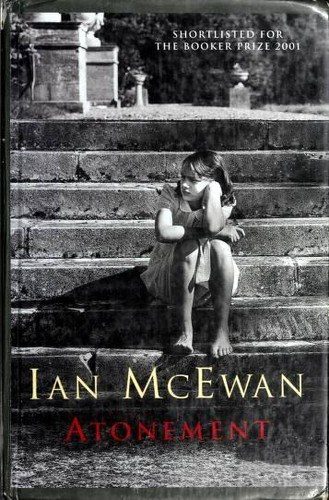
Atonement
Ian McEwan2001about 500 pages
A thirteen year old misreads what she sees on a hot afternoon, tells one lie, and two adults pay for the rest of their lives.
In 1935, on the hottest day of an English summer, Briony Tallis watches something pass between her older sister Cecilia and Robbie Turner, the housekeeper's son, and understands none of it. Then she lies to the police. The novel follows the cost of that lie through the war, a retreat to Dunkirk and a London hospital ward, before its final section quietly reframes everything you have read. The love story itself survives on a handful of letters and one meeting in a cafe, which is all McEwan needs.
Why it is at 2
Second because this grief is manufactured by a child and settled by adults, which is a colder and more permanent kind of hurt than any diagnosis. The last twenty pages pull off the cruellest move in modern English fiction, and unlike most literary tricks it is fully earned. Read it if you want to cry and feel intellectually mugged in the same sitting.
Read it ifyou want a love story wrecked by class, war and one sentence
Skip it ifyou need the narrator to be honest with you throughout
controlled, cold, devastatingBest for: readers of literary fictionwarguiltclass
Heads up: sexual assault, wartime injury and death
3

5 tissues / hurt: fate
The Song of Achilles
Madeline Miller2011about 368 pages
The Iliad told by the boy who loved Achilles, which means the whole book is a countdown you cannot stop.
Patroclus is an exiled prince, small and unimpressive, sent to the court of Peleus, where he becomes the constant companion of Achilles, the golden son everyone already knows is destined to be the greatest of the Greeks. Miller retells the war from Patroclus's side, so the fighting sits in the background and the relationship is the actual text. You already know how this ends and so does anybody who sat through the Iliad in school, which is precisely why the four hundred pages of hoping otherwise work so well.
Why it is at 3
Third because inevitability is its own kind of torture. Every warm scene is being read by someone who knows what Troy does to these two, so the happiness itself becomes unbearable, which is a rare achievement. It sits below Atonement only because the prose occasionally goes soft, and that is a small complaint against a book this good at ruining people.
Read it ifyou want myth, war and a love story you can see the end of
Skip it ifGreek names and battle politics put you off
mythic, tender, doomedBest for: readers who like retellingsqueer romancegreek mythretelling
Heads up: war violence, slavery, a rape referenced offstage
4

5 tissues / hurt: resignation
Never Let Me Go
Kazuo Ishiguro2005about 305 pages
Three friends grow up at an English boarding school that is not a school, and the love story arrives far too late to help.
Kathy narrates her childhood at Hailsham, a country boarding school with strange rules about art and health, and her long friendship with gentle, difficult Tommy and sharp, jealous Ruth. Slowly, and without ever raising its voice, the novel tells you what these children are for. Ishiguro keeps the tone nostalgic and polite throughout, which is what makes it unbearable, because nobody in the book rebels or runs. They simply live their allotted lives, and Kathy and Tommy work out what they mean to each other years after it could have mattered.
Why it is at 4
Fourth because it does something no other book here attempts: it removes the possibility of rescue and then asks you to watch anyway. There is no villain and no escape plan, only two people asking politely for a little more time. The famous scene near the end, in a room with a woman who used to run the school, is as cold as fiction gets.
Read it ifyou want a love story inside a quiet piece of science fiction
Skip it ifyou need characters who fight back, because acceptance is the whole subject
quiet, English, chillingBest for: readers who like literary fictiondystopialiteraryfriendship
Heads up: organ donation, medical exploitation, early death
5
5 tissues / hurt: choice
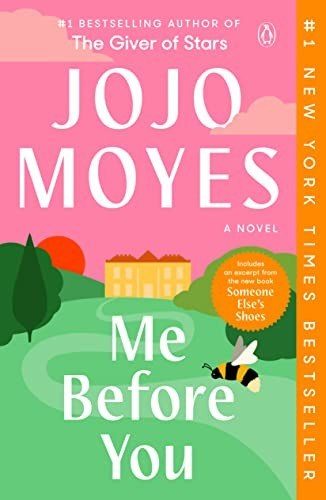
Me Before You
Jojo Moyes2012about 629 pages
She is hired for six months to look after a man who has already decided how those six months end.
Louisa Clark loses her cafe job in a small English town and takes work as a companion to Will Traynor, a wealthy former adrenaline junkie who is quadriplegic after an accident and is unrecognisable to himself. She is chatty and badly dressed and completely out of her depth. He is sarcastic and unreachable. Moyes writes the class gap and the daily practicalities of care with more attention than most novels manage, and the argument at the centre of the book is about autonomy rather than romance.
Why it is at 5
Fifth for pure crying volume, with a caveat that matters. Many disabled readers have argued the book treats a disabled life as one worth ending, and that criticism is fair enough to sit right here in the entry rather than be tidied away in a footnote. It works on you regardless, and you should know what you are agreeing to before it does.
Read it ifyou want a genuine argument inside your weepie
Skip it ifassisted dying as a plot engine is not something you want to spend a week inside
warm, funny, heavyBest for: readers who want a debatedisabilityclasscare
Heads up: assisted dying, disability, grief
6

4 tissues / hurt: absence
The Time Traveler's Wife
Audrey Niffenegger2003about 562 pages
A marriage where one person keeps disappearing out of the present without warning, and the other keeps setting the table.
Henry has a genetic disorder that yanks him out of his own timeline and drops him, without clothes or warning, into other years of his life. Clare grows up meeting him as an adult who already knows her, then marries the younger version who does not. The novel is stamped with dates and alternating voices, and the science fiction is really a machine for writing about waiting: the empty chair, the missed appointments, the loss you can see coming down the calendar towards you.
Why it is at 6
Sixth because the hurt is spread thin across hundreds of pages rather than delivered in one blow, which some readers find worse. The last section is genuinely hard to get through. It is held out of the top four by the early timeline, where a grown man meets his future wife as a child, a choice the book never fully answers for.
Read it ifyou want a marriage novel wearing a science fiction coat
Skip it ifthe age dynamics in the early timeline will nag at you the whole way
inventive, aching, strangeBest for: science fiction readerstime travelmarriageabsence
Heads up: miscarriage, an adult meeting his future wife as a child
7

4 tissues / hurt: depression
Norwegian Wood
Haruki Murakamitranslated by Jay Rubin1987about 340 pages
A student in 1960s Tokyo loves a girl who is disappearing into her own illness, while another girl waits impatiently for him to live.
Toru Watanabe hears a Beatles song on a landing plane and drops back into his student years, when his closest friend killed himself at seventeen and left behind Naoko, the girl they had both grown up around. Toru circles her through sanatorium visits and long letters while Midori, funny and impatient and entirely alive, offers him a different future. This is Murakami at his plainest, no talking cats, just Tokyo rain, cheap apartments and the specific loneliness of your early twenties.
Why it is at 7
Seventh because it does not build to a single scene that breaks you. The sadness is ambient, a low hum for three hundred pages, and it tends to arrive properly two days after you finish. If your own sadness is currently the quiet kind rather than the acute kind, this is the most accurate book on the list about how that feels.
Read it ifyou want grief written coolly rather than loudly
Skip it ifyou are in a fragile place around suicide, because it is central here
quiet, rainy, sensualBest for: readers in their twentiestranslatedjapanmental health
Heads up: suicide, mental illness, explicit sex
8
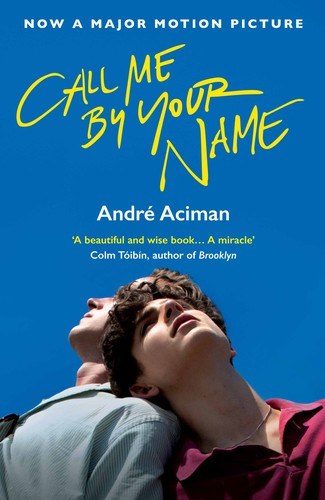
4 tissues / hurt: regret
Call Me by Your Name
Andre Aciman2007
Six weeks in Italy at seventeen, and then a lifetime of measuring everything against them.
Elio spends the summer at his family's house on the Italian coast, where his father hosts a young academic each year. This time it is Oliver, and Elio catalogues every glance, every silence and every humiliation in obsessive detail. Aciman writes desire with an accuracy that is almost embarrassing to read, and the book does not end when the summer does. It skips forward, twice, and the final section is where most readers discover they have been holding their breath since page two hundred.
Why it is at 8
Eighth because the pain is retrospective rather than immediate. Nobody dies of an illness here, they simply grow up and choose other lives, and the book keeps returning to the question of what a person forfeits by being careful. The last twenty pages are the crying section, and they land hardest on readers over thirty.
Read it ifyou have ever wondered what a different decision would have cost you
Skip it ifyou want plot, because this is desire recorded at very high resolution
sensual, intense, wistfulBest for: readers over thirtyqueer romanceitalyregret
Heads up: explicit sex, an age and power gap between the leads
9
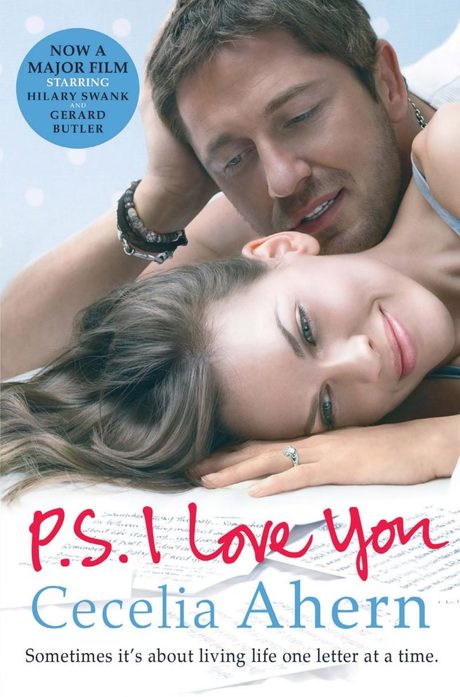
4 tissues / hurt: widowhood
PS, I Love You
Cecelia Ahern2004about 516 pages
A thirty year old widow gets ten letters from her dead husband, one a month, each one pushing her back outside.
Holly loses Gerry to a brain tumour before either of them turns thirty five, and afterwards a package arrives: ten envelopes he wrote while he was dying, to be opened one a month, each carrying an instruction: buy a lamp, sing in public, take the holiday they never took. The Dublin setting keeps it grounded, the friends and family are drawn as actual people rather than a support chorus, and the comedy runs alongside the grief instead of politely waiting for it to finish.
Why it is at 9
Ninth because the structure does something clever with the crying: you get eleven small hits instead of one big one, and the last letter is brutal. It is more sentimental than anything above it and the writing is ordinary in places, which is exactly why it works for readers who find literary grief too cold to be useful.
Read it ifyou want grief that is also funny, and a heroine rebuilding
Skip it ifyou have recently lost a partner, because this is very close to the bone
warm, irish, tearfulBest for: readers who want hope afterwidowhoodirelandgrief
Heads up: terminal illness, bereavement
10

4 tissues / hurt: illness
The Fault in Our Stars
John Green2012about 337 pages
Two teenagers with cancer fall in love and refuse to be inspirational about any of it.
Hazel Grace Lancaster carries an oxygen tank and attends a support group she despises, where she meets Augustus Waters, who is charming in a slightly rehearsed way and has lost a leg to the same category of bad luck. They bond over a novel with no ending and get themselves to Amsterdam to demand one from its author. Green writes teenagers who talk in paragraphs, which annoys some readers and delights others, and the book is very hard on the idea that illness makes people noble.
Why it is at 10
Tenth because it makes almost everybody cry and the machinery is visible while it happens. The dialogue is too polished for real seventeen year olds and the Amsterdam section strains, but the anger underneath is real, and the passages about what a dying child does to parents are the best thing in it. It earns the tissues, just not the top five.
Read it ifyou want teenage voices that refuse to be brave for your benefit
Skip it ifcancer storylines are currently too near your own life
smart, sharp, sadBest for: teenagers and their parentsyaillnessgrief
Heads up: terminal cancer, death of a young person
11

4 tissues / hurt: real loss
I Too Had a Love Story
Ravinder Singh2008about 202 pages
The Indian matrimonial site romance that a generation of engineers read in one night and never quite got over.
Ravin, a software engineer in Bangalore, meets Khushi through a matrimonial website, and the courtship happens in phone calls, chat windows and a few supervised meetings with both families involved. It is written plainly, almost like a diary, with no literary ambition anywhere in it. Then the story turns, and the last third is a man writing down something that actually happened to him. The book's power comes entirely from that fact, which is also the reason it should be handled carefully.
Why it is at 11
Eleventh, and the highest Indian entry, because this is the book that made a whole cohort of non-readers in India read something. The prose is basic and I am not going to pretend otherwise. The grief is not basic, and there is a particular kind of sadness in the ordinariness of the writing that a better stylist could not have produced.
Read it ifyou want an Indian loss story told without any decoration
Skip it ifyou need good sentences, because these are functional
plain, sincere, heavyBest for: readers new to booksindian romancetrue storygrief
Heads up: sudden death, a road accident
12
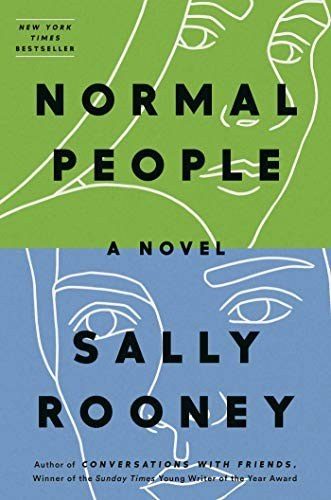
3 tissues / hurt: class
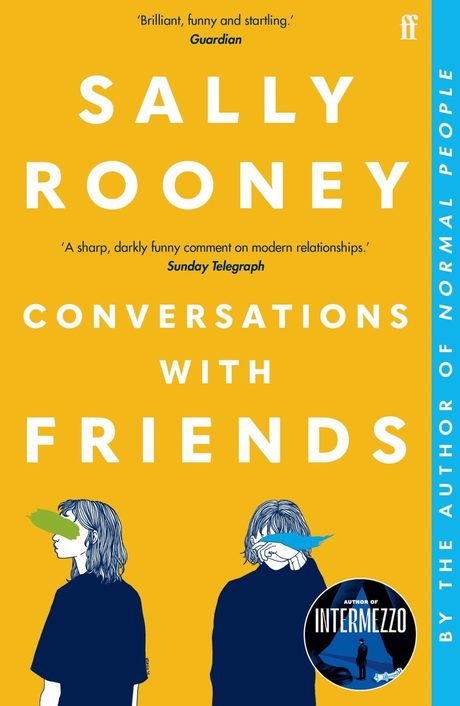
Normal People
Sally Rooney2018about 300 pages
Two clever people from the same small Irish town who keep failing to say the one sentence that would fix it.
Connell is popular at school and poor at home, where his mother cleans Marianne's house. Marianne is rich, friendless and difficult. They start something in secret, he hides it, and at university the social order flips and the whole pattern runs again in reverse. Rooney writes with no quotation marks and almost no scenery, and the book is about how class works inside a bedroom: who is allowed to want things out loud, and who has learned to accept less than they need.
Why it is at 12
Twelfth because it hurts rather than wrecks. Nobody dies, and the pain is the recognisable domestic kind: two people who could be happy in about four sentences and never manage to say them. Its ranking here is about tissue count, not quality. If you want a book to make you uncomfortable rather than tearful, move it to number one.
Read it ifyou want painful accuracy about miscommunication and class
Skip it ifyou need a resolution, because this ends where it ends
spare, cool, bruisingBest for: readers in their twentiesirelandclassliterary
Heads up: abuse in the family home, depression, self-harm
13
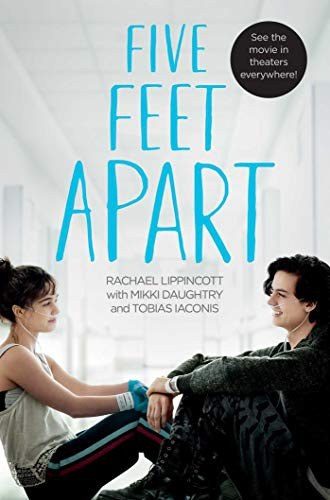
3 tissues / hurt: distance
Five Feet Apart
Rachael Lippincott2018
Two teenagers with cystic fibrosis fall for each other in a hospital where touching could kill either of them.
Stella runs her treatment schedule like a project manager and posts about it online. Will has given up on his and is only in the hospital because his mother enrolled him in a drug trial. Both have cystic fibrosis, which means hospital rules keep them six feet apart at all times, and the book's central act of rebellion is stealing back one of those feet. It was published alongside the film, and it reads that way, with short chapters and scenes built for the screen.
Why it is at 13
Thirteenth because the premise is stronger than the writing. The physical distance is a genuinely good idea for a teenage romance, since the longing has a measurable unit, and the medical detail about cystic fibrosis is taken seriously. The prose is thin and the emotional beats arrive on schedule, so you cry on cue rather than by ambush.
Read it ifyou want a teenage hospital romance with a clever central rule
Skip it ifyou found The Fault in Our Stars manipulative, because this is that with less wit
young, bright, sadBest for: teenage readersyaillnesshospital
Heads up: chronic illness, death of young people, transplant surgery
14
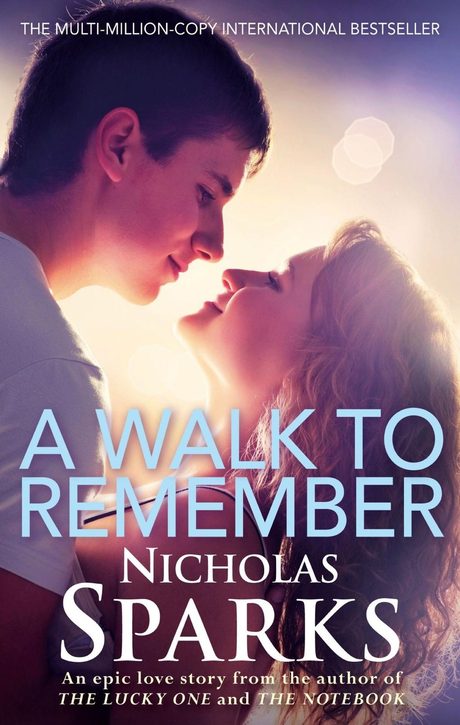
3 tissues / hurt: illness
A Walk to Remember
Nicholas Sparks1999about 130 pages
A small-town troublemaker in 1950s North Carolina falls for the minister's daughter, who has a secret and a Bible.
Landon Carter narrates from middle age, looking back at his final year of school, when he needed a partner for the school play and ended up with Jamie Sullivan, who carries a Bible everywhere and volunteers at the orphanage and is not remotely embarrassed about either. The romance is chaste, the town is drawn with real affection, and the faith in it is treated seriously rather than as decoration. It is short, simple and completely honest about what it wants to do to you.
Why it is at 14
Fourteenth because it is the most efficient tearjerker of the three Sparks-era books here and the least cynical. Jamie is written as a person with convictions rather than a saintly device, which is more than the genre usually manages. The tissue count is only three because you see it coming from the first chapter and the book never pretends otherwise.
Read it ifyou want an old-fashioned, chaste, small-town weepie
Skip it ifreligion in fiction irritates you, because it is central here
gentle, retro, sincereBest for: younger readersyaillnessfaith
Heads up: terminal illness in a teenager
15
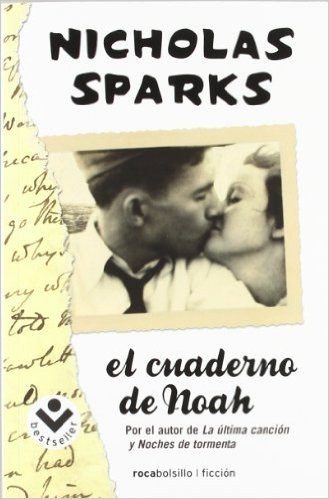
3 tissues / hurt: memory
The Notebook
Nicholas Sparks1996about 246 pages
An old man reads a story aloud to a woman who no longer knows him, hoping she will surface for a few minutes.
In a care home, Noah reads from a notebook to Allie, whose dementia has taken most of what they built. The story inside is a summer in the 1940s when a poor mill worker and a rich girl fell for each other, were separated by her parents, and met again years later, days before her wedding to somebody else. The frame is the good half. Sparks is genuinely sharp on what it is like to lose somebody who is still in the room with you.
Why it is at 15
Fifteenth, split down the middle. The care home sections are quietly excellent and the 1940s romance is thin, with obstacles that dissolve whenever the plot needs them gone. Most readers cry at the frame story and remember the romance, which is a strange trick of memory in itself. Read the film version's fans a little more sceptically than they expect.
Read it ifyou want the dementia frame, which is better than its reputation
Skip it ifyou want a strong central romance, because that is the weaker half
sentimental, broad, familiarBest for: a rainy afternoondementia1940sadapted
Heads up: dementia, ageing, death
16
3 tissues / hurt: illness
Love Story
Erich Segal1970about 229 pages
The book that invented the modern weepie, still short enough to break you before dinner.
Oliver Barrett the fourth is Harvard money and hockey. Jenny Cavilleri is a working class music student at Radcliffe with a sharper tongue than he can handle. They marry against his father's wishes, live on very little, and then the story does the thing that made a hundred later novels possible. It is about a hundred and thirty pages long, the class comedy in the first half is better than anyone remembers, and the most quoted line in it remains genuinely bad advice.
Why it is at 16
Last because everything above it does this better, and it is here because it came first. Read it as a document: this is where the terminal-illness romance template was set, right down to the pacing of the diagnosis. You will cry, you will finish it in one evening, and you will notice how little the book has to do to get there.
Read it ifyou want the original template and only have two hours
Skip it ifyou dislike being played, because the method here is completely undisguised
short, dated, effectiveBest for: one eveningclassicillness1970s
Heads up: terminal illness
Worth knowing
Earned sad and engineered sad
The difference is simple to test. Take the sadness out of the book and ask whether anything is left. Remove the diagnosis from One Day and you still have twenty years of two people being funny and wrong about each other. Remove it from Love Story and you have a short book about a rich boy and his father. Both make readers cry, and only one of them survives the operation.
This is why the top five here are not the ones with the highest body count. Atonement kills fewer people than several books below it and hurts more, because the eighty pages before the damage have done real work. When you are choosing tonight's book, the tissue count tells you how hard you will cry and the hurt type tells you what it will feel like the next morning.
Worth knowing
Reading these while you are actually sad
A crying book can help, and the wrong crying book at the wrong moment can genuinely set you back a week. If you have recently lost somebody, stay away from PS, I Love You and Me Before You for now, however warmly people recommend them. If you are in the middle of a breakup, One Day and Normal People will read like personal correspondence, which some people want and others cannot take.
The safest entries for a fragile week are A Walk to Remember and Five Feet Apart, because both are short, both are gentle, and neither is trying to shock you. Norwegian Wood and Never Let Me Go are the opposite: they are the two most accurate books here about despair and the two least advisable ones to read while you are inside it.
People also ask
Questions, answered
What is the saddest romance book ever written?
For most readers it is One Day, and that is my answer too. The reason is structure rather than subject: because the book checks in once a year for twenty years, you feel time being wasted in a way that no single tragic scene can produce, and then the last third arrives with no warning at all. If you want the saddest ending rather than the saddest book, The Song of Achilles takes it, because you spend four hundred pages hoping the myth has changed.
Which sad romance book should I read first?
Start with One Day if you want the best book, or The Song of Achilles if you want the biggest cry. If you are new to reading generally, start with I Too Had a Love Story or A Walk to Remember, both of which are short and plainly written and get where they are going quickly. Save Atonement for a month when you have some attention to spare, because it needs about eighty pages before it starts working on you.
Are there sad Indian romance novels?
The obvious one is I Too Had a Love Story by Ravinder Singh, which is at number eleven here and turned a lot of Indian non-readers into readers in the late 2000s. It is written plainly, almost like a diary, and the loss in it is real rather than invented, which is where the power comes from. Chetan Bhagat's early novels have sad turns but are not weepies, and Anuja Chauhan writes comedy, not grief.
Do any of these sad romance books have a happy ending?
A few end in something closer to peace than disaster. PS, I Love You closes with the widow rebuilt rather than destroyed, and Normal People ends with a decision that is generous rather than tragic, which is quieter than it sounds. Everything in the top five ends badly for somebody, and Never Let Me Go ends worst of all. If a happy ending is a firm requirement, this is the wrong list, and the enemies to lovers and second chance lists will serve you far better.
Is it a bad idea to read sad books when you are already sad?
It depends on the kind of sad. A book that matches your mood can make you feel less alone with it, and that is the honest reason this genre exists. A book that lands directly on your specific loss can push you further down, so avoid bereavement stories right after a bereavement and abuse storylines if you are living near one. If you are struggling seriously, a novel is company, not treatment, and it should not be the only thing you reach for.
Is the book sadder than the film for these titles?
Usually, and for one particular reason: interior monologue. Me Before You and The Fault in Our Stars both lose their narrator's running commentary on screen, which is where a lot of the pain lives. Atonement is the exception, since the film's ending is nearly as effective as the novel's. The Notebook is the other exception and the film genuinely improves on the book, which almost never happens in this genre.
Before you go
What to read tonight
If you want one book for tonight, take One Day, put your phone in another room, and clear the following morning, because the last section is not something you read on a commute. If you want to cry deliberately and get it over with, The Song of Achilles will do the job in about two evenings and leave you feeling oddly clean afterwards.
And if you have been crying already this week, skip the top of this list entirely. Read A Walk to Remember, which is short and chaste and tells you exactly where it is going, or read nothing sad at all for a while. These books will still be here next month, and the list is ordered so that you can come back and work upward when you can take it.
Keep going
Lists that pair with this one
Mood & Life
16 Books to Read After a Breakup, in the Order You Can Handle Them
Ordered by stage rather than by quality, because handing somebody Wild in week one is like handing a person with fever a plate of biryani.
Romance
14 Romance Novels Men Actually Finish (A Guy's Honest List)
Love stories with plot, jokes, sport and crime in them, ranked by how likely a man who says he does not read romance is to reach the last page.
Books Like
15 Books Like Normal People That Hurt in the Same Quiet Way
Rooney's novel runs on four wires. Every book here carries at least one of them, and I tell you which.
Mood & Life
16 Best Books on Love and Relationships (Science, Not Sermons)
Sorted by the stage you are actually in, single, dating, long-term or repair, with an honest note on which ones have research behind them and which ones only sound like they do.
Romance
The 16 Best YA Romance Books, Ranked by the Reread Test
Every book here gets an age fit and one honest verdict: does it still work when you are thirty and reading it on a Sunday?