I read The Catcher in the Rye at twenty nine, on a delayed flight to Delhi, and spent two hundred pages wanting to tell Holden Caulfield to get a job. Then my cousin read the same paperback at sixteen and went quiet for three days. Same book, same edition, two completely different events.
That is the strange thing about coming of age novels. They are the only books that carry an expiry date printed in invisible ink. Some go stale if you meet them late, because the whole engine runs on feelings you have already finished having. Others do the opposite and get heavier every decade, because you only understand what the child in the book lost once you have lost something yourself.
So every book here carries an age window: the years when it will do the most damage, and whether it fades or grows after that. Seven of the nineteen are Indian, running from a boy bunking school in Malgudi in 1935 to a Bombay flat where a son looks after his mother. The ranking runs on two things, how hard a book hits inside its window and how long the window stays open. A novel you can hand to a fourteen year old and reread at forty beats a novel that owns you for one summer, however good that summer was.
How I picked these
- Every book had to have a nameable age window. Where I could not honestly name one, it came off the list.
- At least a third Indian, by design. A list about growing up that skips Malgudi, an IIT hostel and a Bombay flat is a list about growing up somewhere else.
- All nineteen checked through Google Books and Open Library with real covers and real editions, so nothing here is a ghost paperback.
- The God of Small Things is missing on purpose. It is a novel about a childhood being destroyed rather than a novel about growing up, and shelving it here would tell you something false about what you were buying.
- Fame bought nobody a rank. The most assigned book in the genre finishes last, and I say exactly why.
- I cut novels where the growing up is a subplot. Half of literature has a young protagonist. That does not make it the same genre.
The whole list at a glance
All 19 books, in order
| # | Book | Author | Year | Vibe | Best for |
|---|
| 1 | To Kill a Mockingbird | Harper Lee | 1960 | warm, patient, quietly furious | readers of any age |
| 2 | The Namesake | Jhumpa Lahiri | 2003 | quiet, precise, cumulative | children of migrants |
| 3 | Persepolis | Marjane Satrapi | 2000 | funny, blunt, unsentimental | first time graphic memoir readers |
| 4 | Never Let Me Go | Kazuo Ishiguro | 2005 | calm, English, devastating | anyone who accepted something quietly |
| 5 | English, August: An Indian Story | Upamanyu Chatterjee | 1988 | sardonic, hot, aimless | the newly employed and unimpressed |
| 6 | Norwegian Wood | Haruki Murakami | 1987 | melancholy, rainy, slow | the early twenties heartbreak phase |
| 7 | Em and the Big Hoom | Jerry Pinto | 2012 | funny, raw, loving | adult children of ill parents |
| 8 | The Perks of Being a Wallflower | Stephen Chbosky | 1999 | tender, awkward, sincere | school students and their friends |
| 9 | The Secret History | Donna Tartt | 1992 | cold, elegant, sinister | first year college readers |
| 10 | Purple Hibiscus | Chimamanda Ngozi Adichie | 2003 | controlled, tense, opening | readers from strict households |
| 11 | The Bell Jar | Sylvia Plath | 1963 | cold, witty, claustrophobic | high achieving twenty somethings |
| 12 | Swami and Friends | R. K. Narayan | 1935 | gentle, dry, exact | children and nostalgic adults |
| 13 | Little Women | Louisa May Alcott | 1868 | warm, busy, moralising | young readers and rereaders |
| 14 | Great Expectations | Charles Dickens | 1861 | gothic, guilty, grand | patient classic readers |
| 15 | The Room on the Roof | Ruskin Bond | 1956 | sunlit, restless, kind | Indian teenagers |
| 16 | Fasting, Feasting | Anita Desai | 1999 | still, sharp, suffocating | readers with unmarried aunts |
| 17 | The Outsiders | S. E. Hinton | 1967 | fast, loyal, teenage | reluctant teenage readers |
| 18 | Five Point Someone | Chetan Bhagat | 2004 | breezy, blunt, hostel | reluctant readers in college |
| 19 | The Catcher in the Rye | J. D. Salinger | 1951 | restless, wounded, mouthy | school leavers |
The list
The books, ranked
1
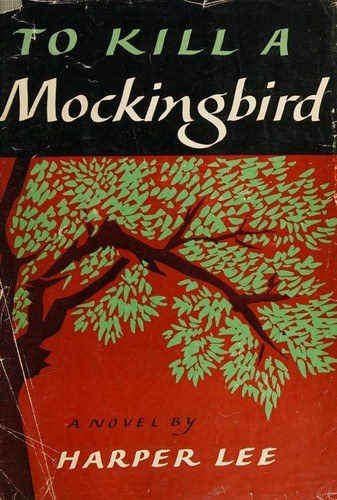
Age window: 12 to forever. Ripens.
To Kill a Mockingbird
Harper Lee1960about 322 pages
A small town lawyer defends a Black man in 1930s Alabama while his daughter watches and learns what her neighbours actually are.
Scout Finch is six when the book opens and nine when it closes, and the whole story arrives through her, which is the trick that makes it work. Her father Atticus takes on the defence of Tom Robinson, a Black man accused of raping a white woman in a town that has already made up its mind. Around that trial sits an ordinary childhood: a treehouse, a strange neighbour, a brother, summer. Reading it feels like being let into a grown up conversation before anyone remembers to send you out of the room, which is how a child first learns that adults are not automatically good.
Why it is at 1
Number one because the window never shuts. At twelve you read it as an adventure with a scary house at the end of the street. At twenty five you notice how patiently Harper Lee builds the town before she breaks it. At forty you see that Atticus loses. Nothing else here works at that many ages without cheating somewhere.
Read it ifyou want one book that works for a child and an adult in the same house
Skip it ifyou need a fast plot, because the first hundred pages are a town being described
warm, patient, quietly furiousBest for: readers of any ageclassicchildhoodcourtroom
Heads up: racial violence and a rape trial, handled without graphic detail
2
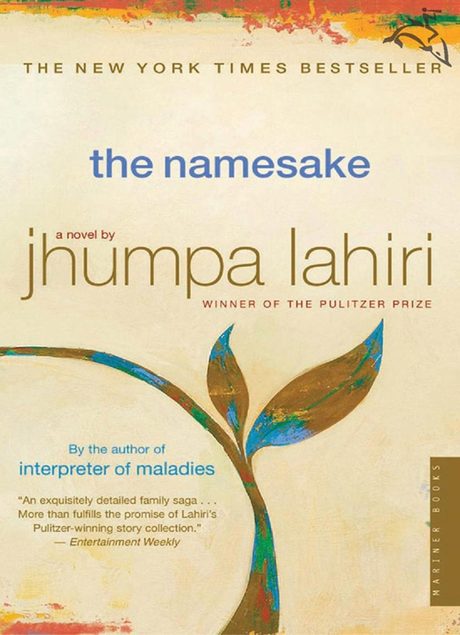
Age window: 18 to 45. Ripens.
The Namesake
Jhumpa Lahiri2003about 312 pages
A boy born in America to Bengali parents spends thirty years fighting the name his father gave him, and the reason behind it.
Ashoke and Ashima move from Calcutta to Massachusetts and have a son they end up calling Gogol, after the Russian writer, for a reason he does not learn until he is grown. The novel follows him from that naming through school, girlfriends, an architecture degree, a marriage and a loss. It is slow in the way a life is slow. Lahiri writes the small humiliations of being an immigrant's child better than anyone I have read: the lunchbox, the accent, the party where your parents are the only people sitting on the floor.
Why it is at 2
Second for what it does to Indian readers specifically, and because the window is enormous. Read it at eighteen and it is about a boy escaping his parents. Read it at thirty five and it turns out to have been about the parents the whole time. Very few novels flip that completely on a second visit.
Read it ifyour family has a story about arriving somewhere with two suitcases
Skip it ifyou want incident and momentum, because this moves at the speed of a decade
quiet, precise, cumulativeBest for: children of migrantsindianimmigrantfamily
Pairs with: Fasting, Feasting, for the sibling who was not allowed to leave
3
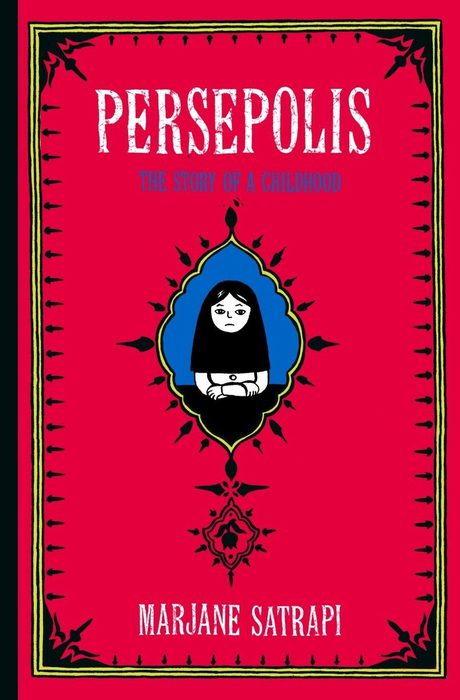
Age window: 13 to forever. Ripens.
Persepolis
Marjane Satrapi2000
A girl grows up in Tehran through revolution and war, drawn in black and white by the woman she became.
Marjane Satrapi was ten when Iran changed, and this is her childhood inside it: a Marxist uncle, a smuggled Iron Maiden tape, a veil she does not understand, air raid sirens, a family that jokes at dinner because the alternative is worse. It is a graphic memoir, black and white, drawn in a flat cartoon style that makes the horror land sideways. You will read fifty pages laughing at a small girl who has decided she will be a prophet, and then a single panel arrives and stops you cold.
Why it is at 3
Third because it does the whole job in about two hours. It is the fastest way into this list, it works for a thirteen year old and a fifty year old with no adjustment at all, and it is the only book here where you watch the growing up happen in the drawing as well as the words.
Read it ifyou want a whole childhood in one sitting and you like being shown, not told
Skip it ifyou have decided comics cannot be serious literature, which is your loss
funny, blunt, unsentimentalBest for: first time graphic memoir readersgraphic memoiriranwar
Heads up: war, executions and the death of a friend, drawn plainly rather than graphically
4

Age window: 17 to forever. Ripens hard.
Never Let Me Go
Kazuo Ishiguro2005about 274 pages
Three friends grow up at an English boarding school that is not a boarding school, and the worst part is how calmly they accept it.
Kathy narrates her own childhood at Hailsham: art classes, rumours, the small cruelties inside a triangle of friends, a teacher who says something she is not supposed to say. What the school is actually for arrives slowly, the way children absorb any enormous fact, which is that they are told and they half hear it and they carry on playing. I will not go past the setup. What I will say is that the dread in this book does not come from the premise. It comes from the obedience.
Why it is at 4
Fourth because it is the one that grows most violently with age. At seventeen it is a sad story about friendship and a secret. At thirty, with a job and a loan and a list of things you were told are simply how life works, it becomes a book about you. That upgrade is why it outranks novels that are more fun to read.
Read it ifyou like dread that arrives politely and then stays for dinner
Skip it ifyou want anger, because nobody here fights back and that is deliberate
calm, English, devastatingBest for: anyone who accepted something quietlyliterarydystopiafriendship
Heads up: the ending is bleak and stays bleak
5
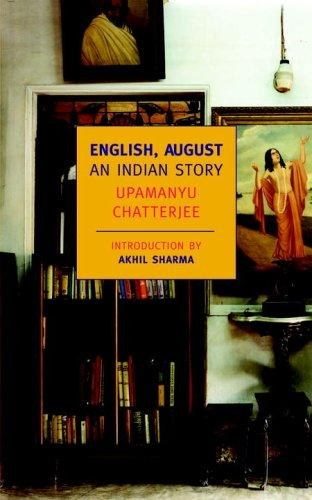
Age window: 21 to 30. Peaks during your first posting.
English, August: An Indian Story
Upamanyu Chatterjee1988
A stoned, sarcastic Delhi boy is posted as a civil servant to a small town and does almost nothing for four hundred pages.
Agastya Sen, called August, clears the civil services exam and is sent to Madna, which he decides is the hottest town in India. He is meant to train, learn the district, meet officials. Instead he lies under a fan, smokes, invents a wife who does not exist, reads Marcus Aurelius badly and thinks about sex and mangoes with equal seriousness. Almost nothing happens, on purpose. It is the funniest Indian novel I know about being twenty four with a good job you cannot make yourself care about.
Why it is at 5
Fifth, and the highest Indian book after The Namesake, because it caught a feeling years before anyone had a phrase for it: educated, employed, comfortable and completely adrift. Read it during your first job and it is almost unpleasant, the way a mirror is unpleasant. Read it a decade later and it turns into nostalgia.
Read it ifyou are in a job you got right and a life you are not sure about
Skip it ifyou need a plot, because there is genuinely no plot here
sardonic, hot, aimlessBest for: the newly employed and unimpressedindiansatirecivil services
Heads up: casual crudeness and steady drug use
6

Age window: 19 to 26. Expires.
Norwegian Wood
Haruki Murakami1987about 340 pages
A Tokyo student in 1969 loves two women, one of them very unwell, and learns that being gentle does not save anybody.
Toru Watanabe hears a Beatles song on a plane and falls twenty years backwards into his student days: a friend who killed himself at seventeen, that friend's girlfriend Naoko who is now in a sanatorium in the hills, and Midori, who is loud and alive and complicates everything. There is no magic in this one, no talking cats, only rain, records, cigarettes and a young man trying to be decent while everything around him comes apart. It moves slowly, it is very sad, and at twenty two it will feel like it was written for you personally.
Why it is at 6
Sixth. Inside its window nothing on this list is more potent, and outside its window plenty of readers find it self indulgent, which is fair. This is the clearest expiry date here. At twenty it is a religion. At thirty five it is a well made book about people you would not want to have dinner with.
Read it ifyou are in your early twenties and something is quietly wrong
Skip it ifyou have no patience for a passive narrator or for sex written earnestly
melancholy, rainy, slowBest for: the early twenties heartbreak phasejapanesegriefstudent life
Heads up: suicide and serious mental illness are central to the story
7

Age window: 20 to forever.
Em and the Big Hoom
Jerry Pinto2012about 212 pages
A son grows up in a one bedroom Bombay flat with a mother whose mind keeps leaving, and he writes it down without asking for pity.
Em is the mother: filthy jokes, chain smoking, sudden warmth, and a bipolar illness that takes her to hospital and sometimes further. The Big Hoom is the father, steady as furniture. The narrator is their son, trying to assemble his mother out of old letters and interrogations, partly because he needs to know whether the illness is coming for him too. The flat is small enough that nobody can hide from anybody. The book is funny far more often than you would expect, and that is exactly what makes the bad days land.
Why it is at 7
Seventh because it is the most honest Indian novel I know about being raised by someone who is ill, and because it never turns the mother into a lesson. It sits below Norwegian Wood only because it is harder to hand to a stranger cold. If there is a person like Em in your family, move it to number one and start tonight.
Read it ifyou grew up managing an adult and nobody around you noticed
Skip it ifmental illness at close range is not something you can read right now
funny, raw, lovingBest for: adult children of ill parentsindianmental healthbombay
Heads up: bipolar disorder, suicide attempts, and a child witnessing both
8
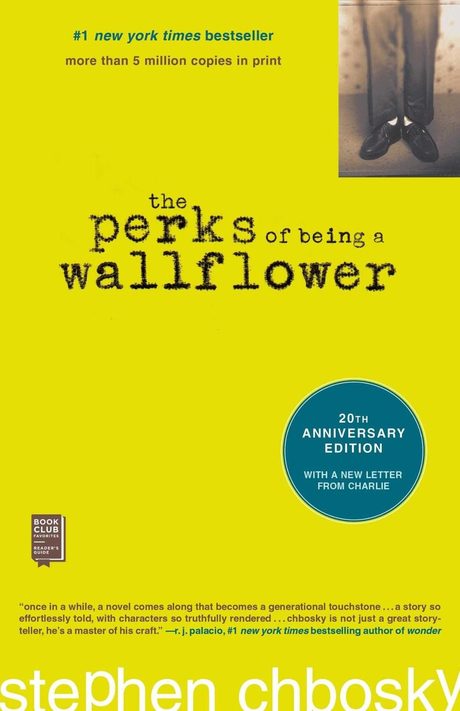
Age window: 14 to 19. Expires.
The Perks of Being a Wallflower
Stephen Chbosky1999about 230 pages
A shy fifteen year old writes letters to a stranger about his first year of real friends, mixtapes, and a memory he has buried.
Charlie is starting high school after a bad year, and he writes unsigned letters to someone he has never met, which is how you get his entire life in his own slightly off voice. He falls in with two seniors, Sam and Patrick, who take him to parties, lend him books and treat him like a person. There are mixtapes, a tunnel, a school dance, and underneath all of it something Charlie is not remembering yet. The writing is simple, almost flat, and that plainness is why it goes straight in.
Why it is at 8
Eighth, and this is a window ranking rather than a quality ranking. Between fourteen and nineteen this book behaves like a friend. After about twenty two the same sentences read thin and the big moments read like posters on a hostel wall. That is not a defect. It was written for a reader still inside the experience.
Read it ifyou are a teenager, or you are buying for one
Skip it ifyou are past twenty five and allergic to earnestness
tender, awkward, sincereBest for: school students and their friendsyaschoolfriendship
Heads up: child sexual abuse, suicide and drug use
9
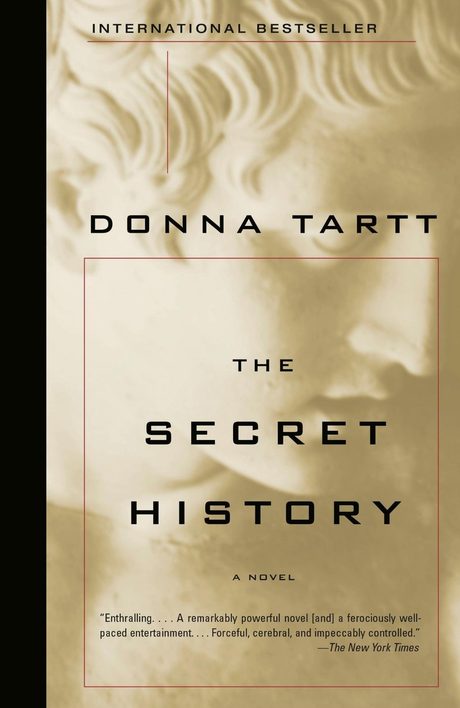
Age window: 18 to 25. Expires slowly.
The Secret History
Donna Tartt1992
A scholarship boy joins five rich Greek students at a Vermont college, and by page one you already know they killed someone.
Richard Papen leaves California, invents a better family for himself, and talks his way into a tiny classics group taught by a professor who picks his students personally. They are beautiful, rude, drunk on Greek and on their own separateness, and Richard would do almost anything to stay inside the circle. The killing is announced in the first paragraph, so the tension is never who or what. It is how ordinary people talk themselves into it. Long, snobbish, full of snow, and addictive in a way I cannot defend on literary grounds.
Why it is at 9
Ninth because it nails one specific version of growing up: the one where you remake yourself to be allowed into a room. It is a first year of college novel wearing a thriller's coat. It ranks here rather than higher because the pleasure fades. At nineteen you want to be them. At thirty you notice they are insufferable.
Read it ifyou want atmosphere, snow and a slow moral collapse
Skip it ifyou dislike unlikeable characters or six hundred page novels
cold, elegant, sinisterBest for: first year college readerscampuscrimeclassics
Heads up: murder, heavy drinking and drug use
10
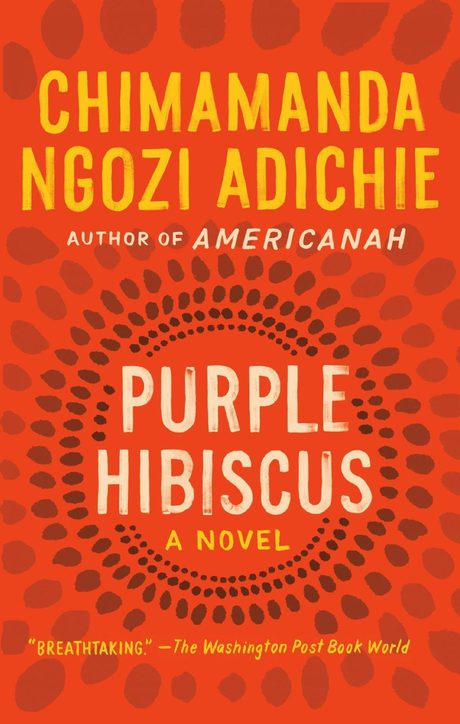
Age window: 15 to 30.
Purple Hibiscus
Chimamanda Ngozi Adichie2003
A fifteen year old girl in Nigeria works out that her devout, respected father is the most frightening thing in her house.
Kambili lives in a large house in Enugu with a timetable for every hour, a brother she loves and a father who is a hero in public and a tyrant at home. Then she and her brother spend a few weeks at their aunt's noisy, poor, laughing house in Nsukka, and that comparison does work no argument could. The prose is plain and steady, and when the violence comes Adichie writes it without music. It is about religion, colonial hangover and a father, but mostly it is about a girl discovering that other houses exist.
Why it is at 10
Tenth because the mechanism travels even though the setting does not. Any reader raised in a strict Indian home will recognise the afternoon you visit a friend's house and understand that your normal was never normal. It is more direct than most books here, which makes it a good choice for a younger reader who finds the classics slow.
Read it ifyou grew up somewhere with rules nobody was allowed to question
Skip it ifdomestic violence on the page is something you avoid
controlled, tense, openingBest for: readers from strict householdsnigeriafamilyreligion
Heads up: domestic violence and religious abuse
11

Age window: 19 to 30.
The Bell Jar
Sylvia Plath1963about 254 pages
A gifted young woman wins a magazine internship in New York, goes home, and watches her own mind close over her.
Esther Greenwood is nineteen, clever, decorated, and in Manhattan for a summer that is supposed to be the start of everything. It is not. She goes home, she cannot sleep, she cannot read, she cannot write, and Plath describes that shutting down with a coldness far worse than melodrama would be. The first half is also genuinely funny about clothes, men and ambitious young women being polite in rooms they hate. The fig tree passage, about choosing one life and losing all the others, is worth the price on its own.
Why it is at 11
Eleventh because it is the sharpest book here about a very particular fear, the fear of being a promising young person, and that fear tends to arrive on schedule. It sits under Purple Hibiscus only because it asks more of the reader emotionally. Do not start it in a bad month. Start it in a steady one and it will explain something to you.
Read it ifyou want the inside of a breakdown described without any drama
Skip it ifyou are in a rough stretch yourself, in which case come back later
cold, witty, claustrophobicBest for: high achieving twenty somethingsclassicmental health1950s
Heads up: suicide attempts, depression and psychiatric treatment described closely
12
Age window: 9 to 14. Ripens as memory.
Swami and Friends
R. K. Narayan1935about 200 pages
A ten year old in a small South Indian town bunks school, starts a cricket team, and takes his tiny world completely seriously.
Swaminathan lives in Malgudi, the town Narayan invented and then never left. His problems are a strict headmaster, an arithmetic teacher, a friend who is richer than him, a grandmother with stories, and the founding of a cricket club for which a bat must somehow be obtained. Narayan writes children exactly as they are, which means selfish, loyal, dramatic and easily distracted, and he never once talks down to them. The comedy is dry and the sadness sits just underneath, because childhood in this book is not safe. It is only small.
Why it is at 12
Twelfth on the ranking and first if you are buying for a child. It is the earliest Indian book here and still the easiest to read, and the sentences are plain enough for a nine year old to manage alone. It falls this far only because an adult meeting it for the first time gets charm rather than impact.
Read it ifyou want the gentlest possible door into Indian fiction
Skip it ifyou want stakes, because the largest crisis is a cricket match
gentle, dry, exactBest for: children and nostalgic adultsindianmalgudichildhood
Pairs with: The Room on the Roof, which is the same country five years older
13
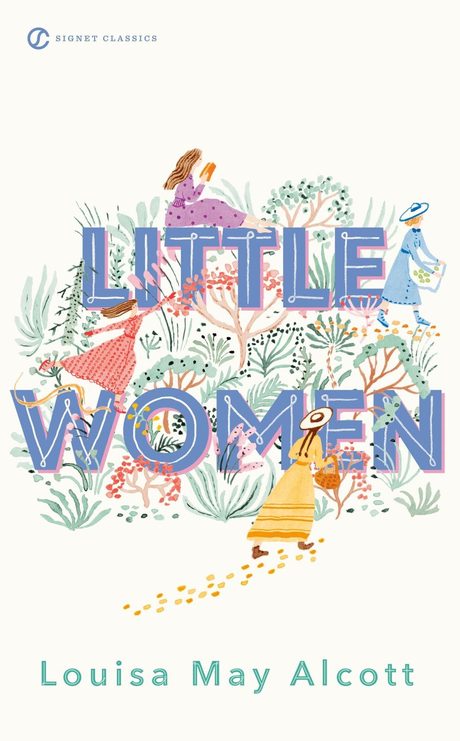
Age window: 11 to 16. Ripens on a reread.
Little Women
Louisa May Alcott1868about 529 pages
Four sisters grow up poor and loud in Civil War America, and the one who wants to be a writer refuses to behave.
Meg, Jo, Beth and Amy March are raised by their mother while their father is away at the war, and the book carries them from attic theatricals to marriages, work and one death. Jo is the engine: furious, talented and impatient with everything a girl in 1868 was expected to want, and she is why people still read this. Written for children in its own century, it now reads as a domestic novel about what four different women are permitted to become, which is a heavier proposition than its reputation suggests.
Why it is at 13
Thirteenth. As a childhood book it is close to perfect and its window opens earlier than anything else here. As an adult novel it creaks, because the moralising is heavy and one plot decision has annoyed readers ever since. Read it at twelve, then argue with it at twenty five, which is a fine second life for a book.
Read it ifyou want a warm long book about sisters and ambition
Skip it ifyou cannot sit through Victorian moral instruction
warm, busy, moralisingBest for: young readers and rereadersclassicsisters19th century
Heads up: a child's death and a good deal of period piety
14

Age window: 15 to 25.
Great Expectations
Charles Dickens1861about 588 pages
A blacksmith's apprentice gets money from a secret benefactor, becomes a gentleman, and turns into somebody he does not like.
Pip is a poor orphan on the marshes who helps an escaped convict, gets summoned to a rotting house where a jilted woman has stopped all the clocks, and later receives an income from a person he is forbidden to identify. He goes to London, acquires manners and debts, and grows ashamed of the man who raised him. Dickens is unusually severe here for a writer everyone remembers as cosy. This is a novel about a young man corrupted by a promotion, told by his older self, who knows precisely how badly he behaved.
Why it is at 14
Fourteenth because it is the ancestor of most books on this list and it still bites, but it is also six hundred pages of Victorian sentences and I would be lying if I said that costs nothing. If you want one nineteenth century novel about growing up, take this over David Copperfield. It is shorter, harder and far less pleased with itself.
Read it ifyou want the original version of the story every other book here retells
Skip it iflong paragraphs and Victorian dialogue make you close books
gothic, guilty, grandBest for: patient classic readersclassicvictorianambition
15

Age window: 14 to 19. Ripens as memory.
The Room on the Roof
Ruskin Bond1956about 151 pages
A sixteen year old orphan in Dehradun runs away from his English guardian into the bazaar and finds friends, sunlight and freedom.
Rusty is Anglo Indian, sixteen, and stuck in the European part of town with a guardian who canes him for going near the bazaar. So he goes to the bazaar. What follows is a season of friendship with Somi, Ranbir and Kishen, a chaat stall, Holi colours, a rented room on a roof and a job teaching English badly. Bond wrote it while he was still a teenager himself, and the age shows in the best possible way. The book has no interest in wisdom, only in what being let out actually felt like.
Why it is at 15
Fifteenth on impact, but it is the first one I would hand to an Indian fifteen year old. It is short, warm, and about the exact thing teenagers want, which is to be somewhere a guardian cannot see them. It ranks below the heavier books because nothing in it ever really costs Rusty anything.
Read it ifyou want small town India, summer, and freedom that feels earned
Skip it ifyou want conflict, because this is mostly a mood with a plot attached
sunlit, restless, kindBest for: Indian teenagersindiandehradunfreedom
16
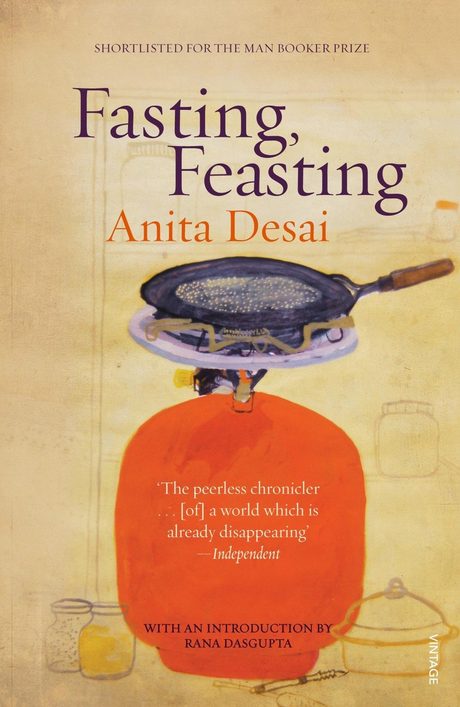
Age window: 20 to 40.
Fasting, Feasting
Anita Desai1999about 177 pages
A daughter is kept at home in small town India while her brother is shipped to America, and neither of them is fed.
The first half belongs to Uma, the older daughter, plain and slightly clumsy, whose education is stopped, whose marriage attempts collapse, and who spends her adult life fetching things for her parents. The second half jumps to Arun, the son everyone invested in, now miserable in a Massachusetts suburb inside an American family with hungers of its own. The title is the argument: one house starves its women with rules, the other stuffs itself and stays empty. Desai writes small domestic cruelty better than almost anyone, and she never raises her voice.
Why it is at 16
Sixteenth by rank, but it is the necessary companion to The Namesake. Lahiri writes the child who left. Desai writes the one who was never allowed to. Most Indian families contain both, and reading them in the same month changed how I looked at my own cousins. It sits here because Uma's half is far more alive than Arun's.
Read it ifyou want the story of the sibling who stayed behind
Skip it ifyou need momentum, because the whole point is that nothing moves
still, sharp, suffocatingBest for: readers with unmarried auntsindianfamilygender
Pairs with: The Namesake, read second, for the brother who got out
17
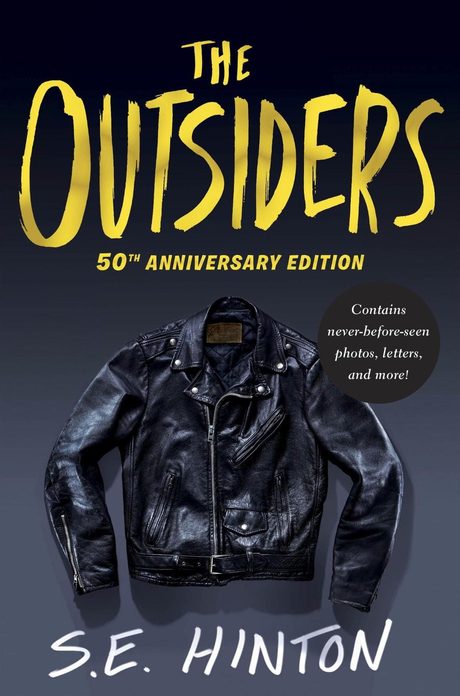
Age window: 12 to 16. Expires.
The Outsiders
S. E. Hinton1967about 226 pages
Two gangs of teenage boys in an American town fight over money nobody has, written by a girl who was still in school.
Ponyboy Curtis is fourteen, an orphan being raised by his older brothers, and a greaser, which means the poor side of town. The rich boys, the Socs, drive better cars and start most of the trouble. There is a fight, a death, a church, and a decision that costs somebody everything. Hinton wrote it while she was still in high school, and the book runs on something adults cannot fake. She is not looking back at teenagers with fondness. She is one, and she takes their loyalties as seriously as they do.
Why it is at 17
Seventeenth on the full list and number one if your reader is thirteen and does not read. Short chapters, a real plot, and it never condescends. Past sixteen the writing shows its age and the feelings get spelled out too plainly. Inside its window, though, it converts non readers, which almost nothing else here can claim.
Read it ifyou want a short book a reluctant teenager will actually finish
Skip it ifyou are an adult wanting subtlety, because this one underlines things
fast, loyal, teenageBest for: reluctant teenage readersyagangsbrothers
Heads up: a stabbing, a fire and two deaths
18

Age window: 17 to 22. Expires fast.
Five Point Someone
Chetan Bhagat2004about 270 pages
Three friends learn that getting into IIT was the easy part, and that the grading system will happily eat them alive.
Hari, Ryan and Alok arrive at IIT Delhi as toppers and quickly become five pointers, which in that world is close to a diagnosis. The book follows four years of hostel life: a professor's daughter, a scheme involving a locked office, cheap alcohol, and a friend whose entire family is depending on him. It is written plainly, sometimes flatly, with no attempt at literature anywhere. What it does carry is the real texture of an Indian engineering hostel, which almost nobody had bothered to put in a novel before.
Why it is at 18
Eighteenth, and it is here for one honest reason. For a very large number of Indian readers this was the first novel they finished by choice. As a book it is thin and the ending is convenient. As a door into reading it worked on an entire generation, and a list that pretends otherwise was written for a jury rather than a reader.
Read it ifyou are in an Indian college hostel right now
Skip it ifyou want good sentences, because these are functional at best
breezy, blunt, hostelBest for: reluctant readers in collegeindiancampusengineering
19
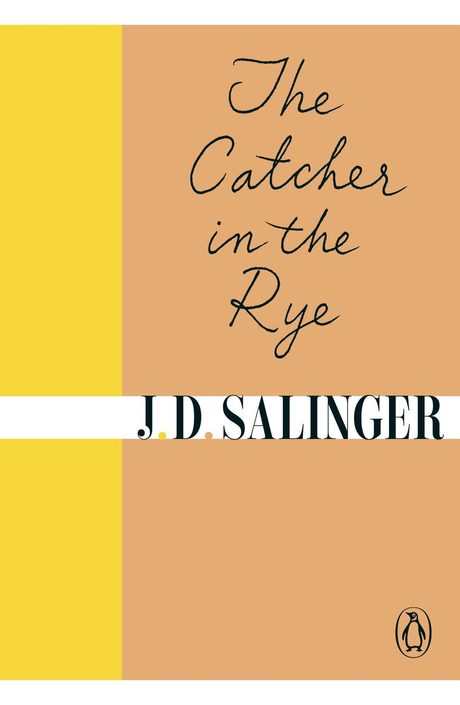
Age window: 15 to 18. Expires hard.
The Catcher in the Rye
J. D. Salinger1951about 207 pages
A sixteen year old is thrown out of school again and wanders New York for three days, angry at everything and lying constantly.
Holden Caulfield leaves his boarding school early, checks into a hotel, telephones old acquaintances, meets a woman he cannot go through with, argues with a girlfriend, sneaks home to see his little sister, and complains about phonies at every stop. The plot is thin because the plot is not the point. What Salinger built is a voice, and that voice is one long attempt to avoid saying the thing that actually happened, which is a death in the family. Read it as grief and the whole book clicks into place.
Why it is at 19
Last, and that placement is the argument of this entire list. At sixteen this novel is a hand on your shoulder. Meet it for the first time after twenty five and Holden is a rich, self pitying boy who needs a nap, which is why so many adults call it overrated. They are not wrong about their experience. They simply arrived after the window shut.
Read it ifyou are fifteen to eighteen, or you were and want to check the damage
Skip it ifyou are over twenty five and have never read it, because you will be irritated
restless, wounded, mouthyBest for: school leaversclassicnew yorkgrief
Heads up: a suicide is discussed and depression runs underneath the whole book
Worth knowing
How the age window works
Every entry carries a window in its label, and it means the years when the book will do the most to you, not the years when you are capable of reading it. A ten year old can read The Bell Jar. It will simply pass through her without touching the sides. The second half of the label matters more: expires means the book loses power once the window shuts, ripens means it gains power, and a few of them do neither and just stay where they are.
This is why the order looks rude in places. The Catcher in the Rye is a better novel than Five Point Someone by any measure you care to name, and it finishes below it here, because its window is three years wide and most readers arrive late. Persepolis sits at three because you can hand it to a thirteen year old and to your father in the same week. Width counts on this list.
Worth knowing
A plain word about the heavy ones
Six of these sit close to depression, suicide, abuse or a parent's illness, and each one is marked. They are novels, not treatment, and none of them will do the work of a doctor or a therapist. If you are in a bad stretch, take the warm ones instead: Swami and Friends, The Room on the Roof, Little Women. The heavy books will still be on the shelf in a better month, and they will hit harder when you are steady enough to argue with them.
Worth knowing
A buying order if these are for a teenager
Start at thirteen with The Outsiders and Persepolis, because both are short and neither talks down. At fourteen add Swami and Friends and The Room on the Roof, which are the Indian versions of the same wish to be let out of the house. Fifteen or sixteen is the year for The Catcher in the Rye and The Perks of Being a Wallflower, and that year does not come around again. Save Never Let Me Go and The Namesake for after school finishes, when there is an actual decision on the table and these books have something to say about it.
People also ask
Questions, answered
What is the best coming of age novel of all time?
To Kill a Mockingbird, if you want one answer that holds for the widest set of readers. It is the only book here that a twelve year old and a sixty year old can read in the same week and both come away with something new. If you want the best Indian one, take The Namesake. If you want the one most likely to follow you around for a decade, take Never Let Me Go.
Is The Catcher in the Rye still worth reading?
Yes if you are between fifteen and eighteen, or if you are curious about what your teenage self missed. No if you are thirty and picking it up purely because of the reputation, because Holden will read as a whiny rich kid and you will feel cheated. The novel has not aged badly. Its window is just narrow, and most adults show up long after it has closed.
Which coming of age novels here are by Indian authors?
Seven of them: Swami and Friends, The Room on the Roof, English August, Fasting Feasting, The Namesake, Em and the Big Hoom and Five Point Someone. Between them they cover a 1930s school in Malgudi, a Dehradun bazaar, a small town civil service posting, a house where the daughter stays and the son leaves, a Bombay flat and an IIT hostel. Start with The Namesake if you are over twenty, Swami and Friends if you are under fifteen.
Why is The God of Small Things not on this list?
Because it is a novel about a childhood being destroyed rather than a novel about growing up. Rahel and Estha do not come of age in it, they get stopped, and the book is really about what the adults around them did. It is one of the finest Indian novels ever written and it belongs on a different list. Putting it here would have made the ranking look grander and told you something false about what you were buying.
What age should you read coming of age books?
Any age, but each book has a best year. Roughly: twelve to fourteen for The Outsiders, Swami and Friends and Little Women. Fifteen to eighteen for Catcher and Perks. Nineteen to twenty five for Norwegian Wood, The Secret History and The Bell Jar. Anytime after eighteen for The Namesake, Never Let Me Go and Em and the Big Hoom, all three of which only improve as you get older.
Which is the shortest book on this list?
Persepolis, if a graphic memoir counts, since most readers finish it in an evening. Among the prose novels it is The Room on the Roof at roughly a hundred and fifty pages, followed by Em and the Big Hoom at a little over two hundred. The longest by a distance are Great Expectations and Little Women, both past five hundred pages, so start small if you have not finished a book in a while.
Before you go
What to read tonight
If it is late and you want to start something tonight, the honest recommendation depends on one number, which is your age. Under eighteen, take Persepolis or The Outsiders and be finished by morning. Between eighteen and twenty five, Norwegian Wood or The Secret History will own your entire week. Past thirty, begin with Never Let Me Go and keep the following Sunday free.
And if you are buying for somebody else, which is how most of these books actually travel, resist the urge to give them the one that saved you. Give them the one that matches the year they are in. A book handed over at the right age becomes a person's favourite for life. The same book handed over three years late becomes homework.
Keep going
Lists that pair with this one
Mood & Life
20 Best Books to Read in Your 20s, Grouped by the Problem
Four problems run this decade, work, love, money and meaning, so the list is sorted that way instead of pretending one book fixes all four.
Mood & Life
18 Best Books for Teenagers in India, Sorted by Age
Three age bands, from twelve to eighteen, ranked by the odds that a teenager who does not read finishes it and asks for the next one.
Authors
The 10 Best Jhumpa Lahiri Books, Ranked (Where to Start)
Ranked by warmth, from the crowded Bengali kitchens of the early stories to the bare Italian rooms she writes in now.
Authors
The 13 Best Ruskin Bond Books, Ranked (Where to Start at Any Age)
Thirteen distinct books, ranked by what they give a first-time reader, with an age label on every one.
Authors
The 12 Best R. K. Narayan Books, Ranked, and Where to Start
Twelve books ranked for a reader picking him up today, each with a sting rating for how hard the ending lands.