Everybody I know finished The Seven Husbands of Evelyn Hugo in two sittings and then asked the same question in the group chat, which is what now. The trouble is that people mean four different things by it. Some want old Hollywood. Some want an old woman finally telling the truth to a younger one with a notebook. Some want Celia. Some want a woman who is allowed to be ruthless about her own ambition and is not punished for it on the last page.
So this list is sorted into four groups rather than ranked one to thirteen on quality. Each group is named after the thing you might have loved, the numbers run straight through, and inside every group the closest match sits at the top. If it was the frame that got you, start at number one and stay in the first group. If it was Celia, skip to number four.
One warning before you start. Nothing here is Evelyn Hugo, because a good part of what made that book land was how neatly it hid a love story behind a gossip headline, and that trick only works once. What these thirteen do is take one piece of it and go further with that piece than Taylor Jenkins Reid had room for. The books people expect on this list, and where I actually stand on them, are in a section near the bottom.
How I picked these
- Grouped, not ranked on quality. The numbers still run one to thirteen so quick picks can point at them, but a nine is not worse than a three, it is answering a different question.
- The match has to be structural. A book qualifies if it shares the frame (a life told to a listener), the machinery of fame, the love that had to stay hidden, or the ambition. Having a woman in it is not a match.
- Every book verified through Google Books and Open Library with a real cover and a real first publication year, so nothing here is a ghost edition or a misremembered title.
- Only two Taylor Jenkins Reid novels are in the numbered list, because handing you her entire backlist is not a recommendation. The rest of her catalogue gets its own section with an honest order.
- I kept the popular picks I disagree with and argued against them near the bottom instead of quietly dropping them, since you are going to be recommended them anyway.
The whole list at a glance
All 13 books, in order
| # | Book | Author | Year | Vibe | Best for |
|---|
| 1 | City of Girls | Elizabeth Gilbert | 2019 | sequins, gin, no regrets | readers who loved the confession |
| 2 | Daisy Jones & The Six | Taylor Jenkins Reid | 2019 | 1970s, loud, unreliable | readers who loved the interview frame |
| 3 | The Final Revival of Opal & Nev | Dawnie Walton | 2021 | punk, angry, superb | readers who want more bite |
| 4 | Atmosphere | Taylor Jenkins Reid | 2025 | 1980s, hopeful, doomed | Celia and Evelyn readers |
| 5 | The Song of Achilles | Madeline Miller | 2011 | bronze, tender, doomed | readers who want to cry |
| 6 | The Great Believers | Rebecca Makkai | 2018 | chicago, 1985, unbearable | readers who want the real history |
| 7 | Mrs. Everything | Jennifer Weiner | 2019 | sisters, decades, compromise | readers who like family sagas |
| 8 | Lessons in Chemistry | Bonnie Garmus | 2022 | 1960s, furious, funny | readers who want ambition and jokes |
| 9 | The Henna Artist | Alka Joshi | 2020 | jaipur, 1955, careful | Indian readers who want proximity |
| 10 | Circe | Madeline Miller | 2018 | island, immortal, patient | readers who like a slow life story |
| 11 | The Vanishing Half | Brit Bennett | 2020 | passing, distance, decades | readers who want a bigger idea |
| 12 | The Invisible Life of Addie LaRue | V.E. Schwab | 2020 | wistful, wandering, lonely | readers open to a little magic |
| 13 | Pachinko | Min Jin Lee | 2017 | korean, japanese, generational | readers who want a big saga |
The list
The books, ranked
1
Group 1: old Hollywood and the machine that makes stars
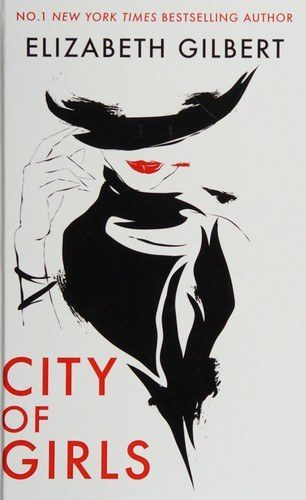
City of Girls
Elizabeth Gilbert2019
A woman in her nineties writes a long letter explaining exactly what she got up to in 1940s New York, and she is not sorry.
Vivian Morris flunks out of Vassar in 1940 and is shipped off to her aunt's shabby theatre in midtown Manhattan, where the showgirls teach her about sex, sequins and staying out until the milk arrives. Then she does something stupid enough to reach the gossip columns. The whole novel is addressed to a woman called Angela, who has asked Vivian, now in her nineties, what she was to Angela's father, and Vivian takes four hundred pages to answer her honestly. Elizabeth Gilbert wrote a book about a woman who has a wild youth and is never made to pay for it.
Why it is at 1
Number one because of the frame, which is the part of Evelyn Hugo most people underrate. An old woman with nothing left to protect tells a younger one the whole truth in order, including the parts that make her look bad. The glamour here is theatre rather than film, and the pleasure is identical: a life recounted by somebody who finally stopped apologising for it.
Read it ifyou loved Evelyn's voice more than her seven marriages
Skip it ifyou need a tight plot, because this one wanders on purpose
sequins, gin, no regretsBest for: readers who loved the confessionold new yorkshowgirlsconfession
Pairs with: The Final Revival of Opal & Nev, for another woman who refuses to be edited
2

Group 1: old Hollywood and the machine that makes stars
Daisy Jones & The Six
Taylor Jenkins Reid2019about 401 pages
The biggest band of 1977 walked offstage forever, and everyone involved explains why separately, in answers that do not match.
This is the oral history of a band that broke up at the top, assembled from interviews with everybody who was in the room, and it is written entirely as transcript. Daisy is a singer with a voice and a habit, Billy is a frontman trying to stay sober for his wife, and the songs the two of them write together are better than anything either manages alone. Because everyone speaks separately they contradict each other constantly, so you spend the book working out who is lying and who has simply remembered it the way they needed to.
Why it is at 2
Second, and the obvious next step, because it takes the interview idea from Evelyn Hugo and pushes it as far as it will go. There is no narrator at all here, only voices. It misses the top spot because there is no single life being unpacked and no fifty year old secret waiting at the end, so the format is cleverer than the payoff.
Read it ifyou want the interview format taken to its logical end
Skip it ifyou cannot get on with books written only in dialogue
1970s, loud, unreliableBest for: readers who loved the interview frameoral historyrock band1970s
3
Group 1: old Hollywood and the machine that makes stars
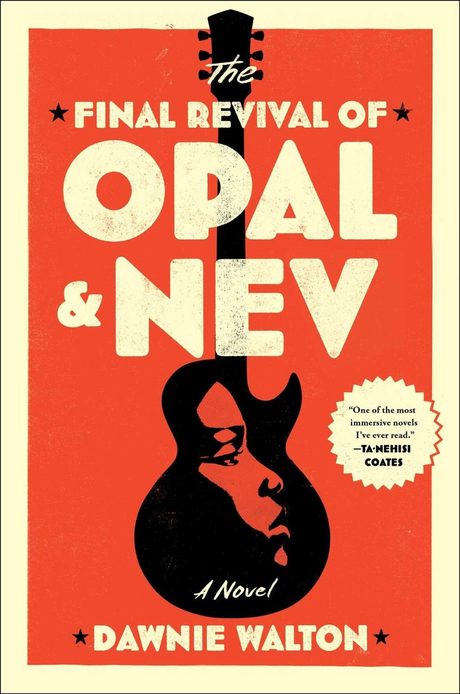
The Final Revival of Opal & Nev
Dawnie Walton2021about 368 pages
A music journalist compiles the oral history of a nearly famous Afro-punk duo, and she is very far from a neutral party.
Opal Jewel is a Black singer from Detroit with a shaved head and no interest in being palatable, Nev Charles is a British songwriter with good tunes and no spine, and together they almost became enormous in early seventies New York before a night that went violently wrong. Decades later a journalist assembles their story from interviews, exactly the way a real music book is built, footnotes included. The catch is that she is not neutral, because her father drummed for them and died at that concert. Dawnie Walton keeps interrupting the myth with the cost of it.
Why it is at 3
Third because it does what Daisy Jones does and then asks the harder question, which is who gets to tell this story and what telling it costs her. If you loved Monique's half of Evelyn Hugo, the journalist carrying her own wound into the room, this is the book that takes that seriously instead of using it as a twist at the end.
Read it ifyou loved Monique as much as you loved Evelyn
Skip it ifyou want escapism, because the racial violence here is direct
punk, angry, superbBest for: readers who want more biteoral historymusic1970s
Heads up: racist violence and an on-page death
4

Group 2: the love that had to stay off the record
Atmosphere
Taylor Jenkins Reid2025
A woman joins the NASA astronaut corps in 1980 and falls in love with someone she cannot be seen loving.
Joan Goodwin teaches astronomy in Texas and applies to the space shuttle programme on an impulse that turns out to be the truest thing about her. The book follows her through training with the first class of astronauts to include women, and through a relationship with another woman, in a decade and an institution where being found out ends a career. Taylor Jenkins Reid cuts between the training years and one night in December 1984 when a mission goes wrong, so you read the love story already knowing that something is on fire.
Why it is at 4
Fourth, and first in this group, because it is the closest Reid has come to writing Celia and Evelyn again. The secrecy has the same shape: two women, an unforgiving employer, and a public version of events that has to be maintained daily. It is warmer and less cynical than Evelyn Hugo, and considerably more technical, so expect orbital mechanics alongside the ache.
Read it ifyou read Evelyn Hugo for Celia and cried at the end
Skip it ifengineering detail and mission procedure bore you
1980s, hopeful, doomedBest for: Celia and Evelyn readersqueer lovenasa1980s
Pairs with: The Great Believers, if you want the same decade with the safety net removed
5

Group 2: the love that had to stay off the record
The Song of Achilles
Madeline Miller2011about 368 pages
The Iliad retold by the boy who loved Achilles, which turns a war epic into the saddest love story on this list.
Patroclus is an exiled prince, unimpressive by his father's standards, sent to be raised in another king's court where he meets Achilles. Madeline Miller takes the friendship Homer leaves unexplained and writes it as a love story, from the boys' training under a centaur to the beach at Troy where everybody already knows how this ends. Knowing the ending is the point. You spend the second half watching two people walk toward something you cannot stop, and the last fifty pages are the reason this book keeps getting handed to people in tears.
Why it is at 5
Fifth because it is the book Evelyn Hugo readers actually pick up next, and the reason is the same ache: a love that history refused to name properly. Miller writes better sentences than most of this list. It sits below Atmosphere only because the setting is so far from Evelyn's world that the resemblance is emotional rather than structural.
Read it ifyou want a queer love story with a myth-sized ending
Skip it ifyou want a happy ending, or Greek retellings put you off
bronze, tender, doomedBest for: readers who want to crygreek mythqueer loveretelling
6
Group 2: the love that had to stay off the record
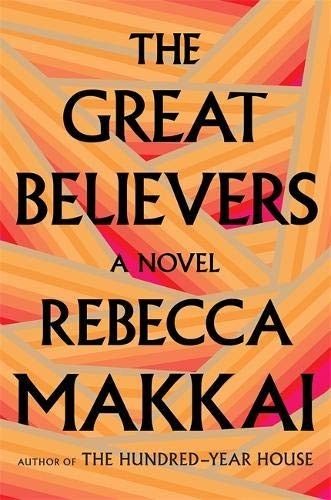
The Great Believers
Rebecca Makkai2018
Chicago in 1985 as the AIDS crisis takes a group of friends apart, braided with a woman searching Paris thirty years later.
Yale Tishman works for a Chicago art gallery and is trying to secure a collection from an elderly donor who was in Paris in the 1920s, while around him his friends fall ill and die one by one. The second timeline follows Fiona, the little sister of that group, searching Paris in 2015 for her own daughter and carrying thirty years of funerals with her. Rebecca Makkai writes grief as paperwork and small rooms rather than speeches. It is the most upsetting book on this list and also the one I most want people to read.
Why it is at 6
Sixth because it holds what Evelyn Hugo only gestures at: the actual cost of loving someone in secret in a decade that punished it, told without the cushion of a movie star's money and lawyers. If Evelyn and Celia made you want the real history underneath rather than the glamorous version, this is where that history lives.
Read it ifyou want the real history under the hidden love story
Skip it ifyou are not ready for a great deal of death
chicago, 1985, unbearableBest for: readers who want the real historyaids crisisdual timelinefriendship
Heads up: AIDS, terminal illness, many deaths
7
Group 2: the love that had to stay off the record
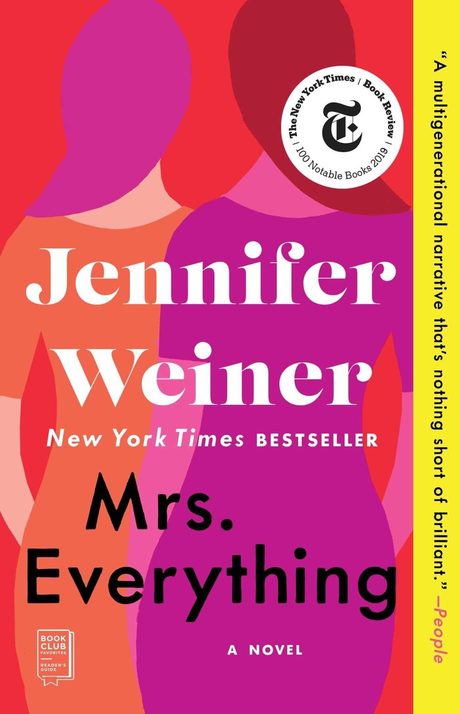
Mrs. Everything
Jennifer Weiner2019about 496 pages
Two sisters from 1950s Detroit swap the lives everybody assigned them, and one spends decades hiding who she loves.
Jo and Bethie Kaufman grow up in a Detroit suburb in the fifties, where Jo is the difficult tomboy and Bethie is the good girl who sings. Over the next sixty years they trade places more than once. Jo, who loves women, marries a man and raises daughters in the suburbs with a whole other life folded away in a drawer. Jennifer Weiner runs both sisters through the second half of the American century, and the sharper thread is Jo's, because she never gets a dramatic reveal, she gets decades of quiet accommodation instead.
Why it is at 7
Seventh because it answers a question Evelyn Hugo leaves alone: what if you were not a film star with money and options, just an ordinary woman who took the safe life. The writing is more commercial than the rest of this group and it covers a lot of ground quickly. Jo's storyline is worth the whole book.
Read it ifyou want the ordinary, unglamorous version of a hidden life
Skip it ifyou dislike family sagas that skim across decades
sisters, decades, compromiseBest for: readers who like family sagassistersamerican centuryhidden life
8
Group 3: one woman, one whole ambitious life
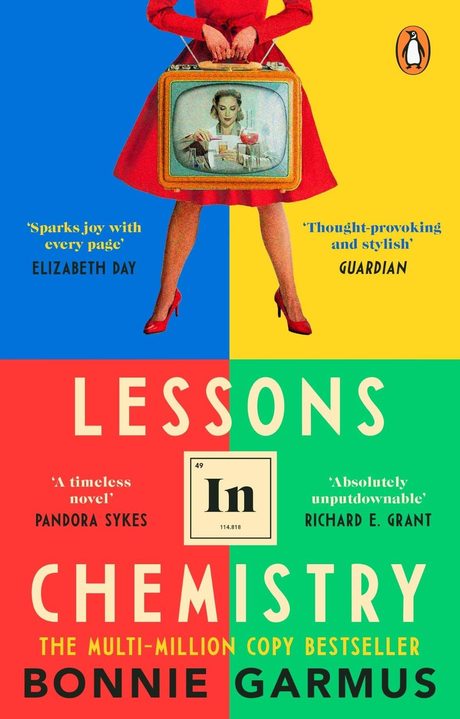
Lessons in Chemistry
Bonnie Garmus2022about 348 pages
A chemist in the early 1960s is pushed out of her lab and ends up teaching the country chemistry through a cookery show.
Elizabeth Zott is a research chemist in the early sixties who keeps being told she is a secretary, a distraction, or somebody's assistant. After her life goes badly wrong she is offered an afternoon television slot and takes the job entirely on her own terms, teaching housewives thermodynamics while pretending to teach them dinner. Bonnie Garmus writes it as a comedy with real anger running under it, and there is a dog with a vocabulary who you will either love or find far too much. The period sexism is not softened for your comfort.
Why it is at 8
Eighth, opening the ambition group, because Elizabeth wants her work the way Evelyn wants her career: completely, without apology, and at a price the men around her never have to pay. It is funnier than Evelyn Hugo and far less glamorous. Some readers find the narration too knowing, and the plot leans hard on one very convenient turn.
Read it ifyou want a woman who refuses to be managed by anyone
Skip it ifarch narration and a clever dog will irritate you
1960s, furious, funnyBest for: readers who want ambition and jokes1960ssciencetelevision
Heads up: sexual assault, briefly depicted
9
Group 3: one woman, one whole ambitious life
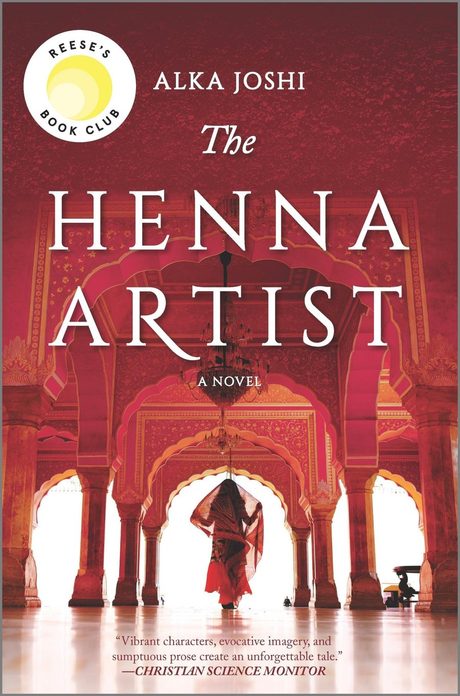
The Henna Artist
Alka Joshi2020about 382 pages
In 1950s Jaipur a woman who walked out of her marriage builds a life painting henna on the hands of the city's richest women.
Lakshmi left an abusive husband at seventeen, walked to Jaipur, and made herself indispensable to the wives of the men who run the city. She knows their secrets because she is in their bedrooms with a henna cone, and she quietly supplies the herbs some of them need and nobody discusses aloud. She is saving for a house of her own, which in 1955 is close to unthinkable for a woman alone. Then the younger sister she did not know she had turns up at her door, and the reputation she spent a decade building starts to wobble.
Why it is at 9
Ninth because the shape is Evelyn's, moved to newly independent India: a woman with no protection who trades on what powerful people want, keeps their secrets, and gets judged for the same ambition that makes her useful to them. This is the one I would hand an Indian reader who loved Evelyn Hugo and then found the Hollywood setting a little far away.
Read it ifyou want an ambitious woman and a setting closer to home
Skip it ifyou want fast plotting rather than a slow social climb
jaipur, 1955, carefulBest for: Indian readers who want proximity1950s indiaindependencesecrets
10
Group 3: one woman, one whole ambitious life
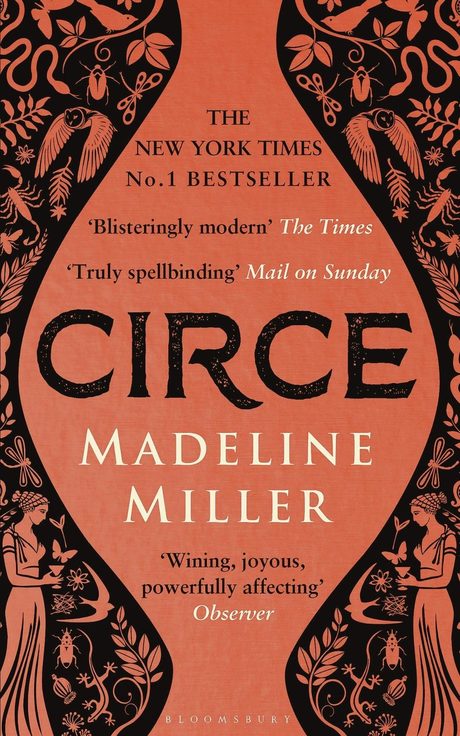
Circe
Madeline Miller2018about 353 pages
The witch from the Odyssey gets her own life, and it turns out the men in it were the short chapters.
Circe is born to the sun god and is unimpressive by the standards of her family, so she is largely ignored until she discovers she can work witchcraft, at which point she is exiled to an island alone. Centuries pass there. Men land, including one very famous one, and mostly they leave again. Madeline Miller writes immortality as an actual condition, which means loneliness, watching mortals age, and slowly working out what you want your own life to be for. The famous heroes turn out to be minor characters in it.
Why it is at 10
Tenth because it is the same idea told at mythological scale: a woman defined by her relationships with men who eventually takes hold of the pen. Evelyn had seven husbands, Circe has gods and sailors, and both books are far more interested in what the woman was doing between them. The pace is slow by design, so read it as a life rather than a plot.
Read it ifyou want the same idea told at the size of a myth
Skip it ifyou need forward momentum and a tightly plotted story
island, immortal, patientBest for: readers who like a slow life storygreek mythsolituderetelling
11
Group 4: the secret that reframes everything
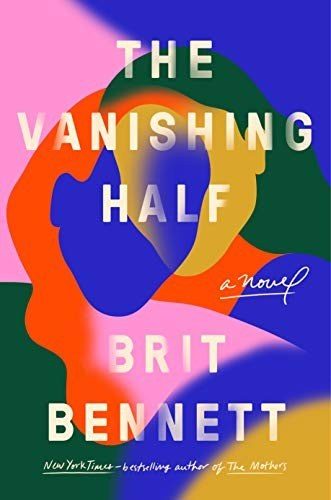
The Vanishing Half
Brit Bennett2020about 304 pages
Twin sisters run away at sixteen, one comes home and one disappears into a white life and never corrects anybody.
Desiree and Stella Vignes are light-skinned twins from a small Louisiana town founded on the idea of getting lighter with every generation. At sixteen they run to New Orleans. Desiree eventually comes back with a dark-skinned daughter, and Stella keeps going, takes a secretarial job where everyone assumes she is white, and builds an entire life on top of that assumption, husband included. Brit Bennett follows both women and both daughters across four decades, and she is unusually fair to Stella, who is doing something indefensible for reasons you can follow the whole way.
Why it is at 11
Eleventh, opening the final group, because it runs on the same engine as Evelyn Hugo: a woman invents a public self and then maintains it for fifty years while it quietly eats everything real. The difference is that Stella's secret is about race rather than who she loves, and there is no interview waiting at the end to release her from it.
Read it ifyou were fascinated by Evelyn's invented public self
Skip it ifyou want a neat resolution for everybody involved
passing, distance, decadesBest for: readers who want a bigger ideatwinspassingfamily
12
Group 4: the secret that reframes everything
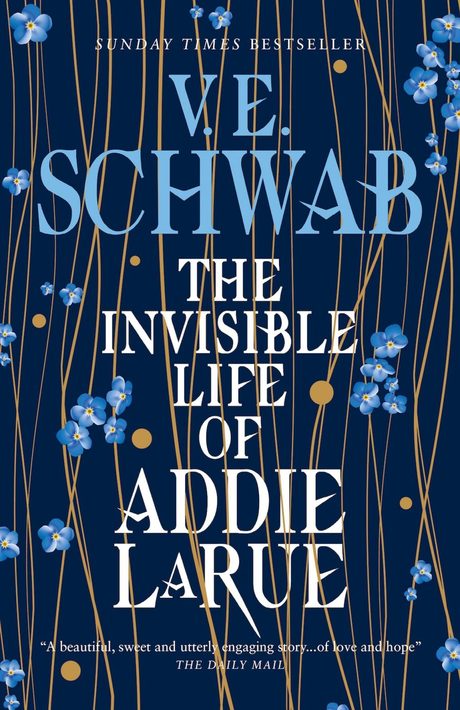
The Invisible Life of Addie LaRue
V.E. Schwab2020about 583 pages
A woman trades her soul for freedom in 1714 and is cursed to be forgotten by everyone, until a boy in New York remembers her.
Addie makes a deal in the dark at the edge of a French village in 1714 to escape a marriage she never agreed to, and the god who answers gives her exactly what she asked for and nothing she actually wanted. She will live as long as she likes, and nobody will remember her once she leaves the room. Three hundred years later a bookshop clerk in New York says her name back to her the next day. The novel is about wanting to be known, and what a person will do to leave a mark when a record is forbidden.
Why it is at 12
Twelfth because it is the fantasy version of Evelyn's bargain: a woman trades everything for freedom and then spends centuries trying to get her story written down by somebody who will keep it. It is slower than the premise promises and the middle section sags badly. The frame, one person finally listening and taking notes, makes up for it.
Read it ifyou loved being told a long life story by the person who lived it
Skip it ifyou want realism, or repetition makes you impatient
wistful, wandering, lonelyBest for: readers open to a little magicfantasyimmortalitynew york
13
Group 4: the secret that reframes everything
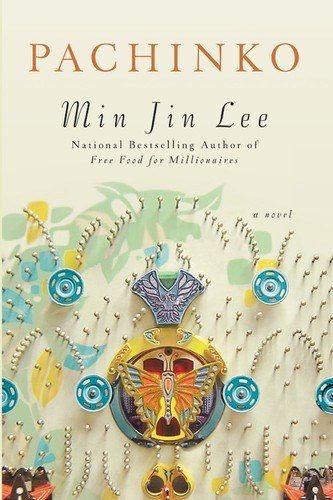
Pachinko
Min Jin Lee2017about 480 pages
A pregnant girl in occupied Korea marries a stranger to save her family's name, and four generations pay for that one choice.
Sunja runs her mother's boarding house on an island near Busan when a rich older man takes an interest in her. He will not marry her because he already has a wife in Japan, so a young minister lodging with them offers his name instead, and she goes with him to Osaka. What follows is four generations of one Korean family in Japan, where they are permanently foreign, permanently registered, and permanently one piece of paperwork away from expulsion. Min Jin Lee writes plainly and covers eighty years without ever letting it feel like a summary.
Why it is at 13
Thirteenth, and the furthest from Evelyn Hugo in tone, so let me justify it. Both books turn on a woman who makes one deal early and then spends her whole life keeping the terms of it, and both are about a secret that decides what the children are allowed to become. Come for that. Do not come for glamour, because this one has none.
Read it ifyou want the same lifelong bargain told without any glamour
Skip it ifyou want a fast read or a comfortable resolution
korean, japanese, generationalBest for: readers who want a big sagakoreajapangenerations
Heads up: discrimination, suicide, wartime hardship
Worth knowing
The books people expect here, and where I actually stand
Malibu Rising is the title everybody names next and it is the weakest Taylor Jenkins Reid novel I have read. Four siblings, one party, one long night in 1983, a lot of surf. The Riva family are good company but nobody in that house wants anything the way Evelyn wants things, so the book runs on atmosphere alone. Read it on a flight, not as a follow-up.
Carrie Soto Is Back is the better choice from her backlist if what you loved was Evelyn's ruthlessness. Carrie is a retired tennis champion who comes back at thirty-seven to defend her record, she is unlikeable in the specific way great sportspeople are permitted to be, and her father is the best character Reid has written. A few characters cross between Evelyn Hugo, Malibu Rising and Carrie Soto, which is a small pleasure rather than a reason to read them in publication order.
Where the Crawdads Sing turns up on every version of this list and I think the match is thin. It is a courtroom mystery about a girl raised alone in a marsh, and past the fact of a woman being judged by her town it has very little in common with Evelyn Hugo structurally. If you want the isolation, read it. If you came for the confession and the ambition, you will spend the whole book waiting.
The Nightingale is a better fit than its reputation suggests, because it also opens with an old woman holding a secret about who she was during the war, and it keeps you guessing about which of the two sisters is narrating. If the framing device is the thing you loved, put it on the maybe pile just behind City of Girls.
Worth knowing
Where to go next in Taylor Jenkins Reid's backlist
In order of how close they sit to Evelyn Hugo: Daisy Jones & The Six, then Atmosphere, then Carrie Soto Is Back, then Malibu Rising. Her earlier contemporary novels, including After I Do, Maybe in Another Life and One True Loves, are straightforward relationship stories with no historical frame at all, so they read like a different writer who happens to share her name.
If what you want is the trick rather than the author, read The Final Revival of Opal & Nev instead. It is the only book on this page that improves on the oral history format rather than copying it, and almost nobody will have recommended it to you already.
People also ask
Questions, answered
What book is most like The Seven Husbands of Evelyn Hugo?
City of Girls by Elizabeth Gilbert, if what you loved was the frame. An old woman finally tells the whole truth about her scandalous youth to a younger woman who asked her a direct question. If what you loved was the interview format itself, read Daisy Jones & The Six instead, and if what you loved was Celia, read Atmosphere by the same author. Those three cover the three reasons people finish Evelyn Hugo and immediately want another one.
Should I read Daisy Jones & The Six or Malibu Rising next?
Daisy Jones, without much hesitation. It uses the same interview format and it is the strongest of her novels after Evelyn Hugo. Malibu Rising is the lightest thing she has written, built around a single party over a single night, and it will feel thin if you read it straight afterwards. If you want her ambition novel instead, go to Carrie Soto Is Back, about a tennis champion who refuses to retire gracefully.
Are there any Indian books like The Seven Husbands of Evelyn Hugo?
The Henna Artist by Alka Joshi is the closest one on this list. It is set in 1950s Jaipur and follows a woman who escaped her marriage and built her independence by holding the secrets of the city's elite, which is Evelyn's bargain in a different currency. It has two sequels that follow the same family into later decades. The glamour is smaller and the social risk is higher, and for plenty of readers that trade makes it land harder.
Is The Seven Husbands of Evelyn Hugo based on a true story?
No, Evelyn is invented, though the book borrows the texture of studio-era Hollywood so precisely that readers spend a lot of time guessing which real actresses she was built from. That is part of why it works, since it reads like a biography of somebody you half remember. If you want the documented version of that era's secrecy and what it cost people, read The Great Believers, which covers the decade afterwards with no fiction cushioning it.
Which of these books will make me cry the most?
The Great Believers, and it is not a close contest. It sits with a group of friends in Chicago through the worst years of the AIDS crisis without looking away, then jumps thirty years ahead to show you what the survivors are still carrying. The Song of Achilles is the runner-up and it is a cleaner, faster grief that hits in the final fifty pages. If you want to feel something without being wrecked for a week, read Atmosphere.
Do I need to read Taylor Jenkins Reid's books in order?
No. They all stand alone, though a few characters cross between Evelyn Hugo, Malibu Rising and Carrie Soto Is Back, which is a small bonus rather than a requirement. Read Evelyn Hugo, then Daisy Jones, then whichever of the others matches what you are hungry for. The only argument for publication order would be watching her get steadily better at the historical frame, and that is a writer's reason, not a reader's.
Before you go
What to read tonight
If you have one evening and want the same feeling tonight, read City of Girls. It gives you the voice, the era and the confession, and Vivian is better company than Evelyn ever quite manages to be. If you have a week and would rather be changed than entertained, read The Great Believers instead and keep the last hundred pages for a day when you have nothing scheduled afterwards.
And if you still cannot tell which part of Evelyn Hugo you loved, here is a quick test. Think about the moment that stayed with you. If it was Monique sitting in that apartment working out why she had been summoned, you want the frame, so pick from group one. If it was Evelyn and Celia, you want group two, and Atmosphere is waiting.
Keep going
Lists that pair with this one