Seven novels, one ranking axis, and a straight answer about which one to open first if you have never read her.
By Bhavik SarkhediUpdated August 2026Covers and data: Google Books, Open Library
Before she published a word of fiction, Anuja Chauhan spent seventeen years at JWT writing lines that are still stuck in your head: yeh dil maange more, nothing official about it, tedha hai par mera hai. She left advertising in 2010, two novels into a second career, and the copywriter came with her. Her books open fast, they sound like actual Indians talking, and they refuse to be boring for even a page.
Every one of her seven novels is a romance bolted to a second machine: cricket, an election, a property fight, a war, a murder. How well that weld holds is my ranking axis. When the romance and the machine need each other, when the campaign and the boy cannot be separated in Jinni's head, the book sings. When the machine keeps running fine on its own and the couple waits in the wings, the book slips a few places. That is why a murder mystery with excellent Delhi satire sits below a family saga you have probably skipped.
This is the whole shelf, all seven, ranked with the best first. If you have never read her, the quick picks will sort you out in ten seconds. If you have read three and you are wondering whether the two mysteries are worth your time, the honest answer is waiting at the bottom of the list.
The weld test: how tightly the love story and the plot machine hold together. A brilliant setting cannot rescue a couple you have stopped caring about.
Reread value. I have read four of these twice, and two of them lost something on the second pass. That cost them places.
All seven novels, no cherry picking. Only the fiction is ranked here, not her advertising work or her essays.
Every edition checked through Google Books and Open Library, so the covers and ISBNs are real rather than print-on-demand ghosts.
Where a beloved book lands low, I give the reason in one line instead of hiding behind the phrase 'not for everyone'.
Five sisters named in alphabetical order, one Doordarshan newsreader, one furious young reporter, and the best eighties Delhi in any Indian novel.
Justice Laxmi Narayan Thakur and his wife Mamta live on Hailey Road with five daughters named in strict alphabetical order, Anjini through Eshwari. The fourth one, Debjani, reads the English news on Doordarshan. Dylan Singh Shekhawat is a young journalist who thinks her employer is a government mouthpiece, and their first real conversation is an argument neither of them wins. Around all of this the house keeps going: sisters, tenants, gossip, and the particular pressure of mid-eighties Delhi. What makes the novel work is how much room the family gets. The love story grows inside the household rather than sitting on top of it.
Why it is at 1
Number one because nothing in it is a set piece. The romance, the newsroom, the sisters and the city are one organism, and if you deleted the love story the book would still be worth reading. Zoya and Bittora are funnier per page. This is the only Chauhan novel I would hand to someone who claims to hate romance and still expect them to finish it.
Read it ifyou want a big warm household novel with a slow argument at the centre
Skip it ifyou need plot movement early, because the first hundred pages are mostly people talking
warm, crowded, eighties DelhiBest for: readers who love family sagasdelhi1980sslow burnfamily saga
Pairs with: The House That BJ Built, which returns to the same house one generation later
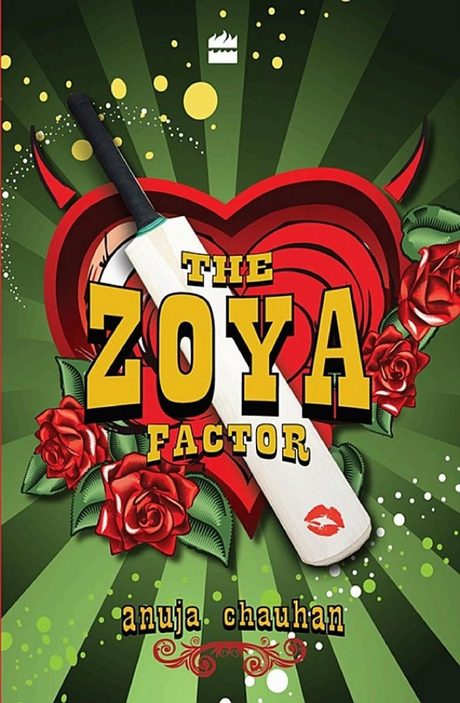
An ad executive discovers the Indian cricket team wins every match she eats breakfast before, and the captain is not amused.
Zoya Singh Solanki works in advertising, gets sent to a shoot with the Indian cricket team, and the players notice they win every match she eats breakfast before. She was born at the exact moment India lifted the 1983 World Cup, which the country promptly decides is proof of something larger. Within weeks she is a national lucky charm with a contract and a great deal of press, and Nikhil Khoda, the captain, is the one man refusing to play along. It is a debut and the seams show in the middle third, but the voice arrived fully formed and nothing in Indian romcom sounded like it before.
Why it is at 2
Second because the premise is her best idea and the execution is her loosest. There is a stretch in the second half where the book circles the same argument twice. Against that, the cricket machine and Zoya's love life are bolted together so tightly that neither works without the other, which is exactly what the weld test rewards. Chauhan also wrote the dialogues for the 2019 film version, which is the kindest thing anyone can say about that film.
Read it ifyou want the most quotable, most Indian romcom premise on this list
Skip it ifa saggy middle annoys you more than a great voice pleases you
loud, funny, cricket-madBest for: first time Chauhan readerscricketromcomdebut
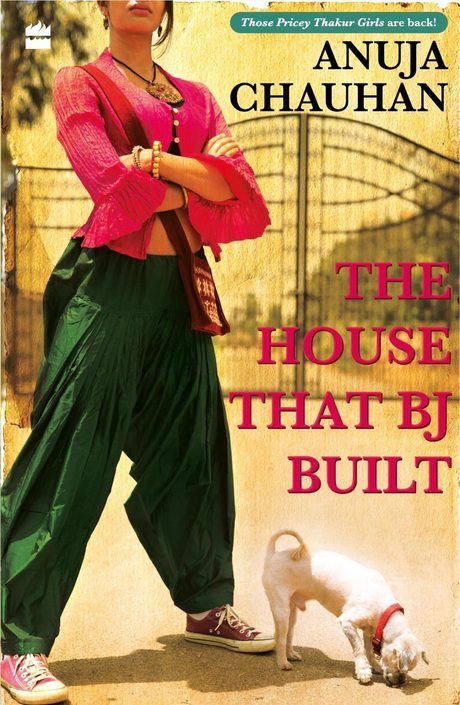
The Hailey Road bungalow is worth crores, most of the heirs want it sold, and the one living in it will fight all of them.
Roughly twenty years after the first Thakur novel, the same Hailey Road bungalow is the battlefield. Bonu Singh runs a small garment business out of it and will not sell. Samar Vir Singh, a film-maker who grew up inside this family and then left it, comes back to push the sale through, and the two of them have history nobody wants discussed in front of the aunts. Property law, old grudges and Delhi land prices do the work that cricket and elections did in the earlier books. It is tighter than its predecessor and meaner, in a way that suits it.
Why it is at 3
Third because it is the best-plotted thing she has written, and sequels this good are rare. It loses to Those Pricey Thakur Girls only on warmth: the earlier house was full and this one is emptying out, which is the point of the book and also its cost. Read it immediately after the first one or you will miss half the jokes and all of the grudges.
Read it ifyou liked the first Thakur book and want a sharper, angrier version
Skip it ifyou have not read Those Pricey Thakur Girls, since this gives away its ending
sharp, litigious, funnyBest for: readers who want plotdelhisequelpropertysecond chance
Pairs with: Those Pricey Thakur Girls, which must come first
A woman hiding happily in Mumbai is dragged home to contest a Lok Sabha seat against the boy she kissed at fifteen.
Sarojini Pande is happily anonymous in Mumbai, with a job she likes and no interest in politics, until her grandmother, a formidable retired politician, decides that Jinni will contest the family seat in Bittora. The opponent is Zain Altaf Khan, princely, charming, and the person she has spent years not thinking about. What follows is a campaign in full working detail: the alliances, the caste arithmetic, the rally logistics, the money, the loudspeaker vans on bad roads. Chauhan reported this one properly and it shows. All of it is played for comedy without ever pretending an Indian election is a clean business.
Why it is at 4
Fourth because the election is superb and the romance is merely good. Jinni and Zain are pleasant company, yet they never generate the friction Debjani and Dylan do, so the campaign ends up carrying more of the book than it should. It is still the funniest thing here page for page, and the one to read during an election season when you would rather laugh than shout at a television.
Read it ifyou like politics, banter and a heroine who did not ask for any of this
Skip it ifcampaign logistics bore you, because there is a great deal of it
raucous, political, funnyBest for: election season readingpoliticselectionromcomsmall town
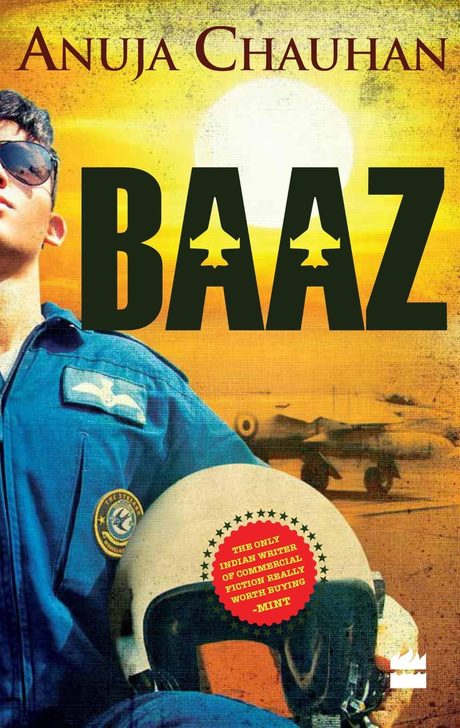
A village boy becomes a fighter pilot in the 1971 war and falls for a photographer who thinks his entire job is wrong.
Ishaan Faujdaar grows up in a Haryana village obsessed with flying, gets into the Indian Air Force, and turns out to be frighteningly good at it. Then 1971 arrives. Tehmina Dadyseth comes from a service family and photographs what war actually does to people, and the argument between the two of them about whether any of it is worth the cost runs under the whole novel. This is Chauhan with the jokes turned down and the research turned up: cockpit procedure, squadron slang, the boredom before a sortie, the language of men who will not admit they are frightened. The last stretch is not a romcom at all.
Why it is at 5
Fifth is a compromise and I will own it. On ambition and craft this belongs at number two, because it is the best-written book here and the only one that risks anything. On the weld test it slips, because the love story and the war stop feeding each other in the final act and the ending arrives like a different novel. I have moved it up and down twice. If you only care how good the sentences are, read it second.
Read it ifyou want the serious, ambitious Chauhan and can take a hard ending
Skip it ifyou came for the banter, since the last quarter has almost none
ambitious, aerial, heavyBest for: readers who want real stakes1971 warair forcehistorical
Heads up: war violence, and an ending many readers find devastating
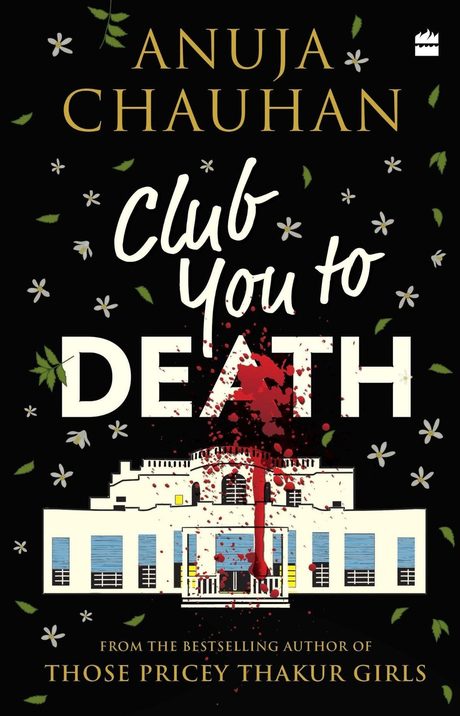
A trainer is found dead in the gym of an elite Delhi club where every suspect has a membership and a lawyer.
The Delhi Turf Club has old money, new money, a waiting list and, one morning, a body in the gym. ACP Bhavani Singh, a polite and slightly rumpled Haryanvi policeman who is quite happy to be underestimated, works his way through members who cannot conceive of themselves as suspects. The mystery itself is fine. The club is the reason to read the book: the seating hierarchy, the small cruelties, the way privilege speaks to staff when it assumes nobody is listening. It is her sharpest social writing and her first proper whodunnit, and Netflix filmed it as Murder Mubarak in 2024.
Why it is at 6
Sixth because the mystery machine is the one machine that fights her strengths. A whodunnit has to withhold, and Chauhan is at her best when everybody is oversharing. Bhavani Singh is a genuinely good creation and the club satire earns the ticket price on its own, but the romance is decorative here and the solution is guessable well before the reveal. Read it for the world, not for the puzzle.
Read it ifyou want Delhi class satire with a body in the middle of it
Skip it ifyou read mysteries for the puzzle and sulk when you solve them early
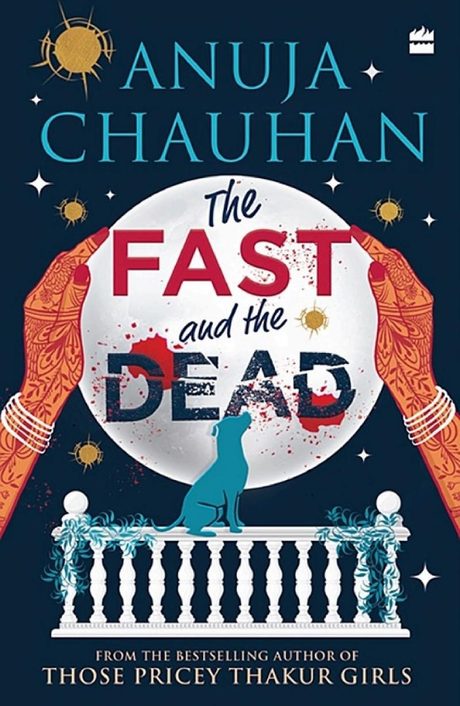
On Karwa Chauth night an old woman fires a shotgun at street dogs, and by morning a jeweller in the lane is dead.
Chauhan moves ACP Bhavani Singh south, to Habba Galli in Shivajinagar, Bengaluru, a lane of jewellers, dog feeders, long feuds and permanent noise. On Karwa Chauth night an eccentric resident named Dondi Pais empties a double-barrelled shotgun to scatter a pack of strays, and by the next morning a stray bullet has killed a jeweller in the same lane. Bhavani turns up and begins asking his mild, disarming questions of people who have known each other for forty years. The lane is drawn with real affection and the dogs get some of the best writing in the book.
Why it is at 7
Last, and I want to be fair about why. It is a warm book with a lovely setting, and it beats Club You to Death on neighbourhood texture. But the cast is too large to keep straight, the pace slackens badly through the middle, and the romance is barely present. If you already love Bhavani Singh you will enjoy meeting him again. If you are picking your first Chauhan, this is the wrong door.
Read it ifyou already like ACP Bhavani Singh and want more of him
Skip it ifyou need a cast you can keep track of, because this lane is crowded
Every Chauhan novel is a romance bolted to a second machine. Cricket in Zoya, an election in Bittora, a newsroom and a joint family in Thakur Girls, a property war in BJ, the 1971 conflict in Baaz, a murder in the last two. The books at the top of this list are the ones where the two halves genuinely need each other, where you cannot extract the couple without the whole structure coming down with them.
The books lower down are the ones where the machine runs perfectly well on its own. Club You to Death would survive losing its romance entirely. The Fast and the Dead barely has one to lose. That is not a moral failing, it is simply a different kind of book, but if you came to Chauhan for the specific pleasure of watching two stubborn people argue their way into love, the ranking tells you where the most of it lives.
Worth knowing
Reading order, and which books connect
Three of the seven are standalones: The Zoya Factor, Battle for Bittora and Baaz. Start with any of those and you lose nothing. The other four are two pairs. Those Pricey Thakur Girls leads into The House That BJ Built, one family and one house about twenty years apart, and the sequel gives away the first book's ending in its opening chapters. Club You to Death leads into The Fast and the Dead through ACP Bhavani Singh, though those two survive being read out of order.
If you want a route through all seven that never stalls, go Zoya, Bittora, Thakur Girls, BJ, Baaz, Club, Fast. That order hands you the light ones while her voice is still new, the two-book family arc in the middle once you are invested, the heavy novel when you already trust her, and the mysteries at the end, when you will forgive their flaws because you like the woman writing them.
Worth knowing
The English she writes in
Her real invention is the language. Chauhan writes Indian English the way it is actually spoken in Delhi drawing rooms and Haryana messes, with Hindi and Punjabi dropped in mid-sentence and no italics, no glossary, no apology to anyone reading from abroad. Hain, yaar, arrey, bugger, chalo. Nobody in these books stops to explain a word to you.
That single choice is why her dialogue sounds like people instead of translation, and why she can be funny in a register most Indian novelists writing in English never reach. If you have ever felt that Indian characters in English fiction talk like BBC presenters at a wedding, this is the cure.
People also ask
Questions, answered
Which Anuja Chauhan book should I read first?
The Zoya Factor, unless you have a full weekend. It is the easiest door into her voice: the premise explains itself in one line, the cricket does not require you to like cricket, and you will know inside forty pages whether she is for you. If you do have the weekend, start with Those Pricey Thakur Girls instead, because it is the better novel and it rewards a slower read. Do not start with Baaz or with either mystery.
Do Anuja Chauhan's books have to be read in order?
Only two pairs are connected. Those Pricey Thakur Girls comes before The House That BJ Built, which follows the same family and the same house about twenty years later, and reading them the wrong way round spoils the first one badly. Club You to Death comes before The Fast and the Dead, since both feature ACP Bhavani Singh, although those two work fine as standalones. The Zoya Factor, Battle for Bittora and Baaz are completely independent.
How many books has Anuja Chauhan written?
Seven novels, published between 2008 and 2023: The Zoya Factor, Battle for Bittora, Those Pricey Thakur Girls, The House That BJ Built, Baaz, Club You to Death and The Fast and the Dead. All seven are ranked on this page. She also spent seventeen years in advertising at JWT before writing fiction full time, which is where most Indians first met her writing without ever knowing her name.
Which Anuja Chauhan books have been adapted for screen?
Three of them so far. The Zoya Factor became a Hindi film in 2019, with Chauhan credited for the dialogues. Those Pricey Thakur Girls has been adapted twice for television, as Dilli Wali Thakur Gurls on &TV in 2015 and as Dil Bekaraar on Disney+ Hotstar in 2021. Club You to Death became Murder Mubarak on Netflix in 2024. The books are better than all of them, which is the usual verdict and in this case the correct one.
Is Anuja Chauhan only for romance readers?
No, although every book has a romance in it somewhere. Battle for Bittora works as a comic novel about Indian elections, Baaz is a war novel with a love story inside it rather than the other way round, and Club You to Death is a club satire with a corpse. If the romance genre puts you off, start with Baaz or Bittora and you will get her sentences without the marriage plot doing most of the driving.
Which is the best Anuja Chauhan book?
Those Pricey Thakur Girls, on this list and in most reader arguments I have had about her. It has her best family writing, her best slow-burn couple and the most complete world of the seven. Baaz is the better piece of writing sentence by sentence and Battle for Bittora is the funniest, so the honest answer is that the top three sit very close together and your pick depends on whether you want warmth, ambition or jokes.
Before you go
What to read tonight
If it is a weeknight and you want something started before you sleep, open The Zoya Factor. It asks nothing of you and gives back plenty, and forty pages will tell you whether her voice is your voice. If you have a free Sunday, take Those Pricey Thakur Girls instead and clear the afternoon, then read The House That BJ Built the following week while the family is still warm in your head.
Choosing between Baaz and Battle for Bittora comes down to one question: do you want to laugh or do you want to be wrecked. And once you have finished three of them, go and watch one of her old Pepsi films on YouTube. Same person, same timing, thirty seconds instead of four hundred pages. That is the rarest thing about her.