15 Books Like Chetan Bhagat, With Endings That Actually Land
Same one-weekend pace, same India you recognise, without the collapse in the last thirty pages.
By Bhavik SarkhediUpdated August 2026Covers and data: Google Books, Open Library
I read Five Point Someone in one sitting on a train, sometime in college, and I have defended it in arguments ever since. People who look down on it usually have not tried to write two hundred pages that a seventeen year old in a hostel will actually finish. That is a real skill and most literary novelists in this country do not have it.
Here is the honest part. Bhagat is very good for the first hundred pages and weak in the last fifty. The setup is sharp, the friends are real, the college or the call centre is exactly right, and then the ending arrives in a rush, usually with a speech in it. Almost every reader who searches for books like his is really searching for the same easy sentences with a last chapter that holds.
So the list is built in three tiers. Same shelf, better made, for readers who want to stay in the exact lane. Same speed, different aisle, for readers who want mythology, a thriller, or a comedy at that pace. And the step up, five books that read just as easily and hit far harder, which is where I would send you if you have read all of his and want more from a book. Every entry has a skip line, because some of these are not for everybody.
The one weekend test. Nothing here needs a dictionary or a study group, and almost all of it fits into a Saturday and a Sunday.
The ending test. I refuse to recommend a book that falls apart in its final thirty pages, because that is the exact complaint people have about the author they are searching for.
The recognition test. Hostels, PGs, ad agencies, coaching classes, matrimonial sites, small towns. An India you have stood in, not an India explained to foreigners.
Two names I get asked about and left off on purpose: Savi Sharma and Sudeep Nagarkar. Both sell in large numbers, both write in a register thinner than Bhagat on his worst day, and everything on this list gives you the same speed with more under it.
Every book verified through Google Books and Open Library with a real cover, and first-publication years checked rather than lifted from whichever reprint came back.
A junior ad agency executive is declared lucky for Indian cricket, and the captain refuses to believe in her.
Zoya was born in Delhi at the exact moment India lifted the 1983 World Cup, which is a fact her family has milked for years. Then the national team eats breakfast with her, wins, and decides she is a good luck charm worth flying to every match. Nikhil Khoda, the captain, thinks the whole thing is superstitious nonsense and says so. Chauhan writes Punjabi family dialogue better than anyone alive, and the advertising world is drawn from the inside, since that was her actual job.
Why it is at 1
Number one because it does everything Bhagat does and then keeps its footing at the end. Same speed, same recognisable India, far better jokes, and a heroine with a job that involves actual work. If you have only read male-narrated Indian commercial fiction, this will feel like someone opened a window. Ignore the film, which flattened it.
Read it ifyou want cricket, Delhi families, and jokes that keep coming
Skip it ifyou have no patience for cricket at all
funny, loud, DelhiBest for: anyone who likes a comic voicecricketromcomdelhi
Pairs with: The Inscrutable Americans, the other genuinely funny book here
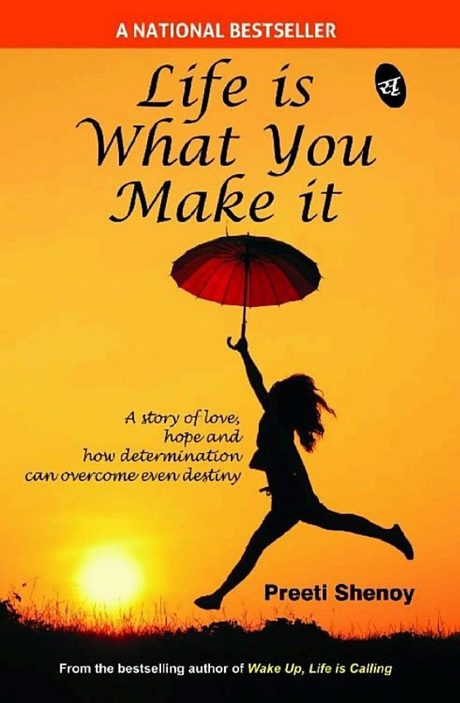
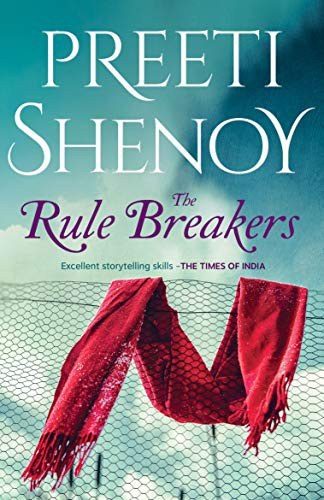
A student with a spotless record and a full life is admitted to a psychiatric ward, and has to work out who she is after that.
Ankita is the sort of student everybody's parents hold up as an example: grades, friends, a scholarship, plans. The book follows her through college in the 1990s and into an illness she has no vocabulary for, then into treatment, then into the long unglamorous business of building a life on the other side. Shenoy writes without any drama in the sentences, which is the right choice, and the sections about how family and friends behave around a mental health diagnosis are the truest part.
Why it is at 2
Second because it delivers the Bhagat reading experience, one weekend, plain English, an Indian campus, and then goes somewhere he never goes. Very few books of this kind treat bipolar disorder as an ordinary medical fact rather than a plot twist. It is at two rather than one because the prose is functional at best.
Read it ifyou want an easy read about something that matters
Skip it ifhospital and mental illness chapters are hard for you
plain, honest, steadyBest for: students under pressuremental healthcampustrue story
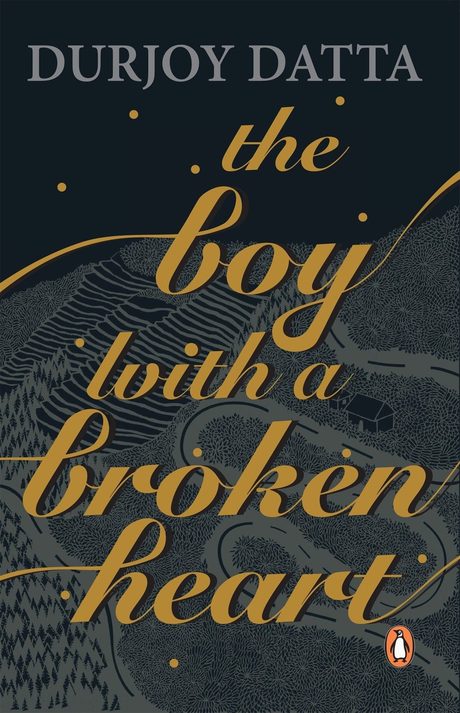
A teenage boy's diary about the girl he loves, and about how much of himself he is willing to damage for her.
Raghu writes everything down. He is fifteen, he lives in Delhi, his family is strained in ways he does not fully see yet, and he has decided that Brahmi is the point of his life. The diary form lets Datta write teenage feeling at full volume without apologising for it, and the book goes to places most Indian commercial fiction avoids, including self-harm and a household that does not know how to help. It is the book of his I would hand to someone who has only seen his covers and dismissed him.
Why it is at 3
Third because it is the strongest thing to come out of the Half Girlfriend lane. Datta wrote a great many quick titles before this one, and here the writing catches up with the feeling. It ranks below Shenoy because it is deliberately overwhelming, and the darkness in the last third is not something to walk into casually.
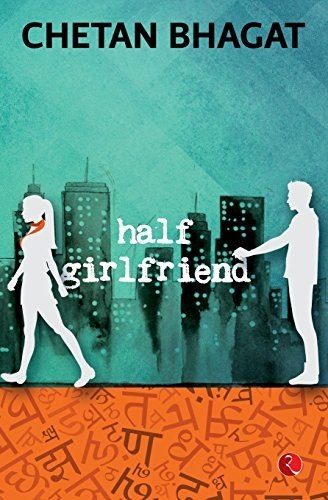
Read it ifyou loved the teenage ache in Half Girlfriend
Skip it ifself-harm on the page is not for you
raw, dark, adolescentBest for: readers in their late teensdiaryfirst lovedelhi
A software engineer meets a girl on a matrimonial site, and the author is writing about his own life.
Ravin is an IT engineer in Bangalore, bored, single, and eventually persuaded to create a matrimonial profile. He meets Khushi, and the courtship happens the way courtships happened in 2006: long phone calls, careful family conversations, a single meeting in a city neither of them lives in. It is written simply and without much technique, and then it stops being a love story, because the events were real and Singh is writing about something that happened to him.
Why it is at 4
Fourth, and this is a placement about impact rather than craft. As a novel it is thin, the dialogue is stiff, and the first half is a series of phone calls. As an experience it is one of the very few Indian books that makes grown men cry on trains, and it did more to create the current market than anything except Bhagat. Read it for that.
Read it ifyou want the famous one and you are ready to cry
Skip it ifyou need good sentences to enjoy a book
simple, sincere, devastatingBest for: readers new to Indian fictiontrue storylong distancegrief
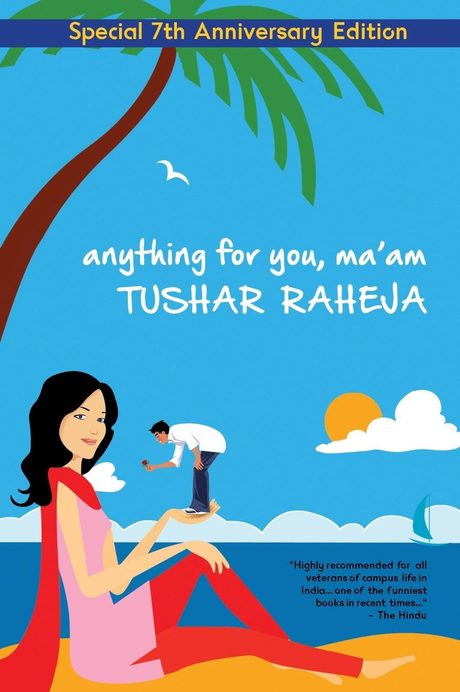
An IIT student invents an elaborate lie to escape Delhi and reach his girlfriend in Chennai, with a professor on his trail.
Tejas needs to get to Chennai. His professor needs him to stay in Delhi. What follows is a comic chase across the country involving forged plans, an unreliable friend, a train, and a level of self-belief only a twenty year old could sustain. The book came out of the same Srishti-era boom that produced most of this genre, and it is by some distance the funniest thing that boom produced. The romance is thin, the running around is the point.
Why it is at 5
Fifth, and it is here for one reason: it is the closest thing to Five Point Someone written by somebody else, with an IIT setting, a chaotic plan and jokes that still work. It is lower than the four above because it is very slight, and the female lead barely exists as a person. Take it as a two hour comedy, not a novel.
Read it ifyou want the IIT campus comedy without the sermon
A Tibetan tribal chief migrates to a perfect kingdom, drinks something that turns his throat blue, and is told he is a prophecy.
Shiva leads his tribe into Meluha, a society organised down to the last detail, where the ruling class is waiting for a saviour from the mountains. His throat turns blue after a drink of somras, which is the sign they have been promised, and a man who considers himself an ordinary fighter has to decide whether to accept a role written for him. Amish treats the gods as people with logistics problems, which is the whole appeal, and the writing is quick and unfussy.
Why it is at 6
Sixth, and the top of the second tier, because it delivers exactly the Bhagat contract, easy sentences and constant forward motion, in a completely different genre. It changed Indian publishing on its own. The prose is often clumsy and the philosophy lectures run long, so go in for the story engine and not for the language.
Read it ifyou want mythology at airport-novel speed
Skip it ifclunky dialogue will pull you out of a book
brisk, mythic, plainBest for: readers who like seriesmythologyshivaseries
The Mahabharata retold by Draupadi, including the parts about Karna that the epic keeps politely quiet about.
You know the story. What you have probably never had is the woman at the centre of it narrating her own marriage, her own humiliation in the court, and her own unspoken feeling for the man on the other side. Divakaruni keeps the plot familiar and moves the camera, so the war becomes something that happens to a household rather than to a nation. It reads faster than any other retelling I have tried, and the palace of the title is the saddest thing in it.
Why it is at 7
Seventh. If you read Amish for the mythology and found the writing rough, this is the same shelf with far better prose and no drop in pace. It sits below Meluha only because it assumes you know the outline of the epic already, so a reader coming in cold will do more work than a Bhagat reader expects to.
Read it ifyou want the Mahabharata from the woman's side
Skip it ifyou do not know the epic at all yet
intimate, mythic, sadBest for: readers who liked Amishmythologymahabharataretelling
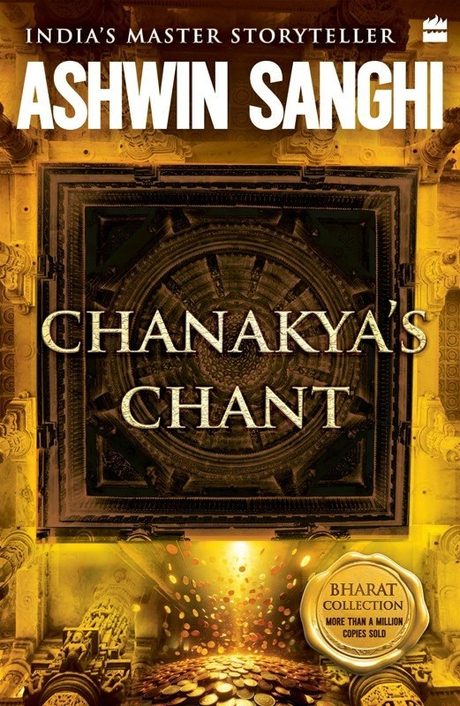
Chanakya in 340 BC and a Kanpur kingmaker today, both building a leader out of nothing, chapter by alternating chapter.
One thread follows the classical strategist plotting his way to control of a kingdom. The other follows Gangasagar Mishra, a modern Brahmin schoolteacher in Kanpur who picks a slum girl and spends decades manoeuvring her towards the prime minister's chair. The two timelines mirror each other move for move, and the pleasure is watching a plan work in two centuries at once. Sanghi is not a beautiful writer and does not try to be. He is an excellent plotter.
Why it is at 8
Eighth, for readers who liked Revolution 2020's interest in how Indian power actually gets used but wanted the plot machinery to be better. It is cynical in a satisfying way. It ranks here because the female characters are instruments rather than people, and the political shortcuts get repetitive by the fourth or fifth double cross.
Read it ifyou like politics, plotting and dual timelines
Skip it ifyou want characters more than mechanics
cynical, twisty, briskBest for: readers who like thrillerspolitical thrillerhistorydual timeline
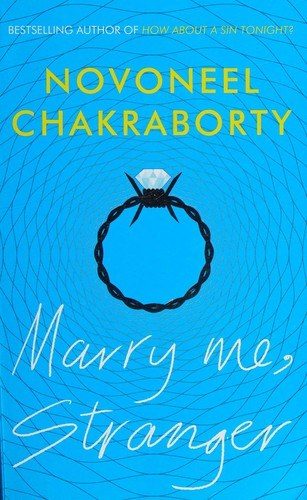
A young woman new to Mumbai starts getting messages from someone who knows every detail of her life.
Rivanah moves from Kolkata to Mumbai for a job, takes a flat, and begins receiving instructions from an anonymous stranger who knows what she did yesterday and what she is about to do tomorrow. Sometimes the stranger helps her. That is the unsettling part. Chakraborty writes short chapters that end on a hook, which makes the book move at speed, and the Mumbai of paying guest accommodation and office politics is convincingly ordinary underneath the creepiness.
Why it is at 9
Ninth. It is the thriller version of the Bhagat contract: young people, a big city, easy sentences, and a reason to keep turning pages. Be warned that it is the first book of a trilogy and it does not resolve, which is a legitimate reason to be annoyed. It ranks here because the writing is basic and the payoff is two books away.
Read it ifyou want an easy thriller set in urban India
Skip it ifunfinished first books in a series irritate you
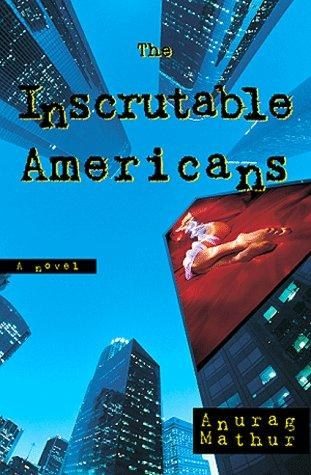
The son of a small-town hair oil manufacturer lands in an American university and is confused by absolutely everything.
Gopal arrives from a town in India to study chemistry in America, armed with letters from his father and no preparation at all for roommates, dating, or the plumbing. The comedy comes from his letters home, which describe American life with total confidence and consistent inaccuracy. It was written before the current wave of Indian commercial fiction existed, and it is still funnier than most of what came after, though a few of the jokes have aged into things you would not write now.
Why it is at 10
Tenth, and the oldest book in this tier. It is on the list because it proves the format is not new: an easy Indian novel about a young man out of his depth, three hundred pages, one sitting. If Two States made you laugh, this is the ancestor. Ranked here because some of the sex comedy is dated and it will make you wince twice.
Read it ifyou want a genuinely funny book from before the boom
Skip it ifdated jokes about women will spoil it for you
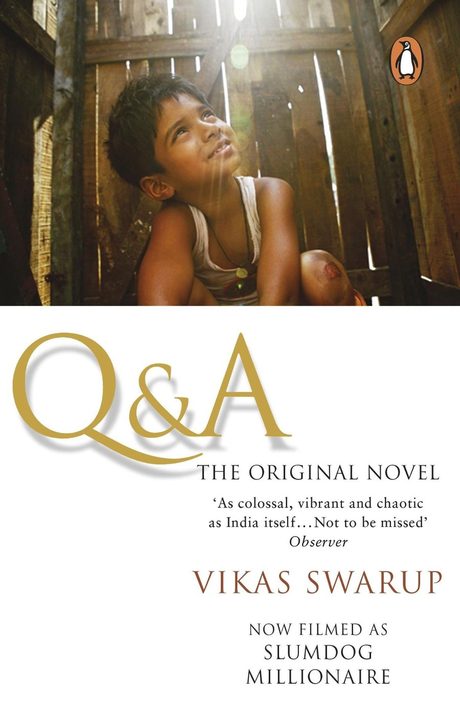
A waiter with no education wins a billion rupees on a quiz show, is arrested for cheating, and explains each answer with a story.
Ram Mohammad Thomas is eighteen, works in a bar in Mumbai, and has just answered twelve questions correctly on national television. Nobody believes he could have. Each chapter takes one question and gives you the piece of his life that taught him the answer, so the book is really twelve short stories about the underside of the city, stacked into a structure that keeps you moving. It became the film Slumdog Millionaire, which changed several things and lost the book's cold humour.
Why it is at 11
Eleventh, and the gentlest step up on the list. The chapters are self-contained, the language is simple, and yet the book is doing something structurally clever that most commercial fiction never attempts. If you have read every Bhagat and want to feel your reading get better without any pain, start here.
Read it ifyou want twelve short stories disguised as a novel
Skip it ifyou have seen the film and want no overlap
clever, streetwise, darkBest for: readers stepping upmumbaistructurequiz show
A driver from a village writes letters to the Chinese Premier explaining, without apology, how he became a Bangalore businessman.
Balram Halwai narrates his own rise in seven nights of letters, from a tea shop in a village to a car in Delhi to an office in Bangalore, and he tells you early what he did to get there. Adiga writes servitude from the inside: the mosquito net over the driver's mat, the way employers talk over your head, the arithmetic of a family that owns your future. It is very funny in a way that keeps turning cold on you, and it moves like a thriller.
Why it is at 12
Twelfth. If the anger in Revolution 2020 about corruption and small-town ambition is what stayed with you, this is that anger with a real weapon. It reads as easily as anything on this list, one voice, short chapters, no literary difficulty. It won the Booker Prize in 2008 and it is still the least intimidating prize winner I can put in your hands.
Read it ifyou want rage about class written at speed
Skip it ifyou need a protagonist you can approve of
savage, funny, coldBest for: readers who liked Revolution 2020classsatirebangalore
A Dalit clerk in a Mumbai research institute decides to pass his ten year old son off as a mathematical genius.
Ayyan Mani works for a famous Brahmin astronomer and spends his days watching brilliant men behave like children. He lives in a one room chawl with his wife and his partially deaf son, and he begins, almost as a joke, to build a public legend around the boy. The plot then does what good plots do and stops being a joke. Joseph writes the funniest sentences of anyone on this list, and the caste politics are handled with no lecturing at all.
Why it is at 13
Thirteenth. This is the book for a Bhagat reader who has started to want jokes with a knife in them. The office satire is universal, the institute is a workplace anyone would recognise, and it never stops being readable. Ranked here rather than higher because the ending is deliberately unresolved, and if you came for a clean finish you will feel short-changed.
Read it ifyou want office satire with caste written properly
Skip it ifyou want the ending tied up neatly
sly, funny, sharpBest for: readers who like satirecastesatiremumbai
A son tries to understand his mother, who is funny, loving, unwell, and the whole weather of a one bedroom flat in Mumbai.
Em is the mother. The Big Hoom is the father. The narrator is their son, growing up in a small Mahim flat where his mother's mental illness is not a secret and not a story, simply the condition of the household. The book is short and made of scenes and remembered conversation, and Em gets all the best lines, which is exactly how it goes in families like this. It is the most honest Indian book I know about loving someone who is ill.
Why it is at 14
Fourteenth, and the only book on the list I would call important without embarrassment. It reads in an evening. Every sentence is plain. If Life is What You Make It gave you a first look at mental illness in Indian fiction, this is the same subject written by a much better writer, from inside the family rather than inside the patient.
Read it ifyou want a short book that will stay with you for years
Skip it ifa parent's mental illness is too close right now
tender, funny, unflinchingBest for: anyone with a difficult parentfamilymental healthmumbai
Heads up: mental illness, suicide attempts, described directly
A Punjab border village where Sikhs and Muslims have always lived together, in the summer of 1947, when a train arrives full of bodies.
Mano Majra is small enough that everyone knows the train timings and everyone knows everyone's business. Then Partition reaches it, in the form of rumours, then officials, then a train from across the new border with nobody alive on it. Singh writes it as a village story, with a local dacoit, a Muslim girl, a nervous bureaucrat and a communist who has read too much, and the horror arrives through ordinary people making ordinary decisions slightly too late.
Why it is at 15
Fifteenth, the shortest book here and the one that will change what you think a quick read can do. Under two hundred pages, simple English, no literary trickery, and an ending that has been keeping Indians awake since 1956. If you take one book from this list into a weekend, and you want to be a different reader by Monday, take this.
Read it ifyou want the shortest book here and the deepest
Skip it ifcommunal violence is not something you can read now
spare, tense, brutalBest for: one long eveningpartitionpunjabclassic
Heads up: communal violence, sexual violence, mass death
What Bhagat is actually good at, and where he loses you
Three things make his books work. The sentences never make you stop, so a reader who does not read much never feels stupid. The situations are ones you have lived through, or your cousin has, which is why the campus and the call centre and the marriage negotiation land. And the narrator sounds like a friend telling you a story badly on purpose, with jokes in the wrong places.
What breaks is the last act. The problem gets solved too fast, somebody gives a speech about what India needs, and the girl agrees. The books below keep the first three things and fix the fourth, which is the entire reason this list exists.
Worth knowing
How the three tiers work
Ranks 1 to 5 are the same shelf, done better: Indian commercial fiction about love and family and being twenty-something, written by people with more control. Ranks 6 to 10 keep his pace and change the genre, so you get mythology, a political thriller, a stalker mystery and a comedy about America. Ranks 11 to 15 are the step up, books that are still easy on the eye but are properly good, and any one of them will make the next Bhagat feel thinner. Nothing here is ranked by prestige. It is ranked by how likely you are to finish it and be glad.
People also ask
Questions, answered
Which author is most similar to Chetan Bhagat?
For pace and campus romance, Durjoy Datta, who writes in the same lane and has improved a great deal since his early titles. For the same easy reading with better jokes, Anuja Chauhan. For the same readership in a different genre, Amish Tripathi and Ashwin Sanghi. Ravinder Singh is the closest match for the emotional, first-person love story, though the writing is plainer than Bhagat's.
What should I read after Five Point Someone?
Anything for You, Ma'am by Tushar Raheja is the nearest thing to it: an IIT student, a ridiculous plan, and a chase across the country. After that go to The Zoya Factor for a funnier version of the same energy, and then to Serious Men if you have started to want your comedy with something sharper inside it. All three read in a weekend.
Which Chetan Bhagat book is actually his best?
Five Point Someone, and it is not close. The friendship in it is real, the fear of failing is real, and the ending is the least rushed of his career. Two States is the funniest and the most quotable. Revolution 2020 has his most interesting subject and his weakest execution. If you have read those three you have read the writer, and the rest is variation.
Are these books written in easy English?
All fifteen are, which was the whole selection rule. The five in the step up tier are better written, and better written usually means easier, not harder: The White Tiger is one voice telling a story, Train to Pakistan is short and plain, Q and A is twelve self-contained chapters. If English is your second or third language, start with Q and A or Life is What You Make It.
Is Durjoy Datta better than Chetan Bhagat?
At his best, yes, and at his fastest, no. Datta published a lot of quick titles in his first years and they read like it. The Boy Who Loved is a genuinely good novel about teenage feeling and family damage, and it is better than anything Bhagat has written since Two States. If you have only met Datta through his early covers, you have not met the writer he became.
Before you go
What to read tonight
Pick by mood rather than by rank. If you want to laugh this weekend, The Zoya Factor. If you want to cry, I Too Had a Love Story, and keep the evening free. If you have read every Bhagat and want the next level without any homework, Q and A on Saturday and Train to Pakistan on Sunday, in that order, because the second one lands harder after the first.
And a small thing worth doing. When you finish any of these, note whether the ending felt earned or arranged. Two or three books of that and you will find yourself reading better books without deciding to, which is the only way it ever really happens.