The first King book I ever picked up was IT, because that is the one everybody names. I carried eleven hundred pages around a hostel room for three weeks, got somewhere near the middle, and quietly put it back on the shelf. It took me two years to try him again. That is the standard King origin story and it is completely avoidable.
He has published more than sixty novels, so the beginner question is not which one is best. It is which one will not defeat you in week one. That is why these fourteen are arranged as a route rather than a scoreboard. Number one is where I would start a friend who has never read him, and number fourteen is where you will be a year later if the first three land.
Every entry carries two things above the title: how frightening it actually gets, and how many evenings it will hold. Five of the fourteen are not horror at all, which surprises people who know him only from film posters. If you have ten seconds, the quick picks below will do the job.
How I picked these
- Nothing over five hundred pages in the first six slots. A beginner should find out whether his voice suits them before signing away a fortnight.
- Route over ranking: the order is the order I would hand the books to you, so a very good book can sit at twelve simply because it needs the one before it.
- Standalones early. The Dark Tower is a multi-book commitment with its own rules, and nobody should take that lease in month one.
- Both famous ones are included, and both come with a warning about their first hundred pages, because that is where people give up on them.
- IT, The Stand and the Dark Tower books are left out on purpose. They are the three most common places a new King reader quits and never comes back.
- Every edition here was checked through Google Books and Open Library, so the covers and ISBNs are real ones you can find in a shop.
The whole list at a glance
All 14 books, in order
| # | Book | Author | Year | Vibe | Best for |
|---|
| 1 | Misery | Stephen King | 1987 | claustrophobic, cruel, fast | your first King, full stop |
| 2 | Carrie | Stephen King | 1974 | raw, furious, sad | readers with one free weekend |
| 3 | The Long Walk | Stephen King | 1979 | bleak, hypnotic, relentless | people who claim to hate horror |
| 4 | The Green Mile | Stephen King | 1996 | tender, sad, old-fashioned | readers who cry easily |
| 5 | Different Seasons | Stephen King | 1982 | varied, human, sharp | sampling every register he has |
| 6 | On Writing: A Memoir of the Craft | Stephen King | 2000 | practical, blunt, warm | writers and curious readers |
| 7 | The Shining | Stephen King | 1977 | cold, domestic, haunted | the famous starting point |
| 8 | Pet Sematary | Stephen King | 1983 | grief-soaked, inevitable, grim | readers who want the worst of him |
| 9 | 'Salem's Lot | Stephen King | 1975 | creeping, small-town, classic | patient horror readers |
| 10 | The Institute | Stephen King | 2019 | propulsive, angry, modern | thriller readers trying King |
| 11 | Billy Summers | Stephen King | 2021 | controlled, moral, melancholy | crime readers |
| 12 | Doctor Sleep | Stephen King | 2013 | road trip, recovery, warmer | readers fresh off The Shining |
| 13 | 11/22/63 | Stephen King | 2011 | immersive, romantic, sad | long journeys and holidays |
| 14 | Fairy Tale | Stephen King | 2022 | warm, sprawling, uneven | after ten other King books |
The list
The books, ranked
1

Door one, small rooms / scare: human / two evenings
Misery
Stephen King1987about 321 pages
A novelist wakes up in a stranger's spare room with two broken legs, and she has read every book he has ever written.
Paul Sheldon writes romance novels about a character called Misery Chastain, kills her off in the final volume, then crashes his car in a Colorado snowstorm. He wakes in the house of Annie Wilkes, a former nurse who tells him she is his number one fan. She has the only copy of his new manuscript, a typewriter with a missing letter, and firm opinions about what he should write next. That is the entire setup. No ghosts, no ancient evil, nothing supernatural anywhere in it, just a locked room and a woman whose mood turns like weather.
Why it is at 1
Number one because it is the least intimidating thing he has written and the most efficient. One room, two characters, roughly three hundred pages, no history to memorise. If King is not for you, you will know by page fifty and you will have lost a single evening. If he is for you, this is the book that makes it official, and everything after it feels shorter.
Read it ifyou want maximum tension for the fewest pages
Skip it ifyou are squeamish about physical injury, because one scene here is famous for a reason
claustrophobic, cruel, fastBest for: your first King, full stoppsychological horrorstandaloneshort
Heads up: graphic injury, captivity, drug withdrawal
Pairs with: On Writing, which explains where the fear of a blank page in this novel comes from
2
Door one, small rooms / scare: rising hum / one weekend
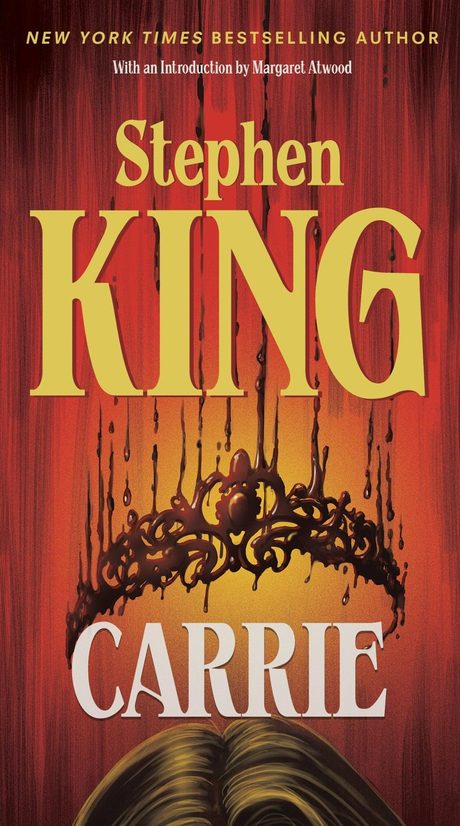
Carrie
Stephen King1974about 337 pages
A bullied girl works out that she can move objects with her mind, and her school finds out at the prom.
Carrie White is sixteen, raised by a mother whose religion has no warmth in it, and treated at school the way schools treat anyone visibly different. Then she discovers she can move things without touching them. King tells the story sideways, cutting between the events and the paperwork left behind afterwards, court testimony and book extracts and news reports, so you know from page one that something terrible happened and you keep going to find out how. It is his first published novel and it is short, angry, and still the sharpest thing he has written about how cruelty compounds.
Why it is at 2
Second because it is the quickest way into his actual horror, and because the fear comes from people rather than a monster. It is rougher than his later work, the split narration reads like a gimmick for the first thirty pages, and that is fine. You are here to find out whether his voice suits you, and one weekend answers the question.
Read it ifyou were ever the odd one out at school
Skip it ifyou want polish, because this is a first novel and it shows in places
raw, furious, sadBest for: readers with one free weekendtelekinesisschoolshort
Heads up: bullying, religious abuse, mass violence
3
Door one, small rooms / pure dread, no monsters / two days
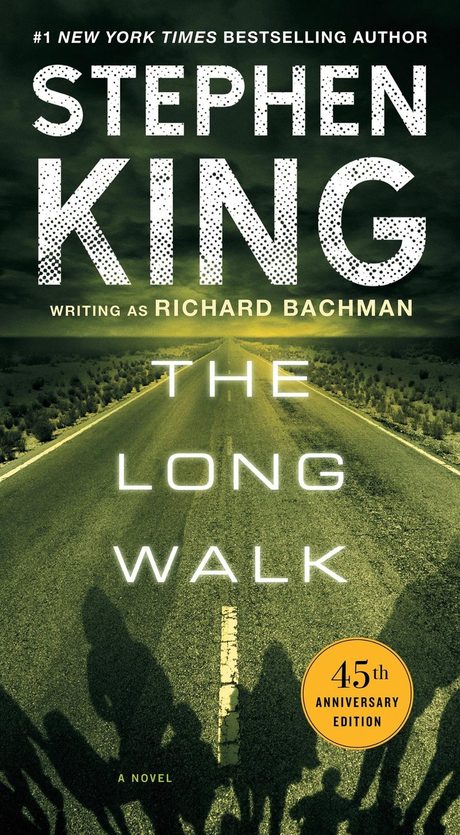
The Long Walk
Stephen King1979about 400 pages
A hundred teenage boys start walking down a road, and the ones who slow down are removed from the competition permanently.
A hundred boys set out on a road in Maine and walk. Drop below four miles an hour and you collect a warning, and the third warning is fatal, delivered by soldiers rolling along behind in a halftrack. Whoever is left standing gets anything he wants for life. There is no plot past that, only boys talking while their number falls, and a country watching the whole thing like a Sunday broadcast. King wrote it as a teenager and published it under the name Richard Bachman, and the flatness of the telling is the point of it.
Why it is at 3
Third because it holds nothing supernatural and still frightens more people than his vampire novel does. It travels light: no town to learn, no lore, just a road and a countdown. Put it above Carrie if bleak dystopia is your thing and below it if you need a plot with corners. Either way, it is the book my horror-avoiding friends finish in two sittings and then refuse to discuss.
Read it ifyou like dystopia and can sit inside slow dread
Skip it ifyou need a hopeful last chapter to feel the time was worth it
bleak, hypnotic, relentlessBest for: people who claim to hate horrordystopiabachmansurvival
Heads up: executions of teenagers, suicidal thinking
4
Door two, no monster / scare: none / four evenings
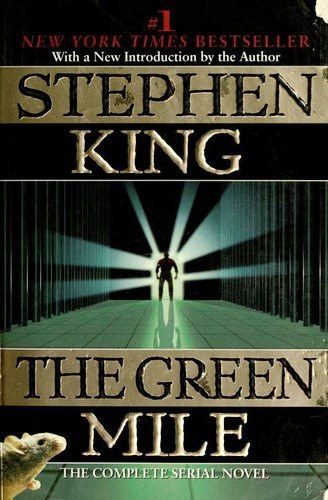
The Green Mile
Stephen King1996about 453 pages
Death row in 1932, a guard telling the story sixty years later, and a prisoner who plainly should not be there.
Paul Edgecombe runs the death row block at Cold Mountain prison in Depression era Louisiana, where the last walk happens along a strip of faded green linoleum. John Coffey arrives convicted of killing two girls, an enormous man who is frightened of the dark and cries easily, and it becomes clear quite early that the case against him does not hold together. King published it as a serial, six thin instalments released month by month, and you can feel that shape in the way each part ends on a hook. It is sentimental in places, and it earns most of what it asks for.
Why it is at 4
Fourth, and the first book through the second door, the one marked no monster. The three before it prove he can hold you; this one shows what he does with warmth instead of fear. It will get you on a train. One caution: John Coffey is the sort of saintly figure that has aged awkwardly, and I would rather say that now than let you meet it cold at chapter ten.
Read it ifyou want King with a heart and a patient build
Skip it ifyou dislike sentiment, or stories built around executions
tender, sad, old-fashionedBest for: readers who cry easilyprisonserial novelsupernatural drama
Heads up: executions, child murder, racial injustice
5
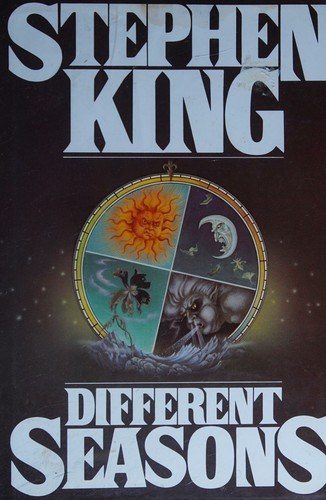
Door two, no monster / scare: mostly none / four sittings
Different Seasons
Stephen King1982about 508 pages
Four novellas, three of them filmed, and only the shortest one has anything supernatural in it.
Four stories at novella length, one per season. Rita Hayworth and Shawshank Redemption is the prison story you know from the film. Apt Pupil is a nasty little book about a teenage boy who identifies a Nazi war criminal hiding in his suburb and blackmails him into telling war stories. The Body follows four boys walking a railway line to look at a dead one, and became the film Stand by Me. The Breathing Method is the only ghost story here and the slightest. Read together, they show his range faster than any single novel manages.
Why it is at 5
Fifth because it is the best value on the list and the strongest argument against filing him under horror. Three registers in one volume, and if you bounce off a story you simply start the next. It sits under The Green Mile only because the collection is uneven, and because Apt Pupil is grim in a way some readers never quite forgive.
Read it ifyou want range and short commitments in one book
Skip it ifyou would rather sink into one long story than four short ones
varied, human, sharpBest for: sampling every register he hasnovellascoming of ageprison
Heads up: Apt Pupil carries Holocaust detail and animal cruelty
6
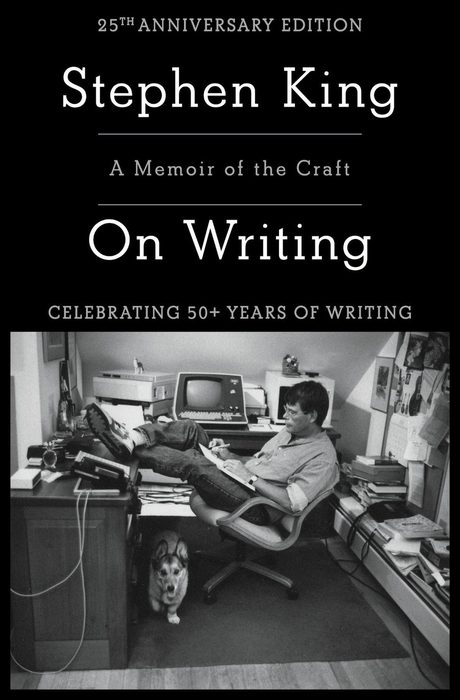
Door two, no monster / scare: none / three evenings
On Writing: A Memoir of the Craft
Stephen King2000about 320 pages
Half memoir, half toolbox, and the plainest thing anyone has written about the actual job of putting sentences down.
The first half is his life: a poor Maine childhood, rejection slips spiked on a nail in his bedroom wall, teaching English by day and writing in a trailer by night, then the drinking and cocaine years he refuses to prettify, then the van that nearly killed him while he was out walking in 1999. The second half is craft, arranged as tools in a box. Grammar, adverbs, dialogue, the first draft written with the door shut and the second with it open. He also tells you to cut ten percent, which remains the most useful editing advice I have been given.
Why it is at 6
Sixth because it is the door out of horror completely, and because it explains the five books before it. After this you start noticing his habits: the brand names, the small town gossip, the way a chapter lands on a deliberately plain sentence. Read it even if you never plan to write a word, since it doubles as the portrait of an addict who kept working.
Read it ifyou write anything at all, or you want the man behind the novels
Skip it ifyou came only for fiction and frights
practical, blunt, warmBest for: writers and curious readersnonfictionmemoircraft
Heads up: addiction and a serious road accident
7
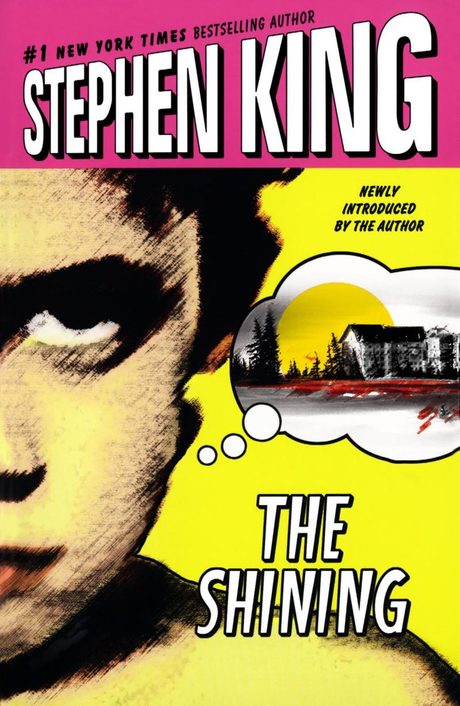
Door three, real horror / scare: lights on / a week
The Shining
Stephen King1977about 530 pages
A recovering alcoholic takes a winter caretaking job at an empty hotel and brings his wife and small son along.
Jack Torrance loses his teaching post, signs on to mind the Overlook Hotel through a Colorado winter, and moves his family in for five snowed-in months. His son Danny sees things nobody else can, which the hotel finds extremely interesting. What surprises film-first readers is how domestic the book is: a marriage under strain, a man fighting a drink he has already given up, a child who understands far more than the adults credit. The hotel never has to invent anything. It only presses on what is cracked already.
Why it is at 7
Seventh, and the first through the third door, because it is the title people name and it deserves the reputation once it moves. The opening hundred pages are family drama at low volume, which is precisely where new readers stop. Get past that and the final third is the best sustained stretch of fear he has written. Read it before Doctor Sleep, never the other way round.
Read it ifyou want the famous one and can wait a hundred pages for it
Skip it ifalcoholism and a father turning on his family sits too close to home
cold, domestic, hauntedBest for: the famous starting pointhaunted housefamilyclassic
Heads up: alcoholism, domestic violence, a child in danger
8
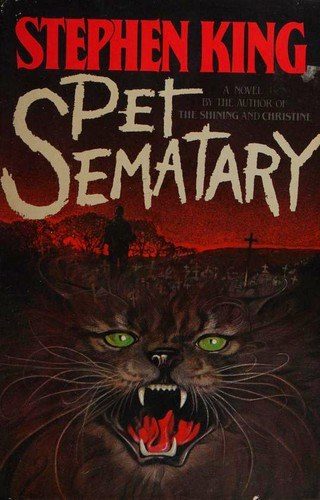
Door three, real horror / lights on and a rough week / a week
Pet Sematary
Stephen King1983about 411 pages
A doctor moves his family to a house beside a road full of speeding trucks, then learns what the woods behind it can undo.
Louis Creed takes a university job, moves his wife and two small children to rural Maine, and meets the old neighbour who walks him up to the animal burial ground in the woods behind the house. Beyond it lies older ground that gives things back, though not in the condition they left. The horror is not the thing in the woods. It is grief, and the arithmetic a parent starts doing at three in the morning. King has said he put the manuscript away for years because it disturbed him, and reading it, I believe him.
Why it is at 8
Eighth because it is the most upsetting book he has written and a beginner should reach it with some mileage behind them. If The Shining frightened you and you want worse, this is worse in a way that is hard to shake off. It ranks under The Shining only because the dread runs in one straight line, so the pleasure is thinner even as the fear is deeper.
Read it ifyou want the darkest book he ever published and know it
Skip it ifyou are the parent of a small child, honestly, wait a few years
grief-soaked, inevitable, grimBest for: readers who want the worst of himgriefrural mainedeath
Heads up: death of a child, sustained grief, animal death
9

Door three, real horror / scare: lights on / a week
'Salem's Lot
Stephen King1975about 586 pages
Dracula moves to a small town in Maine, and the town is so busy with its own secrets that it barely notices him arriving.
A writer comes back to the town he grew up in, planning a book about the empty house on the hill. Somebody else has just bought that house. From there it runs as a vampire novel told through the town rather than the vampire: the bus driver, the estate agent, the priest with a drink problem, the boy who reads horror comics and therefore works out what is happening well before any adult does. King has said openly that it is Dracula transplanted into 1970s America, and the transplant is the whole trick. The town is the protagonist and the town is what dies.
Why it is at 9
Ninth because it is the strongest of the three classics and also the slowest to start. He spends a hundred pages introducing people who are not going to survive, which is either why the book works or why you abandon it. Meet it after Misery and The Shining, once you trust that he is going somewhere. One scene at a bedroom window is the most frightening page in early King.
Read it ifyou like slow-building small town horror with a wide cast
Skip it ifyou want a fast opening, because this one takes its time on purpose
creeping, small-town, classicBest for: patient horror readersvampiressmall townclassic
Heads up: child death, violence
10
Door four, the long ones / scare: hum / four or five nights
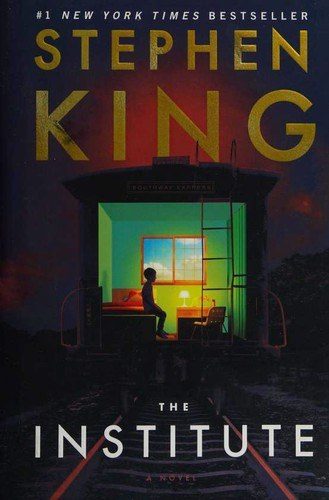
The Institute
Stephen King2019about 496 pages
Children with small psychic talents are taken from their beds and put to work in a facility hidden in the Maine woods.
Luke Ellis is twelve, clever enough for two universities at once, and mildly telekinetic. A team kills his parents in the night and takes him to a place called the Institute, where children are tested, injected, and eventually moved from Front Half to Back Half, which nobody comes out of. It reads like a thriller rather than a horror novel: escape logistics, adults who insist they are only doing a job, and a small town policeman whose story runs alongside until the two meet. Nearly five hundred pages that behave like three hundred.
Why it is at 10
Tenth, opening the fourth door, because it is the easiest long King to actually finish. The pages turn themselves and there is no accumulated lore to hold. Do not expect the strangeness of the seventies books. This one is angry rather than eerie, and it resolves more neatly than his endings usually do, which some readers count as a weakness and most beginners count as a relief.
Read it ifyou want a long book that moves like a thriller
Skip it ifchildren being hurt is a firm no for you
propulsive, angry, modernBest for: thriller readers trying Kingpsychic kidsthrillerlate king
Heads up: children imprisoned, experimented on and killed
11
Door four, the long ones / scare: none / five nights
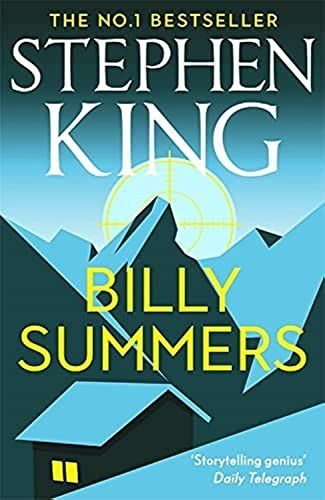
Billy Summers
Stephen King2021about 480 pages
A hitman with a rule about who he will shoot takes a final job, and hides in a small city pretending to be a novelist.
Billy is an ex-Marine sniper turned contract killer who only accepts targets he considers bad men. The last job needs him to sit in a rented office for months while the mark grinds through a court case, so he builds a cover identity as a writer at work on a book. Then he genuinely starts writing it, and what comes out is his own life. Around the midpoint the novel changes shape entirely and becomes something slower and sadder. There is also one late detour that quietly ties back to another book on this list.
Why it is at 11
Eleventh because it is barely horror and very controlled, and it lands harder once you know his other books well enough to catch the nod. Next to The Institute it is slower and better written. Next to Misery it is far less frightening and much more moving. Save it for the point where you want to see what he does with nothing left to prove.
Read it ifyou want crime fiction with a conscience and a slow second half
Skip it ifyou came to be scared, because almost nothing here is frightening
controlled, moral, melancholyBest for: crime readerscrimehitmanlate king
Heads up: sexual assault and its aftermath, violence
12
Door four, the long ones / scare: hum / five nights
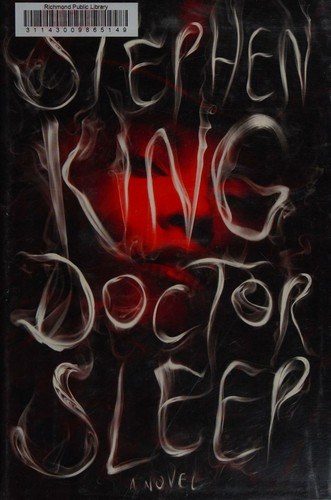
Doctor Sleep
Stephen King2013
Danny Torrance is grown up and drinking like his father, and there are people on the road who feed on children like him.
The boy from The Shining is a man now, carrying both the talent and the alcoholism. He drifts, hits bottom, finds Alcoholics Anonymous and a job in a hospice where his gift lets him sit with people as they go, which is where the nickname in the title comes from. Then a girl with a far larger talent starts contacting him, and a travelling group who live off children like her come hunting. It is a road novel and a recovery novel wearing a horror coat, and the recovery half is the honest one.
Why it is at 12
Twelfth because it needs The Shining first, and because it answers the question that book left open: what becomes of a child who survives something like the Overlook. It is warmer and baggier than the original, and its villains are more entertaining than terrifying. Read it while The Shining is still fresh, or skip it if you thought that ending was the last word.
Read it ifyou loved The Shining and want to know how Danny turned out
Skip it ifyou have not read The Shining yet, since this one spoils it entirely
road trip, recovery, warmerBest for: readers fresh off The Shiningsequeladdictionpsychic
Heads up: alcoholism, the torture and death of a child
13
Door four, the long ones / scare: none / two weeks
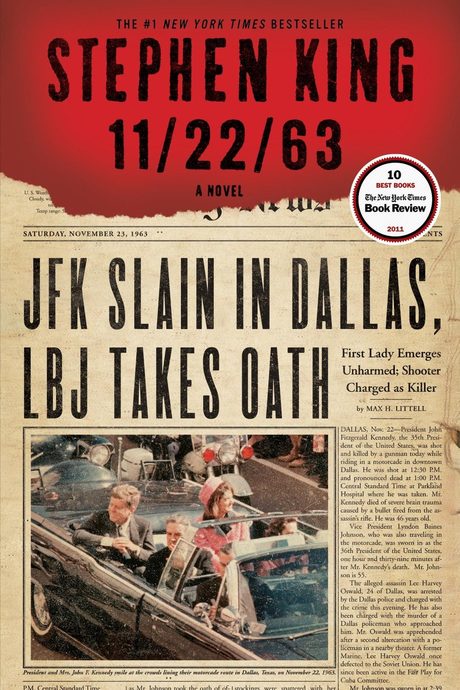
11/22/63
Stephen King2011about 880 pages
A teacher finds a door to 1958 at the back of a diner and decides to use it to stop the Kennedy assassination.
Jake Epping is handed a portal that always opens on the same day in 1958, plus a dying friend's project: live in the past for five years and stop Lee Harvey Oswald. The book is enormous and only about a third of it concerns the mission. The rest is Jake living in small town Texas, teaching, directing school plays and falling in love with a librarian called Sadie, while the past shoves back at anybody trying to alter it. It is the best love story he has written and it happens to be shelved under horror.
Why it is at 13
Thirteenth because it runs to nearly nine hundred pages, and you should only begin it once you know you enjoy his company. It is the book I recommend most often to people who insist they do not read King, and the one that converts them. The Texas stretch in the middle sags for a hundred pages, and then the last two hundred are as good as anything here.
Read it ifyou want one enormous book for a long journey
Skip it ifyou want horror, because this is science fiction with a romance inside it
immersive, romantic, sadBest for: long journeys and holidaystime travelromancedoorstop
Heads up: domestic violence and a violent family killing
14
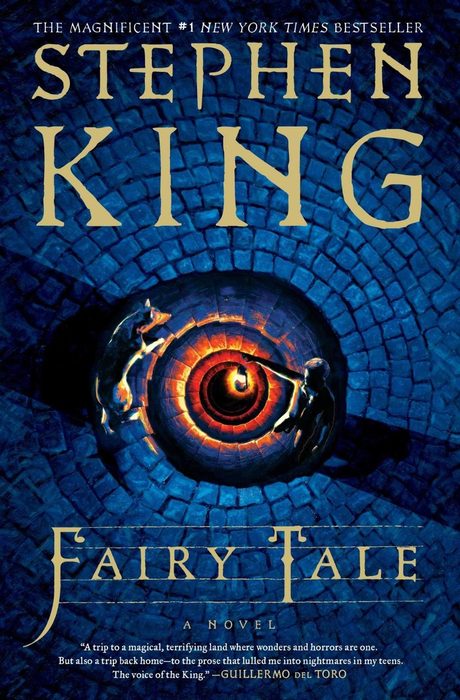
Door four, the long ones / scare: hum / a week
Fairy Tale
Stephen King2022about 624 pages
A teenager inherits an old man's house, his ageing dog, and the locked shed with another world at the bottom of it.
Charlie Reade is seventeen, his mother is dead and his father is a recovering alcoholic, and he takes on the care of a neighbour called Howard Bowditch along with an old German Shepherd named Radar. Bowditch has a shed with a deep shaft in it and a spiral stair going down. The first third is a plain story about a boy, an old man and a dog, and it is the best part of the book. Then Charlie goes down the stairs into a grey kingdom with a sundial that can make an old dog young, and it turns into a quest with borrowed furniture.
Why it is at 14
Fourteenth because it is the most divided opinion here and the least like the books that got you in. This is late King in full storyteller mode: generous, saggy, openly in love with the fairy tales he grew up on. Read it after the other thirteen and you will enjoy the ride and forgive the middle. Read it first and you will wonder what everyone sees in him.
Read it ifyou like portal fantasy, and you like dogs even more
Skip it ifyou want tight plotting, because this book wanders for long stretches
warm, sprawling, unevenBest for: after ten other King booksfantasydogslate king
Heads up: parental alcoholism, grief, a dog in danger
Worth knowing
How the four doors work
Door one is small rooms: short books with a handful of characters and no world to memorise. Door two is King without a monster, which exists in far greater quantity than the film posters suggest and is where most converts are made. Door three is the actual horror, the three seventies novels that built the reputation. Door four is the long ones, which are only worth starting once you know you like sitting with him for a fortnight.
Each entry also carries a scare level and a time cost. None means nothing supernatural and nothing frightening. Hum means unease that follows you into the kitchen. Lights on means what it says. The time cost is my own estimate for an average reader doing an hour a night, and long King moves faster than long anything else, so treat those numbers as generous.
Worth knowing
The two places new readers quit
The first is around page one hundred and twenty of a long one. King parks the plot and starts introducing a town: the barber, the widow, the boy on the bicycle, twelve people who will be dead by chapter twenty. Readers trained on thrillers read this as padding and give up. It is not padding, it is how he makes a place worth being frightened for, but knowing that in advance is the difference between stopping and continuing. If you want to test whether you can handle it, the first hundred pages of 'Salem's Lot are the purest example.
The second is the ending. He is a much better company-keeper than closer, and several of his best books deflate in the last twenty pages. Once you accept that the journey is the payment and the destination is a receipt, the books stop disappointing you. The two on this list with endings that genuinely land are Misery and The Long Walk, which is not a coincidence, since both are short enough that he never has to bring a whole town home.
People also ask
Questions, answered
Which Stephen King book should I read first?
Misery. It runs about three hundred pages, uses two characters and one house, and needs no knowledge of anything else he has written. You will know within fifty pages whether his voice works for you, which is the actual question a beginner is asking. If you want horror without the physical brutality, start with Carrie instead, and if you want no supernatural content at all, start with The Long Walk.
Should I start with IT?
No. It runs past eleven hundred pages, it moves between two timelines and seven characters, and it contains a scene involving the children that many readers find indefensible. It is the most common reason people say they tried King and gave up. Read four or five of the books on this list first, and if you still want the big one, you will read it with the patience it needs.
Which Stephen King books are not horror?
More than people expect. On Writing is a memoir with a craft manual attached. Different Seasons and The Green Mile are drama with only a thread of the uncanny. Billy Summers is a crime novel. 11/22/63 is time travel with a love story at the centre. The Long Walk is dystopia with nothing supernatural in it at all. Five of the fourteen books on this list will not frighten you.
Do I have to read Stephen King's books in order?
Almost never. Nearly everything he writes is a standalone, and the small connections between books are rewards for regulars rather than requirements. There are two exceptions on this list. Read The Shining before Doctor Sleep, since the sequel gives away everything. And Billy Summers has a late scene that pays off much better once you know The Shining.
Are Stephen King's books too scary to sleep after?
It depends entirely on which one, which is why every entry here carries a scare level. Misery and Carrie are tense rather than haunting. The Shining and 'Salem's Lot are genuine lights-on books for most people. Pet Sematary is the one I would not hand to a nervous reader or a new parent. Start at door one, and move up only when the last one left you fine.
Before you go
What to read tonight
If you want to start tonight, buy Misery and clear tomorrow morning, because you will be tired. If you already know that horror is not your thing and you are only here because a friend keeps insisting, read The Long Walk and then Different Seasons, and judge him on those. That is the fairest test he can be given.
After three or four of these, something changes. You stop reading him for the scares and start reading him for the company: the diner talk, the small vanities, the way he writes children who sound like children. That is the point at which the doorstops become inviting rather than intimidating, and IT stops being a wall and turns into an option. The book has not moved. You did.
Keep going
Lists that pair with this one
Genre
16 Horror Novels for Beginners, Ordered Gentlest to Most Brutal
This is a ladder, not a ranking: number one will not cost you any sleep, number sixteen might, and every entry tells you which kind of fear it uses.
Mood & Life
16 Best Books on Writing, Ranked by the Problem They Fix
Ordered by triage, not by fame: what to read when you cannot start, when you cannot finish, and when the sentences are the problem.
Genre
18 Best Crime Thriller Books of All Time, Ranked Honestly
Ranked by what is left of the book once you already know the ending, with a straight answer on every twist.
Genre
14 Best Book Series to Read (And Where Each One Sags)
Fantasy, crime, historical and Indian series, each with its book count, its finished or unfinished status, and the exact volume where most readers put it down.
Mood & Life
18 Books for People Who Don't Like Reading (Short and Fast)
Sorted by how much of your evening they ask for, starting with books you can finish tonight.