Bombay gets written as a single city. Delhi refuses to hold still. There are at least five of them stacked on the same map, and the novel you happen to pick up decides which one you meet: the walled city of Shahjahanabad, the refugee city that Partition built, the bungalow city where power lives, the colony city of the middle class, and the new money city that begins where the Metro thins out.
So this list is ordered by how much of the city you actually carry out of the book, and every entry is labelled with which Delhi it hands you. A book that gives you streets you could walk ranks above a book that uses Delhi as a postal address. That is why a crime novel from 2023 sits above a 1940 classic I admire more as writing.
The first twelve are novels. The last three are reportage and I have marked them clearly, because two of the finest books ever written about this city are not fiction, and hiding them or smuggling them into a fiction ranking would be dishonest. One absence worth flagging early: In Custody is mostly set in Mirpore rather than Delhi, so it is not here, and I explain that properly in the questions at the end.
How I picked these
- The city has to do work. If you could move the story to Lucknow by changing three street names, it did not make the list.
- Every book checked through Google Books and Open Library with a real cover, so nothing here is an edition that does not exist.
- Fiction and reportage are separated and labelled, never mixed. The last three entries are not novels and are not competing with the novels.
- One book per Delhi wherever I could manage it, so you get Chandni Chowk, an Old Delhi house, Lajpat Nagar, Hailey Road, the Malayali quarters and Gurgaon, rather than five books about the same drawing room.
- I cut novels set in an unnamed city that readers assume is Delhi, and I cut the campus romances where the city is only weather and traffic behind the couple.
- For translated books, the English edition had to be real and findable, and I have named translators only where I could confirm them.
The whole list at a glance
All 15 books, in order
| # | Book | Author | Year | Vibe | Best for |
|---|
| 1 | Age of Vice | Deepti Kapoor | 2023 | brutal, glossy, fast | readers who want a plot |
| 2 | The Ministry of Utmost Happiness | Arundhati Roy | 2017 | sprawling, angry, tender | patient literary readers |
| 3 | Clear Light of Day | Anita Desai | 1980 | still, hot, exact | readers who love sentences |
| 4 | Twilight in Delhi | Ahmed Ali | 1940 | elegiac, detailed, slow | Old Delhi obsessives |
| 5 | Delhi: A Novel | Khushwant Singh | 1990 | bawdy, sweeping, uneven | readers who want history |
| 6 | The Association of Small Bombs | Karan Mahajan | 2016 | sharp, sad, unsentimental | readers of literary fiction |
| 7 | The White Tiger | Aravind Adiga | 2008 | cynical, fast, funny | a two day read |
| 8 | Delhi: A Soliloquy | M. Mukundan | 2011 | patient, sad, documentary | readers of translated fiction |
| 9 | Those Pricey Thakur Girls | Anuja Chauhan | 2013 | loud, funny, eighties | romance readers |
| 10 | The Mirror of Beauty | Shamsur Rahman Faruqi | 2006 | opulent, exacting, long | patient historical readers |
| 11 | Sultan of Delhi: Ascension | Arnab Ray | 2016 | pulpy, propulsive, filmable | a flight or a train |
| 12 | The Windfall | Diksha Basu | 2017 | light, observant, comic | an easy weekend read |
| 13 | City of Djinns | William Dalrymple | 1993 | curious, funny, historical | first time visitors |
| 14 | Capital: The Eruption of Delhi | Rana Dasgupta | 2014 | cold, forensic, angry | readers who like arguments |
| 15 | A Free Man | Aman Sethi | 2011 | wry, humane, unresolved | one short sitting |
The list
The books, ranked
1

Fiction / Gurgaon and the farmhouse belt
Age of Vice
Deepti Kapoor2023about 560 pages
A Mercedes kills five pavement sleepers at dawn and the servant in the driver's seat takes the fall, which is where the money starts talking.
The book opens with a crash on the Inner Ring Road at five in the morning and a servant called Ajay sitting in the driver's seat of a car he was not driving. From there Kapoor goes backwards and outwards, into Ajay's childhood in a bonded labour household, into Sunny Wadia's world of penthouses and farmhouse parties, and into a journalist trying to write about a family that owns half the state's construction contracts. It moves like crime fiction and reads like a class autopsy. The Delhi here is the one built after 1991: liquor licences, land deals, gyms and the men who clean up afterwards.
Why it is at 1
First because it is the widest Delhi on this list. Most novels here pick one floor of the building and stay on it. Kapoor takes you from a village boy's bonded childhood to a penthouse inside the same chapter, and she is exact about what each level smells like. It is also the most readable book here, and I say that with two literary giants sitting just below it.
Read it ifyou want Delhi's class system delivered as a thriller
Skip it ifgraphic violence and very long books are not your thing
brutal, glossy, fastBest for: readers who want a plotcrimeclassgurgaon
Heads up: violence, drug use, sexual assault, bonded labour
2

Fiction / a graveyard behind Shahjahanabad
The Ministry of Utmost Happiness
Arundhati Roy2017
A hijra woman leaves Old Delhi's Khwabgah and moves into a graveyard, where she slowly builds a guest house for everyone the country discarded.
Anjum is born in Old Delhi, raised as a boy, and moves into the Khwabgah, the house where the city's hijra community lives. After Gujarat in 2002 she leaves and settles in a graveyard behind a government hospital, adding rooms until it becomes a guest house and then a small republic. Around her the novel spreads out to Kashmir, to Jantar Mantar during the anti corruption protests, to an abandoned baby and four people who love the same woman. It is a difficult, crowded, furious book that changes shape halfway through, and Delhi is the ground everyone keeps returning to.
Why it is at 2
Second because no other novel maps the city's edges this precisely, from the graveyard to the protest ground to the hospital gate where families sleep on the pavement. It costs you something: the structure sprawls and the Kashmir section reads almost as a separate book. Stay with it. The Delhi chapters are the best writing about this city in the last twenty five years.
Read it ifyou want Delhi's outcasts written with fury and love
Skip it ifyou need a linear plot and a single narrator
sprawling, angry, tenderBest for: patient literary readersliteraryhijra communitykashmir
Heads up: communal violence, torture in the Kashmir sections
3

Fiction / a decaying house in Old Delhi
Clear Light of Day
Anita Desai1980about 190 pages
Two sisters in a crumbling family house near the river spend a summer arguing about who was abandoned and who did the abandoning.
Bim stayed. She teaches history, looks after an alcoholic brother, and lives in the family house as it fills with dust and stray cats. Tara left, married a diplomat, and comes home to visit with the careful cheerfulness of a guest. Over a few hot days the novel moves backwards to 1947, when the city burned across the river and the children of this house heard it from the roof without understanding it. Desai writes heat, boredom and family resentment better than almost anyone, and the plot is simply the slow admission of what each sister did to the other.
Why it is at 3
Third because it is the best written book here, and because its Delhi is the one nobody photographs: the sunken quiet of an old house in a decaying neighbourhood where the century's big events happen offstage, audible but never visible. It ranks below the first two only because the city mostly stays outside the compound wall.
Read it ifyou want family resentment written with real precision
Skip it ifyou need incident, because almost nothing happens on the surface
still, hot, exactBest for: readers who love sentencesliterarysiblingspartition
4
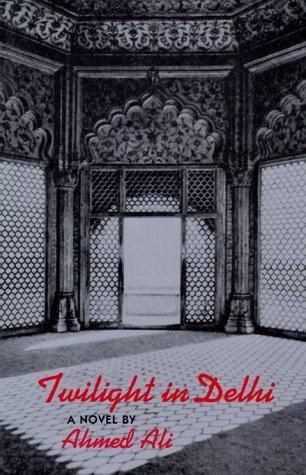
Fiction / Shahjahanabad before the fall
Twilight in Delhi
Ahmed Ali1940
A Muslim family inside the walled city lives out the last years of a culture that the British and then Partition would finish off.
Written in 1940, this is the walled city recorded from inside by a man who grew up there. Mir Nihal keeps pigeons, has a mistress, and watches his world thin out around him. His son Asghar wants to marry for love, which the household treats as a scandal. The Delhi around them is narrow lanes, poets, kite fights, the cries of vendors and the visible humiliation of the 1911 Durbar. Ali wrote in English about an Urdu speaking world, and the effect is of a translation from a language the book never names. Nothing here is closer to a primary source.
Why it is at 4
Fourth because it is the only novel here written from inside the culture it records, before that culture was broken up. The pacing is slow by modern standards and the women are seen from a distance. Read it anyway. It is the book that every later Old Delhi novel, including Roy's and Faruqi's, is quietly answering.
Read it ifyou want the walled city as its own people saw it
Skip it ifyou want pace, because the plot moves at 1940 speed
elegiac, detailed, slowBest for: Old Delhi obsessivesclassicshahjahanabaddecline
5

Fiction / six centuries in one volume
Delhi: A Novel
Khushwant Singh1990about 460 pages
A dissolute writer and his hijra lover carry a narrative that leaps between Nadir Shah's massacre, Ghalib's poverty and the killings of 1984.
Khushwant Singh spent decades on this and it shows in both the ambition and the mess. A cynical narrator who resembles the author moves between his present day life in Delhi, including his relationship with Bhagmati, a hijra woman, and a series of historical chapters told by builders, invaders, poets and eunuchs across six hundred years. Some chapters are superb, one or two are dull, and the final section on the anti Sikh violence of 1984 is the reason the book still matters. Singh was there for that, and he spares nobody, least of all himself.
Why it is at 5
Fifth because it is the only book that tries to hold the entire city in one volume, and it half succeeds, which is more than anyone else has managed. Fair warning: the sexual writing is crude in a way that has aged badly and the historical chapters are uneven. The 1984 section on its own earns the place.
Read it ifyou want Delhi's whole history with a filthy sense of humour
Skip it ifcrude sexual writing from an older generation puts you off
bawdy, sweeping, unevenBest for: readers who want historyhistorical1984epic
Heads up: explicit sex, and a massacre described in detail in the 1984 chapter
6

Fiction / Lajpat Nagar, before and after
The Association of Small Bombs
Karan Mahajan2016about 228 pages
A small bomb in a Lajpat Nagar market kills two boys, and the novel follows everyone it touches, including the man who built it.
The bomb goes off in the opening pages, in a crowded market, and it is deliberately a small one, the kind that gets four paragraphs in the newspaper. Two brothers die and their friend survives to carry it. Mahajan then tracks the Khurana parents through years of grief and activism, the surviving boy into a politics nobody around him expected, and, in the book's bravest move, the bombmaker through his own logic. The Delhi here is the ordinary one of markets, DDA flats, traffic and television news, which is exactly why the violence lands so hard.
Why it is at 6
Sixth because it is the most honest book here about what living in a bombed city does to ordinary people across years rather than days. It sits below the giants because its ambition is narrower, a single event and its blast radius. As a portrait of middle class Delhi under fear, nothing else comes close to it.
Read it ifyou want grief and terrorism written without a lecture
Skip it ifyou cannot read about the deaths of children
sharp, sad, unsentimentalBest for: readers of literary fictionterrorismgrieflajpat nagar
Heads up: child deaths, bombing, torture in custody
7

Fiction / the basement car park
The White Tiger
Aravind Adiga2008about 16 pages
A driver from Bihar writes to the Chinese premier explaining how he got out of the servant class, and what it cost his family.
Balram Halwai narrates his own rise across seven letters, from a village he calls the Darkness to a car service in Bangalore, and the middle of the book is Delhi seen from the driver's seat and the basement parking. He waits outside malls he is not allowed to enter. He sleeps under the building with the other drivers, watching mosquitoes and television. He drives his employers to hotels and to bribe ministers. The city is a machine for keeping men like him invisible, and Adiga's joke is that Balram understands the machine far better than his employers do.
Why it is at 7
Seventh because the Delhi in it is precise and unusual: parking basements, mall security, the servants' rooms behind the apartments. It ranks here rather than higher because Balram's voice is a performance and the satire flattens everyone who is not him. Age of Vice covers the same ground with more people in it. This is still the sharpest short version, and the Booker in 2008 is how most readers found it.
Read it ifyou want the servant's eye view of rich Delhi
Skip it ifyou distrust satire that turns the poor into a punchline
cynical, fast, funnyBest for: a two day readsatireclassbooker
8
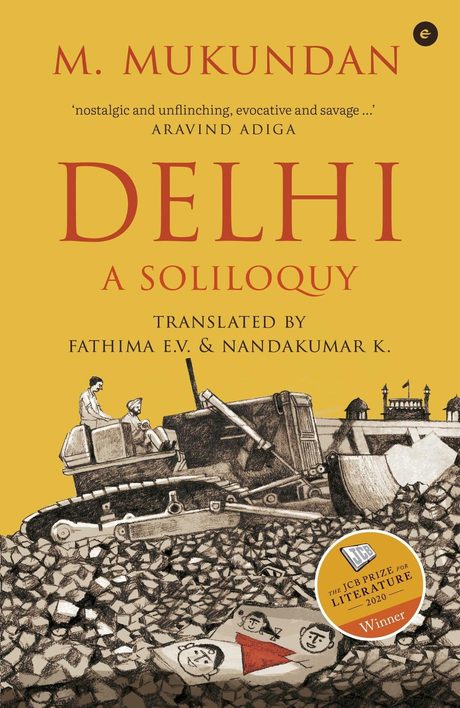
Fiction / migrant Malayali Delhi, 1959 to 2000
Delhi: A Soliloquy
M. Mukundantranslated by Fathima E.V. and Nandakumar K.2011about 488 pages
A Malayali clerk arrives in Delhi in the year of the border war and spends forty years watching the city use up the people he loves.
Sahadevan comes to Delhi from Kerala as a young man and stays, in rented rooms and government quarters, taking small jobs and holding other migrants together. The novel runs from the war with China through the Emergency and the killings of 1984 to the end of the century, and the great events arrive the way they actually arrive for ordinary people, as rumours, curfews and neighbours who stop coming home. Mukundan lived this life for four decades and the detail is unshowy and exact. It is a sad book about a city that takes everything and hands back a pension.
Why it is at 8
Eighth because it is the only novel here about the migrant Delhi that half the city actually is, written by somebody who stayed forty years rather than visited. It took the JCB Prize in 2021, which is how most readers outside Malayalam found it. It ranks here because the English is plain rather than musical, which suits the material and slows the reading.
Read it ifyou want the Delhi of migrants and rented rooms
Skip it ifyou want plot, because this is forty years of accumulation
patient, sad, documentaryBest for: readers of translated fictiontranslatedmalayalammigration
9

Fiction / Hailey Road in the 1980s
Those Pricey Thakur Girls
Anuja Chauhan2013about 342 pages
A retired judge has five daughters named in alphabetical order, and the fourth one falls for the reporter chasing the story her family would rather ignore.
Justice Laxmi Narayan Thakur named his five daughters in alphabetical order and lives with them on Hailey Road in a house with a mango tree and far too many opinions. Debjani, the fourth, lands a job reading the English news on Doordarshan. Dylan Singh Shekhawat is a reporter working on the killings of 1984 and he is precisely the wrong man for a family that wants a quiet rishta. Chauhan writes Delhi dialogue better than anyone working today, the specific rhythm of aunties, servants, cousins and neighbours all talking at once, without turning any of it into a joke about India.
Why it is at 9
Ninth because it is the funniest book here and the only one that gets middle class Delhi domestic life onto the page at full volume. It sits mid table because the romance runs on a track you can see from the first chapter. What lifts it is the 1984 thread underneath the comedy, handled with far more seriousness than the cover suggests.
Read it ifyou want a Delhi romantic comedy that has real teeth
Skip it iflarge family casts confuse you
loud, funny, eightiesBest for: romance readersromance1980sfamily comedy
10
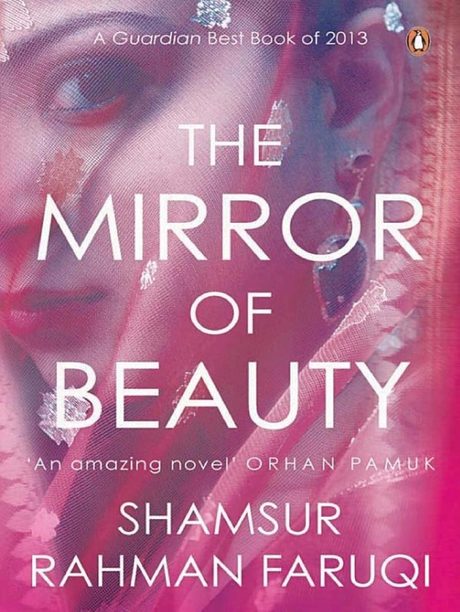
Fiction / the last Mughal century
The Mirror of Beauty
Shamsur Rahman Faruqitranslated by Shamsur Rahman Faruqi2006about 1325 pages
The life of Wazir Khanam, a woman of her own mind in nineteenth century Delhi, and the city at the height of its poetry and its decline.
Faruqi wrote this in Urdu and then translated it into English himself, which is why the English feels like nothing else on the shelf. It follows Wazir Khanam, a real historical figure and the mother of the poet Dagh, through a series of relationships with powerful men, none of which she enters as a victim. Around her, Faruqi rebuilds the Delhi of the 1800s in enormous detail: dyeing and weaving, painting workshops, the mushaira, the grammar of manners, the price of everything. It is very long and completely uninterested in hurrying for your convenience.
Why it is at 10
Tenth because the reward is enormous and the entry cost is high. Nothing else recreates the city before 1857 at this resolution, and the woman at the centre is one of the great characters in Indian fiction. It ranks here purely on how many readers will actually finish nine hundred pages. Those who do never see Old Delhi the same way again.
Read it ifyou want the nineteenth century city in full detail
Skip it iflong books at a slow pace defeat you
opulent, exacting, longBest for: patient historical readershistoricalurduself-translated
11

Fiction / arms, favours and Partition money
Sultan of Delhi: Ascension
Arnab Ray2016about 257 pages
A refugee boy from Lahore becomes the man who moves guns and favours for everyone who runs Delhi, told as unapologetic pulp.
Arjun Bhatia arrives as a refugee after Partition and builds an arms business that eventually makes him necessary to politicians, policemen and industrialists. The book moves between his rise and a present in which his sons are fighting over what he built. Ray writes this as full blooded commercial fiction, with cliffhangers, betrayals and dialogue that clearly expects to be filmed. It is not trying to be literature, and it is much better than it needs to be, particularly about how power in Delhi actually works: through favours owed rather than offices held.
Why it is at 11
Eleventh because it is the most fun and the least ambitious book here. If the literary titles feel like homework, start with this one and you will still learn something true about how the city runs. Do not expect the prose to do anything clever, and be warned that it ends on a hook for a sequel.
Read it ifyou want Delhi crime that moves like a thriller
Skip it ifyou want prose that does more than move the plot
pulpy, propulsive, filmableBest for: a flight or a traincrimepartitioncommercial fiction
12
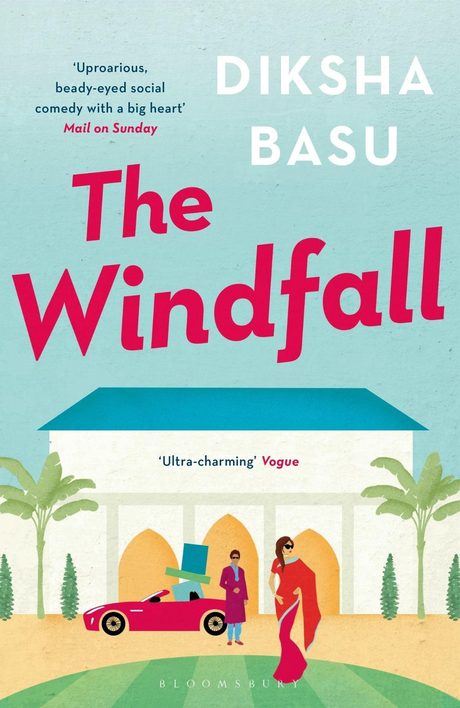
Fiction / east Delhi to Gurgaon, new money
The Windfall
Diksha Basu2017about 400 pages
A middle aged couple sell a website for a fortune and move from a Mayur Vihar housing society to a Gurgaon bungalow, which goes badly.
The Jhas have lived for decades in an east Delhi housing complex where everybody knows what everybody paid for their sofa. Then Mr Jha sells a website and they buy a house in Gurgaon, and the comedy comes from how badly they perform their new class: the imported sofa, the fake designer labels, the neighbour with the show car, the wife who misses her balcony gossip and cannot say so. Basu is affectionate rather than cruel about all of it, and the funniest scenes are the ones where nobody in the room knows its rules.
Why it is at 12
Twelfth and last of the novels because it is the lightest, and because Gurgaon is barely Delhi, which happens to be its subject. Read it after Age of Vice for the comic version of the same money. It is thin on plot and it knows that about itself. The social observation is the reason to pick it up.
Read it ifyou want gentle satire about new money
Skip it ifyou want a novel with real stakes in it
light, observant, comicBest for: an easy weekend readsatiregurgaonclass
13

Reportage / a year in the city, layer by layer
City of Djinns
William Dalrymple1993about 480 pages
A young writer spends a year in Delhi with a landlady, a taxi driver and a stack of histories, digging down through the city's older capitals.
Not a novel. Dalrymple moved to Delhi in his twenties and spent a year interviewing Sufis, eunuchs, pigeon fanciers, Partition survivors and archaeologists, working backwards through the layers from the Delhi of 1989 to the Mughals, the Sultanate and finally the Mahabharata site. His landlady Mrs Puri and his taxi driver Balvinder Singh hold the present day thread and are very funny company. It is thirty years old now, which means the modern Delhi inside it has become history too, and that has made the book stranger and more useful than it was on publication.
Why it is at 13
Thirteenth on the list and first of the three books here that are not fiction. If you have never been to Delhi, read this before any novel on this list, because it hands you the map every novelist assumes you already carry. Its limitation is the obvious one: an outsider's Delhi, in love with ruins, lighter on the living city.
Read it ifyou want the city's history as a walking tour
Skip it ifyou want fiction, because this is reportage
curious, funny, historicalBest for: first time visitorsreportagehistorynonfiction
14

Reportage / the money after 1991
Capital: The Eruption of Delhi
Rana Dasgupta2014about 420 pages
A writer interviews Delhi's new rich, from property dealers to heirs, and comes back with the least flattering portrait of the city ever published.
Not a novel. Dasgupta spent years talking to the people who got rich after liberalisation and to the people who got in their way: builders, a plastic surgeon, a woman whose land was taken, the sons of industrialists who have never been told no. His argument is that the boom was built on land, on damage inherited from the Partition generation, and on a violence everybody has agreed to describe as ambition instead. It is a hostile book in places and Dasgupta knows that. He was living the life he was reporting on, and he says so.
Why it is at 14
Fourteenth, and the natural pair for Age of Vice, which is the novel version of this reporting. Read them in either order. Dasgupta explains where the farmhouse money came from and Kapoor shows you what it feels like inside the car. This is the harder read of the two and it is the one that stays with you.
Read it ifyou want to understand where Delhi's money came from
Skip it ifyou want warmth, because this book has none
cold, forensic, angryBest for: readers who like argumentsreportageeconomicsnonfiction
15
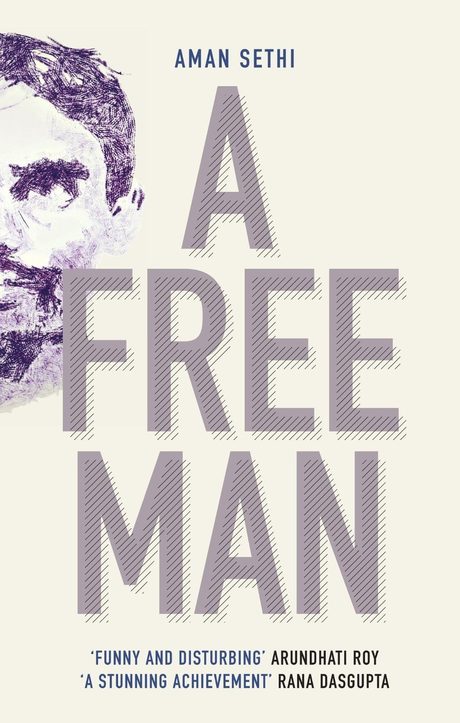
Reportage / Bara Tooti Chowk, Sadar Bazar
A Free Man
Aman Sethi2011about 173 pages
A reporter spends five years with a daily wage labourer in Sadar Bazar trying to write his life, and keeps failing in useful ways.
Not a novel. Sethi met Mohammed Ashraf at Bara Tooti Chowk, where men wait each morning to be hired for the day, and spent five years drinking, arguing and taking notes with him. Ashraf paints signboards, used to be a butcher, and is funny, evasive and entirely uninterested in producing the tidy life story a journalist has come for. The book is about that resistance as much as it is about him. It is the shortest thing on this list and the one I press on people most often, because it lets a poor man be complicated instead of symbolic.
Why it is at 15
Fifteenth in order, not in importance. Every other book here looks at working class Delhi from above, including the great ones. Sethi sits down at the same level and admits the places where he cannot see. If you read one thing about the Delhi that physically builds Delhi, read this rather than any novel about a driver.
Read it ifyou want one man's life without a lesson attached
Skip it ifyou want a story that resolves neatly at the end
wry, humane, unresolvedBest for: one short sittingreportagelabournonfiction
Worth knowing
Which Delhi are you actually asking for?
For the walled city, read Twilight in Delhi first, then The Mirror of Beauty for the century before it, then the Old Delhi chapters of The Ministry of Utmost Happiness for the same lanes today. For the refugee city that Partition made, go to Delhi: A Novel and Sultan of Delhi, with Clear Light of Day for the version heard from a rooftop by children who did not understand it.
For the middle class colonies, the ones with the mango tree and the neighbour who counts your visitors, read Those Pricey Thakur Girls, The Association of Small Bombs and Delhi: A Soliloquy. For the money city that begins around the airport road, read Age of Vice and The Windfall, then Capital for the reporting underneath both. And for the Delhi that gets up at four to build the rest of it, A Free Man and the middle third of The White Tiger.
Worth knowing
Why the last three entries are labelled
Two of the best books ever written about this city are reportage, not fiction, and a list that quietly slipped them in among the novels would be cheating the reader who came looking for a story. So City of Djinns, Capital and A Free Man sit at the end in their own block, marked at the top of each entry. They are ranked lower than the novels for one reason only, which is that the promise in the title of this list is fiction. If you want to understand Delhi rather than to be told a story about it, start with those three and read the novels afterwards.
People also ask
Questions, answered
What is the best novel set in Delhi?
Age of Vice by Deepti Kapoor, if you want one book that covers the whole city, from bonded labour to farmhouse parties, and moves fast enough to finish in a week. If your question is which is the best written, that is Clear Light of Day by Anita Desai. If you want the walled city as its own people saw it, it is Twilight in Delhi, written in 1940 by a man who grew up in those lanes.
Why is In Custody not on this list?
Because most of it takes place in Mirpore, an invented small town, rather than in Delhi. Deven travels to the city to interview the Urdu poet Nur and those chapters are superb, but a list called novels set in Delhi should mean the city carries the book. Anita Desai is here regardless, with Clear Light of Day, which sits inside an Old Delhi house and is the stronger novel of the two.
Which books about Delhi are not fiction?
The last three entries. City of Djinns by William Dalrymple, Capital by Rana Dasgupta and A Free Man by Aman Sethi are all reportage, and I have labelled them, because two of the finest books about this city are not novels and it would be silly either to leave them out or to slip them in unmarked. Start with City of Djinns if the city is new to you.
What should I read to understand Old Delhi?
Twilight in Delhi first, since it was written in 1940 from inside the walled city. Then The Mirror of Beauty for the century before that, if you have the appetite for nine hundred pages of it. Then the Old Delhi chapters of The Ministry of Utmost Happiness for what those same lanes look like now. City of Djinns sits alongside all three as the guidebook the novels assume you have read.
Are there good Delhi novels in translation?
Yes, and two of them are here. Delhi: A Soliloquy was written in Malayalam by M. Mukundan and translated by Fathima E.V. and Nandakumar K., and it covers forty years of migrant life in the city. The Mirror of Beauty was written in Urdu by Shamsur Rahman Faruqi, who then translated it into English himself. Both English editions are easy enough to find in India.
Which Delhi novel should I read first?
If you have read nothing set in the city, read City of Djinns and then Age of Vice. That order gives you the map first and the plot second. If you already know Delhi well and want the writing rather than the tour, begin with Clear Light of Day and follow it with The Association of Small Bombs, both of which take the ordinary residential city seriously instead of treating it as background.
Before you go
What to read tonight
Pick by which Delhi you are curious about rather than by which book you have been told is important. If your question is how the money works, read Age of Vice tonight and Capital next month. If your question is what the city was before it became this, start with Twilight in Delhi and let it be slow. If you want to laugh, take Those Pricey Thakur Girls, and read the 1984 thread carefully instead of skimming past it to the romance.
When you have finished two of these, go back and notice how differently they describe the same three kilometres. That disagreement is the most accurate thing about Delhi writing. No novelist has ever managed the whole city, and the good ones are honest about which corner they took.
Keep going
Lists that pair with this one
Indian Fiction
16 Best Novels Set in Mumbai, Mapped Neighbourhood by Neighbourhood
Sixteen Bombay novels ranked by how much of the city you carry out with you, from a Worli chawl to a tower in Vakola.
Indian Fiction
16 Best Books to Understand India, Ranked by What They Explain
Sixteen books, ten doors into the same country: history, caste, the mega city, the village, money, and where to start tonight.
Indian Fiction
The 20 Best Indian Books in Translation, Ranked by Where to Start
Twenty books from ten Indian languages, ordered from the easiest way in to the one that will fight you, with the translator named every time.
Books Like
14 Books Like Shantaram: Bombay Epics and the True Stuff
Split into the novels, the reportage that beats the novels, and the small shelf where the truth gets slippery, which is where Shantaram itself belongs.
Indian Fiction
18 Best Thriller Novels by Indian Authors, Ranked
Crime, mystery and suspense from Calcutta in 1919 to Delhi right now, ranked best first, with the sub-genre and the commitment marked on every book.