The first time I went to Kerala I did the standard tourist circuit: a houseboat in Alappuzha, tender coconut, a backwater sunset that looked exactly like the poster it was copied from. Then I read Moustache, which is set in that same water, and the poster turned out to be one thin layer over a place where those canals carried caste, labour and a fair amount of blood.
So this list is not ordered by fame. It is ordered by how much Kerala you come away holding, with readability breaking the ties. Each entry carries a label saying which Kerala it opens for you: the Syrian Christian household, the fishing coast, the Muslim family in Malabar, the courtroom, the village that keeps its own gods.
Some of these were written in English and five are translated from Malayalam, which I mark on every entry. Where I am certain of the translator the name is there, because the translator wrote the sentences you will actually read. For translated books the year on the entry is the year of the Malayalam original, so a 1956 novel says 1956 even though the paperback in your hand was printed in 2011.
If the only Kerala novel you have read is The God of Small Things, start at number two or number five instead. Both are shorter than you expect and both tell you more about the state than any travel piece will.
How I picked these
- Set in Kerala, not merely written by a Malayali. Books that leave for Delhi or the Gulf after fifty pages did not qualify, which is why Goat Days, a fine novel that spends most of its length in a Saudi desert, is not on this list.
- Roughly one book per corner of the state. When two novels opened the same door, the better written one stayed and the other got a mention instead.
- Every title verified through Google Books and Open Library with a real cover. I dropped two books I wanted, Agnisakshi and Othappu, because I could not confirm an English edition currently in circulation.
- Novels only. The Ivory Throne is the book people expect on a Kerala list and it is very good on Travancore, but this list promised fiction and history is a different job.
- Where a book is slow, dated or uneven, the entry says so. Three of these have real problems and I would rather tell you than have you find out at page two hundred.
The whole list at a glance
All 12 books, in order
| # | Book | Author | Year | Vibe | Best for |
|---|
| 1 | The God of Small Things | Arundhati Roy | 1997 | lush, cruel, unforgettable | readers who want literary weight |
| 2 | Chemmeen | Thakazhi Sivasankara Pillai | 1956 | elemental, fatalistic, spare | a first Malayalam classic |
| 3 | The Legends of Khasak | O. V. Vijayan | 1969 | dreamlike, earthy, strange | readers who love Marquez |
| 4 | Moustache | S. Hareesh | 2018 | mythic, dense, political | readers who finish difficult books |
| 5 | Me Grandad 'ad an Elephant! | Vaikom Muhammad Basheer | 1980 | warm, funny, sly | your first Malayalam translation |
| 6 | The Blind Lady's Descendants | Anees Salim | 2014 | funny, bleak, intimate | fans of dark comic novels |
| 7 | Qabar | K. R. Meera | 2020 | sharp, unsettling, brief | one evening, one sitting |
| 8 | Chronicle of an Hour and a Half | Saharu Nusaiba Kannanari | 2024 | tense, humid, claustrophobic | readers who like tight timelines |
| 9 | Ancient Promises | Jaishree Misra | 2000 | plain, emotional, honest | readers new to Indian fiction |
| 10 | The Better Man | Anita Nair | 1999 | gentle, observant, slow | a quiet weekend read |
| 11 | Yakshi | Malayattoor Ramakrishnan | 1967 | gothic, paranoid, quick | a genre break between classics |
| 12 | Mistress | Anita Nair | 2005 | sensual, layered, uneven | readers curious about kathakali |
The list
The books, ranked
1
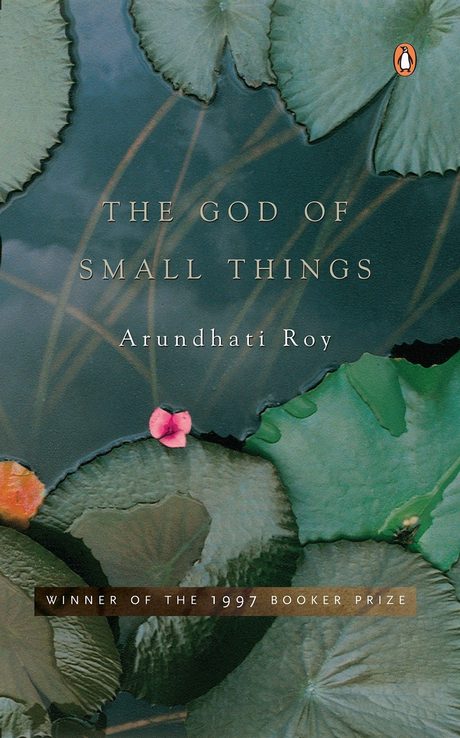
The Syrian Christian house in Ayemenem
The God of Small Things
Arundhati Roy1997about 343 pages
Two twins, one river, and a family with a rule about who may be loved and how much.
Roy circles a single day in 1969 in a village near Kottayam, where a Syrian Christian family runs a pickle factory and holds its shape through silence. There is a communist party marching outside the gate, a church that decides who counts as respectable, and a caste line every person in that house can see and nobody will name. The English is famously odd, built from invented compounds and child logic, and it takes about forty pages for your ear to settle into it. After that the book is impossible to shake and quite hard to read twice.
Why it is at 1
First because no other novel hands you this much Kerala at once: the church, the party, the caste system and the river inside one household. It is also the hardest to recommend blindly, since the prose is a genuine barrier and the story is cruel. If you gave up on it in college, try again in your thirties. It reads like a different book once you have watched adults up close.
Read it ifyou want the whole state inside one family
Skip it ifexperimental prose annoys you or you need a kind ending
lush, cruel, unforgettableBest for: readers who want literary weightliteraryfamilycaste
Heads up: child sexual abuse, caste violence, and a death described in detail
2
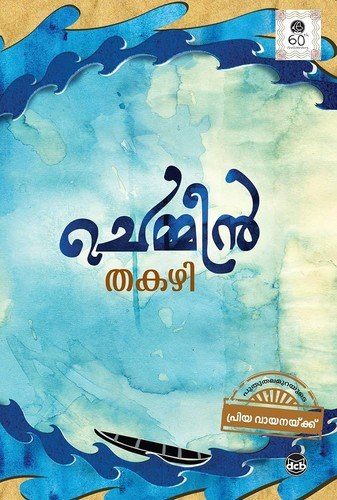
The fishing coast (translated from Malayalam)
Chemmeen
Thakazhi Sivasankara Pillai1956about 221 pages
A fishing village, a Hindu woman, a Muslim trader, and the old belief that the sea takes a man whose wife strays.
Karuthamma is a fisherman's daughter in a family trying to climb, and Pareekutti is the young Muslim trader who lends them money they cannot repay. Around the two of them sits a coastal community that believes the sea protects a fisherman only while his wife stays faithful, and Thakazhi lets that belief work on his characters the way weather works on a boat. The book is short and plain and moves like a folk tale rather than a psychological novel. Most Malayalis meet it at school, which is a pity, because reading it cold as an adult still stings.
Why it is at 2
Second because it is the coast, and because it is the gentlest way into older Malayalam fiction. Where Roy gives you the inland Christian household, Thakazhi gives you the sea and the people whose caste is tied to working it. The gender politics belong to their moment and the ending is fatalistic, which some readers find beautiful and others find maddening.
Read it ifyou want the classic and you want it short
Skip it ifyou need modern gender politics in your fiction
elemental, fatalistic, spareBest for: a first Malayalam classicclassictranslationfishing village
3
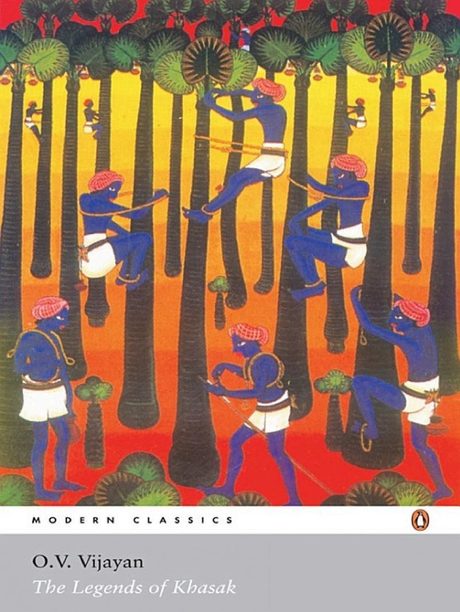
The village that runs on myth (translated from Malayalam)
The Legends of Khasak
O. V. Vijayantranslated by O. V. Vijayan1969about 225 pages
A young man takes a teaching post in a remote village and finds a place that keeps its own version of reality.
Ravi walks out of a research career and arrives in Khasak, a village in Palakkad, to run a single teacher school. What follows is less a plot than a slow soaking: local gods, a mullah, a palm wine tapper, children with their own logic, and a countryside that appears to remember things. Vijayan translated his own novel into English twenty five years after the Malayalam, which makes this a rare case of the author getting the last word on his own sentences. You can feel Malayalam writers borrowing from it for decades afterwards.
Why it is at 3
Third because Khasak hands you a Kerala that is neither coastal nor urban: interior Palakkad, where Hindu and Muslim practice sit on top of much older village gods. It asks more of you than Chemmeen, since the story wanders and the names arrive fast and unexplained. Give it fifty pages before you decide anything.
Read it ifyou like mythic fiction and can float without a plot
Skip it ifyou need a story that goes somewhere
dreamlike, earthy, strangeBest for: readers who love Marquezclassictranslationvillage
4
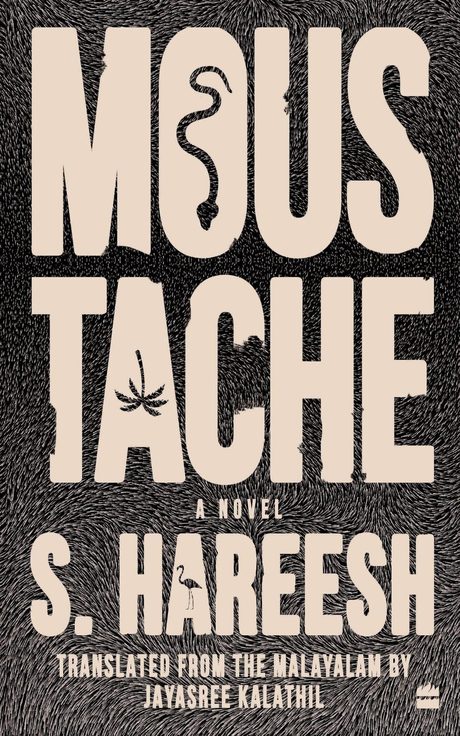
The water, the paddy and the caste line (translated from Malayalam)
Moustache
S. Hareeshtranslated by Jayasree Kalathil2018about 353 pages
A low caste man plays a policeman in a village play, refuses to shave off the moustache, and becomes a legend the land repeats.
Vavachan grows a moustache for a role in a village drama and then keeps it, which in the Kuttanad of that time is an act no man of his caste is permitted. From there the novel opens outward into stories, rumours, boat routes, birds and small local histories, across a wetland Hareesh knows the way a farmer knows it. The book is thick with names and plants, and Kalathil's translation keeps the strangeness rather than smoothing it down for outsiders. This is the best novel here on how land, caste and water are one single subject in Kerala.
Why it is at 4
Fourth because it is the deepest Kerala on the list and the one most likely to change what you see from a houseboat. It is also the slowest going: the story loops, the cast is large, and the folklore is never explained for a reader from outside. Read it after Chemmeen, which works the same water in a much simpler way.
Read it ifyou want folklore, land and caste braided together
Skip it ifyou want a tight plot or you dislike long books
mythic, dense, politicalBest for: readers who finish difficult bookstranslationcastefolklore
Heads up: caste violence and sexual content
5
The Muslim household, and the joke inside it (translated from Malayalam)
Me Grandad 'ad an Elephant!
Vaikom Muhammad Basheer1980about 204 pages
Three short novels by the writer Kerala treats as family, funny on the surface and quietly radical underneath.
Basheer wrote in the Malayalam people actually speak, which counted as a small scandal at the time, and this Penguin volume collects three of his novellas about Muslim life in Kerala. One is a childhood love story, one follows a girl raised on family pride and taught almost nothing else, and one is a comedy about a goat and a house full of relatives. They are short, warm and slyly argumentative, with the jokes carrying his criticism of religion, class and the way girls are kept. Nobody here is easier to read or harder to forget.
Why it is at 5
Fifth and my pick for a first translation, because Basheer goes down like conversation rather than literature. The three stories together give you the Muslim Kerala most English readers never meet, told from inside with no explaining to outsiders. The edition is old and can take some hunting in shops, which is the only reason it is not higher up.
Read it ifyou want humour and heart in under two hundred pages
Skip it ifyou want one continuous novel rather than three short ones
warm, funny, slyBest for: your first Malayalam translationtranslationnovellashumour
6
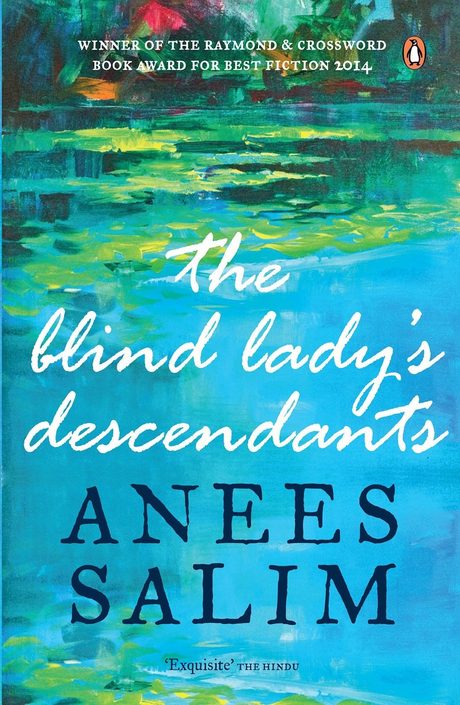
The Muslim family in a coastal town, now
The Blind Lady's Descendants
Anees Salim2014about 263 pages
A young man writes his suicide note as a memoir, and it turns out to be very funny for long stretches.
Amar Hamsa is twenty six and has decided how his story ends, so he tells it: the crumbling house they call the Bungalow, a mother who stopped speaking to his father years ago, an uncle who left for the Gulf, cousins, neighbours, and a town that offers a boy like him almost nothing to do. Salim writes comedy and despair inside the same sentence, which is his signature move. The Kerala here is neither postcard nor political argument, it is small town boredom in a Muslim household, drawn with real affection.
Why it is at 6
Sixth because it is the best contemporary novel here about ordinary Kerala life, and because it makes a small town feel enormous from inside it. I put it directly after Basheer on purpose: same community, seventy years later, and the comedy has gone much darker. Be warned that the frame is a young man planning his own death.
Read it ifyou want funny and bleak arriving together
Skip it ifsuicide as a narrative frame is too much right now
funny, bleak, intimateBest for: fans of dark comic novelscontemporaryfamilysmall town
Heads up: suicide is the frame of the entire book
7
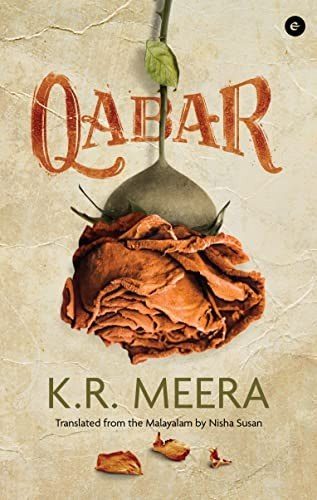
The courtroom, and what lies under it (translated from Malayalam)
Qabar
K. R. Meeratranslated by Nisha Susan2020
A district judge hears a case about a grave and finds the country's history sitting inside her own head.
Bhavana is a judge with a marriage behind her and a son who needs more attention than she has, and a case reaches her about a family grave on land a temple now claims. The man who brings the petition may also be a magician. It is a novella, it moves quickly, and it uses a court file to get at the way Hindu and Muslim histories in Kerala are tangled together and then fought over in the present tense. Meera writes women who are competent and exhausted at once, which is rarer than it should be.
Why it is at 7
Seventh because it is the shortest real book on this list and the one that best explains why Kerala argues the way it does. It gets in and out inside one evening. If magic realism usually irritates you, note that the fantastic parts here are not decoration, they are how a buried past gets to speak in a court that only accepts documents.
Read it ifyou want a short, sharp, contemporary Kerala novel
Skip it ifyou want strict realism with no magic in it
sharp, unsettling, briefBest for: one evening, one sittingtranslationnovellacommunal history
8
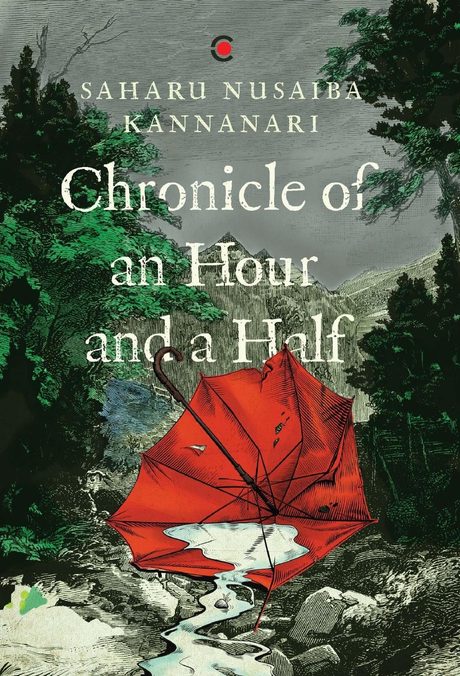
The village, the rumour and the mob
Chronicle of an Hour and a Half
Saharu Nusaiba Kannanari2024about 175 pages
Ninety minutes in a Malabar village during heavy rain, in which a rumour about an affair becomes a crowd.
Kannanari takes a village called Vaiga and a very short stretch of time, then cuts between the people trapped inside it: a woman whose private life becomes public property, a man with a temper and a phone, neighbours with strong opinions and nothing to do, Gulf money sitting in the newer houses, and the rain over everything. Each character gets enough interior life that you cannot cleanly hate any of them, which is exactly what makes the ending land the way it does. It was written in English rather than translated, which is worth knowing before you start.
Why it is at 8
Eighth because this is the most current Kerala on the list: WhatsApp, migration money, moral policing, and a village that can turn inside an hour. It is also the most claustrophobic thing here. Read it if Moustache felt too mythic and you want the same subjects, caste and gossip and land, in a place with electricity and smartphones.
Read it ifyou want contemporary rural Kerala without the nostalgia
Skip it ifmob violence on the page is too much for you
tense, humid, claustrophobicBest for: readers who like tight timelinescontemporaryvillageviolence
Heads up: sexual violence and mob violence
9
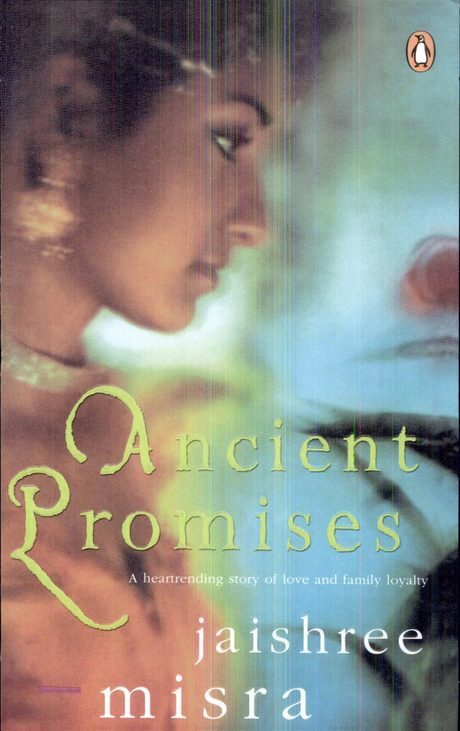
The Nair marriage, from inside
Ancient Promises
Jaishree Misra2000about 324 pages
A Delhi girl marries into a traditional Kerala family and spends fifteen years learning what she agreed to.
Janu is a Malayali raised in Delhi who marries into a wealthy Kerala family at eighteen, and the novel follows what that arrangement does to her: in laws who measure her daily, a daughter who needs more than the family will admit, a first love she never properly closed, and the slow decision to leave. The writing is plain and the emotions are large, which is precisely why it works for people who do not usually read literary fiction. I cannot think of another Indian novel from that period that lets a woman walk out with this little judgement attached.
Why it is at 9
Ninth because it opens the Kerala tourists never see and Malayali families know intimately: the marriage market, the ancestral house, the rules written for a daughter in law. As literature it is the least ambitious book here and as a document it is one of the most useful. Read it alongside The Better Man for the male version of the same village world.
Read it ifyou want an accessible novel about marriage and leaving
Skip it ifyou want ambitious prose
plain, emotional, honestBest for: readers new to Indian fictionmarriagedivorcefamily
10
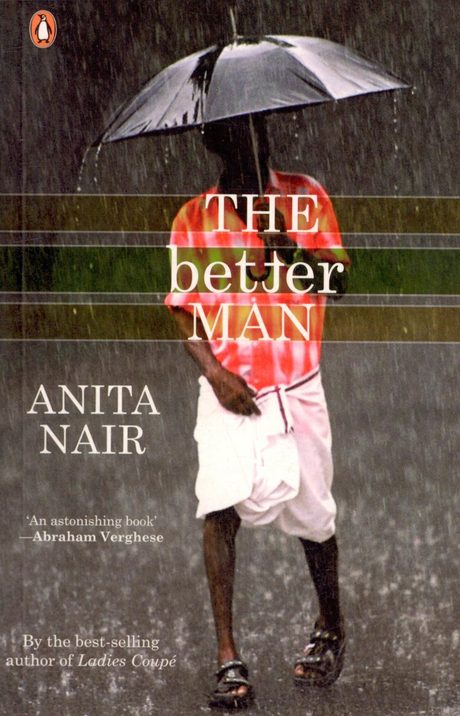
The village and the men in it
The Better Man
Anita Nair1999about 372 pages
A retired man comes back to the Kerala village he escaped, and gets one chance to be useful in it.
Mukundan returns to Kaikurussi after a government career, and the village receives him carrying its memory of the boy who ran from his father. Nair fills the place with people who each get a chapter of their own: a painter who is also a healer, women whose lives never left the compound, a temple committee with politics of its own. The village is not made pretty for visitors. It is petty, watchful and warm by turns, and the question underneath is whether a man in his sixties can still change how he behaves.
Why it is at 10
Tenth because the village is drawn with real care and because it balances Ancient Promises: the same Kerala seen from the men's side, with the same weight of family land and reputation. It is slower than it needs to be and the side stories occasionally take the wheel. Worth it for the portrait of a place where everybody knows everybody else's grandfather.
Read it ifyou like character driven village novels
Skip it iflong digressions frustrate you
gentle, observant, slowBest for: a quiet weekend readvillagecharacter studycontemporary
11
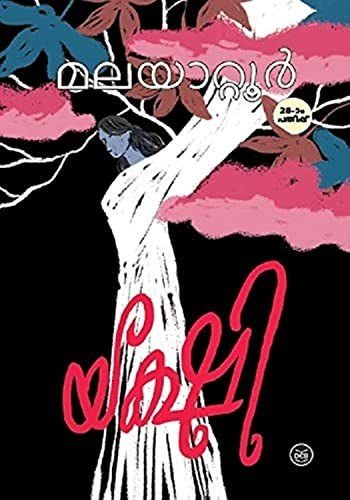
The Kerala of superstition (translated from Malayalam)
Yakshi
Malayattoor Ramakrishnan1967about 154 pages
A college lecturer is disfigured in a lab accident, marries a beautiful woman, and begins to wonder what she is.
Srinivasan teaches chemistry, loses half his face to an explosion, and afterwards marries Ragini, who is young and lovely and gives no clear reason for choosing him. The novel works as a slow psychological squeeze from there. Is she a yakshi out of the old stories, the demon woman who takes men at night, or is a damaged man assembling a monster out of his own shame? Malayattoor keeps both readings alive to the last page. It is a genre novel and it moves, which on this list counts as a mercy.
Why it is at 11
Eleventh because it is the most fun and the least representative book here. There is no caste argument and no politics, only the folk belief sitting under Kerala's very literate surface and the paranoia it can feed. Read it when the serious books have worn you down. The old English edition takes some hunting, and it is worth the hunt.
Read it ifyou want gothic suspense with a Kerala setting
Skip it ifyou read literary fiction only
gothic, paranoid, quickBest for: a genre break between classicstranslationgothicsuspense
12
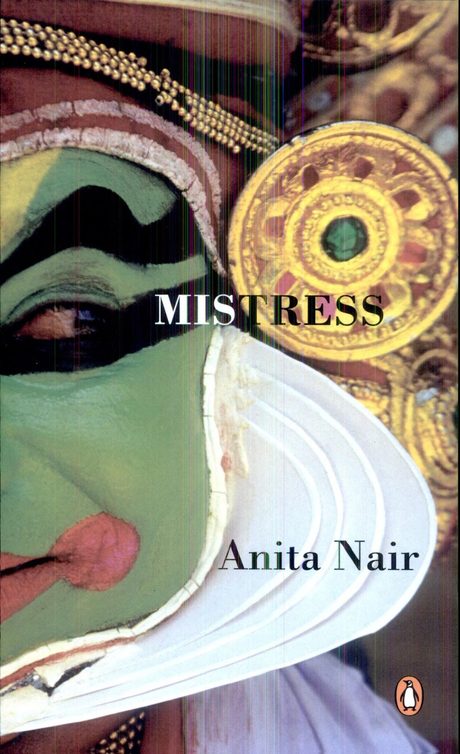
Kathakali, the river and the visitor
Mistress
Anita Nair2005about 448 pages
A travel writer arrives at a riverside resort and lands between an old kathakali dancer and his niece's marriage.
Chris comes to Kerala to write about a kathakali artist named Koman and stays at the resort run by Koman's niece Radha and her husband. Nair braids three voices through the nine emotions of kathakali, giving each section its own mood: love, anger, disgust, wonder. Around the affair sits a family history running back generations and a portrait of the art form more detailed than anything else in Indian writing in English. The book is long, and the affair is considerably less interesting than the dancing.
Why it is at 12
Last because it is the most uneven book here and because the outsider frame has aged badly. Chris is effectively the reader's tourist visa, and the novel keeps pausing to explain Kerala to him. It stays on the list for one reason: nobody has written kathakali this well in English, and the sections on Koman's training justify the rest of it.
Read it ifyou want art, performance and a family saga together
Skip it ifyou have no patience for a long affair plot
sensual, layered, unevenBest for: readers curious about kathakaliperformancefamily sagacontemporary
Heads up: explicit sexual content
Worth knowing
A note on translations and the years on this page
Five books here come from Malayalam: Chemmeen, The Legends of Khasak, Moustache, Qabar and the Basheer collection. Where I am certain of the translator the name sits on the entry, which is Jayasree Kalathil for Moustache and Nisha Susan for Qabar. Khasak is the unusual one, since Vijayan translated himself twenty five years later and was free to rewrite rather than merely translate.
Chemmeen exists in more than one English version, and the HarperCollins paperback most Indian shops stock is Anita Nair's translation, which is what the publisher record for that edition says. For every translated book the year shown is the year of the Malayalam original, with one exception: the Basheer volume is dated to the English collection, because it gathers three novellas he wrote across the nineteen forties and fifties.
Worth knowing
The Keralas this list does not reach
Two are missing and you should know why. The Gulf story, meaning the millions of Malayalis whose remittances built the houses standing in these books, mostly lives in novels set abroad, and Goat Days is the one to read for it even though the desert is not Kerala. The Dalit and Adivasi interior of the state is thin in English too. You get caste from the outside in Moustache and The God of Small Things, but the first person accounts that Tamil and Marathi readers have in translation have not travelled the same way out of Malayalam yet.
If it is history you actually want rather than fiction, The Ivory Throne on the house of Travancore is the book people mean when they ask for one, and it is a different kind of reading week entirely.
People also ask
Questions, answered
Which book set in Kerala should I read first?
If you already read literary fiction, The God of Small Things, and give it forty pages before you judge the style. If you do not, start with the Basheer collection or Chemmeen, both short and neither asking anything unusual of you. Qabar is the right pick for a single evening. Ancient Promises is the easiest of the lot if what you want is a straightforward story about a marriage and a woman leaving one.
Are all these books available in English?
Yes. Five are translated from Malayalam and the rest were written in English by writers from Kerala or tied closely to it. Two of them, the Basheer volume and Yakshi, are older editions that can be hard to find in a shop, so a library or a secondhand seller is usually the faster route. The other ten are in print and simple enough to order online in India.
Is The God of Small Things worth the hype?
Yes, with a caveat. The prose is deliberately strange, the timeline jumps around, and the cruelty in the final third is real rather than decorative. Plenty of people who abandoned it at nineteen finish it easily at thirty, because the book is about adults failing children and that reads very differently later. If you try and stall, Moustache and Chemmeen give you the same state without the stylistic demand.
What is the best Malayalam novel in English translation?
On this list, Moustache, though it asks for patience and a slow week. The Legends of Khasak is the more important one historically and Chemmeen is the easiest place to begin. For most readers the sensible order is Chemmeen first, then Qabar, then Moustache once you have the appetite for a long strange book. Goat Days is the famous translated Malayalam novel that is not set in Kerala at all.
Which of these show the real Kerala rather than the tourist version?
Moustache and Chronicle of an Hour and a Half, for opposite reasons. Hareesh gives you the caste and land history sitting under the backwaters, and Kannanari gives you a village with smartphones, Gulf remittances and a crowd that forms in an afternoon. The God of Small Things sits between the two of them. If your Kerala so far is a houseboat and a beach, those three will rearrange the picture completely.
Before you go
What to read tonight
Pick by the evening you actually have in front of you. Three hours and a willingness to be gutted, take Qabar. A whole week and a wish to live somewhere else for it, take Moustache. A flight to Kochi tomorrow morning, read Basheer on the way and then look at the small town shops differently when you land.
If two of these land well and you want more, go sideways rather than forward. The Malayalam translation shelf has grown quickly in the last ten years, and the novels coming out of it now tend to argue with the classics on this list instead of repeating them, which is the best sign a literature can give you.
Keep going
Lists that pair with this one
Indian Fiction
13 Best Malayalam Novels in English Translation, Ranked
Ranked for someone who has never read one, with the translator named and the hard books flagged before you buy.
Indian Fiction
The 20 Best Indian Books in Translation, Ranked by Where to Start
Twenty books from ten Indian languages, ordered from the easiest way in to the one that will fight you, with the translator named every time.
Indian Fiction
13 Novels Set in Small Town India, Ranked by How Tight the Grip Is
The metros are banned from this page, so what is left is thirteen towns with one college, one cinema, one bus out, and a grip score each.
Authors
Arundhati Roy Books in Order: 9 Books, Two Very Different Shelves
Two novels, a memoir and a shelf of arguments, ordered by how much background each book expects you to already have.
Indian Fiction
17 Best Books About Caste, Starting With the Ones Written From Inside
Ordered by who was holding the pen: Dalit and Bahujan writers first, sympathetic outsiders last, with an honest skip line on every one.