I read Joothan on a Sunday afternoon and had to put it down twice, not because it was hard to follow but because it was so easy. Omprakash Valmiki describes a village school that made him sweep the yard while the other boys studied, and he writes it the way you would describe weather. I grew up in Gujarat hearing caste talked about as a thing that had ended, mostly by people it had never touched.
So this list runs on one question, the one I ask before recommending anything on this subject: who was holding the pen, and how close were they to what they are describing. A memoir by someone who lived it and a novel by a sympathetic observer are both worth your time, but they are not the same kind of document. Testimony comes first here, then the arguments, then fiction, and last of all, clearly marked, the books written from outside the experience.
I am a reader from Ahmedabad, not a scholar of any of this, and what kept bothering me was how many caste reading lists are stacked with books about Dalits rather than by them. The seventeen below are ordered as a path, one to seventeen, gentlest entry point first inside each tier. Quick picks are right below if you want to leave in ten seconds with one title and get on with your evening.
How I picked these
- Who held the pen set the order. Books by Dalit and Bahujan writers about their own communities come first, and each entry says so on its face instead of burying it.
- Every title was checked against Google Books and Open Library with a real edition and a real cover, so nothing here is a book I half remember from a college syllabus.
- I named the translator wherever I could confirm the name. Six of these were written in Hindi, Tamil, Marathi or Gujarati, and the translator is doing half the work you are reading.
- I cut Sangati by Bama even though it is excellent, because Karukku by the same writer gets there first and I did not want one author holding two slots.
- I cut library-priced academic collections and anything you cannot buy in a normal Indian bookshop or ebook store.
- Three books here were written from outside the experience and all three sit at the bottom, including the one title almost every other list on this subject opens with.
The whole list at a glance
All 17 books, in order
| # | Book | Author | Year | Vibe | Best for |
|---|
| 1 | Joothan | Omprakash Valmiki | 1997 | plain, patient, furious underneath | the first Dalit book you read |
| 2 | Karukku | Bama | 1992 | sharp, circling, deliberately unpolished | one evening, one sitting |
| 3 | The Prisons We Broke | Baby Kamble | 1986 | communal, blunt, angry | readers who want women's testimony |
| 4 | Ants Among Elephants | Sujatha Gidla | 2017 | dry, wide, quietly angry | readers who like political history |
| 5 | The Outcaste: Akkarmashi | Sharankumar Limbale | 1984 | raw, bodily, unsentimental | readers who want it undiluted |
| 6 | Coming Out as Dalit | Yashica Dutt | 2019 | contemporary, direct, personal | readers who think caste ended |
| 7 | My Father Baliah | Y. B. Satyanarayana | 2011 | steady, generational, matter of fact | readers who like family histories |
| 8 | Annihilation of Caste | B. R. Ambedkar | 1936 | cold, systematic, merciless | the whole argument in one sitting |
| 9 | Why I Am Not a Hindu | Kancha Ilaiah | 1996 | combative, personal, sweeping | readers past the basics |
| 10 | Caste Matters | Suraj Yengde | 2019 | contemporary, restless, self-critical | readers who want the current debate |
| 11 | The Persistence of Caste | Anand Teltumbde | 2010 | forensic, sober, documented | readers who want the case study |
| 12 | The Stepchild | Joseph Macwan | 1986 | rural, warm, then brutal | Gujarati readers especially |
| 13 | Vultures | Dalpat Chauhan | 1991 | hot, rural, unforgiving | readers who finished The Stepchild |
| 14 | Bhimayana | Durgabai Vyam | 2011 | beautiful, angry, unusual | younger or visual readers |
| 15 | Untouchable | Mulk Raj Anand | 1935 | compact, dated, still stinging | students and history readers |
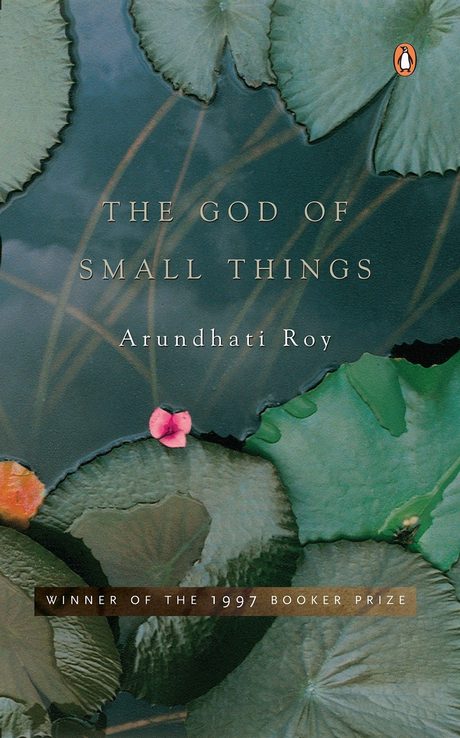
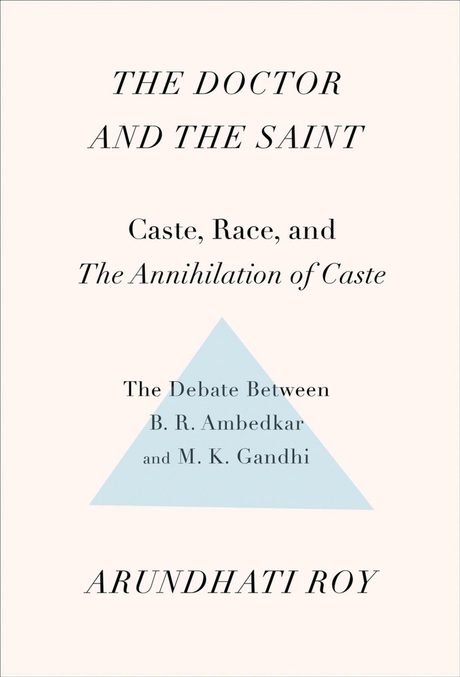
| 16 | The Doctor and the Saint | Arundhati Roy | 2017 | long, forensic, combative | reading after Annihilation of Caste |
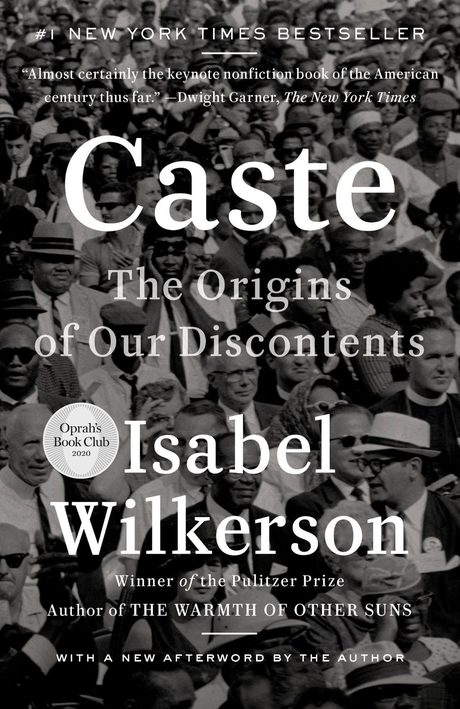
| 17 | Caste: The Origins of Our Discontents | Isabel Wilkerson | 2020 | expansive, comparative, journalistic | readers who finished the Indian books |
The list
The books, ranked
1
Testimony, from inside, Hindi 1997
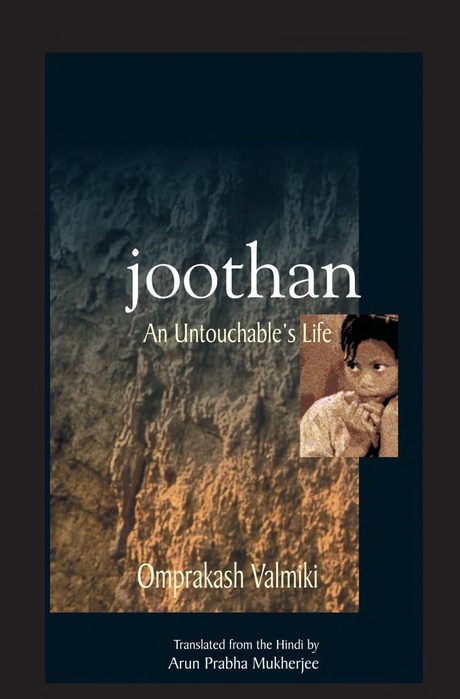
Joothan
Omprakash Valmikitranslated by Arun Prabha Mukherjee1997about 209 pages
The book that forced Hindi literature to deal with what a Dalit child actually went through in a government school.
Valmiki grew up in the Chuhra community in a village in Uttar Pradesh in the 1950s, the decade after Independence, when the Constitution had already outlawed untouchability. The title means leftover food, the scraps off other people's plates that his family was handed and expected to be thankful for. He writes about school, where he was made to sweep instead of learn, about the exact arithmetic of who could touch what, and about a teacher who beat him for reading. What makes it land is the flatness of the telling. No pleading, no speeches, one thing after another until you understand.
Why it is at 1
First because it is the clearest door into all of this for someone who has never read a Dalit writer. It is short, it keeps moving, and it never assumes you already know the vocabulary. Ants Among Elephants has the bigger political story and Karukku has better sentences, but Joothan is the one I would put in a stranger's hands on a train.
Read it ifyou want the plainest possible account of what caste does to a child
Skip it ifyou need a shaped narrative arc, because this is a life told in episodes
plain, patient, furious underneathBest for: the first Dalit book you readmemoirhinditranslationschool
Heads up: sustained humiliation and casteist violence, much of it against children
Pairs with: The Outcaste by Sharankumar Limbale, written from a Marathi village a decade earlier
2
Testimony, from inside, Tamil 1992
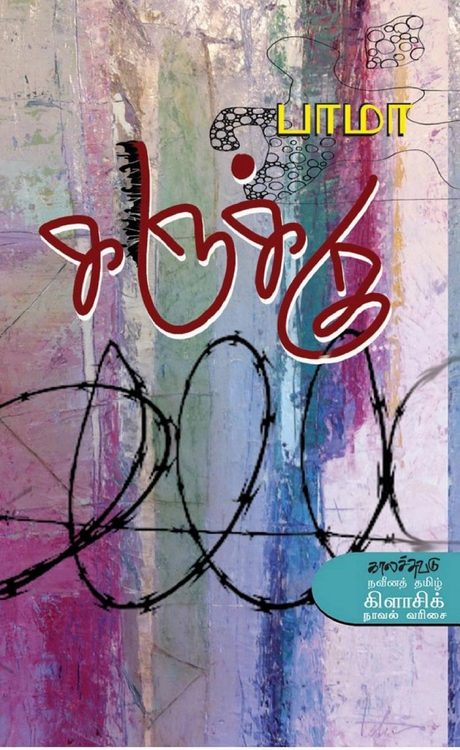
Karukku
Bamatranslated by Lakshmi Holmstrom1992about 125 pages
A Tamil Dalit Christian woman leaves the convent and writes the book the Tamil publishing trade did not want to print.
Bama grew up in a Paraiyar family in a Tamil village, became a nun, and left. Karukku is the account of both places, the village and the convent, and of finding that the church ran on the same hierarchy she had joined it to escape. The title is the serrated edge of the palmyra leaf, which cuts you whichever way you hold it. She wrote it in a spoken Tamil that publishers told her was the wrong sort of Tamil, which is part of the point. The book does not move in a straight line. It circles back to the same wounds and looks again.
Why it is at 2
Second because it does something nothing else here does: it goes after caste inside Christianity, which most Indian conversations quietly treat as solved. It is also the shortest complete book on the list, so it is the one to pick if you have a single free evening. It asks a little more of you than Joothan, only because of that circling structure.
Read it ifyou want caste examined inside the church, not only the temple
Skip it ifyou want chronology, because this book loops on purpose
sharp, circling, deliberately unpolishedBest for: one evening, one sittingmemoirtamiltranslationchurch
Heads up: caste humiliation and violence described directly
3

Testimony, from inside, Marathi 1986
The Prisons We Broke
Baby Kambletranslated by Maya Pandit1986
The first autobiography by a Dalit woman in Marathi, and it is about a whole community rather than one self.
Kamble grew up in a Mahar community in Maharashtra, wrote this in the 1960s, and kept the pages to herself for years before letting anybody publish them. The surprising thing is the pronoun. She writes we far more often than I, so the book turns into a portrait of Mahar women as a group: their work, their weddings, their childbirths, and the beatings they took at home from men who had been humiliated outside it. She is as hard on her own community as she is on the village that held it down.
Why it is at 3
Third because it is the only book here that refuses to be about one person. Joothan and Karukku hand you a life. This one hands you a community of women and the double bind they lived inside, pressed down by the village and then again at home. It is also the most readable of the early testimonies, and Maya Pandit's translation keeps the spoken rhythm of the original.
Read it ifyou want Dalit women's lives written from the middle of them
Skip it ifyou want one person's story followed from start to finish
communal, blunt, angryBest for: readers who want women's testimonymemoirmarathitranslationwomen
Heads up: domestic violence, child marriage, extreme poverty
Pairs with: Karukku, which does similar work from a Tamil village six years later
4
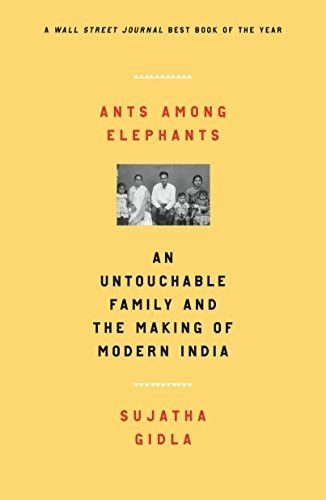
Testimony, from inside, written in English 2017
Ants Among Elephants
Sujatha Gidla2017
A family history that turns out to be a history of Indian communism, told by the niece of the poet who went underground.
Gidla was born into an untouchable family in Andhra Pradesh, taught for a while, moved to New York, and wrote this in her second language. It follows her mother Manjula and her uncle Satyamurthy, a poet who helped start an armed communist movement and was pushed out of it over caste. The book moves between a village, a college hostel, a jail and a party office, and the argument running under it is that the Indian left carried the caste order it claimed to be taking apart. She reports it like a journalist and paces it like a novelist.
Why it is at 4
Fourth because it is the most ambitious book in this tier: not one life but three generations and a political movement. It sits below the three above it only because it asks more background of you, with a lot of relatives and party splits to hold in your head. If you already read Indian political history for fun, start here instead of at one.
Read it ifyou want caste and Indian communism inside the same frame
Skip it ifyou lose your footing in books with many relatives and factions
dry, wide, quietly angryBest for: readers who like political historyfamily historyandhracommunismenglish
Heads up: police violence and custodial abuse
Pairs with: The Persistence of Caste, which carries the same argument into the present
5
Testimony, from inside, Marathi 1984
The Outcaste: Akkarmashi
Sharankumar Limbaletranslated by Santosh Bhoomkar1984
Written at twenty-five, about being the son of a Mahar mother and a landowning father and belonging to neither side.
Limbale was born to a Mahar woman and a Patil landholder, which made him akkarmashi in his village, a word for a child of an illegitimate union, and left him outside every group that might have claimed him. He wrote it at twenty-five. The book is short, physical and fixed on hunger: what the family ate, what they were given, what they picked up off the ground. It keeps returning to food the way other memoirs return to a house. There is no self-pity in it, and no forgiveness either.
Why it is at 5
Fifth because it is the rawest thing in this tier and the hardest to sit with, so I would not hand it to anyone on day one. It also opens a subject the others only brush: what caste does to somebody who does not fit cleanly on either side of the line it draws.
Read it ifyou can take an unsparing book about hunger and belonging
Skip it ifyou are hoping for anything consoling, because this one refuses
raw, bodily, unsentimentalBest for: readers who want it undilutedmemoirmarathitranslationhunger
Heads up: sexual coercion, hunger, prolonged humiliation
6
Testimony, from inside, English 2019
Coming Out as Dalit
Yashica Dutt2019about 266 pages
A journalist who spent her whole childhood passing as upper caste explains what the performance cost, and why she stopped.
Dutt grew up in Ajmer being coached by her mother in how to hide: the right English, the right convent school, a surname that gave nothing away, an answer ready for every question about family. She stopped hiding in 2016, after the death of the research scholar Rohith Vemula, and this book grew out of that. It is the most present-tense book on the list, set in schools, Delhi newsrooms and New York, and its argument is that caste follows you into every space that advertises itself as caste-free.
Why it is at 6
Sixth because it is the entry point for anyone who believes caste is a village problem their grandparents left behind. It reads like reported journalism rather than literature, and the prose is not the best here, but it covers ground nobody else on the list touches: urban, English-speaking, professional India, right now.
Read it ifyou want caste in offices, campuses and dating apps
Skip it ifyou want literary writing, because this is reported nonfiction
contemporary, direct, personalBest for: readers who think caste endedmemoirjournalismurban india
Heads up: discusses suicide, including the death of a student in 2016
7
Testimony, from inside, English 2011
My Father Baliah
Y. B. Satyanarayana2011about 236 pages
Three generations of a Madiga family in Telangana, written by a son who ended up running a college.
Satyanarayana tells the story of his grandfather, his father Baliah, and himself: a family that moves from bonded farm labour to the railway colonies and then into classrooms and government service across most of a century. The railway is the quiet engine of the whole book, because a railway job meant quarters, a fixed wage, and a place where your caste was a little less visible than in the village you came from. It is written with no literary ambition at all, which is exactly why the plainness works.
Why it is at 7
Seventh because it is the most useful book here on how one family climbs out, decade by decade, and what each step actually took in money, schooling and luck. Sentence for sentence it is weaker than the six above it. Come to it when you want the mechanics rather than the wound.
Read it ifyou want the slow generational story rather than a single life
Skip it ifyou want strong prose, because this is plain family reporting
steady, generational, matter of factBest for: readers who like family historiesfamily historytelanganarailways
8
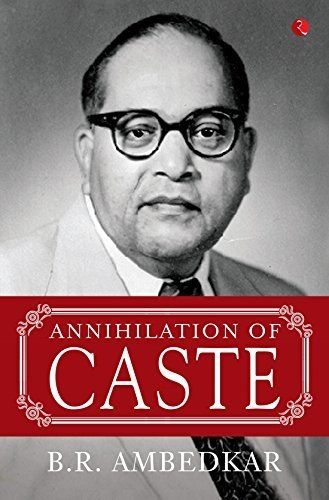
Argument, from inside, 1936
Annihilation of Caste
B. R. Ambedkar1936about 160 pages
A speech so blunt that the reform group who invited him read it in advance and cancelled the event, so he printed it himself.
In 1936 a reformist organisation in Lahore asked Ambedkar to speak on caste, saw the text beforehand, and withdrew the invitation. He published it at his own cost. The argument is that caste is not a division of labour but a division of labourers, that it is held up by scripture rather than by habit, and that reform from inside Hinduism cannot work because the authority being appealed to is the source of the thing. Most editions on sale today also carry his reply to Gandhi at the end, printed after Gandhi objected in public.
Why it is at 8
Eighth, and first among the arguments, because almost everything written afterwards is a response to it. Read it after the testimony rather than before, because the memoirs give you the people the argument is about. It was written as a speech for a general audience, so it is shorter and faster than most political writing of that decade.
Read it ifyou want the founding argument stated with no diplomacy at all
Skip it ifyou dislike polemic, because this is a demolition and not a survey
cold, systematic, mercilessBest for: the whole argument in one sittingessaypolitical theoryambedkar
Pairs with: The Doctor and the Saint, which was written as an introduction to this very text
9
Argument, from inside, 1996
Why I Am Not a Hindu
Kancha Ilaiah1996about 164 pages
A Shudra critique of Hinduism written from a Kuruma shepherd household in Telangana rather than from a seminar room.
Ilaiah writes from the household he grew up in and argues that the daily life inside it, the work, the gods, the food, the way authority was settled at home, was never Hindu in the sense the textbooks mean. He sets what he calls Dalitbahujan culture against Brahminical culture item by item, from childhood games to marriage to death rites. It is deliberately unacademic, it names names, and in places it reads like an argument with a relative who will not let the subject drop.
Why it is at 9
Ninth because it widens the list past Dalit experience into the Shudra and OBC majority, which most caste reading lists leave out completely. It is also the most contested book here and it overreaches in places, generalising about whole communities from one village and one childhood. I still would not skip it, because nothing else on this list does that job.
Read it ifyou want the Shudra and OBC side of the argument
Skip it ifyou want careful hedged scholarship, because this is a polemic
combative, personal, sweepingBest for: readers past the basicsessaytelanganaobcpolemic
10
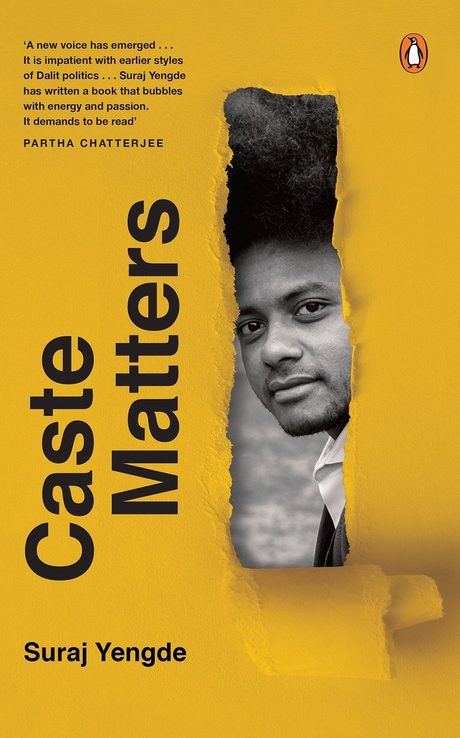
Argument, from inside, 2019
Caste Matters
Suraj Yengde2019about 301 pages
The most current argument on this list, and the only one that turns the knife on Dalit politics itself.
Yengde grew up in a Nanded slum and ended up doing research at Harvard, and the book moves between those two facts without pretending the distance was free. He writes about what he calls Dalit capitalism, about the token Dalit invited into liberal rooms, about allies who expect gratitude, and about the failures of Dalit leadership. There is a chapter on love and desire that is unlike anything else here. It is closer to a set of linked essays than one sustained argument, and it reads faster for it.
Why it is at 10
Tenth because it is the best guide to what this argument sounds like right now, on campuses and in offices and online. It is uneven, and the academic stretches sit awkwardly beside the personal ones. It earns the place by criticising his own side as hard as the other one, which is rarer than it should be.
Read it ifyou want the argument as it stands in this decade
Skip it ifyou want one tight thesis, because this is a collection of essays
contemporary, restless, self-criticalBest for: readers who want the current debateessayscontemporarypolitics
11
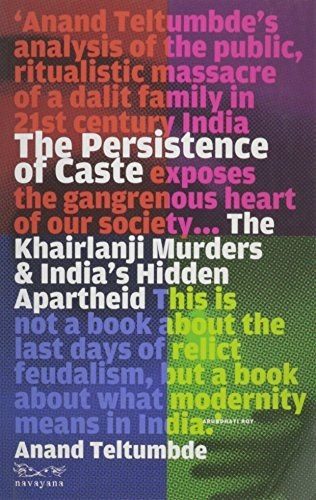
Argument, from inside, 2010
The Persistence of Caste
Anand Teltumbde2010about 196 pages
One killing in a Maharashtra village in 2006, examined until it explains the whole machinery around it.
In 2006 four members of a Dalit family were murdered at Khairlanji in Maharashtra. Teltumbde takes that case, the press coverage, the police response and the court process, and uses it to argue that caste has outlived every system that was supposed to finish it off, including electoral democracy and the market. It is the most analytical book here and the most heavily footnoted. He writes as an Ambedkarite scholar and states the position rather than pretending to stand nowhere.
Why it is at 11
Eleventh because it is the one book here that shows the machinery working in slow motion in living memory, built from documents rather than recollection. It is also the driest, which is why it sits at the bottom of the argument tier. If Coming Out as Dalit persuaded you that caste is alive, this one shows you what alive looks like at its very worst.
Read it ifyou want evidence, case files and cold analysis
Skip it ifyou cannot read a detailed account of a massacre
forensic, sober, documentedBest for: readers who want the case studynonfictionmaharashtraanalysis
Heads up: detailed account of murder and sexual violence against a family
12
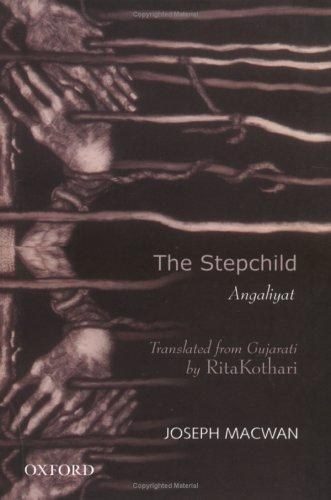
Novel, from inside, Gujarati 1986
The Stepchild
Joseph Macwantranslated by Rita Kothari1986about 272 pages
The first Dalit novel out of rural Gujarat: Vankar weavers in the 1930s, and a friendship that ends up costing lives.
Macwan grew up among the Vankars, a weaving community in the Charotar region of Gujarat, and built this out of stories he had heard all his life. It follows Teeho and Valji, two young Vankar men, and what comes after they refuse a humiliation from a Patidar landholder. The Gujarati is in a Charotari dialect thick enough that Kothari's introduction spends real time on what could not be carried into English. The title word describes a child brought into a marriage from an earlier one, in the house but never quite of it.
Why it is at 12
Twelfth because it opens the fiction tier and it is the best novel on this list. Putting a novel below a memoir is a choice about evidence, not a verdict on quality: an invented story about caste, however close to life, is doing a different job from testimony. It won the Sahitya Akademi award for Gujarati in 1989. If you read Gujarati, read the original.
Read it ifyou want a proper novel with characters you follow for years
Skip it ifyou want quick pacing, because the middle takes its time
rural, warm, then brutalBest for: Gujarati readers especiallynovelgujaratitranslation1930s
Heads up: caste violence, including a killing
13
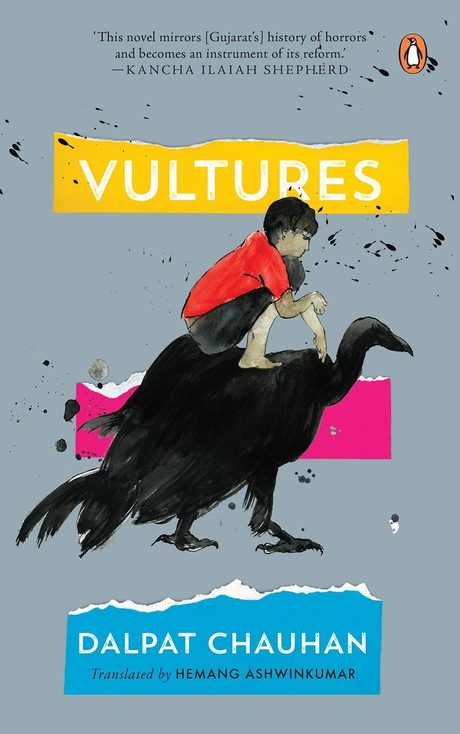
Novel, from inside, Gujarati 1991
Vultures
Dalpat Chauhantranslated by Hemang Ashwinkumar1991about 219 pages
A Dalit man is killed in a north Gujarat village in 1964, and the village quietly agrees on what the story will be.
Chauhan built the novel out of a real killing: a young Dalit man in a village in north Gujarat, Rajput landholders, and a set of rules everybody knows without anybody ever saying them aloud. The vultures of the title circle the whole book, over the animal carcasses the Dalit families are made to clear away and over the people too. It came out in Gujarati in 1991 and reached English only in 2022, which tells you something about how translation queues work in this country.
Why it is at 13
Thirteenth because it is the angriest fiction here and the most recent to arrive in English. It is thinner than The Stepchild in characterisation, and the anger sometimes flattens people into positions. Read it straight after Macwan and you get two Gujarati Dalit novels a generation apart, arguing with each other about how much has actually changed.
Read it ifyou want fiction that stays tight against a real case
Skip it ifthe killing of a young man on the page is too much right now
hot, rural, unforgivingBest for: readers who finished The Stepchildnovelgujaratitranslation1964
Heads up: murder, carcass work, caste violence
14
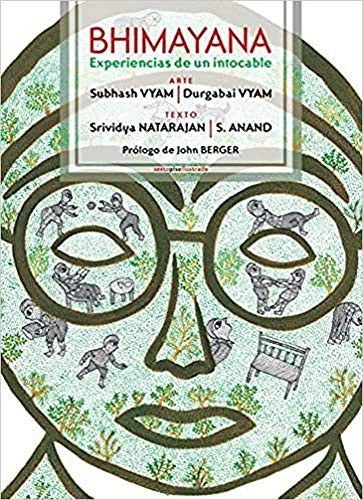
Graphic book, Ambedkar's own accounts, Pardhan Gond art, 2011
Bhimayana
Durgabai Vyam2011about 104 pages
Ambedkar's own accounts of being refused water, shelter and a haircut, drawn in the Pardhan Gond visual tradition.
The text takes incidents Ambedkar recorded from his own life, the ones about water, transport, lodging and school, and sets them beside newspaper reports of similar incidents from recent decades. The art is by Durgabai Vyam and Subhash Vyam, working in the Pardhan Gond language of form, so there are no rectangular panels anywhere: the story runs along animals, roots and rivers instead. Srividya Natarajan and S. Anand wrote the script. It is the only book on this list you could hand to a fourteen-year-old.
Why it is at 14
Fourteenth because it changes how the material feels rather than what it says, and because it is the one entry that can reach a younger reader or someone who reads visually. It is also the odd case for the pen test: the testimony inside is Ambedkar's, while the book around it was made by other people, which the makers state openly in their own notes.
Read it ifyou read visually or want to start a teenager somewhere
Skip it ifyou want depth, because the format keeps every incident short
beautiful, angry, unusualBest for: younger or visual readersgraphicambedkargond art
15
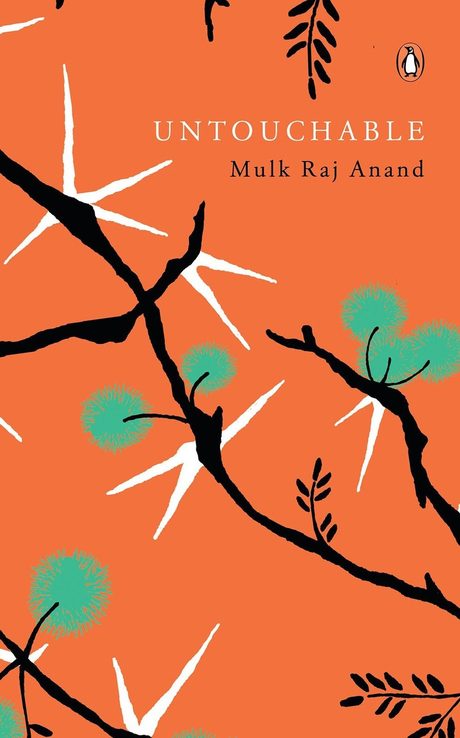
Novel, from outside, English 1935
Untouchable
Mulk Raj Anand1935about 226 pages
One day in the life of a young sweeper in a north Indian cantonment town, written by a novelist who was not one.
Bakha cleans latrines in a garrison town, and the novel follows him through a single day: a temple, a street, a slap, a cup of tea he cannot be handed directly. It appeared in 1935 with a preface by E. M. Forster, after a string of London publishers had turned it down. Anand was not Dalit, and the book was shaped partly by his time around Gandhi, which shows in the last few pages, where the search for a solution ends up somewhere strange and mechanical.
Why it is at 15
Fifteenth, and first in the tier written from outside, because it matters historically and because it is still the book most Indian students are handed as the caste book. It is honest about what Bakha suffers and evasive about what would fix it: the ending effectively hands the problem to a machine. Read it after the testimony and the gap becomes very visible.
Read it ifyou want the historical novel that opened this subject in English
Skip it ifyou specifically want a Dalit voice, because this is a sympathetic outsider
compact, dated, still stingingBest for: students and history readersnovel1935classic
16
Argument, from outside, English 2017
The Doctor and the Saint
Arundhati Roy2017about 130 pages
The introduction to Ambedkar that started a fight, on why India canonised Gandhi and shelved the man who argued with him.
Roy wrote this in 2014 as the introduction to an annotated edition of Annihilation of Caste, and it grew long enough to be published on its own. It sets Ambedkar's position against Gandhi's, quotes Gandhi's early South African writing at length, and argues that the nationalist story kept caste intact by placing Gandhi at its moral centre. It is long, argumentative and thoroughly unfriendly to Gandhi. Roy is clear throughout about writing from a position that caste has served rather than harmed.
Why it is at 16
Sixteenth because it is the most useful outside account here and because it is genuinely disputed: some readers welcomed it, others objected that a non-Dalit writer had been handed the introduction to Ambedkar's most important text. Both reactions are worth knowing about. Read Ambedkar first and this second, in that order, or you meet the argument through somebody else's frame.
Read it ifyou want the Gandhi and Ambedkar fight laid out at length
Skip it ifyou want a neutral account, because this one picks a side early
long, forensic, combativeBest for: reading after Annihilation of Casteessaygandhiambedkar
17
Argument, from outside India, English 2020
Caste: The Origins of Our Discontents
Isabel Wilkerson2020about 545 pages
An American journalist uses caste as the lens for race in the United States, with India and Nazi Germany as her other two cases.
Wilkerson argues that race is the visible skin stretched over an older structure she calls caste, and she builds the case across three systems: the United States, Nazi Germany and India. The American material is the strongest, because it is hers and she has spent a career on it. The Indian chapters draw on visits, on Ambedkar's writing, and on conversations with Dalit scholars, and they work better as a mirror held up to American readers than as an account of India.
Why it is at 17
Last, and I want to be plain about why. It is a serious book and the title most likely to be recommended to an Indian reader searching this subject, which is exactly the problem: an American book about American race relations should not be the first thing you find under this heading. Read it after the sixteen above and it gets genuinely interesting. Read it first and you mostly learn about America.
Read it ifyou want the comparison drawn across three countries
Skip it ifyou specifically want India, because most of this is the United States
expansive, comparative, journalisticBest for: readers who finished the Indian booksnonfictionusacomparison
Heads up: racial violence and lynching described in detail
Worth knowing
How the pen test works
Before recommending a book on caste I ask one question: who was holding the pen, and how close were they to what is being described. That produces four tiers, and this list runs through them in order. Testimony from inside comes first, ranks one to seven, because a life described by the person who lived it is a primary document and most of the rest is commentary on documents like it. Argument from inside comes second, ranks eight to eleven. Fiction and drawing from inside sit third, ranks twelve to fourteen, because invention is doing a different job from memory even when it is built on real events. Books written from outside the experience come last, ranks fifteen to seventeen, and every one of them is labelled.
This is not a ranking of quality and I would rather say so than let you assume otherwise. Annihilation of Caste is a more important book than My Father Baliah and it sits one place lower. Arundhati Roy writes better sentences than several people above her. The order answers a different question: if you are coming to this subject for the first time, what should reach you first, and what will make far more sense once the first thing has landed.
Worth knowing
A note on translations
Six of these seventeen were written in another Indian language, and in each case the translator is doing work you will never quite see. I have named them where I could confirm the name: Arun Prabha Mukherjee for Joothan, Lakshmi Holmstrom for Karukku, Maya Pandit for The Prisons We Broke, Santosh Bhoomkar for The Outcaste, Rita Kothari for The Stepchild, Hemang Ashwinkumar for Vultures.
If you read Hindi, Tamil, Marathi or Gujarati, take the original instead. Several of these writers use dialect on purpose, and the dialect is part of the argument they are making. Bama's Tamil was rejected by publishers for being the wrong kind of Tamil, and that rejection is close to the centre of what her book is about. It is also the single hardest thing for any translation to carry across.
Worth knowing
These seventeen books do not agree with each other
Read the whole list and you will hear the writers arguing. Ambedkar and Gandhi are on opposite sides of the last section of Annihilation of Caste, and Roy picks that same fight back up eighty years later. Kancha Ilaiah's account of Shudra life has been contested by writers who think it flattens differences that matter a great deal. Suraj Yengde spends a chapter going after Dalit leadership itself.
I have not smoothed any of that down, and I have not added a verdict of my own on top of it. A reading list that made seventeen writers nod along together would be lying to you about the subject before you had read a page.
People also ask
Questions, answered
Which book about caste should I read first?
Joothan by Omprakash Valmiki. It is short, it is one life told plainly, and it asks no background of you at all. If you want something even shorter, Karukku by Bama runs to about a hundred and thirty pages and can be finished in an evening. Go to the argument books, Annihilation of Caste or Caste Matters, only once you have some history in your head, because those arguments make far more sense after you have met the people they are about.
What is the difference between Dalit literature and books about caste?
Dalit literature is written by Dalit writers about their own lives and communities, usually with the political position stated rather than implied. Books about caste is a much wider shelf that also holds sympathetic outsiders, academics and reporters. Both are on this list, in that order. The distinction matters because the second category dominated Indian bookshops for most of the twentieth century, and a reader could get through ten books on caste without once reading a Dalit author.
Is Annihilation of Caste difficult to read?
Less than people expect. Ambedkar wrote it as a speech for a general audience in 1936, so it is short, direct, and broken into numbered sections you can stop between. The vocabulary is dated in places, and the closing part assumes you know who Gandhi was and what he had been saying. If you want support, the annotated edition carries Arundhati Roy's long introduction, although I would read Ambedkar first and the introduction second.
Are all of these available in English?
All seventeen are, and each one was checked against a real edition with a real cover before it went on the list. Six were written in Hindi, Tamil, Marathi or Gujarati and reached English through a translator, named on the entry wherever I could confirm the name. A few of them, especially the older university press translations, go out of stock in Indian shops for months at a stretch, so check the ebook before deciding a book is unavailable.
Why is Isabel Wilkerson's Caste ranked last here?
Because it is mostly a book about race in the United States that borrows caste as its frame. It is serious work and worth your time, and Wilkerson writes from inside the system she analyses best, the American one. But it is the title most likely to be pushed at an Indian reader searching this subject, and that ordering is backwards. Sixteen books on this page sit closer to the thing itself.
Are there Dalit women writers on this list?
Yes, and they hold two of the top three places. Bama's Karukku is at two and Baby Kamble's The Prisons We Broke is at three, with Yashica Dutt's Coming Out as Dalit at six. I cut Bama's Sangati, which is also very good, only because I did not want one writer taking two of seventeen slots. If you finish Karukku and want more, Sangati is the next thing to pick up, and it widens out from one life to a whole community of women.
Before you go
What to read tonight
If you take one thing off this page, take the order rather than the titles. Read a life first. Valmiki tonight, Bama over the weekend, and only then Ambedkar, who lands completely differently once you have spent two evenings with the people his speech is about. If you already read a lot of Indian nonfiction, invert it: start at rank eight and come back for the memoirs when the argument starts feeling too clean.
And if what you actually want to know is whether any of it has changed, the two Gujarati novels at twelve and thirteen were written a generation apart about the same state and the same countryside. Reading them back to back is the closest thing to an answer I have found.
Keep going
Lists that pair with this one
Indian Fiction
16 Best Books to Understand India, Ranked by What They Explain
Sixteen books, ten doors into the same country: history, caste, the mega city, the village, money, and where to start tonight.
Indian Fiction
The 20 Best Indian Books in Translation, Ranked by Where to Start
Twenty books from ten Indian languages, ordered from the easiest way in to the one that will fight you, with the translator named every time.
Indian Fiction
11 Gujarati Novels and Story Collections You Can Read in English
I set out to find twelve and could only verify eleven with real English editions, which is the whole problem in one sentence.
Indian Fiction
20 Best Books by Indian Women Authors, From 1905 to 2025
Ranked by how hard I would push each one at a stranger, with a door on every book so you know how much patience it asks for.
Nonfiction
16 Best Books on Indian History for Beginners, in Order
Not a ranking but a route: one or two books per era, from the Indus valley to the news you read this morning.