The first time I went back to my father's town as an adult, the chemist asked after my grandfather's knee before I had finished saying hello. He had not seen me in eleven years. That is the whole subject of this list: places where you are never a stranger and never entirely free, where being known is the safety net and also the net.
Most Indian fiction that travels abroad is set in Mumbai, Delhi or Kolkata, which is strange, because most Indians live somewhere a lot smaller. So the metros are banned here. What is left is Madna, Shivpalganj, Ayemenem, Malgudi, Songarh, Kohima, Durvasapura, Satipur: towns with one college, one cinema, one doctor with a reputation, and a bus that leaves at six whether you are on it or not.
Ranked one to thirteen, best first, where best means the town is most alive on the page. Every entry also carries a grip score out of ten, which is my own scale and nothing official. A three means you could walk out tomorrow and the town would shrug. A ten means the town decides who you marry and there is no appeal. Comedy tends to live at the low end and heartbreak at the high end, so pick by mood, not by rank. Quick picks are below if you want to be gone in ten seconds.
How I picked these
- No metros. Nothing set in Mumbai, Delhi, Kolkata, Bangalore or Chennai, because those cities already have their own lists on this site and they crowd out everything else.
- The one-of-everything test: one college, one cinema, one doctor, one bus out. That let in a few big villages, because in India the line between a large village and a small town is usually a bus route and a bank branch.
- The town has to be a character. If you could move the plot to a different town and change nothing, it got cut. That is why The White Tiger and Serious Men are not here.
- Four of the thirteen were written in Hindi, Tamil, Kannada and Odia first, and I have named every translator I am certain of.
- Region spread on purpose: Kerala, Tamil Nadu, Karnataka, Odisha, Jharkhand, Nagaland, Garhwal and the unnamed Hindi belt. One state was not allowed two books unless the books do completely different jobs.
- Every title checked through Google Books and Open Library with a real cover, so nothing here is a phantom edition you cannot actually buy.
The whole list at a glance
All 13 books, in order
| # | Book | Author | Year | Vibe | Best for |
|---|
| 1 | English, August: An Indian Story | Upamanyu Chatterjee | 1988 | dry, stoned, exact | first-timers and anyone recently transferred |
| 2 | Raag Darbari | Shrilal Shukla | 1968 | dry, sprawling, merciless | readers who like political satire |
| 3 | One Part Woman | Perumal Murugan | 2010 | tender, plain, suffocating | readers with one free evening |
| 4 | The God of Small Things | Arundhati Roy | 1997 | lush, circling, devastating | readers who reread sentences |
| 5 | Samskara: A Rite for a Dead Man | U. R. Ananthamurthy | 1965 | feverish, argumentative, strange | readers who like philosophical fiction |
| 6 | The Guide | R. K. Narayan | 1958 | wry, light, sly | anyone starting with Indian classics |
| 7 | Fasting, Feasting | Anita Desai | 1999 | quiet, airless, angry | readers of domestic fiction |
| 8 | An Atlas of Impossible Longing | Anuradha Roy | 2008 | atmospheric, patient, sad | readers who like family sagas |
| 9 | A Terrible Matriarchy | Easterine Kire | 2007 | plain, warm, stubborn | readers filling a regional gap |
| 10 | Six Acres and a Third | Fakir Mohan Senapati | 1902 | sly, gossipy, furious | readers who like literary tricks |
| 11 | My Father's Garden | Hansda Sowvendra Shekhar | 2018 | frank, unhurried, unsentimental | readers who like linked novellas |
| 12 | Heat and Dust | Ruth Prawer Jhabvala | 1975 | cool, restrained, ironic | readers of colonial era fiction |
| 13 | The Blue Umbrella | Ruskin Bond | 1974 | gentle, hill-cool, kind | reluctant readers and children |
The list
The books, ranked
1
Grip 3/10, run by the collectorate
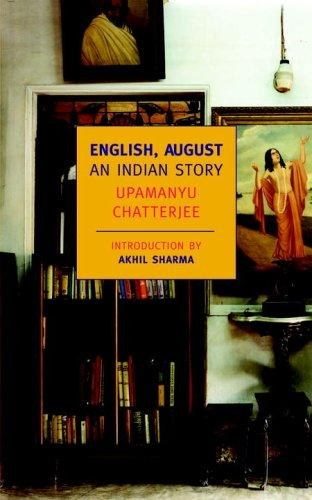
English, August: An Indian Story
Upamanyu Chatterjee1988
A stoned, sarcastic IAS trainee is posted to a town called Madna and spends a year failing to become a serious person.
Agastya Sen, called August by everyone, is twenty four, freshly selected into the Indian Administrative Service, and sent to Madna for his training year. Madna is hot, dull, and full of officials who talk in circles about drinking water schemes. Agastya smokes, lies about being married, reads Marcus Aurelius in bed, misses his friends in the city, and drifts through meetings he does not understand and does not want to. The comedy sits in the gap between the job he trained for and the person he actually is, and Chatterjee writes small town boredom with more accuracy than most writers manage with drama.
Why it is at 1
Number one because Madna is the most complete small town in Indian English fiction. You come away knowing the rest house, the market, the officers' club and the mosquito situation. Its grip is deliberately low: Agastya can leave whenever he likes, which is exactly why the town wins. Fair warning, the plot is thin by design and the sex jokes are very 1988.
Read it ifyou want funny, exact writing about being young and bored in a posting you did not choose
Skip it ifyou need a story that moves, because this one refuses to on purpose
dry, stoned, exactBest for: first-timers and anyone recently transferredsatirecivil services1980smodern classic
Heads up: constant drug use and crude sexual humour
Pairs with: Raag Darbari at number two, which shows you the same town from the inside instead of the guest house
2
Grip 8/10, run by the co-operative union
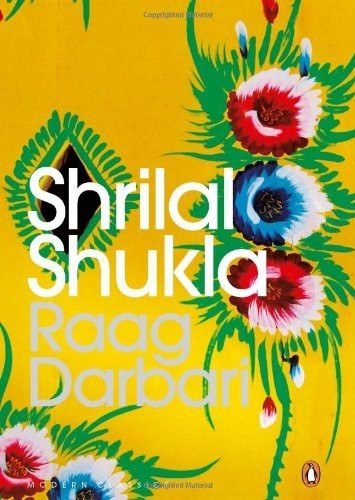
Raag Darbari
Shrilal Shuklatranslated by Gillian Wright1968about 386 pages
An MA student visits his uncle for a rest and learns that the college, the co-operative and the courts are all the same three men.
Rangnath comes to Shivpalganj to recover his health and study in peace, and stays long enough to see how power actually moves in small town north India. His uncle Vaidyaji runs the local college's managing committee and the co-operative union, which turns out to be the same job as running everything. Elections are fixed in the open. Court cases are treated as hobbies with hearing dates. Nothing is secret and nothing changes. Shukla was a civil servant, and it shows: the satire never feels exaggerated, it feels like documentation with the real names taken out.
Why it is at 2
Second because no other book here gives you the machinery. Narayan gives you a town's charm and Chatterjee gives you its boredom. Shukla hands you the wiring diagram. It sits below English, August only because it is long and asks for patience, and because the humour is drier than a Kanpur afternoon in May.
Read it ifyou want to understand how a small town is really run, with jokes
Skip it ifyou want a plot going somewhere, because this one circles by design
dry, sprawling, mercilessBest for: readers who like political satirehindisatirepoliticstranslation
3
Grip 10/10, run by the neighbours
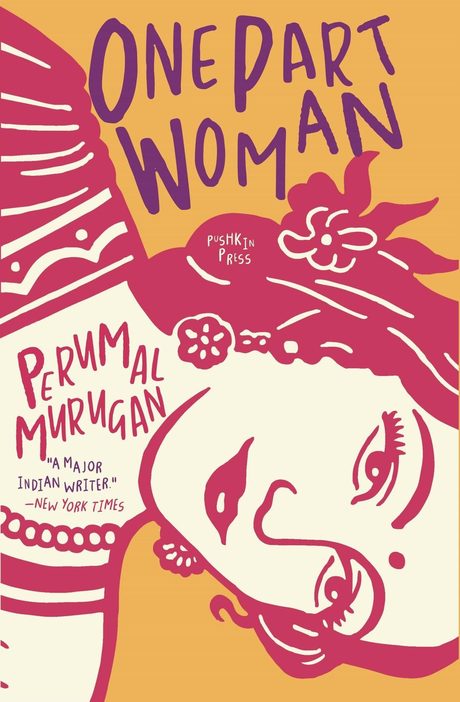
One Part Woman
Perumal Murugantranslated by Aniruddhan Vasudevan2010about 211 pages
A couple in a Tamil town are happy together and childless, and their town will not allow those two facts to sit side by side.
Kali and Ponna have been married for years. They like each other, which is rarer in fiction than it ought to be, and they have no children, which their families and their neighbours treat as public business. Every visit, every festival, every conversation circles back to it. Then an old custom attached to the chariot festival is raised as a possible solution, and the marriage has to survive the suggestion. Murugan writes rural Tamil Nadu in daily detail, the crops and the well and the arguments and the fields at night, and the pressure builds so quietly that you feel it fully only after the last page.
Why it is at 3
Third, and the tightest grip on this list. In Madna nobody cares what you do. In Tiruchengode there is no private life at all, and this book shows exactly how a place turns concern into a slow weapon. It is also the shortest serious novel here, which is why I hand it to people who say they have no time.
Read it ifyou want a short novel about a marriage under public pressure
Skip it iffertility pressure is too close to home right now
tender, plain, suffocatingBest for: readers with one free eveningtamiltranslationmarriageshort novel
Heads up: sexual content, and a plot built around pressure over childlessness
4
Grip 10/10, run by the Love Laws
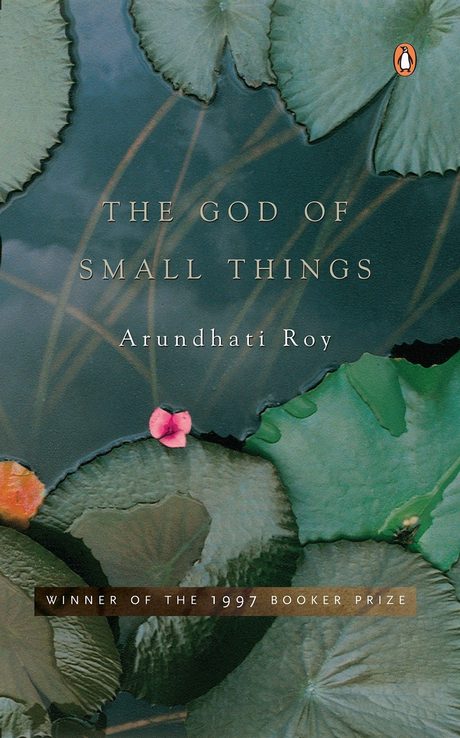
The God of Small Things
Arundhati Roy1997about 343 pages
Twins, a pickle factory and a Kerala village where the rules about who may love whom are enforced by everybody at once.
Ayemenem is a Kerala village with a river, a church, a communist party presence and a family pickle factory called Paradise Pickles and Preserves. Rahel and Estha are seven year old twins in a house full of adults carrying disappointments they will not name. Roy tells the story out of order, circling the same afternoon from different years, so you know roughly what happened long before you learn how. The sentences are famous for good reason: she invents words, breaks lines in half, and writes the way children actually reason. The village is not scenery here, it is the thing that decides.
Why it is at 4
Fourth because it turns up on every Indian book list ever written and I still cannot leave it off this one. Ayemenem is a whole small town society in miniature: caste, church, party, family money, and the certainty that everyone will hear about it by evening. It ranks below the top three only because you have probably already met it, and because the time jumps ask real work from a new reader.
Read it ifyou want the best prose on this list and can follow a broken timeline
Skip it ifyou want events in the order they happened
lush, circling, devastatingBest for: readers who reread sentenceskeralafamilymodern classic
Heads up: child sexual abuse, caste violence, the death of a child
5
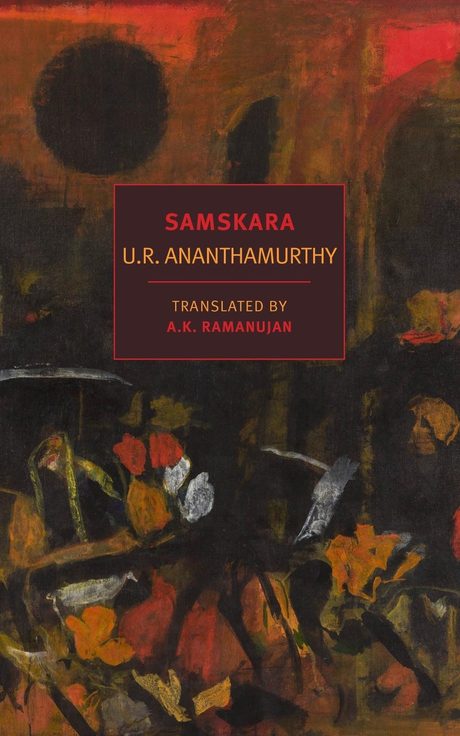
Grip 10/10, run by the rulebook
Samskara: A Rite for a Dead Man
U. R. Ananthamurthytranslated by A. K. Ramanujan1965
A man who broke every brahmin rule dies, and nobody in the agrahara can work out who is permitted to burn his body.
Naranappa ate meat, drank, kept a mistress and mocked his neighbours, and now he lies dead in the agrahara of a Karnataka village called Durvasapura. Nobody will perform his last rites, because performing them might make you as polluted as he was. Praneshacharya, the most learned man there, goes looking for the answer in the texts and does not find one. What follows is a short, hot, dizzying book about a man whose entire authority came from knowing the rule, standing in front of a question the rule does not cover. Ramanujan's English is plain and quick and never gets in the way.
Why it is at 5
Fifth because it is the sharpest thing here about what a small town actually is: a place where the rules are the roads. Samskara turns a corpse into a logic problem and then lets the logic fall apart in the open. It runs under two hundred pages, and the second half goes somewhere much stranger than the setup lets you expect.
Read it ifyou like short novels where an idea breaks a man
Skip it ifyou want a warm story with people to root for
feverish, argumentative, strangeBest for: readers who like philosophical fictionkannadatranslationcasteshort novel
Heads up: caste, a plague, and sexual content
6
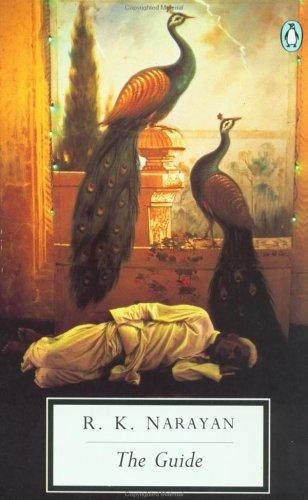
Grip 6/10, run by the railway station
The Guide
R. K. Narayan1958about 234 pages
Malgudi's best tour guide talks his way into a dancer's life, a jail cell and finally a temple, in that order.
Raju grows up beside the Malgudi railway station, minding a shop and then running a sideline as a guide who will show you any cave you ask for. He meets Rosie, a dancer married to a cold archaeologist, and reinvents her career and himself along with it. Later, after a fall he thoroughly earns, a village mistakes him for a holy man during a drought and refuses to be talked out of it. Narayan writes with a straight face and a very light hand, and the joke is always quietly on the man telling the story.
Why it is at 6
Sixth because Malgudi is the original, the town every Indian small town novel has been arguing with ever since. The grip is medium here: Raju can leave, does leave, and returns to a town that has already written his part for him. I picked this over Malgudi Days because a novel shows you how a town works across years rather than in snapshots.
Read it ifyou want charm, irony and a narrator you cannot fully trust
Skip it ifyou want deep interiority, because Narayan stays outside his people
wry, light, slyBest for: anyone starting with Indian classicsmalgudiclassiccomedy
7
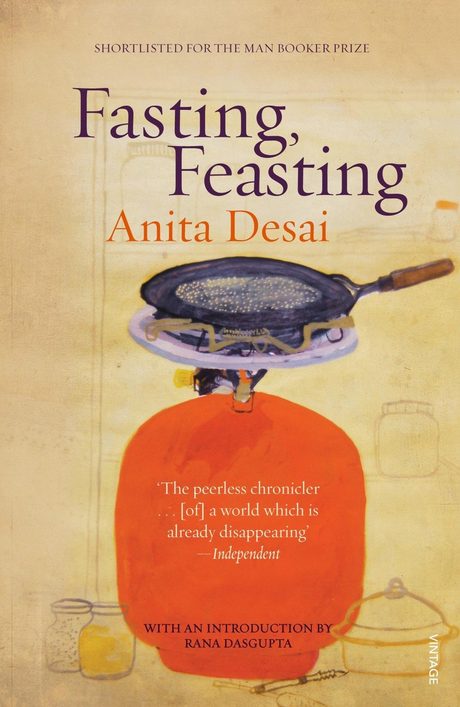
Grip 9/10, run by the parents
Fasting, Feasting
Anita Desai1999about 177 pages
One daughter is kept at home in a north Indian town, one son is shipped to America, and neither arrangement works.
Uma is the elder daughter in a provincial Indian family, plain by her parents' estimate, pulled out of school to be useful, and kept at home through two humiliating attempts at marriage. Her mother and father are so fused that Desai writes them as one word, MamaPapa. The second half crosses to Massachusetts, where her brother Arun boards with an American family and starves in a completely different way. It is a quiet book with a lot of anger inside it, and the Indian half is the stronger half by a wide margin.
Why it is at 7
Seventh because it shows the smallest unit of small town power, which is the house. Nobody in Uma's town needs to enforce anything, because her parents do it for free and around the clock. It loses ground only because a third of the book leaves India, and the American section never matches the heat of the first.
Read it ifyou grew up watching a sister get fewer choices than a brother
Skip it iffamily claustrophobia is not what you came for
quiet, airless, angryBest for: readers of domestic fictionfamily1990sprovincial india
Heads up: an eating disorder appears in the American section
8

Grip 7/10, run by the big house
An Atlas of Impossible Longing
Anuradha Roy2008about 311 pages
Three generations in a factory town at the edge of a forest, and an orphan boy who is taken in but never taken as family.
Amulya moves his family out of Calcutta to Songarh, a small town near a forest and a ruined fort, to run his factory. His wife hates it there. His sons grow up in it anyway. A boy called Mukunda is brought into the house without being brought into the family, and the novel follows what that half belonging does to him over decades. Roy is very good on houses: the rooms, the additions, the locked wing, and the way a building holds on to a family's decisions long after the family has stopped discussing them.
Why it is at 8
Eighth because it is the most novel shaped book here, the one to pick if you want plot, time passing and a love story you can follow to the end. Songarh is a company town, so its grip is economic rather than religious, which makes a useful contrast with Tiruchengode and Durvasapura higher up. The final section moves to Calcutta, and that costs it a place.
Read it ifyou want a long, absorbing family story with a real ending
Skip it ifyou dislike novels that hand over to a new narrator midway
atmospheric, patient, sadBest for: readers who like family sagasbengalmultigenerationalhouses
9

Grip 8/10, run by the grandmother
A Terrible Matriarchy
Easterine Kire2007about 330 pages
A Naga girl in Kohima is sent to live with the grandmother who believes girls should be fed last, and grows up arguing.
Dielieno is five when she is handed over to her grandmother, a woman with firm views on what girls are for and no interest in softening them. The book follows her from that house through school and into adulthood in Kohima, inside a Naga society changing fast around her: church, education, money, and the older order still issuing instructions. Kire writes plainly and lets the cruelty stay small and domestic, which is what makes it land. Nagaland almost never appears on Indian reading lists, and this is the friendliest door into it.
Why it is at 9
Ninth, and the book here I most want to push at people, because northeast India is missing from nearly every list you will find. As a novel it is simpler than the ones above it, more a series of episodes than a structure. As a portrait of a town where your grandmother is the government, it has no competition on this page.
Read it ifyou want a coming of age story from a part of India you have not read
Skip it ifyou want formal ambition, because the telling is deliberately simple
plain, warm, stubbornBest for: readers filling a regional gapnagalandnortheastcoming of age
10
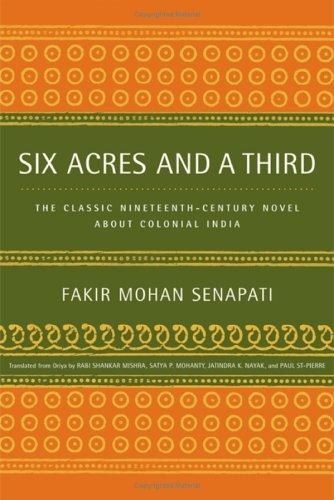
Grip 9/10, run by the landlord
Six Acres and a Third
Fakir Mohan Senapatitranslated by Rabi Shankar Mishra, Satya P. Mohanty, Jatindra K. Nayak and Paul St-Pierre1902about 232 pages
An Odia landlord wants a weaver couple's six and a third acres, and the narrator telling you about it is not on your side.
Ramachandra Mangaraj is a landlord in nineteenth century Odisha, pious in public and a moneylender in private, and he decides he wants a small plot belonging to a weaver couple. That is the entire plot. The pleasure is the narrator, a chatty village voice who praises Mangaraj so hard that the praise turns into evidence, digresses about cats and court clerks, and addresses you directly as though you are sitting on the veranda with him. Senapati was writing in the 1890s and inventing a kind of Indian irony that writers are still borrowing from.
Why it is at 10
Tenth because it is the oldest book here and the one most likely to surprise you, and because it is this list's novel about land. Everything above it is about rules, families or boredom. This one is about who owns the field, which is what most village fights in India have always been about. The sly narration takes about fifty pages to click.
Read it ifyou like unreliable narrators and nineteenth century mischief
Skip it ifyou want a modern voice, because the digressions are relentless
sly, gossipy, furiousBest for: readers who like literary tricksodiasatirecolonial indiatranslation
11

Grip 6/10, run by the transfer order
My Father's Garden
Hansda Sowvendra Shekhar2018about 194 pages
Three pieces of a Santhal doctor's life across small town Jharkhand: a hostel affair, a friend who discovers politics, and a father who plants gardens.
The narrator is a Santhal medical student and later a doctor, and the book hands you three long stretches of his life instead of one plot. The first is an affair with a classmate in a college hostel, told without apology or explanation. The second follows a friend who goes into student politics and turns out to be good at it. The third is about his father, a government servant who plants a garden in every town he is posted to. Shekhar writes small town Jharkhand as a place with an ordinary middle class in it, which hardly anyone does.
Why it is at 11
Eleventh because it is the newest book here and the most matter of fact. There is no lament in it. The towns are simply where a life happens, and the grip is a transfer order rather than a caste council. It ranks here because the three parts add up to a person rather than a novel, and some readers will want more shape than that.
Read it ifyou want contemporary small town India without nostalgia
Skip it ifyou need a single continuous story with one arc
frank, unhurried, unsentimentalBest for: readers who like linked novellasjharkhandadivasicontemporary
Heads up: explicit sex including a gay relationship, and caste and community slurs spoken by characters
12
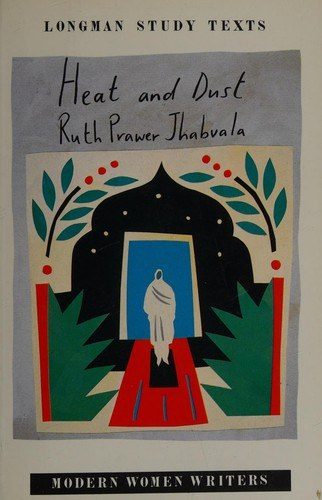
Grip 5/10, run by the civil lines
Heat and Dust
Ruth Prawer Jhabvala1975about 184 pages
Two women, fifty years apart, arrive in the same small town called Satipur and both find the same trouble waiting for them.
In 1923 Olivia is the bored young wife of a British officer posted to Satipur, and she grows close to the Nawab whose palace sits nearby. In the 1970s an unnamed English narrator arrives in the same town carrying Olivia's letters, rents a room above a shop, and starts living a version of the same story. Jhabvala moves between the two timelines without fuss and declines to make either woman a heroine. The town is drawn from outside, by a writer who lived in India for decades and never once pretended to be from there.
Why it is at 12
Twelfth because this is the outsider's small town, and the list needed one. Satipur reaches you through two foreigners, so you get the civil lines, the bazaar and the dak bungalow rather than the kitchen and the courtyard. The grip stays loose, because both women can buy a ticket home at any point. That distance is the honest limit of the book and the reason it is not higher.
Read it ifyou like dual timelines and a cool, unsentimental narrator
Skip it ifyou want India seen from the inside rather than from the veranda
cool, restrained, ironicBest for: readers of colonial era fictioncolonial indiadual timelineoutsider view
13

Grip 4/10, run by the one shop
The Blue Umbrella
Ruskin Bond1974
A hill girl trades her lucky pendant for a bright blue umbrella, and the entire village develops an opinion about it.
Binya lives in a Garhwal village where very little happens, and she wants a blue umbrella that some picnickers have carried up from the plains. She swaps her leopard claw pendant for it. After that the umbrella becomes the most looked at object for miles, and Ram Bharosa, who runs the only shop in the village, wants it badly enough to do something foolish. The whole thing runs about eighty pages, reads happily from age ten upward, and is the gentlest book on this list by a distance.
Why it is at 13
Thirteenth because it is the smallest in scale, which is not the same as the weakest. Everything else here is a town holding a person down. This is a town noticing a bright object and then, slowly and grudgingly, deciding to be decent about it. If you have not finished a novel in years, start with this one tonight.
Read it ifyou want something short, kind and set in the hills
Skip it ifyou want adult complexity, because this one is deliberately simple
gentle, hill-cool, kindBest for: reluctant readers and childrenhillsshortall ages
Worth knowing
The same thirteen, sorted by grip
If you would rather choose by how hard the town squeezes than by my ranking, read them in this order. Loosest first: English, August at three, The Blue Umbrella at four, Heat and Dust at five, then The Guide and My Father's Garden at six, An Atlas of Impossible Longing at seven, Raag Darbari and A Terrible Matriarchy at eight.
Then the tight end: Fasting, Feasting and Six Acres and a Third at nine, and the three tens, One Part Woman, The God of Small Things and Samskara. Notice what happens as the number climbs. At the loose end the books are comedies, because a place you can leave is funny. At the tight end nobody is joking, because a place you cannot leave decides your life and does not explain itself. The middle is where most of us actually live.
Worth knowing
Where these towns actually are
Madna is unplaced on purpose, somewhere hot in the Hindi belt. Shivpalganj is eastern Uttar Pradesh. Tiruchengode is real, in western Tamil Nadu, and you can visit the hill temple. Durvasapura is coastal Karnataka, Malgudi is invented but feels like the Karnataka and Tamil Nadu border, Ayemenem is a real village in Kottayam district, Kerala.
Songarh is invented, somewhere in the Bengal and Jharkhand belt near the forests. Shekhar's towns are real Jharkhand: Ghatsila, Pakur, the medical college in Jamshedpur. Satipur is invented, north India, with a Nawab's palace attached. Kohima is Nagaland's capital and the only place on this list I would call a proper hill town rather than a village grown large. Binya's village in Garhwal has no name at all, which is the point.
People also ask
Questions, answered
What counts as a small town in Indian fiction?
For this list, a place with one of everything: one college, one cinema, one doctor with a reputation, one bus out at six. That covers proper mofussil towns like Kohima and Madna, and it also covers big villages like Ayemenem and Shivpalganj, because in India the line between a large village and a small town is usually a bus route and a bank branch. What it rules out is the metros, which have their own lists on this site and tend to swallow everything else.
Which small town Indian novel should I read first?
English, August if you want to laugh and you read English fiction comfortably. One Part Woman if you want something short that will stay with you, and you can handle a hard subject. The Blue Umbrella if you have not finished a book in a while and want a win tonight. I would not start with Raag Darbari or Six Acres and a Third, not because they are lesser books, but because both take about fifty pages before the humour clicks into place.
Is Malgudi a real place?
No. R. K. Narayan invented Malgudi and then used it across a dozen books and dozens of stories, giving it a railway station, a river called the Sarayu, the Mempi hills nearby, and a cast of shopkeepers who keep turning up. People have argued for decades about which real town in Karnataka or Tamil Nadu it resembles, and Narayan mostly declined to settle the question. Read The Guide first and Swami and Friends afterwards and you get the same town in two very different moods.
Why is The White Tiger not on this list?
Because it leaves. Balram starts in Laxmangarh, which is exactly the kind of place this page is about, but the real subject of that novel is Gurgaon and Bangalore, and the village works as a launch pad rather than a world. The same rule kept out Serious Men, which is Mumbai, and The Illicit Happiness of Other People, which is Madras. If the town could be swapped for any other town without changing the book, it did not qualify here.
Are all of these depressing?
No. Four of the thirteen are funny and two of those are properly funny: English, August and Raag Darbari both work as comedies before they work as anything else. The Guide is wry throughout and The Blue Umbrella is warm from start to finish. The heavy ones are genuinely heavy though, so read the content notes before you commit. For the lightest possible run through this list, take numbers one, six and thirteen in that order.
How many of these are translations?
Four. Raag Darbari from Hindi by Gillian Wright, One Part Woman from Tamil by Aniruddhan Vasudevan, Samskara from Kannada by A. K. Ramanujan, and Six Acres and a Third from Odia by a team of four translators. The other nine were written in English. That ratio is a limitation of what has been brought into English rather than a judgement, because a great deal of the best small town writing in Marathi, Bengali, Telugu and Malayalam still has no English edition at all.
Before you go
What to read tonight
If you take one thing off this page, take the grip idea and use it on whatever you read next. A town that lets its people leave produces comedy. A town that does not produces tragedy, and the same street can do either depending on who is walking down it.
Tonight, if you have an hour, read The Blue Umbrella. If you have a weekend and want to laugh, English, August. If you want the one that will change how you look at your own family's town, it is One Part Woman, and I would not read that one right before bed. After any of them, the natural next move is translation, because three of the four translated books here sent me looking for more, and there is a whole list on this site for exactly that.
Keep going
Lists that pair with this one
Indian Fiction
The 20 Best Indian Books in Translation, Ranked by Where to Start
Twenty books from ten Indian languages, ordered from the easiest way in to the one that will fight you, with the translator named every time.
Authors
The 12 Best R. K. Narayan Books, Ranked, and Where to Start
Twelve books ranked for a reader picking him up today, each with a sting rating for how hard the ending lands.
Indian Fiction
16 Best Books to Understand India, Ranked by What They Explain
Sixteen books, ten doors into the same country: history, caste, the mega city, the village, money, and where to start tonight.
Mood & Life
19 Best Coming of Age Novels, and the Right Age to Read Each
Every one of these has a window when it lands hardest, so I marked all nineteen and ranked them by how long that window stays open.
Indian Fiction
12 Best Novels Set in Delhi, Plus 3 That Are Not Fiction
Delhi is at least five cities stacked on one map, so I have ranked these by which one you actually take away.