The first Preeti Shenoy novel I read was my cousin's, borrowed on a Sunday and not returned for a year. It was a battered copy of Life is What You Make It with cellotape holding the spine, and I picked it up fully intending to be a snob about it. Two hundred pages later I was still in the same chair, mildly annoyed at how easily she had got me.
Here is my honest position on her. Literary India mostly does not review Preeti Shenoy, and readers mostly do not care. Her sentences are plain, sometimes plain to a fault, and she has a habit of telling you what a scene meant right after the scene already told you. But she does one thing almost nobody in Indian commercial fiction attempts: she stays inside an ordinary woman's inner life long enough for the ordinariness to start hurting. A bad marriage in which nobody is hitting anybody. A mother who is simply tired. A grandfather who has outlived his usefulness to his own children. That is a harder subject than a car chase, and she keeps choosing it.
So this list is ranked on one question: does the book earn its emotion, or does it announce it. Number one earns nearly all of it and number twelve mostly announces. And because Shenoy is a writer you grow through rather than binge, every entry carries the life stage where it lands hardest, so you can read her by your own calendar instead of her publication order.
How I picked these
- Twelve books she wrote alone, in her own name. No box sets, no anthologies she merely appears in, no translated editions counted twice.
- Ranked on earned emotion rather than on how much I cried. A book can make you cry and still have cheated to get there.
- One non-fiction title made the cut and one did not. The Magic Mindset is a decent self-help paperback and a weak Shenoy book, so it sits in the cut pile at the bottom of this page.
- Every edition was checked through Google Books and Open Library, so the covers, years and ISBNs point at real books you can actually find.
- Left out on purpose: her 2008 debut 34 Bubblegums and Candies and the short-story collection Love A Little Stronger, both slim and both for people who already like her voice.
The whole list at a glance
All 12 books, in order
| # | Book | Author | Year | Vibe | Best for |
|---|
| 1 | A Hundred Little Flames | Preeti Shenoy | 2017 | slow, green, quietly sad | readers over thirty |
| 2 | Life is What You Make It | Preeti Shenoy | 2011 | plain, urgent, hopeful | college students and new readers |
| 3 | The Rule Breakers | Preeti Shenoy | 2018 | restrained, angry, patient | women in their twenties |
| 4 | A Place Called Home | Preeti Shenoy | 2022 | green, secretive, warm | readers who want story first |
| 5 | Tea for Two and a Piece of Cake | Preeti Shenoy | 2012 | tender, wounded, hopeful | anyone rebuilding after a split |
| 6 | The Secret Wish List | Preeti Shenoy | 2012 | restless, guilty, alive | married readers past the honeymoon |
| 7 | It Happens for a Reason | Preeti Shenoy | 2014 | brisk, scrappy, warm | dog people and single parents |
| 8 | Why We Love the Way We Do | Preeti Shenoy | 2015 | conversational, practical, brief | anyone between relationships |
| 9 | Wake Up, Life is Calling | Preeti Shenoy | 2019 | steady, hopeful, ordinary | readers managing a diagnosis |
| 10 | When Love Came Calling | Preeti Shenoy | 2020 | young, sweet, sudden | teen readers and reluctant ones |
| 11 | The One You Cannot Have | Preeti Shenoy | 2013 | aching, static, honest | the recently rejected |
| 12 | It's All in the Planets | Preeti Shenoy | 2016 | light, chatty, thin | completists on a train |
The list
The books, ranked
1

Lands hardest when a grandparent starts getting old
A Hundred Little Flames
Preeti Shenoy2017about 343 pages
A city boy is dumped on his grandfather in a Kerala village, and the old man turns out to be the more interesting person in the house.
A young man with a decent job, a decent flat and no particular direction gets packed off by his father to a village in Kerala, to look after a grandfather he barely knows. What follows is two men in one house, mostly irritating each other, until the old man's own past starts leaking out. Shenoy is writing about the thing Indian families avoid at dinner: what happens to a parent once he stops being useful, and what a property dispute does to affection. The village has real weather in it. The ending refuses to tidy everything up, which is why it stays with you.
Why it is at 1
First because it is the only book of hers where the emotion arrives before the explanation. The grandfather is allowed to be difficult, which is rare in Indian fiction about the elderly, and she resists handing him a redemption speech at the end. It sits above Life is What You Make It because it is the better written book, even though it is the less important one.
Read it ifyou have a grandparent you visit less often than you should
Skip it ifyou want romance, because the love story is the weakest thread here
slow, green, quietly sadBest for: readers over thirtyfamilykeralaageing
Heads up: illness and end-of-life care
Pairs with: Sudha Murty's short fiction, which works the same generational territory with more comedy in it
2
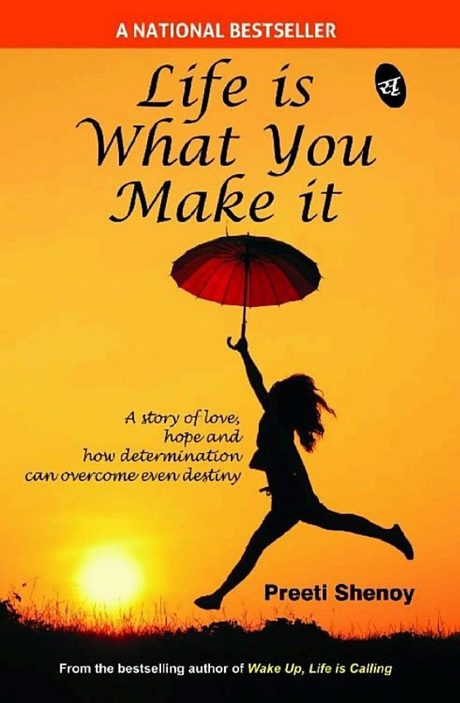
Lands hardest between nineteen and twenty-two
Life is What You Make It
Preeti Shenoy2011about 197 pages
A bright college student's mind comes apart, and the book stays with her through the ward, the diagnosis and the slow way back.
Set in the early eighties across two Indian cities, this follows Ankita, who is doing everything right, college and activities and a romance, until her thinking starts to slide and she ends up admitted to a psychiatric hospital. Shenoy wrote about bipolar disorder for a mainstream Indian audience at a time when the words were barely said aloud in a drawing room, and she wrote it without turning the patient into either a saint or a warning. It is short, plainly told, and it moves. Plenty of people finish it in one sitting, which is part of why it travelled so far.
Why it is at 2
Second because of what it did rather than how it reads. The prose is the plainest on this list and the eighties detail is thin, but this is the book that made mental illness discussable for a generation of Indian readers who would never have picked up a serious novel about it. Read it for that, then read the sequel at rank nine and notice how much steadier she got in eight years.
Read it ifyou want the one everybody has read, or you want a diagnosis described from inside
Skip it ifyou need elegant prose, because this is her plainest writing
plain, urgent, hopefulBest for: college students and new readersmental healthcollege1980s
Heads up: psychiatric hospitalisation and suicidal thinking
Pairs with: Wake Up, Life is Calling at rank nine, which picks the same character up afterwards
3
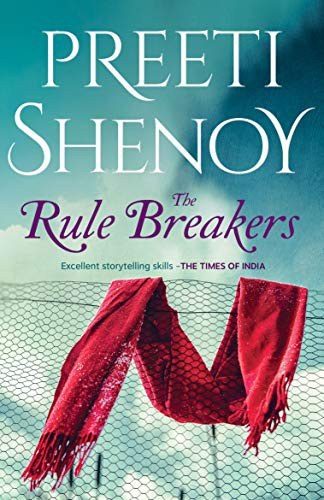
Lands hardest when your family is deciding your life
The Rule Breakers
Preeti Shenoy2018
A studious twenty-year-old from Joshimath is married off before she can object, and has to build a life inside somebody else's flat.
Veda is the sort of daughter who reads, tops her class and assumes the future is hers to plan, and then her parents arrange her marriage and she discovers her opinion was never part of the process. She moves from a hill town to a flat in Pune, with a husband who is indifferent and a mother-in-law who is considerably worse. The book is about how she gets some of herself back, largely through work with children nobody else is bothering to teach. A second thread involving her best friend from home runs alongside it, and it is the weaker half.
Why it is at 3
Third because it is her least sentimental book. The marriage is not a monster, it is just a room with nobody in it, and that is more frightening than melodrama. It ranks below the top two because the friend subplot drags and the last quarter reaches for a twist the story did not need. Still the one I would hand a twenty-two-year-old who is being shown rishta photos on a Sunday.
Read it ifyou are being told your life has already been arranged for you
Skip it ifyou dislike novels where the husband is written as furniture
restrained, angry, patientBest for: women in their twentiesarranged marriagesmall townagency
Heads up: coercive marriage and marital neglect
4

Lands hardest at any age, this one is simply a novel
A Place Called Home
Preeti Shenoy2022about 252 pages
A woman with a settled life on a Karnataka coffee estate has to go back to the Delhi servants' quarters she came from.
Alka runs a life that looks solid from outside: a coffee estate in Sakleshpur, a household, a routine among the hills. The problem is what she left behind in Delhi, and the fact that a past does not accept being left. This is the most plotted book Shenoy has written, with a secret at the centre and a class gap running under everything, and it is the one where she is most obviously enjoying herself as a novelist rather than as a confidante. The Karnataka sections are the best setting work in her catalogue.
Why it is at 4
Fourth because it is her most competent novel and her least necessary one. Nothing here will rearrange how you think about your own life the way the top three might, but as a book you sit down with on a Sunday it is the smoothest of the twelve. If you have bounced off her before because the earlier novels felt like advice with characters attached, start here instead.
Read it ifyou want plot and setting rather than a life lesson
Skip it ifyou came for the interior mental-health writing she is known for
green, secretive, warmBest for: readers who want story firstfamily secretkarnatakaclass
5
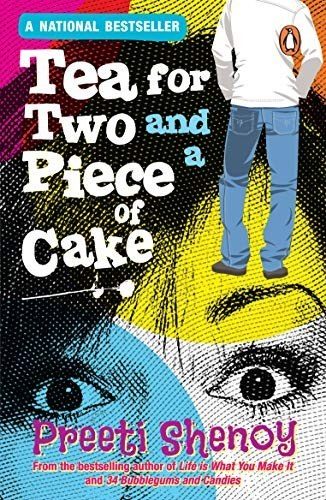
Lands hardest in the year a marriage ends
Tea for Two and a Piece of Cake
Preeti Shenoy2012about 280 pages
A woman who was chosen, married and then discarded has to work out what she actually wants when a second man turns up.
Nisha is overweight, unsure of herself, and startled to be picked by a man who seems to be out of her league. The marriage happens quickly and comes apart slowly, and the second half is about what she does with the wreckage, including a man who has been standing quietly at the edge of the story the whole time. It is a familiar shape, and Shenoy fills it with the small humiliations that make it real: the weight comments, the in-laws, the way a husband can leave a room while still sitting in it.
Why it is at 5
Fifth because the first half is genuinely good and the second half is a wish. Nisha's early self-doubt is the most honestly written insecurity in these twelve books, and then the story hands her a rescue instead of making her build one. I still recommend it, because the ache is real even when the resolution is convenient.
Read it ifyou have been left, or you have been the one who felt lucky to be chosen
Skip it ifconvenient endings make you throw a book across the room
tender, wounded, hopefulBest for: anyone rebuilding after a splitmarriagebody imagesecond chance
6
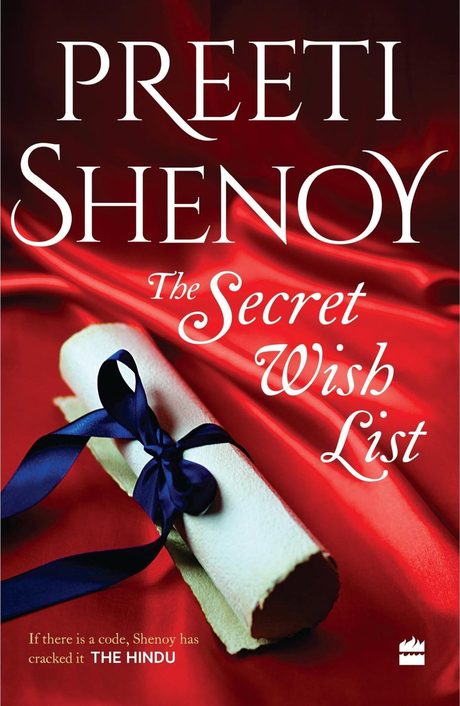
Lands hardest around year seven of a comfortable marriage
The Secret Wish List
Preeti Shenoy2012about 230 pages
A bored wife digs out a list she wrote as a teenager and starts working through it, which goes about as well as you would expect.
Diksha married the man her parents chose, had a son, and became functionally invisible in her own house. Then a school reunion knocks something loose, she digs out a list of things she wanted when she was sixteen, and she starts doing them. Shenoy is writing about the restlessness that arrives when a life is fine and empty at the same time, and about what a woman is allowed to want once the wedding photos have been framed. The husband is drawn thin, and Diksha is not.
Why it is at 6
Sixth because it is the most uncomfortable of her mid-period books and the most honest about how boredom turns into a bad decision. It ranks under Tea for Two because the writing is looser and the husband exists only as an obstacle. But of everything on this list, this is the one married readers quietly message each other about.
Read it ifyour life is fine and that is exactly the problem
Skip it ifyou need a marriage story where nobody behaves badly
restless, guilty, aliveBest for: married readers past the honeymoonmarriagemidlifedesire
Heads up: infidelity and an unhappy marriage
7
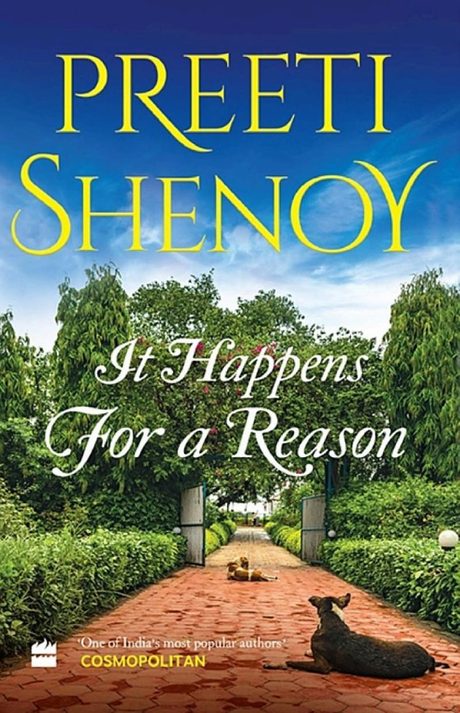
Lands hardest if you are a single parent, or judging one
It Happens for a Reason
Preeti Shenoy2014about 232 pages
A woman who became a mother at eighteen runs a dog boarding place in Bangalore, and then the boy's father walks back in.
Vipasha had a child at eighteen, cut off her family and the boy's father, and rebuilt her life in a quiet corner of Bangalore around boarded dogs and gym shifts. Her son is fifteen now and would quite like her to have a romance. Then the father reappears. What I like is that Shenoy refuses to make the single mother either heroic or tragic: she makes her tired, funny and a little territorial, and the dogs are written by somebody who has clearly lived with dogs.
Why it is at 7
Seventh because the setup is her most interesting and the execution is her most rushed. This premise deserves three hundred pages and gets a little over two hundred, so the returning ex is resolved too neatly and the vet subplot barely qualifies as a subplot. Read it for Vipasha herself, who is the most likeable narrator in the twelve.
Read it ifyou want a heroine who is nobody's victim
Skip it ifyou want an ending that takes its time
brisk, scrappy, warmBest for: dog people and single parentssingle motherbangaloredogs
8
Lands hardest between relationships
Why We Love the Way We Do
Preeti Shenoy2015about 209 pages
Her non-fiction book about attraction, attachment, and why people keep choosing the same wrong person.
This is a set of short pieces about how relationships actually behave: why we pick who we pick, what attention does to a person, how couples drift, what people really mean when they say they have fallen out of love. It is written the way she writes fiction, plainly and through examples, and it is short enough to finish on a Delhi to Bangalore flight. There is no clinical apparatus and she never pretends to be a therapist, which is a relief. It reads like a long conversation with somebody who has watched a lot of marriages from close range.
Why it is at 8
Eighth, and the only non-fiction here, because it is the one book of hers I have gone back to on purpose. It is thin on evidence, so take it as a smart friend's opinions rather than as psychology. It earns this spot because the thinking is hers and it is useful, which is more than I can say for the straight self-help title she published six years later.
Read it ifyou keep repeating the same relationship and want a mirror held up
Skip it ifyou want research, citations and named studies
conversational, practical, briefBest for: anyone between relationshipsnon-fictionrelationships
9
Lands hardest in the year after therapy starts
Wake Up, Life is Calling
Preeti Shenoy2019about 241 pages
The sequel that follows the same young woman out of hospital and into the harder part, which is staying well.
This picks Ankita's story up from Life is What You Make It and carries her forward through recovery, study and the ordinary daily maintenance of a mind that has already broken once. The drama is lower than in the first book because the subject is lower drama by nature. Shenoy is a far steadier writer here, eight years on, and the passages about medication, stigma and having to explain yourself to people who mean well are the best things she has written about mental health.
Why it is at 9
Ninth because it needs the first book to work. On its own the plot is thin and it recaps a fair amount for readers arriving cold. Taken as a pair though, these two books together are the most useful thing on this list for anybody living with a diagnosis, or loving somebody who is.
Read it ifyou read the first one and want to know what happened afterwards
Skip it ifyou have not read Life is What You Make It yet
steady, hopeful, ordinaryBest for: readers managing a diagnosismental healthsequelrecovery
Heads up: mental illness, medication and stigma
10
Lands hardest between seventeen and twenty
When Love Came Calling
Preeti Shenoy2020about 277 pages
A chaotic nineteen-year-old and a shy British-Indian boy meet on a rural volunteering stint in Kerala with no signal to hide behind.
Puja is disorganised and loud and a standing puzzle to her family. Arush is studious, shy, and raised in Britain. Her mother packs her off to volunteer in rural Kerala, his programme sends him to India for twelve weeks, and with choppy internet and nothing else to do they end up talking properly, which is how people used to fall in love. Then the second half turns and the two of them land in genuine trouble. This is Shenoy writing young adult, and she keeps the register right instead of talking down.
Why it is at 10
Tenth because it is well made and deliberately narrow. If you are past twenty-two the emotional stakes will feel small, and the danger in the back half arrives quite abruptly. For a sixteen-year-old cousin who does not read much, though, this is the Shenoy I would hand over, ahead of Life is What You Make It, which is heavier than its page count suggests.
Read it ifyou are a teenager, or shopping for one
Skip it ifyou want adult relationships with adult consequences
young, sweet, suddenBest for: teen readers and reluctant onesyoung adultkeralafirst love
11
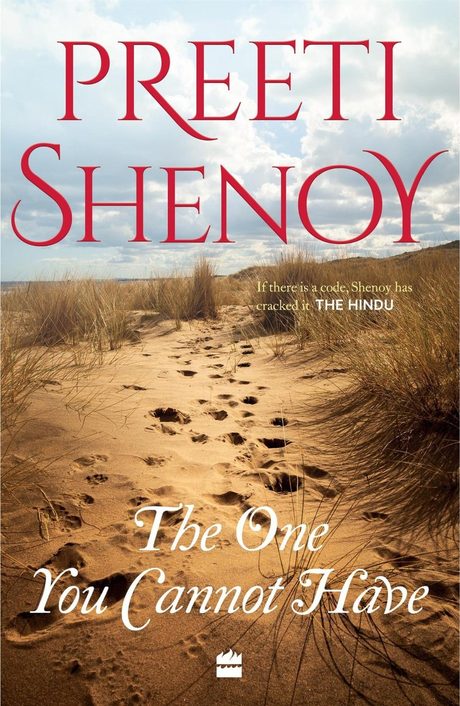
Lands hardest three months after a breakup
The One You Cannot Have
Preeti Shenoy2013about 232 pages
Three people arranged in a straight line of wanting: she wants him, he wants his ex, and his ex is married to somebody else.
Aman was left by Shruti, moved abroad to get over it, and has come home to start again. Shruti is married now. Anjali wants Aman, who is not available in any way that matters to her. The book sits inside unrequited love and refuses to make it noble, which I respect, and it is honest about how much of heartbreak is just admin: avoiding certain places, managing news about someone, deciding what to do with a phone number you have memorised.
Why it is at 11
Eleventh because it is the most repetitive book she has written. The circling is the point, and it is still circling. Individual chapters are sharp, especially the ones from Anjali, but two hundred pages of longing without much movement asks a lot of a reader. Worth it only if you happen to be in exactly that state right now, in which case it will feel written for you.
Read it ifyou are currently in love with somebody unavailable
Skip it ifyou want the plot to actually go somewhere
aching, static, honestBest for: the recently rejectedunrequited lovebreakup
12
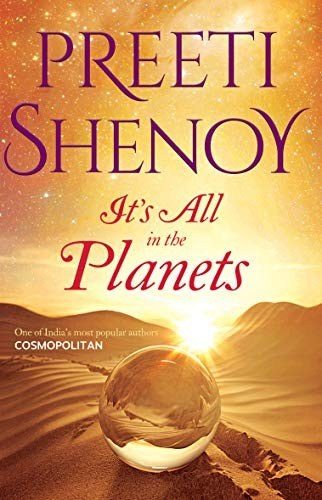
Lands hardest nowhere in particular
It's All in the Planets
Preeti Shenoy2016
Two strangers meet on the Chennai to Bangalore train, both stuck with the wrong partner, and she offers to coach him through it.
Aniket is a techie in love with a woman who treats him badly. Nidhi is a freelance writer engaged to a man she is not sure about. They meet on a train, she offers to act as his relationship coach, and the arrangement goes roughly where you expect it to go. The gimmick is astrology: every chapter opens with a horoscope and an astrologer keeps turning up at the edges. The train sections are fun and the banter is easy, and I still finished it feeling like nobody in it had actually changed.
Why it is at 12
Last because it is the only book here that reads as though it was written to a deadline. The astrology framing is a good idea used as decoration rather than as structure, and the two leads make the same discovery about four separate times. If you have read the other eleven, this is a pleasant Sunday. If you have read none of them, do not start here.
Read it ifyou have read most of her and want something light
Skip it ifthis would be your first Preeti Shenoy book
light, chatty, thinBest for: completists on a trainromanceastrologychennai
Worth knowing
Where the writing is plain to a fault
Shenoy writes for readers who do not want to work for it, and that is a legitimate choice rather than a failing. What is a failing is the habit that shows up in the weaker books here: a scene does its job, and then the narrator steps forward to explain what the scene meant. You can feel the author's hand on your shoulder, checking that you got it. In A Hundred Little Flames she trusts you, and the book is better for it. In It's All in the Planets she does not, and it flattens out.
The second thing worth knowing before you buy three of these at once is that her men are usually thinner than her women. Husbands in particular tend to be obstacles with jobs attached. If you go in expecting a balanced portrait of a marriage you will be irritated by page fifty. If you go in accepting that these are novels about what one specific woman is thinking, you get what you came for, and she is very good at it.
Worth knowing
What I left out, and why
34 Bubblegums and Candies from 2008 is her debut, a slim collection of observational pieces rather than a novel, and it is charming if you already like her voice and slight if you do not. Love A Little Stronger from 2018 is more of the same in short-story form. The Magic Mindset from 2021 is her one straight self-help book, and it is competent, generic, and not why anybody reads Preeti Shenoy in the first place.
I also skipped the box sets, which are three of the above novels in a cardboard sleeve, and the translated editions. If you read Tamil, Malayalam, Hindi or Marathi, her books have been translated widely, and a translation you read comfortably beats an English paperback you read dutifully.
People also ask
Questions, answered
Which Preeti Shenoy book should I read first?
Life is What You Make It, if you want the one everybody has read and a fast way into what she does. A Hundred Little Flames if you want her best novel and do not mind a slower opening. If you are under twenty, start with When Love Came Calling instead, since the other two carry more weight than a teenager necessarily wants on a first try. All three run under three hundred pages, so none of them is a big commitment.
What is Preeti Shenoy's most famous book?
Life is What You Make It, published in 2011. It is the title people mean when they say they have read Preeti Shenoy, and the one that gets passed around hostels and long train journeys. Fame and quality are separate things here, though. It is her most important book and, in my reading, only her second best. A Hundred Little Flames from 2017 is the stronger novel, it just arrived without the same noise.
Do Preeti Shenoy's books need to be read in order?
No, with one exception. Life is What You Make It and Wake Up, Life is Calling follow the same character and should be read in that order, first book then sequel. Everything else stands alone, so you can pick up any of the other ten cold. My actual suggestion is to ignore publication order entirely and use the life-stage line on each entry above, because these books land very differently depending on what is currently happening to you.
Is Preeti Shenoy good for someone who does not read much?
Yes, and that is her real skill. The sentences are short, the vocabulary is everyday, the chapters are small, and none of these books ask you to hold five threads in your head at once. Most run under two hundred and fifty pages. Start with Life is What You Make It or When Love Came Calling, either of which can be finished across two evenings with no reading stamina at all.
Which Preeti Shenoy book is the saddest?
A Hundred Little Flames, though it is a quiet sadness about ageing and family rather than a crying-on-the-metro one. If you want the book that actually hurts, it is Life is What You Make It, because the fear in the hospital sections is not softened for you at all. The Secret Wish List is the most uncomfortable rather than the saddest, which is a different experience and worth knowing before you start it.
Are Preeti Shenoy's books romance novels?
Only partly. There is usually a relationship somewhere in the plot, but the centre of gravity is a woman working out her own life, and the romance often comes second to a job, a diagnosis, a child or a family. If you want pure romance you will find these under-supplied on longing. If you want fiction about ordinary Indian women with a love story attached, that is exactly the shelf she is on.
Before you go
What to read tonight
If it is tonight and you want to actually finish something, pull down Life is What You Make It and give it two hours. If you have a longer weekend and a grandparent you have been meaning to ring, read A Hundred Little Flames instead, and then make the call.
The better way to use this list is to not read her in a row. Pick the entry whose life-stage line describes where you currently are, read that one, and leave the rest on the shelf. Come back in three years when a different line applies to you. Shenoy is at her best when a book arrives at the right moment, and at her weakest when you read four in a fortnight and start noticing the machinery. One at a time, she is very good company.
Keep going
Lists that pair with this one
Authors
The 11 Best Sudha Murty Books, Ranked for Kids, Teens and Adults
Eleven books worth your money out of the forty on the shelf, sorted by who each one is actually for.
Indian Fiction
20 Best Books by Indian Women Authors, From 1905 to 2025
Ranked by how hard I would push each one at a stranger, with a door on every book so you know how much patience it asks for.
Romance
The 25 Best Indian Romance Novels, Ranked Honestly (2026)
Comfort reads, campus tearjerkers, comedies and literary heavyweights, ranked with labels, quick picks and honest skip-it warnings.
Mood & Life
16 Books to Read After a Breakup, in the Order You Can Handle Them
Ordered by stage rather than by quality, because handing somebody Wild in week one is like handing a person with fever a plate of biryani.
Mood & Life
20 Best Books to Read in Your 20s, Grouped by the Problem
Four problems run this decade, work, love, money and meaning, so the list is sorted that way instead of pretending one book fixes all four.