Sudha Murty is the most gifted author in India, and I do not mean talented. I mean she is the book your aunt buys when she does not know what to buy. She turns up at weddings in gift wrap, in school prize ceremonies, in the hands of a cousin who has not finished a book since college and finished this one in two days. My mother owns four of hers and has read all four, which is a better strike rate than anything I have written.
The reflex among people who read a lot is to be snobbish about this, and I think the snobbery is half right. Her sentences are plain to the point of being bare, her novels announce their feelings instead of building them, and the morals often arrive with the subtlety of an announcement at a railway station. What that critique misses is that plainness is a choice with a payoff. In the true-story books, where the material is real people she actually sat with, that same flat style reads as respect. In the novels it reads as a summary of a better book.
So this list is ordered by that idea: how well her style serves what she is trying to do. Eleven distinct books, each with an audience label above the title, because the right Sudha Murty at nine is not the right one at twenty-nine. Quick picks first if you are buying a gift and have somewhere else to be.
How I picked these
- Books she wrote as books. Her Best Of and Collected volumes gather stories from the titles below, so buying those means paying twice for pages you already own.
- Every title verified through Google Books and Open Library with a real cover. Her Indian editions are reprinted constantly, so the printed date on the copy you buy is usually not the first publication year.
- Ordered by fit between style and job, not by fame, which is why a nonfiction collection beats her famous novels.
- An audience label on each, since she writes for seven-year-olds and for adults in the same career and bookshops shelve both together.
- I left out the mythology books that repeat material from the two epic collections here, and I left out anthologies she edited rather than wrote.
The whole list at a glance
All 11 books, in order
| # | Book | Author | Year | Vibe | Best for |
|---|
| 1 | Three Thousand Stitches: Ordinary People, Extraordinary Lives | Sudha Murty | 2017 | plain, warm, matter-of-fact | readers who want real India stories |
| 2 | Wise and Otherwise | Sudha Murty | 2002 | brisk, anecdotal, moral | gifting to non-readers |
| 3 | Mahashweta | Sudha Murty | 2007 | direct, angry, hopeful | teenagers and new novel readers |
| 4 | The Old Man and His God | Sudha Murty | 2006 | quiet, observational, kind | returning readers |
| 5 | House of Cards | Sudha Murty | 2013 | domestic, slow-burn, bitter | readers who like family sagas |
| 6 | The Serpent's Revenge | Sudha Murty | 2016 | brisk, curious, mythic | children nine and up |
| 7 | Dollar Bahu | Sudha Murty | 2007 | short, pointed, domestic | one-sitting reading |
| 8 | The Mother I Never Knew | Sudha Murty | 2014 | searching, sentimental, mild | a weekend read |
| 9 | The Upside-Down King | Sudha Murty | 2018 | familiar, tidy, mythic | children nine and up |
| 10 | The Magic Drum and Other Favourite Stories | Sudha Murty | 2006 | simple, oral, sunny | bedtime with small children |
| 11 | Gently Falls the Bakula | Sudha Murty | 2008 | wistful, blunt, early | readers curious about her beginnings |
The list
The books, ranked
1

Adults
Three Thousand Stitches: Ordinary People, Extraordinary Lives
Sudha Murty2017about 149 pages
The best thing she has written: true stories from decades of foundation work, told without a single sentence trying to impress you.
These are essays from her years running the Infosys Foundation, and the title piece is the one that stays with you. She spent a long time working with Devadasi women in north Karnataka, women dedicated to temples as children and then used and discarded by the same society that dedicated them, and she is honest about how badly the early meetings went and how long it took before anybody trusted her. Around it sit pieces about trains, village schools and the strange things people say to a woman whose job is giving money away. Nothing is dressed up, so nothing feels borrowed.
Why it is at 1
Number one because this is the mode she is built for: real people she actually met, reported in flat sentences with no literary ambition anywhere near them. The novels further down have plot, and plot is exactly where her limits show. Here the plainness reads as respect for the material instead of thin writing, and the difference is the whole argument of this list.
Read it ifyou want short true stories about the India outside the metros
Skip it ifyou want polished prose or one sustained argument
plain, warm, matter-of-factBest for: readers who want real India storiesessaystrue storiessocial work
2
Adults
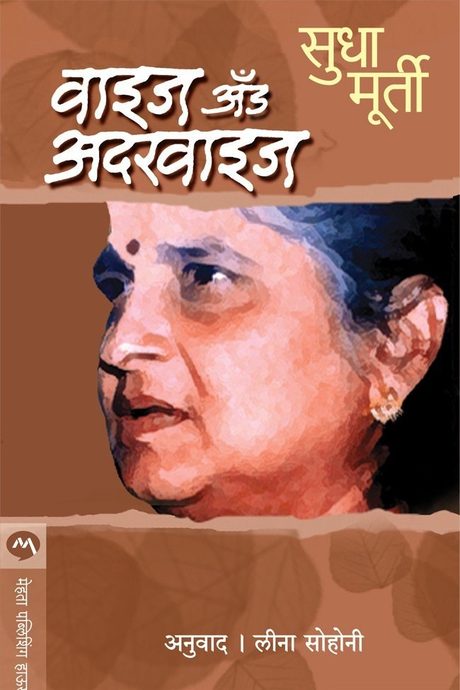
Wise and Otherwise
Sudha Murty2002about 10 pages
The book that made her a household name, and still the most reliable gift in Indian publishing.
The format has barely changed since: short true stories gathered while she travelled the country for the foundation, most of them three or four pages long. Somebody lies to her about their circumstances. Somebody else refuses help they obviously need, out of pride. A headmaster in a village does something quietly decent that nobody will ever hear about. Each piece closes with a small moral, sometimes stated outright, which will either warm you or irritate you depending on how you feel about being told the point of a story you just read.
Why it is at 2
Second because it invented the mode and holds up two decades later, though it is patchier than Three Thousand Stitches and the moralising sits heavier. If you are buying for a relative who claims they do not read, this is the safest book on the page. If you want her at full strength, buy the one above it instead.
Read it ifyou want quick true stories you can read one at a time
Skip it ifmorals at the end of a story make you itch
brisk, anecdotal, moralBest for: gifting to non-readerstrue storiesshort piecesclassic
3

Teens and up
Mahashweta
Sudha Murty2007about 164 pages
A young bride develops white patches on her skin, and her marriage and her in-laws quietly decide she is a liability.
Anupama is a college student and a stage performer when she marries into money. Then a white patch appears on her foot, the leucoderma spreads, and the family that chose her for her looks starts treating her as a mistake to be managed. Her husband, conveniently, is abroad. The second half is her building a working life in Bombay with no rescue arriving from anywhere. Murty wrote the novel in Kannada first and the English edition reached readers in 2007. The emotional beats are announced rather than earned, but the anger underneath is real and young readers feel it.
Why it is at 3
Third, and the best of her novels, because the subject is one Indian fiction almost never picks up: a skin condition treated as a moral failing, and a family disposing of a woman over it. It sits above House of Cards because it stays with one person instead of sprawling across a decade. Come for what it says out loud, not for the sentences.
Read it ifyou want an Indian novel about stigma and starting over
Skip it ifyou need literary prose or morally grey characters
direct, angry, hopefulBest for: teenagers and new novel readersnovelstigmawomen
Heads up: illness stigma and marital abandonment
4

Adults
The Old Man and His God
Sudha Murty2006about 136 pages
More true stories in the Wise and Otherwise mode, quieter and less interested in handing you a lesson.
People met on trains, in temples, in the villages where the foundation was putting up schools and libraries. The collection keeps circling one question, which is the distance between being religious and being decent, and it mostly refuses to answer that directly. This is the least insistent of her nonfiction books. Several of the pieces simply stop, leaving you with a person and no verdict, and readers who find her moralising heavy elsewhere often name this one as the collection where she trusts them most.
Why it is at 4
Fourth because it is a good book that arrived after the format was already set, so it reads as a second helping rather than a new dish. Pick it up if Wise and Otherwise worked for you and you want more of the same company. If you are only ever going to read one of her nonfiction collections, it should not be this one.
Read it ifyou liked Wise and Otherwise and want another round
Skip it ifyou have not read any of her nonfiction yet
quiet, observational, kindBest for: returning readerstrue storiestravelfaith
5

Adults
House of Cards
Sudha Murty2013about 294 pages
A village girl marries a doctor, money arrives in the marriage, and something in him rots so slowly that nobody names it.
Mridula grows up in a Karnataka village and moves to Bangalore with a husband whose medical career is about to take off. It takes off. The novel follows what the money does to him, to her, and to a marriage that was assembled for a smaller life, with a woman who keeps adjusting until there is nothing left of her to adjust. This is the most ambitious book she has written, the widest cast and the longest run, and it is also where the plain style strains hardest, since the corruption gets described to you rather than played out in scenes.
Why it is at 5
Fifth because the ambition is real and the execution wobbles. There are long stretches where she is genuinely sharp about how respectable people talk themselves into small crimes, and other stretches that read like notes toward a better novel. Worth your time after Mahashweta if you want to see her reaching for something larger.
Read it ifyou want a domestic novel about money changing a marriage
Skip it ifbeing told rather than shown wears you out
domestic, slow-burn, bitterBest for: readers who like family sagasnovelmarriagebangalore
6
Age 9 and up
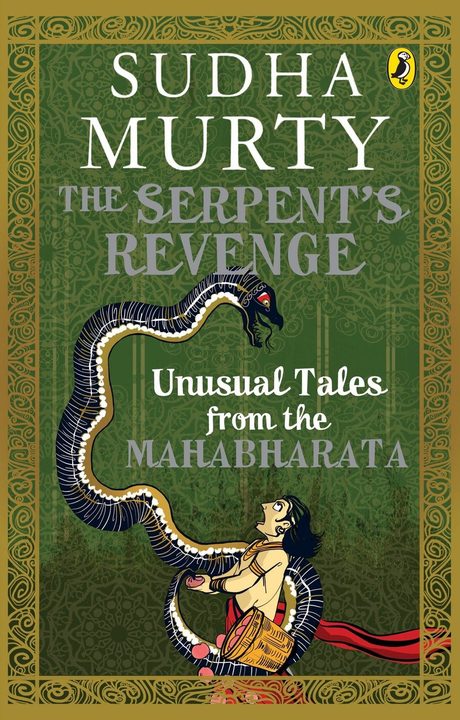
The Serpent's Revenge
Sudha Murty2016about 187 pages
Side doors into the Mahabharata for children who already half know the main plot from television.
Why the great snake sacrifice happened. Where a particular curse came from, and who a minor character had been before they walked into the famous scene you already know. Murty keeps each retelling short, refuses to sand down the ugly parts, and where the old texts disagree with each other she says so instead of quietly picking one version. For a child who wants the epic and cannot be handed a thousand-page translation, this is a good first ladder, and it does not talk down to them on the way up.
Why it is at 6
Sixth, and the best of her mythology books, ahead of The Upside-Down King because the Mahabharata hands her stranger material to work with. An adult will finish it in two evenings and learn three things. It ranks below the nonfiction only because it is a retelling, so the voice is hers only in the framing and the choosing.
Read it ifyou want a child-friendly way into the Mahabharata
Skip it ifyou want the epic told in order, since these are side stories
brisk, curious, mythicBest for: children nine and upmythologymahabharatachildren
7

Teens and up
Dollar Bahu
Sudha Murty2007about 163 pages
A mother-in-law worships the son who sends dollars and treats the daughter-in-law of the son who stayed like household staff.
Vinuta marries the Bangalore son, the one with the ordinary salary, and spends her married life being measured against a brother-in-law in America whom nobody has seen in years. The mother-in-law's devotion to the dollar is the engine of the book, and it runs until she finally visits the United States and finds out what her golden son's life actually costs him. Murty wrote it in Kannada first and the English edition came in 2007. It later became a television serial, which tells you how precisely it hit a nerve in middle-class Indian homes.
Why it is at 7
Seventh because it says something true about how Indian families rank their children by currency, and it says it in about two hours of reading. It sits below the books above because the characters are positions in an argument rather than people. Good on a flight, good for a teenager, thin if you already read a lot of fiction.
Read it ifyou want a short novel about NRI worship inside a family
Skip it ifyou want rounded characters rather than positions
short, pointed, domesticBest for: one-sitting readingnovelnrifamily
8

Adults
The Mother I Never Knew
Sudha Murty2014about 216 pages
Two novellas about men who find out the family story they grew up inside had been edited before they were born.
One man learns his father had another wife and another household. The other learns that the woman who raised him did not give birth to him. Both go looking, and the looking is the good part, because it takes them into small towns, old neighbours with long memories, and the particular awkwardness of knocking on a stranger's door with a question that will ruin her afternoon. Murty is good on the mechanics of a search in an India of paper records and unreliable relatives. The endings then tidy everything up faster than the situations have earned.
Why it is at 8
Eighth because the premises are stronger than the delivery. She sets up two genuinely interesting hunts and resolves both with more forgiveness than most real families can manage. If the setup is what you want, read the first novella and stop wherever it suits you. The emotional shortcuts show more here than in Mahashweta.
Read it ifyou like family secret stories set in small-town Karnataka
Skip it ifneat endings after messy setups annoy you
searching, sentimental, mildBest for: a weekend readnovellasfamily secretskarnataka
9

Age 9 and up
The Upside-Down King
Sudha Murty2018about 183 pages
The companion volume, doing for Rama and Krishna what The Serpent's Revenge did for the Mahabharata.
Unusual stories about the two most familiar gods in the house: ancestors, side quests, and the odd piece of genealogy that explains why a famous character behaves the way they do at the moment everybody remembers. Same structure as the Mahabharata book, short chapters, simple sentences, no effort to make the gods behave better than the old texts say they did. Children who took to the first one will take to this. The Ramayana material is more familiar to most Indian kids, which makes the surprises rarer.
Why it is at 9
Ninth because it is a good book taking a second lap around a format that was fresher the first time. Buy it for the child who finished The Serpent's Revenge and asked what comes next. Adults can skip it unless the family trees of the two epics are a gap you have been meaning to fill.
Read it ifyour child finished the Mahabharata book and wants more
Skip it ifyou already know the Ramayana side stories well
familiar, tidy, mythicBest for: children nine and upmythologyramayanachildren
10

Age 7 and up
The Magic Drum and Other Favourite Stories
Sudha Murty2006about 197 pages
Folk tales retold for young readers, the kind of story that used to arrive from a grandparent and now arrives from a book.
Kings and thieves, clever animals, rich men outwitted by poor ones, and a few tales that end on a joke rather than a lesson. The tellings are short and the language is deliberately simple, so a seven-year-old can manage them alone and a five-year-old can be read to. There is nothing here you could not find in some other folk collection, and that is fine, because what Murty brings is a steady speaking voice and a good instinct for which single detail a child will still remember at breakfast.
Why it is at 10
Tenth because it is a solid children's folk collection and there are a hundred solid children's folk collections. It earns its slot on read-aloud rhythm, which is better here than in most. If you want her mythology work specifically, the two epic books above are stronger and stay in the memory longer.
Read it ifyou are reading aloud to a child of five to nine
Skip it ifyou already own a shelf of Indian folk tales
simple, oral, sunnyBest for: bedtime with small childrenfolk taleschildrenread aloud
11
Teens and up
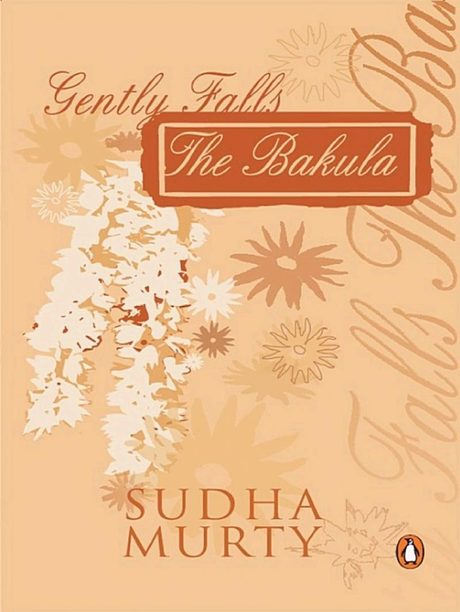
Gently Falls the Bakula
Sudha Murty2008about 197 pages
A bright girl marries the boy who edged past her in the exams, then hands him the years she was going to spend on her own work.
He climbs. She manages the house, the family, the moves, the dinners, and slowly stops mentioning the research she used to want to do. The marriage does not blow up, it empties out, which is the harder thing to write and the more common thing to live. Murty picked up the sharpest theme of her career here, the way ambition inside one household turns out to be a limited resource in practice even when nobody says so. The novel itself is early work and it shows, walking straight to its conclusion with characters who explain themselves in dialogue.
Why it is at 11
Last because the idea deserved a better novel than the one it got, and she wrote better ones later. Read it if the theme grabs you by the collar, or if you are curious about the writer before the style settled. Please do not start here, because it will leave you thinking she is a smaller writer than she is.
Read it ifyou want a short novel about a wife's career quietly disappearing
Skip it ifyou want a well-made novel rather than a strong idea
wistful, blunt, earlyBest for: readers curious about her beginningsnovelmarriageambition
Worth knowing
There are three Sudha Murtys, and you probably only met one
The first is the reporter: Wise and Otherwise, The Old Man and His God, Three Thousand Stitches. True stories from a woman who spent decades handing out foundation money in places most Indian writers never visit, written down without decoration. This is the best of her, and it is the version most readers under twenty-five have never opened.
The second is the novelist: Mahashweta, Dollar Bahu, House of Cards, Gently Falls the Bakula, The Mother I Never Knew. Strong subjects, thin execution, and a habit of resolving in a paragraph what took two hundred pages to build. Read one or two for the subject matter and stop there.
The third is the storyteller for children: The Serpent's Revenge, The Upside-Down King, The Magic Drum. This is where she has quietly done the most useful work in the last decade, giving Indian children a way into the epics that neither preaches nor dumbs down. If you are buying for a child, ignore ranks one to five entirely and start at six.
Worth knowing
A note on the Kannada originals and the anthology pile
Two of the novels here, Mahashweta and Dollar Bahu, were written in Kannada first and reached English readers later through Penguin. The English editions are the ones on sale everywhere, and the years on this list are the years those editions appeared. If you read Kannada, the originals are the better experience for the obvious reason.
The other thing worth knowing before you buy: her name now carries so much shelf value that publishers keep assembling new collections out of old material. If a title contains Best, Collected, Complete or Treasury, open the contents page before you pay. You will often find you already own most of it under a different cover, which is a bad way to spend money on a writer whose whole subject is people spending money well.
People also ask
Questions, answered
Which Sudha Murty book should I read first?
Three Thousand Stitches if you are an adult, because it is her strongest book and the one that shows why she matters beyond gift-wrapping. Wise and Otherwise if you want something shorter and lighter to test the water. If you specifically want a novel, start with Mahashweta. For a child of nine or older, skip all three and start with The Serpent's Revenge.
What is the best Sudha Murty book for children?
The Serpent's Revenge for nine and up, which retells the odd corners of the Mahabharata without preaching. The Upside-Down King is its companion for Rama and Krishna stories. For younger readers around five to eight, The Magic Drum and Other Favourite Stories works well read aloud. All three use short chapters and simple English, which makes them useful for children who are still building reading stamina.
Are Sudha Murty books good for beginners in English?
Yes, and this is a genuine strength rather than a backhanded compliment. Her vocabulary stays common, her sentences stay short, and her chapters end quickly, so a reader who has never finished an English book can finish one of hers in a weekend. Start with Wise and Otherwise, where every story is three or four pages, then move to Mahashweta for a full novel.
Which Sudha Murty novel is the best?
Mahashweta, for the subject more than the writing. It takes on a skin condition treated by a whole society as a moral failing, and it follows a woman who is discarded for it and does not stay discarded. House of Cards is the more ambitious book and the more uneven one. Gently Falls the Bakula has her best theme and her weakest execution, so read it last if at all.
Was Mahashweta originally written in Kannada?
Yes. Murty writes in both Kannada and English, and Mahashweta and Dollar Bahu both existed in Kannada before Penguin published them in English in 2007. That is why editions of those two carry dates decades apart depending on which version a seller is listing. The years on this list refer to the English editions, since those are the ones most readers of this page will buy.
Why do her books feel so simple?
Because simplicity is the choice, not the ceiling. She writes for readers who are not confident in English and for children, and she has said her aim is to be understood rather than admired. It costs her something in the novels, where a plainer telling flattens characters who needed shading. In the true-story collections it costs her nothing at all, which is why those rank highest here.
Before you go
What to read tonight
If you have been avoiding her because she is the author your relatives like, read the title essay of Three Thousand Stitches tonight and then decide. It takes about twenty minutes and it is not the writer you think you are avoiding.
If you are buying rather than reading, the decision tree is short. A child under nine gets The Magic Drum. A child over nine gets The Serpent's Revenge. An adult who does not read gets Wise and Otherwise and will finish it, which is more than most gifted books manage. An adult who does read gets Three Thousand Stitches. And if somebody in your family keeps insisting that Mahashweta changed their life, believe them, because for a lot of Indian readers it was the first novel that treated a woman's humiliation as something worth a whole book.
Keep going
Lists that pair with this one
Indian Fiction
20 Best Books by Indian Women Authors, From 1905 to 2025
Ranked by how hard I would push each one at a stranger, with a door on every book so you know how much patience it asks for.
Indian Fiction
16 Best Indian Short Story Collections (Where to Start in Each)
Sixteen collections worth your evening, ranked by how much patience each one asks for, with the exact story to read first in every book.
Indian Fiction
16 Best Books to Understand India, Ranked by What They Explain
Sixteen books, ten doors into the same country: history, caste, the mega city, the village, money, and where to start tonight.
Authors
The 14 Best Devdutt Pattanaik Books, in the Right Reading Order
Ranked as a sequence rather than a leaderboard, with the exact point where his books start repeating themselves.
Indian Fiction
18 Best Indian Mythology Fiction Books, Faithful to Wild
Ranked on one dial: how far each book strays from the epic it is built on, with an honest note on which are page-turners and which are literature.