I read I Too Had a Love Story on a Volvo bus because somebody had left it on the seat, and I finished it before we reached Vadodara. I was embarrassed by how much it got to me. The writing is not good, and I want to be clear about that from the start. It did not matter, because the thing in that book actually happened to the man who wrote it, and you can tell on every page.
That gap is the whole story of Ravinder Singh's career, and it is a genuinely interesting problem. His first book was written by a Microsoft programme manager who was not a writer, about a woman he met through a matrimonial site and lost days before their engagement. It reached a readership that had never seen its own ordinary grief set down that plainly in English. Everything since has been written by a professional, and professionals manufacture feeling for a living. Some of the later books manufacture it well. None of them found the original thing again.
So this list runs on one axis: how much real feeling is on the page against how much machinery. Four tiers, marked on each entry. One book sits in a tier of its own, three are reaching for something, four are competent romance product, and two are anthologies he selected rather than wrote, which I have flagged so nobody buys the wrong thing by mistake. If the famous one is all you have read, entries two and three are where to go next.
How I picked these
- Ranked on felt feeling, not on plot. A book that manufactures a death to make you cry ranks below a book that is simply honest about a school corridor.
- The two anthologies are labelled clearly. He selected and introduced those stories, other people wrote them, and buyers get caught out by this constantly.
- No Hindi editions, no serialised Penguin Petit parts, no box sets. Ten distinct books, checked through Google Books and Open Library so the covers and ISBNs are real ones.
- I did not dock him for plain prose. Plain is his register and it works when the material is real. I docked him for prose that is plain and also pretending.
- Left out on purpose: You Are All I Need, a third reader anthology from 2020, because two of those on one list is already enough.
The whole list at a glance
All 10 books, in order
| # | Book | Author | Year | Vibe | Best for |
|---|
| 1 | I Too Had a Love Story | Ravinder Singh | 2008 | raw, plain, devastating | readers who want a true story |
| 2 | Like It Happened Yesterday | Ravinder Singh | 2013 | warm, nostalgic, plotless | readers avoiding a sad ending |
| 3 | Your Dreams Are Mine Now | Ravinder Singh | 2014 | earnest, political, uneven | college readers in Delhi |
| 4 | Can Love Happen Twice? | Ravinder Singh | 2011 | restless, hopeful, contested | readers of the first book |
| 5 | Will You Still Love Me? | Ravinder Singh | 2018 | sincere, formulaic, issue-led | readers who want a message |
| 6 | This Love That Feels Right | Ravinder Singh | 2016 | adult, restless, tidy | readers past the campus stuff |
| 7 | Write Me A Love Story | Ravinder Singh | 2021 | light, arch, meta | romance readers who write |
| 8 | The Belated Bachelor Party | Ravinder Singh | 2019 | loose, silly, harmless | a short flight |
| 9 | Love Stories That Touched My Heart | Ravinder Singh | 2012 | uneven, sincere, amateur | bedside dipping |
| 10 | Tell Me a Story | Ravinder Singh | 2015 | mixed, gentle, slight | readers who liked the first anthology |
The list
The books, ranked
1

Tier 1: the one that actually happened
I Too Had a Love Story
Ravinder Singh2008about 202 pages
A software engineer meets a woman on a matrimonial site, they fall in love across months of phone calls, and then she does not survive the year.
Ravin, an engineer in Bhubaneswar, gets pushed by his friends onto a matrimonial website, where he finds a woman working in Delhi. They talk on the phone for months before they ever meet, in the way Indian couples of that era genuinely did, and the courtship is all logistics and long calls and families being told. Then, days before the engagement, an accident. The last third is a man writing down the worst thing that ever happened to him with no craft to hide behind, and the absence of craft is exactly what makes it land.
Why it is at 1
First, and not close. Every other book here is a writer deciding what would move a reader. This one is a man who could not write, writing anyway, because he had no other way to put it down. The prose is clumsy, the dialogue is stiff, the structure is basically a diary, and it still does more to you than the nine better-made books that follow.
Read it ifyou can take a sad ending and want to know why this book mattered so much
Skip it ifyou are grieving right now, or clumsy sentences ruin a story for you
raw, plain, devastatingBest for: readers who want a true storyautobiographicalgriefromance
Heads up: the death of a partner, hospital scenes, sustained grief
Pairs with: Can Love Happen Twice at rank four, the direct sequel, which is much weaker
2
Tier 2: the ones that reach
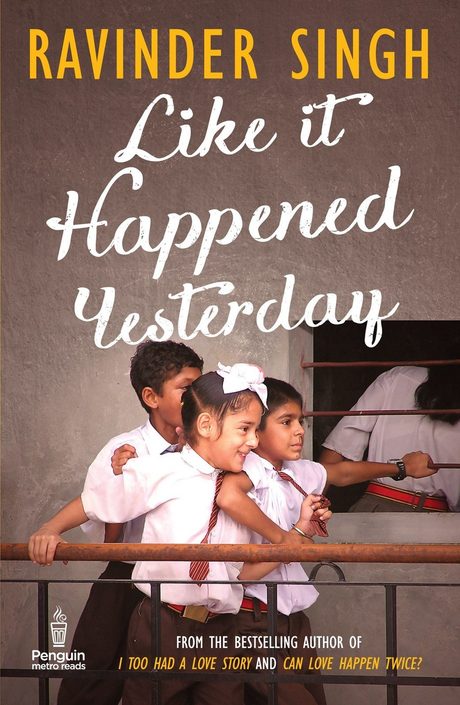
Like It Happened Yesterday
Ravinder Singh2013about 162 pages
His childhood memoir: small-town Odisha, school corridors, first crushes, and nobody dies in it.
Singh grew up in Burla in western Odisha, and this is the book where he goes back for it: classroom rituals, the terror of exam results, the games, the first flicker of interest in a girl who did not notice, the specific texture of being a boy in a small Indian town in the nineties. There is no plot to speak of. It is a sequence of remembered things, and because he is remembering rather than inventing, the writing loosens up and becomes properly likeable for the only time in his catalogue.
Why it is at 2
Second because it is the only other book here where he is not performing. Nostalgia is a cheap effect and he largely avoids the cheap version, partly because the details are too specific to have been invented. It ranks under the debut because nothing is at stake, which is also the reason to read it: this is the Ravinder Singh you can hand to somebody who cannot face the first book.
Read it ifyou grew up in a small Indian town in the eighties or nineties
Skip it ifyou need a story with a plot and a destination
warm, nostalgic, plotlessBest for: readers avoiding a sad endingmemoirchildhoododisha
3
Tier 2: the ones that reach
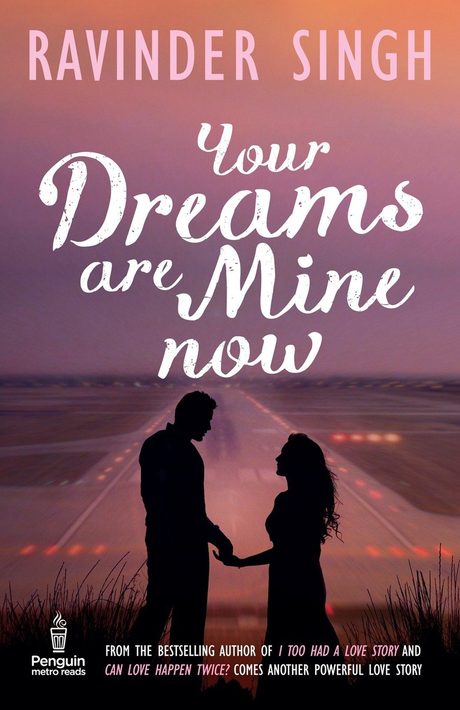
Your Dreams Are Mine Now
Ravinder Singh2014
A small-town topper and a Delhi University student politician fall for each other while the campus around them turns dangerous.
Rupali arrives at Delhi University from a small town with her books and her plans intact. Arjun is already there, deep in student politics, the sort of confident boy who runs things and knows it. The romance is the surface. Underneath, Singh is writing about how campus power actually operates in North India, and about the safety of women on and around a university, which was very much the national argument in 2014. This book has more on its mind than anything else he has published.
Why it is at 3
Third because the ambition is real even where the execution is not. He is trying to write a social novel with a love story inside it, and roughly half of it works: the campus politics are convincing, the speeches are not. It sits above the sequel because at least it reaches for something outside his own biography, and because Rupali is a character rather than a requirement.
Read it ifyou want the one book of his with a public subject in it
Skip it ifspeeches delivered as dialogue make you close a book
earnest, political, unevenBest for: college readers in Delhicampusdelhisocial novel
Heads up: sexual violence as a plot element
4
Tier 2: the ones that reach
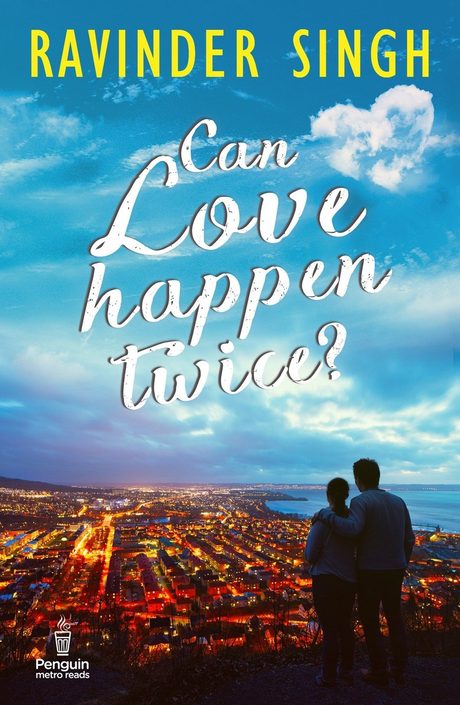
Can Love Happen Twice?
Ravinder Singh2011about 173 pages
The direct sequel: same narrator, now in Belgium, being pushed by his friends toward a woman who is not the one he lost.
Ravin has moved abroad to get away from the memory, and in Belgium he meets Simar, who works at the Indian embassy and is the opposite of quiet grief. The book is framed as a story being told to friends, and the question in the title is asked seriously: can a person who has already had the great love of his life have another one. Singh clearly wanted to answer it honestly. Whether the ending actually does that is the argument every reader of this book eventually has with somebody.
Why it is at 4
Fourth, and the most divisive thing he has written. Half its readers feel cheated by the last thirty pages and the other half will defend them to you at length. What keeps it in the upper tier is that the grief carried over from the debut is still real on the page, and Simar has more life in her than anyone in the professional-era novels. Read it only after the first book.
Read it ifyou finished the debut and cannot leave the story there
Skip it ifyou have not read I Too Had a Love Story yet
restless, hopeful, contestedBest for: readers of the first booksequelbelgiumsecond chance
5
Tier 3: the professional ones
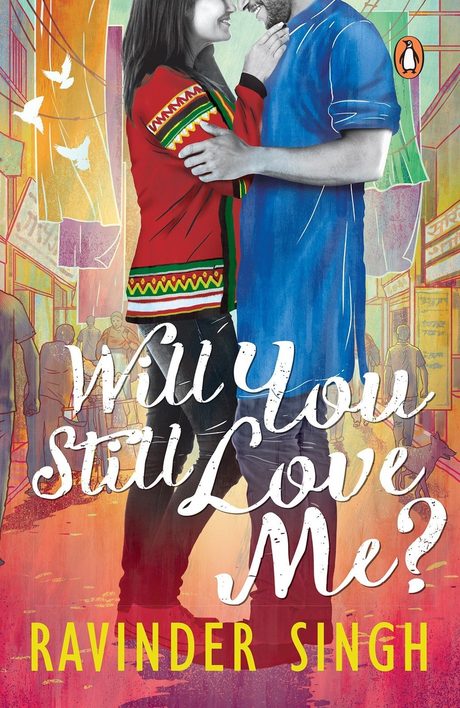
Will You Still Love Me?
Ravinder Singh2018about 235 pages
Two opposites, families who complicate everything, and then a road accident that turns the novel into an argument about road safety.
Lavanya lives loosely and Rajveer runs his life by rules, and Singh does the standard opposites-attract setup competently for most of the first half. Then a crash arrives and the book changes job. The back half is about what happens on Indian roads and how casually this country treats the subject. It is the most openly issue-driven thing he has written outside Your Dreams Are Mine Now, and for the last hundred pages the message and the story are pulling in different directions.
Why it is at 5
Fifth, top of the professional tier, because the intention behind it is decent even when the writing is on autopilot. He is using a large readership to say something about road deaths, which is more effort than most commercial novelists make. The romance itself is his most generic, though, and the tragedy feels administered rather than suffered.
Read it ifyou want a cause attached to your romance
Skip it ifyou can see a manufactured tragedy coming from page ten
sincere, formulaic, issue-ledBest for: readers who want a messageromanceroad safetytragedy
Heads up: a fatal road accident
6

Tier 3: the professional ones
This Love That Feels Right
Ravinder Singh2016about 213 pages
A married woman in a hollow marriage meets a fitness trainer with no obligations, and the book asks whether she is allowed to want that.
Naina is married, well settled and quietly unhappy inside a life that looks entirely correct from outside. Aarav is a fitness trainer carrying none of those obligations. The book is about the pull between what a woman is permitted and what she wants, and to Singh's credit he does not treat her as a villain for wanting it. It is also by some distance his most physically written novel, which caught out a lot of readers who came to him from the grief books.
Why it is at 6
Sixth because the subject is braver than the execution. An Indian mass-market novelist writing an unhappily married woman's desire without punishing her for it is worth something, and the first half holds together well. Then the plotting takes over, and the ending arranges everybody into a tidy shape instead of letting the situation stay as difficult as it actually is.
Read it ifyou want him writing an adult woman rather than a student
Skip it ifyou want the moral question left unresolved
adult, restless, tidyBest for: readers past the campus stuffmarriagedesireromance
Heads up: infidelity and sexual content
7
Tier 3: the professional ones
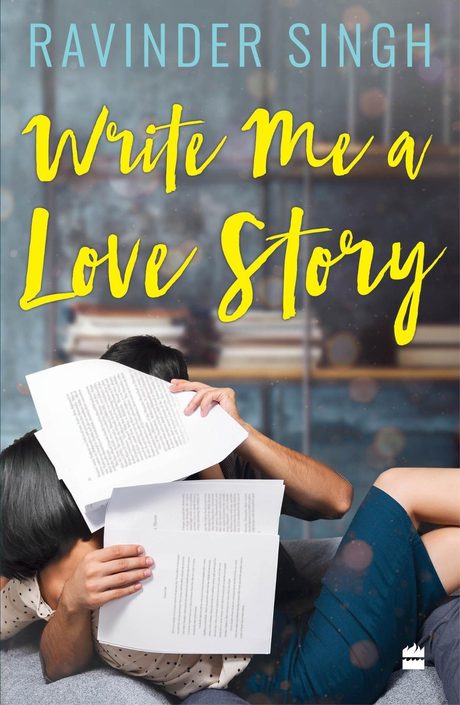
Write Me A Love Story
Ravinder Singh2021about 271 pages
A commercial novelist who sells enormously and an editor who despises commercial novels are thrown together, and it goes where you think.
Abhimanyu writes the kind of books that sell in airports and is not remotely humble about it. Asmita edits literary fiction at the same publishing house and considers his work beneath the imprint. They clash, he sets out to prove a point at her expense, and the enemies-to-lovers machine handles the rest. The interesting part is the setting: this is Singh writing about Indian publishing, snobbery toward popular fiction, and more or less the exact criticism he has been taking for fifteen years.
Why it is at 7
Seventh because the premise is a joke he is telling on himself, and that self-awareness is the best thing in it. As a romance it is thin, the two leads argue in positions rather than in character, and the resolution comes fast. Read it as a commercial novelist's reply to the people who look down on commercial novels, and it gets considerably more fun.
Read it ifyou like publishing-world stories and enemies to lovers
Skip it ifyou want emotional weight rather than banter
light, arch, metaBest for: romance readers who writeenemies to loverspublishingromance
8

Tier 3: the professional ones
The Belated Bachelor Party
Ravinder Singh2019about 231 pages
Four friends, twelve years married, finally take the bachelor trip none of them ever had, and Europe suffers for it.
Happy, MP, Raamji and Ravin graduated together, got married, got jobs, and then worked out that not one of them ever had a bachelor party. So they plan one, extremely late, and go to Europe. It is a comedy about middle-aged Indian men behaving like hostel students for a fortnight, and it works best in the stretches where it stops trying to be a novel and simply lets four friends be irritating to each other in a shared room. There is a sentimental turn near the end that the book did not need.
Why it is at 8
Eighth, and the odd one out here: the only book of his written to make you laugh. It is not especially funny, but it is genuinely relaxed, and after five romances built around a tragedy that is something of a relief. It ranks low because nothing in it stays with you past the flight home.
Read it ifyou want him without a dead girlfriend or a moral attached
Skip it ifyou want a plot with consequences
loose, silly, harmlessBest for: a short flightcomedyfriendshiptravel
9
Tier 4: he edited it, he did not write it
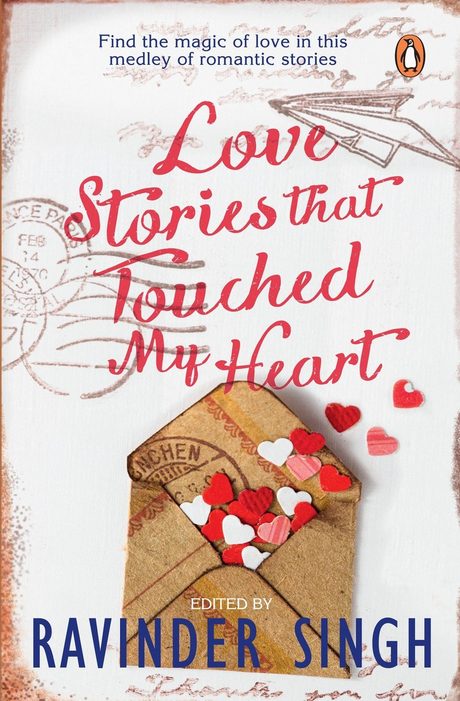
Love Stories That Touched My Heart
Ravinder Singh2012about 235 pages
Real love stories sent in by ordinary readers, chosen by him, with all the roughness that implies.
This is an anthology of short pieces submitted by readers and selected by Singh, not a book he wrote himself. The stories are uneven by design, some barely run three pages, and the quality swings from genuinely affecting to school magazine. What makes it worth the shelf space is that it is the clearest statement of what he actually believes: that ordinary people's love stories deserve printing, and that you do not need a writing degree to have had something happen to you.
Why it is at 9
Ninth because it is not really his book, and buyers regularly do not realise that until it arrives. Judged as an anthology it is fine and occasionally lovely, and his introduction is the most direct thing he has written about why he does this at all. Judged as the next Ravinder Singh novel, which is how a lot of people buy it, it will disappoint you.
Read it ifyou want short pieces you can read one per night
Skip it ifyou are expecting a novel written by him
uneven, sincere, amateurBest for: bedside dippinganthologyeditedshort stories
10
Tier 4: he edited it, he did not write it
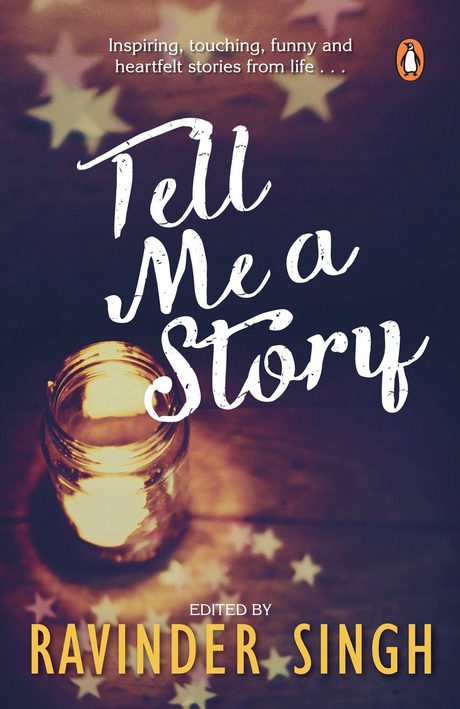
Tell Me a Story
Ravinder Singh2015about 166 pages
The second reader anthology, and this one drops the romance rule: any life story that changed somebody could get in.
Three years after the first collection, Singh ran the same idea with the brief widened out. These are not all love stories, they are moments people could not forget: family, loss, luck, small kindnesses, ordinary turning points. The widening helps in places, because the writers are no longer straining to make everything romantic, and it hurts in others, because a few of the pieces have no shape at all. Again, other people wrote these. He chose them and wrote the introduction.
Why it is at 10
Last because it is the same idea as the previous anthology with a looser filter and slightly weaker material. If you are only ever going to buy one of these two collections, buy the first. This one is for readers who liked the format enough to want more of it, which is a real audience, just a smaller one than the publisher hoped.
Read it ifyou liked the first anthology and want more of the same
Skip it ifyou want stories written by an author you already trust
mixed, gentle, slightBest for: readers who liked the first anthologyanthologyeditednon-romance
Worth knowing
How the four tiers work
Tier one holds a single book, because only one of these was written by somebody who had no choice about writing it. Tier two is the three where he reaches past formula: back into his own childhood, out into campus politics, forward into the question of whether grief permits a second chance. Tier three is the professional era, four novels built by a man who by then knew exactly how a Ravinder Singh book is assembled, and assembled one. Tier four is the two anthologies, which he selected rather than wrote.
The uncomfortable conclusion is that his skill went up while his books got worse. Put the sentence-level writing in Write Me A Love Story next to the sentence-level writing in the debut and it is not a contest, the 2021 book is far more capable. It is also completely forgettable. That gap is the most interesting fact about his career, and no amount of workshopping was ever going to close it, because the missing ingredient was never technique.
Worth knowing
A word about the criticism he gets
Literary India has spent fifteen years using Ravinder Singh as a punchline, usually without reading him, and usually as shorthand for everything wrong with Indian commercial fiction in English. Some of that is fair. The prose is flat, the endings are engineered, and the women in the later books are assembled from requirements rather than observed. But the sneering misses what he did, which was to write about middle-class Indian love in Indian English, with matrimonial sites and Volvo buses and parents who have to be told, at a moment when the alternative on the shelf was literary fiction about Partition or imported chick lit.
You do not have to think he is a good writer to notice that he turned a very large number of people into readers, which is a real thing to have done. My honest position: read the debut, read the childhood book, sample one novel from the professional tier so you can see the machinery for yourself, and stop there unless you are genuinely enjoying the ride.
People also ask
Questions, answered
Which Ravinder Singh book should I read first?
I Too Had a Love Story, unless you cannot take a sad ending, in which case start with Like It Happened Yesterday. The debut is the reason he has a career and it is genuinely unlike everything after it. Do not start with Can Love Happen Twice, which is a direct sequel and will make very little sense as an entry point, and do not start with the anthologies, which he edited rather than wrote.
Is I Too Had a Love Story a true story?
Yes, in the main. It is described as an autobiographical novel, based on Singh's own courtship with a woman he met through a matrimonial site and her death in a road accident days before their engagement date in February 2007. Some names and details are handled as fiction, but the loss at the centre of the book is his own, which is precisely why the last section reads so differently from anything else he has published since.
How many books has Ravinder Singh written?
He has authored eight: seven novels and one childhood memoir. On top of that he has edited several anthologies of reader-submitted stories, and this list includes the two best known of those, which is how it reaches ten. Hindi editions, serialised ebook parts and box sets also exist, which is why online counts for him range anywhere from nine to sixteen depending on what the counter decided to include.
Do I need to read Ravinder Singh's books in order?
Only one pair matters. Can Love Happen Twice is a direct sequel to I Too Had a Love Story and should be read second. Everything else stands completely alone: no shared characters, no continuing world, no running plot. If you want a sensible route through him, go debut, then the memoir, then whichever professional-era novel has a premise you like the sound of, and treat the two anthologies as optional extras.
Why is Ravinder Singh so popular if the writing gets criticised?
Because he wrote about ordinary middle-class Indian romance in the English that ordinary middle-class Indians actually speak, at a time when very little on the shelf did. His books are short, cheap, stocked at railway stations and airports, and they ask nothing of you technically. For a lot of Indian readers his debut was the first English novel they finished by choice. Whether he is a good writer and whether he matters are two different questions with two different answers.
Which Ravinder Singh book is the saddest?
I Too Had a Love Story, and nothing else is close, because the grief in it was not invented for the occasion. Will You Still Love Me has a fatal accident in it and is engineered to make you cry, which is a different experience and, for me, a much less effective one. If you want to be wrecked, read the debut. If you want him without a death in the plot, read Like It Happened Yesterday or The Belated Bachelor Party.
Before you go
What to read tonight
If you are picking one tonight, pick the first one, and give yourself an evening where you do not have to be pleasant to anybody afterwards. If you have already read it and want to know whether he is worth continuing with, go to Like It Happened Yesterday next rather than the sequel, because it will tell you honestly whether you enjoy his company or only enjoyed his grief.
And if you finish the professional-tier books feeling slightly cheated, that is the correct reaction rather than a failure of taste. Read his first book alongside somebody else's true story sometime, and you will notice what I noticed: technique is what a writer builds once the material has stopped arriving on its own.
Keep going
Lists that pair with this one
Books Like
15 Books Like Chetan Bhagat, With Endings That Actually Land
Same one-weekend pace, same India you recognise, without the collapse in the last thirty pages.
Authors
Durjoy Datta Books Ranked: The 15 That Matter, Best First
Fifteen novels ranked on the writing, not on how much you cried in class eleven, with the three very different Durjoys sorted out.
Romance
The 25 Best Indian Romance Novels, Ranked Honestly (2026)
Comfort reads, campus tearjerkers, comedies and literary heavyweights, ranked with labels, quick picks and honest skip-it warnings.
Romance
Sad Romance Books That Make You Cry: 16, Tissue Rated
Every book gets a tissue count out of five and a hurt type, because grief, bad timing and a terminal diagnosis do not damage you the same way.
Romance
14 College Romance Novels by Indian Authors, Ranked Honestly
Sorted into three tiers, because some of these are real novels and some are nostalgia machines wearing a cover.