In most Indian homes Satyajit Ray is a filmmaker who also wrote a few children's books. In Bengali homes it runs the other way: a whole generation met him first as the man who wrote Feluda, read him under the desk in school, and only got to Pather Panchali later, usually because a teacher made them.
The rest of us are missing a genuinely good writer. He wrote thirty-five Feluda adventures and thirty-eight Professor Shonku stories, plus ghost stories, memoirs and the sharpest film criticism any Indian director has produced. The catch is the English shelf, which is a mess. The same stories come back every few years in new covers, so people buy three books and discover they own one story collection twice.
This list ranks the thirteen volumes worth owning by two things: how much actual Ray you get per book, and how easily a new reader walks in. Every entry says who it is for, because the answer changes a lot depending on whether the reader is ten, fifteen or thirty. There is also an overlap map further down, so you can buy the second volume without buying the first one again by accident.
How I picked these
- Ranked by how much of Ray a single volume gives you and how easy it is to start there, not by literary reputation. The fat omnibuses win because they are the honest value.
- At least two books from each of his four lanes: Feluda, Professor Shonku, the standalone stories, and the writing on cinema. A Ray list that is only Feluda misses the writer.
- Volumes that repeat other volumes are pushed down rather than cut, and the overlap map below tells you exactly where the repeats sit.
- Every edition was checked through Google Books and Open Library, so covers and ISBNs are real. Years given are the first publication years of these English volumes, not of Ray's Bengali originals, which came decades earlier.
- Translators are named only where I could confirm them from a publisher listing or a catalogue record. Where I could not, the field is empty rather than guessed.
The whole list at a glance
All 13 books, in order
| # | Book | Author | Year | Vibe | Best for |
|---|
| 1 | The Complete Adventures of Feluda Volume 1 | Satyajit Ray | 2000 | clean, curious, travelling | families, first-time Ray readers |
| 2 | Our Films, Their Films | Satyajit Ray | 1976 | dry, practical, opinionated | film lovers and students |
| 3 | The Diary of a Space Traveller and Other Stories | Satyajit Ray | 2004 | silly, inventive, quick | younger children, reluctant readers |
| 4 | Indigo: Selected Stories | Satyajit Ray | 2009 | quiet, eerie, understated | teenagers and horror-curious adults |
| 5 | The Complete Adventures of Feluda Volume 2 | Satyajit Ray | 2004 | darker, longer, assured | readers who finished volume one |
| 6 | My Years with Apu: A Memoir | Satyajit Ray | 1994 | modest, practical, warm | anyone who loves the Apu trilogy |
| 7 | 3 Rays: Stories from Satyajit Ray | Satyajit Ray | 2021 | handsome, varied, archival | gifting, and Ray completists |
| 8 | Childhood Days: A Memoir | Satyajit Ray | 1998 | warm, light, nostalgic | school students, gentle readers |
| 9 | Speaking of Films | Satyajit Ray | 2005 | technical, blunt, close-up | film students and serious fans |
| 10 | Travails with the Alien | Satyajit Ray | 2018 | documentary, curious, unfinished | film history readers |
| 11 | The Final Adventures of Professor Shonku | Satyajit Ray | 2020 | odd, wistful, inventive | children continuing the series |
| 12 | Deep Focus: Reflections on Cinema | Satyajit Ray | 2011 | uneven, archival, sharp | readers with the other film books |
| 13 | The Best of Satyajit Ray | Satyajit Ray | 2001 | broad, safe, sampler | absolute beginners buying one book |
The list
The books, ranked
1

Ages 10 and up, and the one to buy first
The Complete Adventures of Feluda Volume 1
Satyajit Raytranslated by Gopa Majumdar and Chitrita Banerji2000about 976 pages
Sixteen cases with Calcutta's most practical detective, arranged in the order Ray wrote them.
Pradosh Mitter, known to everybody as Feluda, is a private investigator in Calcutta who solves cases with observation, a good memory and a habit of testing his teenage cousin Topshe, who narrates. A few cases in, they pick up Lalmohan Ganguly, a writer of terrible thrillers under the name Jatayu, who supplies the comedy and the car. The cases run through Darjeeling, Lucknow, Rajasthan and Varanasi, and Ray sends the three of them travelling so often that the book doubles as an atlas of the country in the 1960s and 1970s.
Why it is at 1
First because it is the most Ray you can get in one purchase, and because Feluda is where almost every reader of his enters. The stories are arranged in the order he wrote them, so you watch an amateur turn professional across a decade. Volume 1 outranks Volume 2 only because the early cases are shorter and friendlier to a new reader.
Read it ifyou want detective stories a ten-year-old and a forty-year-old can share
Skip it ifyou need modern forensics, because Feluda works on notice and nerve
clean, curious, travellingBest for: families, first-time Ray readersfeludadetectiveomnibus
Pairs with: Volume 2, once the household has fought over the first one
2
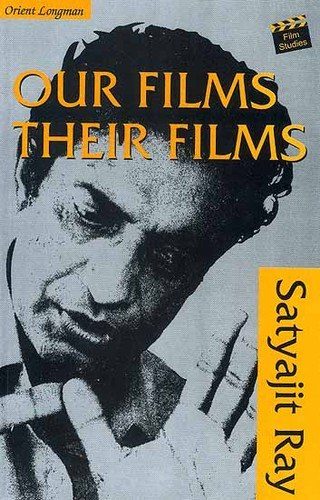
For the adult who knows the films
Our Films, Their Films
Satyajit Ray1976about 238 pages
Ray writing about cinema in English, in two halves: what Indian films do, and what everyone else's films do.
Ray put this collection together himself, and split it down the middle. The first half is about Indian cinema, including how Pather Panchali got shot, what was wrong with the studio films he grew up on, and what a director owes the place he is filming. The second half is him as a fan: Chaplin, Kurosawa, Hollywood, the neorealists who changed what he thought a film could be. He wrote it in English, so nothing arrives through a translator, and the tone is a working director thinking out loud rather than a critic performing.
Why it is at 2
Second, and the book I would give any adult who loves the films and has never read him. It is the shortest route to his actual mind: practical, funny about bad cinema, unsentimental about his own. It ranks under Feluda only because the average reader arrives here wanting stories, not essays.
Read it ifyou have watched the Apu trilogy and want to know how he thought
Skip it ifyou want gossip from film sets rather than argument about craft
dry, practical, opinionatedBest for: film lovers and studentscinemaessaysnon-fiction
Pairs with: My Years with Apu, which tells the same story from inside the production
3

Ages 10 and up, twelve short diary entries
The Diary of a Space Traveller and Other Stories
Satyajit Raytranslated by Gopa Majumdar, with one story translated by Satyajit Ray2004
The scientist from Giridih writes up his experiments, most of which go wrong in interesting ways.
Professor Trilokeshwar Shonku keeps a diary, and the diary is the story. He lives in Giridih with a cat named Newton, invents things like a pill that cures everything except the common cold, and then finds himself somewhere a Giridih pensioner has no business being, outer space included, dealing with the consequences. The entries are short, the science is cheerful nonsense, and Ray plays it completely straight, which is what makes it funny. For a child who is not yet a confident reader, this is the friendliest thing he wrote: you can finish an adventure in fifteen minutes.
Why it is at 3
Third because it is the easiest Ray to hand a child who says they do not like reading. The diary format means constant small finishes, and Shonku is a good deal sillier than Feluda. It sits below the first two because the stories are slight next to the detective novels, and because grown-ups tend to be done with Shonku in one sitting.
Read it ifyou are buying for a nine to twelve-year-old, or you like gentle science fiction
Skip it ifyou want plots that hold together under adult inspection
silly, inventive, quickBest for: younger children, reluctant readersshonkuscience fictionchildren
Pairs with: The Final Adventures of Professor Shonku, which closes the run
4

Teen and up, read with the light on
Indigo: Selected Stories
Satyajit Raytranslated by Satyajit Ray and Gopa Majumdar2009about 288 pages
The strange and supernatural side of Ray, from a haunted bungalow to old men telling stories they should not.
This is the collection people are most surprised by, because the man who made humane family films also wrote proper unsettling short stories. There are hauntings, objects that should not move, and a run of tales told by Uncle Tarini, an old boy whose stories always start comfortably and never end that way. The book also carries a Feluda story that turned up among Ray's papers after his death. His horror works by understatement: an ordinary Bengali household, one detail slightly off, and then the floor goes.
Why it is at 4
Fourth, and the most fun of the story collections for a reader over thirteen. Ray never shouts in these, which is why they land. It ranks here rather than higher because it is a selection, so it overlaps with other anthologies of his short fiction, and because a few of the stories are thin.
Read it ifyou want short Indian ghost stories that respect your intelligence
Skip it ifyou find creeping dread worse than blood and jump scares
quiet, eerie, understatedBest for: teenagers and horror-curious adultsghost storiesshort storiessupernatural
Heads up: a few stories are genuinely frightening for younger children
5
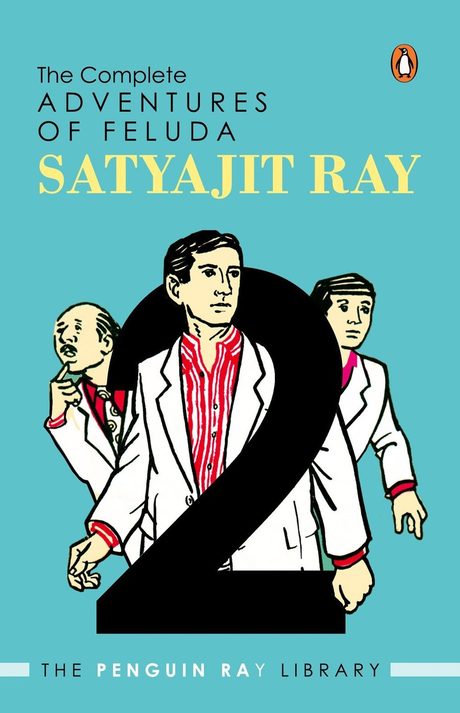
Ages 12 and up, the second half of the run
The Complete Adventures of Feluda Volume 2
Satyajit Raytranslated by Gopa Majumdar2004about 947 pages
The later Feluda cases, longer and darker, taking the count to all thirty-five adventures.
The second volume carries the rest of the run, and the difference is noticeable. The cases get longer, the villains get nastier, and Feluda spends more time on questions of greed and family property than on stolen objects. Jatayu is fully part of the team by now, so the comic rhythm is settled, and the travelling continues, Kathmandu included. The later stories also run shorter on average, so the volume ends up mixing full novels with cases that are over in forty pages.
Why it is at 5
Fifth because it only makes sense after Volume 1, not because it is weaker. Some of his best plotting is in here. Buy both, but buy them in order, and note that this pair is the whole Feluda canon in English, so any slim Feluda paperback you see later is a story you already own.
Read it ifyou finished Volume 1 and want the rest of the canon
Skip it ifyou have not read Volume 1, because the character grows in sequence
darker, longer, assuredBest for: readers who finished volume onefeludadetectiveomnibus
6
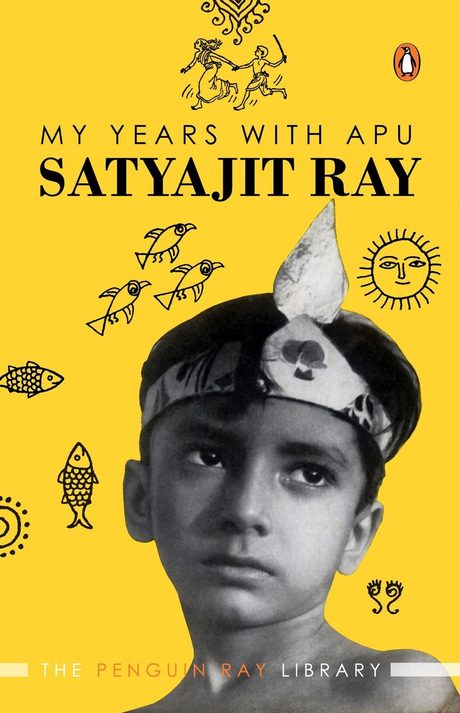
For the adult who knows the films
My Years with Apu: A Memoir
Satyajit Ray1994about 145 pages
How three of the most admired Indian films ever made got shot by a man with no money and no experience.
Ray wrote this near the end of his life, in English, about the making of Pather Panchali, Aparajito and Apur Sansar. It is a production story before it is anything else: an advertising man with no filmmaking training, a crew of amateurs, weekend shoots that stopped whenever the money ran out, a field of flowers eaten by cattle so the famous train scene had to wait a year. He is matter of fact about all of it, including the parts where he had no idea what he was doing, and that plainness is what makes it moving.
Why it is at 6
Sixth. If you have watched the trilogy, this doubles its value, and if you have not, it will make you watch. It ranks below Our Films, Their Films because it covers one project rather than a whole way of thinking about cinema, and because it was published after his death, so it is shorter than it might have been.
Read it ifyou have seen Pather Panchali and want the story behind it
Skip it ifyou have not seen the films and do not intend to
modest, practical, warmBest for: anyone who loves the Apu trilogymemoircinemapather panchali
7
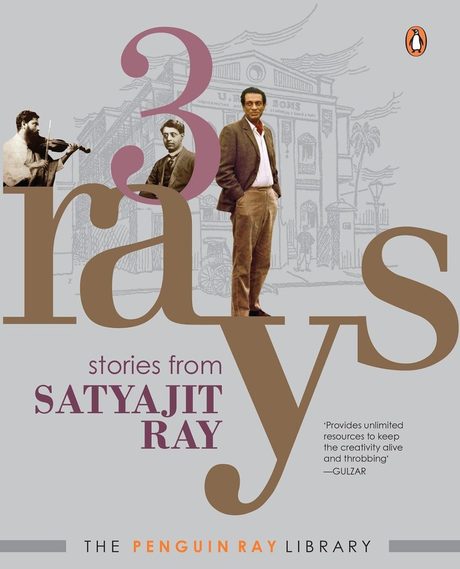
The gift edition
3 Rays: Stories from Satyajit Ray
Satyajit Ray2021about 792 pages
Stories, poems, autobiographical pieces and his own illustrations, with his father and grandfather in the mix.
Published for his centenary and edited by his son Sandip Ray, this one takes the family seriously: the title points at three generations of Rays, so alongside Satyajit's fiction you get work connected to his father Sukumar, the nonsense poet, and his grandfather Upendrakishore, who wrote the fairy tales the family printing press produced. There are previously unpublished pieces, autobiographical writing, and Ray's own drawings through the book, which matter because he was a designer and illustrator first. It is a heavy, handsome object rather than a book you carry on a train.
Why it is at 7
Seventh, and the one I would gift. It is the best introduction to Ray as a whole household rather than a single writer, and the unpublished material is a real draw for anyone who already owns the standard collections. It is not higher because the selection is scattered by design, which makes it a browsing book instead of a reading one.
Read it ifyou want the family context and a book that looks good on a shelf
Skip it ifyou want one continuous story rather than a mixed selection
handsome, varied, archivalBest for: gifting, and Ray completistsanthologyillustrationscentenary
8
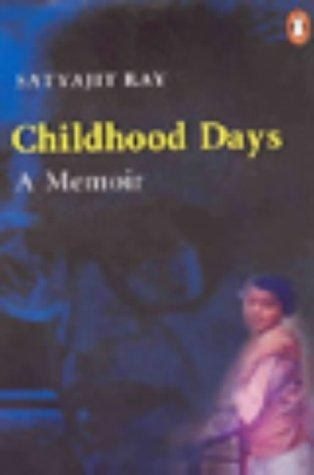
Ages 12 and up
Childhood Days: A Memoir
Satyajit Raytranslated by Bijoya Ray1998about 220 pages
Ray remembering a Calcutta childhood among printers, poets and eccentric relatives, written for young readers.
Ray first wrote this for a children's magazine, and it shows in the best way: short chapters, no lecturing, a boy's eye for what is funny about adults. He grew up in a family that ran a printing press and produced children's magazines, so the memoir is full of type, blocks, ink and visiting oddballs, along with early cinema, cricket and school. The Penguin edition adds his account of making Pather Panchali, which sits oddly next to the childhood pieces but is worth having.
Why it is at 8
Eighth because it is charming rather than substantial, and because the added film essay overlaps with material you get elsewhere. As a first non-fiction Ray for a teenager, though, nothing else here comes close: it is short, it is funny, and it explains where the man came from without making a case for his own genius.
Read it ifyou want a gentle memoir a school student can finish in a week
Skip it ifyou want depth about his adult life and work
warm, light, nostalgicBest for: school students, gentle readersmemoircalcuttachildhood
9
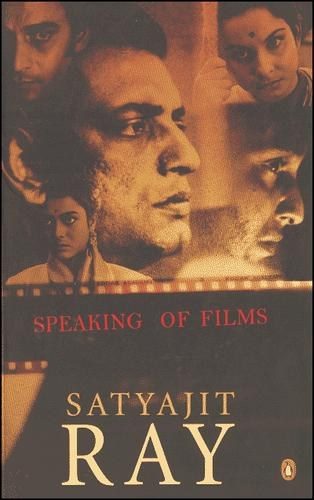
For the film student
Speaking of Films
Satyajit Raytranslated by Gopa Majumdar2005about 242 pages
His Bengali essays on filmmaking in English at last, more technical and more argumentative than Our Films, Their Films.
These are the pieces Ray wrote in Bengali for Bengali readers, which means he assumes more and explains less. He goes into film language, the problem of turning a novel into a script, what music does and does not do in a film, the difference between what a scene needs and what an audience wants. There is a long section on his own films where he is his own toughest critic. If Our Films, Their Films is Ray talking to the world, this is Ray talking to people who already argue about cinema at home.
Why it is at 9
Ninth, and a step up in difficulty, which is why it sits here rather than beside the other film book. Read this second. It is the better book on technique and the worse book to start with, and a reader who has not watched much Indian cinema will find whole passages going past them.
Read it ifyou already read Our Films, Their Films and wanted more depth
Skip it ifyou have not watched many of the films he dissects
technical, blunt, close-upBest for: film students and serious fanscinemaessayscraft
10
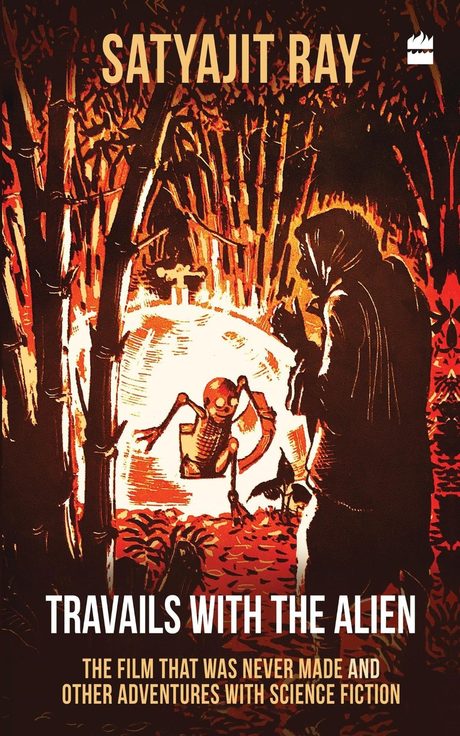
For the film obsessive
Travails with the Alien
Satyajit Ray2018about 330 pages
The screenplay for the science fiction film Ray never got to make, plus the long paper trail around it.
In the 1960s Ray wrote a script called The Alien about a spacecraft landing in a Bengal village and a child who befriends what comes out of it. Hollywood got involved, names were attached, the project collapsed, and the script circulated for years afterwards, which led to a long argument about what later films owed it. This book collects the screenplay, the story it grew from, Ray's own account of the affair, and his other writing on science fiction, so you can read the film that never existed and judge the row for yourself.
Why it is at 10
Tenth because it is a specialist's book that happens to be gripping. You are reading a screenplay, so it demands more work than a story collection, and half the value is in the letters and the argument rather than the fiction. For anyone who likes Ray as a maker rather than only as a storyteller, it is the most interesting thing on the back half of this list.
Read it ifyou like scripts, film history and unfinished projects
Skip it ifreading a screenplay format puts you off
documentary, curious, unfinishedBest for: film history readersscreenplayscience fictionfilm history
11
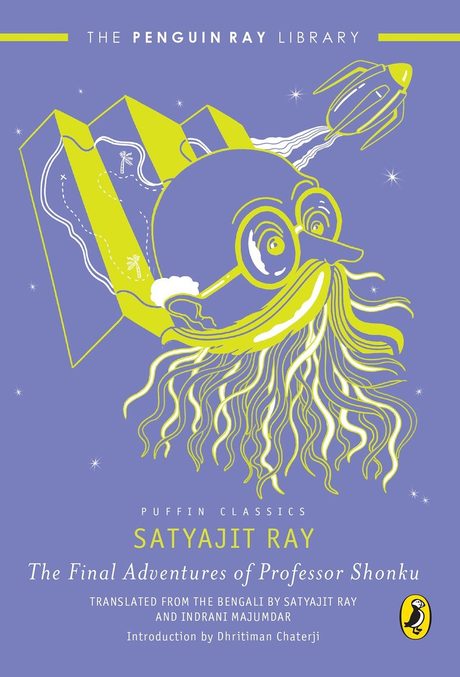
Ages 10 and up, the last of Shonku
The Final Adventures of Professor Shonku
Satyajit Raytranslated by Indrani Majumdar, with one story translated by Satyajit Ray2020about 223 pages
The last nine Shonku diaries, which completes all thirty-eight of them in English.
This is the fourth and closing volume of the Shonku stories, and it finishes the job of getting every one of them into English. The late entries are odder than the early ones, with more of Ray's interest in memory, machines that behave badly, and the limits of a scientist who keeps meddling anyway. Shonku himself is unchanged: still writing everything down in his diary, still travelling further than a Giridih pensioner reasonably should, still surviving by a mixture of luck and his own inventions.
Why it is at 11
Eleventh because it is a completing volume rather than a starting one. If a child has enjoyed Diary of a Space Traveller, this is where you go later, not first. Ranked here rather than lower because the translation finally makes the full run available, which matters if you are building a shelf for a child who is going to grow into it.
Read it ifyou or your child have already read a Shonku collection
Skip it ifthis would be your first Shonku, since the earlier volume is friendlier
odd, wistful, inventiveBest for: children continuing the seriesshonkuscience fictionchildren
12
For the film obsessive
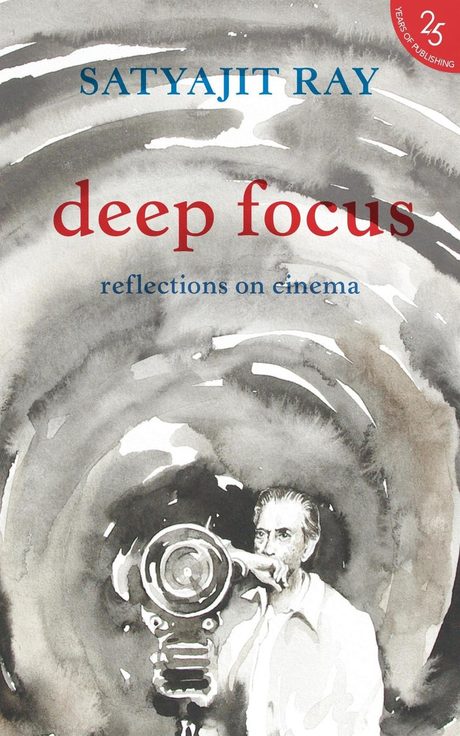
Deep Focus: Reflections on Cinema
Satyajit Ray2011about 226 pages
The film pieces that did not make it into his own two collections, gathered after his death.
Sandip Ray put this together from writing on cinema that had stayed uncollected: an appreciation of silent films, notes on the trouble with adapting books, thoughts on contemporaries from Godard to the Bengali star Uttam Kumar, and reports from film festivals where Ray sat on juries and watched himself be judged. It is a leftovers book in the literal sense, which means it is uneven, and it also means there are three or four pieces here you will not find anywhere else.
Why it is at 12
Twelfth because it is the third film book, and nobody should buy it before the first two. If you have read Our Films, Their Films and Speaking of Films and still want more, this is a genuine addition. If you have not, buy it later, because a collection of odds and ends is a poor place to meet a writer.
Read it ifyou have read his other two cinema books and want the offcuts
Skip it ifyou are new to Ray's non-fiction
uneven, archival, sharpBest for: readers with the other film bookscinemaessaysposthumous
13
Only if you own nothing else
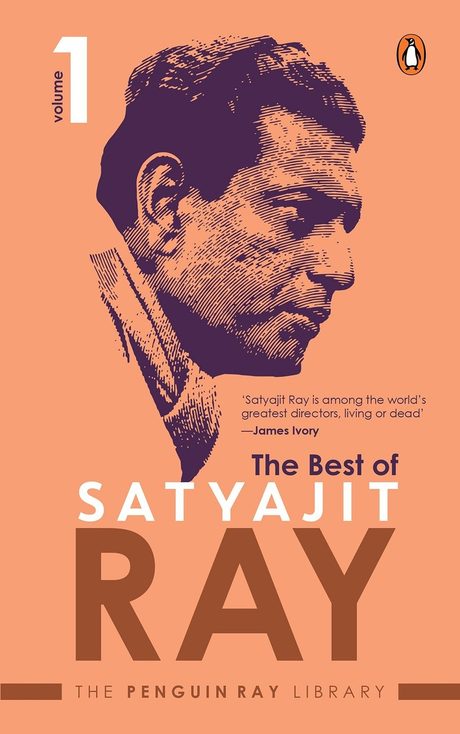
The Best of Satyajit Ray
Satyajit Ray2001about 431 pages
A greatest-hits gathering of his short fiction, which is either the perfect first buy or a duplicate of what you own.
This is the sampler: a thick selection pulled from across his short fiction, mixing the eerie, the funny and the plain strange, and sold in numbered volumes so the one you find may be the first or the second. As an object it does the job well, and if somebody owns no Ray at all it is a reasonable single purchase that covers a lot of ground. As a thirteenth book on a shelf that already holds Indigo and 3 Rays, it is mostly stories you have met before.
Why it is at 13
Last on this list for one reason: a best-of by definition draws on the collections around it, so the more Ray you own the less this adds. Open the contents page in the shop and count how many titles you already have. If the answer is more than four, put it back and buy the second Feluda volume instead.
Read it ifyou own no Ray fiction and want one book that covers the range
Skip it ifyou already own two of his story collections
broad, safe, samplerBest for: absolute beginners buying one bookshort storiesanthologysampler
Worth knowing
The overlap map: what repeats where
Ray's English publishers have repackaged him constantly, so here is the shape of it. There are four lanes. Feluda, which is thirty-five adventures and sits complete in the two omnibus volumes on this list. Professor Shonku, which is thirty-eight stories spread across four Puffin volumes, of which Diary of a Space Traveller is the friendliest opening and The Final Adventures is the closing one. The standalone short fiction, which is the messy lane. And the film writing plus the memoirs, which barely repeat at all.
The trap is the third lane. Every few years a new selection of Ray's short stories appears with a fresh cover and a new title, drawing from the same body of work, which is why families end up owning the same ghost story three times. The rule that saves money is boring and it works: open the contents page before you pay, and count the titles you already know.
The two Feluda omnibuses are safe from this. Because they carry the complete run, any slim Feluda paperback you see afterwards is a story already sitting in your house. The film books are safe too. Our Films, Their Films was assembled by Ray, Speaking of Films is a translation of his Bengali essays, and Deep Focus gathers what those two left out, so the three of them stack rather than repeat.
Worth knowing
Where to start at 10, at 15 and at 30
For a ten-year-old, start with The Diary of a Space Traveller. Short diary entries, an absent-minded scientist and a cat, nothing frightening, and a child gets the satisfaction of finishing something every fifteen minutes. Feluda works at this age too if the child already reads comfortably, in which case go straight to Volume 1.
For a fifteen-year-old, Feluda Volume 1 first and Indigo second. The detective stories give a teenager travel, competence and jokes, and the ghost stories give them the thing they actually want, which is to be scared in a way their parents approve of. Childhood Days is the one to leave lying around if they claim they hate reading.
For an adult who came to Ray through the films, ignore the fiction for a moment and read Our Films, Their Films, then My Years with Apu. You will get a working director explaining his decisions in plain English, and after that the Feluda books read differently, because you can see the same eye choosing what to show and what to leave out.
People also ask
Questions, answered
Which Satyajit Ray book should I read first?
The Complete Adventures of Feluda Volume 1 if you want stories, and Our Films, Their Films if you came to Ray through the films. Feluda is the easier entry and works for the whole family, while the essay collection is the fastest way to hear how he actually thought. Both are self-contained, so there is no wrong order between them. Avoid starting with a best-of anthology, because a sampler is a poor introduction to any writer.
How many Feluda stories did Satyajit Ray write?
Thirty-five, and the two Complete Adventures volumes carry all of them in English, with Volume 1 covering the first sixteen from 1965 to 1978 and Volume 2 the rest of the run. That is the practical reason to buy the omnibuses rather than the slim single-story paperbacks: two purchases and the canon is closed, with no accidental repeats.
Are the Feluda stories only for children?
No, though they were written for young readers and stay clean: no gore, no romance, no cynicism. What holds an adult is the method. Feluda works by noticing, the plots play fair with the reader, and the travelling means each case is also a portrait of a place at a particular time. Read one on a flight and you will see why Bengali households never treated these as a phase to grow out of.
Do I need to read Feluda in order?
Not strictly, since each case stands alone, but the omnibus volumes are arranged in the order Ray wrote them and there is a payoff to that. Feluda starts as an amateur and becomes a professional, Topshe grows up, and Jatayu arrives a few cases in and changes the chemistry completely. Reading in order lets you watch a writer work out what his own series is for.
What is the best Satyajit Ray book about filmmaking?
Our Films, Their Films for a general reader and Speaking of Films for anyone studying cinema. The first is Ray in English, split between Indian films and the foreign films he loved, and it is funny about bad cinema. The second is a translation of essays he wrote in Bengali, which are more technical and assume you have watched the films he takes apart. Deep Focus is worth having only after those two.
Which Satyajit Ray book should I buy as a gift?
3 Rays, which was published for his centenary and edited by his son. It carries stories, autobiographical pieces, unpublished material and Ray's own illustrations, and it takes in his father Sukumar and grandfather Upendrakishore as well, so the receiver gets three generations of a remarkable family. It is heavy and good-looking, which is what a gift book has to be. For a child, buy a Feluda omnibus instead.
Before you go
What to read tonight
If you are buying one book tonight, make it Feluda Volume 1 and give yourself a week with it, because it is the volume that turns most people from a Ray viewer into a Ray reader. If you already know the films well, buy Our Films, Their Films instead and read the Pather Panchali essay first.
After that, the shelf builds itself: Feluda Volume 2 when the first one is finished, Indigo when somebody in the house wants a fright, My Years with Apu when you next rewatch the trilogy. Take the contents-page rule with you into the shop, because the only way to go wrong with Ray in English is to buy the same stories twice and conclude he repeated himself.
Keep going
Lists that pair with this one
Genre
The 14 Best Detective Series, and Which Book to Start With
I ranked these by the door, not by the house: the exact entry book, how many there are, and whether reading order actually matters.
Indian Fiction
14 Bengali Novels in English Translation, Ordered as a Route
Start at the easy end with Feluda and Chowringhee, finish at Hansuli Turn, and see the translator named wherever I could confirm one.
Indian Fiction
14 Novels Set in Kolkata, From Colonial Calcutta to Now
Ranked by how much of the real city ends up in your head, and labelled with the era each one drops you into.
Indian Fiction
16 Best Indian Short Story Collections (Where to Start in Each)
Sixteen collections worth your evening, ranked by how much patience each one asks for, with the exact story to read first in every book.
Mood & Life
18 Best Books for Teenagers in India, Sorted by Age
Three age bands, from twelve to eighteen, ranked by the odds that a teenager who does not read finishes it and asks for the next one.