I finished my first story collection by accident. It was a borrowed Malgudi Days with the cover gone, and I read An Astrologer's Day standing in a bank queue in Ahmedabad because there was nothing else in my bag. Eight minutes. By the time the counter opened I had a whole man's life in my head and something unpleasant sitting at the bottom of it.
That is the thing nobody says about short stories: they are the most phone-proof reading there is, because a story finishes before your attention goes looking for something else. The reason people bounce off collections is not the form, it is the entry point. They open the book at page one, hit the writer's most difficult piece, and decide the whole genre is homework.
So every book here comes with the story I would start you on, which is often not the first one printed. The ranking runs on patience. Number one will convert somebody who has never finished a collection in their life, number sixteen expects you to already love the form. Seven of the sixteen are translations and I have named the translator wherever I am sure of it.
How I picked these
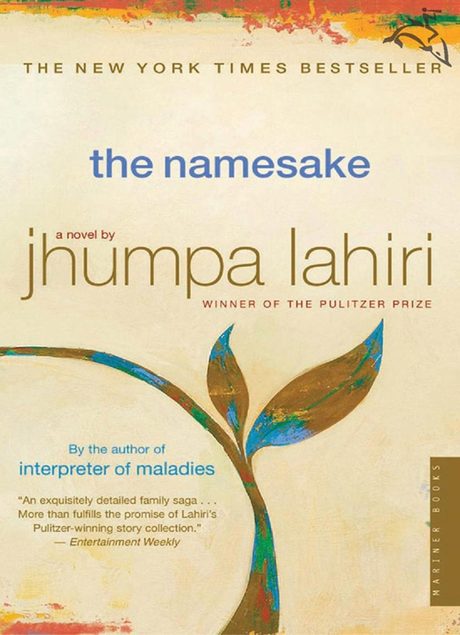
- One collection per writer, with a single exception: Jhumpa Lahiri gets two, because Interpreter of Maladies and Unaccustomed Earth are aimed at different readers a decade apart.
- Collections, not anthologies. Every book here is one writer's work, so the multi-author best-of-Indian-writing volumes are out, including the good ones.
- Every book verified through Google Books and Open Library with a real cover and a real edition, and every starting story checked against the actual contents of that collection rather than my memory of it.
- Five Indian languages besides English: Urdu, Bengali, Kannada, Gujarati and Hindi. A list of Indian short stories that runs only in English is not a list of Indian short stories.
- What got cut: the fat complete-stories omnibuses, which are reference books rather than reading, and a few well-known collections where two great pieces were carrying eighteen weak ones.
The whole list at a glance
All 16 books, in order
| # | Book | Author | Year | Vibe | Best for |
|---|
| 1 | Interpreter of Maladies | Jhumpa Lahiri | 1999 | quiet, precise, sad | your first story collection |
| 2 | Malgudi Days | R. K. Narayan | 1943 | warm, dry, unhurried | readers who abandon books |
| 3 | The Night Train at Deoli and Other Stories | Ruskin Bond | 1988 | gentle, wistful, clear | one quiet evening |
| 4 | Tales from Firozsha Baag | Rohinton Mistry | 1987 | funny, cruel, communal | readers who want a novel feel |
| 5 | Heart Lamp | Banu Mushtaq | 2025 | sharp, funny, angry | readers who want something new |
| 6 | Love and Longing in Bombay | Vikram Chandra | 1997 | atmospheric, plotted, urban | readers who prefer novels |
| 7 | Mottled Dawn: Fifty Sketches and Stories of Partition | Saadat Hasan Manto | 1997 | brutal, brief, unflinching | readers who want the real thing |
| 8 | The Adivasi Will Not Dance | Hansda Sowvendra Shekhar | 2015 | unsparing, plain, angry | readers tired of metro fiction |
| 9 | Unaccustomed Earth | Jhumpa Lahiri | 2008 | patient, adult, melancholy | readers in their thirties |
| 10 | Lifting the Veil | Ismat Chughtai | 2001 | sly, impatient, frank | readers who like literary history |
| 11 | Ratno Dholi: The Best Stories of Dhumketu | Dhumketu | 2020 | old fashioned, tender, rural | readers who like translation finds |
| 12 | East, West | Salman Rushdie | 1994 | clever, uneven, occasionally tender | readers who like formal play |
| 13 | The World of Premchand: Selected Short Stories | Premchand | 1969 | plain, moral, unsparing | readers filling the classics gap |
| 14 | Selected Short Stories | Rabindranath Tagore | 1991 | lyrical, sentimental, observant | readers of classics |
| 15 | Swimmer Among the Stars | Kanishk Tharoor | 2016 | cool, inventive, distant | readers who like experiments |
| 16 | Imaginary Maps | Mahasweta Devi | 1995 | furious, political, dense | readers who want difficulty |
The list
The books, ranked
1
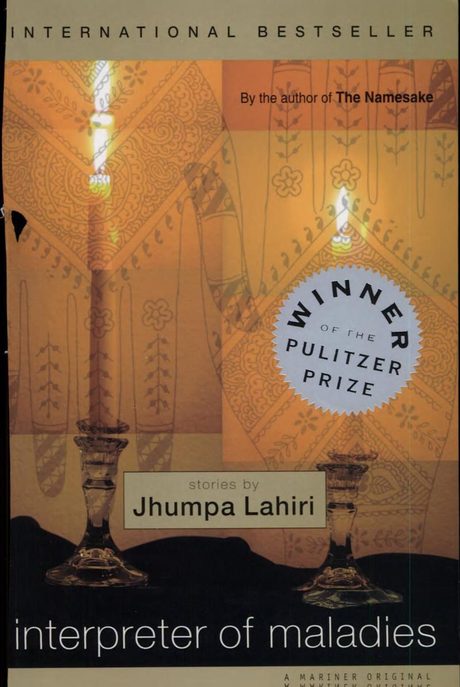
Start with: A Temporary Matter
Interpreter of Maladies
Jhumpa Lahiri1999about 202 pages
Nine stories about Indians in America and Indians in India, all of them about the small distance between two people who share a house.
Lahiri's first book, written mostly in her twenties, and still the cleanest way into Indian short fiction in English. A couple in Boston use a week of scheduled power cuts to say things they have been avoiding for months. A tour guide in Konark, who also translates patients' symptoms for a doctor, mistakes a tourist's confession for intimacy. A woman in a Calcutta building sweeps the stairs until the neighbours decide she is a liability. Nothing explodes. People fail each other in small recognisable ways, and Lahiri is unusually good at finding the exact sentence where it happens.
Why it is at 1
Rank one because it asks the least and gives the most. The sentences are plain, each story runs about the length of a commute, and every one of them lands somewhere. This is the book I hand to a friend who says they cannot get through short stories, and so far it has not come back unfinished.
Read it ifyou want plain sentences and people you recognise
Skip it ifyou want plot, because these turn on small failures rather than events
quiet, precise, sadBest for: your first story collectiondiasporaliterarygateway
2

Start with: An Astrologer's Day
Malgudi Days
R. K. Narayan1943about 260 pages
Short pieces from one invented South Indian town, written so plainly that you forget somebody wrote them.
Narayan invented Malgudi, a town somewhere in south India, and spent a career filling it with shopkeepers, tricksters, schoolteachers and men who talk too much. The stories are tiny. A fake astrologer under a tree meets the man he once believed he had killed. A postman holds back a letter because delivering it would ruin a wedding. A doctor decides that the kindest thing available to a dying friend is a lie. Narayan never raises his voice and never judges anybody, and after twenty pages of him you start seeing your own street the way he sees his.
Why it is at 2
Second because it demands nothing except that you keep turning pages, and because most Indian readers already carry a bit of Malgudi from the television series, which does the work an introduction usually has to do. It sits below Lahiri only because Narayan's flatness can read as slightness on a first pass, and because a few of these pieces are sketches rather than stories.
Read it ifyou want short warm stories about ordinary people
Skip it ifyou want intensity, because Narayan never once raises his voice
warm, dry, unhurriedBest for: readers who abandon booksclassicsmall townsouth india
Pairs with: The Night Train at Deoli, if you want more of the same temperature
3
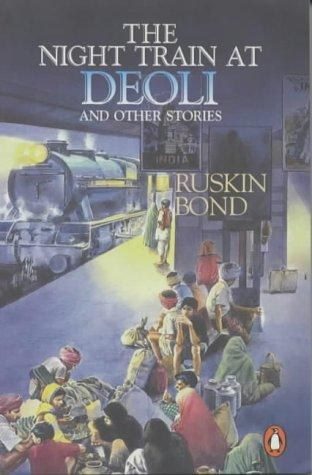
Start with: The Night Train at Deoli
The Night Train at Deoli and Other Stories
Ruskin Bond1988about 252 pages
Hill station stories about people who almost connect, from the writer who makes the simplest English in India look effortless.
Bond's stories run on near misses. A student passing through a tiny station on every holiday keeps buying a basket from the same girl on the platform and never once gets off the train to find her. A boy and an old man share a bench and a long silence. Somebody arrives in a hill town, notices the light on the deodars, and leaves before anything can happen. There is no cleverness in the prose, which is the trick, because writing this plain and this controlled is much harder than it looks. Most pieces run six or seven pages.
Why it is at 3
Third because it is the shortest commitment here and the least likely to intimidate anybody. Bond writes at a level a schoolchild can follow and an adult can still be moved by, which is rarer than it sounds. It sits under Malgudi Days because the range is narrower, all hills and boarding schools and a particular wistfulness that starts to repeat if you read the whole book in one go.
Read it ifyou want gentle stories you can finish tonight
Skip it ifyou want edge, because nobody here is cruel or complicated
gentle, wistful, clearBest for: one quiet eveninghill stationsgentleeasy
4

Start with: Squatter
Tales from Firozsha Baag
Rohinton Mistry1987about 250 pages
Eleven linked stories from one Parsi apartment block in Bombay, funny and cruel inside the same paragraph.
One building, many flats, and neighbours whose stories keep leaking into each other. Mistry's Firozsha Baag has a servant boy who sleeps on the stairs, a man who holds children spellbound with long confident lies, families arguing about emigration, and the particular comedy of a community that cannot stop watching itself. Squatter is the famous one: a Parsi man moves to Toronto, cannot manage the western toilet, and the story turns from farce into something genuinely sad about belonging nowhere. Mistry wrote this before the novels, and you can hear him warming up in it.
Why it is at 4
Fourth because linked stories are the easiest kind to finish. The building carries you from one piece to the next the way a novel would, so you never get the cold start that makes people abandon collections halfway. It is a notch harder than Bond because the humour is Parsi-specific and a few references will go past you, which costs nothing and adds a little useful friction.
Read it ifyou like linked stories and Bombay in the eighties
Skip it ifyou dislike comedy that turns humiliating, because Squatter goes there
funny, cruel, communalBest for: readers who want a novel feelbombayparsilinked stories
5

Start with: Stone Slabs for Shaista Mahal
Heart Lamp
Banu Mushtaqtranslated by Deepa Bhasthi2025about 222 pages
Twelve stories about Muslim women in southern Karnataka, written across three decades and arriving in English all at once.
Mushtaq is a lawyer and activist in Karnataka who has been writing these stories in Kannada since around 1990, and Deepa Bhasthi selected and translated twelve of them into a single English book. The women in them are inside families, mosques, courtrooms and kitchens, arguing for room to breathe. What surprises people is the humour. Mushtaq is funny in the middle of grim material, and she stops a story the second her point has landed rather than rounding it off. Bhasthi keeps Kannada and Urdu words in the English instead of smoothing them away, and the book is better for it.
Why it is at 5
Fifth because the stories are short and individually easy even when the material is not. It won the International Booker in 2025, which is why it is everywhere at the moment, and the attention is deserved rather than manufactured. It sits below the four above it purely on familiarity: if you have read nothing from Karnataka before, the first two stories take a little settling into.
Read it ifyou want contemporary India and women who argue back
Skip it ifyou want comfort reading, because several of these end badly
sharp, funny, angryBest for: readers who want something newkannadatranslationcontemporary
Heads up: domestic cruelty and violence against women run through the book
6
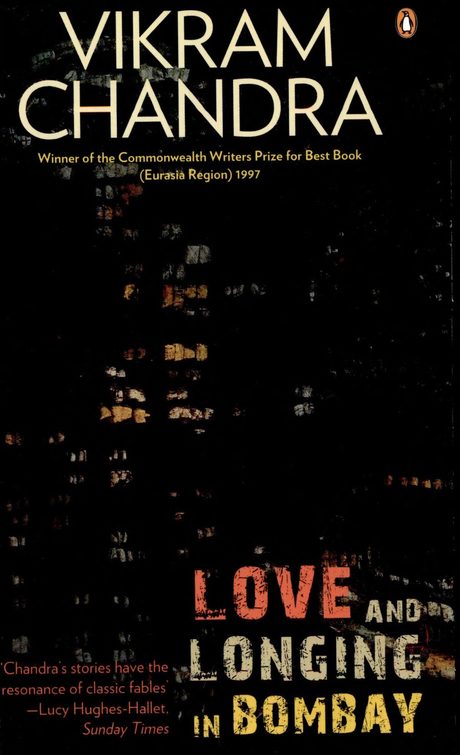
Start with: Dharma
Love and Longing in Bombay
Vikram Chandra1997about 296 pages
Five long stories told by an old man in a Bombay bar, each one a different genre wearing the same city.
Chandra gives you a retired civil servant who tells a story a night to a younger listener over drinks, and the five stories are named for Sanskrit ideas: dharma, shakti, kama, artha, shanti. One is a ghost story about a general who comes home to a house he cannot sleep in. One is a social war between two women at the top of Bombay society. One is a police case, and the inspector working it is Sartaj Singh, who later carries Sacred Games. They run forty to seventy pages each, so they read like short novels, and the city in them is specific down to the whisky.
Why it is at 6
Sixth, and the first book here that asks for real reading time. You cannot finish one of these in a queue, which is the only reason it sits at six rather than higher up. What you get in exchange is the best plotted writing on this list and a Bombay that feels lived in rather than described from a distance.
Read it ifyou want long stories with actual plot
Skip it ifyou only read in ten minute windows
atmospheric, plotted, urbanBest for: readers who prefer novelsbombaylong storiesplot
Pairs with: Sacred Games, if Kama leaves you wanting more Sartaj Singh
7

Start with: Toba Tek Singh
Mottled Dawn: Fifty Sketches and Stories of Partition
Saadat Hasan Mantotranslated by Khalid Hasan1997about 214 pages
Fifty short pieces about Partition by the writer who refused to look away, and several of them are under a page long.
Manto wrote about 1947 while it was still going on around him, and this Penguin selection puts the Partition work in one place: full stories, and the one paragraph sketches that do the most damage. Toba Tek Singh is here, in which two new governments decide to exchange their lunatics along with everything else, and one inmate refuses to stand on either side of a line nobody can explain to him. Manto does not editorialise. He reports the thing, stops, and leaves you holding it. Some of these sketches are three sentences long and you will still have them in ten years.
Why it is at 7
Seventh because the material is the hardest on this list and the prose is the easiest. That combination makes it an odd recommendation: you can read ten pieces in twenty minutes and then need the rest of the day. By most measures Manto is the best writer here, and he sits at seven only because I would not hand him to somebody still deciding whether they like short stories.
Read it ifyou want the truth about 1947 without a historian standing between you and it
Skip it ifyou cannot take sexual violence and communal killing on the page
brutal, brief, unflinchingBest for: readers who want the real thingpartitionurdutranslation
Heads up: communal violence, rape and murder, described plainly and often
8
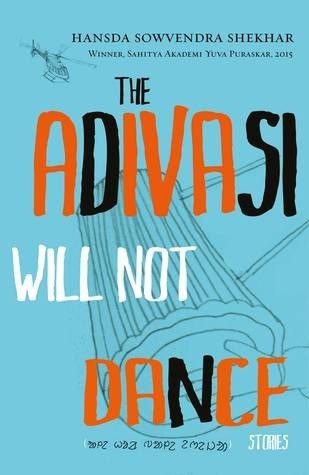
Start with: They Eat Meat!
The Adivasi Will Not Dance
Hansda Sowvendra Shekhar2015about 189 pages
Stories from Santhal Jharkhand by a doctor who lives there and is not explaining his people to anybody.
Shekhar is a medical officer in Jharkhand and these stories come out of the mining belt: the small towns, the villages that lose their land to a power plant and receive a compensation cheque, the girls who go missing into cities. In one, a Santhal family transferred to Vadodara gives up meat to keep the neighbours comfortable, and then 2002 arrives. In another, a woman waiting for the labour train trades herself for a small note and some cold bread. Shekhar writes without the softening that usually attaches to Adivasi subjects in Indian fiction and without asking a city reader for sympathy.
Why it is at 8
Eighth because this is where the list stops being comfortable. Technically it is not a hard read, since the stories are short and the language is direct. What makes it demanding is that it refuses the usual arrangement in which rural India is either tragic or picturesque. If your idea of the country comes from Bombay and Delhi novels, this is the correction.
Read it ifyou want India outside the metros without the sentimentality
Skip it ifyou want uplift, because there is very little of it here
unsparing, plain, angryBest for: readers tired of metro fictionjharkhandadivasicontemporary
Heads up: sexual exploitation, communal violence, extreme poverty
9
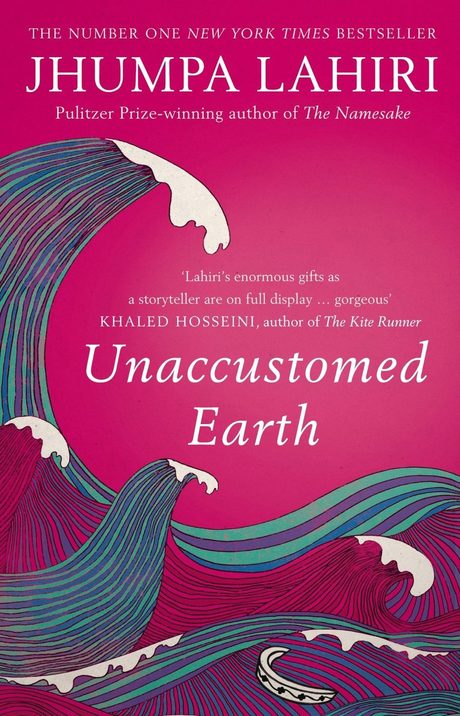
Start with: the title story, Unaccustomed Earth
Unaccustomed Earth
Jhumpa Lahiri2008about 236 pages
Lahiri a decade later, with longer stories about grown children and the parents they have started to manage.
These stories run close to twice the length of the ones in her first book, and the subject has moved on with her. Adult children now, with mortgages and marriages of their own, and immigrant parents ageing into a second kind of dependence. In the title story a widowed father visits his daughter in Seattle, spends the week planting her garden, and neither of them says the thing they are both circling. The last three pieces form one sequence that follows two people across decades, and it is the best sustained work Lahiri has done at this length.
Why it is at 9
Ninth because this is Lahiri asking more of you than Interpreter of Maladies did. The stories are long, the register is quieter, and the payoffs arrive late. Read it after the first book rather than instead of it. The linked sequence at the end is worth the price on its own, and it will not land if you have not built up the patience first.
Read it ifyou liked Interpreter of Maladies and want more room
Skip it ifyou want short pieces, because these run long and slow
patient, adult, melancholyBest for: readers in their thirtiesdiasporafamilyliterary
Pairs with: Interpreter of Maladies, which should come first
10
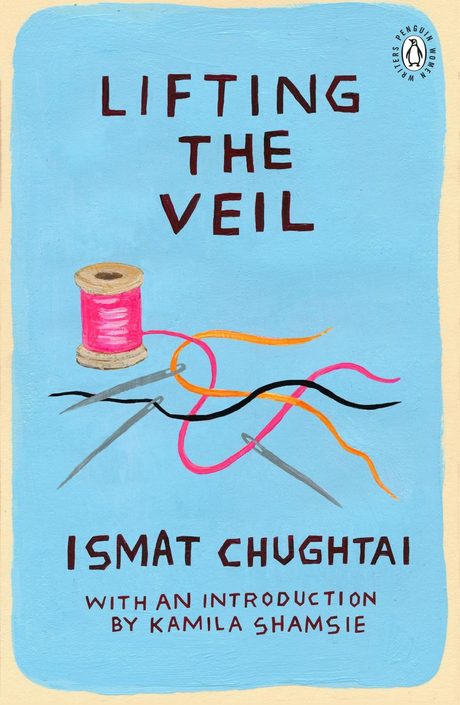
Start with: The Quilt
Lifting the Veil
Ismat Chughtaitranslated by M. Asaduddin2001about 291 pages
The Urdu writer who was hauled into court over one story and turned up refusing to apologise, gathered in one volume.
Chughtai wrote about middle-class Muslim households from the inside, in the idiom women actually used with each other, which is exactly what made her dangerous. The Quilt is the story that got her prosecuted for obscenity: a child narrates what she sees happening under her aunt's quilt at night and does not understand it, while the reader understands it perfectly. The rest of the volume is broader than that reputation, with sketches and non-fiction sitting beside the stories. Chughtai is funny, impatient and completely unimpressed by respectability, and Asaduddin keeps her sentences quick in English.
Why it is at 10
Tenth because the writing is easy and the context is not. You get far more out of Chughtai once you know what the 1940s Urdu literary establishment was and what it cost a woman to write this, and the volume gives you enough of that to follow along. As a pure reading experience it sits below the books above. As a piece of Indian literary history it outranks most of them.
Read it ifyou want the woman who broke Urdu fiction open
Skip it ifyou want a straight story collection, because this mixes forms
sly, impatient, frankBest for: readers who like literary historyurdutranslationclassic
11
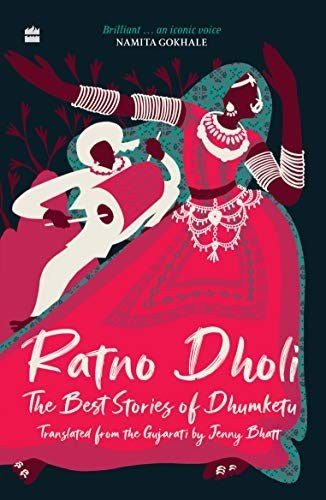
Start with: Ratno Dholi
Ratno Dholi: The Best Stories of Dhumketu
Dhumketutranslated by Jenny Bhatt2020
Twenty-seven Gujarati stories by the man who effectively invented the form in that language, in English for the first time.
Dhumketu was the pen name of Gaurishankar Joshi, whose first Gujarati collection came out in 1926 and changed what a short story could be in the language. Jenny Bhatt chose twenty-seven of them and translated them, which is the first time an English reader has had a real selection rather than a stray anthology piece. The title story follows a village drummer and the dancer he loves, and it goes where village love stories in that period went. Others turn on a letter that arrives too late, or a tea house near Darjeeling run by somebody with a history.
Why it is at 11
Eleventh because it is the most valuable book on this list and not the easiest one. Gujarati fiction barely exists in English, so this is close to the only door into it, and Bhatt's decision to keep the period cadence rather than modernise it makes the prose feel a century old, which it is. That is worth adjusting to. Skip it if you want a contemporary voice.
Read it ifyou want a literature almost nobody has translated
Skip it ifyou want modern prose, because the cadence here is deliberately old
old fashioned, tender, ruralBest for: readers who like translation findsgujaratitranslationclassic
12
Start with: The Courter
East, West
Salman Rushdie1994about 226 pages
Nine stories in three sets, three Eastern, three Western, three where the two collide, and the last one is the best thing in it.
Rushdie splits the book in three: stories set in the East, stories that rewrite Western material such as Hamlet's Yorick and Columbus at the Spanish court, and stories where the two sit in one room. The third section is where the book comes alive. The Courter is about an Indian family in London, the ayah who came with them, and a Central European porter who plays chess with her and cannot pronounce her name, so she becomes Certainly-Mary. It is the least show-off thing Rushdie has written and probably the most moving.
Why it is at 12
Twelfth because half of it is Rushdie doing exercises. The Western section is clever and cold and plenty of readers give up inside it, which is exactly why the book sits in the back half of this list. Go straight to the third section if you need to. The Courter on its own justifies the book, and the two pieces beside it come close.
Read it ifyou want Rushdie at short length and at his warmest
Skip it ifyou have no patience for literary games
clever, uneven, occasionally tenderBest for: readers who like formal playdiasporalondonformal play
13
Start with: The Shroud
The World of Premchand: Selected Short Stories
Premchandtranslated by David Rubin1969
The writer who built the Hindi and Urdu short story, in the English selection that has held up best.
Premchand wrote hundreds of stories in Urdu and Hindi in the first third of the twentieth century, mostly about villages, debt, caste and the daily arithmetic of not having enough. Rubin arranges his selection in three parts, the village, the town and the world, and it holds the pieces you will meet everywhere else. In The Shroud a father and son sit outside a hut while the woman inside dies in labour, then spend the money collected for her funeral cloth on food and drink. In The Chess Players two noblemen keep playing while their kingdom is annexed around them.
Why it is at 13
Thirteenth because Premchand is essential and dated at the same time. The moral clarity that made him revolutionary in 1930 can read as heavy-handed now, and a few stories end with the lesson spelled out for you. Read him anyway. The Shroud is one of the cruellest things in Indian fiction and it has not aged a day, and most of what came after it in Hindi owes him something.
Read it ifyou want the root of modern Hindi fiction
Skip it ifyou dislike fiction with a moral attached to the end
plain, moral, unsparingBest for: readers filling the classics gaphindiurduclassictranslation
14

Start with: The Postmaster
Selected Short Stories
Rabindranath Tagoretranslated by William Radice1991about 472 pages
Bengali stories from the 1890s, most of them written while Tagore was running the family estates and watching village life at close range.
Tagore's best stories come out of the decade he spent looking after the family lands in East Bengal, travelling by boat, meeting tenants, and noticing exactly the kind of small domestic cruelty a celebrated poet is not supposed to notice. The Postmaster is where to begin: a city man posted to a village, an orphan girl who keeps his house, a friendship neither of them names, and then a departure. Kabuliwallah is in here too. Radice's translations are the reason this particular edition matters, because the older English Tagore is unreadably sweet and this is not.
Why it is at 14
Fourteenth because Tagore is the hardest sell here to a modern reader and one of the most rewarding once you adjust to him. The sentiment runs high by current standards and the plots are simple. What survives intact is his attention to people with no power, particularly girls and young widows, which was not a common subject for a famous man to take up in the 1890s.
Read it ifyou want to see where the Indian short story starts
Skip it ifhigh sentiment puts you off a writer
lyrical, sentimental, observantBest for: readers of classicsbengaliclassictranslation
15

Start with: Swimmer Among the Stars
Swimmer Among the Stars
Kanishk Tharoor2016about 188 pages
Stories about elephants shipped across oceans, cities under siege, and the last speaker of a language being interviewed as it dies.
Tharoor writes fables that behave like reportage. Ethnographers record the final speaker of a language and keep asking her for more words while the language runs out mid-interview. An elephant is sent as a diplomatic gift from Delhi to a Moroccan court and spends most of the story at sea. A besieged city holds a committee meeting about the terms of its own surrender. The settings hop across centuries and continents while the tone stays cool and faintly amused. It is the most stylistically ambitious book here and the least interested in making you feel anything.
Why it is at 15
Fifteenth because it assumes you already like short stories and want them to do something unusual. There is very little warmth to hold on to and almost no ordinary domestic life, so if you came to this list for people you recognise, this is not the book. If you came for a writer taking real formal risks in English, it is the best thing on the list.
Read it ifyou want fables, history and formal ambition
Skip it ifyou need characters you can care about
cool, inventive, distantBest for: readers who like experimentsfablehistoricalexperimental
16
Start with: The Hunt
Imaginary Maps
Mahasweta Devitranslated by Gayatri Chakravorty Spivak1995about 250 pages
Three long stories about tribal India, translated by a theorist who argues with them inside the same volume.
Mahasweta Devi spent decades working with tribal communities in Bengal, Bihar and what is now Jharkhand, and these three stories come straight out of that: The Hunt, Douloti the Bountiful, and Pterodactyl, Puran Sahay and Pirtha. The Hunt is the accessible one. A young woman of mixed parentage lives in a village that holds a ritual hunt, and she uses the day in a way nobody expects. Douloti is about bonded labour and what a debt does to a body over a lifetime. Spivak's translation arrives wrapped in her preface, her footnotes and an interview, so you are reading an argument as much as a book.
Why it is at 16
Sixteenth and last because it is the hardest book here by a distance, and the difficulty is not Devi's fault. Her stories are direct and furious. It is the apparatus around them, all that theory, that turns a short book into a project. Read The Hunt on its own first, and carry on only if the anger in it takes hold of you.
Read it ifyou want the angriest political fiction on this list
Skip it ifacademic apparatus puts you off, because there is a great deal of it
furious, political, denseBest for: readers who want difficultybengaliadivasitranslationpolitical
Heads up: bonded labour and sexual violence
Worth knowing
How the patience ranking works
Ranks one to five are the converters. Short pieces, plain prose, very little context needed, and a first story that pays off inside ten minutes. Any of them can be handed to somebody who claims they have stopped reading fiction.
Ranks six to eleven assume you have finished at least one collection and can sit with a story that refuses to resolve. This is where the list gets its range: Partition, a Jharkhand mining belt, a Karnataka household, a Gujarati village in the 1930s.
Ranks twelve to sixteen are for readers already sold on the form. Older prose, translated prose, theory in the footnotes, formal experiments. Nothing down here is worse than what sits above it. It just asks for more from you.
Worth knowing
A note on translations
Seven of these sixteen were written in something other than English: Urdu twice, Bengali twice, and Kannada, Gujarati and Hindi once each. Where I am sure of the translator I have named them, because the English you hold is theirs as much as the writer's.
The differences are real and worth knowing about. Deepa Bhasthi leaves Kannada and Urdu words standing in the English text of Heart Lamp. Jenny Bhatt keeps Dhumketu sounding like 1930 instead of pulling him into now. William Radice rescued Tagore from a century of sugary Edwardian English. If a translation feels wrong to you, look for a different one before you give up on the writer, because two English versions of the same story can be completely different reading experiences.
People also ask
Questions, answered
Which Indian short story collection should I read first?
Interpreter of Maladies by Jhumpa Lahiri, and start with A Temporary Matter rather than the title story. The sentences are plain, each piece runs about twenty pages, and the situations are ordinary enough that you never need background. If you want something Indian rather than diaspora, take Malgudi Days instead and start with An Astrologer's Day, which is eight pages long and has a better twist in it than most novels manage.
Is Heart Lamp worth reading?
Yes, and not only because of the prize. Banu Mushtaq wrote these stories in Kannada across three decades and Deepa Bhasthi translated twelve of them, so you get a whole career rather than one moment. They are short, funny in unexpected places, and hard on the men in them. Start with Stone Slabs for Shaista Mahal. If open endings annoy you, a few of these will, because Mushtaq stops the second her point has landed.
What is the best Indian short story ever written?
There is no settled answer, but three titles come up in every argument: Toba Tek Singh by Manto, The Shroud by Premchand, and The Postmaster by Tagore. My vote goes to Toba Tek Singh, because it does in nine pages what most Partition novels cannot manage in four hundred, and because the closing image of a man lying in the strip of land between two countries holds the entire event in one picture. All three are in books on this list.
Are short story collections good for beginners?
Better than novels, if you pick right. A story is over before your attention wanders, which matters more than most reading advice admits. The mistake beginners make is starting at page one, where writers often put their most difficult piece. Open at the story somebody recommends, finish it, then wander around the book in any order you like. Two collections in, you will notice you no longer need a plot to keep going.
Which Indian short story writers are available in English translation?
Most of the major ones now. Manto and Ismat Chughtai from Urdu, Premchand from Hindi and Urdu, Tagore and Mahasweta Devi from Bengali, Dhumketu from Gujarati, Banu Mushtaq from Kannada. The gaps are still wide. Tamil, Malayalam, Marathi and Assamese short fiction is served patchily and a lot of what exists goes out of print. Check who translated an edition before you buy it, because the gap between two English versions of one story can be total.
How many stories should I read in one sitting?
Two or three, then stop. Collections are built to be dipped into, and most of them punish a straight read because the writer's habits start showing by story eight. Bond gets wistful, Lahiri gets quiet, Manto gets relentless. Spread a collection across two weeks and it reads like six different books. Read it in one weekend and it reads like one long book with a mood problem.
Before you go
What to read tonight
If you have never finished a collection, do this tonight. Open Malgudi Days at An Astrologer's Day and read eight pages. That is the whole test. If the last line makes you sit back for a second, you like short stories and simply did not know it, and Interpreter of Maladies is the next thing to buy.
If you are already sold and want the one that stays longest, it is Manto. Read Toba Tek Singh, put the book down, and do not pick up anything else that day. Come back a week later for the rest of Mottled Dawn in small doses, because small doses are the only way anybody gets through him.
Keep going
Lists that pair with this one
Indian Fiction
The 20 Best Indian Books in Translation, Ranked by Where to Start
Twenty books from ten Indian languages, ordered from the easiest way in to the one that will fight you, with the translator named every time.
Authors
The 12 Best R. K. Narayan Books, Ranked, and Where to Start
Twelve books ranked for a reader picking him up today, each with a sting rating for how hard the ending lands.
Authors
The 10 Best Jhumpa Lahiri Books, Ranked (Where to Start)
Ranked by warmth, from the crowded Bengali kitchens of the early stories to the bare Italian rooms she writes in now.
Authors
The 13 Best Ruskin Bond Books, Ranked (Where to Start at Any Age)
Thirteen distinct books, ranked by what they give a first-time reader, with an age label on every one.
Indian Fiction
16 Best Books to Understand India, Ranked by What They Explain
Sixteen books, ten doors into the same country: history, caste, the mega city, the village, money, and where to start tonight.