A friend tells you Rebus is the greatest detective series in English. You go to the shop, find book one, take it home, and get a thin 1987 novel where Ian Rankin is still working out what he is doing. You finish it thinking your friend has poor taste, and you never read the ten superb books that come later. That is the most common way people lose a series they would have loved.
Every list called best detective series answers a question nobody typed. The question people actually have is where do I start, and the honest answer is regularly not book one. So this list is ranked by the door rather than by the house. Position one goes to the series with the best entry experience for someone starting today, not the series with the most impressive reputation.
Each entry gives you three things: the exact book to begin with, roughly how big the series is so you know what you are agreeing to, and an order tax, which is my scale for how much you lose by reading out of sequence. Free means read them in any order you like. Light means you spoil small personal developments and nothing else. Heavy means the series is really one long story and you should start at the beginning.
Fourteen series, from Baker Street to a Bengaluru flat and a Bombay law office, with four Indian entries that are not tokens. Quick picks are below if you want to be reading something within the next ten minutes.
How I picked these
- The entry book is judged on its own merits. A famous series with a weak first book gets a later door instead, and I say which.
- One series per detective, and only series with at least three books, since two books is not a commitment worth planning.
- Only editions that are easy to buy or borrow in India today, which quietly ruled out several great translated series with patchy availability.
- I skipped series where the entry point is obvious and undisputed, because there is nothing useful for me to add there.
- Every book verified through Google Books and Open Library with a real cover and a real ISBN, so nothing here is a phantom edition.
The whole list at a glance
All 14 books, in order
| # | Book | Author | Year | Vibe | Best for |
|---|
| 1 | The Adventures of Sherlock Holmes | Arthur Conan Doyle | 1892 | brisk, clever, theatrical | sampling a series in one evening |
| 2 | The Murder of Roger Ackroyd | Agatha Christie | 1926 | cosy, sly, ruthless | one perfect classic mystery |
| 3 | A Rising Man | Abir Mukherjee | 2016 | smoky, angry, propulsive | Indian historical crime |
| 4 | Black and Blue | Ian Rankin | 1997 | cold, bitter, procedural | readers who want grit |
| 5 | The Widows of Malabar Hill | Sujata Massey | 2018 | elegant, patient, indignant | readers who like legal detail |
| 6 | Broken Harbour | Tana French | 2012 | bleak, psychological, dread-filled | readers who like slow dread |
| 7 | A Murder Is Announced | Agatha Christie | 1950 | cosy, sharp, post-war | a rainy weekend afternoon |
| 8 | The Unexpected Inheritance of Inspector Chopra | Vaseem Khan | 2015 | warm, funny, humane | your first crime novel |
| 9 | The Black Echo | Michael Connelly | 1992 | hard-boiled, procedural, American | a year of reading one man |
| 10 | The Cuckoo's Calling | Robert Galbraith | 2013 | London, dogged, addictive | six months of one series |
| 11 | Faceless Killers | Henning Mankell | 1991 | grey, patient, melancholy | readers who like slow procedure |
| 12 | The Complete Adventures of Feluda | Satyajit Ray | 2000 | bright, travelling, wholesome | teenagers and nostalgic adults |
| 13 | Picture Imperfect and Other Byomkesh Bakshi Mysteries | Saradindu Bandyopadhyay | 1999 | old Calcutta, domestic, shrewd | short cases on a commute |
| 14 | The Monochrome Madonna | Kalpana Swaminathan | 2010 | urban, wry, unsentimental | readers tired of male detectives |
The list
The books, ranked
1

Sherlock Holmes, 4 novels and 56 stories, order tax: free
The Adventures of Sherlock Holmes
Arthur Conan Doyle1892about 452 pages
Twelve short cases including the red-headed man with the pointless job and the snake in the bedroom, and you can read any one of them tonight.
This is the first collection of Holmes short stories, and it contains the ones that built the legend: a king being blackmailed by a photograph, a bank robbery disguised as a job for red-haired men, a stepfather and a whistle in the dark. Each runs about twenty pages, so you get a complete case in one sitting. Watson narrates, Holmes performs, and the deduction scenes still land because Doyle never lets a trick outstay its welcome.
Why it is at 1
First because the door is barely a door. You are not committing to a series, you are reading one story, and if you like it there are fifty-five more waiting with no order to worry about. Everyone tells beginners to start with A Study in Scarlet, the first novel, which has a long flashback to Utah that has been sending readers to sleep since 1887.
Read it ifyou want to sample a series without agreeing to anything
Skip it ifVictorian sentences slow you down, because the vocabulary is of its time
brisk, clever, theatricalBest for: sampling a series in one eveningclassicshort storiesvictorian
Heads up: period attitudes to race and empire show up in the wider canon
2

Hercule Poirot, 33 novels plus stories, order tax: free
The Murder of Roger Ackroyd
Agatha Christie1926about 212 pages
A retired Belgian detective grows vegetable marrows in an English village until his neighbour is stabbed in his own study.
Poirot has moved to King's Abbot to retire, badly, and the village doctor narrates while a wealthy man is killed hours after learning something he refused to share. The set-up is standard Christie: a locked study, a household of people with debts and secrets, a village that runs on gossip. What she does inside that ordinary frame is the reason writers still take this book apart line by line ninety years later, and the reason I will describe none of it here.
Why it is at 2
Second because it is the strongest single mystery on this list and it requires nothing but curiosity. Do not read the Wikipedia page. Do not let a friend explain why it is famous, because the entire experience is one you can only have once. It is not the first Poirot, and that does not matter at all, since Christie never asks you to remember anything from a previous case.
Read it ifyou want the best puzzle here and you can stay away from spoilers
Skip it ifyou need psychological depth from characters, because Christie is building a machine
cosy, sly, ruthlessBest for: one perfect classic mysterygolden agepuzzlevillage
3

Wyndham and Banerjee, 5 novels, order tax: light
A Rising Man
Abir Mukherjee2016
A burnt-out Scotland Yard man arrives in Calcutta in 1919, and a senior British official turns up dead in an alley behind a brothel.
Captain Sam Wyndham has survived the trenches, lost his wife to influenza, and taken a job with the Imperial Police because there is nothing left for him in London. His sergeant, Surendranath Banerjee, is better at the work and outranked by the colour of his skin. The case is a proper investigation with suspects and pressure from above, and the city is not decoration: the politics of 1919 Bengal is inside the plot rather than sprinkled over it.
Why it is at 3
Third because it is the rare Indian-set series where book one is also the best door, and because the detective pair is the point. Wyndham's opium habit and Banerjee's position deepen across five books, so read them in order if you can. Compared with the two Bombay series below, this one commits harder to the politics, and it is better for it.
Read it ifyou want colonial Calcutta and a police procedural that does not flatter the British
Skip it ifyou want your historical crime free of politics, because that is the engine here
smoky, angry, propulsiveBest for: Indian historical crimecalcuttahistoricalindian
Heads up: opium addiction, colonial violence, and racism throughout
4
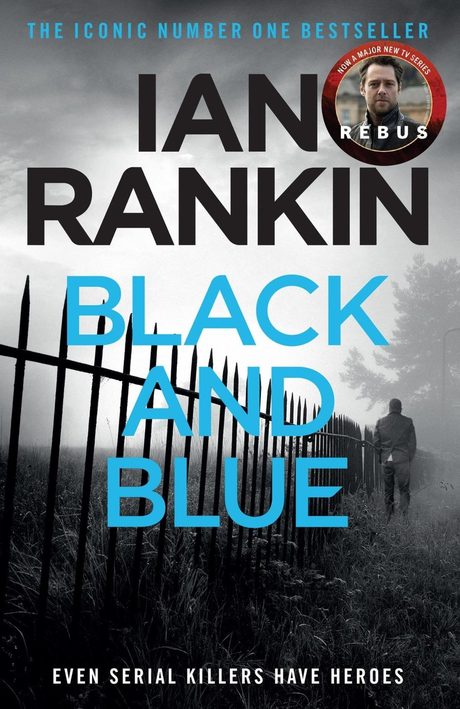
John Rebus, more than twenty novels, order tax: light
Black and Blue
Ian Rankin1997about 532 pages
Rebus chases a copycat killer across Scotland while a real unsolved case from the 1960s presses on him from behind.
This is the eighth Rebus book and the one where the series stops being good and becomes serious. Rebus is sent north in disgrace, and the case pulls him from Edinburgh to Glasgow to Aberdeen and out onto a North Sea oil rig, while an old Glasgow killer who was never caught shadows the whole thing. It is longer and angrier than the earlier books, the Scotland in it is a working country with money problems, and Rebus himself is finally as complicated as the crimes.
Why it is at 4
Fourth because it is the clearest case on this list for ignoring book one. Knots and Crosses is an early novel by a writer who had not yet decided he was writing a series. Start here, and if it lands, go back and read from the beginning knowing the payoff exists. Nothing in Black and Blue requires the seven books before it.
Read it ifyou want a hard, adult police series with a difficult lead
Skip it ifyou dislike the wrecked-detective-with-a-drink-problem template, because Rebus is the type specimen
cold, bitter, proceduralBest for: readers who want gritscotlandpoliceseries
Heads up: murder investigated in detail, alcoholism
5

Perveen Mistry, 4 novels, order tax: light
The Widows of Malabar Hill
Sujata Massey2018about 401 pages
Bombay, 1921: the city's only woman solicitor notices that three widows in seclusion have signed away everything they own.
Perveen Mistry works in her father's law firm because the bar will not let her argue in court, which turns out to be an advantage when the household in question is one no man may enter. She is executing a will for a wealthy Muslim family with three widows in purdah, and their signatures do not sit right. A death follows. Alongside the case, the book gives you Perveen's own past in Calcutta, which explains exactly why she cares this much about a woman's legal standing.
Why it is at 5
Fifth because the investigation and the history are doing the same work: the mystery only exists because of what the law allowed men to do to women's property in 1921. The pace is slower than Mukherjee's Calcutta books, which is the trade-off. Read the four in order, since Perveen's backstory unfolds across them rather than being explained twice.
Read it ifyou want a period Bombay mystery with law and inheritance at the centre
Skip it ifyou want a fast investigation, because half this book is domestic and legal detail
elegant, patient, indignantBest for: readers who like legal detailbombayhistoricalwomen
Heads up: domestic abuse and coercive control within a marriage
6
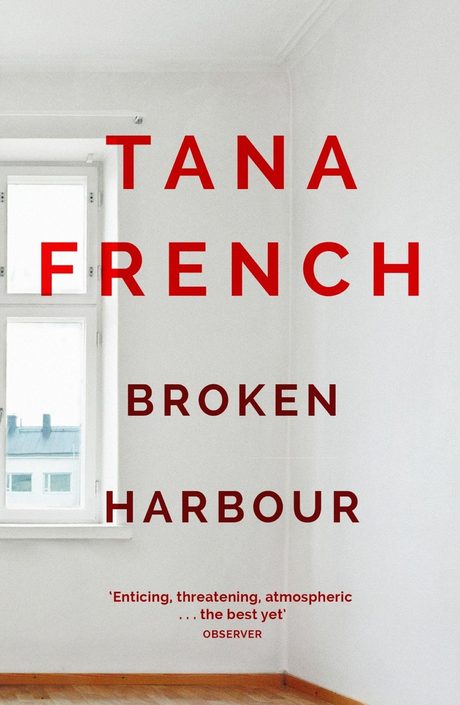
Dublin Murder Squad, 6 novels, order tax: free
Broken Harbour
Tana French2012about 630 pages
A family is attacked in a half-built estate outside Dublin, and the detective who takes the case is the last man who should have it.
The Spains bought into a development that the crash abandoned, so their new home sits in a field of empty shells. The father and two children are dead, the mother is in intensive care, and there are holes punched through the walls of the house. Scorcher Kennedy is the squad's model of procedure and control, which is precisely why this case takes him apart. French writes crime as psychology, and this is her most frightening book because nothing supernatural is required.
Why it is at 6
Sixth because it is the standalone door into a series people quit at book one. Each Dublin Murder Squad book promotes a minor character from the last one to narrator, so there is no ongoing story to miss. In the Woods, the first, leaves one thread deliberately unfinished, and that has made more readers angry than any other choice in modern crime fiction.
Read it ifyou want crime fiction that is really about how people break
Skip it ifyou need a tidy resolution, or the deaths of children are off limits for you
bleak, psychological, dread-filledBest for: readers who like slow dreadirelandpsychologicalstandalone
Heads up: the killing of children, mental illness, and financial ruin
7
Miss Marple, 12 novels and 20 stories, order tax: free
A Murder Is Announced
Agatha Christie1950
The village paper carries a notice that a murder will occur at Little Paddocks at half past six, so naturally everybody turns up to watch.
The neighbours assume it is a party game, arrive with their curiosity dressed as politeness, and at the announced hour the lights go out and a gun is fired. Marple happens to be staying nearby. The setting is post-war England, where rationing and displaced people mean nobody can quite prove who they say they are, and Christie uses that beautifully: the puzzle depends on the fact that a village of strangers had been pretending to be a village of neighbours.
Why it is at 7
Seventh, and above the American and Scandinavian series below, because it is the best Marple and the friendliest entry to her. The order genuinely does not matter, since Marple is unchanging by design. Ranked under Roger Ackroyd only because the trick there is a once-in-a-century thing and this one is merely excellent.
Read it ifyou like village mysteries and an old woman nobody takes seriously
Skip it ifyou find the cosy English village setting too far from anything you care about
cosy, sharp, post-warBest for: a rainy weekend afternoongolden agevillagepuzzle
8
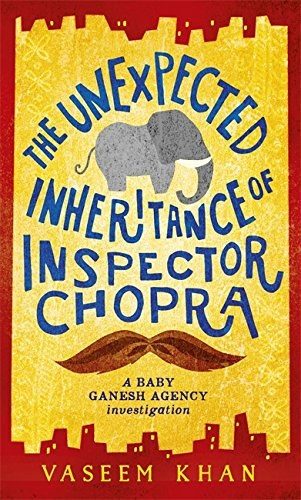
Baby Ganesh Agency, 5 novels, order tax: light
The Unexpected Inheritance of Inspector Chopra
Vaseem Khan2015
On the day he retires, a Mumbai inspector inherits a baby elephant from an uncle he barely knew, and refuses to let go of one last case.
Ashwin Chopra has a bad heart, a forced retirement, a wife with opinions, and a boy's drowning that the station has written off as an accident. Then a truck arrives at his housing society with an elephant calf in it. The elephant is not a gimmick for long, and the case takes Chopra through the parts of Mumbai a retired policeman is no longer supposed to enter. It is warm, funny about family, and clear-eyed about the money and pressure that decide which deaths get investigated.
Why it is at 8
Eighth because it is the softest landing on this list. If crime fiction has always looked too grim to try, start here: the violence stays offstage, the city is affectionate rather than punishing, and you still get a real investigation. Read the five in order for the family, in any order for the cases. Khan's later Malabar House books are darker if you want that.
Read it ifyou want a Mumbai mystery that is gentle without being silly
Skip it ifcosy crime irritates you, because there is an elephant and it does help
warm, funny, humaneBest for: your first crime novelmumbaicosyindian
9
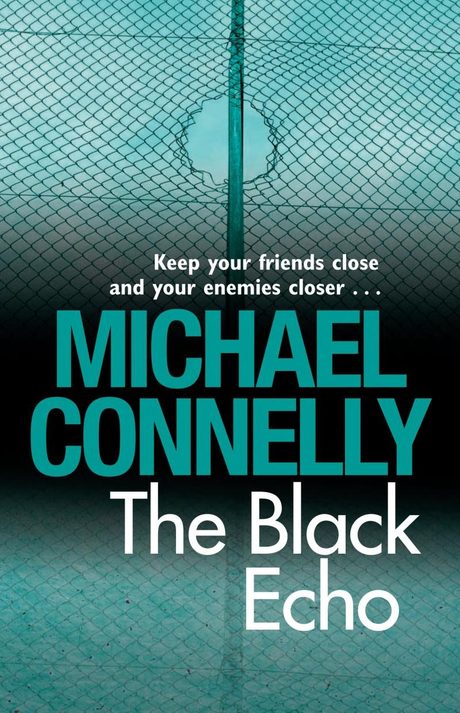
Harry Bosch, more than twenty novels, order tax: heavy
The Black Echo
Michael Connelly1992about 491 pages
An LAPD detective finds a body in a drainage pipe and recognises the dead man from the tunnels they both crawled through in Vietnam.
Harry Bosch works homicide with a chip on his shoulder and a demotion behind him, and the case pulls him into a bank job, an FBI agent who does not want him near it, and a war he has not finished having. Connelly was a crime reporter before this, and it shows in the procedural detail: warrants, jurisdiction fights, the boredom of surveillance. The Los Angeles here is a working city of freeways and shifts, not a movie set.
Why it is at 9
Ninth because this is one of the few series where book one really is the door. Bosch ages in real time across three decades, changes units, retires, comes back, and the cases carry consequences forward, so starting in the middle costs you the whole point. Twenty-plus books is a serious commitment, which is why a series with a lower barrier deserves the higher rank.
Read it ifyou want a long American police series to live inside for a year
Skip it ifyou want to dip in and out, because this one punishes readers who skip
hard-boiled, procedural, AmericanBest for: a year of reading one manlos angelespolicelong series
Heads up: graphic crime scenes and Vietnam war trauma
10

Cormoran Strike, a long modern series, order tax: heavy
The Cuckoo's Calling
Robert Galbraith2013about 560 pages
A supermodel falls from a Mayfair balcony, the police call it suicide, and her brother hires a broke private detective sleeping in his own office.
Cormoran Strike is a war veteran with a prosthetic leg, a collapsed relationship and a debt problem, and Robin Ellacott arrives as a temporary secretary on the morning everything changes for him. The case is old-fashioned detective work: interviews, contradictions in timelines, a rich family that lies out of habit. Robert Galbraith is the pen name J.K. Rowling published this series under, which is public knowledge now and was not when the book appeared.
Why it is at 10
Tenth because the series is genuinely absorbing and the entry cost is high. The later books run past 900 pages, and the real engine is the slow, painful working relationship between Strike and Robin, which means reading in order is not optional. If you want a modern series to disappear into for six months, this is it. If you want one good mystery, take Roger Ackroyd instead.
Read it ifyou want a long-running detective pair and you read fast
Skip it ifvery long books defeat you, because these grow enormous
London, dogged, addictiveBest for: six months of one serieslondonprivate eyelong series
Heads up: later books in the series contain graphic violence and sexual violence
11

Kurt Wallander, about ten books, order tax: light
Faceless Killers
Henning Mankelltranslated by Steven T. Murray1991about 279 pages
An elderly farming couple are attacked in the Swedish countryside, and the wife's dying word sets off a wave of racist violence.
Kurt Wallander is separated, eating badly, drinking more than he should, and worried about both his father and his daughter, and he is the reason half of modern Scandinavian crime fiction exists. The investigation is deliberately unglamorous, with false leads and weeks of nothing. What lifts it is what Mankell is actually writing about: a peaceful country discovering it is not as decent as it believed, and a police force being handed a social problem to solve with handcuffs.
Why it is at 11
Eleventh because it is the original of a form you have already met second-hand in a dozen television series, so parts feel familiar now. Still worth starting here rather than in the middle, since Wallander's marriage, his health and his father run through the books in order. The pace is slow, and that is a choice rather than a flaw.
Read it ifyou want the source of Nordic noir rather than another imitation
Skip it ifyou need momentum, because this investigation stalls the way real ones do
grey, patient, melancholyBest for: readers who like slow procedureswedentranslatednordic noir
Heads up: racist violence against refugees is central to the plot
12

Feluda, around 35 adventures, order tax: free
The Complete Adventures of Feluda
Satyajit Ray2000about 808 pages
Calcutta's own private investigator, his teenage cousin and a thriller writer who is wrong about everything, solving cases from Darjeeling to Rajasthan.
Pradosh Mitter, called Feluda, was created by Satyajit Ray for a children's magazine in the 1960s and grew into something adults kept reading. Topshe narrates, Lalmohan Ganguly supplies the comedy, and the cases are built around real places: a hill station, a temple town, a Jaisalmer fort. The English collections translated by Gopa Majumdar put the stories in one place, and they move fast, with the clues laid out fairly enough that a sharp twelve-year-old can beat Feluda to it.
Why it is at 12
Twelfth because of who it is for. These were written for younger readers and the violence is minimal, so an adult coming from Rankin or French will find them light. As a first detective series for a teenager, or as the thing you reread from your own childhood, nothing on this list beats it. Any story, any order.
Read it ifyou want Indian detective stories the whole family can pass around
Skip it ifyou want adult crime with real menace, because that is not the assignment here
bright, travelling, wholesomeBest for: teenagers and nostalgic adultsbengalitranslatedclassic
13
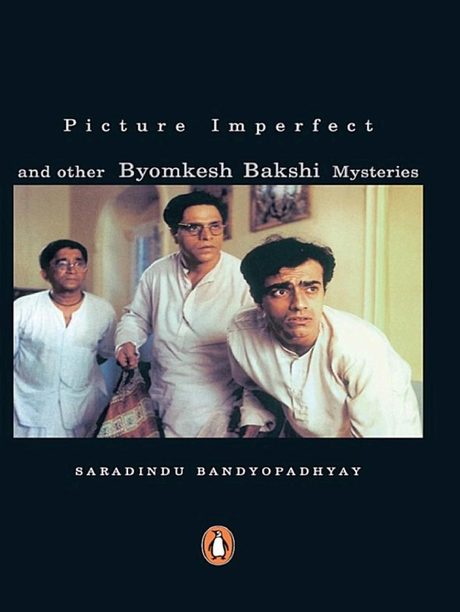
Byomkesh Bakshi, a little over thirty stories, order tax: free
Picture Imperfect and Other Byomkesh Bakshi Mysteries
Saradindu Bandyopadhyaytranslated by Sreejata Guha1999about 324 pages
A 1930s Calcutta investigator who refuses the word detective and calls himself a truth-seeker instead, with his friend Ajit writing it all down.
Saradindu Bandyopadhyay began these in Bengali in the 1930s, and Byomkesh is a genuinely unusual creation: married, domestic, unimpressed by his own cleverness, working out of a shared house in north Calcutta. The cases are short and often turn on something small in a household. This Penguin collection, translated by Sreejata Guha, gathers the well-known early ones and is the easiest way into him in English. The city he moves through is worth the ticket by itself.
Why it is at 13
Thirteenth on the strength of the English editions rather than the originals. In Bengali this sits near the top of any list like this. In translation the tone flattens in places, and readers who know both will tell you so. Start anywhere in the collection, since there is no arc to protect, and treat it as a set of short stories rather than a saga.
Read it ifyou want the older Indian detective tradition and short cases
Skip it ifyou dislike reading translated prose that occasionally sounds formal
old Calcutta, domestic, shrewdBest for: short cases on a commutebengalitranslatedshort stories
14
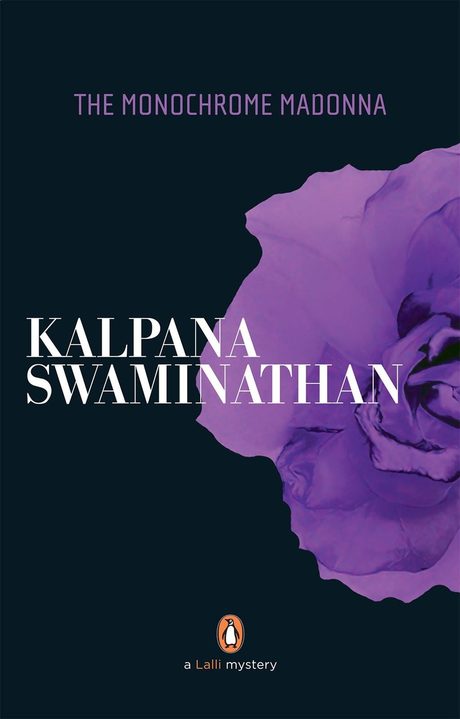
Lalli, several novels, order tax: free
The Monochrome Madonna
Kalpana Swaminathan2010about 239 pages
A retired Mumbai detective and her writer niece, in a series that treats the city's flats and families as the actual scene of the crime.
Sita answers a panicked call from a friend, arrives at her flat, and finds a dead woman and a painting that will not stop mattering. Her aunt Lalli, long retired from the police and never quite retired from thinking, takes over. Swaminathan is a surgeon by profession and writes bodies and social hypocrisy with the same unsentimental eye. The Lalli books are short, sharp, and much less known than they deserve to be, which is the only reason this one sits at the bottom.
Why it is at 14
Fourteenth on visibility, not on quality. The cases stand alone, the books are easy to find in Indian editions, and this is the tightest of them, so it is the door I would use. Ranked below Feluda and Byomkesh only because those two are institutions and this series is still waiting for its readers.
Read it ifyou want contemporary Indian crime with an older woman at the centre
Skip it ifyou want a long series to settle into, because this one is small and scattered
urban, wry, unsentimentalBest for: readers tired of male detectivesmumbaiindiancontemporary
Heads up: domestic violence and a detailed crime scene
Worth knowing
How the order tax works
Free means the books are independent cases and the detective does not change much between them. Sherlock Holmes, Marple, Poirot, Feluda, Byomkesh, Lalli and the Dublin Murder Squad all sit here. Pick by the premise that appeals to you, ignore the numbers on the spines, and you lose nothing at all.
Light means the cases stand alone but the detective's personal life moves forward: a marriage ends, a child grows up, a habit gets worse. Rebus, Wallander, Perveen Mistry, Chopra and the Wyndham books work this way. Reading out of order spoils small private developments, and most readers decide that is a fair price for starting with the good one.
Heavy means the series is one long story wearing a case as a coat. Harry Bosch and Cormoran Strike are the two here. Start at book one or accept that you have skipped the part that makes people care, which in Strike's case is an entire relationship built over thousands of pages.
Worth knowing
Series that nearly made this list
Maigret is missing because Simenon wrote seventy-five of them with no natural door, and telling you to pick one at random is not advice. Montalbano and the Martin Beck books were both cut on availability, since the English editions are inconsistent in Indian shops and I only wanted books you can actually get hold of. Kinsey Millhone and V.I. Warshawski, the two great American women private eyes, were squeezed out by Bosch taking the American slot.
The Millennium books with Lisbeth Salander are not really a detective series, whatever the shelf says, and the Thursday Murder Club is a comedy that happens to contain a body. Both are worth your time. Neither answers the question this list is here to answer, which is where a new reader should walk in.
People also ask
Questions, answered
Do I have to read detective series in order?
Usually not. Most classic series, Holmes, Marple, Poirot, Feluda, Byomkesh, are separate cases with a detective who never changes, so any book works as a starting point. Modern series split into two kinds: ones where the personal life develops slowly and you lose a little by skipping, and ones like Harry Bosch and Cormoran Strike that are a single long story. Check the order tax on each entry above before you buy.
Which detective series should I start with if I have never read crime fiction?
The Unexpected Inheritance of Inspector Chopra by Vaseem Khan. The setting is Mumbai, the violence stays offstage, the humour is real, and there is a genuine investigation underneath. If you would rather have a classic, read The Adventures of Sherlock Holmes and stop after one story to see how you feel. Both are low commitment, which is what matters when you are still finding out whether the genre suits you.
Where should I start with Agatha Christie?
The Murder of Roger Ackroyd for Poirot and A Murder Is Announced for Marple, both on this list. Avoid starting with her weakest late novels, which are the ones cheap omnibus editions tend to include. Order does not matter with Christie, and the two exceptions, the final Poirot and the final Marple, should be saved for after you have read several others, for reasons that will be obvious when you get there.
Which Indian detective series are actually good?
Four are on this list. Abir Mukherjee's Calcutta books for colonial-era police work, Sujata Massey's Perveen Mistry for 1920s Bombay and the law, Vaseem Khan's Chopra novels for warm contemporary Mumbai, and Kalpana Swaminathan's Lalli for something sharper. Feluda and Byomkesh sit alongside them as the classics that every Indian reader meets first, usually in a school library or a cousin's bookshelf.
Is it fine to start a series in the middle?
Yes, and for two series on this list I recommend it. Black and Blue is the eighth Rebus and the first great one, and Broken Harbour is the fourth Dublin Murder Squad and the best standalone. Publishers push book one because that is how backlists sell, not because it is the strongest reading experience. The only real cost is spoiling small details of the detective's private life.
How many books do I need to read before deciding I like a series?
One, if you pick the right one. That is the entire argument of this list. A weak first book tells you nothing about a series and a strong entry tells you almost everything, because the voice, the setting and the moral temperature are fixed early even when the plotting improves later. If the entry book named here does not hold you for fifty pages, move to another series without guilt.
Before you go
What to read tonight
If you want to be reading in the next ten minutes, take The Adventures of Sherlock Holmes and read The Red-Headed League, which is about twenty pages and will tell you within two of them whether this whole genre is for you. If you want something set closer to home, Inspector Chopra is the gentlest door and A Rising Man is the most serious one.
One rule worth keeping once you commit: give a series its recommended entry book and one more before you decide. Detective series are built on returning to a person, and the second visit is where you find out whether you want that person's company for another eighteen books. If the answer is no, there are thirteen other doors on this page and nobody is checking which ones you tried.
Keep going
Lists that pair with this one
Genre
18 Best Crime Thriller Books of All Time, Ranked Honestly
Ranked by what is left of the book once you already know the ending, with a straight answer on every twist.
Indian Fiction
18 Best Thriller Novels by Indian Authors, Ranked
Crime, mystery and suspense from Calcutta in 1919 to Delhi right now, ranked best first, with the sub-genre and the commitment marked on every book.
Genre
14 Best Book Series to Read (And Where Each One Sags)
Fantasy, crime, historical and Indian series, each with its book count, its finished or unfinished status, and the exact volume where most readers put it down.
Mood & Life
20 Unputdownable Books, Ranked by the Engine That Hooks You
I ranked these on one thing: how hard each book made it to stop reading, and which mechanic does the pulling.
Mood & Life
16 Best Books for Long Flights and Train Journeys, by Hours
Every book here is timed: roughly how many hours it fills, and how well it survives being put down for the meal trolley.