A cousin asked me for a fantasy recommendation last winter and I did the cruellest thing you can do to a new reader. I handed her book one of a nine book series. She finished it in four days, loved it, and then found out that the author is still writing the ending and has been for most of her life. She has not touched fantasy since, which is fair.
So this list is the antidote. Fourteen fantasy novels that begin and end inside one book. No cliffhanger, no waiting, no wiki tab open on your phone to remember who is whose cousin. You buy one object, you read it, you close it, you are done, and the story does not owe you anything else.
The ranking runs on how well each book uses its single volume: how much world it builds, how hard the ending lands, and how likely I am to push it on someone at a wedding. Every entry finishes with a sequel check, because a few of these authors did go back later, and you deserve to know which ones before you get attached. Quick picks are below if you have ten seconds.
How I picked these
- One volume, whole story. If the last page sends you shopping for book two, it is not on this list, however good it is.
- The ending has to land. A book that stops rather than ends fails the only promise this list makes.
- Range over sameness: the shortest book here is under 200 pages and the longest is over a thousand, and the moods run from warm folklore to genuinely nasty.
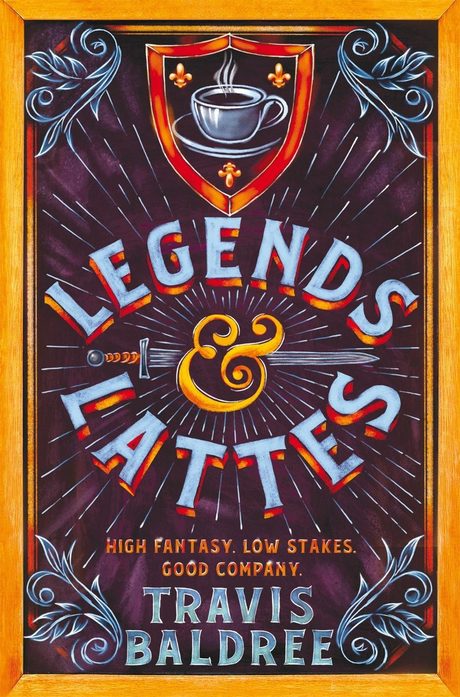
- Cut on purpose: Legends and Lattes and The House in the Cerulean Sea are lovely and they live on the cozy fantasy list instead, and Cerulean Sea now has a sequel. The Golem and the Jinni got a sequel too, so it lost its seat here.
- Every book verified through Google Books and Open Library, real covers, real editions, no ghost titles.
The whole list at a glance
All 14 books, in order
| # | Book | Author | Year | Vibe | Best for |
|---|
| 1 | Piranesi | Susanna Clarke | 2020 | quiet, eerie, tender | readers with three free evenings |
| 2 | Uprooted | Naomi Novik | 2015 | muddy, fierce, fairy tale | your first fantasy novel |
| 3 | Circe | Madeline Miller | 2018 | sunlit, bitter, patient | fantasy sceptics |
| 4 | Babel | R. F. Kuang | 2022 | furious, bookish, tragic | readers who love etymology |
| 5 | The Night Circus | Erin Morgenstern | 2011 | monochrome, dreamy, cold | reading in bed in December |
| 6 | Spinning Silver | Naomi Novik | 2018 | frozen, sharp, mercantile | readers who liked Uprooted |
| 7 | The Ocean at the End of the Lane | Neil Gaiman | 2013 | small, English, terrifying | a single sitting |
| 8 | Jonathan Strange & Mr Norrell | Susanna Clarke | 2004 | wry, wintry, enormous | a long holiday |
| 9 | Tigana | Guy Gavriel Kay | 1990 | operatic, mournful, adult | readers who like history |
| 10 | The Spear Cuts Through Water | Simon Jimenez | 2022 | mythic, brutal, hypnotic | readers bored of standard fantasy |
| 11 | The Ten Thousand Doors of January | Alix E. Harrow | 2019 | wistful, bookish, defiant | fans of doors and letters |
| 12 | Gods of Jade and Shadow | Silvia Moreno-Garcia | 2019 | sunny, dusty, romantic | a train journey |
| 13 | The Devourers | Indra Das | 2015 | feral, humid, gorgeous | readers with a strong stomach |
| 14 | The Last Unicorn | Peter S. Beagle | 1968 | lyrical, funny, heartbreaking | readers who love language |
The list
The books, ranked
1
One book, one house
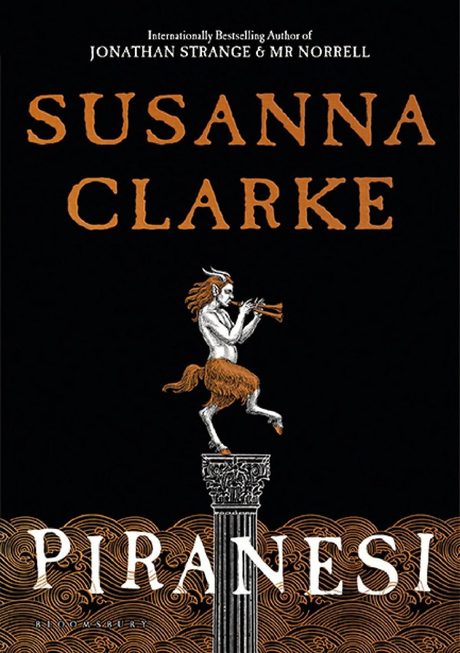
Piranesi
Susanna Clarke2020about 289 pages
A man lives alone in an endless house of statues and tides, keeps careful notes, and slowly works out what his own notes are hiding.
Piranesi lives in the House: infinite halls, thousands of statues, an ocean in the lower floors, birds in the upper ones, and tides he has learned to predict. He keeps a journal, catalogues the halls, and meets the only other living person twice a week. The pleasure at first is his voice, orderly and delighted by a world that should frighten him. Then small errors surface in his own old entries and reading becomes detective work you do beside him. It runs about 250 pages and gets more out of them than most trilogies manage in three thousand.
Why it is at 1
First because it is the most complete object on the list. A whole world, a whole mystery and a whole ending, in a book you can carry in a jacket pocket, and nothing about it asks you to read anything else. Clarke wrote a very different novel before it, and they share nothing but a mind. Sequel check: none, and none is wanted.
Read it ifyou want a short strange book that respects your time
Skip it ifyou need battles, banter, or a fast opening fifty pages
quiet, eerie, tenderBest for: readers with three free eveningsliterary fantasymysteryshort
Heads up: captivity and psychological manipulation
Pairs with: The Ocean at the End of the Lane, if you want two short unsettling books in one week
2

One book, one wood
Uprooted
Naomi Novik2015about 481 pages
Every ten years the wizard in the tower takes one village girl, and this time he takes the wrong one.
Agnieszka's valley pays a tax in daughters. Every decade the wizard called the Dragon picks a seventeen year old, keeps her ten years, and returns her changed but unharmed. Everyone expects him to choose Agnieszka's beautiful best friend. He chooses Agnieszka. What follows is Polish flavoured folklore with teeth: a corrupted forest that swallows people and sends them back wrong, magic learned as a messy practical craft rather than a school subject, and a court plot that turns bloody. The Wood is one of the better villains in modern fantasy, mostly because it is not a person and cannot be reasoned with.
Why it is at 2
Second because it is the easiest book here to put in a stranger's hands. Fairy tale structure everyone already knows, a heroine who is stubborn instead of chosen, and a last chapter that shuts the door properly. Sequel check: none. Novik wrote Spinning Silver in the same key three years later, but it is a separate story with separate people.
Read it ifyou want folklore, a wood that hates you, and a fast second half
Skip it ifa prickly older mentor as love interest puts you off
muddy, fierce, fairy taleBest for: your first fantasy novelfolklorepolishmagic school of one
Heads up: body horror and battlefield violence
3
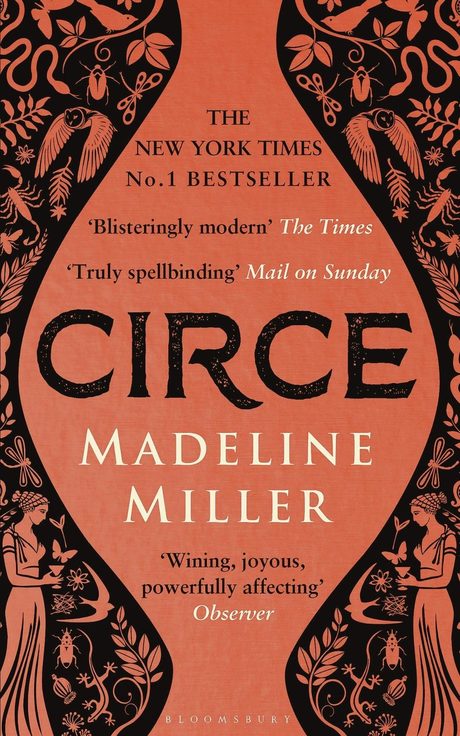
One book, one whole life
Circe
Madeline Miller2018about 353 pages
The witch who turned men into pigs gets her entire life told back to her, and it turns out she was the reasonable one.
Circe is a minor goddess with a mortal sounding voice, born into a hall of beautiful relatives who find her dull. She discovers that herbs obey her, gets exiled to an island for it, and spends centuries learning to be good at solitude. Myth arrives at her door as gossip and leaves as consequence: a craftsman, a monster, a famous sailor who overstays. Miller writes gods as bored aristocrats with unlimited power and no manners, which makes Circe's slow, expensive decency the real plot of the book.
Why it is at 3
Third because it is the best door on this list for someone who insists they do not read fantasy. Read as the story of a woman building a life alone, with witchcraft as one tool among several, and it works on people who would never pick up a book with a dragon on the cover. Sequel check: none. Miller's other novel stands by itself too.
Read it ifyou like myth retold slowly and from the side nobody asked
Skip it ifyou need urgency, because this is a life rather than a quest
sunlit, bitter, patientBest for: fantasy scepticsgreek mythretellingliterary
Heads up: sexual violence in one chapter, and a difficult childbirth sequence
4
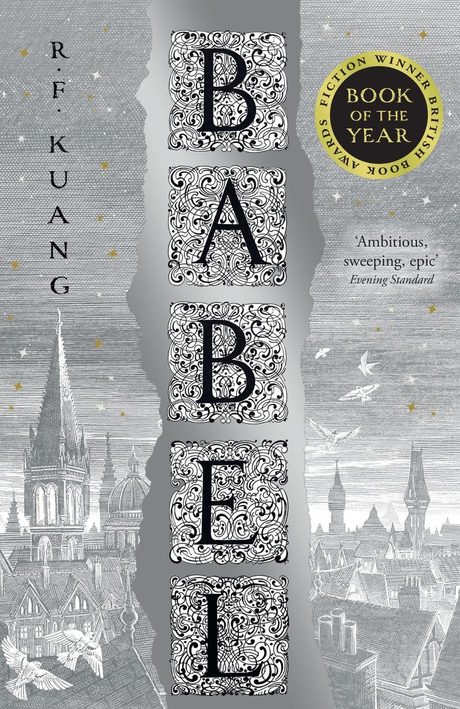
One book, one empire
Babel
R. F. Kuang2022about 688 pages
Oxford, 1836, where translation is literal magic and the British Empire runs on the meaning lost between languages.
Silver bars hold the gap between a word and its translation, and that gap does work: it powers ships, cures fevers, keeps an empire moving. A boy is taken from Canton, raised in England for his usefulness, and sent to Oxford to feed the tower that turns his mother tongue into fuel. The friendships are warm, the college scenes are funny, and the ledger of what the institution costs keeps growing in the margins until it cannot be ignored. It is long, it is angry, it has footnotes, and it argues with you the whole way.
Why it is at 4
Fourth because no other book here packs in this many ideas and then finishes them inside one cover. The lecturing will irritate some readers and Kuang is not subtle, which she would tell you is deliberate, since subtlety has historically been a tool of the people holding the silver. Sequel check: none. The ending is closed and bolted.
Read it ifyou like history, languages, and a novel with a thesis
Skip it ifyou want moral greyness or hate being argued at
furious, bookish, tragicBest for: readers who love etymologydark academiacolonialismalternate history
Heads up: racism, colonial violence, character death
5
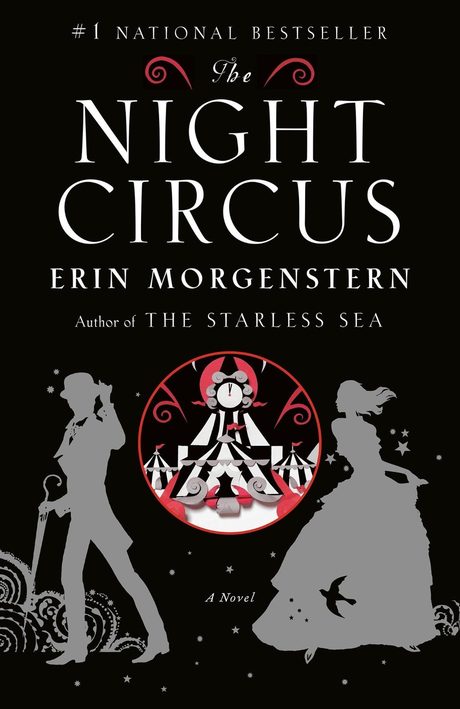
One book, one circus
The Night Circus
Erin Morgenstern2011
A black and white circus arrives without warning, opens at nightfall, and hides a duel nobody has explained to the duellists.
Le Cirque des Reves has no posters and no advance notice. It appears in a field, opens at dusk, closes at dawn, and everything inside it is black, white or silver. Two young magicians have been bound to a contest by their mentors without being told the rules, the stakes, or how a winner is decided. The plot stays deliberately loose. What the book gives you instead is a place: an ice garden, a wishing tree, a cloud maze, caramel in the cold air, and a set of people who love it enough to follow it around the world.
Why it is at 5
Fifth on atmosphere alone, because nothing else here builds somewhere you would rather spend a night. It ranks below the top four because the contest never becomes urgent and the characters stay slightly behind glass, admired more than known. Sequel check: none. Morgenstern's later novel is a separate book with a separate obsession.
Read it ifyou read for mood, texture and setting more than plot
Skip it ifyou need stakes, pace and characters you can hug
monochrome, dreamy, coldBest for: reading in bed in Decembercircusatmosphericslow burn
6
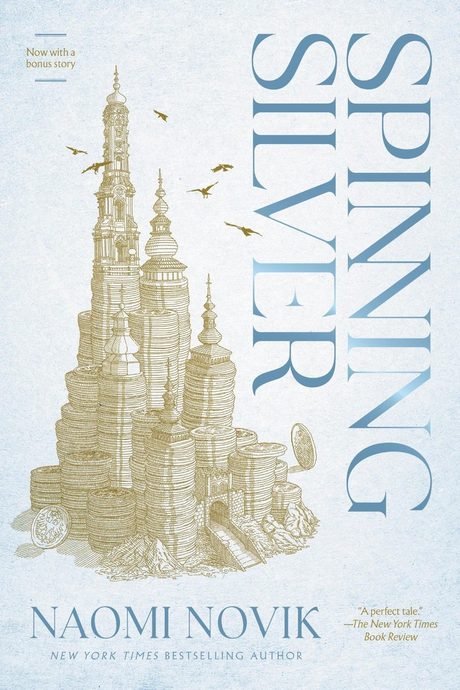
One book, three women
Spinning Silver
Naomi Novik2018about 545 pages
A moneylender's daughter is so good at collecting debts that the ice king of the winter road wants her for it.
Miryem's father lends money and lacks the spine to get it back, so his daughter takes over the ledger and the village learns to pay. Her competence attracts the Staryk, the cold king whose road crosses the forest, and a boast about turning silver into gold becomes a contract she cannot escape. Three women narrate: the moneylender's daughter, a farm girl she employs, and a duke's daughter married into a household with something living inside her husband. Rumpelstiltskin is the seed. What grows is a novel about debt, antisemitism, winter, and marriage as a negotiation between unequal parties.
Why it is at 6
Sixth, and I could be argued higher. The three voice structure is more ambitious than Uprooted and it pays off completely in the last third, but the opening eighty pages demand more patience than a new reader usually has to give. Sequel check: none. Same author, same folklore instinct, entirely separate world.
Read it ifyou want cold, clever fairy tale logic and grown up stakes
Skip it ifyou want one narrator or romance in the foreground
frozen, sharp, mercantileBest for: readers who liked Uprootedfairy talewintermultiple narrators
Pairs with: Uprooted, though they share nothing but a temperament
7
One book, one evening
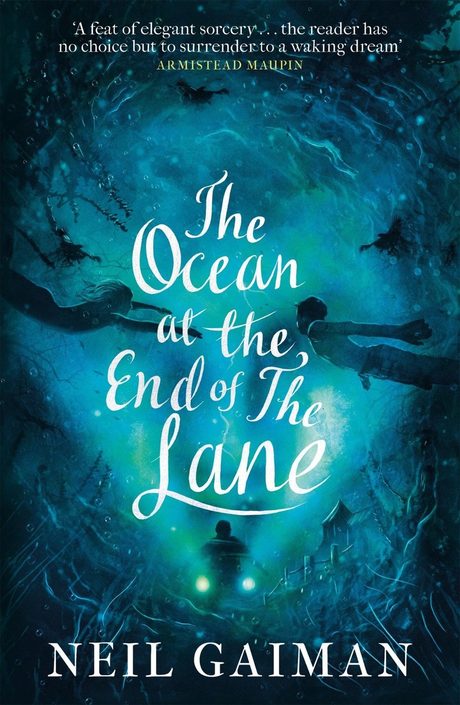
The Ocean at the End of the Lane
Neil Gaiman2013about 180 pages
A man returns to his childhood lane for a funeral, sits by a pond a girl once called an ocean, and remembers a buried year.
The narrator is seven again, in a small English village, in a house where a lodger has just died and something has come loose because of it. A girl at the farm at the end of the lane says the pond behind it is an ocean, and she seems to be telling the truth. What arrives next takes the shape of a housekeeper and makes his family love her more than him. Under 200 pages, told with a child's helplessness intact, and far more frightening than people expect from an author they have filed under whimsy.
Why it is at 7
Seventh because it is the one you can start and finish tonight, and because it is the scariest book on the list. Points off for how much mythology stays unexplained, which is either the charm or the frustration depending on your tolerance. Sequel check: none. Gaiman has written in many worlds and never gone back to this one.
Read it ifyou want one short frightening evening with a lump in your throat
Skip it ifyou want your magic systems explained
small, English, terrifyingBest for: a single sittingnovella lengthchildhoodhorror adjacent
Heads up: a death by suicide early on, and sustained danger to a child
8
One book, one thousand pages
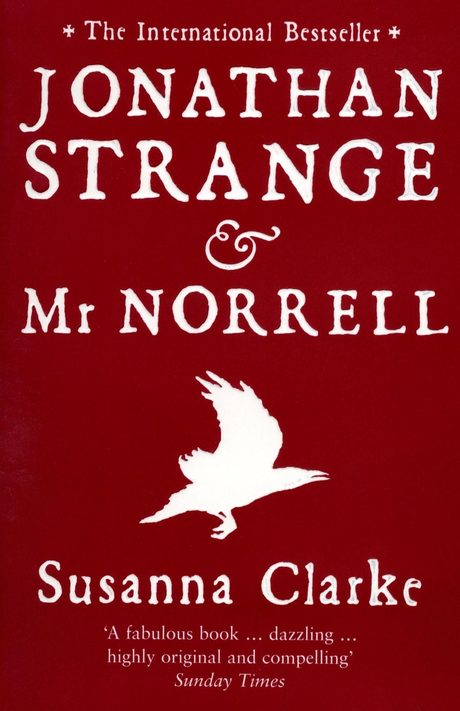
Jonathan Strange & Mr Norrell
Susanna Clarke2004about 1026 pages
England fights Napoleon with two rival magicians, one a hoarder of books, the other reckless enough to actually use them.
Magic has been a subject of study rather than practice in England for centuries, until Mr Norrell proves it can still be done and immediately tries to own it. Strange becomes his student, then his rival, and their argument drags something much older and colder back into English weather. Clarke writes it as a nineteenth century novel, complete with footnotes that run for pages and are frequently better than the main text. A thousand pages that move at a Sunday pace on purpose, and a fairy villain with the manners of a bored aristocrat.
Why it is at 8
Eighth because the entry fee is real: two hundred pages of polite throat clearing before the story bares its teeth. Stay, and you get the most convincing magical England ever written. The last page settles the plot and refuses to tidy up the two men, which some readers find unfinished. Sequel check: no sequel novel. Clarke returned to this world once in a story collection, The Ladies of Grace Adieu, which is a side dish.
Read it ifyou have a month and you love Austen era sentences
Skip it ifyou want pace, or footnotes make you anxious
wry, wintry, enormousBest for: a long holidayhistorical fantasyfootnotesdoorstopper
9
One book, one erased country
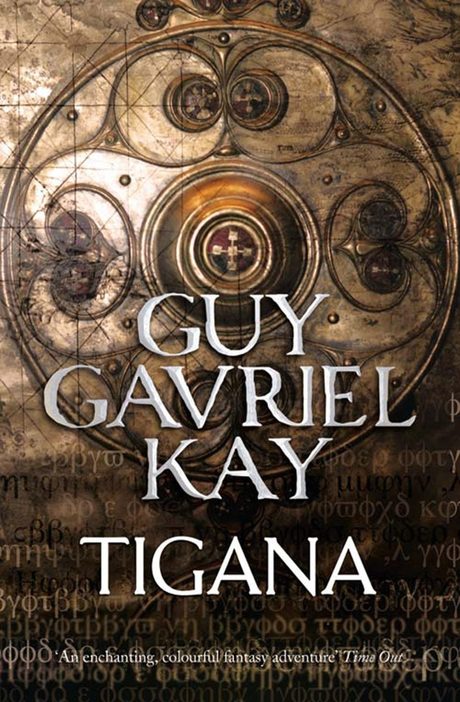
Tigana
Guy Gavriel Kay1990about 38 pages
A tyrant destroys a province and then removes its name from the mind of everyone who was not born there.
Two sorcerer kings have carved up a peninsula that looks a great deal like renaissance Italy. One of them lost a son in battle against the province of Tigana, so he razed it and then took its name out of the world: outsiders cannot hear the word, cannot remember the place, and the survivors watch their country being forgotten while they stand in it. The plot is a slow conspiracy of travelling musicians, exiles and one woman who has placed herself inside the tyrant's household. Kay writes grief and politics better than he writes spells.
Why it is at 9
Ninth because it attempts something nobody else here tries: it makes memory itself the stake, which hits differently if your family has ever watched a language thin out over two generations. The prose reaches for opera and occasionally trips over its own robes. Sequel check: none. Kay has built a career on standalone novels, which is why he belongs on this list twice over.
Read it ifyou want political fantasy about identity and loss
Skip it ifyou dislike large casts or florid prose
operatic, mournful, adultBest for: readers who like historypolitical fantasymemoryitaly inspired
Heads up: sexual coercion and on page sex within a power imbalance
10

One book, five nights
The Spear Cuts Through Water
Simon Jimenez2022about 544 pages
A guard and a stranger walk a captive god across a country in five nights, and the story is being performed for you in a dream theatre.
You are seated in an inherited dream, watching a play your grandmother used to tell. On stage, two young men, one of them born inside the ruling family, escort the Moon, an old and failing goddess, across a country ruled by her own monstrous sons. The narration moves between the two men, the audience of the dead who keep interrupting, and you, in the second person, in the theatre. It sounds unbearable and it works within a chapter. Violent, tender, queer, and structured like nothing else you will pick up this year.
Why it is at 10
Tenth on ambition, because nobody here takes a bigger swing at form and lands it. It sits this low because the first thirty pages ask you to trust a narrator you cannot place, and plenty of readers put it down there. Give it fifty pages before you decide. Sequel check: none.
Read it ifyou want a book that reinvents how it is told
Skip it ifsecond person narration or shifting viewpoints annoy you
mythic, brutal, hypnoticBest for: readers bored of standard fantasyexperimentalmythicqueer
Heads up: graphic violence and abuse of children by a parent
11

One book, many doors
The Ten Thousand Doors of January
Alix E. Harrow2019about 270 pages
A rich collector's ward finds a book about doors between worlds, and the book starts explaining her own life to her.
January Scaller grows up in a house full of catalogued curiosities in early twentieth century America, brown skinned in rooms that keep reminding her of it, treated as one more interesting object by the man who took her in. Her father is away hunting artefacts. Then she finds a strange volume about doors that open between worlds, and the story inside it starts running parallel to hers. It is a portal fantasy about who is permitted to walk through doors and who gets collected, and it is unusually sharp on the loneliness of being someone's exotic pet.
Why it is at 11
Eleventh because the idea outruns the execution: the middle sags while the nested book catches up with the main story, and you can see the joins. The last hundred pages are worth the wait and the anger under the fairy tale is real. Sequel check: none. Harrow's other novels are separate books.
Read it ifyou love portal fantasy and books about books
Skip it ifa story within a story structure tests your patience
wistful, bookish, defiantBest for: fans of doors and lettersportal fantasyhistoricalepistolary bits
12

One book, one road trip
Gods of Jade and Shadow
Silvia Moreno-Garcia2019about 380 pages
A poor cousin in jazz age Mexico opens a locked chest, releases the Mayan god of death, and has to help him get his throne back.
Casiopea Tun sweeps floors in her grandfather's house and takes daily insults from cousins who enjoy reminding her where she stands. She opens a chest she was told never to touch, and a bone splinter lodges in her hand along with Hun Kame, the deposed lord of the Mayan underworld. They travel: Yucatan to Mexico City to Baja, by train and by car, and the god becomes more human the longer he stays out of his own kingdom. Short chapters, brisk momentum, a fairy tale with real dust on its shoes.
Why it is at 12
Twelfth because it is the most purely enjoyable book here and the least ambitious, which is not an insult, it just has heavy company. Pick it up if the last three books wore you down and you want something that moves. Sequel check: none.
Read it ifyou want myth, travel and a slow romance with momentum
Skip it ifyou want dense worldbuilding or moral complexity
sunny, dusty, romanticBest for: a train journeymayan myth1920sroad trip
13
One book, two centuries
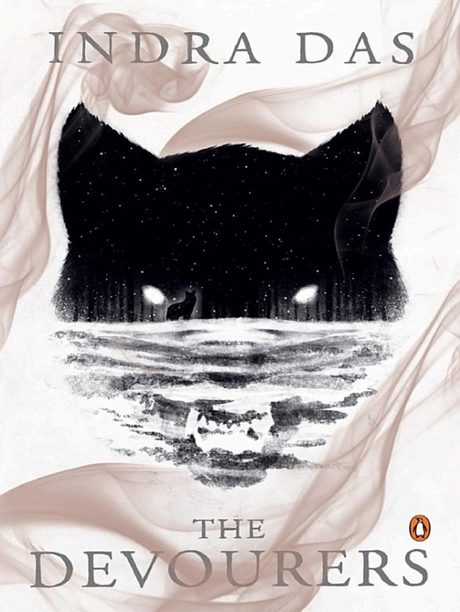
The Devourers
Indra Das2015about 396 pages
A Kolkata professor meets a stranger who says he is half werewolf, then spends months transcribing scrolls that prove it.
Alok, a history lecturer, meets a man at a baul concert who claims to be part shapeshifter and hands him old manuscripts to transcribe. The scrolls run back to Mughal era India and to European shapeshifters who came here to hunt, told partly by one of them and partly by the woman they wronged. The book is about appetite in every sense: hunger, sex, colonisation, the urge to consume a person and call it love. The Kolkata sections smell like the city. Nothing in it flinches, which is a warning as much as a recommendation.
Why it is at 13
Thirteenth for how much it demands, not for quality. The long middle section is narrated by a predator and it is a hard read on purpose, so this is the one book here I would not hand to someone casually. As Indian fantasy that owes nothing to the mythology retelling shelf, it stands alone in more ways than one. Sequel check: none.
Read it ifyou want Indian fantasy that is literary, queer and unsafe
Skip it ifyou avoid graphic sexual violence in fiction
feral, humid, gorgeousBest for: readers with a strong stomachindianshapeshiftersliterary horror
Heads up: rape, cannibalism and graphic violence, described at length
14
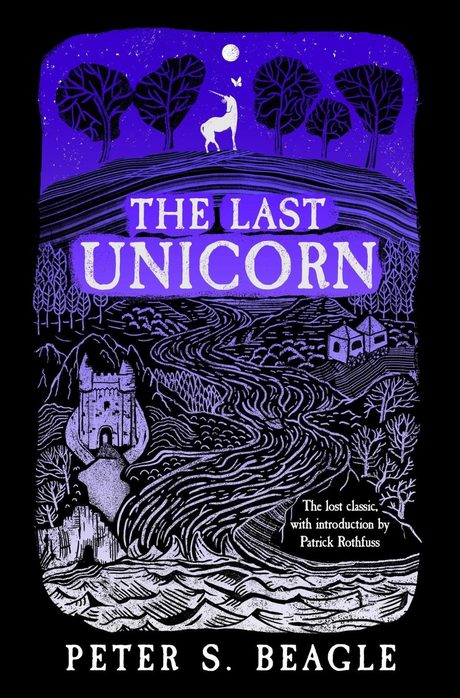
One book, one quest
The Last Unicorn
Peter S. Beagle1968about 201 pages
The last unicorn leaves her forest to find out where the others went, and picks up a second rate magician on the way.
She hears from a passing hunter that she may be the only unicorn left, so she goes looking, and gets captured, freed, and befriended by an incompetent wizard and a hard woman who has stopped expecting anything. What they find is a king, a bull, and a curse that runs on despair. Beagle wrote a quest that keeps interrupting itself to argue about quests, with characters who know they are in a story and say so, decades before that became a habit. The ending is why people carry this book around for the rest of their lives.
Why it is at 14
Last here and first in plenty of hearts. It sits at fourteen because the rhythm is 1968: readers raised on hooks tend to find the opening fifty pages wandering. Push past that and the final act does something no other book on this list attempts. Sequel check: Beagle went back once, decades later, in a single short story. The novel is whole without it.
Read it ifyou want fairy tale prose and an ending that stays with you
Skip it ifyou need modern pacing, or whimsy that turns sad upsets you
lyrical, funny, heartbreakingBest for: readers who love languageclassicquest1960s
Worth knowing
The sequel check, in plain English
Standalone is a word publishers use loosely, so here is the scale I applied. Sealed means nothing else exists in that world and nothing needs to. Companion means the author wrote another book with the same instincts and a different cast, which is what Novik did with Uprooted and Spinning Silver, and what Miller did with Circe. Side dish means a short story or collection exists in the same world without continuing the plot, which is the case for Jonathan Strange and for The Last Unicorn.
Three good books failed the test and got cut, and it is worth naming them so nobody thinks I forgot. The House in the Cerulean Sea now has a full sequel. Legends and Lattes has a prequel that came out a year after it. The Golem and the Jinni has a proper continuation. All three are still fine books, they just cannot promise you one and done, which is the only promise this page makes.
Worth knowing
A reading order if you are new to fantasy
Start with Uprooted, because the fairy tale shape does half the work of teaching you the genre. Then Circe, which will convince the part of you that thinks fantasy is for other people. Then Piranesi, once you trust a book to withhold information from you for a hundred pages. After those three you can go anywhere, but Gods of Jade and Shadow is the easiest fourth and Jonathan Strange is the hardest.
If you already read a lot and you are here because series fatigue has set in, invert it. Start at ten with The Spear Cuts Through Water, then nine, then four. Those three will remind you why the genre exists.
People also ask
Questions, answered
What is the best standalone fantasy novel?
Piranesi by Susanna Clarke, for most readers. It builds a complete world, sets up a real mystery, and finishes both in around 250 pages, so you get the full experience of a fantasy novel in the time a series would spend on its prologue. If you want something warmer and more traditional, Uprooted is the better first choice, and Circe is the one to hand a reader who claims fantasy is not for them.
Are there any good fantasy books that are not part of a series?
Plenty, they are just harder to find because publishers push series harder. Every one of the fourteen books on this page is a complete novel in one volume, ranging from under 200 pages to over a thousand. Guy Gavriel Kay has built an entire career on standalone fantasy, and Madeline Miller, Susanna Clarke and Simon Jimenez have never asked a reader to wait for a second book.
Do I need to read Uprooted before Spinning Silver?
No. They share an author and a taste for Eastern European folklore, and nothing else. Different world, different characters, different magic, no shared timeline. Read whichever cover appeals to you. If you want the easier ride, start with Uprooted, since Spinning Silver spends its first eighty pages setting up three separate narrators before it starts pulling them together.
Which of these standalone fantasy books is the shortest?
The Ocean at the End of the Lane comes in under 200 pages and can be finished in one long evening. Piranesi is next at roughly 250, and The Last Unicorn is around 200 in most editions. At the other end, Jonathan Strange and Mr Norrell runs past a thousand pages, so plan a holiday around it rather than a weeknight.
Is Circe actually fantasy?
Yes, though it wears the clothes of literary fiction. There is witchcraft, there are gods with weather changing powers, and there are monsters. What makes it read differently is the pace and the point of view: it is the interior life of one immortal woman over centuries rather than a quest with a deadline. That is exactly why it works so well on readers who avoid the fantasy shelf.
Will any of these get a sequel later?
No promises can be made about what an author does in ten years, which is why every entry above carries a sequel check based on what exists now rather than on marketing language. Books whose authors have already gone back, including The House in the Cerulean Sea and The Golem and the Jinni, were left off this list for exactly that reason.
Before you go
What to read tonight
If you only take one recommendation tonight, take Piranesi, mostly because finishing a fantasy novel in three sittings is a feeling series readers forget exists. If Piranesi sounds too strange, take Uprooted, and if you have an early start tomorrow, take The Ocean at the End of the Lane and be finished before midnight.
The useful habit after this list is checking the spine before you fall in love. Anything labelled book one of the something cycle is a commitment, and commitment is fine when you choose it on purpose. What ruins new readers is discovering the commitment on the last page, at one in the morning, with no book two in the house.
Keep going
Lists that pair with this one
Trending
14 Cozy Fantasy Books, Ranked by How Much World They Let In
Cozy is a promise about safety, not a lack of stakes, so I have sorted these by how far each book leaves the door open.
Genre
16 Fantasy Books for Beginners, Ranked by Homework
Ordered by how many names you have to hold in your head before chapter five, lightest load first.
Trending
The 15 Best Romantasy Books, Ranked by Romance to Fantasy Ratio
Fifteen books arranged from almost all romance to almost all fantasy, with an honest spice note on each, so you land in the right one first time.
Mood & Life
20 Best Short Novels Under 200 Pages, Ranked by Length
Every book here is under 200 pages in the edition we link, and the list runs shortest first, so you can pick by the hours you actually have left tonight.
Genre
14 Best Book Series to Read (And Where Each One Sags)
Fantasy, crime, historical and Indian series, each with its book count, its finished or unfinished status, and the exact volume where most readers put it down.