There is a shelf in my house of books I started and did not finish, and for about a year it was winning. The thing that fixed it was not discipline. It was a ninety-page book I read in one sitting on a Tuesday, after which I remembered that finishing something feels good, and I went and finished two more that week.
That is what this list is for. Every book here is under 200 pages in the edition we link to, and the list runs shortest first, from a fifty-seven page Kafka to a hundred and ninety-four page Khushwant Singh. So the order is not best to worst. It is fastest to slowest, and inside each entry I say where the book sits on merit as well.
Each one also carries a sitting count, one or two, based on a reading speed I have actually timed rather than one I invented. Short does not mean easy, and I have flagged the ones that are heavy going. Two books here will take more out of you than a four-hundred-page thriller.
If you have ten seconds, use the quick picks. If you have an evening, start at the top and work down until the page count matches the hours you have left.
How I picked these
- Under 200 pages in a real edition, not in theory. I used the page count of the exact edition each cover comes from, and I print that count on every entry.
- Novels and novellas only. Story collections, poetry and essay books were cut even when they were shorter, because you cannot finish those the same way you finish a novel.
- Every book checked through Google Books and Open Library with a real cover, so there are no ghost editions and no print-on-demand blanks here.
- I dropped Bonjour Tristesse, which belongs on any list like this, because the edition worth linking bundles it with a second novel and pushes the volume past 200 pages.
- Fifteen of the twenty are older than 1970, which I did not plan. Every time I tried to add something recent it turned out to be a story collection or 260 pages long.
The whole list at a glance
All 20 books, in order
| # | Book | Author | Year | Vibe | Best for |
|---|
| 1 | The Metamorphosis | Franz Kafka | 1915 | airless, funny, quietly cruel | one Sunday afternoon |
| 2 | Chess Story | Stefan Zweig | 1942 | claustrophobic, precise, sad | a long flight |
| 3 | Small Things Like These | Claire Keegan | 2021 | quiet, cold, decent | a slow winter evening |
| 4 | The Blue Umbrella | Ruskin Bond | 1974 | warm, hill-station, simple | restarting a reading habit |
| 5 | The Little Prince | Antoine de Saint-Exupery | 1943 | tender, strange, wistful | a bad week |
| 6 | Ghachar Ghochar | Vivek Shanbhag | 2013 | domestic, tense, unsettling | a weeknight |
| 7 | Ethan Frome | Edith Wharton | 1911 | frozen, doomed, exact | readers who like sad |
| 8 | Convenience Store Woman | Sayaka Murata | 2016 | deadpan, alien, funny | anyone dodging rishta questions |
| 9 | Siddhartha | Hermann Hesse | 1922 | searching, plain, calm | a quarter-life wobble |
| 10 | Of Mice and Men | John Steinbeck | 1937 | dusty, tender, brutal | reluctant readers |
| 11 | The Old Man and the Sea | Ernest Hemingway | 1952 | sunburnt, stubborn, spare | a stuck week |
| 12 | The Prime of Miss Jean Brodie | Muriel Spark | 1961 | witty, cold, Scottish | anyone with a favourite teacher |
| 13 | The Stranger | Albert Camus | 1942 | flat, sunlit, unnerving | a philosophical mood |
| 14 | Breakfast at Tiffany's | Truman Capote | 1958 | glamorous, lonely, brittle | a city night in |
| 15 | The Great Gatsby | F. Scott Fitzgerald | 1925 | glittering, hollow, sad | an old love hangover |
| 16 | The Vegetarian | Han Kang | 2007 | cold, bodily, extreme | readers who want difficult |
| 17 | Passing | Nella Larsen | 1929 | poised, coiled, ambiguous | a book club argument |
| 18 | Animal Farm | George Orwell | 1945 | clear, savage, plain | anyone following the news |
| 19 | We Have Always Lived in the Castle | Shirley Jackson | 1962 | gothic, funny, sinister | a rainy night alone |
| 20 | Train to Pakistan | Khushwant Singh | 1956 | hot, tense, unsparing | understanding 1947 |
The list
The books, ranked
1

57 pages, one sitting
The Metamorphosis
Franz Kafkatranslated by Susan Bernofsky1915about 57 pages
A salesman wakes up as an insect, and the real horror is how quickly his family adjusts to it.
Gregor Samsa wakes one morning as a giant insect, and Kafka spends almost no time on how or why. The whole book is about what happens next: the locked bedroom door, the family on the other side of it, the salary he was bringing home that has now stopped. Everyone in that flat adapts to the situation faster than you expect them to, and that is the part which stays with you. I read it on a Sunday afternoon and then sat very still for a while. The Norton edition by Susan Bernofsky moves cleanly in English, which not every Kafka translation manages.
Why it is at 1
First because it is the shortest thing here that is unarguably a novel rather than a long story, and because it is the book on this list most often quoted by people who have never opened it. Fifty-seven pages, no warm-up, no subplot. If you want to test whether a very short book can hit as hard as a fat one, start here.
Read it ifyou want a famous book you can finish before dinner
Skip it ifyou need warmth, because this family is cold and the ending offers no comfort at all
airless, funny, quietly cruelBest for: one Sunday afternoonclassicnovellatranslated
Heads up: body horror, family neglect
2
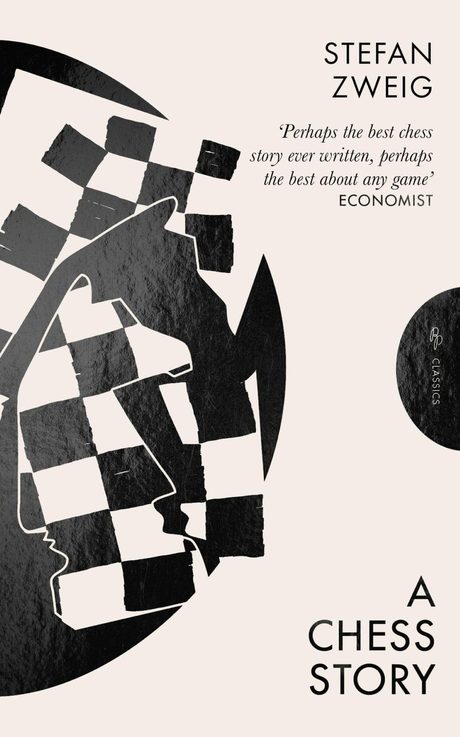
71 pages, one sitting
Chess Story
Stefan Zweig1942about 71 pages
On a liner to Buenos Aires, a world chess champion meets a man who learned the game alone in a locked room.
Two men play chess on an ocean liner. One is the reigning champion, a peasant boy with no interests outside the board and no conversation at all. The other is a Viennese lawyer who survived months of Gestapo isolation with nothing but a stolen book of chess games, which he memorised until the games began playing themselves inside his skull. Zweig wrote this in Brazil in 1941, shortly before his death, and the exile sits in every page. The tension does not come from the match. It comes from watching a mind that has already broken once being asked to do the thing that broke it.
Why it is at 2
Second on length, and a contender for the best-built story on the whole list. Zweig sets up a closed room, puts two damaged men inside it, and gets out in seventy pages without a wasted paragraph. It sits above The Blue Umbrella because it is denser: the same hour of reading gives you considerably more.
Read it ifyou like a tight psychological duel and do not need to know chess
Skip it ifyou want action, because two men at a board is the entire plot
claustrophobic, precise, sadBest for: a long flightnovellapsychologicaltranslated
Heads up: solitary confinement, mental breakdown
3

87 pages, one sitting
Small Things Like These
Claire Keegan2021about 87 pages
A coal merchant in small-town Ireland finds a girl shut in a convent coal shed and has to decide what he can afford to lose.
It is 1985 in a small Irish town and Bill Furlong sells coal and timber. He is a decent man with five daughters and a business that runs on everyone in town continuing to like him. In the weeks before Christmas he makes a delivery to the local convent and sees something he cannot unsee. Keegan is very good on ordinary work: cold hands, weather, the smell of a coal yard in December. Almost nothing happens for sixty pages, and then one small act becomes the largest thing in the book.
Why it is at 3
The best book on this list, and it happens to be the third shortest. Keegan does in eighty-seven pages what most novels need four hundred for, and she never raises her voice to do it. If you read one thing from here, read this. The only reason it is not sitting at number one is that the order is length, not quality.
Read it ifyou want a small moral story that leaves a mark
Skip it ifyou need plot momentum, because this moves at the speed of a working week
quiet, cold, decentBest for: a slow winter eveningliterarynovellaireland
Heads up: institutional abuse of women and girls, referred to rather than shown
4

under 100 pages, one sitting
The Blue Umbrella
Ruskin Bond1974
A girl in a Garhwal village trades her lucky pendant for a blue umbrella, and the whole village starts wanting it.
Binya is a hill girl who sees a blue silk umbrella belonging to a group of picnickers and wants it so badly that she hands over her leopard claw pendant for it. After that the umbrella becomes the most discussed object in the village, and the local shopkeeper decides he has to have it. Bond writes children and shopkeepers with exactly the same seriousness, which is why this still works when you are thirty. It is a story about wanting a thing, getting it, and then finding out what the wanting does to everyone around you.
Why it is at 4
The one honest gap on this list: the Rupa edition I checked prints no page count I could verify, so it is the only entry here without a number. It runs shorter than everything below it, and I have never met anyone who took more than an hour over it. It sits at four because it is the easiest possible way back in if you have not finished a book in years.
Read it ifyou want something gentle and Indian that fits inside an hour
Skip it ifyou want adult complications, because the moral arrives plainly and on time
warm, hill-station, simpleBest for: restarting a reading habitindiannovellaruskin bond
5
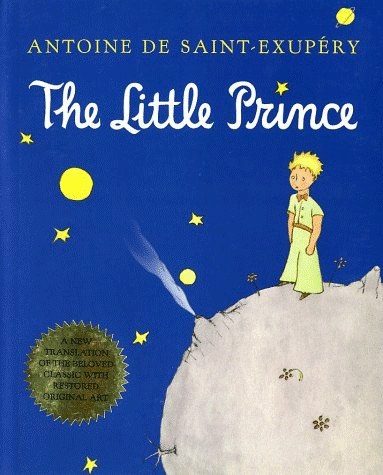
102 pages, one sitting
The Little Prince
Antoine de Saint-Exupery1943about 102 pages
A pilot crashes in the Sahara and meets a small boy from an asteroid who asks better questions than any adult in the book.
A pilot goes down in the desert with limited water and meets a child who wants a drawing of a sheep. Over the next few days the boy describes the planets he has visited and the men living on them: a king with no subjects, a businessman counting stars he believes he owns, a lamplighter who cannot stop working. Then he talks about a rose he left behind. It is written like a children's book and read mostly by adults, which tells you something about both. The famous line about seeing clearly with the heart is earned by then, not decorative.
Why it is at 5
It sits at 102 pages, which is roughly where the one-sitting books end. It is also the book here that many Indian readers have owned since school and never actually read past the drawings. Come back to it at twenty-eight and the rose chapters land somewhere completely different. Placed above Ghachar Ghochar by page count alone.
Read it ifyou want something short, kind, and secretly about loss
Skip it ifyou find whimsy tiring, because this book is whimsical by design
tender, strange, wistfulBest for: a bad weekclassicfabletranslated
6
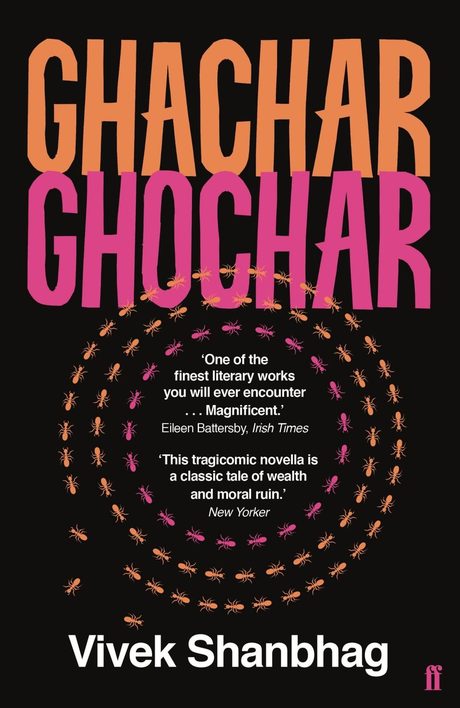
103 pages, one sitting
Ghachar Ghochar
Vivek Shanbhagtranslated by Srinath Perur2013about 103 pages
A Bangalore family comes into money fast, and the money quietly turns them into people you would not want in your house.
The narrator sits in a Bangalore coffee house talking to a waiter he treats as a kind of confessor. His family used to be poor and packed into a small house with an ant problem. Then an uncle started a spice business, money arrived, and the family closed ranks around it in ways that get uglier the longer you look at them. The title is a nonsense phrase the family uses for something tangled past fixing. Shanbhag wrote it in Kannada, and the English by Srinath Perur is among the cleanest translations from an Indian language I have read.
Why it is at 6
The best Indian novel on this list and, at 103 pages, one of the shortest. It earns its place over The Little Prince by being far harder to shake off: nothing supernatural occurs, nobody is written as a villain, and by the final page you are genuinely uneasy about a family you have spent one hour with.
Read it ifyou want an Indian novel that is short, modern and quietly menacing
Skip it ifyou need resolution, because the last page hands the whole thing back to you
domestic, tense, unsettlingBest for: a weeknightindiantranslatedkannada
Heads up: domestic violence, implied rather than shown
7
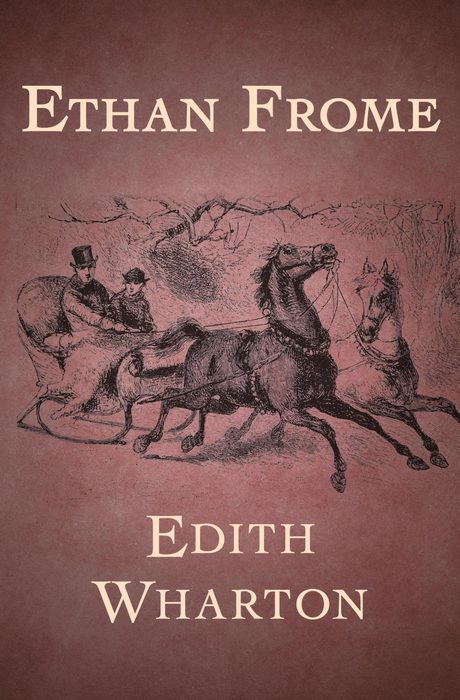
105 pages, one sitting
Ethan Frome
Edith Wharton1911about 105 pages
A failing New England farmer, a sick wife, her young cousin in the house, and one winter decision that cannot be taken back.
Ethan runs a dying farm in a Massachusetts village where winter shuts everything down for months. His wife Zeena is ill, or says she is, and her young cousin Mattie has come to help around the house. What happens between Ethan and Mattie is mostly silence and small kindnesses, which Wharton makes almost unbearable to sit through. The book opens with a narrator meeting Ethan decades later, so you know from page one that something went badly wrong, and then you watch it go wrong in slow motion.
Why it is at 7
Here for the cleanest demonstration of what a short novel can do that a long one cannot: hold a single note of dread for a hundred pages and never let you look away from it. Ranked above Convenience Store Woman on length alone. Fair warning, this is bleaker than anything sitting near it.
Read it ifyou want a short tragedy that is genuinely tragic
Skip it ifyou are already low, because there is no relief anywhere in this one
frozen, doomed, exactBest for: readers who like sadclassictragedynovella
Heads up: suicide attempt, chronic illness
8
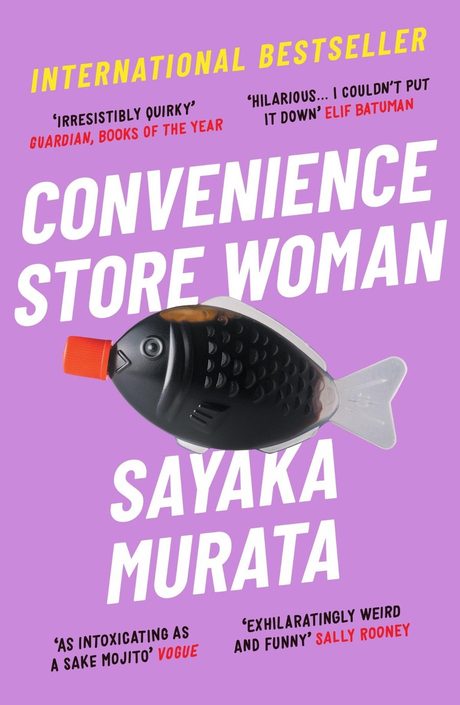
110 pages, one sitting
Convenience Store Woman
Sayaka Muratatranslated by Ginny Tapley Takemori2016about 110 pages
A woman has worked the same Tokyo convenience store for eighteen years and cannot understand why everyone treats that as a problem.
Keiko has never worked out what other people want from her. The store solves it: there is a manual, a script, a uniform, and one correct way to greet a customer walking through the door. Outside the store she is a thirty-six-year-old woman whose family and friends keep asking why there is no husband and no career, so she begins improvising a life that will pass inspection. It is funny in a flat, deadpan way for seventy pages and then turns into a real argument about how much of ourselves we perform for people who are not even watching closely.
Why it is at 8
The most contemporary book on the list and the one most likely to sound like your own family gatherings, which is why I rate it above several older novellas around it. It loses a little for a repetitive middle stretch. The last twenty pages fix that completely and go somewhere you will not predict.
Read it ifyou have ever been asked when you plan to settle down
Skip it ifyou want a character who grows in the direction you are hoping for
deadpan, alien, funnyBest for: anyone dodging rishta questionsjapanesetranslatedcontemporary
9
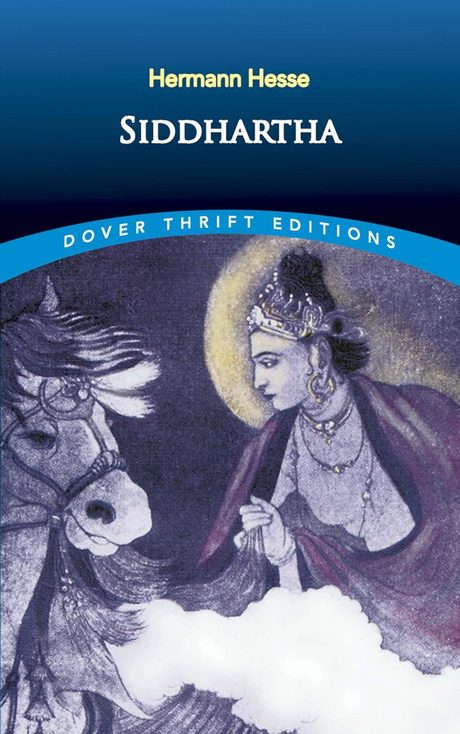
114 pages, two sittings
Siddhartha
Hermann Hesse1922about 114 pages
A Brahmin's son walks out on everything, including the Buddha himself, to learn the one thing nobody can teach him.
Siddhartha leaves his father's house, tries starving himself with a group of ascetics, meets the Buddha and politely declines to become a follower, then goes the other way entirely: money, a courtesan, appetite, and the slow rot that comes with all three. Late in the book he ends up beside a river with a ferryman and finally starts listening. Hesse was a German writing about India in 1922, so the India in these pages is a European idea of one, and the book works far better as a parable than as a portrait.
Why it is at 9
Included with a caveat. This is the most quoted spiritual novel among Indian readers in their twenties, and a good half of what people love in it is what they brought to it themselves. It sits at nine on page count, not on merit, and two or three books below it are better written. The river chapters still justify the hour.
Read it ifyou want a short book about wanting things and then not wanting them
Skip it ifyou dislike parables, or you want a real India on the page
searching, plain, calmBest for: a quarter-life wobbleclassicphilosophicaltranslated
10
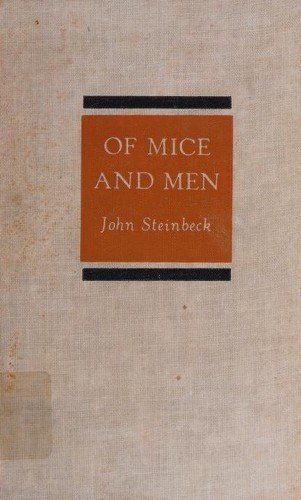
116 pages, two sittings
Of Mice and Men
John Steinbeck1937about 116 pages
Two migrant workers in California share one plan for a small farm, and one of them cannot control his own hands.
George is small and quick, Lennie is enormous and slow, and they move from ranch to ranch across Depression-era California because Lennie keeps getting them chased out of towns. Their plan is a few acres of their own, described between them so often that it works like a bedtime story. Steinbeck built it almost as a play: mostly rooms, mostly dialogue, very little scenery to get lost in. You can see the ending coming from a long way off and it does not help you at all, which is exactly the design.
Why it is at 10
The most efficient tragedy in English, and the book I hand to anyone who claims they cannot read fiction. It sits above Siddhartha because everything in it is concrete: work, wages, dogs, hands, a bunkhouse. Nothing here is symbolic in a way somebody has to teach you first.
Read it ifyou want a classic that is short, plain and completely clear
Skip it ifyou cannot take an animal death or a genuinely bleak last chapter
dusty, tender, brutalBest for: reluctant readersclassicamericannovella
Heads up: animal death, violence, racist and ableist language of the period
11
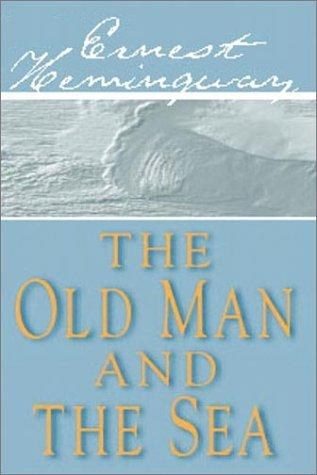
134 pages, two sittings
The Old Man and the Sea
Ernest Hemingway1952about 134 pages
An old Cuban fisherman who has caught nothing for eighty-four days hooks a marlin bigger than his boat.
Santiago has gone eighty-four days without a fish, the boy who used to crew with him has been moved to a luckier boat, and he rows out much further than anybody sensible would. What follows is one man alone with a fish he cannot see, for days, talking to himself and to his own cramping hands. The sentences are short and repeated on purpose. Whether that reads as hypnotic or as a famous writer performing depends entirely on your mood, and I have felt both about this book inside the same year.
Why it is at 11
Ranked here on length, and included because the final thirty pages are as good as anything on this list. Be honest with yourself about the middle, though: there is a long stretch of rope, sun and cramp that some readers find meditative and others find dull. Both reactions are correct.
Read it ifyou want a famous short classic and can sit still inside slowness
Skip it ifyou need dialogue and other characters, because it is one man and a fish
sunburnt, stubborn, spareBest for: a stuck weekclassicamericansea
12
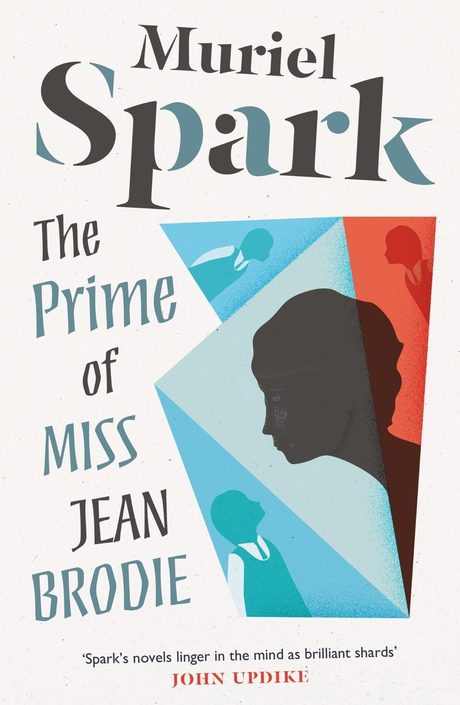
144 pages, two sittings
The Prime of Miss Jean Brodie
Muriel Spark1961about 144 pages
A magnetic Edinburgh teacher picks six favourite girls and shapes them, and the book tells you early that one of them will betray her.
Miss Jean Brodie teaches at a girls' school in 1930s Edinburgh and considers herself to be in her prime. She selects six students, tells them about art and Italy and her own love life, and hands them opinions she has no business handing to children. Spark reveals early which girl does the betraying, then keeps jumping forward and back in time so you spend the whole book watching for it. The tone is light and the content is not: this is a story about influence, and about how flattering it feels to be chosen by someone impressive.
Why it is at 12
The sharpest sentences on the list. Spark is funny in a way that keeps turning cold on you, and the time-jumping structure achieves more in 144 pages than most novels do in four hundred. It sits above The Stranger by page count only. On writing alone I would put it in the top three here.
Read it ifyou want wit with a knife behind it
Skip it ifyou need a straight timeline, because this one jumps decades mid-paragraph
witty, cold, ScottishBest for: anyone with a favourite teacherclassicschoolsatire
13
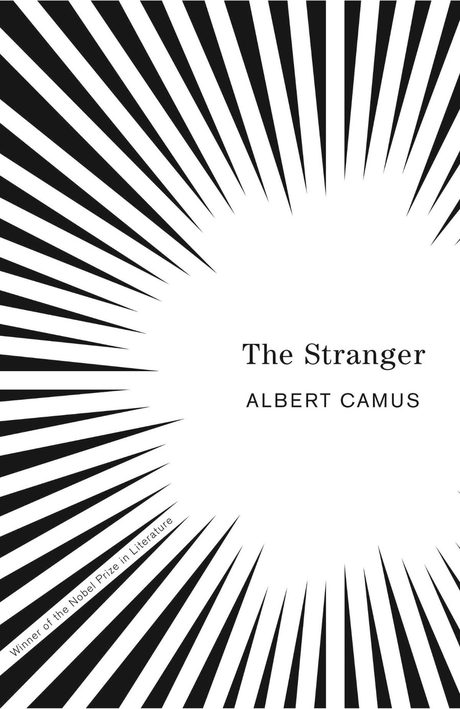
145 pages, two sittings
The Stranger
Albert Camustranslated by Matthew Ward1942about 145 pages
A man does not cry at his mother's funeral, kills a stranger on a beach, and is condemned largely for the first thing.
Meursault gets a telegram saying his mother has died, attends the funeral without visible grief, goes swimming the next day, and later shoots a man on a beach in Algiers under a sun the book will not stop mentioning. His trial spends more time on his behaviour at that funeral than on the killing itself. Camus writes in short flat sentences that hold you at arm's length from a narrator already at arm's length from himself. The Matthew Ward translation is the one to get, because older English versions smooth him out into something more polite.
Why it is at 13
Placed here on length, though it deserves the attention it gets. It is the book on this list most often misread as cool detachment when it is closer to a portrait of a man who cannot lie, including to himself, and who dies for that. Read the last four pages twice.
Read it ifyou want the famous existential novel and only have one evening
Skip it ifyou need a narrator you can actually warm to
flat, sunlit, unnervingBest for: a philosophical moodclassicfrenchtranslated
Heads up: murder, and a colonial-era framing of the victim that the book never examines
14
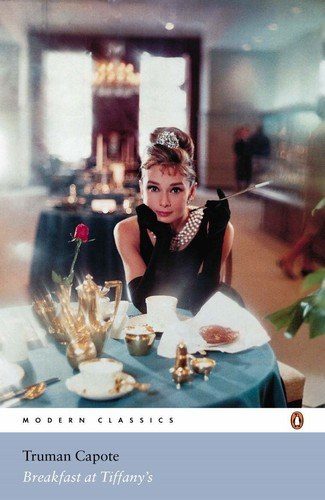
157 pages, two sittings
Breakfast at Tiffany's
Truman Capote1958about 157 pages
Holly Golightly is not the Audrey Hepburn version, and the book is sadder, harder and better than the film.
A young writer in a New York brownstone becomes fascinated by his neighbour, a woman who takes money from men, keeps a cat she refuses to name, and calls her worst days the mean reds. He loves her without ever quite entering her story. Capote's Holly is nineteen, running from something very specific in her past, and considerably tougher than the film allows her to be. This Penguin edition also carries three stories, of which House of Flowers is worth your time. The ending is not the one you have seen on screen.
Why it is at 14
Included partly to correct the film. If you know Holly only from the poster on somebody's hostel wall, the book will rearrange her for you in two hours flat. It ranks below The Stranger on page count and below Spark on sentences, but it is the most sociable book here, the one you can read with the television on.
Read it ifyou liked the film and want the character it left out
Skip it ifyou are after a romance, because this is a story about somebody leaving
glamorous, lonely, brittleBest for: a city night inclassicamericannovella
Heads up: dated language and attitudes of the 1950s
15
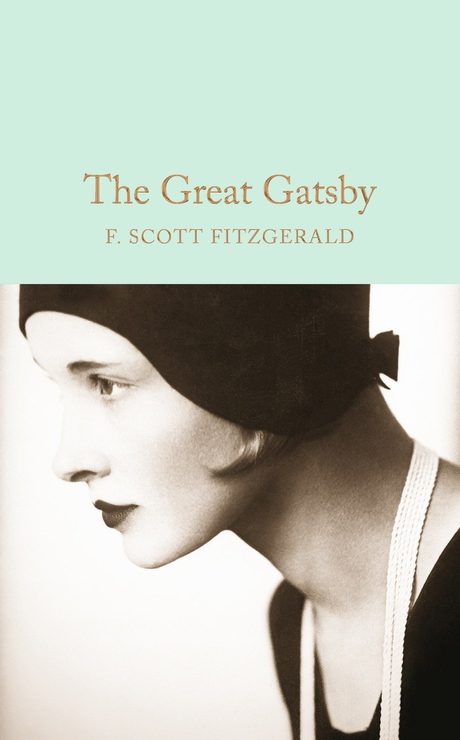
160 pages, two sittings
The Great Gatsby
F. Scott Fitzgerald1925about 160 pages
A man buys a mansion across the water from the woman he lost and throws parties until she notices him.
Nick Carraway rents a small house on Long Island beside an enormous one belonging to Jay Gatsby, who throws parties for hundreds of people he has never met. Gatsby has money nobody can account for and exactly one purpose: Daisy, married, living across the bay with a rich husband who is openly awful to everyone. The plot is thin on purpose. What carries the book is Nick's voice, and the closing page is the most famous ending in American fiction because the previous 159 pages actually earn it.
Why it is at 15
It sits at 160 pages, which surprises people who remember it as a big book from school. The reason to read it now, at whatever age you are, is that it is about wanting an older version of your life back, and that hurts more each year. My caveat: the party chapters in the middle drag if you are not in the mood for them.
Read it ifyou want the American classic and have one long evening free
Skip it ifyou want likeable people, because almost nobody here qualifies
glittering, hollow, sadBest for: an old love hangoverclassicamericanjazz age
16

160 pages, two sittings
The Vegetarian
Han Kangtranslated by Deborah Smith2007about 160 pages
A Korean woman stops eating meat after a dream, and her family treats that decision as an act of war.
Yeong-hye has a violent dream and decides to stop eating meat. That is the entire trigger. The book comes in three parts, narrated by her husband, her brother-in-law and her sister, and she never gets to tell her own story, which is the whole point of the design. Her family's response escalates from irritation to force. It is a book about a woman withdrawing consent from everything, food, sex, speech, her own body, and about the people who cannot allow her to do it. The middle section is the most uncomfortable stretch of reading on this list.
Why it is at 16
Ranked here on length, and included because nothing else this short does anything remotely like it. Fair warning: this is the least pleasant book on the list by a distance and I would not hand it to somebody looking for an easy evening. If you can take it, you will not forget it.
Read it ifyou want something strange, formally clever and genuinely disturbing
Skip it ifyou are sensitive to disordered eating, assault or force-feeding
cold, bodily, extremeBest for: readers who want difficultkoreantranslatedliterary
Heads up: sexual assault, self-harm, disordered eating, force-feeding
17
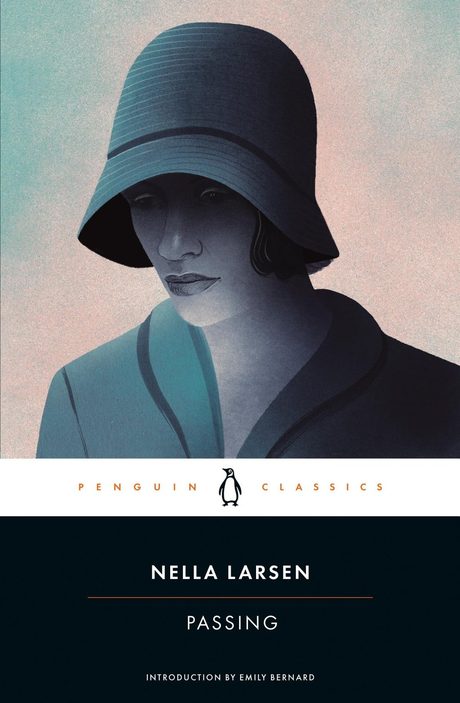
161 pages, two sittings
Passing
Nella Larsen1929about 161 pages
Two childhood friends meet again in 1920s Harlem, and one of them has spent years living as a white woman.
Irene and Clare grew up together in Chicago. Irene is now a respectable Harlem wife who passes for white occasionally, when it is convenient in a hotel tea room. Clare has passed permanently and married a white man who does not know, and who says racist things at his own dinner table while she sits there. Clare starts coming back to Harlem, pulled by the thing she gave up, and Irene cannot work out whether she is jealous, frightened or attracted. Larsen writes in a clipped drawing-room style that hides how much pressure is building underneath it.
Why it is at 17
The most underrated book here. A 1929 novel that reads as though it were written last year, and it says more about class, ambition and marriage in 160 pages than most new fiction manages at twice the length. It sits at seventeen on page count. If you want the biggest surprise of the twenty, this is the one.
Read it ifyou want a short classic that feels startlingly modern
Skip it ifyou want the ending spelled out, because the final scene is deliberately unresolved
poised, coiled, ambiguousBest for: a book club argumentclassicharlem renaissancenovella
Heads up: racism and racial slurs spoken by characters
18
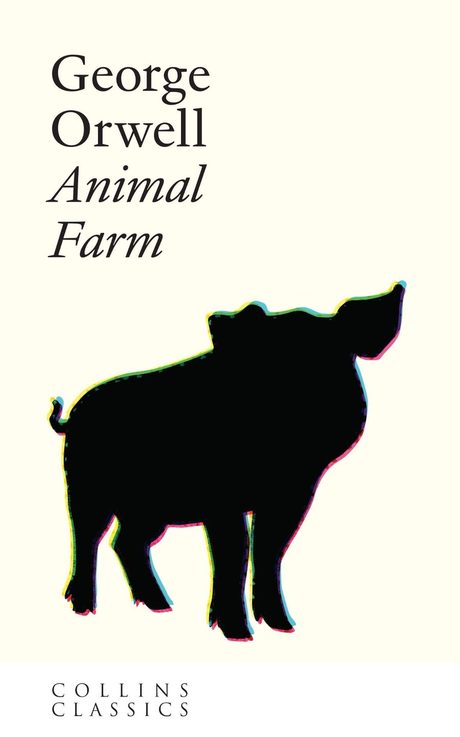
161 pages, two sittings
Animal Farm
George Orwell1945about 161 pages
Farm animals throw out the farmer and rebuild the same system with different faces at the top of it.
The animals of Manor Farm drive out their drunk owner and set up their own society with seven commandments painted on the barn wall. The pigs take charge of the thinking, the carthorse takes charge of the work, and the commandments start getting quietly edited overnight. Orwell wrote it about Stalin's Soviet Union, but nothing in it stays in 1945: any reader in any country will finish it able to name real people for most of the animals. The Collins edition runs 161 pages with generous margins, so it goes faster than that number suggests.
Why it is at 18
Here because it is the most reread book on this list and the one that changes as you do. At sixteen it is a story about pigs. At thirty it is about the last time you watched a group you believed in start rewriting its own rules and daring you to remember the earlier version.
Read it ifyou want political writing that never once lectures you
Skip it ifyou want subtlety, because the allegory is deliberately unsubtle
clear, savage, plainBest for: anyone following the newsclassicsatirepolitical
Heads up: animal cruelty, executions
19
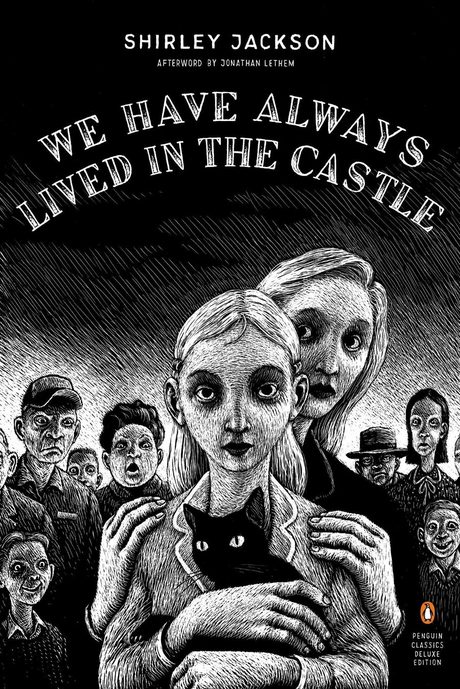
162 pages, two sittings
We Have Always Lived in the Castle
Shirley Jackson1962about 162 pages
Two sisters live alone in a big house after most of their family died at dinner, and the village has opinions about it.
Merricat is eighteen, lives with her older sister Constance and their frail uncle, and does the weekly shopping in a village that hates all three of them. Six years earlier most of the family died of arsenic in the sugar bowl. Constance was tried and acquitted. Merricat narrates, and she is one of the great untrustworthy voices in fiction: superstitious, funny, fiercely protective and clearly capable of anything at all. Jackson makes a domestic routine feel like a spell being maintained daily, then sends a cousin to the front door to break it.
Why it is at 19
The best atmosphere of any book here and the one most likely to keep you reading past the point where you should have slept. It ranks nineteenth on page count only. If you want the reading experience closest to a horror film without much actual horror in it, take this over anything else on the list.
Read it ifyou want gothic strangeness with a narrator you cannot trust
Skip it ifyou need a clean explanation at the end, because you are not getting one
gothic, funny, sinisterBest for: a rainy night alonegothicclassicunreliable narrator
Heads up: poisoning, family deaths, mob violence
20

194 pages, two sittings
Train to Pakistan
Khushwant Singh1956about 194 pages
In a Punjab village where Sikhs and Muslims have always lived together, a train arrives from Pakistan carrying the dead.
Mano Majra is a small village sitting on the new border, and through the summer of 1947 it has stayed mostly untouched by what is happening elsewhere. Then a train pulls in loaded with bodies and the village has to decide what kind of place it actually is. Singh moves between a village strongman in love with a Muslim girl, a nervous magistrate, and a young communist who has read a great deal and understood very little of it. The prose is unfussy and almost reportorial, which is what makes the final thirty pages so hard to get through.
Why it is at 20
Last because it is the longest, and first in importance if you are Indian. It is the shortest serious novel about Partition and it lets nobody off: not the British, not either community, not the educated men who talk while other people act. If you want to understand 1947, start here rather than with a seven-hundred-page history.
Read it ifyou want the essential Partition novel and can take the violence in it
Skip it ifyou want hope, because the book withholds it on purpose
hot, tense, unsparingBest for: understanding 1947indianpartitionclassic
Heads up: communal violence, sexual violence, massacres
Worth knowing
How the sitting count works
Every entry carries a label like 87 pages, one sitting. A sitting here means about two hours of reading in a chair without picking up your phone, which at a relaxed and unhurried fifty-five pages an hour comes to roughly 110 pages. So anything under 110 is a one-sitting book, and anything from 110 to 200 is two.
Your speed will differ, and the count is not a challenge. Translated prose and older sentences slow most people down, so The Stranger at 145 pages can take longer than Passing at 161. Treat the label as a way to match a book to the evening you have, not as a target to beat.
Worth knowing
About those page counts
Page counts are a property of the edition, not of the book. The same novel can run 120 pages in one printing and 190 in another, depending on the type size and whether the publisher has added an introduction, notes and a reading group guide. Every number on this list comes from the specific edition whose cover you can see beside it, which is also the edition the buy and borrow links point at.
One entry has no number. The Rupa edition of The Blue Umbrella did not report a page count I could confirm, so rather than invent one I have said under 100 pages and left it there. If you buy a different printing of anything here, expect the count to move by ten or twenty pages either way.
People also ask
Questions, answered
What is the best short novel under 200 pages?
Small Things Like These by Claire Keegan, at 87 pages. It is the one book here that does not feel short while you are inside it, and it lands harder than novels five times its length. If you want something Indian instead, Ghachar Ghochar at 103 pages is the pick, and if you want the famous option, The Great Gatsby is only 160 pages.
How long does it take to read a 150-page book?
Roughly three hours at a relaxed pace of about fifty-five pages an hour, so one long evening or two ordinary ones. Older and translated prose runs slower, so budget four hours for Camus or Hesse and closer to two for Steinbeck or Bond. If you read on a commute, 150 pages is about a week of local train rides each way.
Is a novella the same thing as a short novel?
Roughly, yes, and the line is drawn by publishers rather than by any rule. Most people call something a novella under about 40,000 words and a short novel above that. Of Mice and Men and The Metamorphosis get called both, depending on who is printing them. Nothing on this list changes based on which word you use, so I have not fussed about it.
Which short novel should I read first if I have not finished a book in years?
The Blue Umbrella by Ruskin Bond. It is under a hundred pages, the sentences are plain, and there is nothing in it you need background knowledge to follow. After that go to Of Mice and Men, which is just as clear but hits far harder. Avoid starting with The Vegetarian or Ethan Frome, because both are heavy going and can put you off again.
Are short novels easier to read than long ones?
Shorter, not easier. A short novel usually has less padding, which means fewer pages where you can drift and still follow the plot. The Vegetarian and Ethan Frome are both around a hundred and fifty pages and both ask more of you than a five-hundred-page thriller would. The advantage of short is that you finish, and finishing is what restarts a reading habit.
What is the shortest classic novel on this list?
The Metamorphosis by Franz Kafka at 57 pages in the Norton edition, followed by Chess Story by Stefan Zweig at 71. Both are complete works rather than extracts, and both can be done in a single evening. If you count The Blue Umbrella, which prints no page count, that one is probably shorter still than the Zweig.
Before you go
What to read tonight
If it is nine in the evening and you want to finish something before you sleep, pick Small Things Like These and give it ninety minutes. If it is a Sunday afternoon and you want to feel clever, take The Metamorphosis. If you have been telling yourself for two years that you used to read, start with The Blue Umbrella tonight and Of Mice and Men tomorrow, in that order, because the first one gives you the win and the second one gives you the reason.
Once you have done three of these, something changes. A 400-page novel stops looking like a wall and starts looking like four of these stacked up, which it is. That is the actual point of a list like this: not to keep you reading short books, but to remind you that you can finish.
Keep going
Lists that pair with this one
Mood & Life
18 Books for People Who Don't Like Reading (Short and Fast)
Sorted by how much of your evening they ask for, starting with books you can finish tonight.
Mood & Life
Classic Books for Beginners: 21 Ranked Easiest to Hardest
Twenty one classics arranged on a four rung ladder, easiest first, so you finish the first one instead of abandoning it at page thirty.
Mood & Life
16 Best Books for Long Flights and Train Journeys, by Hours
Every book here is timed: roughly how many hours it fills, and how well it survives being put down for the meal trolley.
Indian Fiction
The 20 Best Indian Books in Translation, Ranked by Where to Start
Twenty books from ten Indian languages, ordered from the easiest way in to the one that will fight you, with the translator named every time.
Mood & Life
20 Unputdownable Books, Ranked by the Engine That Hooks You
I ranked these on one thing: how hard each book made it to stop reading, and which mechanic does the pulling.