There is a moment in almost every Bollywood biography where you can feel a lawyer walk into the room. The sentences get longer, the verbs go soft, a shouting match on set becomes a creative difference, and a man who made everyone's life miserable for six months is now remembered as somebody with high standards. I have read enough of these to spot the exact paragraph where it happens.
That moment is what this list is built on. Every book about Hindi cinema pays for its material in one of four ways. The writer reports it without permission, or the subject cooperates and quietly edits, or the star writes it himself, or the writer builds the whole thing out of the archive and the films. Each route buys something and costs something. Access buys detail and costs candour. Distance buys honesty and costs the small human things only the subject can hand you.
So each of these fifteen carries a label for how it was paid for, and the ranking is how much you learn once you account for the bill. Reported books mostly sit near the top and star memoirs near the bottom, with one loud exception in each direction. This is for people who love Hindi films and are tired of coffee table books. If you only came for gossip, three of these will do it and I have said which.
How I picked these
- Four labels, one question: who paid for the access. Reported, authorised, own voice, or archive. Every entry says which one it is.
- Fan service got cut. If a book exists mainly to tell you a star is wonderful, it is not here, whoever the star is.
- Every title was checked through Google Books and Open Library and had to have a real, buyable edition with a real cover. Four books I badly wanted did not clear that bar, and I have named them in a section below instead of pretending they were never in the running.
- Craft and history count as much as stardom. Two of the top four are about how films actually got made rather than who was in them.
- No picture books. They are lovely, they cost three thousand rupees, and they tell you nothing you cannot see in a still.
The whole list at a glance
All 15 books, in order
| # | Book | Author | Year | Vibe | Best for |
|---|
| 1 | Sholay: The Making of a Classic | Anupama Chopra | 2000 | reported, brisk, unsentimental | anyone who has seen Sholay |
| 2 | Guru Dutt: A Life in Cinema | Nasreen Munni Kabir | 1996 | careful, close, elegiac | fans of fifties Hindi cinema |
| 3 | Talking Films | Nasreen Munni Kabir | 1999 | talkative, sharp, practical | writers and screenwriting students |
| 4 | Bombay Cinema: An Archive of the City | Ranjani Mazumdar | 2007 | theoretical, original, demanding | film students and city nerds |
| 5 | King of Bollywood | Anupama Chopra | 2007 | reported, readable, outward facing | SRK fans and industry watchers |
| 6 | Conversations with Waheeda Rehman | Nasreen Munni Kabir | 2014 | quiet, dry, dignified | fans of fifties and sixties cinema |
| 7 | Rekha: The Untold Story | Yasser Usman | 2016 | sad, sharp, archival | readers curious about film journalism |
| 8 | Bollywood: A History | Mihir Bose | 2006 | broad, journalistic, quick | beginners who want the arc |
| 9 | Yash Chopra: Fifty Years in Indian Cinema | Rachel Dwyer | 2002 | scholarly, fond, film literate | readers who love Yash Chopra films |
| 10 | Jaane Bhi Do Yaaro | Jai Arjun Singh | 2010 | affectionate, scrappy, specific | cult comedy fans |
| 11 | Khullam Khulla: Rishi Kapoor Uncensored | Rishi Kapoor | 2017 | blunt, gossipy, self aware | readers who want candour |
| 12 | Sanjay Dutt: The Crazy Untold Story of Bollywood's Bad Boy | Yasser Usman | 2018 | chaotic, sober, documented | readers who like reported biographies |
| 13 | An Unsuitable Boy | Karan Johar | 2017 | chatty, vulnerable, guarded | readers who follow film gossip |
| 14 | Romancing with Life | Dev Anand | 2007 | vain, warm, unstoppable | fans of golden age cinema |
| 15 | Bollybook: The Big Book of Hindi Movie Trivia | Diptakirti Chaudhuri | 2014 | fun, digressive, obsessive | trivia arguers |
The list
The books, ranked
1

Reported, with access
Sholay: The Making of a Classic
Anupama Chopra2000about 214 pages
How a three hour curry western got made, nearly died in its opening fortnight, and turned into the film every Indian can quote.
Chopra went back to almost everyone still alive and rebuilt the making of Sholay: the script sessions with Salim and Javed, the casting arguments, the years of scattered schedules at Ramanagara where a whole village was constructed for the shoot. The best parts are the failures. The trade reaction after release, the sniffy reviews, the producers watching an enormous budget sit in half empty halls while nobody said the obvious. Then word of mouth turns, and the book becomes about how a country adopts a film and keeps it.
Why it is at 1
Number one because it is the best reported book about Hindi cinema and it teaches you more per page than anything else here. Chopra had full access and did not spend it on flattery, which is rare enough to be the entire point of this list. Read it, then watch the film again with the making running in your head. It is a different film after this.
Read it ifyou want to see how a huge Hindi film actually gets made
Skip it ifyou have somehow never seen Sholay, because it assumes you have
reported, brisk, unsentimentalBest for: anyone who has seen Sholaysholaymaking of1970s
2

Archive and interviews
Guru Dutt: A Life in Cinema
Nasreen Munni Kabir1996about 200 pages
The clearest account of the director behind Pyaasa and Kaagaz Ke Phool, built from the films themselves and from the people who stood next to him.
Kabir moves through Guru Dutt's career film by film, using long interviews with his collaborators, his cameraman, his writers and his family, along with close attention to what is actually on screen. You get the behaviour of light in Pyaasa, the commercial failure of Kaagaz Ke Phool and what that failure did to a man who had bet everything on it, the studio economics of the fifties, and a life that ended before forty. She refuses the tragic genius shorthand everybody else reaches for, and the sad parts land harder for it.
Why it is at 2
Second because it does what most Indian film books cannot: it explains how the films were made instead of who the maker was sleeping with. Kabir has spent a career interviewing this industry properly and it shows in the quality of what people tell her. It sits below Sholay only because it is an older, quieter book that can be hard to find in a cheap edition.
Read it ifyou want a director's work explained by someone who studied the frames
Skip it ifyou came for scandal, since she stays firmly with the work
careful, close, elegiacBest for: fans of fifties Hindi cinemaguru dutt1950scraft
Heads up: his early death, and the depression of his last years, are discussed directly
3
Own voice, in interview
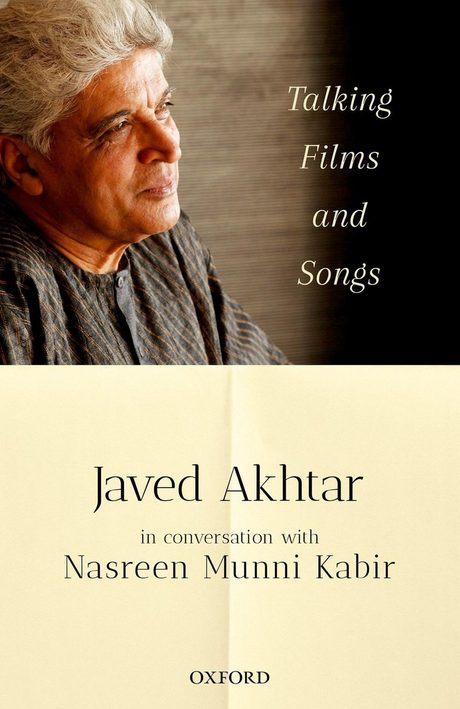
Talking Films
Nasreen Munni Kabir1999about 196 pages
Javed Akhtar at length on how Hindi film scripts are actually built, and on the partnership that wrote Sholay, Deewaar and Don.
This is one long interview, edited into a book, with the screenwriter who was half of Salim and Javed. Akhtar is among the best talkers in India and he spends it here on mechanics: why a Hindi film scene needs a turn every few minutes, how the angry young man of the seventies was assembled out of the mood of the country, what a lyricist actually does when handed a tune that already exists. He is candid about the end of the partnership and about his drinking years. Current editions bundle a second conversation about songs.
Why it is at 3
Third, and the highest craft pick, because nothing else in English explains as well how a mainstream Hindi film gets written. Half the screenwriters I have met in Mumbai quote this book without knowing they are quoting it. Being an interview, it inherits interview limits: he answers what he is asked, and nobody in the room is checking a claim while he makes it.
Read it ifyou write, or you want to know why Hindi films are shaped the way they are
Skip it ifyou want a biography, because this stays on the work
talkative, sharp, practicalBest for: writers and screenwriting studentsscreenwritingjaved akhtarcraft
4
Archive, academic
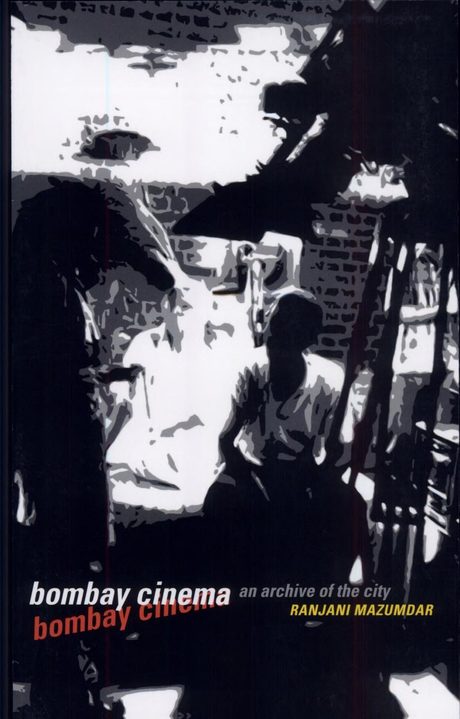
Bombay Cinema: An Archive of the City
Ranjani Mazumdar2007about 306 pages
A scholar reads Hindi cinema as a record of Bombay, and it will change what you notice in the very next film you watch.
Mazumdar looks at how the city keeps showing up on screen: the angry young man of the seventies as the product of a specific urban crisis, the enormous glossy interiors of nineties family films and what they were quietly selling, the street, the tapori, the skyline shot that stands in for having arrived. It is a university press book and reads like one, with theory in the joints. Push through that and it does something nothing else here manages, which is to hand you a way of seeing rather than a bag of stories.
Why it is at 4
Fourth because it is the only book on this list that permanently changes how you watch. The cost is the prose, written for a seminar room, with paragraphs you will read twice. If you can take that, it repays more than any biography here. If academic writing makes you itch, go to number five and come back to this in a year, when the itch has passed.
Read it ifyou like film theory and want Bombay read as a text
Skip it ifacademic prose sends you to sleep, because there is plenty of it
theoretical, original, demandingBest for: film students and city nerdsfilm studiesmumbaitheory
5
Reported, with access
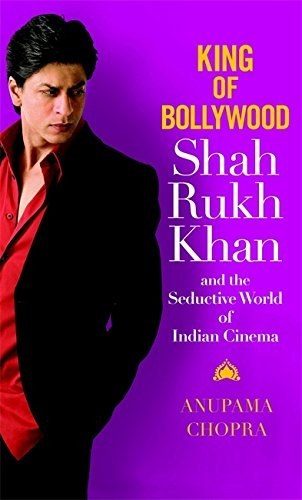
King of Bollywood
Anupama Chopra2007about 133 pages
Shah Rukh Khan from a middle class Delhi flat to the biggest film star in the world, reported by someone who kept her distance.
Chopra tells the story with the industry built around it: a Delhi boy with no film family and both parents gone early, the television years, the run of romances that made him, and a studio system that reorganised itself around one man's face. It was written for an American publisher, so it stops to explain things an Indian reader already knows, which slows the middle. What saves it is the reporting on how star power actually gets built, priced and defended in a business that has almost no formal structure.
Why it is at 5
Fifth because it is the best biography here of a living star and one of the few written with access that keeps a sceptical eye open. It ranks below the craft books because much of it will be familiar if you grew up in India, and because the last two decades of that career are simply not in it. As a study of manufactured stardom, it holds up well.
Read it ifyou want the making of a superstar with the business shown
Skip it ifyou already know the Shah Rukh story beat by beat
reported, readable, outward facingBest for: SRK fans and industry watchersshah rukh khanstardom1990s
6
Own voice, in interview
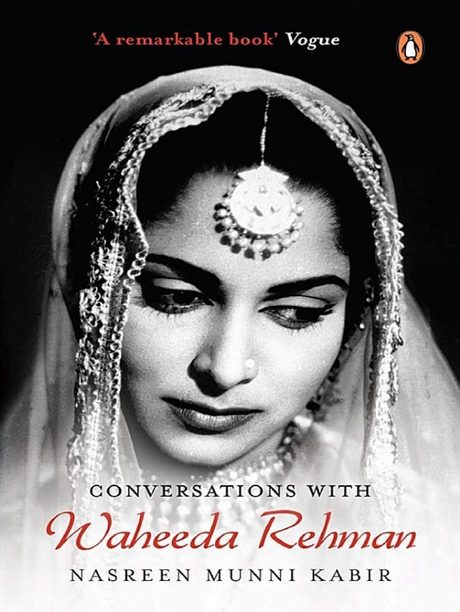
Conversations with Waheeda Rehman
Nasreen Munni Kabir2014about 216 pages
The most private of the great actresses agrees to sit down and talk, and what comes out is quiet, funny and free of self pity.
Waheeda Rehman worked with Guru Dutt on Pyaasa and Kaagaz Ke Phool, with Vijay Anand on Guide, and then spent decades declining to explain herself in public. Kabir got her talking about the work: how a shot was set up, what a director asked for, how a young woman in the fifties negotiated a contract and a reputation at the same time and in the same room. She refuses to be dramatic about any of it. The book is short, plainly transcribed, and the restraint is most of the pleasure.
Why it is at 6
Sixth because it is the best of the interview books after Talking Films, and because it catches a working actress on craft rather than a legend on legacy. It sits here rather than higher because she withholds a great deal. You finish knowing how she worked and very little about how she felt, which is her right and also a real limit on the book.
Read it ifyou want an actress talking about the work itself
Skip it ifyou want her private life opened up
quiet, dry, dignifiedBest for: fans of fifties and sixties cinemawaheeda rehmaninterviewsclassic
7
Archive, no cooperation
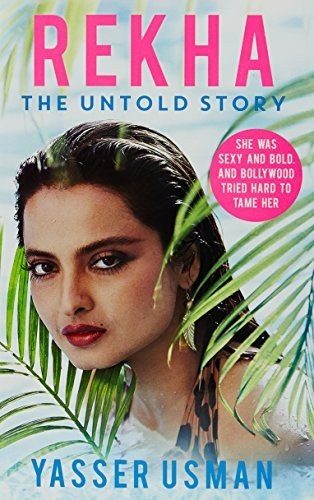
Rekha: The Untold Story
Yasser Usman2016about 256 pages
A life reassembled from decades of printed interviews about a star who stopped speaking, and better journalism than the title suggests.
Usman is a television journalist who went through the magazine archive of the seventies and eighties and rebuilt a life out of what Rekha and everyone around her said at the time. The book is built from that printed record rather than from fresh access. What he ends up with is partly the portrait of a woman who was mocked, hunted and reinvented several times over, and partly a portrait of the film press that did the hunting. The second of those is what makes the book worth your money, and he knows it.
Why it is at 7
Seventh because it is the only gossip adjacent book here that does real research, and because it becomes, almost by accident, a history of Indian film journalism at its cruellest. The caveat matters: a life told through old interviews is a life told by people who were selling magazines that week. Read it as a study of coverage, not as the last word on her.
Read it ifyou want the star system's cruelty documented rather than repeated
Skip it ifyou need the subject's own account, because she never gave one
sad, sharp, archivalBest for: readers curious about film journalismrekhastardompress
Heads up: a suicide, and sustained press harassment of a young woman
8
Reported history
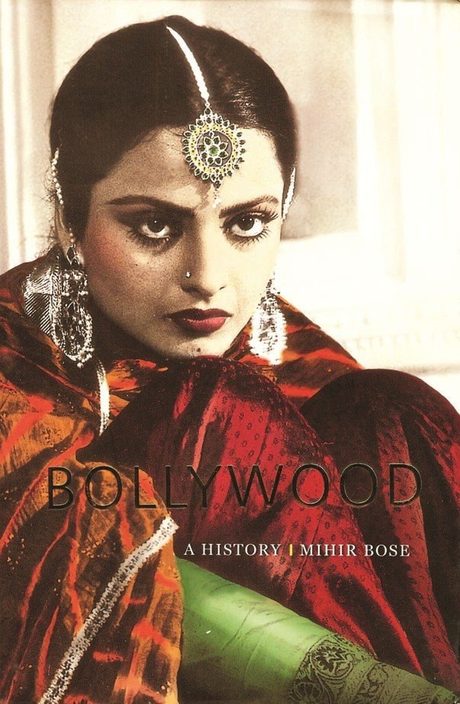
Bollywood: A History
Mihir Bose2006about 605 pages
The one volume history of Hindi cinema from the silent era to the multiplex, by a journalist who also wrote well about Indian cricket.
Bose runs the whole story: Phalke and the silents, the studio era, the arrival of sound and the careers it ended overnight, the underworld money of the eighties and nineties, then corporatisation and the multiplex. He is a British Indian journalist writing partly for a foreign reader, so the tone is explanatory and the pace is quick. Covering a century in one volume, it goes thin in places and specialists argue with some of the detail. As a first map of the territory, nothing else in English does the job this clearly.
Why it is at 8
Eighth because everybody should read one general history and this is the most readable of them, but a map is not a destination. It ranks below the specific books because breadth costs depth and you can feel that in the later chapters. Read it first if you know nothing at all, or last, once the other books have given you something for it to join together.
Read it ifyou want one book covering the whole century
Skip it ifyou want depth on a single film, star or decade
broad, journalistic, quickBest for: beginners who want the archistoryoverview
9
Authorised, academic
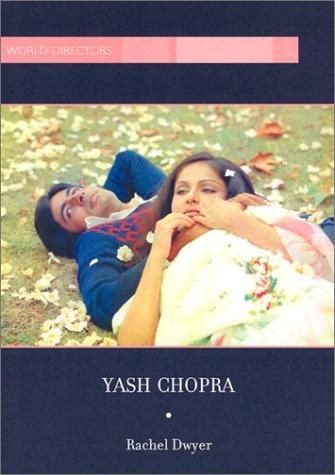
Yash Chopra: Fifty Years in Indian Cinema
Rachel Dwyer2002about 282 pages
A film scholar takes the man who defined Hindi romance seriously, treating chiffon and Switzerland as decisions rather than punchlines.
Dwyer, a British academic who has spent her career on Hindi cinema, works through Yash Chopra from the social dramas of the fifties and sixties, through Deewaar, into the romances that hardened into a house style: Kabhi Kabhie, Silsila, Chandni, Lamhe. She is interested in why the films look the way they do, what the songs are doing structurally, and how a family production house builds a brand that outlives its founder. He cooperated, so the criticism is gentle, but she is a scholar and does not simply take his word about his own work.
Why it is at 9
Ninth because it is the only serious study here of a mainstream commercial director, and because it treats the romance film as worth analysing instead of apologising for. The cost of cooperation is visible: the failures get short paragraphs and the family gets soft light. Read it for the reading of the films, not for a verdict on the man who made them.
Read it ifyou love Hindi romance and want it analysed rather than mocked
Skip it ifyou want a critical biography, because this one had his blessing
scholarly, fond, film literateBest for: readers who love Yash Chopra filmsyash chopraromancefilm studies
10
Reported, oral history
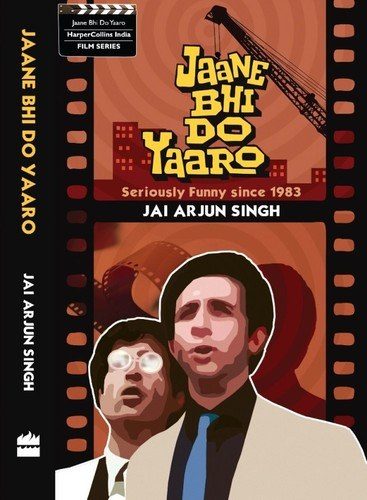
Jaane Bhi Do Yaaro
Jai Arjun Singh2010about 300 pages
The making of India's best comedy, told by the people who made it while broke, improvising, and fairly sure nobody would watch.
Kundan Shah's 1983 film about two photographers, a corpse and a Mahabharata performance that will not end has become the thing every Indian film buff quotes at parties. Singh went back to the crew and put together how it happened: a film school generation with no money, a shoot that kept inventing itself, actors who were nobodies then and household names now, and an ending that had to be argued into existence. It is slim and it is a fan's book, but it is honest about which famous stories have grown in the retelling.
Why it is at 10
Tenth because it is the second best making of book here after Sholay, and because it preserves an oral history that was about to walk out of the room. It ranks at ten because the subject is one cult film, so the audience is narrower by design. If you can quote Jaane Bhi Do Yaaro at people, this is a very happy evening.
Read it ifyou can quote the film and want to know how it survived
Skip it ifyou have not seen it, because most of the pleasure is recognition
affectionate, scrappy, specificBest for: cult comedy fansjaane bhi do yaaromaking ofcomedy
11

Own voice, unusually candid
Khullam Khulla: Rishi Kapoor Uncensored
Rishi Kapoor2017about 271 pages
The rare star memoir where the star tells on himself: the drinking, the jealousy, the years of behaving badly to people who could not answer back.
Rishi Kapoor, working with the journalist Meena Iyer, writes about growing up inside the most famous family in Hindi cinema, the odd loneliness of being Raj Kapoor's son, the run of romantic hits that followed Bobby, the long stretch when the industry moved on and he had not, and his relationship with his own son's generation. What separates it from the pack is the confessing. He is blunt about his drinking, about envying Amitabh Bachchan's rise, about being difficult on set. The prose is plain and the candour is anything but.
Why it is at 11
Eleventh, and the best star autobiography here by a wide margin, because he tells you things that make him look bad. Put it beside number thirteen or fourteen and the difference is clear inside twenty pages. It is not higher because it is a life story rather than a book about the cinema, and once you take the confessions out, what remains is a career list.
Read it ifyou want a star being honest about his own worst behaviour
Skip it ifyou want the films analysed rather than the life recounted
blunt, gossipy, self awareBest for: readers who want candourrishi kapoormemoirkapoor family
12
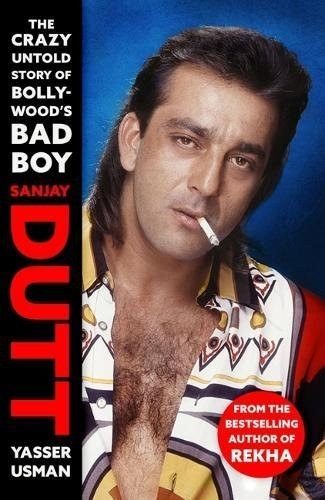
Archive, no cooperation
Sanjay Dutt: The Crazy Untold Story of Bollywood's Bad Boy
Yasser Usman2018about 256 pages
The most chaotic life in Hindi cinema reported from the record: addiction, a mother's death, and a weapons case that ran for two decades.
Usman takes the archive method he used on Rekha and turns it on Sanjay Dutt: the addiction that started around his first film, a mother who died days before that film opened, the investigation after the 1993 Bombay blasts that ended with a conviction under arms laws, prison, release, and an industry that kept casting him through all of it. He is careful with the legal facts, which matters more here than usual. What comes out is less a bad boy story than a study of how much a famous family can absorb.
Why it is at 12
Twelfth because it is sober reporting on a life usually told as either a joke or a legend, and it refuses the sneer and the redemption arc equally. It ranks below Rekha because that book accidentally became about the press, while this one stays on its subject. Read it if the film versions of this life left you suspicious, which they should have.
Read it ifyou want the legal and personal record laid out plainly
Skip it ifyou want a redemption story with a warm ending
chaotic, sober, documentedBest for: readers who like reported biographiessanjay duttbiographycrime
Heads up: drug addiction, bereavement, and a long criminal case
13
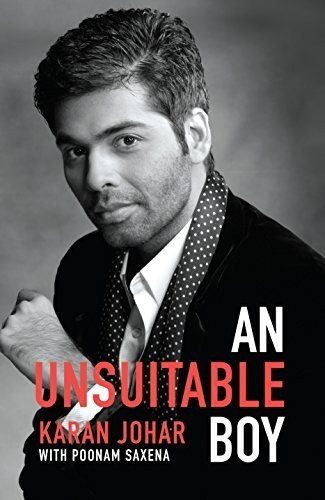
Own voice, managed
An Unsuitable Boy
Karan Johar2017about 248 pages
Bollywood's most connected insider on loneliness, therapy and privilege, stopping carefully short at every point where a name would cost him.
Johar, with Poonam Saxena, writes about being a soft, film obsessed only child in a producer's house, the making of his first films, his father's illness, therapy, depression, and a private life he discusses in outline rather than in detail. He is genuinely good on the emotional weather of the industry: who calls you after a flop and who does not, what a friendship there costs, how the nepotism argument feels from inside the house being accused. He is also carefully unspecific whenever specificity would have a price.
Why it is at 13
Thirteenth because it is honest about feelings and evasive about facts, which is a very particular kind of Bollywood book. It is likeable and it moves fast. Set beside Khullam Khulla it shows the difference between admitting to a mood and admitting to a mistake. Read it for the emotional texture of the industry rather than for information you can use.
Read it ifyou want the inside emotional weather of the film industry
Skip it ifyou want names, dates and actual admissions
chatty, vulnerable, guardedBest for: readers who follow film gossipkaran joharmemoirindustry
14
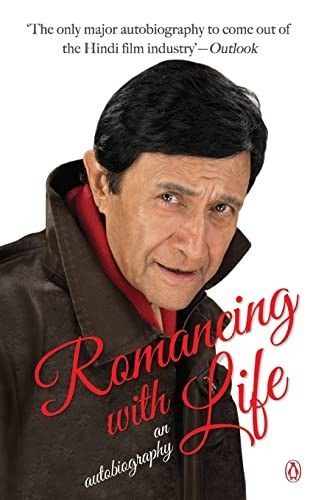
Own voice, unfiltered
Romancing with Life
Dev Anand2007about 482 pages
A star of the fifties writes his own life with no editor brave enough to stop him, and the result is oddly wonderful.
Dev Anand wrote this himself, late in life, and it reads exactly like a man talking without pausing for breath: arriving in Bombay as a young man with almost nothing, founding Navketan with his brothers, making Guide, the affairs, the flops he declines to concede were flops, the late films nobody watched that he financed anyway. Nobody has smoothed the prose and nobody has trimmed the self regard. That is the appeal. You are hearing an unmediated voice from an era every other writer here can only reconstruct.
Why it is at 14
Fourteenth on the truth axis and much higher on charm. Very little in it is checked and a fair amount is self serving, so take it as testimony rather than history. Read it next to Kabir's Guru Dutt book, which covers the same studios with discipline, and you get both halves of that decade: what it felt like from inside, and what was actually going on.
Read it ifyou want an unedited voice from the fifties and sixties
Skip it ifyou need reliability, since this is memory with nobody checking it
vain, warm, unstoppableBest for: fans of golden age cinemadev anandmemoir1950s
15
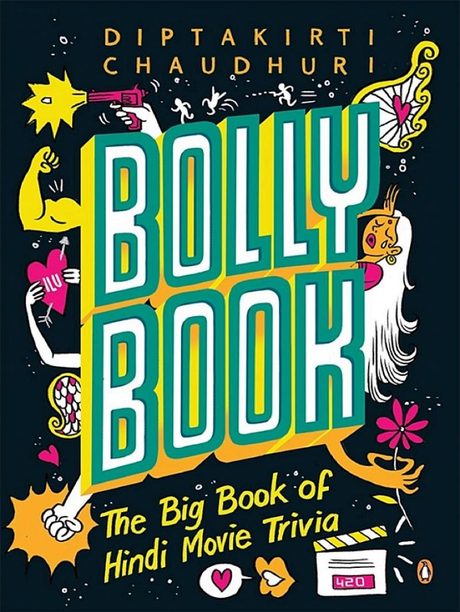
Archive, for fun
Bollybook: The Big Book of Hindi Movie Trivia
Diptakirti Chaudhuri2014about 559 pages
Lists, patterns and trivia about Hindi cinema, collected by someone who noticed the same odd things you did and then went and checked them.
Chaudhuri gathers the kind of Hindi film knowledge that usually lives inside a family WhatsApp argument: recurring character names, actors who played the same part twice, dialogue writers nobody credits, strange runs of coincidence across decades. It is organised as lists, so you can open it anywhere and read for four minutes while the rice cooks. He is a real obsessive rather than a copy and paste merchant, and where a piece of trivia is disputed he says so. There is no thesis and no attempt at one.
Why it is at 15
Last, and here because a list of Bollywood books with only serious titles on it would be dishonest about how people actually enjoy this cinema. It teaches you nothing structural, which is exactly why it is fifteenth. It is also the book most likely to be permanently borrowed by the first person who visits your house and picks it up.
Read it ifyou argue about Hindi films with friends and want ammunition
Skip it ifyou want a narrative or an argument, because these are lists
fun, digressive, obsessiveBest for: trivia arguerstriviafunreference
Worth knowing
The four ways a Bollywood book gets paid for
Reported means the writer went and found out, with or without permission, and kept the right to publish what was inconvenient. Authorised means the subject cooperated, which buys you detail and diaries and phone numbers, and costs you the chapters about the divorce and the flops. Own voice means the star wrote it, so you get the texture of the person and the version they can live with. Archive means the writer built it from old interviews, court records and the films themselves, which is honest about its distance and always missing the inside of somebody's head.
None of the four is automatically better. Sholay at number one is a book with full access that stayed honest, and Rekha at number seven is an archive job that got closer to a truth than most cooperating books manage. The label is not a verdict. It is the thing to hold in your hand while you read, so you know which silences are choices.
Worth knowing
Four books I wanted here and could not verify
Akshay Manwani's biography of Sahir Ludhianvi, Gautam Chintamani's Dark Star about Rajesh Khanna, Sidharth Bhatia's book on the Navketan studio, and Mother Maiden Mistress on women in Hindi cinema all exist and all deserve a place on a list like this. I could not confirm a current edition with a real cover through either of the two sources I check every title against, so I left them unranked rather than send you after a book you might not be able to buy.
If you find any of the four in a shop or a library, take it. This is a gap in my verification, not a judgement on the writing, and the Sahir book in particular is the one I would most like to have ranked.
Worth knowing
Why one interviewer's name keeps appearing
Three of these fifteen are by Nasreen Munni Kabir, and that is not laziness on my part. She has spent decades interviewing this industry for television and for books, and people tell her things they do not tell reporters, mostly because she asks about the work rather than about the marriage.
If you like the sound of her books, her method is the thing to follow rather than her subjects. She sits with one person for a long time, keeps her own opinions out of the transcript, and lets the craft talk do the work. In an industry that mostly produces press releases in hardback, that is the most valuable habit anyone has.
People also ask
Questions, answered
What is the best book about Bollywood?
Sholay: The Making of a Classic by Anupama Chopra, if you want one book. It is reported rather than authorised in spirit, it covers the most famous Hindi film ever made, and it shows you the whole machine: script, casting, shoot, release, failure, then the slow turn into legend. If you would rather have a general history of the industry instead of one film, read Bollywood: A History by Mihir Bose, which is at number eight here.
Which Bollywood star autobiography is actually honest?
Khullam Khulla by Rishi Kapoor, written with Meena Iyer. He is open about his drinking, about envying Amitabh Bachchan, and about treating people badly, which almost no Indian star memoir does. An Unsuitable Boy by Karan Johar is honest about emotion but careful about facts, and Romancing with Life by Dev Anand is unfiltered without being reliable. Take Rishi Kapoor first if candour is what you are after.
What should I read first if I am new to Hindi cinema?
Start with Bollywood: A History by Mihir Bose for the shape of the century, then move to one book about a film you have already seen, which will almost certainly be Sholay. After those two, pick by what you enjoy: craft takes you to Talking Films, stardom takes you to King of Bollywood, and if you want your viewing rearranged, Bombay Cinema by Ranjani Mazumdar is the one, though it asks for patience.
Are there good books on Hindi film music and lyricists?
Partly. Talking Films covers songwriting well because Javed Akhtar is a lyricist as well as a screenwriter, and current editions include a whole second conversation about songs. Akshay Manwani has written a biography of Sahir Ludhianvi that is the obvious next step, but I could not verify a buyable edition of it through my two sources, so it is not ranked here. The gap in music writing on this list is real and I would rather say so.
Is An Unsuitable Boy by Karan Johar worth reading?
Yes, if you know what it is. It is a quick, likeable book about loneliness, privilege and how the industry treats people emotionally, and Johar is genuinely open about therapy, depression and the nepotism argument. It is not a book of revelations. Wherever a specific name or incident would cost him a relationship, the account goes vague. Read it for the mood of the place, not for evidence about it.
Why are so many books about Bollywood so bad?
Because most of them are transactions. A star or a studio grants access, a publisher wants the name on the cover, and the manuscript passes through people whose job is protecting a brand that still has films to sell. What survives is a career summary with the arguments removed. The good ones on this list either had no access to lose, like the archive books, or were written by people who spent their access on the work instead of on the personality.
Before you go
What to read tonight
If you want one tonight, the choice is simple. Seen Sholay? Read Chopra and then rewatch it. Want to work in film, or write anything at all? Read Talking Films, because Javed Akhtar gives away more about structure in one interview than most craft books manage in three hundred pages.
After that, the useful habit is to read a book about a film you already love rather than about a star you already follow. The star book tells you what the star wants told. The film book has to account for hundreds of people, a budget and a release date, so it cannot make the same kind of promises. That is where the actual industry shows up on the page, in the arguments about money and the scenes that got cut.
Keep going
Lists that pair with this one
Nonfiction
16 Best Cricket Books That Survive Knowing the Result
I ranked them by how much is left once you already know who won, which is why the famous autobiographies sit at the bottom.
Indian Fiction
16 Best Books to Understand India, Ranked by What They Explain
Sixteen books, ten doors into the same country: history, caste, the mega city, the village, money, and where to start tonight.
Indian Fiction
16 Best Novels Set in Mumbai, Mapped Neighbourhood by Neighbourhood
Sixteen Bombay novels ranked by how much of the city you carry out with you, from a Worli chawl to a tower in Vakola.
Nonfiction
16 Best Books on Indian History for Beginners, in Order
Not a ranking but a route: one or two books per era, from the Indus valley to the news you read this morning.