My school history syllabus was a list of dynasties I memorised in April and forgot by June. It never told me why anybody did anything. Years later, in a flat in Ahmedabad with a Dalrymple paperback, I worked out that the East India Company was a corporation with a private army, and that the whole conquest had been a hostile takeover. That was the first time Indian history felt like a story instead of a syllabus.
Most lists of Indian history books rank them by how good they are, which is no help at all if you are starting from zero. A brilliant book about the Deccan sultanates makes a terrible first book. So this is a route rather than a ranking. It runs in the order the history happened, one or two books per era, and you read it front to back the way you would watch a series.
One exception sits at the top. Number one is not the oldest book, it is the map, and reading it first gives every later book somewhere to sit. I have also marked which books are contested and by whom, because Indian history is an ongoing argument rather than a settled record, and a beginner deserves to know where the fights are.
Sixteen books is a two-year project at a normal human pace, and nobody is checking on you. Read the first four and you already know more than most people in the room.
How I picked these
- One book per era, mostly. Where I broke that rule, and the stretch from 1739 to 1947 gets five books, it is because that is where modern India was decided and no single volume holds it.
- Readable over authoritative whenever I had to choose. I left out R S Sharma's India's Ancient Past on purpose: it is a syllabus in a cover, and syllabi are how people quit history.
- Every book verified through Google Books and Open Library, so the editions and covers here are real ones you can buy or borrow.
- Contested books stay in, labelled. Freedom at Midnight and The Discovery of India both have real problems as history, and both are worth reading once you know what you are holding.
- I cut White Mughals to keep the Dalrymple count to two, and I cut Indian Summer because three Partition books already felt like a lot for a beginner.
The whole list at a glance
All 16 books, in order
| # | Book | Author | Year | Vibe | Best for |
|---|
| 1 | Land of the Seven Rivers | Sanjeev Sanyal | 2012 | brisk, curious, opinionated | absolute beginners |
| 2 | Early India | Romila Thapar | 2002 | careful, sceptical, dense | readers who want the scholarly baseline |
| 3 | The Wonder That Was India | A. L. Basham | 1954 | warm, old-fashioned, wide | readers who prefer culture to politics |
| 4 | Rebel Sultans | Manu S. Pillai | 2018 | fast, wry, crowded | readers bored of Delhi-centric history |
| 5 | Aurangzeb | Audrey Truschke | 2017 | short, cool, contested | one evening, one big argument |
| 6 | The Anarchy | William Dalrymple | 2019 | cinematic, brutal, propulsive | readers who think they hate history |
| 7 | The Last Mughal | William Dalrymple | 2006 | elegiac, detailed, grim | readers who want 1857 properly |
| 8 | Gandhi Before India | Ramachandra Guha | 2013 | patient, human, unsentimental | readers who want Gandhi as a person |
| 9 | Annihilation of Caste | B. R. Ambedkar | 1936 | cold, furious, exact | one evening that rearranges you |
| 10 | The Discovery of India | Jawaharlal Nehru | 1946 | romantic, sweeping, dated | understanding Nehru's India |
| 11 | Freedom at Midnight | Larry Collins | 1975 | dramatic, propulsive, partial | readers who need momentum |
| 12 | Midnight's Furies | Nisid Hajari | 2015 | cold, political, unsparing | understanding India and Pakistan now |
| 13 | India After Gandhi | Ramachandra Guha | 2007 | authoritative, readable, liberal | the single most useful book here |
| 14 | The Idea of India | Sunil Khilnani | 1997 | dense, elegant, argumentative | readers who finished Guha |
| 15 | Ants Among Elephants | Sujatha Gidla | 2017 | plain, unsparing, personal | readers who want India from below |
| 16 | India Unbound | Gurcharan Das | 2000 | personal, argued, pro-market | readers who want the money story |
The list
The books, ranked
1
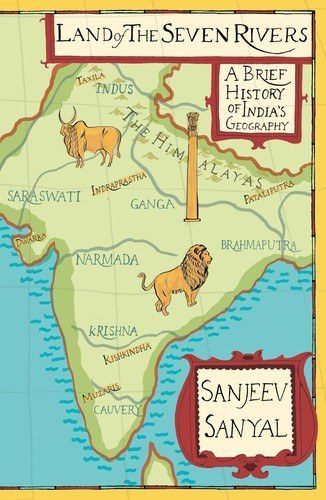
Covers eight thousand years, and it is the map
Land of the Seven Rivers
Sanjeev Sanyal2012
The geography lesson school skipped: rivers, passes and coastlines, and why every city and empire ended up exactly where it did.
Sanyal's argument is that you cannot understand Indian history until you understand Indian geography: where the rivers ran, where they moved, which passes let armies through, why cities sat where they sat. He starts with the geology and the genetics of the subcontinent and works forward to present-day Gurgaon, using trade routes, coastlines and the Saraswati debate as his spine. It reads like a very well travelled friend explaining the country to you on a long drive. You finish it with a mental map that school never handed over.
Why it is at 1
First because it is the only book here that gives you a frame before it gives you facts. Every other book on this list quietly assumes you know roughly where things are and what came before. Read this and Basham stops feeling like a wall of Sanskrit. Fair warning: Sanyal writes from a broadly Hindu nationalist position and some of his Saraswati claims are disputed, so take the map and leave the verdicts.
Read it ifyou want the geography and the big shape before any dates
Skip it ifyou want neutral academic history, because the author's politics show
brisk, curious, opinionatedBest for: absolute beginnersgeographyoverviewstarting point
Pairs with: Early India by Romila Thapar, which reads the same evidence from the other side of the argument
2
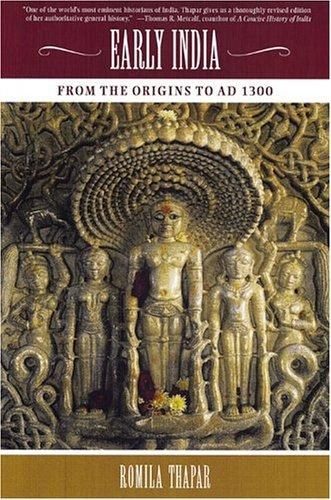
Covers the origins to 1300 CE, slowly
Early India
Romila Thapar2002about 598 pages
The standard modern account of India's first four thousand years, written by a historian who shows you her evidence as she goes.
Thapar rewrote her 1966 history of early India into this, and it remains the standard account of the subcontinent from the first settlements to about 1300. She is interested in how societies actually worked: who owned the land, how caste hardened, how Buddhism travelled along trade routes, what a king's inscription was really trying to do. There is very little drama and almost no epic storytelling. What you get instead is a historian showing her working, telling you what the evidence supports and exactly where it runs out.
Why it is at 2
Second because once you have the map, this is the most reliable account of the first four thousand years, and because Thapar teaches you how history gets argued rather than only what happened. It is slower than everything else here. If you find it heavy, read Basham next and come back to her later, and the order will still hold together.
Read it ifyou want evidence-based ancient history and can read slowly
Skip it ifyou want narrative history with characters and battles
careful, sceptical, denseBest for: readers who want the scholarly baselineancient indiascholarlycontested
Pairs with: Land of the Seven Rivers, whose politics point the opposite way
3

Covers ancient India by subject, not by date
The Wonder That Was India
A. L. Basham1954about 769 pages
A seventy-year-old survey of ancient Indian life that nobody has quite replaced, warm and wide and honestly dated in places.
Basham published this in 1954 and it has never really been superseded, which is strange for a survey that old. He walks through ancient India by subject rather than by date: religion, art, language, law, war, love, daily life. The chapter on everyday living is the reason people still press it on beginners, because he tells you what people ate, wore, owed and argued about. Some of the archaeology has been overtaken since, and his framing belongs to its era, but the curiosity in it is real and the writing is generous.
Why it is at 3
Third because it is the friendliest door into ancient India, and because it fills in the culture that Thapar's structural approach leaves thin. Treat it as her companion volume rather than her rival. The one caution is age: wherever Basham and a modern historian disagree on a fact, assume the modern one is right and move on.
Read it ifyou want ancient Indian culture explained warmly and at length
Skip it ifyou need current archaeology, because 1954 is 1954
warm, old-fashioned, wideBest for: readers who prefer culture to politicsancient indiaclassicculture
4

Covers the Deccan, roughly 1300 to 1700
Rebel Sultans
Manu S. Pillai2018about 336 pages
The Deccan sultanates, Vijayanagara and the rise of the Marathas, told fast and with a great deal of gossip.
Most Indian history jumps from Delhi to Delhi and files the south under footnotes. Pillai spends this whole book in the Deccan instead: Bijapur, Ahmadnagar, Golconda, Vijayanagara across the river, and the world the Marathas rose out of. His cast is gloriously unmanageable, full of Persian adventurers, African generals who became kingmakers, and queens with better strategy than their husbands. The prose is quick and a little wicked, closer to a good gossip column than to a monograph, and it never assumes you already care about any of these people.
Why it is at 4
Fourth because it plugs the biggest hole in a beginner's map, which is everything south of the Vindhyas between 1300 and 1700. It also quietly dismantles the idea that these centuries were a simple Hindu against Muslim story, since half these rulers were allying across that line every other week. Lighter than Thapar, and a genuine relief straight after her.
Read it ifyou want the Deccan, and you want history that moves quickly
Skip it ifyou want a tidy chronology, because the cast list is enormous
fast, wry, crowdedBest for: readers bored of Delhi-centric historydeccanmedievalnarrative
5
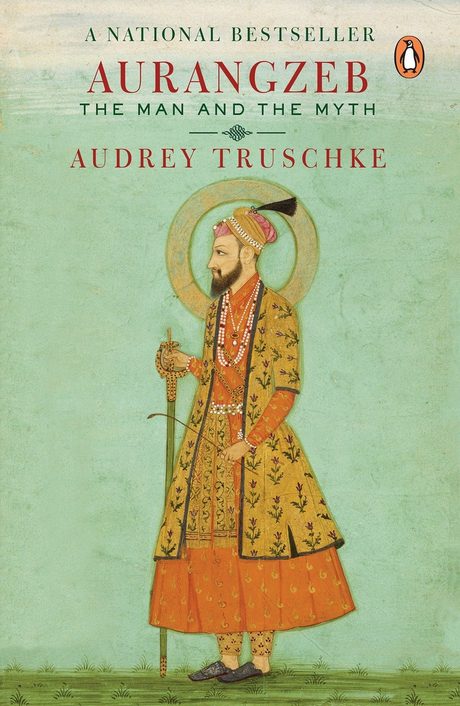
Covers one emperor, 1658 to 1707
Aurangzeb
Audrey Truschke2017about 149 pages
A hundred and fifty pages on the most argued-about emperor in Indian history, built from the sources of his own century.
Truschke takes the most fought-over ruler in Indian history and asks one question: what do the sources from his own time actually say. What comes back is neither the villain of forwarded messages nor a secular saint. It is a ruthless, pious, obsessive emperor who patronised some temples and destroyed others, who by her account had more Hindus in his administration than earlier Mughal emperors did, and who broke his own empire by chasing the Deccan for twenty-five years. The whole thing runs about a hundred and fifty pages, so it costs you one long evening.
Why it is at 5
Fifth because you cannot read Indian history today without walking into an Aurangzeb argument, and this is the shortest honest briefing available. It is also the most attacked book on this list. Truschke is an American scholar, her readings of the Persian sources are disputed by other historians, and she is denounced far more loudly by people who have not opened her. Read it, then go find a critic.
Read it ifyou want the evidence behind an argument you keep hearing
Skip it ifyou want a settled verdict, because this book refuses to hand one over
short, cool, contestedBest for: one evening, one big argumentmughalbiographycontested
6

Covers the Company, 1599 to 1803
The Anarchy
William Dalrymple2019about 577 pages
How a London company with shareholders and a private army took a subcontinent, told as corporate history with cavalry.
This is the story of how a joint stock company with an office in London and a few hundred shareholders ended up ruling most of a subcontinent. Dalrymple runs it from the Company's founding through Plassey, Buxar, the Bengal famine and the taking of Delhi in 1803, and he writes it as corporate history with cavalry attached. The villains have balance sheets. What lands hardest is the collapse of the Mughal centre, because the Company did not defeat a strong empire, it walked into a room where everybody was already fighting everybody.
Why it is at 6
Sixth because it is the most enjoyable book on this list and the clearest explanation of how colonial rule actually started, which is not the version most of us were taught in school. Dalrymple does get criticised for writing empire as spectacle and for leaning on a familiar cast of grandees, and that criticism is fair. It is still the book I hand to people who tell me history is boring.
Read it ifyou want the East India Company story told like a heist
Skip it ifyou want economic analysis rather than battles and personalities
cinematic, brutal, propulsiveBest for: readers who think they hate historyeast india companycolonialnarrative
7
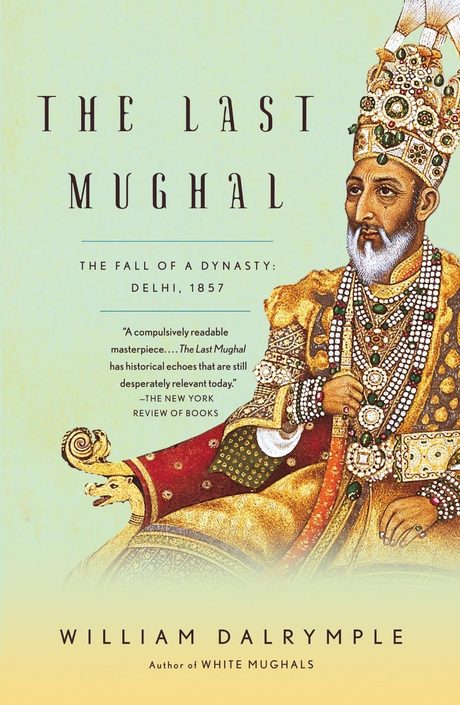
Covers one year in one city, 1857
The Last Mughal
William Dalrymple2006about 592 pages
1857 from inside Delhi, through roughly twenty thousand Urdu documents nobody had bothered to read, ending in an emptied city.
1857 told through the city of Delhi, using the Mutiny Papers, a mass of Urdu and Persian documents that had been sitting in the National Archives largely unopened. So instead of British officers and Indian generals, you get the petitions of shopkeepers, courtesans and sepoys asking to be paid, and a poet emperor in his seventies who never wanted a revolt in the first place. Then the British retake the city, and the last third becomes an account of a place being emptied and a culture being deliberately ended.
Why it is at 7
Seventh because this is the hinge year, and because reading 1857 from inside Delhi rather than from a regimental history changes what you think it was. Slower and sadder than The Anarchy, and better for it. If you only have room for one Dalrymple, take The Anarchy for the story and this one if you want to feel something.
Read it ifyou want 1857 from inside the city it destroyed
Skip it ifyou want a military history of the whole rebellion
elegiac, detailed, grimBest for: readers who want 1857 properly1857delhimughal
Heads up: detailed massacre and reprisal accounts through the final third
8
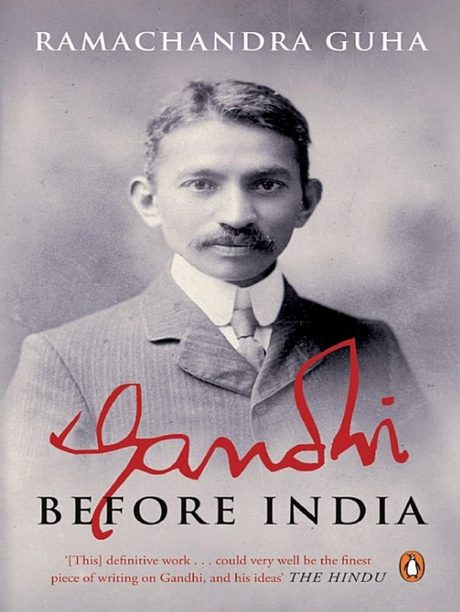
Covers Gandhi's first forty-five years, mostly abroad
Gandhi Before India
Ramachandra Guha2013about 911 pages
The Gandhi nobody teaches: a nervous young lawyer in South Africa, inventing satyagraha out of a run of failures.
Everyone knows the Gandhi who returned to India in 1915. Guha spends this entire volume on the twenty-odd years before that, most of them in South Africa, where a nervous Gujarati lawyer who could barely address a courtroom slowly assembled satyagraha out of failed strikes, small newspapers and a commune outside Johannesburg. It is the origin story and it is unsentimental. Guha shows the racism in the young Gandhi's early views on Africans, the strain he put on his wife and sons, and the friendships that made him into someone else.
Why it is at 8
Eighth because reading Gandhi's formation before you read Partition explains what was actually lost in 1947, and because this is the best written of Guha's books. It runs past six hundred pages. If that is unrealistic, read the South Africa chapters and stop, since the story is complete there, and pick up his second volume later if you want the India years.
Read it ifyou want to see where satyagraha was actually invented
Skip it ifyou want the famous years, which this book never reaches
patient, human, unsentimentalBest for: readers who want Gandhi as a persongandhibiographysouth africa
9
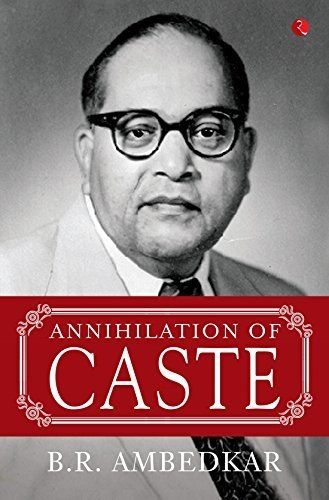
Written in 1936, and still the sharpest thing here
Annihilation of Caste
B. R. Ambedkar1936about 160 pages
A hundred pages, written in 1936, arguing that caste cannot be reformed and has to be destroyed instead.
Ambedkar was invited to address a reform group in Lahore in 1936. They read his text in advance, asked him to soften it, he refused, the event was cancelled, and he printed the speech himself. What he had written was an argument that caste cannot be reformed, only abolished, and that Hindu scripture is the source of the problem rather than a misreading of it. It runs about a hundred pages in cold and exact English, and it takes apart every comfortable position on caste available at the time, Gandhi's included.
Why it is at 9
Ninth in the route and honestly the most important text on this list. Every other book here describes India from above, through emperors, companies and prime ministers. This is the only one that attacks the structure the whole society was built on, written by the man who then went and drafted the Constitution. Read it in one sitting. It is short, and it is designed to ruin a few of your assumptions.
Read it ifyou want the single sharpest argument in modern Indian thought
Skip it ifyou want gentle, because this is a demolition and it means it
cold, furious, exactBest for: one evening that rearranges youcasteambedkarprimary text
Pairs with: Ants Among Elephants, which shows the same structure from inside one family
10
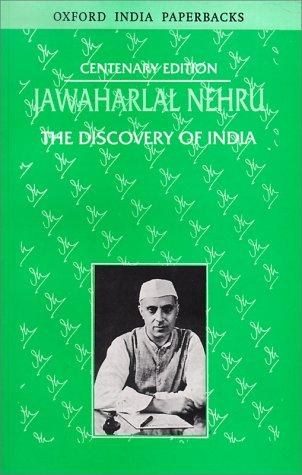
Written in a prison cell, 1942 to 1946
The Discovery of India
Jawaharlal Nehru1946about 642 pages
Nehru in a British prison, writing out the country he intended to build, a few years before he had to run it.
Nehru wrote this in British custody at Ahmednagar Fort between 1942 and 1946, without much of a library, largely from memory. It sweeps from the Indus valley to the 1940s, and it is really an argument dressed as a history: that India is one civilisation with a long habit of absorbing whatever arrived, and that it can therefore hold together as one modern nation. As history it is uneven and often simply wrong. As a record of what the first prime minister believed the country was, nothing else comes close.
Why it is at 10
Tenth because it is a primary source rather than a reference book, and the trick is reading it as one. Read it as Nehru arguing with himself in a cell, months before he had to run the place. Put it straight after Ambedkar and the two of them start fighting on your shelf, which is precisely the argument independent India has been having ever since.
Read it ifyou want the founding vision in the founder's own words
Skip it ifyou want accurate history, because this is a personal essay at heart
romantic, sweeping, datedBest for: understanding Nehru's Indiaprimary textnehrunationalism
11
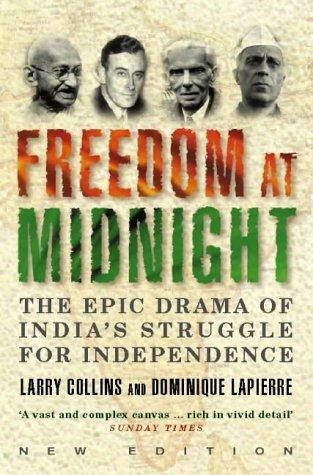
Covers the last year of the Raj
Freedom at Midnight
Larry Collins1975
Partition as a nonfiction thriller: fast, human, hugely readable, and tilted heavily toward Mountbatten's version of Mountbatten.
Two journalists took the final year of the Raj and wrote it as a nonfiction thriller: the Mountbattens arriving, Radcliffe drawing a border in a few weeks with maps he did not trust, Gandhi walking through Noakhali, the trains arriving full of bodies, and finally the assassination. It moves like a novel, and it is the reason a whole generation of Indians read any Partition history at all. The chapters following Godse are the most famous section and remain the most uncomfortable thing in it.
Why it is at 11
Eleventh, with a warning attached. Historians have complained for decades that the book leans on Mountbatten's own account of his own decisions and flatters him accordingly, and that its portrait of Jinnah is thin to the point of caricature. Read it for the pace and the human scale, then read the next book on this list to correct it. On its own it is a fine story and a poor verdict.
Read it ifyou want Partition as a fast narrative you cannot stop reading
Skip it ifyou want balanced history, because the sourcing tilts hard one way
dramatic, propulsive, partialBest for: readers who need momentumpartition1947contested
Heads up: graphic communal violence throughout
Pairs with: Midnight's Furies, the corrective that should follow it immediately
12
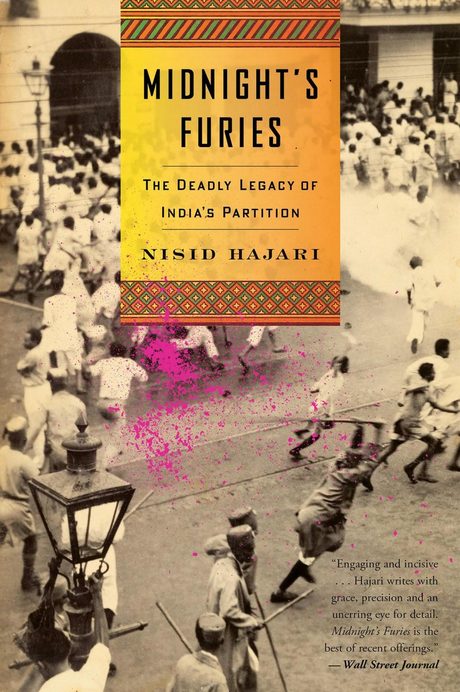
Covers 1947 and everything it started
Midnight's Furies
Nisid Hajari2015about 450 pages
The same year as Freedom at Midnight, told as politics rather than tragedy, and it lets nobody off the hook.
Hajari covers roughly the same months as Freedom at Midnight and arrives somewhere much darker. His subject is the relationship between Nehru and Jinnah, two men who had once been on the same side and who by 1947 could barely share a room, and how the violence in Punjab was not a spontaneous eruption but something politicians watched build and failed to stop. He follows the story past August into Kashmir and the first war, which is exactly where most accounts of Partition stop.
Why it is at 12
Twelfth because it makes Partition legible as politics rather than as weather, and because it refuses to hand either country a clean conscience. It is drier than Freedom at Midnight and far better sourced. The pairing is the whole point: read the thriller first if you need pulling in, then read this and watch the comfortable version come apart.
Read it ifyou want Partition explained rather than only narrated
Skip it ifyou want a hopeful ending, because there is not one here
cold, political, unsparingBest for: understanding India and Pakistan nowpartitionkashmirpolitics
Heads up: sustained accounts of massacres and sexual violence
13
Covers 1947 to the 2000s, the essential one
India After Gandhi
Ramachandra Guha2007about 898 pages
The one book that explains the India you actually live in, running from 1947 to roughly the day before yesterday.
The book that treats independent India as a serious historical subject instead of as current affairs. Guha runs from 1947 to the 2000s: the integration of the princely states, Kashmir, the redrawing of the map along language lines, the wars, the Emergency, Mandal, Ayodhya, liberalisation. His real question is how a poor, enormous, multilingual country kept holding elections and mostly stayed in one piece when almost every expert expected it to fall apart. It is nine hundred pages and reads faster than that, because most chapters are built around a crisis.
Why it is at 13
Thirteenth in the route and first in importance for a modern reader, because this is the stretch that explains the news. If you finish only one book from this list, make it this one and pick up the earlier eras later. Guha writes from a liberal Nehruvian position and never hides it, so treat his verdicts on the last thirty years as one informed opinion among several.
Read it ifyou want to understand the India you actually live in
Skip it ifyou want something short, because this is a brick
authoritative, readable, liberalBest for: the single most useful book herepost-1947politicsessential
14
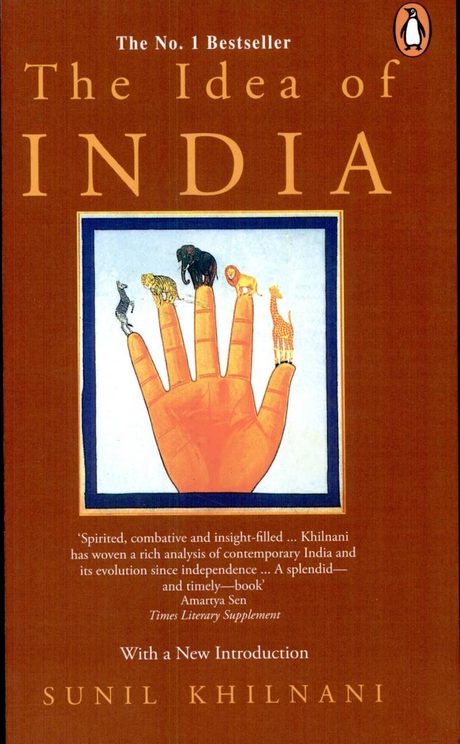
Four essays on what India was meant to be
The Idea of India
Sunil Khilnani1997about 296 pages
Four essays on what the Indian state was trying to become, and what had happened to that plan by the nineties.
A short book of four long essays about what the Indian state set out to be: Nehru's bet on democracy in a country with almost no industrial base, the strange career of the Indian city, the long fight over who counts as Indian, and where the whole project stood by the mid-nineties. It sits closer to political philosophy than to narrative history and it assumes you already know the events. Under three hundred pages, and it takes longer to get through than nine hundred pages of Guha.
Why it is at 14
Fourteenth because it belongs after Guha and not before. Once you know the sequence of events, Khilnani gives you the argument about what they meant, and his chapter on the Indian city is still the best short thing written on why our cities look the way they do. It stops in 1997, so the last thirty years are missing and you will feel that gap.
Read it ifyou want ideas about India rather than events in India
Skip it ifyou are still learning the timeline, because this book assumes it
dense, elegant, argumentativeBest for: readers who finished Guhapolitical thoughtpost-1947essays
15
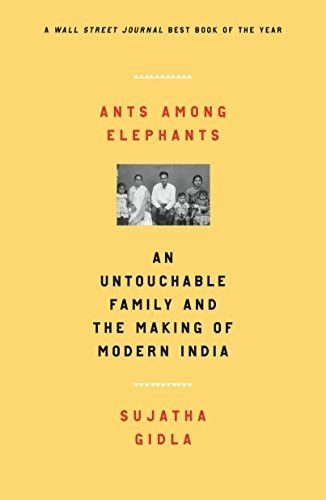
One Dalit family across the twentieth century
Ants Among Elephants
Sujatha Gidla2017
One Dalit family, one communist uncle, and the twentieth century seen from underneath the official national story.
Gidla tells the story of her own family, Dalit Christians in Andhra, across most of the twentieth century. The centre of it is her uncle Satyam, who became a communist revolutionary, and her mother Manjula, who fought for an education nobody wanted her to have. It is a family memoir doing the work of a history book: independence, the communist movement, the Telangana struggle and the Naxal years all arrive through the eyes of people at the bottom of the pile. She writes flatly, without pleading, and it is devastating for exactly that reason.
Why it is at 15
Fifteenth as a lens rather than a chapter. Every other book here looks at India from Delhi or from a library. This one looks up. Set it next to India After Gandhi and you get the same seventy years from two completely different heights, and the disagreement between those two books is the most useful thing on this list.
Read it ifyou want twentieth century India from the bottom of the caste order
Skip it ifyou want the official national story, because this contradicts it
plain, unsparing, personalBest for: readers who want India from belowcastememoir20th century
Heads up: caste violence, poverty and family suffering throughout
16
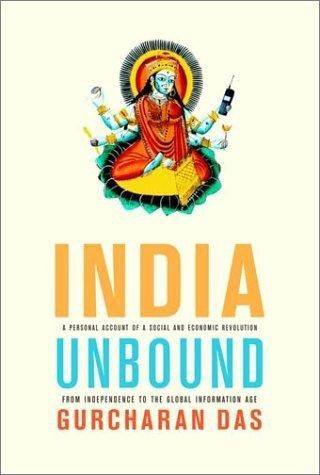
Covers the economy, licence raj to 2000
India Unbound
Gurcharan Das2000about 448 pages
The licence raj, the 1991 crisis and what followed, written by a man who ran a large company straight through it.
Das ran Procter and Gamble in India and then wrote the story of the economy he had spent a career inside: the licence raj, the decades of state control and slow growth, the crisis in 1991 that forced liberalisation, and the businesses that grew afterwards. He mixes memoir with economic history, so his own family shows up next to the policy. It is the most openly argued book on this list, because he wants you to finish it agreeing that the state got out of the way about forty years too late.
Why it is at 16
Sixteenth and last because it covers the lens the others mostly ignore, which is money. Guha gives liberalisation a chapter; Das gives you the whole business of it from inside a boardroom. He is a partisan and reads like one, and the book stops in 2000 so it misses everything since. Read it for the argument rather than for a current picture.
Read it ifyou want the economic story and can handle an obvious bias
Skip it ifyou want a current account of the economy, because this stops in 2000
personal, argued, pro-marketBest for: readers who want the money storyeconomy1991memoir
Worth knowing
How to actually read this list
If sixteen books is unrealistic, and for most people it is, there is a four book version that still works. Land of the Seven Rivers for the map, The Anarchy for how the British arrived, Annihilation of Caste for what was underneath all of it, and India After Gandhi for the country you live in now. That is about two thousand pages, it covers the whole span, and it leaves the important arguments intact.
If you want the fast version, start at thirteen instead. India After Gandhi explains the news, and once modern politics makes sense you will have your own reasons for going back to 1857 and to 1206. Reading history backwards is not a sin. It is only less tidy, and it works better for people who came to the subject because of something they read in the newspaper.
Worth knowing
Which of these are contested, and by whom
Indian history gets fought over in public, so here is a plain map of the fights on this list. Sanjeev Sanyal writes from a broadly Hindu nationalist position and is criticised by academic historians for how far he pushes the Saraswati evidence. Romila Thapar is attacked from the opposite direction by the Hindu right, who call her a Marxist and have campaigned against her for decades. Both are worth reading, and the distance between them is itself an education.
Audrey Truschke's Aurangzeb is disputed by other historians over specific readings of Persian sources, and denounced far more loudly online by people who have not opened it. Freedom at Midnight rests on Mountbatten's account of his own decisions, which is about as reliable as that sounds. Dalrymple gets accused of writing empire as entertainment. Guha writes from a Nehruvian liberal position and says so. Gurcharan Das is a free-market partisan and says that too.
None of this is a reason to skip a book. It is a reason to read a second one. The rule I would give any beginner is simple: never take your only account of a period from a single author, and when a book flatters an opinion you already hold, be more suspicious rather than less.
People also ask
Questions, answered
Which book on Indian history should a beginner read first?
Land of the Seven Rivers by Sanjeev Sanyal, because it hands you the geography before the dates and everything afterwards becomes easier to hold in your head. If you would rather start with the period that explains the news, begin with India After Gandhi and work backwards from there. Both are readable with no background at all. What I would not start with is an ancient India textbook, which is where most people quit.
In what order should I read Indian history books?
Chronologically, with one exception at the start. Begin with a book that gives you the map and the big shape, then move era by era: ancient, then the Deccan and the medieval south, the Mughals, the Company and 1857, the freedom movement, Partition, and then post-1947 India. The books on this list are already in that order. Only the last three sit outside the sequence, because they cut across the whole span through caste, political ideas and the economy.
Is Freedom at Midnight accurate?
Partly. It is superb narrative and shaky history. Collins and Lapierre had extensive access to Mountbatten, and the book reflects his account of his own decisions far more than anyone else's, which is why its Jinnah is so thin. Historians have been saying this for decades. Read it for the human scale of 1947, then read Midnight's Furies by Nisid Hajari straight after for the politics, and you will end up somewhere close to the truth.
Do I need to read NCERT textbooks before these?
No. The NCERT volumes and R S Sharma's India's Ancient Past are written to be examined rather than read, and they are a large part of why so many Indians think they hate history. If you are preparing for a competitive exam then use them, obviously. If you are reading because you want to understand the country, the books on this list will teach you more and you will actually finish them.
What is the single best book on Indian history?
For a modern reader, India After Gandhi by Ramachandra Guha, because it covers the period that shapes daily life and gives you the most per hour spent. For the older sweep there is no good single volume. Anyone claiming to cover five thousand years in one book is compressing so hard that what you get is a timeline rather than history, which is why this list runs in eras instead.
How long does this reading list take?
At a book a month, sixteen months, and nobody is grading you. Several of these are short enough for one weekend, including Annihilation of Caste, Aurangzeb and The Idea of India, so use those to build some early momentum. The three long ones, Gandhi Before India, India After Gandhi and Early India, are each a month of real reading, so space them out instead of stacking them together.
Before you go
What to read tonight
If you want to start tonight, open Land of the Seven Rivers, read forty pages, and see whether the shape of the country starts to appear. If it does not hold you, jump straight to The Anarchy, which has never once failed to hold anybody I have handed it to.
Then, three or four books in, do the thing that turns a reader into somebody who actually knows something. Pick a period you have now read about twice and go find a historian who disagrees with your first book. Read a Marxist on 1857 and then a nationalist on 1857. The facts will barely move. The meaning will move enormously, and you will finally understand why this subject makes people so angry at dinner tables.
Keep going
Lists that pair with this one
Indian Fiction
16 Best Books to Understand India, Ranked by What They Explain
Sixteen books, ten doors into the same country: history, caste, the mega city, the village, money, and where to start tonight.
Nonfiction
15 Best Travel Books About India, Even If You Live Here
Ranked by what each one gives a reader who already knows what a railway platform smells like at four in the morning.
Indian Fiction
14 Best Partition Novels and Books, Ranked by Where to Start
Fiction and first-hand testimony from both sides of the 1947 line, ordered so you begin with the one you can actually finish.
Authors
The 12 Best Amitav Ghosh Books, Ranked (With the Ibis Reading Order)
Three doors into his work, twelve books ranked, and an honest warning about the first eighty pages of Sea of Poppies.
Books Like
15 Books Like Sapiens: Big Arguments You Can Actually Finish
Every one is real, verified and ranked by how much of the Sapiens feeling comes back, including the book that argues Harari is wrong.