The first cricket book I read came out of a school library in Ahmedabad and it was about the 1983 World Cup. I read it so many times the spine gave up somewhere around the Kapil Dev innings that nobody bothered to film. Here is what I did not notice at eleven and cannot stop noticing now: I already knew the result. India won. I knew it before I opened the book and I knew it on the fortieth reading, and the book still worked.
That is the only test that matters for a cricket book, and it has got much harder to pass. Every scorecard since 1877 is four seconds away on your phone, and the actual shots are on YouTube with better commentary than most prose. So a book has to hold something a scorecard cannot: a caste system, a bookmaker, a father, a country arguing with itself. I ranked these sixteen on exactly that. The higher a book sits, the less it needs you to care who won.
The top of this list works for someone who has never sat through a full day of Test cricket. The bottom half is for people who already love the game and want more of it. And yes, the biggest selling cricket autobiography in India is at number sixteen, with reasons. Quick picks first, in case you are standing in a bookshop with five minutes and a train to catch.
How I picked these
- The result test: does the book still work when you already know the score. Anything that was a highlights reel in prose got cut.
- No ghostwritten trophy cabinets. Player books had to earn a place on the writing alone, and most of the ones I tried did not.
- Every title checked through Google Books and Open Library with a real cover, so nothing here is a phantom edition you cannot actually buy.
- Cricket is not only India. Pakistan, Sri Lanka, Australia, England and a Dutch banker in New York all get a spot, because the game reads differently from each end.
- Two novels sit on a nonfiction list on purpose. Fiction gets to say things about this sport that reporting cannot prove.
The whole list at a glance
All 16 books, in order
| # | Book | Author | Year | Vibe | Best for |
|---|
| 1 | Beyond a Boundary | C L R James | 1963 | essayistic, political, unhurried | readers who dislike sports books |
| 2 | A Corner of a Foreign Field | Ramachandra Guha | 2002 | rigorous, argumentative, Indian | readers of Indian history |
| 3 | Pundits from Pakistan | Rahul Bhattacharya | 2005 | warm, roaming, generous | travel readers and India Pakistan fans |
| 4 | Chinaman: The Legend of Pradeep Mathew | Shehan Karunatilaka | 2010 | boozy, funny, sad | novel readers curious about Sri Lanka |
| 5 | The Great Tamasha | James Astill | 2013 | reported, sceptical, clear | people who follow the IPL |
| 6 | The Unquiet Ones | Osman Samiuddin | 2014 | affectionate, unsparing, sweeping | readers who like national histories |
| 7 | Mystery Spinner | Gideon Haigh | 1999 | melancholy, precise, human | biography readers |
| 8 | Netherland | Joseph O'Neill | 2008 | slow, elegant, lonely | literary fiction readers |
| 9 | The Art of Captaincy | Mike Brearley | 1985 | thoughtful, practical, English | managers and captains |
| 10 | Cricket 2.0 | Tim Wigmore | 2019 | analytical, current, clear | T20 and IPL watchers |
| 11 | Bookie Gambler Fixer Spy | Ed Hawkins | 2012 | shadowy, careful, unsettling | readers who like investigative books |
| 12 | Steve Smith's Men | Geoff Lemon | 2018 | angry, funny, forensic | readers who like scandal reporting |
| 13 | Coming Back to Me | Marcus Trescothick | 2008 | plain, honest, brave | readers who want candour |
| 14 | Rain Men | Marcus Berkmann | 1995 | silly, self aware, English | gully and weekend cricketers |
| 15 | Sunny Days | Sunil Gavaskar | 1976 | cocky, funny, dated | fans of 1970s Indian cricket |
| 16 | Playing It My Way | Sachin Tendulkar | 2014 | careful, detailed, guarded | Tendulkar completists |
The list
The books, ranked
1
Essay, memoir, politics
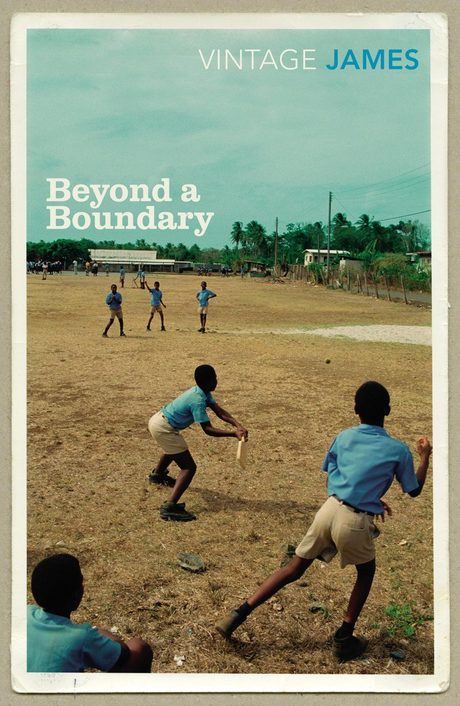
Beyond a Boundary
C L R James1963about 195 pages
The book that asked what anyone can really know of cricket if cricket is all they know, then spent 250 pages answering itself.
C L R James was a Trinidadian writer, a historian of revolutions, a cricket correspondent and one of the sharpest minds of his century, and he put all of it into one book. Half of it is his own childhood: a boy whose bedroom window looked onto a cricket pitch, a mother who read novels, a school that handed out English manners along with cover drives. The other half is an argument that cricket is an art form and that West Indian cricket was politics played with a bat, building towards his campaign to have Frank Worrell captain the side. It reads like a very clever man talking across a table.
Why it is at 1
Number one because it barely needs cricket. You could hand it to someone who thinks the sport is nonsense and they would still finish it, which is not true of anything else on this list. Guha at two is the better historian of India specifically, but James got there first and wrote better sentences. The caveat is real though: this is a 1963 book with 1963 pacing, and the first fifty pages ask for patience.
Read it ifyou want a book about class, empire and art that happens to use cricket
Skip it ifyou want match writing, because the actual cricket reporting here is thin
essayistic, political, unhurriedBest for: readers who dislike sports booksclassicwest indiespoliticsessays
Pairs with: A Corner of a Foreign Field, which does for India roughly what James did for the Caribbean
2

Social history
A Corner of a Foreign Field
Ramachandra Guha2002about 654 pages
How a colonial import became the Indian religion, told through caste, communal quotas and a Dalit spinner nobody named their son after.
Guha opens with the Parsis who first took on the British in Bombay, moves through the Hindu, Muslim and Parsi teams of the old Quadrangular tournament, and builds the book around Palwankar Baloo, a Dalit bowler good enough that upper caste teammates had to share a field with him and still made him drink his tea outside the pavilion. From there it runs into Gandhi's objection to communal teams, the arrival of a national side, and the long fight over who owns the game. Proper history with footnotes, written by someone who clearly still watches every ball.
Why it is at 2
Second because it does the job James did, on ground that will matter more to an Indian reader, with better research behind it. It sits below Beyond a Boundary only because Guha is a historian first and a stylist second. If you have ever wondered why cricket and not hockey became the national obsession, this is the answer, and the answer is not flattering to anybody.
Read it ifyou want the caste and empire history sitting under Indian cricket
Skip it ifyou want modern cricket, since the book mostly stops before the television money arrives
rigorous, argumentative, IndianBest for: readers of Indian historyindiahistorycasteempire
3
Tour diary
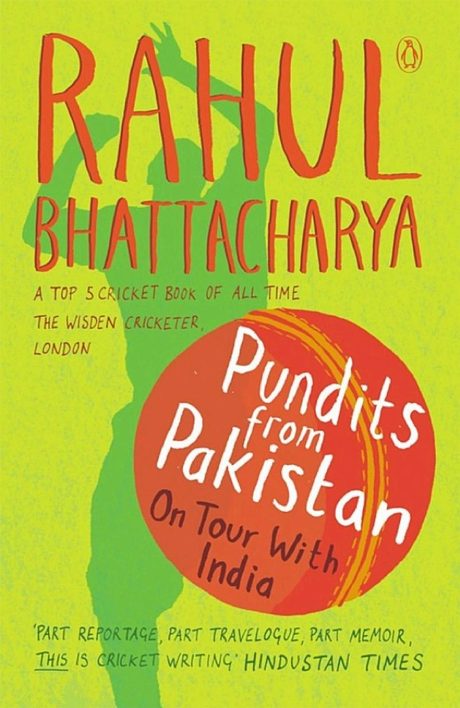
Pundits from Pakistan
Rahul Bhattacharya2005about 344 pages
A young reporter follows India to Pakistan in 2004 and comes back with the warmest travel book anyone has written about that border.
In 2004 India toured Pakistan for the first time in fourteen years and Bhattacharya went along, young and mostly unknown. What came back is half cricket writing and half travel writing, and the travel half is better than most travel books about the subcontinent. He eats, argues, gets lost, meets Pakistani fans who fight him for the restaurant bill, and watches a series that eventually went India's way. The cricket description is the finest I have read from an Indian writer. He can make a spell of reverse swing feel like weather changing over a city.
Why it is at 3
Third because it is the best written cricket book by an Indian, and because it holds something that has not happened since: Indians and Pakistanis in each other's stadiums, being decent to one another. Guha explains the history, Bhattacharya shows you one week of it. It ranks below the two above only because its subject is a single tour rather than a century.
Read it ifyou like travel writing and want Pakistan through a friendly window
Skip it ifyou have no patience for ball by ball description
warm, roaming, generousBest for: travel readers and India Pakistan fansindiapakistantravelreportage
4
Novel
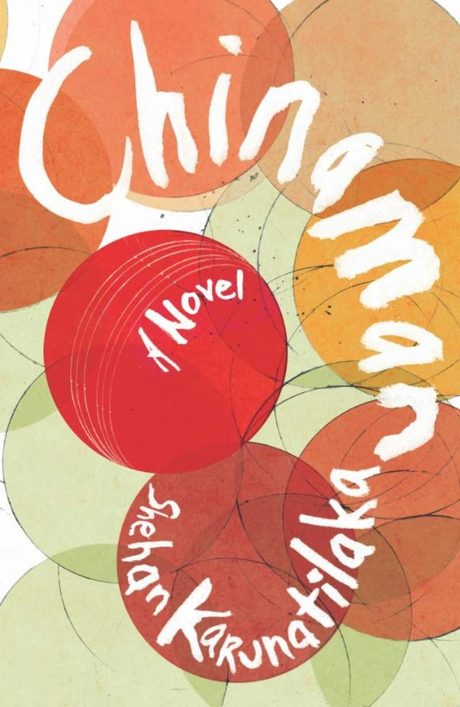
Chinaman: The Legend of Pradeep Mathew
Shehan Karunatilaka2010about 420 pages
A drunk Sri Lankan sportswriter goes hunting for a forgotten spinner, and the search turns into a novel about a country coming apart.
W G Karunasena is a retired cricket journalist with a failing liver and one obsession: proving that a left arm spinner called Pradeep Mathew was the greatest bowler Sri Lanka ever produced, and working out why he was erased from the record. The book is a fake investigation, complete with diagrams, feuds, and a gloriously bad tempered narrator. Under the jokes it is about Sri Lanka during the war years, about a father and son who cannot talk to each other, and about how a country quietly writes people out of its own story.
Why it is at 4
The highest fiction here because it works for a reader who knows nothing about cricket and rewards one who knows everything. The digressions do wander, and eighty pages could go without anybody noticing. I still think about the last chapter more than about any nonfiction entry on this list. Karunatilaka is better known now for a different novel, but this is his cricket one and it is the funnier book.
Read it ifyou want a very funny novel that happens to be about cricket
Skip it ifyou need a tidy plot, because this one sprawls on purpose
boozy, funny, sadBest for: novel readers curious about Sri Lankafictionsri lankasatire
Heads up: heavy drinking throughout, and the Sri Lankan civil war in the background
5
Reportage
The Great Tamasha
James Astill2013
A foreign correspondent follows the IPL money into villages, bookmakers and boardrooms, and comes back with a clear picture of new India.
Astill covered India for The Economist and used cricket as the lens for everything else: liberalisation, a middle class that could suddenly afford tickets, caste inside the club system, the politics that runs the boards, and the gambling economy shadowing every match. He goes to a Mumbai maidan where boys bat on coir mats, to a rural academy, to a franchise auction where players are bought like cattle with better haircuts. The reporting is the strong part. He is neither sentimental about the IPL nor sneering at it, which in 2013 made him almost alone.
Why it is at 5
Fifth because if you want to understand the cricket you actually watch, this is still the book, more than a decade later. It ranks below the three above it because journalism has a shelf life and some of the names and numbers have moved on since. The chapters on betting and on caste in the domestic game have not aged a day.
Read it ifyou want the IPL explained along with the money underneath it
Skip it ifyou want current figures, since the book stops before the last decade of expansion
reported, sceptical, clearBest for: people who follow the IPLiplindiamoneyreportage
6

History
The Unquiet Ones
Osman Samiuddin2014about 427 pages
The history of Pakistan cricket by a writer who loves it and refuses to tidy it up for visitors.
Samiuddin runs the story from partition onward: a country inventing a Test team before it had the stadiums, Fazal Mahmood at the Oval in 1954, the Imran Khan decade, the invention of reverse swing, the fixing scandals, and the 2009 attack on the Sri Lankan team bus in Lahore that pushed international cricket out of the country for years. He is very good on the national mood, a kind of collective delirium that arrives without warning and disappears the same way. Affectionate and unsparing at once, which is the hardest register to hold for four hundred pages.
Why it is at 6
Sixth, and it deserves a bigger readership than it gets, because outside Pakistan almost nobody buys books about Pakistan cricket. Read beside Guha it makes a pair: two countries, one game, opposite temperaments. It sits here rather than higher because the middle chapters assume you know the players, so an Indian reader raised on highlights will be looking a few names up.
Read it ifyou want the other half of the subcontinent's cricket story
Skip it ifyou need a beginner's guide, because it moves fast through unfamiliar names
affectionate, unsparing, sweepingBest for: readers who like national historiespakistanhistoryreportage
7

Biography
Mystery Spinner
Gideon Haigh1999about 334 pages
The life of a man who bowled a delivery nobody could read, dominated one Ashes summer, and then went quiet for the rest of it.
Jack Iverson was a Melbourne estate agent who taught himself to spin a ball with a bent middle finger, worked the grip out while flicking a table tennis ball around an army camp, and arrived in first class cricket in his thirties with a delivery batsmen could not pick. He played one Ashes summer for Australia, took it apart, and then his career fell in on itself almost at once. Haigh follows him all the way to a sad end and turns it into a study of what happens to a man who is briefly, accidentally, the best in the world at something.
Why it is at 7
Seventh because it is the best written biography here and one of the best cricket books anywhere, but its subject is obscure enough that most Indian readers will never pick it up. Haigh is the finest cricket writer alive and this is the book where he is chasing something bigger than cricket. Read it for the portrait of a private, awkward, unlucky man, not for the matches.
Read it ifyou like biographies of quiet, strange, unlucky people
Skip it ifyou want stars and famous matches you can remember watching
melancholy, precise, humanBest for: biography readersaustraliabiographyobsession
Heads up: suicide is part of the story and is handled directly
8

Novel
Netherland
Joseph O'Neill2008about 274 pages
A Dutch banker loses his marriage in post 2001 New York and finds a cricket league of immigrants on a rough Staten Island outfield.
Hans van den Broek is stranded in New York after his wife takes their son back to London. He is lonely in the specific way of a man with money and no plan, and he drifts into weekend cricket with Trinidadians, Pakistanis, Indians and Sri Lankans, then into a friendship with a Trinidadian dreamer who wants to build a real cricket stadium in the city. The prose is slow and lovely, the plot is thin on purpose, and the cricket is the immigrant's game played in a country that does not know it exists.
Why it is at 8
Eighth because it is the finest novel on this list and the least interested in cricket as cricket. Chinaman at four is the better cricket book. Netherland is the better novel. If you read fiction for sentences and for the feeling of a city, start here and ignore my ranking, which runs on a cricket axis and treats this one unfairly.
Read it ifyou read novels for prose and mood more than for plot
Skip it ifyou need momentum, because very little happens for long stretches
slow, elegant, lonelyBest for: literary fiction readersfictionnew yorkimmigrants
9

Craft
The Art of Captaincy
Mike Brearley1985about 285 pages
The best book on leading a team I have read, written by a Test captain who later trained as a psychoanalyst.
Brearley captained England, most famously through the 1981 Ashes when he got Ian Botham back to his best, and he went on to become a psychoanalyst, which tells you the sort of book this is. He works through the actual job: setting a field, reading a bowler who has stopped trying, handling a player better than you, deciding when to declare, managing your own doubt in front of ten people who can smell it. Every principle comes attached to a real match situation, so it never floats off into management speak. Corporate India has been quoting this book for decades without crediting it.
Why it is at 9
Ninth, and the highest craft book, because it is the only one here that will change how you do something outside cricket. It ranks below the reportage because it needs you to picture a field setting, and if you have never fielded at slip that takes effort. Read it if you manage people. It is better than most of what the business shelf is selling.
Read it ifyou lead a team anywhere and want to think about it properly
Skip it ifyou have never watched cricket, since the examples assume a field
thoughtful, practical, EnglishBest for: managers and captainsleadershipcraftengland
10
Analysis
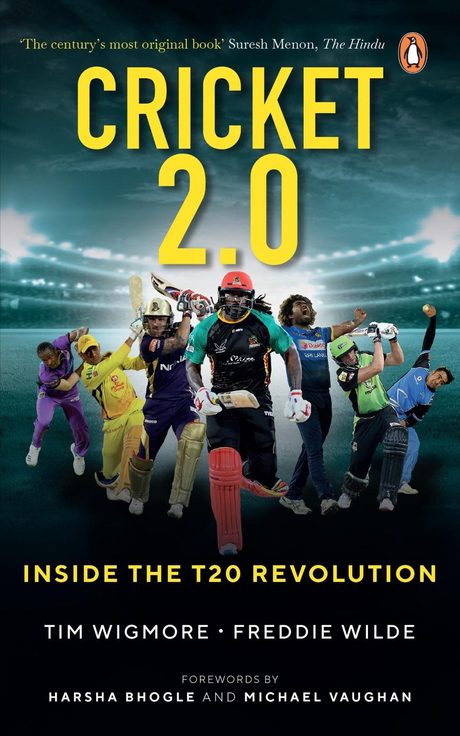
Cricket 2.0
Tim Wigmore2019about 438 pages
How T20 rewired the sport, written by two analysts who take the format seriously instead of sneering at it.
Wigmore and his co-author Freddie Wilde explain the cricket most of us actually watch: why the six became a percentage play, how leg spinners turned into the most valuable bowlers alive, what a data analyst does in a franchise dugout, how West Indian players built global freelance careers while their own board fell apart. They talk to coaches and analysts rather than legends, so the book explains decisions instead of retelling matches. It is the closest cricket has come to a Moneyball, and it argues its case better than Moneyball did. It won Wisden's book of the year.
Why it is at 10
Tenth because it is the most useful book here for anyone under thirty. The writing is functional rather than lovely, which is why it is not higher up. But if you watch the IPL and want to know why the field looks like that in the nineteenth over, nothing else comes close. Read it next to The Great Tamasha, which handles the money while this one handles the cricket.
Read it ifyou watch T20 and want to know why teams do what they do
Skip it ifstrike rates and match ups bore you
analytical, current, clearBest for: T20 and IPL watcherst20iplanalysis
11

Investigation
Bookie Gambler Fixer Spy
Ed Hawkins2012about 242 pages
A betting journalist spends years with India's illegal bookmakers and finds out how much of what we watch is arranged in advance.
Hawkins wrote about betting markets for a living, noticed that odds sometimes moved in ways matches could not explain, and went looking for the people setting them. The book takes him to bookmakers in India who handle enormous sums on a single game, to anti corruption officers who cannot touch them, and to the uncomfortable question of what a player is worth to someone who wants a specific over to go a specific way. He is careful about what he can prove and honest about what he cannot, which matters in a subject that attracts wild claims.
Why it is at 11
Eleventh because it covers ground nothing else here goes near, and because it changes how you watch a dead rubber. It ranks below the histories because parts of it read like a reporter's notebook rather than a finished argument, and the trail goes cold in places. Still the sanest book in English on cricket's betting economy, and the one to read before your next opinion about fixing.
Read it ifyou want the betting and fixing story reported rather than gossiped
Skip it ifyou would rather not think about your favourite sport that way
shadowy, careful, unsettlingBest for: readers who like investigative booksbettingcorruptionindiainvestigation
12

Reportage
Steve Smith's Men
Geoff Lemon2018about 267 pages
The sandpaper scandal from a writer who was in the ground, plus a hard look at the culture that made it inevitable.
In Cape Town in 2018 an Australian player was filmed working on the ball with sandpaper, and the fallout removed a captain, a vice captain and a coach inside a week. Lemon covered that tour and wrote fast, but this is not a cash in. He traces the years of sledging, of a team told to play right up to the line, of administrators who wanted the aggression and the sponsorship money at the same time. He is funny, genuinely angry, and very good on how a dressing room talks itself into something stupid.
Why it is at 12
Twelfth because it is the best book about a single cricket scandal and a fine example of a reporter refusing the official version. It sits below the histories because the subject is narrow and very Australian. If the sandpaper is only a meme to you, this explains why an entire country lost its temper for a month over a piece of yellow paper.
Read it ifyou like sports journalism about institutions failing in public
Skip it ifAustralian cricket politics holds no interest for you
angry, funny, forensicBest for: readers who like scandal reportingaustraliascandalreportage
13

Memoir
Coming Back to Me
Marcus Trescothick2008about 303 pages
An England opener explains why he kept flying home from tours, and it turns out to be the most honest book any cricketer has written.
Trescothick was England's best opening batsman of his generation and he left tours, more than once, without any public explanation that made sense at the time. This book is the explanation: a stress illness that arrived as sleeplessness and panic and made touring impossible, in a decade when nobody in the game had the words for it. He writes about county cricket, about his father driving him to matches, about the 2005 Ashes, and about the particular dread of an airport departure gate. Plain, unshowy writing, and it broke something open in the sport.
Why it is at 13
Thirteenth on a cricket axis and first if you rank by nerve. It is not higher because the cricket chapters are ordinary county season material and the prose is workmanlike. What makes it matter is the timing. An active international admitted to a mental illness in 2008, in a dressing room culture built to punish exactly that, and other players followed him.
Read it ifyou want an honest sportsperson's account of anxiety and depression
Skip it ifyou are after a triumphant career memoir with a trophy at the end
plain, honest, braveBest for: readers who want candourenglandmemoirmental health
Heads up: depression, anxiety and panic attacks described in detail throughout
14

Comedy
Rain Men
Marcus Berkmann1995about 178 pages
The funniest cricket book ever written, about an amateur side that loses every week and cannot stop turning up anyway.
Berkmann is a music journalist who plays extremely bad cricket for a team of extremely bad cricketers, and the book is about the madness of doing that every summer of your adult life. There are chapters on the bowler who cannot bowl straight and knows it, the batsman who averages four and blames the light, statistics as a form of self harm, and the deep private joy of a fixture washed out. If you have ever played any organised sport badly with your friends, the recognition is constant and slightly painful.
Why it is at 14
Fourteenth because it is a small book about a small subject, and a lot of the comedy is very English and tied to club structures you may not know. It stays on the list because it is the only book here about the cricket most of us actually play, in a gully or on a maidan, badly, at thirty four, with a tennis ball. Read it in one sitting on a long train.
Read it ifyou have ever played weekend cricket with unfit friends
Skip it ifyou want professional cricket and names you recognise
silly, self aware, EnglishBest for: gully and weekend cricketerscomedyamateurengland
15
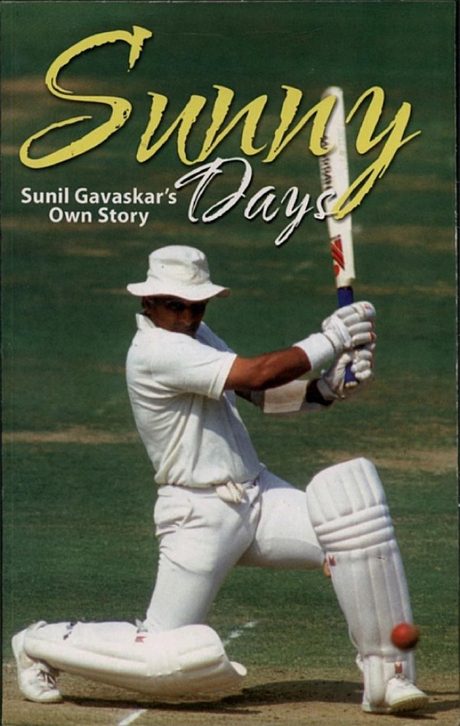
Memoir
Sunny Days
Sunil Gavaskar1976
The Indian cricket memoir worth your money: written young, written himself, and far spikier than anything a modern star would risk.
Gavaskar wrote this early, soon after the West Indies tour that made his name, and he wrote it without a ghost. The tone surprises people who only know him as a broadcaster. He is funny, competitive and rude about people he did not rate, including officials and a couple of teammates. There is the famous story of him being swapped with another baby in a Bombay hospital and spotted by an uncle who remembered a mark on his ear. The cricket is 1970s cricket, no helmets and long sea crossings, and the voice belongs to a young man who has decided he belongs.
Why it is at 15
Fifteenth here, and first among Indian player books, which is the actual point. Set it against number sixteen: same country, same level of fame, one written by a young man with opinions and the other assembled decades later by a committee of caution. Some of the cricket is dated and a few of the attitudes have aged badly. The honesty has not.
Read it ifyou want an Indian cricketer with real opinions on the page
Skip it ifyou expect modern sensibilities, because parts of it have not aged well
cocky, funny, datedBest for: fans of 1970s Indian cricketindiamemoir1970s
16
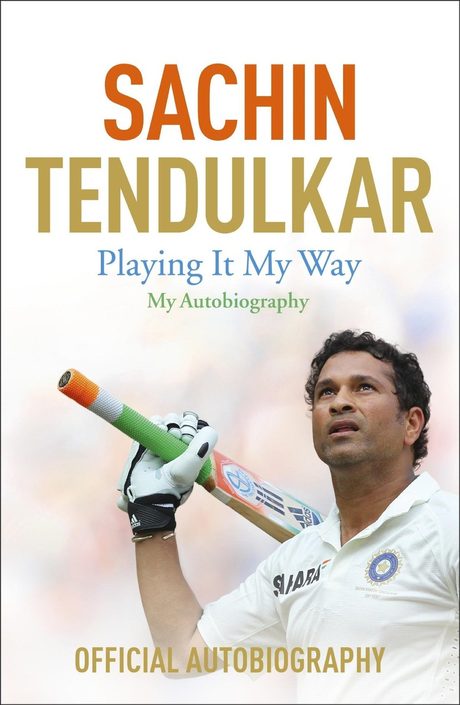
Memoir
Playing It My Way
Sachin Tendulkar2014about 625 pages
The biggest cricket book India has produced, and the most careful one, which is exactly what is wrong with it.
Tendulkar's autobiography, written with Boria Majumdar, walks through a career that ran twenty four years: the Shivaji Park childhood, the tour of Pakistan at sixteen, his father's death during the 1999 World Cup, the back injury and the tennis elbow, the 2011 final at the Wankhede. The detail is real and the cricket is accurate. What is missing is the man. Almost every chapter reads as though it passed a legal check and a reputation check before it reached the page, and the one section that made news, about a difficult coach, only proves the rule.
Why it is at 16
Last, and on the list mainly so I can be straight about it. This is the cricket book most Indians buy and the one that teaches you least. It is not badly made. It is guarded, and a guarded life story is a very long read for very little return. If you want Sachin, watch the innings, then read Gavaskar for what an Indian batsman sounds like when he stops managing you.
Read it ifyou want the events of that career laid out in his own order
Skip it ifyou want candour, because nearly every conflict gets smoothed flat
careful, detailed, guardedBest for: Tendulkar completistsindiamemoirtendulkar
Worth knowing
Why most cricket autobiographies are a waste of your money
Think about when these books get made. A player retires at thirty six, a publisher pays for the name, a co-writer gets six months of interviews, and then the manuscript goes past an agent, a sponsor or two, a board that may still employ him as a commentator, and a family that has to live in the same city as everybody he might annoy. What survives that process is a career summary with the arguments taken out.
The exceptions on this list got there by accident. Gavaskar wrote his at twenty seven, before he had a legacy to protect. Trescothick wrote his because the alternative was letting people keep guessing about why he flew home. That is the pattern worth remembering when the next big memoir lands: ask what the writer still stands to lose. If the answer is plenty, wait for the paperback and buy a reported book instead.
Worth knowing
Two of these books sit with mental illness
Coming Back to Me is about a serious stress illness described from the inside, and Mystery Spinner ends with a suicide. Both are handled with care by their writers, and neither is a sad read for its own sake. Still, if you are having a bad month, know what you are walking into.
One plain thing before you buy either: a book is company, not treatment. Recognising yourself on a page can be a relief and it can also be the nudge to call somebody. If your own week sounds like Trescothick's, talk to a doctor or a counsellor, not just to a paperback.
Worth knowing
A reading order if you have never read a cricket book
Start at number four or number fourteen, not at number one. Chinaman and Rain Men both work as ordinary good books, with no homework required. Then take Pundits from Pakistan for the pleasure of the writing, then The Great Tamasha to understand the game as it is now run.
After those four, Beyond a Boundary and A Corner of a Foreign Field will land properly instead of feeling like a set text. That is the whole trick with this genre. The famous books at the top are not harder, they just assume you have already decided the sport is worth an argument.
People also ask
Questions, answered
What is the best cricket book of all time?
Beyond a Boundary by C L R James, and it is not really close. It was published in 1963 and it is the book everyone else on this list has read. James writes about cricket as art and as colonial politics at the same time, using his own Trinidadian childhood as the spine. If you want the best book specifically about Indian cricket, that is A Corner of a Foreign Field by Ramachandra Guha, which is at number two here.
Which cricket book should I read first if I do not follow cricket?
Chinaman by Shehan Karunatilaka, at number four. It is a novel, it is very funny, and the narrator explains everything you need as he goes because he is explaining it to himself. Netherland at number eight is the other easy entry point if you prefer quiet literary fiction. Neither one asks you to know a single rule, and both are better novels than they are cricket books.
Are cricketers' autobiographies worth reading?
Usually not. Most are written after retirement with a co-writer and approved by people who have something to lose, so the conflicts get smoothed and you finish knowing the fixture list rather than the person. Two on this list survive the process: Coming Back to Me by Marcus Trescothick, because he had a reason to tell the truth, and Sunny Days by Sunil Gavaskar, because he wrote it young and by himself before there was anything to protect.
What is the best book about the IPL?
The Great Tamasha by James Astill for the money, the politics and the world the league grew out of, and Cricket 2.0 by Tim Wigmore and Freddie Wilde for the cricket itself, meaning why teams pick the players they pick and set the fields they set. Read them in that order. Astill tells you why the IPL exists and Cricket 2.0 tells you what is happening on the field while you watch it.
Is Playing It My Way by Sachin Tendulkar worth reading?
Only if you want the events of his career in his own sequence. The book is accurate, detailed and extremely careful, and the carefulness is the problem: almost every disagreement in twenty four years of professional sport arrives sanded down. If what you want is an Indian batsman being honest on a page, Sunny Days by Gavaskar does far more for you in half the length.
Are there good cricket books by women or about women's cricket?
Yes, and this list does not do that well, which I would rather say than hide. Rachel Dwyer, Emma John and Raf Nicholson have all written seriously about the game, and the women's game has produced strong recent memoirs in England and Australia. I kept this list to books I have actually read and could verify with a real edition, and my own reading here has been narrow. Treat that as a gap in me, not in the writing.
Before you go
What to read tonight
If you take one book tonight, take Chinaman when you want to enjoy yourself and A Corner of a Foreign Field when you want to argue with someone. Those two cover the extremes of what this genre can do, and between them they will tell you whether you want the rest of the list at all.
The habit worth building is smaller than a reading list. Next time a series ends and you feel that flat Sunday evening when there is no cricket on, pick up the book about that part of the game rather than the highlights package. A scorecard tells you what happened in about four seconds. Everything else, why anyone cared, who was left out, who made money, sits in these sixteen.
Keep going
Lists that pair with this one
Indian Fiction
16 Best Books to Understand India, Ranked by What They Explain
Sixteen books, ten doors into the same country: history, caste, the mega city, the village, money, and where to start tonight.
Nonfiction
16 Best Books on Indian History for Beginners, in Order
Not a ranking but a route: one or two books per era, from the Indus valley to the news you read this morning.
Nonfiction
15 Best Books About Bollywood, Ranked by Who Paid for Access
Every Hindi cinema book is a trade between access and candour, so I ranked these by how much you actually learn once the trade is made.
Nonfiction
15 Best Travel Books About India, Even If You Live Here
Ranked by what each one gives a reader who already knows what a railway platform smells like at four in the morning.
Nonfiction
13 Best Books About Music, Sorted by the Question They Answer
Science, memoirs, riyaaz, film songs and two novels, each one tagged with whether you should be listening while you read it.