The first time I took a Churchgate local at nine in the morning, I did not decide when to get off. The crowd decided for me, quite gently, at Marine Lines, and I stood on the platform putting my shirt back in order while ten thousand people went past me like weather.
That is the thing novels understand about Mumbai that photographs miss. The city is mostly an argument about space and who is allowed how much of it. Every book on this list is secretly about square feet: a chawl room shared by five, a landing between two floors, a society flat a builder wants, a shed beside the airport, a Malabar Hill drawing room with a woman sitting on the floor beside the sofa.
So I have ranked these sixteen on two things: how much of the city you carry out with you afterwards, and whether the novel stands on its own once you stop caring about the setting. Each entry carries its neighbourhood and its era in the label, so the list doubles as a map. If you would rather travel south to north than one to sixteen, there is a route further down the page.
Two of the sixteen are short story collections, marked as such. One is the giant everybody mentions at parties, and I have put it last, with reasons.
In a hurry
Quick picks
1Best overall
Sacred Games
the only book that holds the police, the underworld, the films and the slums at once
2Best in one weekend
Em and the Big Hoom
small, funny, and it sits on your chest for a month afterwards
3Funniest
Ravan & Eddie
two boys, one chawl, and the best comic writing in Indian English
11Best first taste of the city
Love and Longing in Bombay
five stories, five Bombays, no nine hundred page commitment
16The famous one, ranked honestly
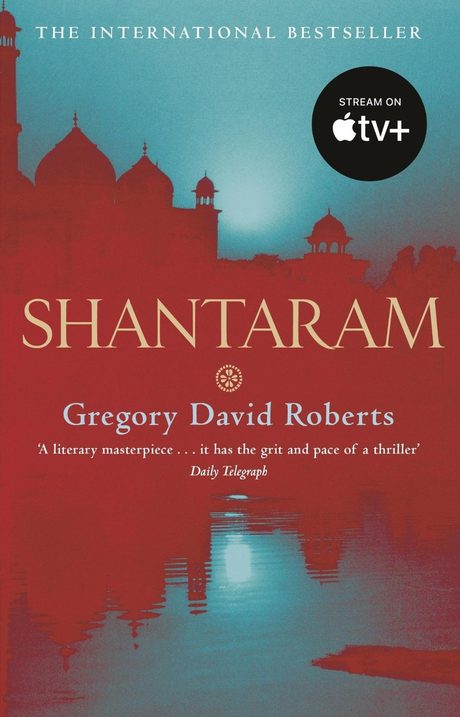
Shantaram
wonderful for three hundred pages, then a foreigner's dream of the place
How I picked these
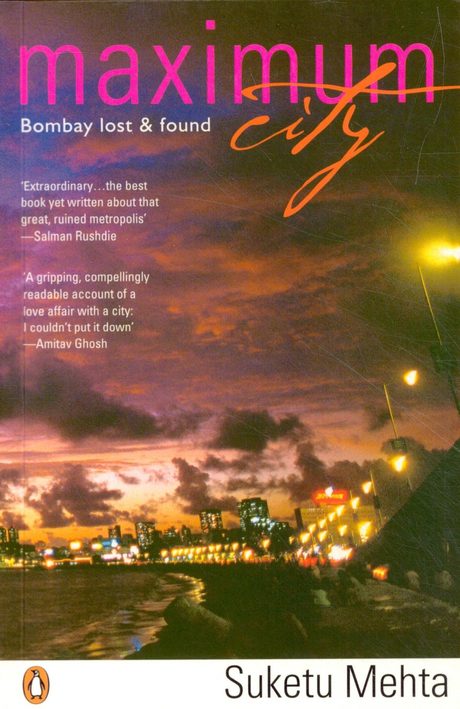
- Fiction only. Maximum City and Mumbai Fables are better than half of this list and both are reported non fiction, so they are out here. Maximum City sits on my list of books to understand India instead.
- Bombay has to be the subject and not the backdrop. If the story could move to Pune without losing anything, it did not make the cut.
- Spread across eras and pin codes: 1921 to the late 2000s, Colaba to Vakola, Malabar Hill drawing rooms to Worli chawls. A list of sixteen south Bombay novels would be a lie about the city.
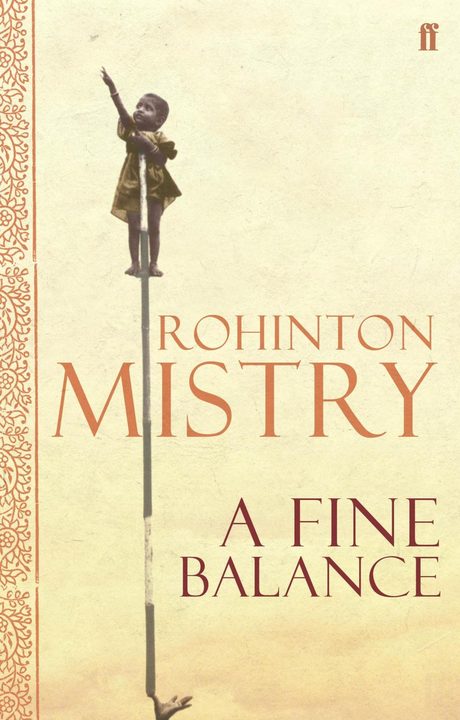
- Two writers appear twice, Vikram Chandra and Rohinton Mistry, because in both cases the two books are different cities rather than the same one told again.
- Two short story collections are in and labelled, because leaving Manto out of a Bombay list would be vandalism.
- Every title checked through Google Books and Open Library, so the editions and covers here are real.
The whole list at a glance
All 16 books, in order
| # | Book | Author | Year | Vibe | Best for |
|---|
| 1 | Sacred Games | Vikram Chandra | 2006 | sprawling, profane, addictive | readers who want everything |
| 2 | Em and the Big Hoom | Jerry Pinto | 2012 | funny, tender, unflinching | one weekend |
| 3 | Ravan & Eddie | Kiran Nagarkar | 1994 | raucous, warm, sly | readers who want to laugh |
| 4 | Such a Long Journey | Rohinton Mistry | 1991 | warm, sad, precise | readers who love family novels |
| 5 | Last Man in Tower | Aravind Adiga | 2011 | cold, tense, satirical | anyone in a redevelopment fight |
| 6 | Bombay Stories | Saadat Hasan Manto | 2012 | blunt, humane, unsparing | one story a night |
| 7 | Narcopolis | Jeet Thayil | 2012 | narcotic, elegiac, hypnotic | readers who love style |
| 8 | Serious Men | Manu Joseph | 2010 | cruel, funny, clever | readers who enjoy satire |
| 9 | The Moor's Last Sigh | Salman Rushdie | 1995 | maximalist, furious, dazzling | readers who finished Midnight's Children |
| 10 | Family Matters | Rohinton Mistry | 2002 | domestic, tender, relentless | readers with ageing parents |
| 11 | Love and Longing in Bombay | Vikram Chandra | 1997 | elegant, varied, companionable | first time visitors to the city |
| 12 | The Death of Vishnu | Manil Suri | 2001 | intimate, formal, sad | readers who like short literary novels |
| 13 | The Space Between Us | Thrity Umrigar | 2005 | warm, sad, direct | readers who employ house help |
| 14 | The Widows of Malabar Hill | Sujata Massey | 2018 | brisk, period, satisfying | holiday reading with substance |
| 15 | Baumgartner's Bombay | Anita Desai | 1988 | quiet, wintry, exact | readers who like interior novels |
| 16 | Shantaram | Gregory David Roberts | 2003 | romantic, bloated, seductive | long flights and beach chairs |
The list
The books, ranked
1
The whole island, 1990s into the 2000s
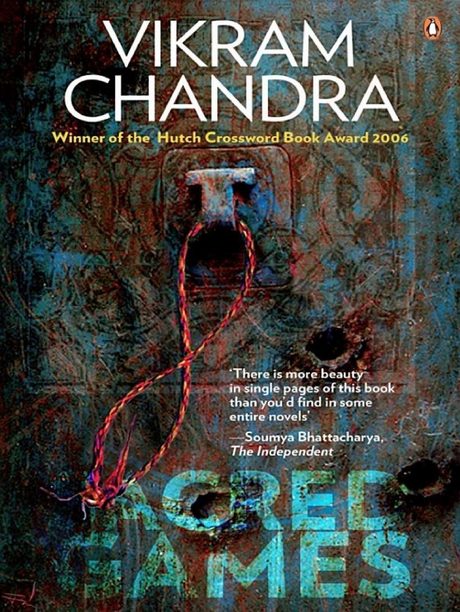
Sacred Games
Vikram Chandra2006about 1351 pages
A tired Sikh inspector, a gangster talking from inside a concrete bunker, and nine hundred pages of the city's full machinery.
A gangster called Ganesh Gaitonde shuts himself inside a bunker in a Bombay suburb and starts talking. Sartaj Singh, a divorced inspector who is good at the job and bad at the career, is on the other side of the wall. From that setup Chandra opens out into everything: builders, film producers, informers, a godman, intelligence officers, and the arithmetic of who owns which piece of land. The Bombay Hindi runs untranslated, which irritates some readers and is the whole point for the rest of us. Netflix adapted it in 2018 and the book is considerably better.
Why it is at 1
Number one because it holds more of the city than anything else written. Most Bombay novels take one building, one lane or one community. This one takes the police, the underworld, the film industry, the slums and the state, and shows the same money moving through all of them. It asks for nine hundred pages and earns them until roughly the last hundred.
Read it ifyou want the entire city and have three weeks to give it
Skip it ifyou want a tight thriller, because this one detours constantly
sprawling, profane, addictiveBest for: readers who want everythingcrimeepicsuburbs
Heads up: graphic violence, sexual violence, communal riots
2

A one bedroom flat in Mahim, 1980s
Em and the Big Hoom
Jerry Pinto2012about 212 pages
A son tries to describe his mother's mind inside the flat where all four of them live, and it turns into a love story.
The family is Goan Catholic, four people in a one bedroom flat in Mahim: a father the children call the Big Hoom, a mother called Em who smokes beedis, talks without stopping, and swings between electric joy and psychiatric wards, and two kids who grow up doing the arithmetic of her illness. The narrator is the son, trying as an adult to work out who his mother was before any of it started. Pinto writes mental illness with no varnish and no pity, and the book is far funnier than that description makes it sound.
Why it is at 2
Second because it is the most Bombay book here in a way that has nothing to do with landmarks. It is about space: what a family turns into when four people share four hundred square feet and one of them is unwell. It is also the shortest book in this top five, and the one I have given away most often.
Read it ifyou want a small book that stays on your chest for weeks
Skip it ifmental illness in a family is too close to home right now
funny, tender, unflinchingBest for: one weekendfamilymental healthmahim
Heads up: suicide attempts, psychiatric hospitals, bipolar illness
3

A CWD chawl in central Bombay, 1950s to 1970s
Ravan & Eddie
Kiran Nagarkar1994
A Hindu boy and a Catholic boy grow up on different floors of one chawl, never quite friends, always inside each other's story.
Ravan is Maratha Hindu, Eddie is Goan Catholic, and they live in the same government chawl in central Bombay, separated by one floor and a death that happens on the first page. Nagarkar follows them from childhood into adolescence through Hindi film obsession, the neighbourhood gym, altar boy duty, bad first jobs and worse first attempts at girls. Between chapters he breaks off into short essays on the chawl as a machine for living and on the Bombay film song. It is the funniest Indian novel I have read, and all of the comedy runs on real poverty.
Why it is at 3
Third because the chawl is where most of Bombay actually lived through the twentieth century, and almost no novel in English has got inside one this well. It is also the only book here that will make you laugh out loud on a crowded train. Some readers find the essay detours self indulgent. I would keep every single one.
Read it ifyou want comedy that grows out of a real place
Skip it ifyou dislike novels that stop to lecture you, however cheerfully
raucous, warm, slyBest for: readers who want to laughcomedychawlcoming of age
Pairs with: Serious Men at number eight, the same chawl world half a century later and much angrier.
4

A Parsi apartment block, 1971
Such a Long Journey
Rohinton Mistry1991about 429 pages
A bank clerk gets pulled into an old friend's secret during the year India goes to war over Bangladesh.
Gustad Noble is a bank clerk with a bad hip, a son who refuses the future planned for him, and a daughter who falls ill. Then a parcel arrives from a friend who moved into government work, and Gustad's carefully held life begins to leak. Around him the compound wall is being used as a public urinal until a pavement artist starts painting gods along it, and the country slides into the 1971 war. Mistry writes ordinary decency under pressure better than almost anybody, and the Parsi Bombay he describes was already thinning out when he wrote it.
Why it is at 4
Fourth because it is the best novel about one specific Bombay community in the year the whole country turned. Set against Family Matters further down, this one has more plot and much more street in it. If you have never read Mistry, begin here rather than there.
Read it ifyou want humane realism with a slow burning plot
Skip it ifyou need pace, because it takes a hundred pages to warm up
warm, sad, preciseBest for: readers who love family novelsparsi1971literary
5
Vishram Society, Vakola, beside the airport, 2000s
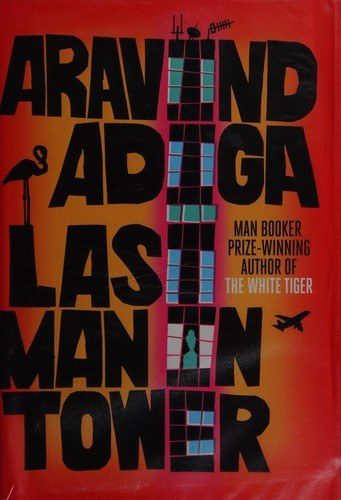
Last Man in Tower
Aravind Adiga2011
A builder offers every flat owner in an ageing society more money than they have ever seen, and one retired teacher says no.
Vishram Society is a respectable, crumbling co operative near the airport, full of people who have known each other for thirty years. A developer arrives with an offer that would change every family in it, on the single condition that everyone signs. Masterji, a retired schoolteacher, will not. Adiga then does something quietly brutal: he keeps the neighbours reasonable, sympathetic and steadily more desperate, and lets you watch a decent community talk itself into something terrible. I do not know a better novel about what property prices do to ordinary people.
Why it is at 5
Fifth because redevelopment is the central Bombay drama of the last twenty years, and this is the only novel that treats it as a moral thriller instead of background scenery. As prose it is thinner than Mistry above. As a machine it is sharper, and the final third is genuinely difficult to put down.
Read it ifyou have ever sat through a housing society meeting
Skip it ifyou want somebody to root for the whole way through
cold, tense, satiricalBest for: anyone in a redevelopment fightpropertyvakolamoral thriller
6
Kamathipura and the film studios, 1930s and 1940s (stories, not a novel)
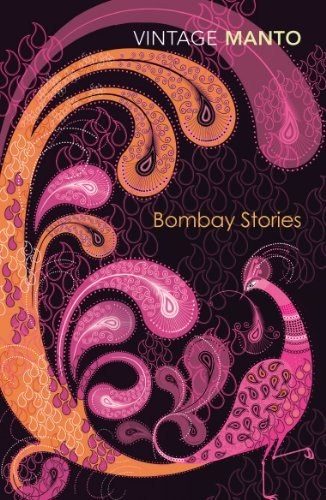
Bombay Stories
Saadat Hasan Manto2012
Manto's Bombay: film extras, pimps, sex workers and small time hustlers, written by a man who lived among all of them.
Manto worked in the Bombay film industry through the 1930s and 1940s and wrote short stories about the people that industry used and threw away. Sex workers who turn out to be the most honest characters on the page, screenwriters waiting on a cheque, landlords, drifters, men who mistake pity for love. He never sentimentalises anybody and never sneers either, which is much harder than it looks. The stories themselves are from before independence; this English selection gathering the Bombay ones appeared in 2012, and it is the closest thing we have to a photograph of the city between the wars.
Why it is at 6
Sixth, and the first of the two story collections here, which I count because no list of Bombay fiction is honest without Manto. He wrote the city's underside before independence, before the mills shut, before most of the reclamations. Read three of these stories and you notice how much of what came afterwards is a footnote to him.
Read it ifyou want short, hard, unsentimental fiction
Skip it ifyou want one continuous story rather than fragments of a city
blunt, humane, unsparingBest for: one story a nightshort storieskamathipurapre-independence
Heads up: sex work, sexual violence, casual cruelty
7
Shuklaji Street, 1970s into the 2000s
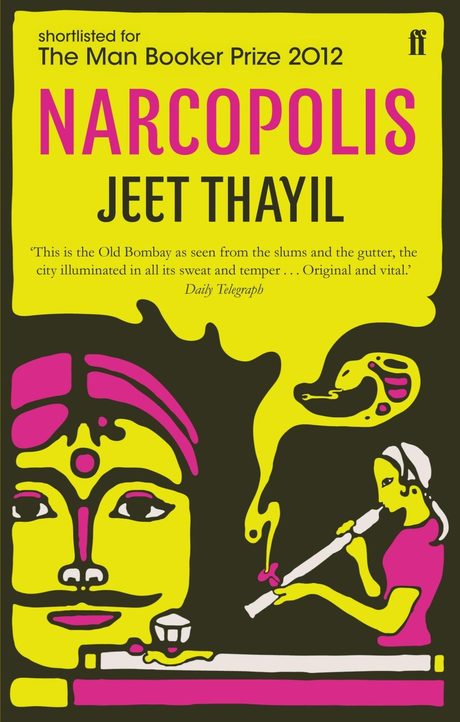
Narcopolis
Jeet Thayil2012about 274 pages
An opium room in the old red light district, the people who live inside it, and the cheap heroin that eventually clears them out.
The book opens with a prologue that runs as a single long sentence and sets the terms: this is a novel that wants to sound like the drug it is about. Most of it happens in and around Rashid's opium khana off Shuklaji Street, with Dimple, who prepares the pipes and is the best character in the book, at the centre. Time drifts, the seventies turn into the eighties, cheap heroin arrives and the old ritual dies with it. Thayil was an addict for years, and the book carries the authority of a man describing his own former address.
Why it is at 7
Seventh because it maps a Bombay that has since been demolished and denied, and because the sentences are better than the subject usually attracts. It is a haunting rather than a story, which is why it sits below the novels above it. If you want plot, look elsewhere. If you want an atmosphere you cannot shake off for a week, this is the one.
Read it ifyou want language and atmosphere ahead of story
Skip it ifdrug use on nearly every page is not what you want
narcotic, elegiac, hypnoticBest for: readers who love styledrugsred light districtliterary
Heads up: addiction, sexual violence, self harm
8

BDD chawls in Worli, an institute in the south, 2000s
Serious Men
Manu Joseph2010about 353 pages
A Dalit clerk decides his perfectly ordinary son is a mathematical genius, and the lie gets away from him.
Ayyan Mani lives in a one room chawl in Worli and works as personal assistant to a Brahmin astronomer who is busy with a theory about life falling from the sky. Bored, humiliated by his position and much cleverer than anybody around him admits, Ayyan starts feeding the world the story that his ten year old son is a prodigy. Joseph writes caste, ambition and male vanity with a comic cruelty that spares nobody, the scientists least of all. Netflix made a film of it in 2020 and the novel is sharper.
Why it is at 8
Eighth because it is the funniest book here about the thing Bombay likes to claim it does not have, which is caste, and because Ayyan Mani is one of the great Indian characters of this century. It tips into satire in places and the women are thinner than the men. Worth reading anyway, and fast.
Read it ifyou like comedy with a knife inside it
Skip it ifyou want warmth, because this book has very little to spare
cruel, funny, cleverBest for: readers who enjoy satiresatirecasteworli
9

Malabar Hill and the city's politics, across the twentieth century
The Moor's Last Sigh
Salman Rushdie1995about 458 pages
A spice dynasty from Cochin ends up in a Bombay mansion, and their son ages at twice the normal speed.
Moraes Zogoiby, called the Moor, narrates his family from a Portuguese Jewish and Christian line in Cochin to a house on Malabar Hill. He has a deformed hand and a body running at double speed, so a whole life gets compressed into half of one. His mother is a great painter, his father is in businesses nobody names at dinner, and the last third becomes a fight with a Bombay politician assembled out of the city's Hindu right. Rushdie is at his most playful here and also at his angriest about what happened to Bombay in the nineties.
Why it is at 9
Ninth because it is the best novel about Bombay as an idea, the port that mixed everybody together, and about the politics that set out to unmix it. It is also the most work on this list: the sentences pile up and the allegory is heavy. If you have never read Rushdie, this is a difficult first date.
Read it ifyou like maximalist novels and know a little Bombay politics
Skip it ifyou want plain prose and a straight timeline
maximalist, furious, dazzlingBest for: readers who finished Midnight's Childrenliterarymalabar hillpolitics
10

Two Parsi flats, one grand and one cramped, 1990s
Family Matters
Rohinton Mistry2002about 532 pages
An old man with Parkinson's is shifted between his stepchildren's large flat and his daughter's small one, and everybody pays.
Nariman Vakeel is seventy nine, a retired professor with Parkinson's and a past he was never allowed to choose. When he breaks an ankle, his stepchildren decide he should recover at his daughter's place, a two room flat already holding four people. What follows is not melodrama, it is arithmetic: who bathes him, who pays for the nappies, who gives up work, who sleeps where. Mistry sets it in the Bombay of the nineties, with the Shiv Sena in power and small corruptions working their way into every household decision.
Why it is at 10
Tenth because it is the most domestic novel here and, if you have an ageing parent, the most frightening. It has less street life than Such a Long Journey, which is why it sits lower, and more emotional precision, which is why it sits this high. Read it second if the first Mistry worked on you.
Read it ifyou want a slow family novel that refuses to lie
Skip it ifcaring for an ill parent is your actual life right now
domestic, tender, relentlessBest for: readers with ageing parentsparsifamily1990s
Heads up: illness, incontinence and elder care described plainly
11
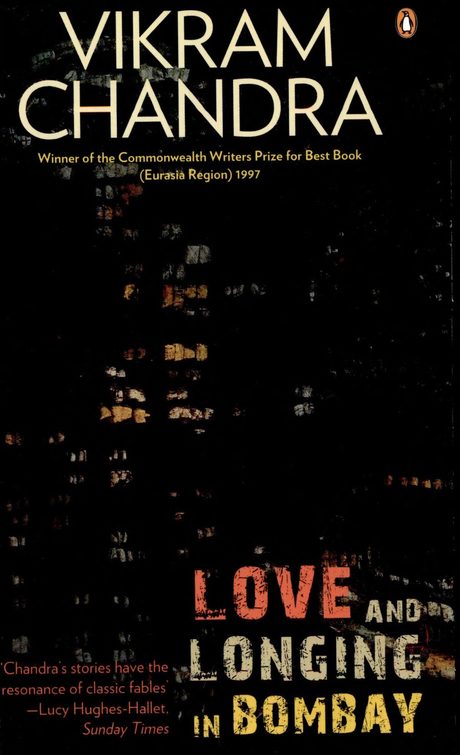
Five stories, five Bombays, 1990s (stories, not a novel)
Love and Longing in Bombay
Vikram Chandra1997about 296 pages
Five long stories told in a bar by a retired civil servant, each one opening a different part of the city.
A retired bureaucrat named Subramaniam holds court in a Bombay bar and tells stories to a younger crowd who half believe him. There is a ghost story attached to an army officer's house, a police story whose inspector later grew into Sacred Games, one about new software money colliding with old money, and one about a mother trying to find out what her son actually does for a living. The frame lets Chandra move between social worlds without forcing them into a single plot, and each story is the right length for a commute.
Why it is at 11
Eleventh, and the one I hand to visitors. Five stories give you five Bombays inside three hundred pages, from Malabar Hill drawing rooms to police stations, with none of the commitment Sacred Games demands. It is uneven and the later stories are weaker than the first two, but for effort against reward nothing here beats it as an introduction.
Read it ifyou want the city in five doses instead of one
Skip it ifyou want a single story to sink into for a week
elegant, varied, companionableBest for: first time visitors to the cityshort stories1990ssouth bombay
12
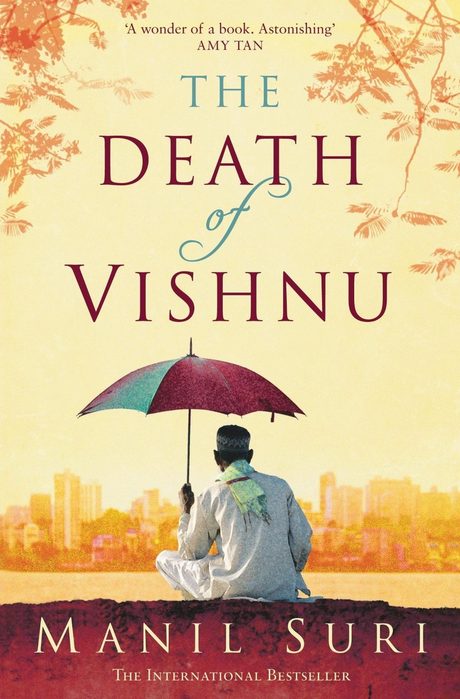
One apartment building, read from the stairwell upward, 1990s
The Death of Vishnu
Manil Suri2001about 354 pages
The man who runs errands for the building lies dying on the landing while the families above him carry on arguing.
Vishnu sleeps on the landing between the ground and first floors of a Bombay apartment building, does odd jobs for the families upstairs, and is now dying there in front of all of them. Suri builds the novel as a climb: the Asranis and the Pathaks fighting over a shared kitchen on the first floor, a grieving widower higher up, a teenage elopement running through the middle of it, and Vishnu's own drifting memories underneath. The building becomes a small model of the city, and the joke is that nobody has time to look down at the stairs.
Why it is at 12
Twelfth because the vertical structure is the smartest formal idea on this list, and because it catches the particular Bombay talent for living within inches of somebody whose surname you never learned. It is a first novel and shows it, mostly in the mystical passages. The ground floor material is excellent.
Read it ifyou like a novel built on a clever structure
Skip it ifthe dreamlike mystical passages will irritate you
intimate, formal, sadBest for: readers who like short literary novelsapartmentliterarydebut
13
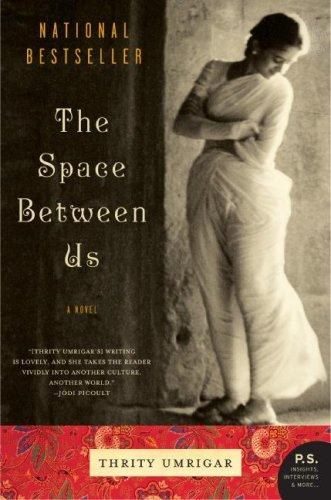
A Malabar Hill flat and the slum its maid goes home to, 2000s
The Space Between Us
Thrity Umrigar2005about 352 pages
A Parsi widow and the woman who has cleaned her house for decades, and the line between them that neither can cross.
Sera is a middle class Parsi widow in a good building. Bhima has worked in her kitchen for years, sits on the floor, drinks from a separate glass, and goes home to a slum where her granddaughter is the family's one chance at something better. Umrigar writes the real affection between the two women honestly, then keeps showing you the trapdoor underneath it, which opens the moment an actual crisis arrives. The book is direct rather than subtle, and it hurts exactly because everyone in it believes they are being kind.
Why it is at 13
Thirteenth because the maid and the memsahib is one of the most common relationships in urban India and one of the least seriously written about. It is more sentimental than the books above it and the ending pushes hard on the reader. Read it if the woman who works in your building has become invisible to you.
Read it ifyou want class and domestic work looked at squarely
Skip it ifyou dislike novels that tell you how to feel
warm, sad, directBest for: readers who employ house helpclassparsidomestic work
Heads up: domestic abuse, alcoholism, an unwanted pregnancy
14

Malabar Hill and the Fort offices, 1921
The Widows of Malabar Hill
Sujata Massey2018about 401 pages
Bombay's first woman solicitor takes a case involving three widows in seclusion who have never met their own lawyer.
Perveen Mistry is a Parsi solicitor in 1921 Bombay, working in her father's firm because no court will let her argue in it. An estate crosses her desk: three widows of the same man, living in seclusion, all three signing away their inheritance in suspiciously similar handwriting. Because she is a woman she can walk into the part of the house no male lawyer can enter. Massey builds a proper mystery on top of real legal history, and the period detail is the real pleasure here: trams, Fort offices, hostel rooms, the small daily rules that governed women's lives.
Why it is at 14
Fourteenth, and the most purely enjoyable book on the list. It is genre fiction and never pretends otherwise. What earns it a place is the 1921 city, reconstructed with care, and a heroine drawn from the first generation of Indian women who trained in law. If you want Bombay history without opening a history book, start here.
Read it ifyou want a mystery with real period research behind it
Skip it ifyou want literary fiction rather than the opener of a series
brisk, period, satisfyingBest for: holiday reading with substancemystery1920sparsi
15
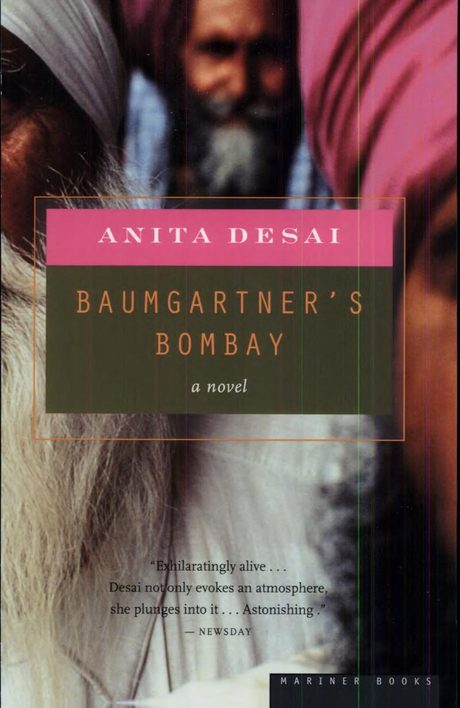
Colaba, from the 1930s to the 1980s
Baumgartner's Bombay
Anita Desai1988about 244 pages
A German Jew escapes to India, is interned as an enemy alien by the British, and grows old in Colaba feeding stray cats.
Hugo Baumgartner leaves Germany in the thirties, lands in Calcutta, and is promptly locked up by the British because his passport makes him an enemy alien, which is the joke the century plays on him twice over. He ends up in Bombay with no country, no language fully his own, a rented room in Colaba and a bag of scraps for the neighbourhood cats. Desai writes exile as a physical condition rather than a theme, and her Bombay is the one foreigners fall into and never leave. Short, cold, exactly observed, and much sadder than the cats suggest.
Why it is at 15
Fifteenth because it is the quietest book here and the one that stays longest. It shows a Bombay defined by the people the twentieth century simply left there: refugees, drifters, the leftovers of empire. It is slow and interior, which is why it sits down here rather than in the top ten, and not because it is any less good.
Read it ifyou want exile and old age written without self pity
Skip it ifyou need plot and forward motion in a novel
quiet, wintry, exactBest for: readers who like interior novelsexilecolabaliterary
16
Colaba, a slum and the underworld, 1980s
Shantaram
Gregory David Roberts2003about 1196 pages
The famous one: an Australian escapee lands in Bombay, opens a clinic in a slum, and falls in with the local mafia.
Roberts escaped an Australian prison, reached Bombay on a false passport, lived in a slum, learned Marathi, worked around the underworld, and turned those years into a very long novel sold as more or less his own life. The first three hundred pages are why people love it: Prabaker as a guide, the slum clinic, a city that keeps handing an outsider a place in it. Then it becomes a mafia saga with a detour into Afghanistan and long stretches of philosophy from a gangster mentor. It became a global hit and Apple turned it into a television series.
Why it is at 16
Sixteenth, and ranked honestly. It is here because it is the book most people mean when they say a novel about Bombay, and because those first three hundred pages really are wonderful. It is last because it runs to nine hundred pages, at least three hundred of them self admiring, and because its Bombay is a foreigner's dream of the place. Read it after two or three others so you can tell the difference.
Read it ifyou want a big romantic adventure and can forgive the sermons
Skip it ifyou want the city as the people who live in it experience it
romantic, bloated, seductiveBest for: long flights and beach chairsadventurecolabaunderworld
Worth knowing
The route: reading the city south to north
If you would rather read Bombay as geography than as a ranking, go in this order. Start at the bottom tip with Baumgartner's Bombay in Colaba, then The Widows of Malabar Hill for the Fort and the 1921 city, then Shantaram if you want it. Climb to Malabar Hill and Chowpatty for The Space Between Us, Family Matters and The Moor's Last Sigh. Into the middle of the island next: Bombay Stories for Kamathipura, Narcopolis for Shuklaji Street, then Serious Men and Ravan & Eddie for the chawls at Worli and central Bombay.
Then head out to the suburbs, which is where most of the city actually lives: Em and the Big Hoom in Mahim, Last Man in Tower in Vakola beside the airport, and Sacred Games moving through all of it at once. Read in that order and the list draws you a map. You will also notice the thing every Bombay novel is quietly about, which is how many square feet a person is allowed to occupy.
Worth knowing
Bombay or Mumbai
The city was officially renamed in 1995. Most of these novels were written before that or are set before it, so they say Bombay, and I have followed each book's own usage instead of correcting it. The switch is not only a matter of dates either: several of these writers use Bombay deliberately, for a city they believe has since changed into something else. Nobody here is being careless, and the search engines treat the two as one place anyway.
People also ask
Questions, answered
Which Mumbai novel should I read first?
Em and the Big Hoom if you want something short and unforgettable, or Love and Longing in Bombay if you want a tour of the city in five stories. Save Sacred Games for when you have three clear weeks, because at nine hundred pages it is a commitment rather than a book. If you are visiting the city soon, read Last Man in Tower as well, since it explains most of what you will see happening to the skyline.
Is Shantaram a true story?
It is sold as a novel drawn from the author's life. Gregory David Roberts did escape an Australian prison and did spend years in Bombay, and he has always described the book as fiction rather than memoir, whatever the covers imply. Read it as a novel with an autobiographical engine, enjoy the first third, and treat the wisdom speeches as a character's opinions rather than reporting about the city.
Why is Midnight's Children not on this list?
Because only part of it is a Bombay book. It begins in Kashmir, spends its childhood chapters in Bombay, then moves to Karachi, Delhi and the war in Bangladesh, so the city is one movement in a much larger piece. I have picked The Moor's Last Sigh instead, which stays with Bombay and is angrier about what happened to it. If you want the Bombay chapters of Midnight's Children, they are wonderful and they are still there.
Is Maximum City a novel?
No. Suketu Mehta's Maximum City is reported non fiction, and it is one of the two or three best books ever written about the city, which is exactly why people assume it belongs here. This list promises novels, so it is not on it. You will find it near the top of my list of books to understand India, where it fits without any asterisk attached.
Which book gives the best sense of Mumbai as it is now?
Last Man in Tower for the property mania and the suburbs, and Sacred Games for how money, police work and politics fit together. Both are from around 2006 to 2011, which is the most recent this list gets. That is a genuine gap: the very good novels about the city tend to arrive a decade after the years they describe, so the 2020s Bombay novel is probably being written right now.
Are any of these translated from Indian languages?
One. Manto wrote in Urdu and Bombay Stories is an English selection of his work. Everything else here was written in English, which is a real limit on this list rather than a judgement. Marathi and Gujarati novels set in this city exist in numbers, and most of them have never been translated well or at all. If you read Marathi, you already have a bigger shelf available to you than this one.
Before you go
What to read tonight
If you have one evening, take Em and the Big Hoom. If you have a month and a long commute, Sacred Games will eat all of it and you will not resent a minute. And if you are actually going to Mumbai, read Love and Longing in Bombay on the flight and Last Man in Tower after you have seen the suburbs from the back of an auto, because the second one will make sense only then.
One habit worth stealing: read these with a map open on your phone. Look up Vakola, Shuklaji Street, Mahim, the Fort, the Worli chawls. The city on the page and the city on the map are only the same size in the books that got it right, and you will spot the difference within a chapter.
Keep going
Lists that pair with this one
Indian Fiction
12 Best Novels Set in Delhi, Plus 3 That Are Not Fiction
Delhi is at least five cities stacked on one map, so I have ranked these by which one you actually take away.
Indian Fiction
16 Best Books to Understand India, Ranked by What They Explain
Sixteen books, ten doors into the same country: history, caste, the mega city, the village, money, and where to start tonight.
Books Like
14 Books Like Shantaram: Bombay Epics and the True Stuff
Split into the novels, the reportage that beats the novels, and the small shelf where the truth gets slippery, which is where Shantaram itself belongs.
Indian Fiction
16 Best Indian Short Story Collections (Where to Start in Each)
Sixteen collections worth your evening, ranked by how much patience each one asks for, with the exact story to read first in every book.
Indian Fiction
The 20 Best Indian Books in Translation, Ranked by Where to Start
Twenty books from ten Indian languages, ordered from the easiest way in to the one that will fight you, with the translator named every time.