I grew up in Ahmedabad speaking Gujarati at home and reading almost nothing in it after school. That is a common story here. We keep the language for family and switch to English for books, and then we are surprised to find that our own literature is a rumour to us: names we can recite, Munshi, Dhumketu, Pannalal Patel, and not one page actually read.
So I went looking for the Gujarati books a person can read in English today. I wanted twelve. I found eleven that I could confirm exist as real English editions, with a publisher, an ISBN and a cover, and I am not going to pad the number to make a rounder headline. Saraswatichandra, the biggest Gujarati novel of them all, is the loudest absence, and I explain why further down.
The order runs on two things at once: how well the book works for a reader who has no Gujarati in them, and how easily you can actually get hold of the English edition. A brilliant novel in a 1995 academic translation you cannot buy ranks below a good novel Penguin printed last year. Every entry names the translator, because in Gujarati that person is usually the only reason the book exists in English at all.
How I picked these
- Only books with a verifiable English edition. Every title here was checked on Google Books and Open Library, and I looked at each cover myself before it went in.
- Translations, not retellings. There is a HarperCollins Saraswatichandra by Sameer Acharya, but it is an English retelling of the story rather than a translation, so it is not in the ranking.
- Ranked on readable plus findable. Being a masterpiece is not enough if the only English version is out of print and reads like a thesis, and I say so where that is the case.
- Fiction only. The most widely read Gujarati book in English is Gandhi's autobiography, and it is not a novel, so it gets a note at the end instead of a rank.
- Cut for lack of an English edition: Oceanside Blues and Tattvamasi by Dhruv Bhatt, Amrita by Raghuveer Chaudhari, and the Jhaverchand Meghani selections. Good books, no findable English text with a cover to point you at.
The whole list at a glance
All 11 books, in order
| # | Book | Author | Year | Vibe | Best for |
|---|
| 1 | Ratno Dholi | Dhumketu | 2020 | warm, classical, humane | your first Gujarati book in English |
| 2 | The Stepchild | Joseph Macwan | 1986 | oral, tender, brutal | readers of Indian social fiction |
| 3 | Fence | Ila Arab Mehta | 2011 | quiet, contemporary, unsparing | readers who like understated political fiction |
| 4 | Vultures | Dalpat Chauhan | 1991 | cold, forensic, angry | readers of serious social realism |
| 5 | Fear and Other Stories | Dalpat Chauhan | 2023 | spare, hard, quick | commuters who want something with teeth |
| 6 | Karan Ghelo | Nandshankar Mehta | 1866 | grand, digressive, tragic | readers who like origins |
| 7 | The Glory of Patan | K. M. Munshi | 1916 | swashbuckling, scheming, grand | readers who binge series |
| 8 | The Lord and Master of Gujarat | K. M. Munshi | 1917 | expansive, romantic, political | series readers |
| 9 | The King of Kings | K. M. Munshi | 1922 | grand, talky, conclusive | completists |
| 10 | Endurance: A Droll Saga | Pannalal Patel | 1947 | rural, epic, starving | serious readers of Indian classics |
| 11 | Seven Steps in the Sky | Kundanika Kapadia | 1984 | domestic, defiant, earnest | readers of feminist classics |
The list
The books, ranked
1
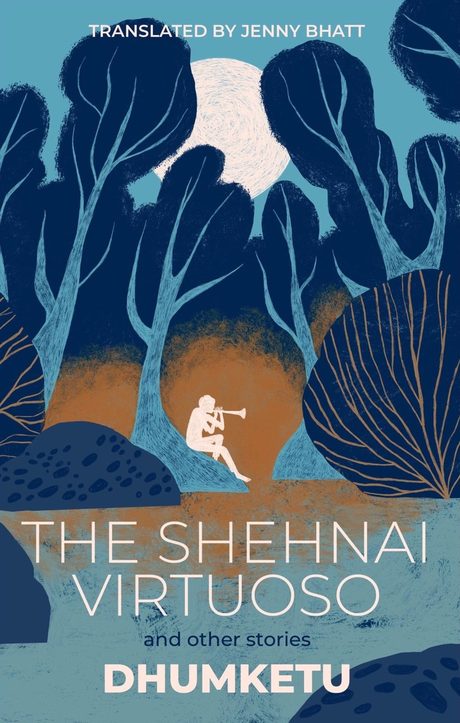
Stories, written from the 1920s onward
Ratno Dholi
Dhumketutranslated by Jenny Bhatt2020about 310 pages
The writer who built the modern Gujarati short story, finally given a translator with a real ear.
Dhumketu was the pen name of Gaurishankar Govardhanram Joshi, who did for the Gujarati short story roughly what Premchand did for Hindi, and he wrote hundreds of them from the nineteen twenties onward. Jenny Bhatt selected and translated this volume, and for a long stretch it was the only serious English gateway into any of it. The stories are built the old way, with a situation, a turn and a closing line that lands like a door shutting. What surprised me is how little they preach. A servant, a widow, a musician past his best years, a clerk in a small town: Dhumketu puts a person in a corner and then simply watches what they do.
Why it is at 1
First because this is the one book here I would hand to a reader with no connection to Gujarat whatsoever. Bhatt's English is contemporary without flattening the period, her notes help without lecturing, and short stories let you sample a whole tradition in twenty-page pieces. Everything below this asks a little more commitment from you than a train journey.
Read it ifyou want classic Indian short stories with a modern translator's ear
Skip it ifyou only read novels and find collections uneven by nature
warm, classical, humaneBest for: your first Gujarati book in Englishshort storiesclassicdhumketu
Pairs with: Fear and Other Stories at number five, the same form a century later and much angrier
2
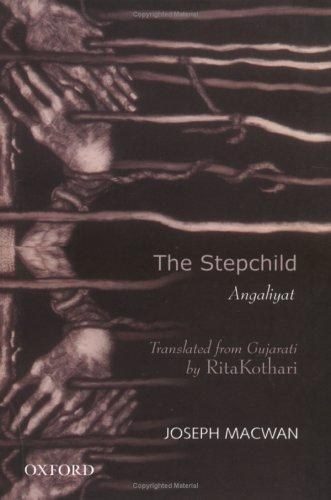
Angaliyat
The Stepchild
Joseph Macwantranslated by Rita Kothari1986about 272 pages
Two Dalit friends in a Charotar village decide not to behave, and the landowners decide to teach them.
An angaliyat in Gujarati is a child brought into a marriage from a woman's earlier one, led in by the finger, and Macwan uses the word for a whole community treated as somebody else's leftover. The novel sits among the Vankar weavers of central Gujarat in the years around independence and follows two friends, Teeha and Valji, and what follows when a Dalit man refuses to step off the road. Macwan built the book out of oral accounts from people he knew, so it reads like a village telling its own story out loud, songs included. It is widely described as the first Dalit novel written in Gujarati.
Why it is at 2
Second, and the book on this list I think every Gujarati should read once. It shows you the villages behind the state's success story without one speech about caste, because the events do the arguing. Rita Kothari's translation keeps the differences in how each community speaks, which carries half the meaning in the original and is the hardest thing to move into English.
Read it ifyou want the landmark Gujarati Dalit novel, and you want to be moved rather than lectured
Skip it ifcaste violence and sexual assault in a story will sit badly with you now
oral, tender, brutalBest for: readers of Indian social fictiondalitvillageclassiccharotar
Heads up: caste violence, sexual assault
3
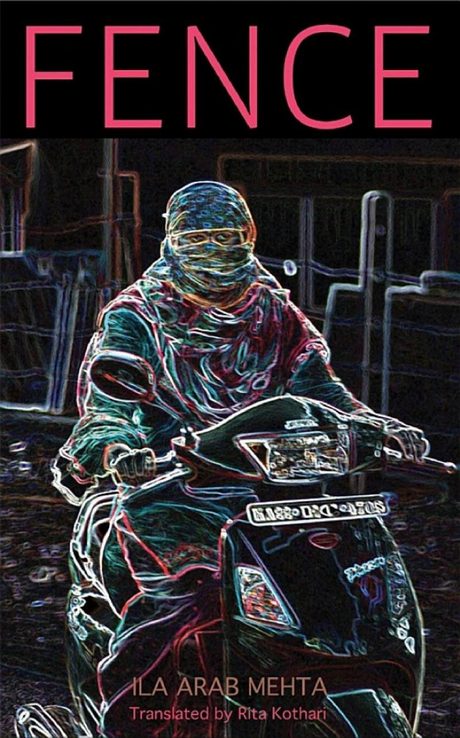
Vaad
Fence
Ila Arab Mehtatranslated by Rita Kothari2011about 195 pages
A Muslim woman with a job and savings goes flat-hunting in Gujarat, and learns how many polite ways there are to say no.
Fateema Lokhandwala comes from a poor Muslim family in a Gujarat village, studies hard, gets herself a college job, and decides she wants to buy a home in the city. That search is the novel. Around it are a brother pulled towards anger, a father who trusted his neighbours all his life, and a state that has quietly learned to sort itself into areas where each kind of name belongs. Ila Arab Mehta tells it in unhurried little chapters with no villain anywhere in sight, which somehow makes the whole thing land harder than a book with one would.
Why it is at 3
Third because it is the most contemporary novel here and the closest to the Gujarat I actually live in, with its housing societies, job interviews and unspoken rules about which side of the road you may buy on. The Stepchild is set seventy years ago in villages. This is now, in a city with malls in it, and the mechanism has only changed its manners.
Read it ifyou want a quiet, present-day novel about segregation and one woman's stubbornness
Skip it ifyou want plot momentum, because this one moves at the speed of a property search
quiet, contemporary, unsparingBest for: readers who like understated political fictioncontemporarymuslimgujaratwomen
4
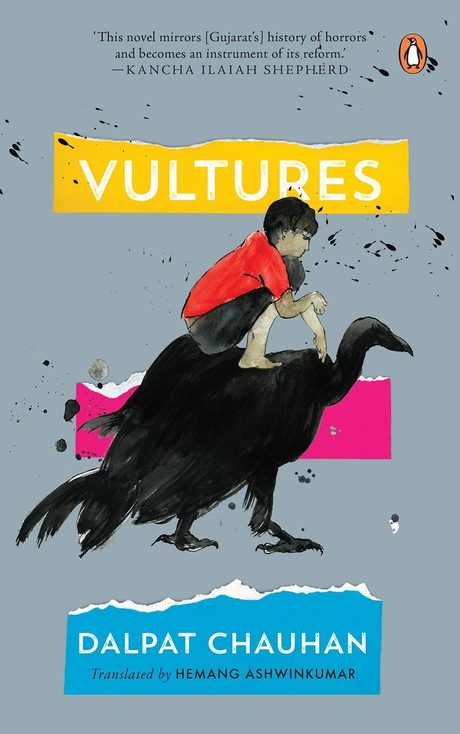
Gidh
Vultures
Dalpat Chauhantranslated by Hemang Ashwinkumar1991about 219 pages
A north Gujarat village, a murdered Dalit boy, and a careful account of the arrangement that allowed it.
Chauhan takes a killing that happened in a north Gujarat village in 1964 and builds outward from it: who owns the land, who is expected to clean what, who may draw water from which well, and who can be relied upon to look away at the right moment. His method is patient and close to documentary. He assembles the village as a working machine first, so that when the machine does what it was built to do, nobody in the book is surprised except the reader. The vultures of the title are the actual birds, and also everybody standing around watching.
Why it is at 4
Fourth because it is the heaviest read here and one of the most valuable. It sits below The Stepchild because Macwan gives you friendship and songs alongside the cruelty, while Chauhan gives you the mechanism almost without relief. Hemang Ashwinkumar's English is deliberately rough in places, keeping village speech instead of ironing it into polite Indian English, and the book is better for it.
Read it ifyou want an unflinching caste novel built on a real case
Skip it ifyou need some light in a book to keep going
cold, forensic, angryBest for: readers of serious social realismdalitcastenorth gujarat1964
Heads up: murder, caste atrocity
5
Stories, selected for English
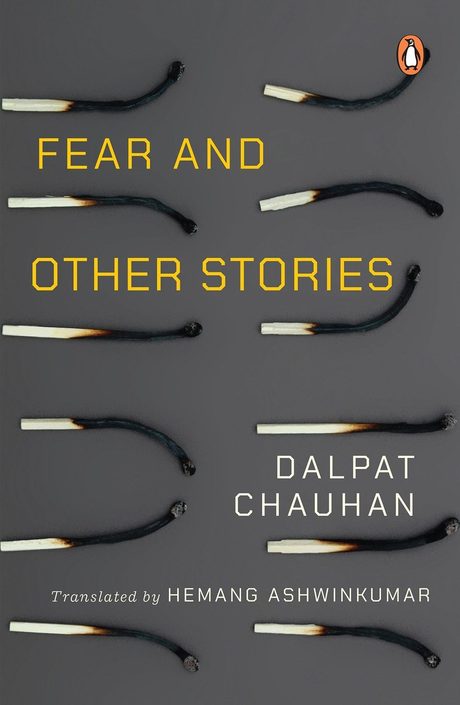
Fear and Other Stories
Dalpat Chauhantranslated by Hemang Ashwinkumar2023about 178 pages
The same north Gujarat villages as Vultures, cut into short stories you can finish on a bus.
This is a selection of Dalpat Chauhan's short fiction put together for English readers rather than a copy of one Gujarati volume, and the setting is the world of Vultures seen in slices. Most of the stories turn on a small everyday transaction, a road, a well, a cup of tea, a greeting, that carries the entire caste arrangement folded inside it. Nothing here runs longer than it needs to. Chauhan writes anger without ever raising his voice, which is a much rarer skill than the shouting kind, and in the short form it comes out sharper than it does across a novel.
Why it is at 5
Fifth because stories are an easier way into this writing than the novel, and because the book is recent, in print and cheap. If Vultures sounds too heavy to begin with, begin here and work upward. The trade-off with any career-spanning selection is that two or three pieces feel more like sketches than finished stories, which I would rather tell you now.
Read it ifyou want short, hard fiction about caste in modern Gujarat
Skip it ifyou want variety of setting, because these all live in one district
spare, hard, quickBest for: commuters who want something with teethshort storiesdalitcontemporary
6
The first Gujarati novel
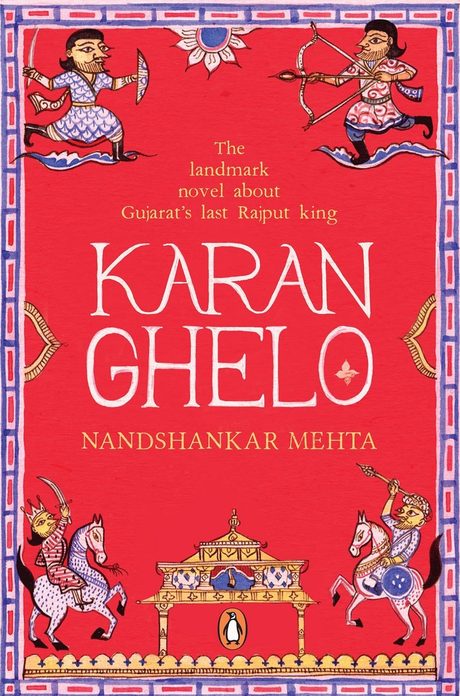
Karan Ghelo
Nandshankar Mehtatranslated by Tulsi Vatsal and Aban Mukherji1866about 332 pages
The first novel written in Gujarati: a king does something unforgivable, and an empire arrives to collect.
Karan is the last Vaghela king of Gujarat, and the story opens with him taking his minister's wife, which sets off a chain ending with Alauddin Khilji's army and the close of Rajput rule in the region. It was written in 1866 by a school inspector in Surat who had decided that Gujarati needed a modern literature and that somebody had better start one. So it lectures a bit. There are pages on customs, clothes, food and ceremony that a modern editor would strike out and that I would keep, because they are the reason the book still feels like a window rather than a plot.
Why it is at 6
Sixth because it is a first novel in every sense, slightly stiff, fond of its own explanations, and completely readable anyway. Tulsi Vatsal and Aban Mukherji are the reason it works in English, since they kept the storytelling speed and pushed the historical explaining into notes. Read this before the Munshi trilogy below, because Munshi does deliberately what this book was inventing as it went.
Read it ifyou want the origin point of Gujarati fiction and a good revenge plot
Skip it ifnineteenth century digressions test your patience
grand, digressive, tragicBest for: readers who like originshistoricalclassic1866rajput
7

Patan ni Prabhuta, Patan trilogy book one
The Glory of Patan
K. M. Munshitranslated by Rita Kothari and Abhijit Kothari1916about 304 pages
Eleventh century Patan, a dying king, a regent queen, and a minister running the state better than anyone else in the room.
The Solanki capital at the start of the twelfth century. The old king is dying, Minaldevi is holding power for a child heir, and Munjal Mehta, the minister who actually runs Gujarat, is two moves ahead of everybody. Munshi wrote it in 1916 as a serial and it still reads like one, with cliffhangers, disguises, sword fights and constant political scheming. If you know Dumas, you know the temperature exactly. It is also nation-building in fancy dress, because Munshi was inventing a proud Gujarati past at the same time as he was entertaining people with it.
Why it is at 7
Seventh because it is the most purely enjoyable book on this list and the opening of the only Gujarati series available complete in English. It sits below the modern novels because the politics need saying out loud: Munshi's Gujarat is a Hindu Rajput glory story, and his version of Gujarati pride has had a long political afterlife. Keep that in your pocket and it is still a terrific adventure.
Read it ifyou want palace intrigue, battles and a scheming minister you end up rooting for
Skip it ifhistorical fiction with a nationalist tilt puts you off
swashbuckling, scheming, grandBest for: readers who binge serieshistoricalpatan trilogysolankiadventure
8
Gujarat no Nath, Patan trilogy book two
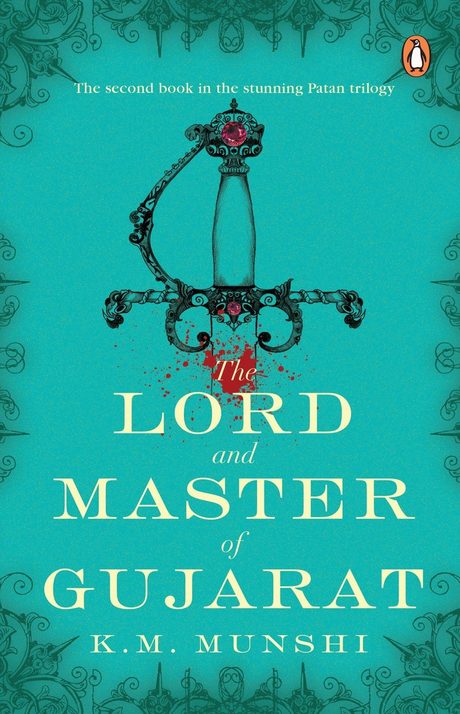
The Lord and Master of Gujarat
K. M. Munshitranslated by Rita Kothari and Abhijit Kothari1917about 471 pages
The boy king grows into Siddhraj Jaysinh, and the empire building starts in earnest.
Four years on from the first book, the child heir is becoming the ruler Gujarat still names roads after, and Munjal Mehta is still holding the state together with one hand while fending off rivals with the other. There is a romance between Kaak and Manjari that Gujarati readers have been sentimental about for a century, a long rivalry that gives the book its spine, and battles that Munshi stages like theatre because he clearly enjoyed writing them. This is the volume most Gujaratis mean when they say they grew up on Munshi.
Why it is at 8
Eighth, one place below the first volume, purely because you cannot start here. It is the better book of the two in most respects, with a wider canvas and a stronger antagonist, but it assumes you already know who everyone is and whose side they were on last year. Treat the trilogy as one long read, and this is the middle stretch where the adventure quietly becomes a book about power.
Read it ifyou finished The Glory of Patan and want more of the same world
Skip it ifyou have not read book one, because this will feel like joining a wedding at the end
expansive, romantic, politicalBest for: series readershistoricalpatan trilogysiddhrajromance
9

Rajadhiraj, Patan trilogy book three
The King of Kings
K. M. Munshitranslated by Rita Kothari and Abhijit Kothari1922about 520 pages
Siddhraj at the height of his power, and the question of what a ruler becomes once nobody can tell him no.
The last of the three. Siddhraj is at the top of his reign, the wars are bigger, and the argument underneath the story turns towards faith, since Munshi brings in the tensions between Jain and Shaivite interests at court and makes little secret of where his own sympathies lie. It came out in 1922, six years after the first volume, and the writer's confidence is visible on every page, sometimes to the book's cost, because he now stops for ideas where he used to stop for a duel.
Why it is at 9
Ninth because it is the weakest of the three and still worth doing if you have read the other two. The plotting thins, the speeches lengthen, and Munshi grows more interested in his argument than in his people. Finishing is the reward here: in English this is the only Gujarati series you can actually complete, and there is a real satisfaction in shutting the third book.
Read it ifyou want to finish the trilogy properly
Skip it ifyou are picking one Munshi and only one, in which case take book one
grand, talky, conclusiveBest for: completistshistoricalpatan trilogywarreligion
10
Manvini Bhavai
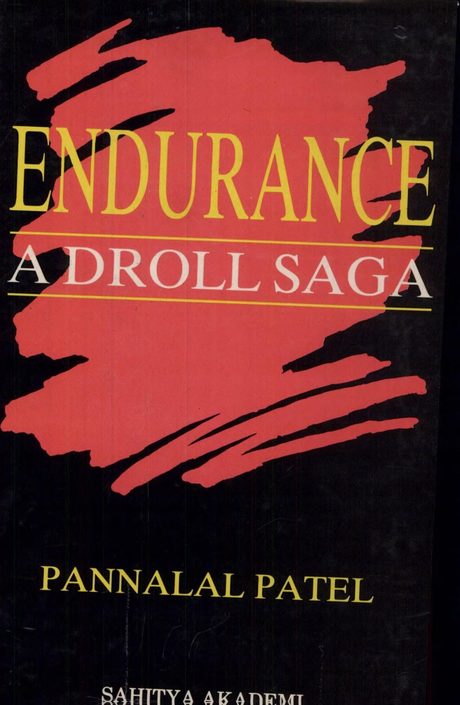
Endurance: A Droll Saga
Pannalal Pateltranslated by V. Y. Kantak1947about 460 pages
A love story in a north Gujarat village, and then the famine of 1900 arrives and eats the book.
Kalu and Raju want each other and the families have decided otherwise, which is an ordinary village tragedy until the drought comes. Pannalal Patel wrote it in 1947 from stories he grew up hearing about the Chhappaniyo Dukal, the famine of Samvat 1956, and the second half of the novel is where it becomes something else entirely. Hunger takes over the plot. People who were arguing about marriage begin calculating about grain, and the love story stops being the subject without ever being abandoned. It is generally held to be the finest Gujarati novel of the twentieth century.
Why it is at 10
Tenth, and the ranking is about the edition rather than the novel. V. Y. Kantak's translation for the Sahitya Akademi, published in 1995, is the only English text there is, and its formal, careful English puts a pane of glass between you and a book that is savage underneath. It is also hard to buy. Read it anyway, and know that the Gujarati is a different animal.
Read it ifyou want the great Gujarati novel and you do not mind an old-fashioned translation
Skip it ifyou need a copy you can order tonight, because this one takes hunting
rural, epic, starvingBest for: serious readers of Indian classicsfamineclassicvillage1947
Heads up: famine, starvation, death of children
11
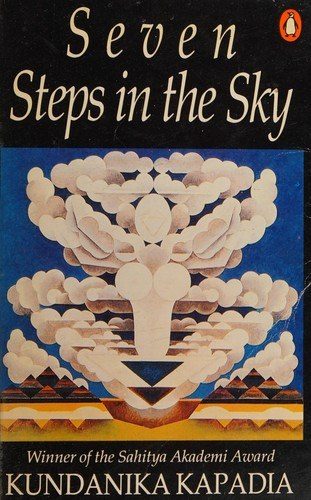
Saat Pagla Aakashma
Seven Steps in the Sky
Kundanika Kapadia1984about 264 pages
A woman spends decades being absorbed by a joint family, and then leaves it in middle age.
The novel follows one woman from her marriage into a large joint household through the slow discovery of how completely such a house can absorb a person: the kitchen, the calendar, the opinions, the daily arithmetic of everybody else's needs before her own. Then she walks out, and the last stretch of the book is about what a woman builds when she starts again in her forties. Kundanika Kapadia published it in 1984 and it started an argument in Gujarati homes that has not entirely finished. The English cover carries the Sahitya Akademi Award.
Why it is at 11
Last because it is the hardest of these to find in English and because the translation reads dated in places. It is on the list because no honest account of Gujarati fiction leaves it out. This is the book Gujarati women passed to each other for a decade, often quietly, and the question it asks about what a wife owes a household still turns up at family lunches in my city.
Read it ifyou want the Gujarati novel that started a domestic argument in the eighties
Skip it ifyou want subtlety, because this one argues its case openly
domestic, defiant, earnestBest for: readers of feminist classicswomenjoint family1984classic
Worth knowing
The books that should be here and are not
Saraswatichandra by Govardhanram Tripathi is the mountain of Gujarati literature, four volumes published between 1887 and 1901, and it has been translated in full into English by Tridip Suhrud for Orient Blackswan. I could not verify a copy through the usual book databases with a cover to show you, which tells you something about how it circulates. There is also a HarperCollins Saraswatichandra by Sameer Acharya, and that one is described as an English retelling rather than a translation, so it does not belong in a list of translations. If you want the real thing, ask a good bookshop to order the Suhrud edition and be patient.
Also missing for the same reason: Dhruv Bhatt, whose Samudrantike came out in English as Oceanside Blues and whose Tattvamasi has a following that borders on religious, Raghuveer Chaudhari's Amruta, and the Jhaverchand Meghani selections. Every one of them exists in some English form somewhere. None of them was findable as a proper current edition, and a list that sends you hunting for ghosts is worse than a short list.
Worth knowing
The most widely read Gujarati book in English is not a novel
Gandhi wrote his autobiography in Gujarati, as Satya na Prayogo, and Mahadev Desai translated it into the English that the world reads as The Story of My Experiments with Truth. That makes it, by a distance, the most read Gujarati book in translation ever, and almost nobody thinks of it as a translated book at all. It is worth reading with that fact in mind, because you start to hear the Gujarati sentence shapes under Desai's English.
The same point applies to the whole list. Gujarati has produced a century of fiction and has one of the thinnest translation records of any major Indian language, thinner than Odia, which has a fraction of the speakers. It is not a quality problem. Nobody has been paying translators to do the work. Jenny Bhatt, Rita Kothari, Abhijit Kothari, Hemang Ashwinkumar, Tridip Suhrud: that short list is more or less the entire bridge, and most of these books exist in English because one of those people decided they should.
People also ask
Questions, answered
Which Gujarati novel should I read first in English?
If you want a novel, read The Stepchild by Joseph Macwan in Rita Kothari's translation. It is under three hundred pages, the story pulls hard, and it needs no background in Gujarati literature. If you would rather sample than commit, start with Ratno Dholi by Dhumketu, translated by Jenny Bhatt, and read three stories before deciding whether to continue. For pure entertainment, go to The Glory of Patan and treat it as a period adventure serial.
Is Saraswatichandra available in English?
Yes, in two very different forms. Tridip Suhrud has translated the complete four-volume novel for Orient Blackswan, which is the real thing and takes some effort to get hold of in a shop. Separately, HarperCollins published a single-volume English retelling by Sameer Acharya, which is a much easier read but is a retelling rather than a translation. Know which one you are buying, because they are not the same book in any meaningful sense.
Why are so few Gujarati books translated into English?
Money and habit rather than quality. Malayalam and Bengali built translation cultures decades ago, with publishers who commissioned regularly and translators who could make a partial living at it. Gujarat's literary energy went into publishing in Gujarati for a large local readership, and the state's English-reading class has tended to read business books rather than its own fiction. The result is that a hundred years of novels sit one language away from a huge potential audience.
Who are the main translators of Gujarati literature into English?
A small group carries almost all of it. Rita Kothari translated The Stepchild and Fence and, with Abhijit Kothari, the entire Munshi Patan trilogy. Jenny Bhatt brought Dhumketu into English. Hemang Ashwinkumar has done both Dalpat Chauhan books here. Tridip Suhrud translated Saraswatichandra and much of Gandhi. If you like a book on this list, following its translator to their next project is a better bet than following the publisher.
Are Gujarati Dalit writers available in English?
More than they used to be, and it is the most active area of Gujarati translation right now. Joseph Macwan's The Stepchild came out through Oxford University Press, and Penguin has published two Dalpat Chauhan books, the novel Vultures and the collection Fear and Other Stories, both translated by Hemang Ashwinkumar. That is three of the eleven titles on this list, which says something about where the new energy in Gujarati writing has been for the last forty years.
Are these books available on Kindle in India?
The Penguin titles are, which covers the Munshi trilogy, Karan Ghelo, Vultures and Fear and Other Stories. Ratno Dholi is easy to buy in either its Indian edition or the American one, which is sold as The Shehnai Virtuoso and Other Stories. The two hardest are Endurance: A Droll Saga from the Sahitya Akademi and Seven Steps in the Sky, both of which usually mean a used copy or a library.
Before you go
What to read tonight
If you read one book off this list, make it The Stepchild, and read it slowly enough to hear the way different characters are allowed to speak to each other. If you read two, add Fence, because the ninety years between them will do more for your understanding of this state than any explainer.
And if you read Gujarati at all, even badly, there is a job going. Every book on this page exists in English because one person decided to spend two years of their life carrying it across. There are hundreds more waiting, and the language is not going to translate itself while we all keep saying that our literature deserves better.
Keep going
Lists that pair with this one
Indian Fiction
The 20 Best Indian Books in Translation, Ranked by Where to Start
Twenty books from ten Indian languages, ordered from the easiest way in to the one that will fight you, with the translator named every time.
Indian Fiction
16 Best Indian Short Story Collections (Where to Start in Each)
Sixteen collections worth your evening, ranked by how much patience each one asks for, with the exact story to read first in every book.
Indian Fiction
16 Best Books to Understand India, Ranked by What They Explain
Sixteen books, ten doors into the same country: history, caste, the mega city, the village, money, and where to start tonight.
Mood & Life
20 Best Short Novels Under 200 Pages, Ranked by Length
Every book here is under 200 pages in the edition we link, and the list runs shortest first, so you can pick by the hours you actually have left tonight.
Genre
16 Best War Novels, Ordered by How Close They Stand
War fiction told from inside the fighting, the machine and the houses in between, with an honest note on which ones will wreck your week.