My father and I once drove from Ahmedabad to Udaipur, six hours, and I think we managed forty sentences between us, most of them about petrol prices and whether the AC was too cold. Neither of us was upset. That is simply the register we speak in. When I read books about fathers and sons, what I am looking for is a writer who understands that the silence is not emptiness, it is a whole conversation nobody bothered to write down.
So this list is not ordered by prestige. It is ordered by how much of the actual relationship a book gets onto the page, and every entry carries a distance reading: same room, across a table, across a country, across a grave. Use that dial before you use my ranking. If your father is alive and watching TV in the next room, the elegies will wreck you for no good reason, and if he died in 2019, the books about arguing at dinner will feel like a joke someone else got to tell.
Seven are fiction, four are memoirs, two are letters, one is a play. Four are Indian or Indian American, because the father who cannot say the thing out loud is not an American invention. Ranked one to fourteen, best first, with quick picks below for anyone standing in a bookshop with ten minutes and a train to catch.
How I picked these
- The father had to be a person, not a device. Books where dad exists to explain the hero's damage in one flashback got cut.
- One relationship in focus. Big family sagas where the father is thread number nine did not make it, however good they are.
- Four Indian and Indian American books, not as a quota but because the father who shows love through school fees and silence needed his own shelf.
- I dropped the famous father-daughter books, which are a different animal, and I dropped two novels where the father dies early and the book moves on without him.
- Every title checked through Google Books and Open Library with a real cover, and first publication years verified by hand rather than taken from a reprint date.
- Where a book is heavy, the warning sits at the top of the entry instead of ambushing you at one in the morning.
The whole list at a glance
All 14 books, in order
| # | Book | Author | Year | Vibe | Best for |
|---|
| 1 | The Road | Cormac McCarthy | 2006 | bleak, tender, relentless | readers who want it wordless |
| 2 | Patrimony | Philip Roth | 1991 | unsparing, tender, plain | sons of ageing fathers |
| 3 | The Illicit Happiness of Other People | Manu Joseph | 2012 | funny, cruel, alive | readers who grew up in that flat |
| 4 | The Namesake | Jhumpa Lahiri | 2003 | quiet, precise, sad | children of immigrants |
| 5 | Letter to His Father | Franz Kafka | 1952 | forensic, wounded, exact | sons of impossible men |
| 6 | Death of a Salesman | Arthur Miller | 1949 | loud, doomed, american | anyone with a disappointed father |
| 7 | Between the World and Me | Ta-Nehisi Coates | 2015 | urgent, angry, controlled | readers who want the letter form |
| 8 | A River Runs Through It | Norman Maclean | 1976 | quiet, elegiac, precise | one evening and a river |
| 9 | Angela's Ashes | Frank McCourt | 1996 | funny, squalid, warm | readers who forgive their fathers |
| 10 | The Return | Hisham Matar | 2016 | measured, haunted, beautiful | loss without a full stop |
| 11 | Family Life | Akhil Sharma | 2014 | flat, funny, devastating | families changed by one accident |
| 12 | My Father Baliah | Y. B. Satyanarayana | 2011 | plain, factual, moving | readers of Indian social history |
| 13 | Fathers and Sons | Ivan Turgenev | 1862 | sharp, ironic, humane | arguments with your parents |
| 14 | Big Fish | Daniel Wallace | 1998 | warm, tall tale, quick | fathers who joke instead of talking |
The list
The books, ranked
1
Distance: same room
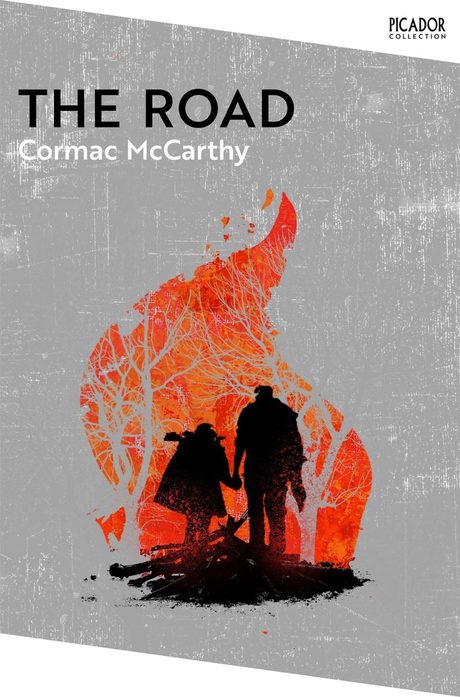
The Road
Cormac McCarthy2006about 324 pages
A father and son push a trolley through a burned country, and every gesture between them carries what neither can say.
A man and a boy walk south through a country that has burned. McCarthy never explains what happened and never needs to. What you get instead is the daily arithmetic of keeping a child alive: two tins of food, a tarp, a pistol with a fixed number of bullets, a repeated conversation about whether they are still the good guys. The two are never named. They are the man and the boy, and by page thirty you understand that this is the most exact description of parenting anyone has written, which is that you are keeping something alive in a world you cannot fix.
Why it is at 1
First because it reduces the relationship to one question, will I get you through today, and answers it on every page. Other books here have more incident and better jokes. None of them put the weight of a father's job in your own arms like this. If you can, read it before you have children, because afterwards it stops being a novel and starts being a nightmare with your face in it.
Read it ifyou want the relationship with all small talk removed
Skip it ifyou are raw about your own child's safety, because that fear is the engine
bleak, tender, relentlessBest for: readers who want it wordlessnovelpost-apocalypticamerican
Heads up: post-apocalyptic violence, cannibalism, a child in constant danger
Pairs with: Between the World and Me, the same fear written as a letter
2
Distance: across a table
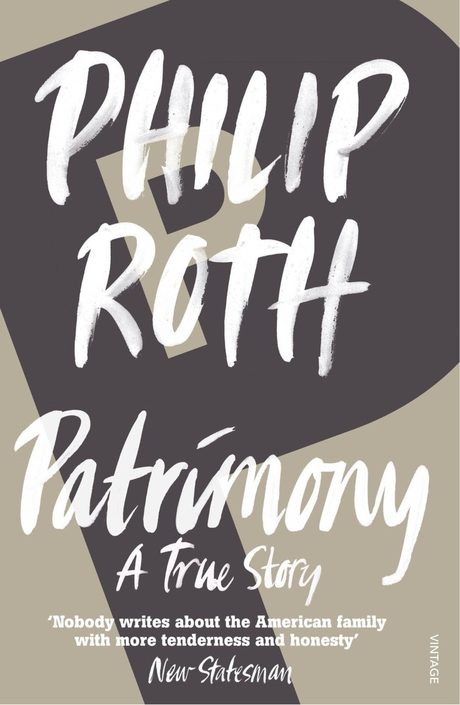
Patrimony
Philip Roth1991about 240 pages
Roth watches his father die of a brain tumour and refuses to make either of them noble about it.
Herman Roth is a retired insurance man from Newark: stubborn, exhausting, incapable of meeting a stranger without mentioning his son the writer. A brain tumour is diagnosed and Philip becomes the one who drives to appointments, argues about surgery, and cleans up after the worst nights. The book is short and never once reaches for grace. What makes it hurt is the specificity, the fight over a shaving mug, the boxes of documents, the moment a son notices his father has become an item on a calendar. It is the least sentimental father book I know and somehow the most loving.
Why it is at 2
Second because it stays honest while the father is dying, which is exactly when most writers start sanding the man into a saint. If your father is alive and getting old, read this now rather than later. It will make you want to call him, and it will make you dread calling him, usually within the same paragraph.
Read it ifyou can take unflinching physical detail about illness
Skip it ifyou are currently caring for a dying parent and need distance from it
unsparing, tender, plainBest for: sons of ageing fathersmemoirillnessamerican
Heads up: terminal illness, frank detail about bodily decline
3
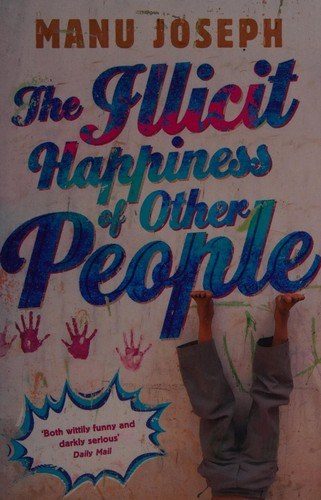
Distance: across a grave, facing the other way
The Illicit Happiness of Other People
Manu Joseph2012about 304 pages
A drunk failed writer in Madras interrogates the whole neighbourhood about the son who jumped from their balcony three years ago.
Ousep Chacko is a Malayali journalist in 1990s Madras, brilliant when sober and unbearable when not, which is most evenings. His seventeen year old son Unni, a cartoonist everybody loved, walked to the balcony one afternoon and jumped. Three years later Ousep is still knocking on doors, collecting comics, asking teenagers what Unni actually believed. Manu Joseph writes middle class south India with a comic precision that keeps ambushing you: the mother arguing with herself in the kitchen, the younger brother measuring his own worth against a dead boy. The funniest book on this list is also the saddest one.
Why it is at 3
Third, and the highest Indian entry, because it inverts the usual direction. Nearly every book here is a son trying to read his father. This is a father trying to read his son, too late, with the wrong instruments. If you grew up in a house where nobody asked anybody how they were, this novel will feel like someone took notes in your building's stairwell.
Read it ifyou want comedy and devastation inside the same paragraph
Skip it ifa suicide in your family is too close right now
funny, cruel, aliveBest for: readers who grew up in that flatnovelindianmadras
Heads up: suicide of a teenager, alcoholism, a family under long strain
4
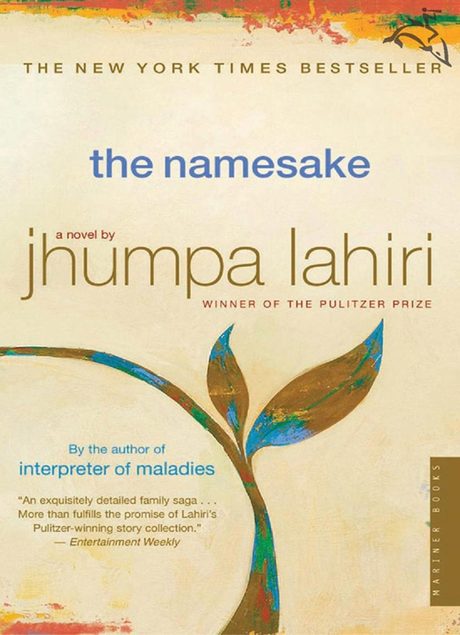
Distance: across a country
The Namesake
Jhumpa Lahiri2003about 312 pages
A boy hates the name his father gave him, and does not learn what it cost until the man is gone.
Ashoke Ganguli survives a train accident in Bengal, partly because of the book he was holding, and years later in America he names his son Gogol after the writer of it. Gogol grows up in Massachusetts hating the name, legally changing it, dating his way into a life his parents cannot follow. Lahiri writes migration as a series of small mistranslations: the parties with too much food, the phone calls at odd hours, the parents who never explain themselves because explaining is not a thing they do. The father barely raises his voice in the entire novel and is the loudest presence in it.
Why it is at 4
Fourth because it catches the specific distance of the diaspora father, the man whose whole biography is a sentence he never got around to saying. It sits below Patrimony only because Gogol takes a long time to become interesting company. Stay for the chapter where the story of the name finally arrives, which is one of the best father scenes in modern fiction.
Read it ifyour parents' history feels like a locked file
Skip it ifyou want a fast plot and dislike slow domestic novels
quiet, precise, sadBest for: children of immigrantsnoveldiasporaindian american
Pairs with: Family Life, the harder version of the same migration
5
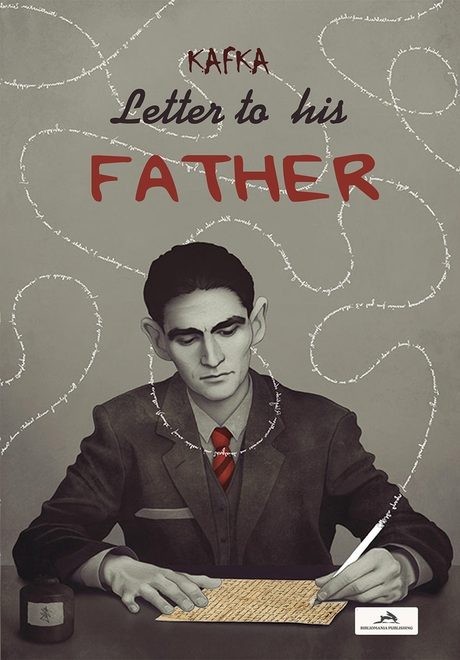
Distance: across a table, in writing, undelivered
Letter to His Father
Franz Kafka1952about 92 pages
Kafka wrote a hundred pages explaining exactly what was wrong, handed them to his mother, and they never reached his father.
In 1919 Kafka wrote a long letter to Hermann Kafka, a self made shopkeeper who found his son weak, and gave it to his mother to pass on. She did not pass it on, and it reached print only decades after both men were dead. What survives is the most exact anatomy of a certain kind of father: the sarcasm at the dinner table, the rules he does not follow himself, the approval that arrives only when the son is out of the room. Kafka is also unfair in places, and he knows it, and says so, which is what saves the thing from being a rant.
Why it is at 5
Fifth, and the shortest text here by a distance. Nothing else on this list explains so cleanly why some grown men cannot finish a sentence in their father's presence. Read it in one sitting, then sit with how much of what you assumed was your own private defect was written down by a Czech insurance clerk before your grandparents were born.
Read it ifyou want the diagnosis rather than the story
Skip it ifyou need warmth in a book, because there is none in this one
forensic, wounded, exactBest for: sons of impossible menletterclassicshort
Heads up: sustained account of humiliation and emotional abuse
6
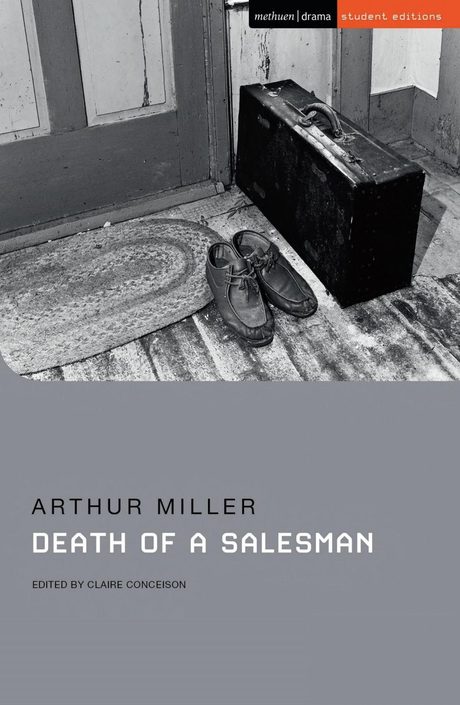
Distance: same room, which is the tragedy
Death of a Salesman
Arthur Miller1949about 161 pages
Willy Loman cannot see his sons, only the men he needed them to become, and this is the night it finally breaks.
It is a play, so it reads in ninety minutes and hits like a bus. Willy Loman is a travelling salesman at the end of his usefulness, living inside a story where he is well liked and his boys are going to be somebody. His son Biff has come home knowing the truth about both of them. The two circle each other for two acts while the mother holds the house upright with her bare hands. What Miller understood is that the cruelest thing a father can do is hand his son a version of himself and then refuse to accept returns.
Why it is at 6
Sixth, and yes, mark it clearly as a play, because the format scares people off for no reason. It earns the spot by being the source code for a hundred later father and son stories, and because the final confrontation does something no novel here manages, which is to put the fight and the love in the same breath, out loud, in front of witnesses.
Read it ifyou can read dialogue without stage directions bothering you
Skip it ifyou want interior prose, since a play hands you none of it
loud, doomed, americanBest for: anyone with a disappointed fatherplayclassicamerican
Heads up: suicide, infidelity, a family finance collapse
7
Distance: same room, father holding the pen
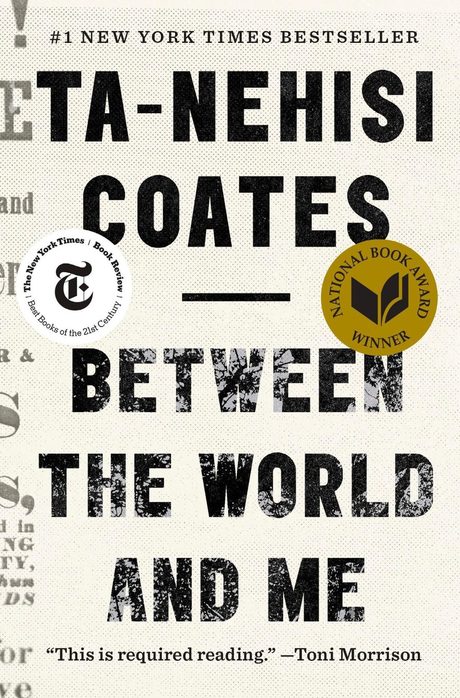
Between the World and Me
Ta-Nehisi Coates2015about 163 pages
A father writes to his teenage son about living in a Black body in America, and deliberately refuses to end on hope.
Coates addresses the entire book to his son, then fifteen, after a grand jury declined to indict a police officer. He goes back over his own Baltimore childhood and its rules, the years at Howard, the killing of a college friend by police, and what he is now obliged to hand over. The unusual part is the honesty about fathering itself. He tells the boy he cannot promise safety, will not offer comfort he does not believe in, and recognises that the fear which made his own father's hand hard is the same fear now sitting in his hands.
Why it is at 7
Seventh, and one of only two books here written from the father's side of the desk. It sits this high because of the letter form: you are watching a man decide, sentence by sentence, what to tell a child he cannot protect. Read it next to The Road and you have the same terror in two genres, one figurative and one entirely literal.
Read it ifyou want a father's fear stated plainly, with no resolution offered
Skip it ifyou want an uplifting ending, which he withholds on purpose
urgent, angry, controlledBest for: readers who want the letter formmemoirletteramerican
Heads up: racial violence, police killings
8
Distance: across a river, which is the same as a country
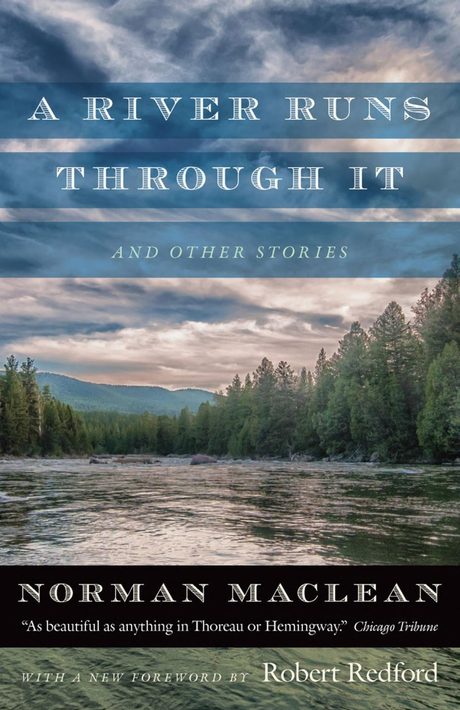
A River Runs Through It
Norman Maclean1976about 263 pages
A Presbyterian minister taught his two sons to fly fish, and only one of them could be reached any other way.
Maclean was in his seventies when he wrote this, looking back at Montana in the 1930s, at his father the minister and his younger brother Paul, the finest fisherman any of them had seen and a man nobody could help. The fishing is not a metaphor you have to work for. It is the single place where the three of them are fluent together, and everywhere else the family runs straight into the limit of what love can actually accomplish for another person. The last page is the part people carry around for years afterwards.
Why it is at 8
Eighth, and the best hundred pages here if you want beauty rather than argument. It ranks where it does because the father, unforgettable as he is, shares the frame with the brother. Read it in one evening, ideally near water, and read nothing else afterwards. Anything you pick up next will sound like it is shouting.
Read it ifyou want quiet, old fashioned, exact prose
Skip it ifyou need conflict on every page to keep going
quiet, elegiac, preciseBest for: one evening and a rivernovellaamericanfamily
Pairs with: Big Fish, the same silence played for charm
9
Distance: same room, wrong father
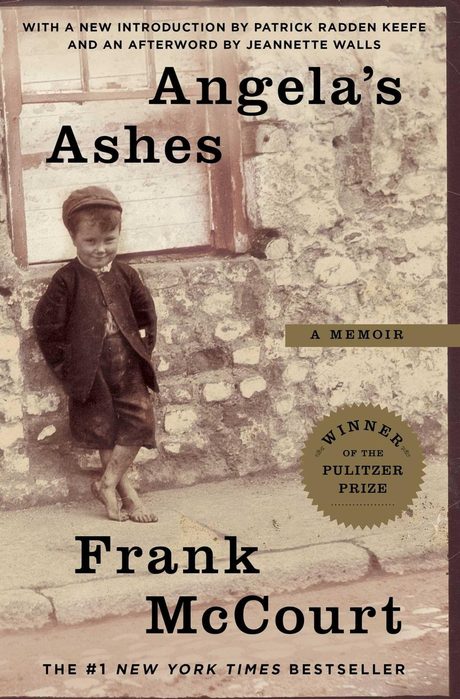
Angela's Ashes
Frank McCourt1996about 384 pages
The father sings rebel songs at two in the morning and drinks the wages, and his son loves him anyway, which is the problem.
McCourt grew up in Limerick in the 1930s and 40s in poverty that is genuinely hard to read about: dead siblings, a flooded ground floor, one pair of shoes between the boys. His father Malachy is charming, unemployable, and gone to the pub with the money before the family sees any of it. What makes the book work is that Frank as a boy adores him. The stories by the fire before dawn are real love, and so is the hunger, and the child holds both without editing either one. Told in the present tense, without self pity, and funnier than it has any right to be.
Why it is at 9
Ninth, and the definitive account of the charming useless father, the one you cannot fully hate no matter how much evidence you collect. If your own father was fun and unreliable, nothing here will describe your childhood more precisely. It sits below the top group only because the mother, not the father, is the true subject of the book.
Read it ifyou can read about children going hungry for four hundred pages
Skip it ifalcoholism at home is a live wound rather than an old one
funny, squalid, warmBest for: readers who forgive their fathersmemoirirelandpoverty
Heads up: child deaths, extreme poverty, alcoholism
10
Distance: across a grave nobody can find
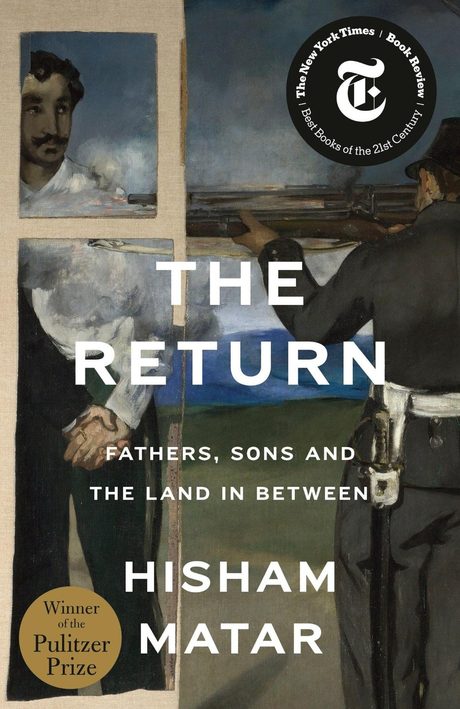
The Return
Hisham Matar2016about 273 pages
Matar's father was taken by Gaddafi's men in 1990, and this is a son's search that never produces a body or a date.
Jaballa Matar was a Libyan dissident living in exile in Cairo when he was seized and handed to the Gaddafi government. Letters came out of prison for a while, then nothing at all. Hisham Matar was nineteen. The book follows the son's return to Libya after the revolution, years of petitioning officials, conversations with released prisoners, and the particular torture of a disappearance, which is that there is no grave, no confirmation, and a father who is neither alive nor dead in any way you can file. Matar writes about exile and painting too, and the sentences here are the finest on this list.
Why it is at 10
Tenth on the ranking and first if your own loss has no full stop. Most books about a dead parent hand you a death and then a process. Matar refuses that, because he was refused it. Anyone still waiting on news about a parent, or holding a family fact that nobody will confirm, should read this before anything else here.
Read it ifyou want a search rather than a resolution
Skip it ifyou read grief books to get closure, since this one denies it
measured, haunted, beautifulBest for: loss without a full stopmemoirlibyaexile
Heads up: political imprisonment, torture, enforced disappearance
11
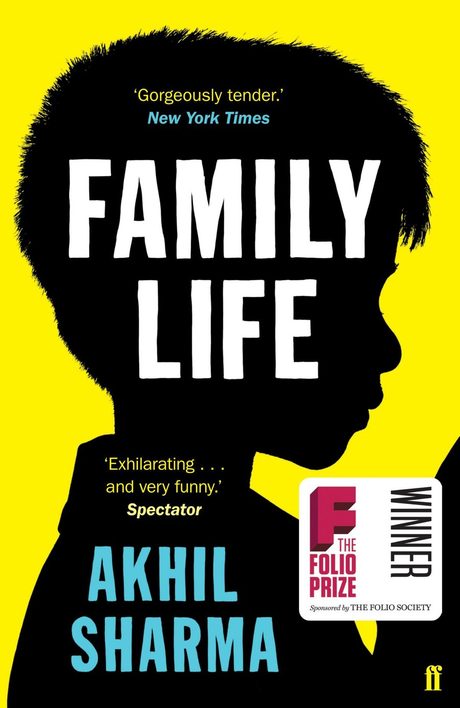
Distance: across a country, then across a hospital bed
Family Life
Akhil Sharma2014about 172 pages
Two brothers move from Delhi to Queens, one dives into a swimming pool, and the father starts drinking.
Ajay is eight when the family moves to America, worshipping his older brother Birju, who has a place at a top school and knows everything worth knowing. Then Birju is left brain damaged by a swimming pool accident and the household reorganises itself around a bed in the living room. The father, mild and competent back in Delhi, becomes an alcoholic in slow motion while the mother runs on faith and a stream of visitors. Sharma writes in flat short sentences that seem almost childish until you realise they are the only way anyone could say these things.
Why it is at 11
Eleventh, and the most useful book here on what a long crisis does to a father over years rather than in one dramatic scene. Where Angela's Ashes gives you a drinker from page one, this shows an ordinary man becoming one, and a boy learning to manage him. It is the book I have handed to friends whose fathers changed after a family disaster.
Read it ifyou want the slow version of a family coming apart
Skip it ifdisability or a sibling's injury sits too near your own life
flat, funny, devastatingBest for: families changed by one accidentnoveldiasporaindian american
Heads up: brain injury, years of caregiving, alcoholism
12
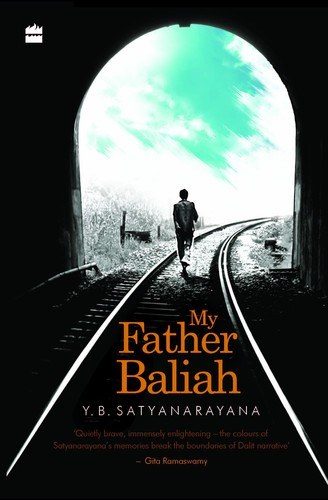
Distance: across three generations
My Father Baliah
Y. B. Satyanarayana2011about 236 pages
A Dalit railway worker in Telangana pushed his sons through school, and one of those sons grew up to write this book.
Satyanarayana tells his family story across three generations, beginning with his grandfather Narsiah and settling on his father Baliah, a Madiga man who worked on the railways and moved from posting to posting so that his children could stay in school. The writing is plain and the book is not a lament. It is a record of what it took, in particular rupees and particular humiliations, for one family in twentieth century Telangana to get educated. The father here is not complicated by literature. He is a man carrying a load, and the load is described exactly.
Why it is at 12
Twelfth on prose and essential on this list, because most father and son books assume a father who had options. Baliah had a caste system and a railway job. Read only the western entries here and you will come away thinking the father problem is emotional. For a great many Indian families it was structural long before it was emotional.
Read it ifyou want the Indian father as an economic fact rather than a mood
Skip it ifyou want literary fireworks, since the writing is deliberately direct
plain, factual, movingBest for: readers of Indian social historymemoirindiancaste
Heads up: caste discrimination and untouchability, described from inside
13
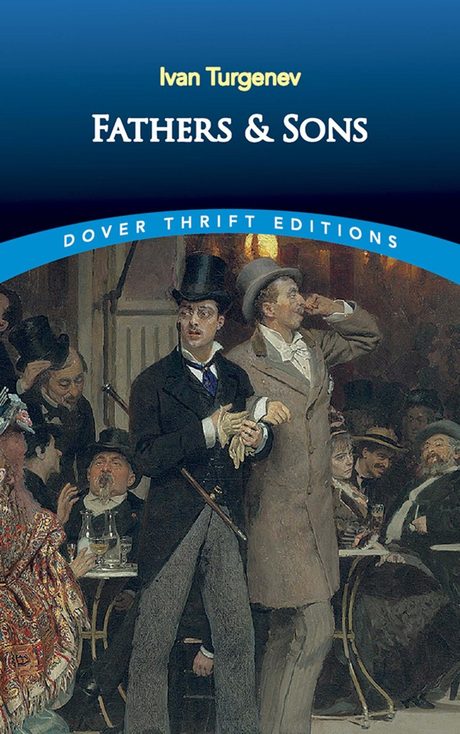
Distance: across a century, still current
Fathers and Sons
Ivan Turgenevtranslated by Constance Garnett1862about 179 pages
Two young men come home from university with new ideas, and their fathers try very hard to be modern about it.
Arkady brings his friend Bazarov home for the summer. Bazarov is a nihilist, which in 1862 meant a man who accepted nothing on authority, and he is rude about poetry, romance and the older generation's entire way of living. Arkady's father, gentle and faintly embarrassed by himself, tries to keep up by reading the new books his son mentions. Meanwhile Bazarov's own parents, who adore him, tiptoe around their son so as not to bore him. The novel is short, very funny about young men, and merciless about how small a parent will make himself to stay in contact.
Why it is at 13
Thirteenth by rank and first in the family tree, since most of the books above are arguing with this one. Read it for proof that the generational fight is not modern. That specific sting of a father reading your books so he has something to say to you is a hundred and sixty years old. The chapters with Bazarov's parents are the reason it made the list.
Read it ifyou like nineteenth century novels that actually move
Skip it ifRussian names and country estates send you to sleep
sharp, ironic, humaneBest for: arguments with your parentsclassicrussiantranslated
Pairs with: Death of a Salesman, the same fight with worse consequences
14
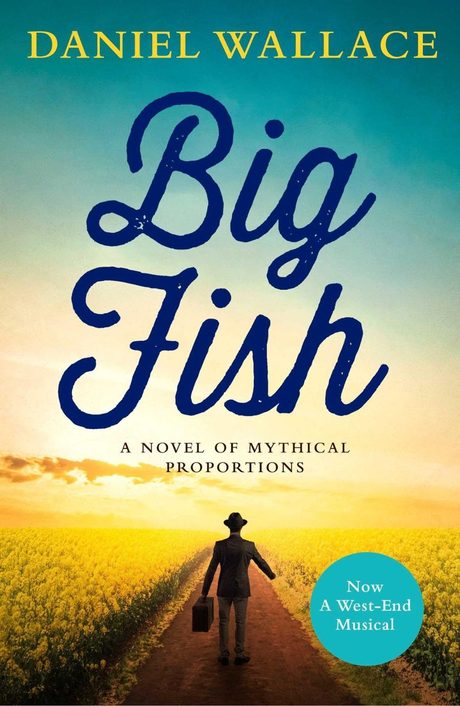
Distance: across a story he will not stop telling
Big Fish
Daniel Wallace1998about 149 pages
A dying father keeps telling tall tales, and his son has to decide whether the myth counts as knowing him.
Edward Bloom is dying, and his son William sits by the bed trying to get one true story out of the man. What he gets instead are legends: the giant, the town nobody ever leaves, the day his father caught an uncatchable fish. Wallace writes in short chapters that read like folk tales with a hospital room underneath them. The question in the book is one a lot of us carry. If your father only ever spoke in jokes and stories, did you know him at all, and was the story he told about himself the closest thing to truth he had?
Why it is at 14
Fourteenth, the lightest thing here, and kept for exactly that reason. Every other book on this list demands something from you. This one goes down in an afternoon and still lands the point about fathers who perform instead of confiding. It is also the safest title here to hand to your own father without triggering an incident at dinner.
Read it ifyou want charm and a bit of magic with your feelings
Skip it ifwhimsy irritates you, because there is a lot of it
warm, tall tale, quickBest for: fathers who joke instead of talkingnovelamericanshort
Pairs with: A River Runs Through It, the serious version of the same silence
Worth knowing
How the distance dial works
Every entry carries one of four settings, and it has nothing to do with quality. Same room means the two men are physically together for most of the book, which sounds warm and is often the opposite, because proximity is where the damage happens. Across a table means the father is alive and reachable, the conversation is technically available, and nobody is having it. Across a country covers migration, class, education, ideology, any gap that turned two people into strangers who share a surname. Across a grave means one of them is dead and the talking continues anyway.
The reason I built this instead of a star rating is that the wrong book at the wrong time does nothing for you. A reader whose father is in the next room needs Patrimony or the Kafka letter, books that suggest something is still possible. A reader whose father died last year does not need a novel about a man who could have called and did not. Find your setting, start there, and treat the rank as a tiebreaker.
Worth knowing
The one you give him, the one you keep
Three of these are giftable to your own father without an atmosphere at dinner: Big Fish, A River Runs Through It, and Turgenev if he is the kind who still reads classics. They are about fathers and sons without accusing anyone in the room.
Three are private reads, and I would not hand them over with a smile: Kafka's letter, Patrimony, and The Road. The first will read as a charge sheet, the second is about a dying father and will land as a hint, and the third will simply frighten him. Read those alone, then decide what you want to say in your own words. Giving a man a book instead of a sentence is the family tradition this entire list is about.
Worth knowing
Before you start the heavy ones
Four books here deal with suicide, disappearance, brain injury and alcoholism. If any of that is live in your family right now, please know that a book is not treatment. A novel can sit with you at two in the morning and it can make you feel less alone, but it cannot do the work of a doctor, a counsellor or a helpline, and it is not meant to. Read the content notes, pick something lighter if the timing is wrong, and come back to the hard ones later. They will still be there.
People also ask
Questions, answered
What is the best book about fathers and sons?
The Road by Cormac McCarthy, if you want one answer. It takes the relationship down to a man keeping a boy alive and never lets go of that. If you want nonfiction instead, take Patrimony by Philip Roth, which follows a son through his father's final illness without once making either of them heroic. Between those two you get the whole range, the fear of losing a child and the fear of losing a parent.
Are there good Indian books about fathers and sons?
Four on this list. The Illicit Happiness of Other People by Manu Joseph is the strongest, a father investigating his dead son in 1990s Madras. The Namesake and Family Life both handle the Indian father abroad, one gently and one brutally. My Father Baliah gives you something the others cannot, a Dalit family in Telangana where the father's love is measured in school admissions won against a caste system.
Which of these should I gift my father?
Big Fish is the safe one, funny and short, and nobody will read it as an accusation. A River Runs Through It works if he is the outdoors or quiet type. Turgenev suits a father who still reads classics and enjoys being argued with. Do not gift the Kafka letter, Patrimony or The Road unless you actively want a conversation, because all three will be read as a message.
Is Turgenev's Fathers and Sons really about fathers and sons?
Partly. It is more about two generations colliding in 1860s Russia, with the sons full of new science and contempt and the fathers trying to keep up. What makes it belong here is the parents, particularly Bazarov's mother and father, who love their son so much they cannot behave naturally around him. Anyone who has watched a parent perform casualness to avoid annoying an adult child will recognise it immediately.
What should I read if my father has already died?
It depends on how he died. If it was an illness you sat through, Patrimony will feel like company rather than a wound. If the loss is unresolved, no grave, no confirmation, no version of events anybody agrees on, read The Return by Hisham Matar. If you want comfort more than analysis, A River Runs Through It is a hundred pages and ends in something close to peace.
Are all of these depressing?
No. Big Fish is charming, Turgenev is genuinely funny about young men being insufferable, and Angela's Ashes gets more laughs per page than most comic novels despite the subject. The Illicit Happiness of Other People is the strangest case: the jokes and the tragedy sit in the same sentence. The unrelentingly heavy ones are The Road, Kafka's letter and Patrimony, and each entry says so at the top.
Before you go
What to read tonight
Pick by the dial, not by my numbers. If your father is alive and reachable, read Patrimony this week and then call him about something unimportant, which is how these calls actually work in most families. If you have one evening and a low tolerance for misery, take A River Runs Through It. If you are Indian and want the version set in a home that looks like yours, start with The Illicit Happiness of Other People and keep the tissues nearby around the last fifty pages.
And if you are the father in this equation rather than the son, read Between the World and Me and Big Fish back to back. One is a man saying the difficult thing directly to his child, the other is a man who spent a lifetime avoiding it and became a legend instead. Most of us are somewhere between those two, usually closer to the second than we would like to admit.
Keep going
Lists that pair with this one
Mood & Life
16 Best Books About Mothers and Daughters, and Who Gets the Last Word
Every one of these books is one side of an argument, so I checked which ones let the mother answer back.
Mood & Life
The 13 Best Books About Siblings, Ordered by What They Fight Over
Not ranked best to worst: ordered from the fights you have had with your own brother or sister to the ones you can only read about.
Mood & Life
16 Books About Grief, Sorted by the Job You Need Them to Do
Most grief books fail because they arrive at the wrong moment, so I sorted these by what they actually do for you: sit with you, explain you, or tell you what to do.
Indian Fiction
15 South Asian Diaspora Novels, By Who Does the Leaving
Not a quality ranking. Four movements: the one who left, the one born there, the one who went back, and the ones still in transit.