The bookshop puts all of these on one table called Immigrant Fiction, which is a bit like calling every song about rain a single genre. The man who lands at Heathrow at forty with a degree nobody will recognise, and the daughter who is born there and gets asked where she is really from, are not writing from the same wound. Neither of them is the man who goes back at thirty and discovers that back has quietly stopped existing.
So this list is not ranked one to fifteen on quality. It runs in four movements. Ranks one to five belong to the ones who left, ranks six to eleven to the ones born there, ranks twelve and thirteen to the ones who went back, and the last two to people who never get to arrive at all, which is the part of this story that has grown fastest since 2015.
One more thing I mark on every entry: which direction the homesickness points. Some of these books ache backwards, at a country that has changed since the character left it. Some ache forwards, at a country that will not quite let them in. A few ache sideways, at the version of themselves who never got on the plane, and those are the ones that hurt for weeks.
If you have a cousin in Toronto, or you are the cousin, start with the movement you are actually living in. Quick picks are below if you want one book tonight and not a project.
How I picked these
- South Asian means the whole region, not only India. Pakistan, Bangladesh and Sri Lanka are all here, because the people who leave have never sorted themselves by our borders.
- Novels only. Memoirs and essay collections were cut even when I love them, because one form makes the comparison honest.
- One book per author, which is why a single Jhumpa Lahiri appears on a list she could have filled by herself.
- The book has to be about the leaving or what came after it. A novel set entirely in Delhi by a writer who happens to live in Boston is not a diaspora novel, it is a novel.
- Every edition checked through Google Books and Open Library, so the cover you see and the ISBN behind the buy link match a real book in print.
- Anita and Me by Meera Syal and Londonstani by Gautam Malkani were the last two cut, both from the second movement, and both would sit comfortably around rank nine.
The whole list at a glance
All 15 books, in order
| # | Book | Author | Year | Vibe | Best for |
|---|
| 1 | Brick Lane | Monica Ali | 2003 | patient, domestic, quietly furious | readers who like long immersive novels |
| 2 | Family Life | Akhil Sharma | 2014 | flat, unsparing, tender | readers who want short and heavy |
| 3 | Jasmine | Bharati Mukherjee | 1989 | hot, restless, unsentimental | readers tired of sad migrant novels |
| 4 | Maps for Lost Lovers | Nadeem Aslam | 2004 | gorgeous, wintry, angry | readers who love sentences |
| 5 | Transmission | Hari Kunzru | 2004 | satirical, jittery, global | tech workers and visa veterans |
| 6 | The Namesake | Jhumpa Lahiri | 2003 | precise, restrained, warm | anyone starting this whole subject |
| 7 | White Teeth | Zadie Smith | 2000 | loud, comic, sprawling | readers who like big social novels |
| 8 | The Buddha of Suburbia | Hanif Kureishi | 1990 | randy, funny, restless | readers who like a picaresque |
| 9 | Home Fire | Kamila Shamsie | 2017 | tense, political, tragic | readers who like plot with politics |
| 10 | A Place for Us | Fatima Farheen Mirza | 2018 | tender, devout, aching | readers close to their families |
| 11 | Gold Diggers | Sanjena Sathian | 2021 | satirical, sly, contemporary | the youngest readers of this list |
| 12 | The Reluctant Fundamentalist | Mohsin Hamid | 2007 | tense, monologue, ambiguous | one-sitting readers |
| 13 | The Inheritance of Loss | Kiran Desai | 2006 | damp, bitter, brilliant | readers who want no comfort |
| 14 | Exit West | Mohsin Hamid | 2017 | calm, fabular, tender | readers with one free evening |
| 15 | The Boat People | Sharon Bala | 2018 | procedural, cold, humane | readers who follow immigration news |
The list
The books, ranked
1

Left: Bangladesh to East London | ache backwards
Brick Lane
Monica Ali2003about 385 pages
Nazneen is married off at eighteen and posted to a council flat in East London, and the story is what she does with the next twenty years.
Nazneen arrives in Tower Hamlets from a village in Bangladesh, married to a much older man who talks a great deal about respect and reads a great deal of nothing. For years her world is the flat, the estate and letters from the sister who stayed behind. Then she takes in sewing, and a machine and her own money change what is possible. Ali is very good on Chanu, the husband, who is a fool and a snob and also a man being slowly ground down by a country that will not employ him properly. The novel is long and takes its time, in the way the years it covers took their time.
Why it is at 1
First because it is the purest version of this movement: a woman with no English, no plan and no way out, building a life anyway. It also refuses the tidy ending it could easily have taken. Set beside Family Life at rank two, which is a boy watching his family break, this is an adult watching a marriage hold together by inches.
Read it ifyou want a long novel about one woman's slow arrival
Skip it ifyou want a fast plot, because the first hundred pages are deliberately still
patient, domestic, quietly furiousBest for: readers who like long immersive novelsbangladeshlondonmarriage
2
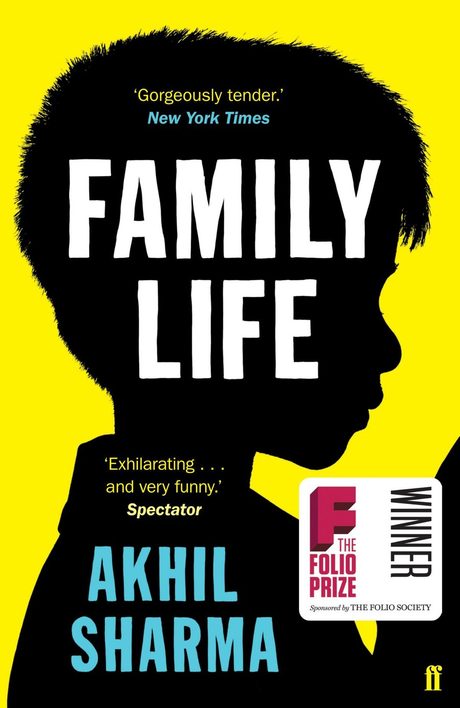
Left: Delhi to New Jersey | ache sideways
Family Life
Akhil Sharma2014about 172 pages
A family moves from Delhi to New Jersey for the better life, and then an accident in a swimming pool takes the older son.
Ajay is eight when the family lands in America and everything is thrilling, including the carpet. Then his brilliant older brother dives into a pool, hits his head, and survives with catastrophic brain damage. The rest of the novel is the family living around that bed for years: the mother's faith, the father's drinking, the visitors who come to touch the boy for blessings, and Ajay growing up as the one who is fine and therefore invisible. Sharma writes in short flat sentences that never once reach for your pity, which is precisely why it lands as hard as it does.
Why it is at 2
Second because it is the other half of the leaving story. The migration succeeds on paper, the visa works, the job works, and the family is destroyed regardless. It is also the shortest book in this movement and the one people finish in two sittings. It sits below Brick Lane only because Ali covers more years and more of a whole life.
Read it ifyou want restraint and a story that refuses self-pity
Skip it ifa book about a severely disabled child in the house would land too close right now
flat, unsparing, tenderBest for: readers who want short and heavyusafamilyillness
Heads up: severe brain injury, alcoholism, a family under years of strain
3

Left: Punjab to Iowa | ache forwards
Jasmine
Bharati Mukherjee1989about 264 pages
A young widow from a Punjab village remakes herself across America, changing her name and her self at every stop.
Jyoti is widowed at seventeen in a village in Punjab, travels to the United States on false papers to carry out a plan she never completes, and instead keeps becoming somebody else. Jasmine, then Jase, then Jane, each name attached to a different man and a different state. Mukherjee wrote it in 1989 and it still reads fast and hot, with a narrator who is neither a victim nor a saint. It is also, deliberately, a novel about wanting America rather than mourning India, which was an unusual position to take then and is an unusual one now.
Why it is at 3
Third because it makes the argument the rest of this movement will not: that some people leave without looking back and would do the whole thing again tomorrow. Parts of it have aged badly, particularly how quickly rural India gets sketched in, and I would still put it in your hands, because no other novel here has this much appetite in it.
Read it ifyou want a migrant story driven by hunger rather than grief
Skip it ifyou want a careful modern treatment of caste and village life
hot, restless, unsentimentalBest for: readers tired of sad migrant novelsusareinvention1980s
Heads up: sexual violence early in the book
4
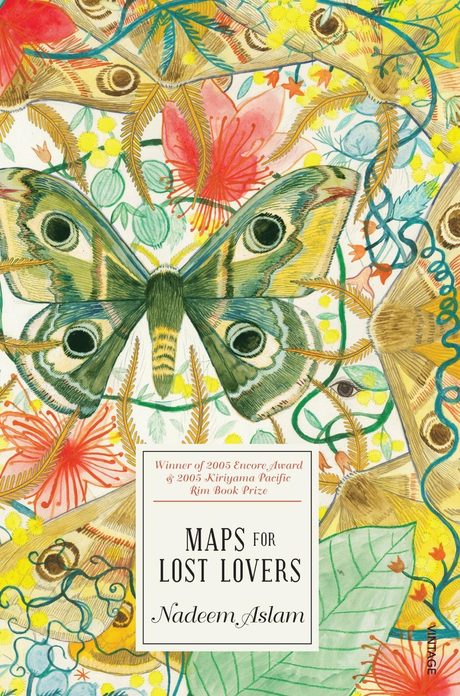
Left: Pakistan to northern England | ache backwards
Maps for Lost Lovers
Nadeem Aslam2004about 374 pages
In an English town full of Pakistani families, a couple who lived together without marrying vanish, and the absence rots the whole neighbourhood.
Two lovers go missing. Everybody in the neighbourhood, which its residents have renamed after the towns they came from, knows roughly what happened and why, and the novel spends a year inside the family of the missing man's brother as the truth moves closer. Aslam took more than a decade over this book and the prose shows every year of it, loaded with moths, snow, paint and birds. It is the most beautiful writing on this list and also the angriest, because what the book argues is that a community can carry its own prison across an ocean and set it up again on a wet English street.
Why it is at 4
Fourth because the ache points backwards so hard here that it turns violent, which is the darkest version of this movement. It is slower than everything above it and the imagery can weigh a lot over four hundred pages. Read it when you have room for it. Where Brick Lane shows a woman making a life inside the community, Aslam shows what that same community does to people who step outside it.
Read it ifyou want prose you slow down for and a story that does not flinch
Skip it ifyou want something light, or you are tired of novels that indict religion
gorgeous, wintry, angryBest for: readers who love sentencespakistanenglandcommunity
Heads up: honour killing, domestic abuse, religious coercion
5
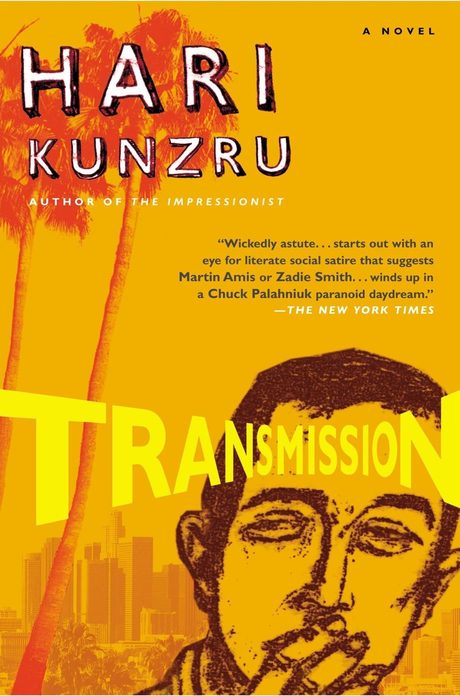
Left: Delhi to Silicon Valley | ache forwards
Transmission
Hari Kunzru2004about 289 pages
An Indian programmer flies to California for the dream job, gets laid off, and releases a computer virus named after a Bollywood actress.
Arjun Mehta is recruited in Delhi with a lot of talk about opportunity, lands in California, and discovers he is contract labour on a visa that effectively owns him. When the layoff comes he does something stupid and enormous: he writes a virus, names it after the film star he adores, and networks around the world start falling over. Kunzru cuts between Arjun, a British marketing man and a Bollywood actress, and the satire is aimed at the entire machine that shifts people and money around the planet. Funny for a long stretch, and then suddenly not funny at all.
Why it is at 5
Fifth because it is the only book in this movement about the technical middle-class migration most Indian readers actually know from their own families: the visa, the shared apartment, the parents told a carefully edited version of the truth. It is also the lightest book here emotionally, which after Aslam counts as mercy. Weakest ending on the list, and I recommend it anyway.
Read it ifyou want satire about the visa economy rather than a family saga
Skip it ifyou want emotional depth, because this one runs on wit
satirical, jittery, globalBest for: tech workers and visa veteransusasatiretech
6
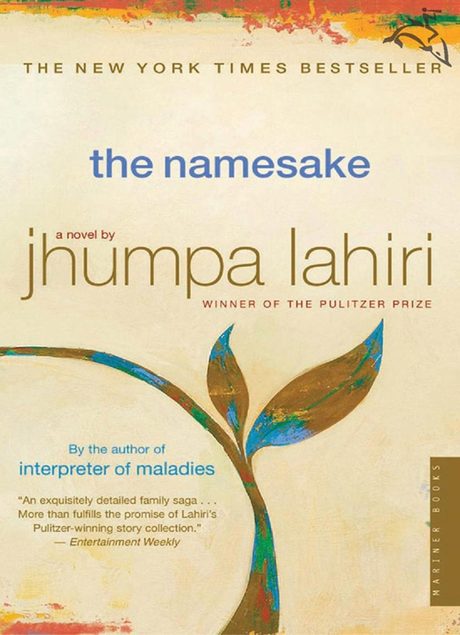
Born there: Boston | ache sideways
The Namesake
Jhumpa Lahiri2003about 312 pages
A boy named after a Russian writer spends thirty years trying to explain his own name, which turns out to be his father's near death.
Ashoke and Ashima marry in Kolkata and move to Massachusetts, and their son is registered as Gogol because the hospital needs a name that day and the letter from India carrying the real one has not arrived. The novel follows Gogol from that hospital to college, through relationships that are partly about escaping the name, to the day he finally understands what it meant to his father. Lahiri writes ordinary life with such accuracy that a scene at a dinner party ends up carrying the weight of a country. Very little happens dramatically, and that is exactly the design.
Why it is at 6
Sixth, and the best book on this list, which is why it opens the second movement instead of sitting at number one: the ranking follows the arc, not my ratings. Nobody has written the second-generation position better. The parents get full interior lives here instead of being furniture in their son's story, which is the mistake most novels in this movement make.
Read it ifyou want the definitive second-generation novel and quiet prose
Skip it ifyou need plot, because this is thirty years of ordinary life
precise, restrained, warmBest for: anyone starting this whole subjectusabengalinames
7

Born there: North London | ache backwards
White Teeth
Zadie Smith2000about 478 pages
Two London families, one Bangladeshi and one English, tangled across fifty years by a writer who was twenty-four and showing off gloriously.
Archie and Samad met in a tank at the end of the second world war and wash up in North London decades later, one married to a Jamaican woman half his age, the other to a Bangladeshi woman with more sense than either of them. Their children then refuse every plan the fathers make. Smith writes crowds, jokes, arguments and voices, and the book is loud the way a Willesden bus is loud. Underneath the comedy it is about what fathers do when they realise their children belong to a country the fathers cannot read.
Why it is at 7
Seventh because it is the funniest big book here and the best on second-generation friendship across communities. It also sprawls, and the science-project plot in the last third loses a lot of readers, myself included for about forty pages. Even so, the first two hundred pages are the most alive writing anywhere on this list.
Read it ifyou want comedy, an enormous cast, and London on the page
Skip it ifyou want a tight plot and a controlled ending
loud, comic, sprawlingBest for: readers who like big social novelsbangladeshlondoncomedy
8

Born there: South London | ache forwards
The Buddha of Suburbia
Hanif Kureishi1990about 284 pages
Karim is half Indian, entirely South London, and would like to be famous, sleep with everyone, and never go back to the suburbs.
Karim's father, an Indian clerk in a London borough, reinvents himself as a spiritual teacher for bored suburban English people, which works alarmingly well. Karim uses the resulting chaos to get out: theatre, sex, the seventies, a city where punk is starting and race is a daily negotiation nobody has agreed the terms of. Kureishi is funny and completely unsentimental about identity, including the way Karim performs Indianness on stage because that is the only role anyone is offering him. It has aged in places and it is still the freest book here.
Why it is at 8
Eighth because it takes the second movement somewhere none of the others go: appetite, ambition, comedy, and zero interest in being a good representative of anybody. Set against Home Fire at rank nine, which is the same country thirty years later and far less free, this book is a useful reminder that the 1970s were not only grim.
Read it ifyou want humour and a narrator with no interest in being respectable
Skip it ifyou want a careful modern treatment of race and sexuality
randy, funny, restlessBest for: readers who like a picaresquebritain1970scomedy
Heads up: explicit sex, and racist language spoken by characters
9
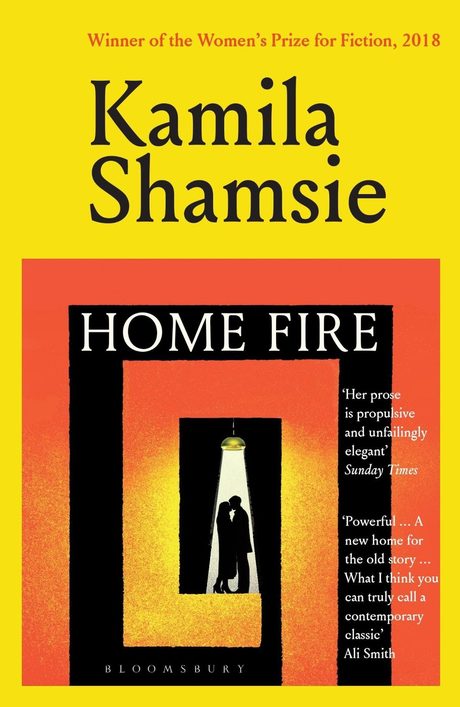
Born there: London and Raqqa | ache sideways
Home Fire
Kamila Shamsie2017about 289 pages
Antigone rewritten as a British Pakistani family story, where a boy joins the Islamic State and his sisters are left to answer for it.
Isma, Aneeka and Parvaiz are the children of a jihadi father who died on his way to Guantanamo, a fact the British state has never allowed them to put down. When Parvaiz goes to Syria, the family collides with the ambitions of a British home secretary of Pakistani origin who has built an entire career on distance from people like them. Shamsie takes Sophocles and fits him to the war on terror with almost no strain showing. The last thirty pages move very fast and are extremely hard to read calmly.
Why it is at 9
Ninth because it is the most current book here about being born British and still on probation, and because the plot machinery genuinely pulls. It sits below Kureishi only because the ending, faithful as it is to Sophocles, will strike some readers as staged. It won the Women's Prize for Fiction, and that is the rare prize decision I would defend in a pub.
Read it ifyou want a page-turning novel that is also about citizenship
Skip it ifyou want subtlety in the final act
tense, political, tragicBest for: readers who like plot with politicsbritainpakistantragedy
Heads up: radicalisation, state surveillance, and a death
10
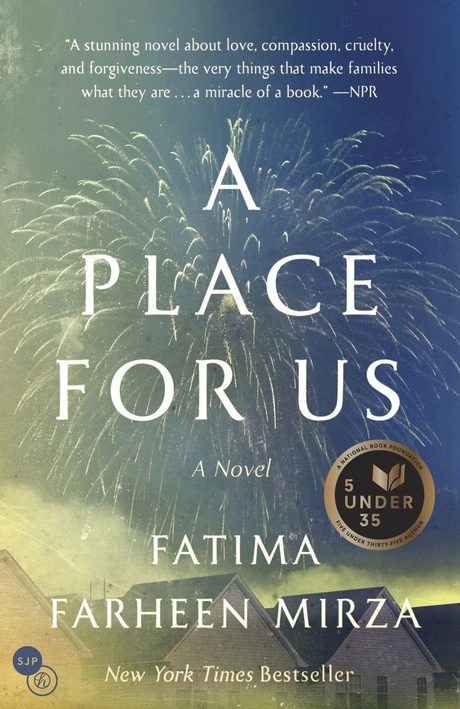
Born there: California | ache sideways
A Place for Us
Fatima Farheen Mirza2018about 402 pages
An Indian Muslim family in California gathers for a wedding, and the son who walked out comes back for exactly one day.
The novel opens at Hadia's wedding, where her estranged brother Amar turns up after years away, and then it travels backwards through the childhoods that produced that silence. Mirza writes a devout family without mocking the faith and without selling it either: prayer, the mosque, the rules the daughters get and the sons do not, and a father whose love keeps arriving in the wrong language. The final section switches into the father's voice and is the best thing in the book by some margin. She wrote it in her twenties, which is frankly annoying.
Why it is at 10
Tenth because it is the quietest book in this movement and the most specific about faith, which most diaspora novels handle at arm's length or not at all. It is slower than Home Fire and less funny than Smith, and it will land hardest on anyone who has watched a sibling drift out of a family's expectations and not found a way to say so.
Read it ifyou want a family novel about faith and forgiveness
Skip it ifyou want pace, or you are tired of wedding-frame structures
tender, devout, achingBest for: readers close to their familiesusamuslimsiblings
11
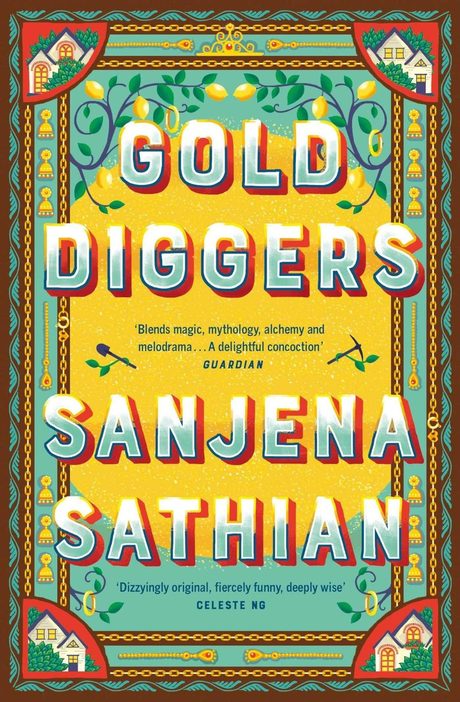
Born there: Atlanta | ache sideways
Gold Diggers
Sanjena Sathian2021about 282 pages
Two Indian American teenagers in Atlanta steal gold jewellery and drink it, because the ambition of whoever wore it comes along with it.
Neil is a lazy teenager in a suburb of Atlanta where every other Indian kid is being engineered into a success story. His neighbour Anita and her mother have found a shortcut: a brew made from stolen gold that transfers the striving of its owner to whoever drinks it down. Sathian uses that one absurd idea to take apart model-minority pressure, the entrance-exam industry and the gold-rush history of the American west, and she is funny the whole way. The second half jumps forward into adulthood and loses some of the first half's charge.
Why it is at 11
Eleventh because it is the newest voice here and the only one that treats second-generation ambition as a heist rather than a tragedy. It closes this movement on a deliberately different note. The magic conceit is not for everyone and the adult section drags, but nothing else on this list is having anywhere near this much fun with the subject.
Read it ifyou want satire with a strange premise and a lot of jokes
Skip it ifyou dislike magic realism or unlikeable teenage narrators
satirical, sly, contemporaryBest for: the youngest readers of this listusasatireambition
12

Went back: New York to Lahore | ache sideways
The Reluctant Fundamentalist
Mohsin Hamid2007about 184 pages
A Pakistani man tells an American stranger in a Lahore cafe how he got a Princeton degree, a New York job, and then went home.
Changez is a Princeton graduate working at a New York valuation firm, very good at it, in love with a woman who is not well, and then the towers come down and he watches the city start looking at him differently. He also catches himself smiling at the news in a way that frightens him. The whole novel is a monologue delivered to a silent American across a table in Lahore, and Hamid never tells you what the listener is or what happens when the meal ends. It runs under two hundred pages and can be finished in an evening.
Why it is at 12
Twelfth, and the opening of the third movement, because the going back here is a decision rather than a defeat. The monologue device is a gamble that pays off, and the unresolved ending is the thing readers either love or throw the book across a room for. Read it directly after The Namesake and you can watch one generation split into two directions.
Read it ifyou want a short tense book about belonging after 2001
Skip it ifyou need a clear ending you can hold on to
tense, monologue, ambiguousBest for: one-sitting readerspakistannew yorkreturn
Heads up: the 11 September attacks and their aftermath, discussed directly
13
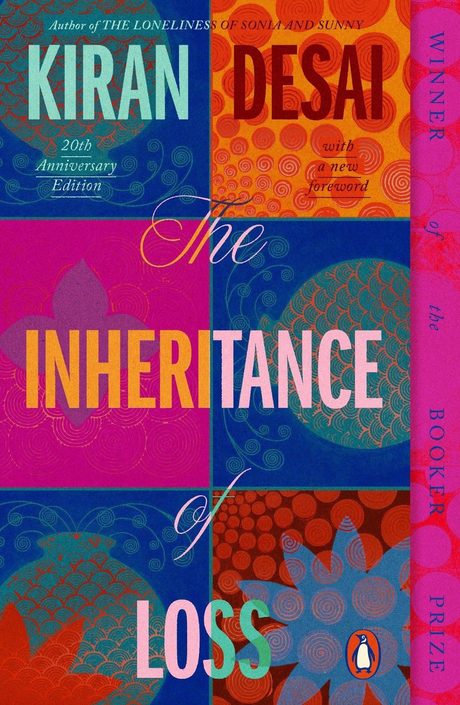
Went back: New York to Kalimpong | ache backwards
The Inheritance of Loss
Kiran Desai2006about 360 pages
A retired judge in Kalimpong, his orphaned granddaughter, and a cook whose son is washing dishes without papers in New York.
Two stories run against each other. An anglophile judge sits in a damp house in the Himalayan foothills as the Gorkhaland agitation of the mid-1980s reaches his gate, while Biju, the cook's son, moves between basement kitchens in Manhattan with no papers and no way home. Desai is merciless about the fantasy of the west, and equally merciless about the class arrangement back home that makes the fantasy necessary in the first place. The Kalimpong sections are the strongest writing. The New York sections are the ones you will still be thinking about at two in the morning.
Why it is at 13
Thirteenth because it is the best book here on the cost of going and the impossibility of returning, and it holds both inside one household. It is also the least comfortable, since it refuses to make anybody admirable. Where Hamid's narrator chooses to go back, Biju is sent back, and setting those two next to each other is the most honest thing this list does.
Read it ifyou want the class politics of migration rather than the sentiment
Skip it ifyou want warmth, or a character to root for
damp, bitter, brilliantBest for: readers who want no comfortindianew yorkclass
14
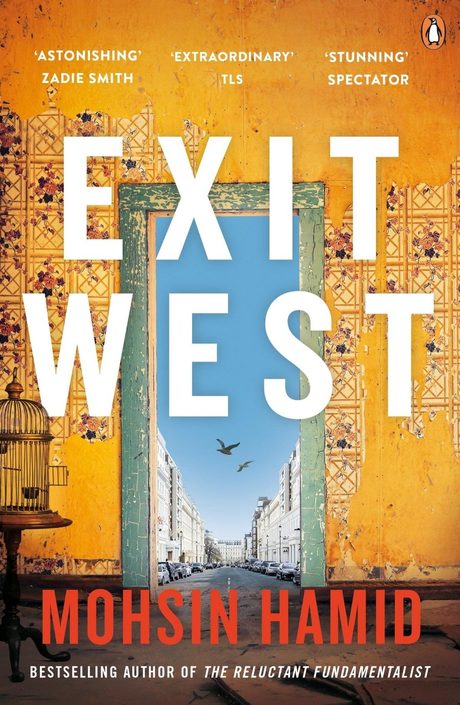
Still moving: an unnamed city, outwards | ache forwards
Exit West
Mohsin Hamid2017about 163 pages
Two young people flee a city sliding into war through doors that open into other countries, and the novel treats this as ordinary.
Saeed and Nadia meet at an evening class in an unnamed city, fall into something, and then the war arrives street by street. Instead of a harrowing crossing, Hamid gives them doors: black rectangles that open onto Mykonos, London, California. Removing the journey leaves the actual subject exposed, which is what happens to two people afterwards, and what happens to the places receiving them. The prose is calm and formal, almost fable-like, and a running series of one-page glimpses shows other doors opening elsewhere in the world at the same time.
Why it is at 14
Fourteenth, and the start of the fourth movement, because this is the migration story that has grown fastest since 2015 and the one Indian readers see least. The doors also solve a real problem. We have all seen the boat footage, and a novel that spends two hundred pages there risks turning into a documentary. Shorter and stranger than everything above it.
Read it ifyou want a short strange humane book about leaving under fire
Skip it ifyou want realism, because the doors are never explained
calm, fabular, tenderBest for: readers with one free eveningrefugeesspeculativeromance
15
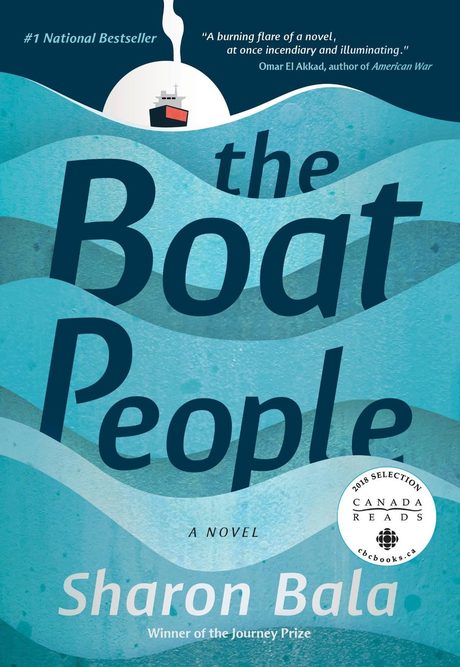
Still moving: Sri Lanka to Vancouver | ache forwards
The Boat People
Sharon Bala2018about 416 pages
A cargo ship of Sri Lankan Tamil asylum seekers reaches Canada, and the country has to decide whether they are refugees or a threat.
Mahindan arrives in British Columbia with his six-year-old son on a rusted freighter and is detained immediately while Canada works out whether he was a victim of the Sri Lankan civil war or a participant in it. Bala tells it from three sides: the detained father, a young lawyer carrying her own family history, and an adjudicator whose Japanese Canadian grandparents were interned in the 1940s. The novel was built on a real arrival by sea in 2010, and it stays close to the procedure, the hearings, the paperwork, the delays, which is exactly where the cruelty lives.
Why it is at 15
Fifteenth and last because it is the coldest and most procedural book here, and the right place to finish. Where Exit West makes the crossing magical, Bala makes the aftermath bureaucratic, and the bureaucracy turns out to be the more frightening of the two. It is also the only book on this list that gives real space to the Sri Lankan Tamil experience.
Read it ifyou want the legal and human machinery of asylum
Skip it ifyou want an uplifting ending
procedural, cold, humaneBest for: readers who follow immigration newssri lankacanadaasylum
Heads up: civil war violence, family separation, immigration detention
Worth knowing
The four movements, and how to use them
Movement one is the person who left. They carry a whole country in their head and the country keeps changing without asking them. Movement two is the person born there, who is fluent in a place that still treats them as a guest and fluent in nothing else. Movement three is the person who goes back and finds the house is smaller, the road is different and the people have gone on without them. Movement four is the person still in transit, who has left and not arrived, and whose story is now the most common one in the world.
If you are picking one, pick the movement you are living in rather than the one that sounds most literary. A cousin who left last year will get more out of Family Life than out of any of the second-generation books, and the second-generation books will mean almost nothing until you have watched somebody grow up between two sets of rules.
Worth knowing
Which way the ache points
Every entry carries a direction, and it is a more useful sorting tool than country of origin. Backwards means the character is holding on to a place that has already moved on, which is Nazneen's sister's letters and Aslam's entire wet English street renamed after Pakistani towns. Forwards means the character wants in, and the wanting is the engine, which is Jasmine and Karim and Arjun with his visa.
Sideways is the one nobody warns you about. It is the ache for the person you would have been if the family had stayed, or if you had gone instead of your brother. Gogol carries it, Amar carries it, and Changez carries it worst of all, because he has actually gone back and can still feel the other life running in parallel somewhere over the Atlantic. Sideways is why these books stay with people who have never emigrated anywhere.
Worth knowing
What got cut, and why
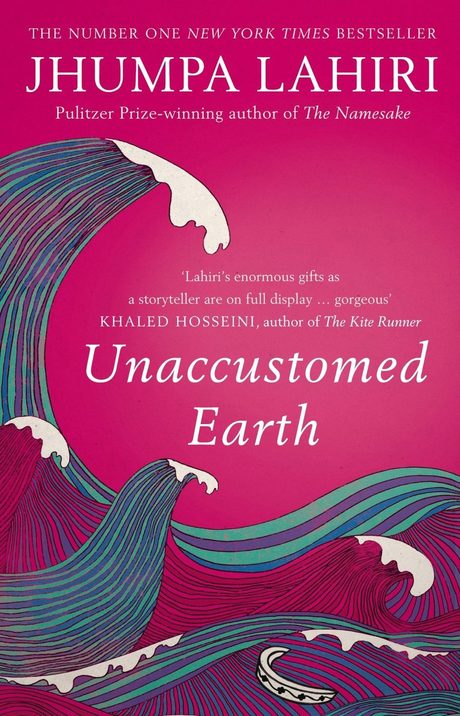
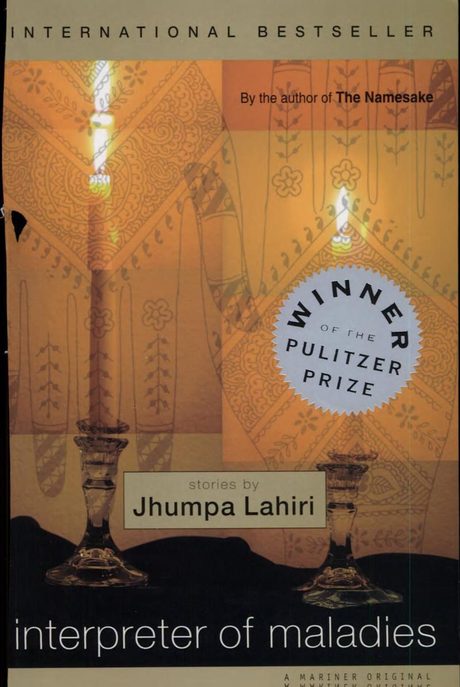
Interpreter of Maladies and Unaccustomed Earth are better than several books on this page and both are story collections, so the novels-only rule took them out. The Lowland went the same way, under one book per author. Anita and Me and Londonstani were cut last, for space, and both belong in movement two.
A Golden Age by Tahmima Anam and The Henna Artist by Alka Joshi get recommended on lists like this constantly and they are not diaspora novels, they are novels set in Bangladesh and India by writers who live elsewhere. Good books, wrong list. If a page tells you otherwise, it was written by somebody who read the author biography and stopped there.
People also ask
Questions, answered
What counts as a South Asian diaspora novel?
A novel about leaving South Asia, arriving somewhere else, or living with what that move did to a family. The test I used here is whether the leaving is inside the book rather than only inside the author's life. A novel set entirely in Chennai written by somebody in Chicago is an Indian novel. A novel about a Sri Lankan family in Toronto is a diaspora novel, and so is one about a Pakistani man in New York who decides to go home.
Which South Asian diaspora novel should I read first?
The Namesake by Jhumpa Lahiri, at rank six. It is the most welcoming book here, the prose asks nothing of you, and it gives you both generations at once: the parents who left and the son who did not choose any of it. Once you have read it, the rest of this list opens up, because almost every other book on the page is either agreeing with it or arguing back.
Are these books only about India?
No. Brick Lane and White Teeth follow Bangladeshi families in London, Maps for Lost Lovers and Home Fire and The Reluctant Fundamentalist are Pakistani, and The Boat People is Sri Lankan Tamil. Roughly half this list sits outside India, which reflects the actual shape of the South Asian diaspora rather than the shape of the Indian bookshop shelf. Exit West never names its country at all, on purpose.
Which of these is the shortest?
The Reluctant Fundamentalist at around two hundred pages, followed by Exit West and Family Life. All three can be read in an evening or two. Brick Lane, White Teeth and Maps for Lost Lovers are the long ones, each well over four hundred pages, and Maps for Lost Lovers is the slowest of those because the prose is dense enough that you will not want to rush it.
Are any of them funny?
Three of them. The Buddha of Suburbia is the funniest, White Teeth is close behind and has more characters to be funny with, and Gold Diggers is the most contemporary comedy here. Transmission is satire rather than comedy, sharp about the visa economy but colder. The rest range from quiet to devastating, and I have marked the heavy ones with content notes so nothing arrives as a surprise.
Is there a reading order?
Follow the ranks and you follow the arc, which is the order I would recommend. If you would rather sample, take one from each movement: Brick Lane, The Namesake, The Reluctant Fundamentalist and Exit West. That is four books, roughly a month of evenings, and you will have covered leaving, being born there, going back and never arriving, which is the whole shape of the subject in miniature.
Before you go
What to read tonight
Pick by movement, not by prize. If you left recently, Family Life will find you. If you were born somewhere your parents were not, start with The Namesake and then argue with it using Gold Diggers, which treats the same pressure as a comic heist rather than a slow sadness.
If you have one evening and no patience for a project, Exit West is a hundred and eighty odd pages and will still be sitting in your chest a week later. And if you finish the whole list, read The Inheritance of Loss last rather than first. Desai takes away every comfort the other fourteen books offer, which is unbearable at the start and clarifying at the end.
Keep going
Lists that pair with this one
Authors
The 10 Best Jhumpa Lahiri Books, Ranked (Where to Start)
Ranked by warmth, from the crowded Bengali kitchens of the early stories to the bare Italian rooms she writes in now.
Mood & Life
19 Best Coming of Age Novels, and the Right Age to Read Each
Every one of these has a window when it lands hardest, so I marked all nineteen and ranked them by how long that window stays open.
Indian Fiction
20 Best Books by Indian Women Authors, From 1905 to 2025
Ranked by how hard I would push each one at a stranger, with a door on every book so you know how much patience it asks for.
Trending
14 Booker Prize Winners Worth Reading (And 3 That Are Homework)
Ranked by what each book gives back for the hours it takes, with the cost of entry printed on every entry.
Indian Fiction
16 Best Books to Understand India, Ranked by What They Explain
Sixteen books, ten doors into the same country: history, caste, the mega city, the village, money, and where to start tonight.