My first Ruskin Bond was a school library paperback with a broken spine and somebody's name scratched out on the first page. I read the Deoli story on a Sunday afternoon in Ahmedabad, forty degrees outside, ceiling fan going like an aeroplane, and then sat there wanting a hill station I had never visited. That is the trick he does. He writes about small weather and unimportant people, and you come out of it homesick for a place you have never been.
Recommending him is harder than it sounds. He has been publishing since 1956, he has a Sahitya Akademi Award and a Padma Bhushan, and Indian publishers keep reshuffling the same forty stories into new collections with new covers. Walk into any bookshop and you will see thirty Ruskin Bond titles on the shelf, of which maybe ten are actually different books. People buy three and read the same story three times.
So this list only ranks distinct books, thirteen of them, ordered by how much they give a reader who has never read him. Every entry carries an age label above the title, because the honest answer to which Bond you should read is different at eight, at eighteen and at thirty-five. Quick picks are below if you have ten seconds, and there is a section further down on the repackaging problem so you do not pay twice for the same pages.
How I picked these
- Distinct books only: no omnibuses, no Best of collections, no school editions of a single story you already own inside another book.
- Every title checked through Google Books and Open Library with a real cover, and first-publication years checked separately, since the editions on sale are mostly reprints from decades later.
- An age label on each one, because he genuinely writes for five-year-olds and for adults, and the difference matters more with him than with most writers.
- I cut the ghost story anthologies and the poetry, not because they are bad but because nobody arrives at Ruskin Bond through them.
- Honest about the later work: two books here are pleasant rather than important, and I say so in their entries instead of pretending the shelf is all peaks.
The whole list at a glance
All 13 books, in order
| # | Book | Author | Year | Vibe | Best for |
|---|
| 1 | The Night Train at Deoli and Other Stories | Ruskin Bond | 1988 | quiet, wistful, unhurried | first-time Bond readers |
| 2 | The Room on the Roof | Ruskin Bond | 1956 | restless, tender, young | teenagers and nostalgic adults |
| 3 | Our Trees Still Grow in Dehra | Ruskin Bond | 1991 | autobiographical, plain, aching | adults who read him as children |
| 4 | The Blue Umbrella | Ruskin Bond | 1974 | gentle, sunlit, sly | children and hurried adults |
| 5 | A Flight of Pigeons | Ruskin Bond | 1978 | tense, restrained, period | readers who find him too gentle |
| 6 | Rain in the Mountains | Ruskin Bond | 1993 | slow, seasonal, companionable | bedside reading |
| 7 | Scenes from a Writer's Life | Ruskin Bond | 1997 | wry, honest, unhurried | readers who want the backstory |
| 8 | A Book of Simple Living: Brief Notes from the Hills | Ruskin Bond | 2015 | spare, calm, elderly | anxious readers |
| 9 | Tales of Fosterganj | Ruskin Bond | 2013 | shaggy, warm, comic | returning Bond readers |
| 10 | Roads to Mussoorie | Ruskin Bond | 2005 | chatty, funny, local | trip reading |
| 11 | Angry River | Ruskin Bond | 1972 | elemental, quiet, tense | children aged seven to eleven |
| 12 | Rusty, the Boy from the Hills | Ruskin Bond | 2002 | sunny, episodic, mild | middle grade readers |
| 13 | The Cherry Tree | Ruskin Bond | 1980 | simple, patient, warm | read-aloud with kids |
The list
The books, ranked
1
Teens and up
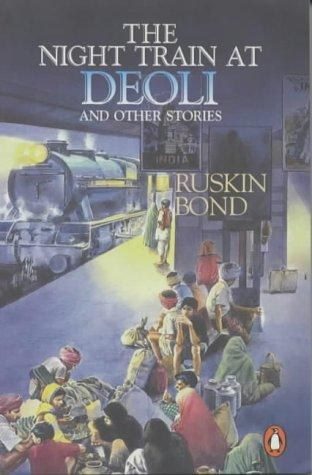
The Night Train at Deoli and Other Stories
Ruskin Bond1988about 252 pages
The best single doorway into Bond, built around a boy who sees a girl at a tiny station and never gets off the train.
The title story runs a few pages and it has followed three generations of Indian readers around. A student travels to Dehradun every holiday, the train halts at a small station called Deoli, and a girl selling baskets looks at him through the window. He never gets down. Around it sit stories about station masters, aunts, lonely tenants and hill boys, most of them ending a beat before you expect them to. The sentences look easy, almost plain, and then one of them turns and catches you in the chest.
Why it is at 1
Number one because it asks nothing of you and returns the most. No prior India required, no prior Bond, no patience, since the longest story here is about fifteen pages. If you read this collection and feel nothing, you can close the book on him with my blessing and go read somebody else. Most people do not close it.
Read it ifyou want short stories that fit inside a chai break
Skip it ifyou need plot, because most of these are moods with an ending attached
quiet, wistful, unhurriedBest for: first-time Bond readersshort storiesclassichills
Pairs with: Our Trees Still Grow in Dehra, if the sad ones are the ones you liked
2

Age 14 and up
The Room on the Roof
Ruskin Bond1956about 151 pages
A seventeen-year-old wrote this novel about a sixteen-year-old escaping his guardian's bungalow into the bazaar, and it still moves like that.
Rusty is an Anglo-Indian orphan in Dehra, kept indoors by an English guardian who is certain the bazaar will ruin him. So Rusty goes to the bazaar. He makes Indian friends, plays Holi and comes home stained pink, gets thrown out for it, and ends up teaching a small boy English in exchange for a room. Bond wrote the book at seventeen in a rented London room, homesick for the town he had just left, and both the homesickness and the amateurishness are visible on the page. In a novel about being sixteen, both turn out to be assets.
Why it is at 2
Second because it is his origin story and one of the few Indian English novels about a boy nobody is looking after. It is a first novel and it behaves like one, jumpy in places and thin in others. Read it anyway, then read Scenes from a Writer's Life at rank seven to meet the real boy standing behind Rusty.
Read it ifyou like coming-of-age novels with dust and heat in them
Skip it ifyou want a polished novel, since the seams show everywhere
restless, tender, youngBest for: teenagers and nostalgic adultscoming of ageclassicdehradun
3
Any age, best after twenty
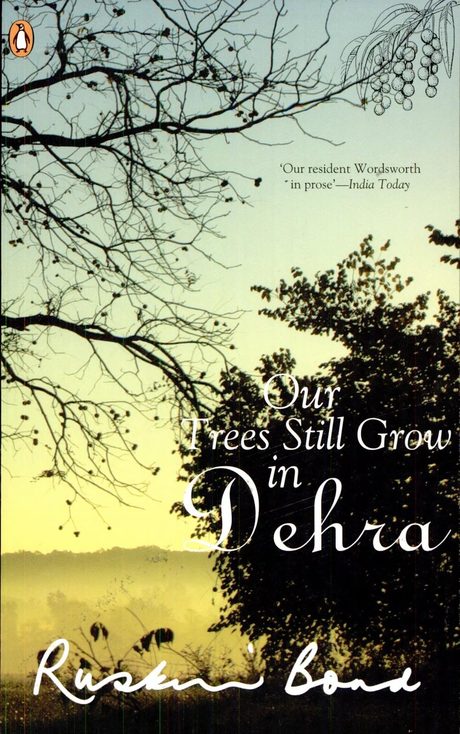
Our Trees Still Grow in Dehra
Ruskin Bond1991about 124 pages
Fourteen semi-autobiographical stories about family, absence and the trees he planted, and the closest he has come to a great book.
These stories sit nearer his own life than anything else in his fiction. A boy visits his father in wartime Delhi and eats sweets in a hotel room. A grown man goes back to Dehra to find the house sold and the trees he planted standing tall over strangers. Grandmother's veranda, goodbyes on railway platforms, deaths that arrive in a single line and then are never mentioned again. Bond handles grief the way Indian families handle it, by changing the subject to the garden and letting you work out what just happened.
Why it is at 3
Third, above the famous novellas, because here he is writing with no child audience in mind and no picnic ending waiting at the end of the path. If you have ever returned to a childhood house and found it altered, the title story will cost you a few minutes of composure. This is the collection I hand to adults who still file him under children's writer.
Read it ifyou want the grown-up Bond and can take some sadness
Skip it ifyou are reading for plot or for cheerfulness
autobiographical, plain, achingBest for: adults who read him as childrenshort storiesfamilymemory
4

Age 8 and up
The Blue Umbrella
Ruskin Bond1974
A hill girl trades her lucky pendant for a bright blue umbrella, and the whole valley quietly loses its mind over it.
Binya is a Garhwali girl out with her cows when a group of picnickers offers her a swap: their frilly blue umbrella for the leopard's claw she wears on a string. She takes the deal. The umbrella turns her into the most looked-at person for miles, and the old shopkeeper, a man who has wanted very little in his life, decides that he wants this. What follows is small, mean and then unexpectedly generous. Vishal Bhardwaj filmed it in 2005 with Pankaj Kapur as the shopkeeper, and the film is faithful, though the book gets you there in an evening.
Why it is at 4
Fourth because it is the most complete thing he has written at any length: want, theft, shame and repair, all inside a hundred pages, with nobody turned into a villain along the way. It ranks under the collections only because it plays a single note. If you are buying one Ruskin Bond book for a child of nine, buy this one and stop reading this list.
Read it ifyou want one small perfect book for a child or for yourself
Skip it ifyou want moral complexity, because the ending is kind
gentle, sunlit, slyBest for: children and hurried adultsnovellachildrengarhwal
5

Age 13 and up
A Flight of Pigeons
Ruskin Bond1978about 172 pages
His one real historical novella: 1857 seen from inside a household of women waiting to learn what the revolt will do to them.
Shahjahanpur, 1857. The English congregation is attacked in church, and Ruth Labadoor, a girl from an Anglo-Indian family, gets out with her mother and into the protection of Indian neighbours. A Pathan named Javed Khan shelters them and then decides he would like to marry Ruth, which turns hospitality into a slow siege conducted entirely through good manners. Bond keeps the fighting off the page and stays in the house with the women and the rumours. Shyam Benegal filmed it as Junoon. The novella is drier and better, because on the page you get Ruth's flat, frightened way of reporting things.
Why it is at 5
Fifth because it is the only book here that shows what he could do with history, and the one I hand to anyone who says he is too soft. There is real menace in it, held at arm's length by a narrator who will not raise her voice. It sits below the collections because it was a one-off, an experiment he never went back to at this level.
Read it ifyou want 1857 at household scale rather than battlefield scale
Skip it ifyou want a full account of the revolt or a large cast
tense, restrained, periodBest for: readers who find him too gentlehistorical1857novella
Heads up: religious violence and the threat of a forced marriage
6

Grown-ups mostly
Rain in the Mountains
Ruskin Bond1993about 268 pages
Notes, journal entries and poems from a man who moved to a hillside and wrote down the weather for thirty years.
This is Bond off duty: the sounds he likes, the monsoon arriving, the window he works at, a fox on the hill at night, neighbours' children who walk in without knocking. Some entries run two lines and some are proper essays about writing for a living in a country that paid its writers very badly. It is not a book you read straight through in a weekend. Keep it by the bed, take three pages a night, and after a week you will catch yourself looking at your own street more carefully than usual.
Why it is at 6
Sixth because it is the best of his notebook books, and the notebook is where his sentences run loosest and funniest. It ranks below the fiction because there is no story pulling you forward, only company. Readers who already love him often end up naming this one their favourite, which tells you it is a second book and not a first.
Read it ifyou like diaries, weather and writers talking about work
Skip it ifyou need narrative momentum to keep turning pages
slow, seasonal, companionableBest for: bedside readingessaysjournalhimalaya
7

Age 16 and up
Scenes from a Writer's Life
Ruskin Bond1997about 214 pages
The memoir of the broke young man who wrote The Room on the Roof in a rented London room and then came back to India anyway.
Bond covers his early years here: the father he lost far too young, school in Simla, and the stretch in Jersey and London in his late teens where he worked dull jobs, ate badly and finished his first novel. He is straightforward about money, about not fitting in England, and about choosing writing in the 1950s when almost nobody in India was making a living from it. The tone stays light, which is exactly why the hard parts land. It reads like a long letter from a man who has stopped needing you to be impressed by him.
Why it is at 7
Seventh because it explains the rest of the shelf. Read this and you see why he keeps returning to orphans, guardians, trains and the idea of going home. It sits here rather than higher because it assumes you already care about the writer. Start somewhere else on this list, then come back to it in a month.
Read it ifyou already like him and want the person behind the books
Skip it ifyou have not read any of his fiction yet
wry, honest, unhurriedBest for: readers who want the backstorymemoir1950swriting life
8

Grown-ups
A Book of Simple Living: Brief Notes from the Hills
Ruskin Bond2015about 160 pages
Diary scraps and one-line observations from a man in his eighties who long ago made peace with a small life on a hillside.
Two lines about a lizard on the wall. Four lines about a friend who has died. A paragraph about the first blossom of the season, then nothing for three days. This is the sparest book on the list, closer to a commonplace book than a memoir, and its whole argument is that a life can be assembled out of noticing things. There is no advice in it, which is precisely why it works better than the advice books you may have been handed. One page in the morning is the correct dose, the way some people read a calendar quote, except this one comes from somebody who actually lives that way.
Why it is at 8
Eighth because the format is a gamble. Some pages hold a real thought and some are a note about the weather, and you cannot tell which is coming until you are inside it. When it lands, it is the calmest thing here. It ranks under Rain in the Mountains because that book simply gives you more per page.
Read it ifyou want a slow book you can read three pages at a time
Skip it ifyou find aphorisms thin or you want an argument to follow
spare, calm, elderlyBest for: anxious readersjournalshort entrieslater work
9

Age 12 and up
Tales of Fosterganj
Ruskin Bond2013
Late Bond enjoying himself: a writer takes a room in a scruffy hamlet below Mussoorie and collects its oddballs.
Fosterganj is invented, which frees him up considerably. The narrator, a writer who sounds a great deal like Bond, rents a room in a half-collapsed settlement below the hill station and spends a season among the residents: a baker, a young man with schemes, a landlady, a man the neighbours consider dangerous. There is a thread about old money running through it and it does not particularly matter. The pleasure is the company, and the way he writes poor people with dignity instead of pity, which is rarer in Indian fiction than it should be.
Why it is at 9
Ninth because it is the best of his later fiction and evidence that he could still write at eighty, but it is a minor book beside the top five and it seems to know that about itself. Come here once you have read the classics and want more of the same weather, or if you like novels where nothing much is required to happen.
Read it ifyou have read the famous ones and want more hill company
Skip it ifyou want a story that goes somewhere in a hurry
shaggy, warm, comicBest for: returning Bond readerslate fictionmussooriecomic
10

Any age
Roads to Mussoorie
Ruskin Bond2005about 150 pages
The funny one: essays on tourists, landladies, ghosts and the daily comedy of living in a town other people visit for two days.
Bond has lived above Mussoorie since the 1960s, and this is the book where he writes about the town rather than the hills around it. Honeymooners arriving in June, the Landour bakery, cars going off the road at the third bend, characters he has watched age across decades, and a few ghost stories he half believes himself. He is properly funny here, in a dry throwaway way that Indian nonfiction rarely attempts. If you are planning a Mussoorie trip, this beats every travel blog going, because he is describing residents rather than attractions.
Why it is at 10
Tenth because it is charming rather than important, and I would not hand it to anybody as their first Bond. As a second or third book it is a good time, particularly if you are reading it on the train up to Dehradun with the window open and the hills still ahead of you.
Read it ifyou are going to Mussoorie or like light travel essays
Skip it ifyou want depth, since this is a pile of anecdotes
chatty, funny, localBest for: trip readingessaysmussooriehumour
11

Age 7 to 11
Angry River
Ruskin Bond1972about 92 pages
A girl alone on a river island through a flood, told in the plainest words a good writer can bring himself to use.
Sita lives with her grandparents on a small island in the middle of a river, in a hut under a big old tree. Her grandmother falls ill, her grandfather takes her across the water to the town, and while they are away the monsoon does what the monsoon does. The book is about a child waiting out a rising river with no adult around to promise her it will be fine. Bond wrote it for young readers and refused to lie to them, which is why it still holds when you read it as an adult in one sitting on a Sunday.
Why it is at 11
Eleventh because it is written for children and stays inside that register, which makes it slighter than the books above even though the fear in it is real and unresolved for a good long while. For a nine-year-old who has finished The Blue Umbrella and wants the next one, this is the next one.
Read it ifyou want a short survival story for a young reader
Skip it ifyou want an adult book, because the vocabulary is deliberately simple
elemental, quiet, tenseBest for: children aged seven to elevenchildrenmonsoonsurvival
12

Age 9 to 13
Rusty, the Boy from the Hills
Ruskin Bond2002about 224 pages
The Rusty stories from before the famous novel, gathered for younger readers who are not ready for the bazaar yet.
This is the first volume of the Puffin Rusty series, and it collects the childhood pieces: Rusty as a small boy in Dehra, a grandfather running a private zoo in the garden, holidays that turn into modest adventures, an India of the 1940s seen at knee height. Nothing here is as strong as The Room on the Roof, and it is not attempting to be. It works as a bridge book for a child who has outgrown picture books and needs chapters without any heartbreak in them yet.
Why it is at 12
Twelfth because it is a compilation aimed at an age group rather than a book he sat down and wrote whole. Useful if you are buying for a ten-year-old and want a step up from The Blue Umbrella. If you are an adult, skip it and read Our Trees Still Grow in Dehra, which covers the same childhood with the lights on.
Read it ifyou are buying for a child of nine to thirteen
Skip it ifyou are an adult reader who wants his best work
sunny, episodic, mildBest for: middle grade readerschildrenrustydehradun
13

Age 5 to 8
The Cherry Tree
Ruskin Bond1980about 52 pages
A six-year-old plants a cherry seed on a hillside and discovers how slowly, and how stubbornly, a tree happens.
Rakesh buys cherries in the bazaar, eats them on the walk home and pushes one seed into the ground behind his grandfather's house in the hills. Then he waits. Goats, storms, a man with a scythe and two winters all have a go at the seedling, and each year Rakesh measures the tree against his own height. It is a picture book at heart, around thirty pages, and it is the best short thing to read aloud to a small person who is impatient about absolutely everything.
Why it is at 13
Last in the ranking and nowhere near last in usefulness. It is a children's picture book, so it cannot compete with the collections above, but as a first Ruskin Bond for a five-year-old it does one job perfectly: it makes waiting feel like an activity instead of a punishment.
Read it ifyou are reading aloud to a small child at bedtime
Skip it ifyou are an adult buying something for yourself
simple, patient, warmBest for: read-aloud with kidspicture bookchildrenpatience
Worth knowing
The three doors into Ruskin Bond
There are only three ways into this writer, and picking the wrong one is why some people bounce off him and decide he is overrated. The stories door is ranks one, three and five: short fiction for readers who want something to happen, even quietly. The boy door is ranks four, eleven, twelve and thirteen: books written for children, in ascending order of age, all of them safe to hand over without reading first. The notebook door is ranks six, seven, eight and ten: no plot at all, just a man at a window telling you what the weather did and what he thinks about it.
Adults who say he bores them have almost always walked in through the boy door by accident, usually because a school prescribed it. Go back through the stories door at rank one or three and see if you still feel that way. Children handed the notebook door will be equally unimpressed, and they will be right.
Worth knowing
The repackaging trap, and how to avoid paying twice
Bond has written hundreds of short pieces, and Indian publishers have spent forty years rearranging them into fresh collections with fresh covers. Best Of, Collected, Classic, Complete, Treasury, Omnibus, Selected, plus one-story school editions sold as full books. The Deoli story alone appears in a dozen places. Nothing dishonest is going on, but if you buy on instinct you will own the same forty pages four times over.
Two habits fix this. First, buy books he wrote as books, which is the whole of this list, rather than collections somebody assembled later. Second, before you buy any anthology, read its contents page in the shop or on the preview and count how many titles you already own. If it is more than three, put it back and buy a novella you have not read instead.
People also ask
Questions, answered
Which Ruskin Bond book should I read first?
The Night Train at Deoli and Other Stories, if you are a teenager or older. It gives you his range in one sitting and the stories are short enough that a bad one costs you four minutes. If you are buying for a child under twelve, start with The Blue Umbrella instead, and if you already read him at school and want the adult version, go to Our Trees Still Grow in Dehra.
What is the best Ruskin Bond book for kids?
It depends on the age, which is why every entry above carries a label. Five to eight, read The Cherry Tree aloud. Seven to eleven, Angry River, which is short and genuinely tense without being frightening. Eight and up, The Blue Umbrella, the best book he has written for children by some distance. Nine to thirteen, Rusty, the Boy from the Hills, which is where a young reader can start on chapters.
Why do so many Ruskin Bond books contain the same stories?
Because he wrote most of his short fiction for magazines and newspapers across seventy years, and publishers have since gathered those pieces into new collections again and again. The stories are not new, only the packaging is. Stick to the books he conceived as books, check the contents page of any anthology before buying, and you will avoid owning the Deoli story in four different covers.
Which Ruskin Bond books were made into films?
Three main ones. A Flight of Pigeons became Shyam Benegal's Junoon, The Blue Umbrella was filmed by Vishal Bhardwaj in 2005, and Susanna's Seven Husbands became 7 Khoon Maaf in 2011, also directed by Bhardwaj. Of the three, the Blue Umbrella film is closest to its book. If you watched Junoon first, the novella will still surprise you, because it sits far closer to the women than the camera does.
Is Ruskin Bond only a children's writer?
No, and the confusion comes from Indian schools, which prescribe his simplest stories and quietly file him under junior fiction for life. Roughly half the books on this list were written for adults, including a memoir, a historical novella about 1857, and two collections about death and going home. Read Our Trees Still Grow in Dehra and then argue the point with whoever told you he writes for kids.
Which Ruskin Bond book is the saddest?
Our Trees Still Grow in Dehra, without much competition. It is not sad in a dramatic way, since nobody in it announces their feelings and there is no big scene at a hospital. It is sad the way old photographs are sad, and the title story about going back to a childhood house is the one readers tend to remember years later. Have something light lined up for afterwards.
Before you go
What to read tonight
If you take one thing from this page, take the age label. Bond is the rare writer whose shelf genuinely splits by reader, and most of the arguments about whether he is any good are actually arguments between somebody who read The Cherry Tree at eight and somebody who read Our Trees Still Grow in Dehra at thirty.
Tonight, download or borrow The Night Train at Deoli and read only the title story, four or five pages. If it leaves you feeling slightly hollow and slightly warm at the same time, you are one of us, and the next stop is Our Trees Still Grow in Dehra. If it does nothing for you, try A Flight of Pigeons before you give up, since that is the book where he behaves least like himself. And if you are buying for a child, The Blue Umbrella has never once let me down as a gift.
Keep going
Lists that pair with this one
Indian Fiction
16 Best Indian Short Story Collections (Where to Start in Each)
Sixteen collections worth your evening, ranked by how much patience each one asks for, with the exact story to read first in every book.
Authors
The 12 Best R. K. Narayan Books, Ranked, and Where to Start
Twelve books ranked for a reader picking him up today, each with a sting rating for how hard the ending lands.
Mood & Life
15 Best Books to Read in Monsoon, Matched to Your Rain Day
Ordered the way the season actually moves, from the dry wait before the first burst to the rain that outlasts everybody, with the exact kind of wet day each book suits.
Mood & Life
19 Best Coming of Age Novels, and the Right Age to Read Each
Every one of these has a window when it lands hardest, so I marked all nineteen and ranked them by how long that window stays open.
Mood & Life
Classic Books for Beginners: 21 Ranked Easiest to Hardest
Twenty one classics arranged on a four rung ladder, easiest first, so you finish the first one instead of abandoning it at page thirty.