A friend borrowed my copy of Interpreter of Maladies in college and gave it back three days later with one sentence: this woman has been reading my parents' mail. That is the Lahiri effect on Indian readers. She writes people we already know, doing ordinary things badly, in kitchens that smell right.
Then, around 2012, she moved to Rome, stopped writing in English, and started again in Italian like a beginner with a dictionary. A lot of readers fell off there and never came back. I understand why. I also think they quit early.
So I have ranked all ten books on one axis, warmth. The early work is crowded: weddings, in-laws, rice, grief with a lot of people standing around it. The Italian work is nearly empty, one woman, one city, often no names at all. Neither is better by default, but knowing which one you are holding saves you a bad evening. The list runs one to ten. If you have never read her, jump to the quick picks and start with the single story I name there.
How I picked these
- Everything she has published in book form is here, fiction and nonfiction, plus one book she did not write but translated, because leaving it out would hide half of what she does now.
- Ranked on how hard I would push it at a stranger, not on prizes. The famous one is not at number one, and I say why in that entry.
- Every title checked against Google Books and Open Library, so the editions and covers are real and not print-on-demand ghosts.
- Years are original first-publication years, which means the Italian books show their Italian dates rather than the later English ones.
- Left out: uncollected magazine stories, anthologies she edited rather than wrote, and anything with no English edition I could verify.
The whole list at a glance
All 10 books, in order
| # | Book | Author | Year | Vibe | Best for |
|---|
| 1 | Unaccustomed Earth | Jhumpa Lahiri | 2008 | long, patient, quietly brutal | readers who like short stories |
| 2 | Interpreter of Maladies | Jhumpa Lahiri | 1999 | precise, restrained, humane | first-time Lahiri readers |
| 3 | The Namesake | Jhumpa Lahiri | 2003 | gentle, cumulative, sad | readers who prefer novels |
| 4 | The Lowland | Jhumpa Lahiri | 2013 | cold, political, patient | readers who liked The Namesake |
| 5 | Whereabouts | Jhumpa Lahiri | 2018 | spare, solitary, precise | one quiet evening |
| 6 | Roman Stories | Jhumpa Lahiri | 2022 | cold, sharp, unsettled | readers who liked Whereabouts |
| 7 | In Other Words | Jhumpa Lahiri | 2015 | plain, repetitive, revealing | language learners |
| 8 | Ties | Domenico Starnone | 2014 | cold, exact, merciless | readers of her Italian work |
| 9 | Translating Myself and Others | Jhumpa Lahiri | 2022 | essayistic, rigorous, dry | writers and translators |
| 10 | The Clothing of Books | Jhumpa Lahiri | 2016 | short, personal, minor | completists and designers |
The list
The books, ranked
1
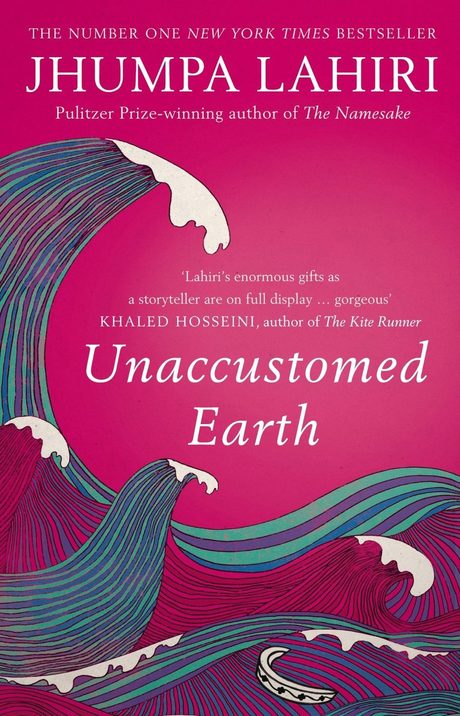
Warm, and her best
Unaccustomed Earth
Jhumpa Lahiri2008about 236 pages
Eight long stories about Bengali families in America, and the three at the end follow one relationship across thirty years and two continents.
Five standalone stories, then a linked trio at the close that follows Hema and Kaushik from a childhood in Massachusetts into an adulthood neither of them planned. The standalone pieces use the usual Lahiri furniture: a widowed father who has quietly started travelling, a brother whose drinking nobody names out loud, a marriage that has become a housing arrangement. What is different here is length. She gives each story enough room to change its mind, so the endings stop clicking shut the way the early ones do. Reading it feels like sitting through a long family lunch where somebody finally says the thing.
Why it is at 1
Number one because this is where she stops performing control. The stories are longer, messier and sadder than the debut, and the closing trio is the single best thing she has written in either language. Interpreter of Maladies is the famous one and sits at number two, which will annoy people. I stand by it.
Read it ifyou want short stories with the length and weight of small novels
Skip it ifyou need plot, because most of these move at the speed of a Sunday afternoon
long, patient, quietly brutalBest for: readers who like short storiesshort storiesdiasporafamily
Pairs with: Interpreter of Maladies, read second so you can watch her get looser.
2
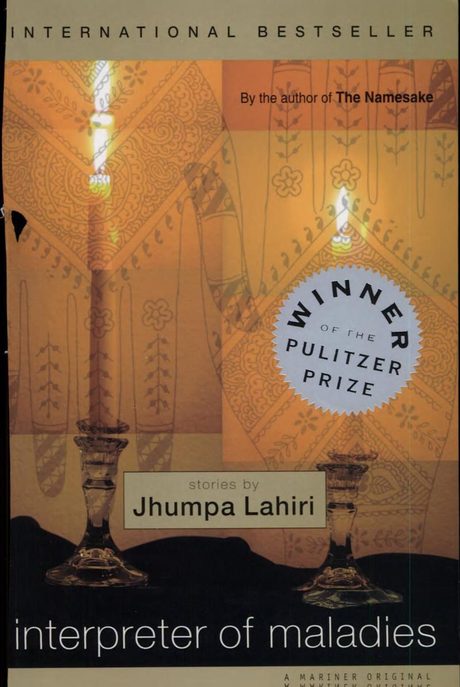
Warm, and the doorway
Interpreter of Maladies
Jhumpa Lahiri1999about 198 pages
Nine stories about Indians and Indian Americans getting love slightly wrong, and the book that made everyone start comparing debut collections to it.
Nine short stories set between Calcutta, Boston and the awkward space in between. A young couple confess things to each other during scheduled power cuts. A tour guide at a temple decides a bored tourist's attention is an invitation. An old woman sweeps a Calcutta stairwell and tells anyone who listens about the life she says she lost. Lahiri was in her early thirties when this came out and the control is almost irritating: every story lands exactly where she wants it, not a sentence spare. That neatness is both the pleasure and, later, the thing she spends twenty years escaping.
Why it is at 2
Second, and only just. It is the better entry point, the cleaner book, and the one that won the Pulitzer for fiction, which is rare for a debut and rarer for stories. Unaccustomed Earth beats it because it risks more and settles less. If this is your first Lahiri, start here anyway and work forward.
Read it ifyou want a first book that shows you what the short story can do
Skip it ifyou dislike tidy endings, because these close with a satisfying click
precise, restrained, humaneBest for: first-time Lahiri readersshort storiesdebutdiaspora
3
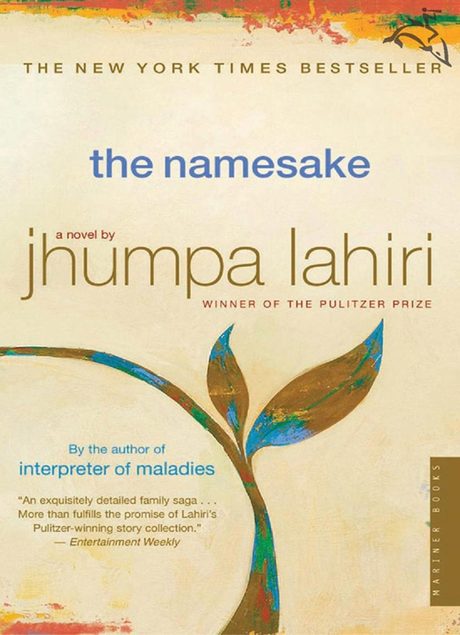
Warm, and the one they filmed
The Namesake
Jhumpa Lahiri2003about 312 pages
A boy named after a Russian writer spends thirty years trying to shake the name, and his parents' whole migration along with it.
Ashoke and Ashima Ganguli move from Calcutta to Massachusetts, have a son, and in the confusion of an American hospital give him a pet name that was only ever meant to be temporary. Gogol grows up hating it, changes it, dates his way through a life his parents cannot follow, and understands where the name came from far too late. The novel is slower than the stories and its pleasures accumulate: rooms, meals, phone calls to India, the specific loneliness of parents who have nobody left to be young with. Mira Nair filmed it in 2006 with Irrfan Khan and Tabu.
Why it is at 3
Third because it is the most loved and the least surprising. Almost everything good in it exists in more concentrated form in the two collections above. If you want a novel rather than stories, this is still where to go, and the stretch about Ashoke's train accident is the finest writing in any of her novels.
Read it ifyou want one long story about a family instead of many short ones
Skip it ifyou find slow domestic novels a chore, because very little happens loudly
gentle, cumulative, sadBest for: readers who prefer novelsnoveldiasporanames
Pairs with: The film, but read the book first, because the ending lands differently on paper.
4

Cooling
The Lowland
Jhumpa Lahiri2013about 354 pages
Two brothers in 1960s Calcutta, one drawn into the Naxalite movement, and the wife left holding a life she never chose.
Subhash and Udayan grow up beside a low flooded field in Tollygunge, close enough in age to be mistaken for each other. Udayan joins the Naxalite movement of the late sixties. Subhash leaves for a doctorate in Rhode Island. What follows is a marriage made out of duty, a daughter raised on a withheld fact, and forty years of people failing to say one sentence to each other. It is her coldest English book and her most political, and the Rhode Island half is deliberately drained of colour. Some readers find that airless. I find it the most honest decision in the novel.
Why it is at 4
Fourth because the first hundred pages are as good as anything she has done and the back half asks for a patience most readers will not give it. It is also the bridge book, the warmth of the early work draining out in real time before Italy finishes the job. Read it after The Namesake, never before.
Read it ifyou want history and politics sitting inside a family story
Skip it ifyou need characters you can warm to, because Gauri is built to resist you
cold, political, patientBest for: readers who liked The Namesakenovelcalcuttapolitics
Heads up: political violence and a death early in the book
5
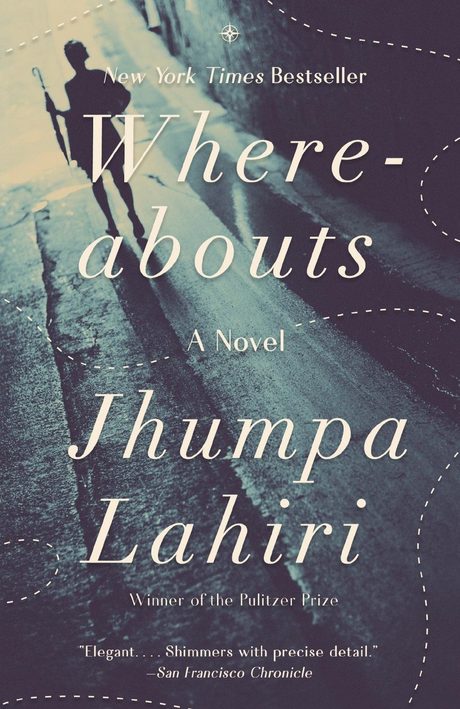
Bare room
Whereabouts
Jhumpa Lahiritranslated by Jhumpa Lahiri2018about 136 pages
A woman with no name walks around a city with no name for a year, and it is far better than that description sounds.
Forty odd short chapters, each named for a place: on the street, at the trattoria, in the piazza, at the beach in winter. A woman in her mid forties, unmarried, a teacher, moves through an Italian city Lahiri never names, thinking about her dead father, her mother's disapproval, a married friend she should not want. Nothing accumulates the way it does in a normal novel. What builds instead is a mood, the very particular solitude of a person who has arranged her life exactly as she likes it and is no longer sure that was wise. She wrote it in Italian and translated it into English herself.
Why it is at 5
Fifth, and the highest of the Italian books, because this is where the new bareness becomes a style instead of an experiment. If the early collections are crowded rooms, this is one chair and a window. Read it in two sittings. If it has bored you by page forty, the Italian half of her career is not for you, and that is a fair conclusion to reach.
Read it ifyou want mood and observation more than plot
Skip it ifyou need a story with stakes, because this one has almost none by design
spare, solitary, preciseBest for: one quiet eveningnovelitalysolitude
6
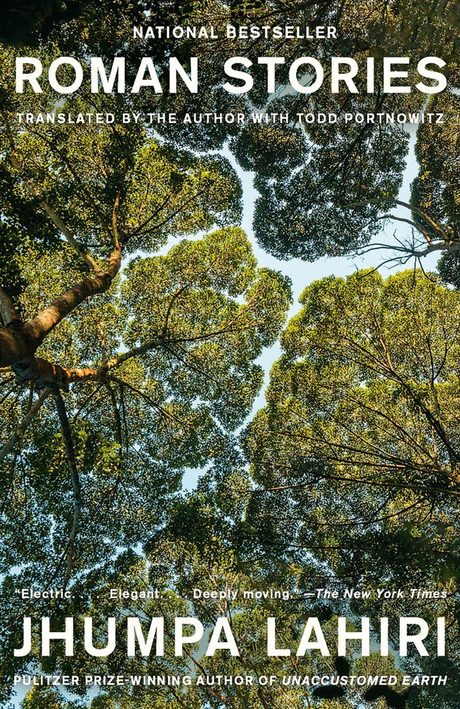
Cool, and populated again
Roman Stories
Jhumpa Lahiritranslated by Jhumpa Lahiri and Todd Portnowitz2022about 225 pages
Nine stories set in Rome, most of them about people the city has quietly decided are not really Roman.
Rome here is not the postcard version. It is bus routes, rented flats, park benches, holiday houses that belong to somebody else's family. Several of these stories follow immigrants and long-settled foreigners who are still asked, politely, where they are really from, and Lahiri writes that particular humiliation with a coldness her English fiction never had. She wrote the book in Italian and brought it into English with Todd Portnowitz. It is harsher than anything in Unaccustomed Earth and much less interested in making you comfortable. A few pieces run barely three pages and land like a slap.
Why it is at 6
Sixth because it is the strongest argument that the Italian turn was not a detour. The anger in it is new and it suits her. It sits below Whereabouts only because the collection is uneven, with two or three pieces that read like exercises. Come to it if Whereabouts worked on you.
Read it ifyou want short fiction with an edge of real anger in it
Skip it ifyou came for the warmth of the Bengali stories, because none of it is here
cold, sharp, unsettledBest for: readers who liked Whereaboutsshort storiesromebelonging
7
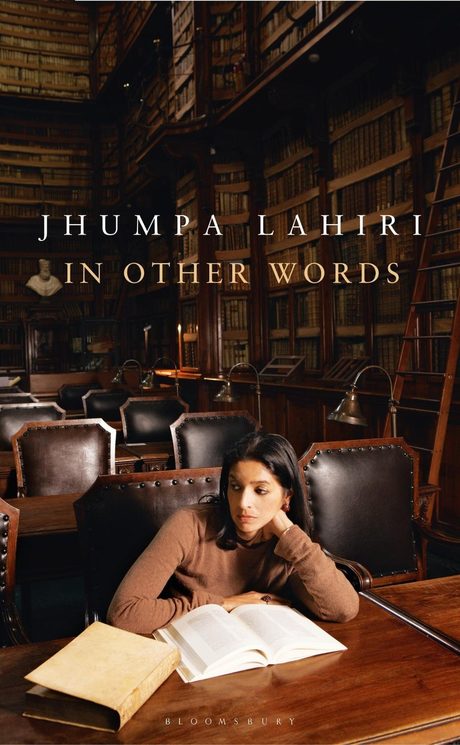
The confession
In Other Words
Jhumpa Lahiritranslated by Ann Goldstein2015about 257 pages
The diary of a celebrated English-language novelist deciding to write badly, in public, in a language she barely knows.
Lahiri moved to Rome in 2012, stopped reading in English, and began keeping a notebook in Italian. This book collects the result: short, deliberately plain chapters about vocabulary, humiliation, and the exhaustion of being fluent at nothing. Two short stories sit inside it as well. The original editions print Italian and English on facing pages, and Ann Goldstein did the English, because Lahiri did not yet trust herself to translate her own Italian. That detail tells you more about the book than any summary could. It is the log of a very accomplished person choosing to be a beginner where everyone can see.
Why it is at 7
Seventh because it is essential context and only intermittently good reading. Chapter after chapter circles the same feeling, which is honest to the experience and hard on the reader. If you are learning a language, or you moved cities and lost your fluency in yourself, it will land. Otherwise read the first forty pages and both stories.
Read it ifyou are curious about why she walked away from English
Skip it ifyou want fiction, because this is a diary in book clothing
plain, repetitive, revealingBest for: language learnersmemoiritalianlanguage
8
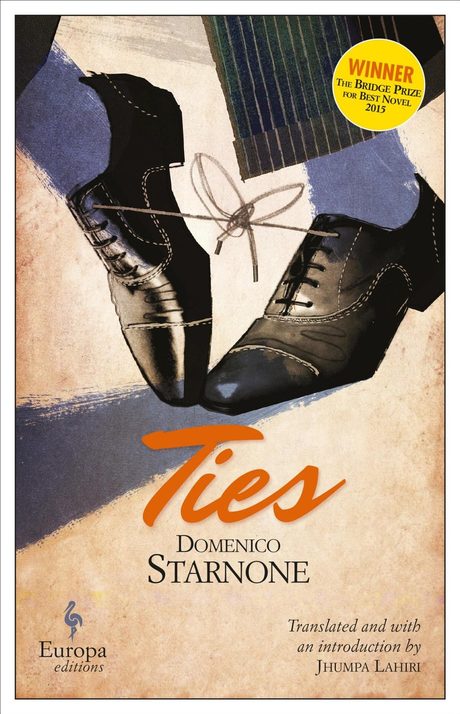
Not hers, but hers
Ties
Domenico Starnonetranslated by Jhumpa Lahiri2014about 117 pages
A Naples marriage breaks, gets repaired badly, and forty years later the repair job comes apart in front of the grown children.
Starnone's short novel opens with letters from a wife whose husband has left her for a younger woman, then jumps decades to find the two of them old, back together, and packing for a holiday. What happened in between arrives out of order and from the wrong angles, which is the whole method. Lahiri translated it from Italian into English, and if you have read her own Italian work you can hear exactly how much she took from him: the flat sentences, the domestic cruelty, the refusal to editorialise. It runs to under a hundred and twenty pages and wastes none of them.
Why it is at 8
Eighth, and yes, she did not write it. It is here because her translations are now a real part of the work, and this is the best of them. It also answers the question people keep asking, which is what she actually found in Italian. She found this: cold, exact, merciless about marriage. Read it straight after Whereabouts.
Read it ifyou want to understand where her Italian voice came from
Skip it ifyou only want books she wrote herself, which is a fair position
cold, exact, mercilessBest for: readers of her Italian worknoveltranslationmarriage
9
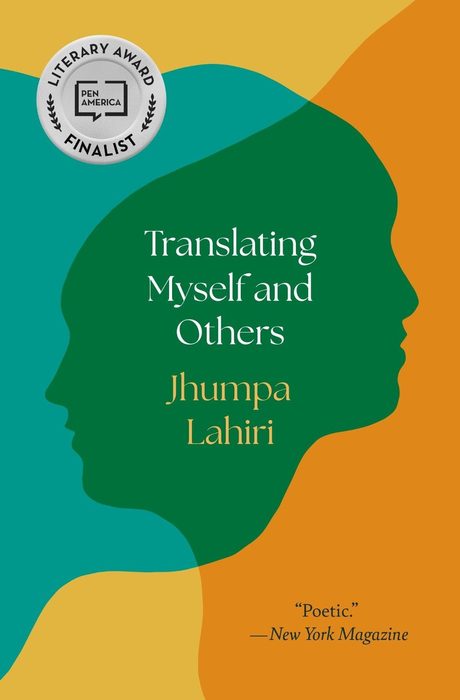
Essays, and the clearest explanation
Translating Myself and Others
Jhumpa Lahiri2022about 216 pages
Essays on translation that double as the plainest account of why she left English behind.
Ten essays, written mostly in English, about translating Starnone, translating herself, reading Ovid, and the odd position of a writer who now works between two languages and belongs completely to neither. The best of them takes apart what happens when she translates her own Italian novel into her first language, which turns out to be less like translating and more like arguing with an earlier version of yourself. It gets academic in places and she does not apologise for that. The thinking is first rate, and this is the only book here where she explains herself directly.
Why it is at 9
Ninth because it asks the most of you and repays the right reader most generously. Writers, translators and people who think about language for fun will find it the most useful book on this list. Everyone else will find it dry. That gap is precisely why it sits down here instead of in the top five.
Read it ifyou write, translate, or think about language for fun
Skip it ifyou want narrative, because there is none of it here
essayistic, rigorous, dryBest for: writers and translatorsessaystranslationcraft
10
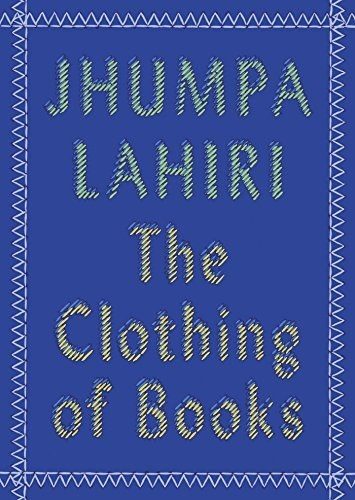
The minor one
The Clothing of Books
Jhumpa Lahiri2016about 71 pages
A short essay about book covers, written by an author who has disliked most of hers.
Seventy odd pages, first delivered as a talk in Florence, about the jacket as a garment the book is forced to wear. Lahiri writes about growing up in clothes chosen by other people, about school uniforms, and about the covers that made her books look like something she had not written. Her complaint is specific and familiar to any Indian reader: a sari, a mango, a hennaed hand, applied to a book about a couple in Massachusetts. It is charming, a little slight, and finished comfortably in one sitting.
Why it is at 10
Tenth because it is the least necessary book she has published, which is not at all the same as bad. It is a good hour. It simply cannot stand next to the story collections. Buy it if you already love her and want the extra track, or if you work in design, in which case it is genuinely useful.
Read it ifyou already love her and want the offcuts
Skip it ifthis would be your first or second Lahiri, because you should start elsewhere
short, personal, minorBest for: completists and designersessaybook designshort
Worth knowing
Reading order if you are starting today
Start with one story, not one book. Read A Temporary Matter, the first piece in Interpreter of Maladies, about a married couple whose electricity is cut for an hour every evening and who begin confessing things in the dark. If it does nothing for you, stop there and go read somebody else with my blessing.
If it works, finish that collection, then read Unaccustomed Earth, then The Namesake. That is roughly a month of evenings and it covers the whole Bengali American body of work. The Lowland comes fourth, once you trust her enough to sit through the cold parts.
Only then go to Italy. Whereabouts first, because it is short and complete. Then Roman Stories. Then, if you are still curious, In Other Words and Ties in either order. The two essay books are for people who reach the end of all that and want more.
Worth knowing
Why the Italian books read so differently
The obvious explanation is the language. She began writing in Italian with a vocabulary far smaller than her English one, and small vocabularies produce short sentences and very few adjectives. True, but not the whole story.
The bigger change is who is in the room. The early books are full of families: parents, in-laws, neighbours, dinner guests, entire communities standing around a single grief. The Italian books usually have one person and a city. Nobody arrives with sweets. Nobody has an opinion about the marriage. Readers who loved her for the crowded kitchens feel that loss on the first page, and they are not wrong to. The question is whether the emptiness earns its own kind of attention. For me it does, most days.
People also ask
Questions, answered
Which Jhumpa Lahiri book should I read first?
Interpreter of Maladies, and specifically its opening story, A Temporary Matter. It gives you the whole author in one sitting: an ordinary marriage, a small domestic event, and an ending that rearranges the thirty pages before it. If the collection lands, go to Unaccustomed Earth next. If you would rather have a novel, The Namesake is the friendlier door, as long as you know it moves slowly on purpose.
Did Jhumpa Lahiri really stop writing in English?
For a long stretch, yes. She moved to Rome in 2012, stopped reading and writing in English, and began working in Italian instead. In Other Words, Whereabouts and Roman Stories all came out of that period. She has not abandoned English permanently, though. Her essay collection on translation is largely in English, and she now translates her own Italian books into it rather than handing them to somebody else.
Which Jhumpa Lahiri book won the Pulitzer?
Interpreter of Maladies, her first book, which is unusual, because story collections rarely take the fiction prize and debut collections almost never do. It sits at number two on this list. That is not a knock on it. Unaccustomed Earth, published nine years later, simply does more with the same material and takes bigger risks with structure and length.
Is the film of The Namesake as good as the book?
It is different, and both are worth your time. Mira Nair's 2006 adaptation, with Irrfan Khan and Tabu as the parents, gets the migration and the marriage exactly right, and a few scenes are more moving on screen than on the page. What a film cannot carry is the interior life of one man across thirty years, which is most of the novel. Read first, watch second.
Do I need to read the Italian books in order?
No, though Whereabouts before Roman Stories helps, because the first teaches you how to read the second. In Other Words works better once you have seen the fiction it produced, not before. Ties, which she translated rather than wrote, can go anywhere, but it hits hardest after you have noticed how much of Starnone now lives inside her own sentences.
Is The Lowland worth it if The Namesake felt slow?
Probably not, at least not yet. The Lowland is slower, colder, and asks you to spend hundreds of pages with a woman built to keep you at a distance. If The Namesake tested your patience, go sideways into the short stories instead, where the same domestic material arrives in twenty page portions and every one of them has an ending. Come back to The Lowland later, or never.
Before you go
What to read tonight
If you have twenty minutes tonight, read A Temporary Matter and decide from there. That really is the whole recommendation. Everything else on this list is a question of how much company you want inside a book: the early collections hand you a full house, the Italian ones hand you one woman and a window, and The Lowland sits in between with the lights going out.
If you finish the Bengali American books and want more of that specific ache, try Amitav Ghosh for scale and Rohinton Mistry for weather. If the Italian books are the ones that got you, go to Starnone next, or to Natalia Ginzburg, whose short flat sentences the Italian Lahiri keeps echoing.
Keep going
Lists that pair with this one
Indian Fiction
16 Best Indian Short Story Collections (Where to Start in Each)
Sixteen collections worth your evening, ranked by how much patience each one asks for, with the exact story to read first in every book.
Indian Fiction
20 Best Books by Indian Women Authors, From 1905 to 2025
Ranked by how hard I would push each one at a stranger, with a door on every book so you know how much patience it asks for.
Indian Fiction
The 20 Best Indian Books in Translation, Ranked by Where to Start
Twenty books from ten Indian languages, ordered from the easiest way in to the one that will fight you, with the translator named every time.
Authors
The 12 Best Amitav Ghosh Books, Ranked (With the Ibis Reading Order)
Three doors into his work, twelve books ranked, and an honest warning about the first eighty pages of Sea of Poppies.
Books Like
12 Books Like A Suitable Boy: Long Indian Novels Worth a Month
Twelve big Indian novels with a real page count, a days-to-finish plan, and an honest note on which ones are hard and which only look it.