My spoken Hindi is perfectly fine. My reading Hindi is a Class 10 exam that expired around 2005 and was never renewed, so a page of Premchand takes me four minutes and I lose the thread of the sentence twice on the way down. For years I treated this as a character defect and quietly read the English instead.
Then I read Gillian Wright's Raag Darbari and Daisy Rockwell's Tomb of Sand in the same month and stopped apologising. A good translation is not a reduced version of a book. It is a second original by somebody who sat with every line far longer than the author had to. A bad one really is a downgrade, and the difference matters enormously here, so every entry on this list carries a verdict on its English edition: whether one exists, who did it, and whether I would send you to it.
Ranked one to thirteen, and I have put the funniest novel in the language at the top rather than opening with Godaan, because every other list opens with Godaan and then reads like a syllabus you failed. Two very famous novels are missing and I explain exactly why near the end. Quick picks first if you want to buy one and get on with your evening.
How I picked these
- Novels only. That ruled out Volga Se Ganga, which is a set of stories, and it ruled out Manto, who wrote in Urdu and gets his own list on this site.
- Every title had to come back from Google Books and Open Library with a real edition and a real cover. Hindi literature is catalogued worse than almost anything else I have checked here, so this cut more books than I expected.
- A readable English edition had to exist, because most people arriving at this page will need one. Where the English is out of print or genuinely hard to get, I say so inside the entry rather than letting you find out at checkout.
- I have named a translator only where I could confirm the name. Where the field is empty, that is deliberate, not an oversight.
- Spread across the century, from 1936 to 2018, with four women writers and settings that run from a Bihar village to a Prague winter, so the list does not read as the same book thirteen times.
The whole list at a glance
All 13 books, in order
| # | Book | Author | Year | Vibe | Best for |
|---|
| 1 | Raag Darbari | Shrilal Shukla | 1968 | deadpan, rural, merciless | anyone who deals with Indian bureaucracy |
| 2 | Godaan | Premchand | 1936 | grim, humane, foundational | readers who want the origin point |
| 3 | Tamas | Bhisham Sahni | 1974 | cold, procedural, devastating | readers of history and politics |
| 4 | Tomb of Sand | Geetanjali Shree | 2018 | playful, sprawling, alive | adventurous readers with patience |
| 5 | This Is Not That Dawn | Yashpal | 1958 | sweeping, unsparing, political | committed readers of Partition history |
| 6 | Chander and Sudha | Dharamvir Bharati | 1949 | aching, idealistic, dated | romance readers and Allahabad nostalgics |
| 7 | The Girl with the Golden Parasol | Uday Prakash | 2001 | young, angry, tender | students and recent graduates |
| 8 | Days of Longing | Nirmal Verma | 1964 | cold, still, melancholy | one winter evening |
| 9 | Mai | Geetanjali Shree | 1993 | quiet, watchful, generational | readers who liked Tomb of Sand's ideas |
| 10 | Partitions | Kamleshwar | 2000 | argumentative, historical, uneven | readers who like formal experiments |
| 11 | The Music of Solitude | Krishna Sobti | 2000 | spare, wise, companionable | readers with ageing parents |
| 12 | Kathgulab | Mridula Garg | 1996 | multi-voiced, unsparing, feminist | readers of women's writing |
| 13 | Kali-Katha: Via Bypass | Alka Saraogi | 1998 | wandering, elegiac, Kolkata | Kolkata readers and family-saga fans |
The list
The books, ranked
1
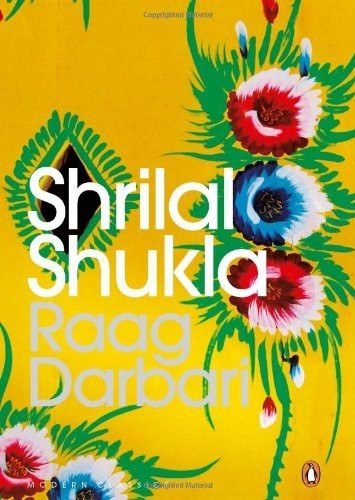
English: excellent, Gillian Wright, Penguin
Raag Darbari
Shrilal Shuklatranslated by Gillian Wright1968about 386 pages
A city boy spends a few months in his uncle's village and watches the entire machinery of Indian public life get quietly eaten.
Rangnath, a young man with an MA and a mild illness, goes to stay in Shivpalganj to recover, and ends up watching his uncle Vaidyaji run the local college, the cooperative and the panchayat like a private estate. There is no plot in the usual sense. There are elections, court cases, a wrestling akhara, a principal being managed, and a slow accumulation of proof that the system works exactly as intended for the people running it. The comedy is dry, constant and never announces itself, which is why it survives translation so well.
Why it is at 1
First because more than fifty years on it is still the most accurate book written about how power actually operates in an Indian small town, and because it is funny on nearly every page. Godaan is the more important novel historically. This is the one I would actually make you read, and Gillian Wright's English keeps the deadpan intact, which is the hard part.
Read it ifyou want satire that has aged into documentary
Skip it ifyou need a plot with a destination, because this circles
deadpan, rural, mercilessBest for: anyone who deals with Indian bureaucracysatirevillagepoliticsclassic
2
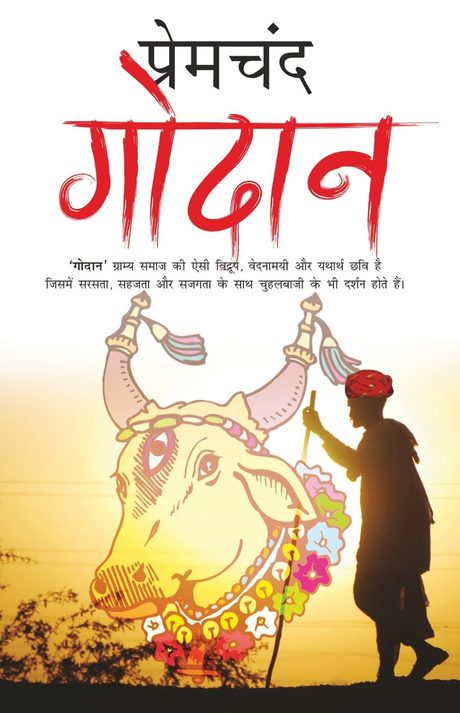
English: two options, Roadarmel's is the better one
Godaan
Premchand1936about 414 pages
A farmer in a UP village wants to own one cow, and the entire economy of rural India lines up to stop him.
Hori is a tenant farmer with a small holding, a wife who is smarter than him about money, and one modest ambition: a cow of his own, which in his world is the difference between poverty and dignity. What follows is debt compounding on debt, the moneylender and the priest working the same racket from different ends, a son who leaves for the city and comes back changed, and a caste system that punishes every attempt to move inside it. Premchand's last completed novel, and the one that set the shape of serious Hindi fiction.
Why it is at 2
Second because everything after it is in conversation with it, and because the economics are still recognisable in rural India today. It sits below Raag Darbari only because it is the more effortful read: the moralising is heavier than modern taste likes and the city subplot sags. Gordon C. Roadarmel's English translation, published as The Gift of a Cow, is the one to look for.
Read it ifyou want the foundation stone of the modern Hindi novel
Skip it ifrelentless grinding misfortune is not what you need this month
grim, humane, foundationalBest for: readers who want the origin pointclassicruralcastepremchand
Pairs with: Raag Darbari, the same village thirty years later and much angrier about it
3

English: in print, Penguin Classics, revised 2025
Tamas
Bhisham Sahnitranslated by Daisy Rockwell1974about 305 pages
Five days in a Punjab town in 1947, told from inside the mechanics of how ordinary neighbours arrive at slaughter.
It opens with Nathu, a tanner, being paid by a local contact to kill a pig, a job he does badly and slowly in a dark room. The carcass turns up on the steps of a mosque the next morning and the town begins to come apart. Sahni then follows the riot outward through officials, party workers, shopkeepers and families, giving each of them the reasoning that lets them do what they do. Penguin Classics brought it back in 2025 in a translation revised by Daisy Rockwell.
Why it is at 3
Third because it refuses every comfort available to a Partition novel. There is no noble sacrifice and no speech about brotherhood, just administration, rumour and the specific small decisions that add up to a massacre. It is the book I would give someone who thinks 1947 was an event rather than a process.
Read it ifyou want Partition explained through mechanics, not through tragedy
Skip it ifyou want an emotional story with characters to hold on to
cold, procedural, devastatingBest for: readers of history and politicspartitionpunjab1947
Heads up: communal violence in detail
4

English: outstanding, Daisy Rockwell
Tomb of Sand
Geetanjali Shreetranslated by Daisy Rockwell2018about 546 pages
An eighty-year-old widow turns to face the wall and refuses to get up, and then gets up as somebody else entirely.
Ma loses her husband, turns her back on the household and stops participating in being alive. Her family fusses and negotiates and gives up. Then she rises, moves in with her daughter, acquires new friends and new opinions, and eventually decides she needs to go to Pakistan, for reasons that take the whole book to arrive. Geetanjali Shree writes it in a voice that lets crows, doors and roads interrupt whenever they feel like it, and Daisy Rockwell's English keeps that playfulness instead of tidying it into good behaviour.
Why it is at 4
Fourth because it is the most alive prose on this list, and it lands here rather than higher because that same wildness loses a chunk of readers in the first hundred pages. It won the International Booker Prize in 2022, the first book from any Indian language to do so, which is why most people reading this page have heard of it.
Read it ifyou want experimental prose that is still warm and funny
Skip it ifyou need a novel to behave, because this one will not
playful, sprawling, aliveBest for: adventurous readers with patiencecontemporarypartitionbookerexperimental
5

English: complete and in print, translated by Anand
This Is Not That Dawn
Yashpaltranslated by Anand1958about 1146 pages
The biggest Partition novel written in any Indian language, following one Lahore lane from before 1947 into the wreckage after.
It starts in a crowded Lahore mohalla with an ordinary middle-class family, a daughter named Tara heading toward a marriage she does not want and a son named Jaidev with political ideas, and it takes its time letting you live there. Then 1947 arrives. The second half is about what the new country did with the people it had just liberated, including the ones who arrived with nothing and discovered that independence had already been distributed. Yashpal published it in two volumes and the English runs past eleven hundred pages.
Why it is at 5
Fifth because of scale and honesty rather than polish. Nothing else here shows you the full arc from settled life to refugee camp to the sordid politics of resettlement. It ranks below Tamas because the prose is plainer and the length asks for a serious commitment, but it is the more complete account of what happened.
Read it ifyou want the entire Partition story and have a month
Skip it iflong books defeat you, because this is genuinely enormous
sweeping, unsparing, politicalBest for: committed readers of Partition historypartitionlahoreepic
Heads up: sexual violence during the riots
6
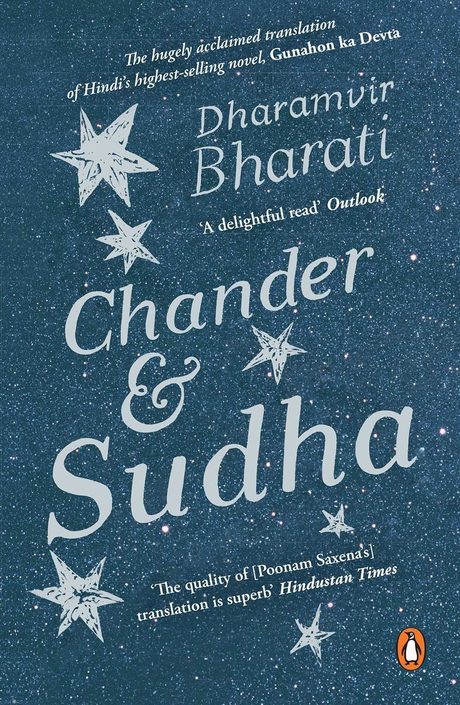
English: good and in print, Poonam Saxena, Penguin
Chander and Sudha
Dharamvir Bharatitranslated by Poonam Saxena1949about 317 pages
Two people in Allahabad love each other clearly and completely, and one of them arranges her wedding to somebody else.
Chander is a research student working under Sudha's father at Allahabad University, and he is in and out of their house so often that he is practically family. That closeness is the trap. He talks himself into believing that his duty to the professor and his own high ideals require him to hand Sudha into a marriage he has picked out, and he does it, and then he has to live in the world he made. Originally published as Gunahon Ka Devta, and read by roughly every Hindi-reading student for seventy years.
Why it is at 6
Sixth because it is the emotional centre of Hindi popular literature, and because the thing it captures is real: a man who mistakes his own cowardice for principle and calls it sacrifice. Be warned that the melodrama is turned up high and the idealism has dated. Read it anyway, and notice how much of it still stings.
Read it ifyou want the Hindi novel that broke the most hearts
Skip it ifself-inflicted romantic tragedy makes you want to shake people
aching, idealistic, datedBest for: romance readers and Allahabad nostalgicsromancecampusclassic
Pairs with: The Girl with the Golden Parasol, the same campus fifty years on and much less innocent
7
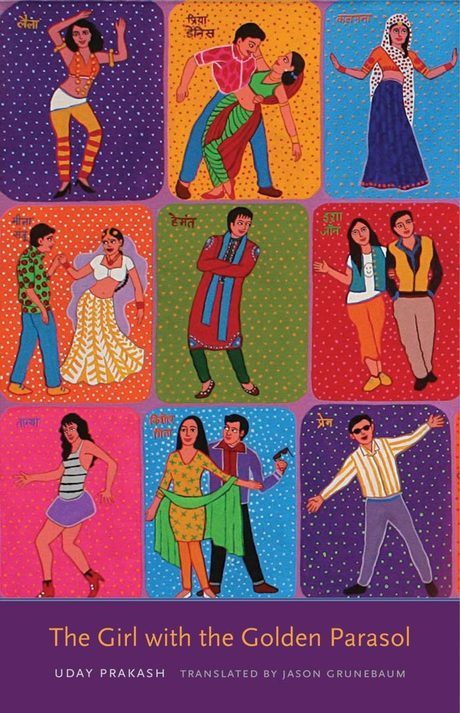
English: excellent, Jason Grunebaum, Yale
The Girl with the Golden Parasol
Uday Prakashtranslated by Jason Grunebaum2001about 165 pages
A Hindi department student falls for a girl with a yellow umbrella, and caste turns up to explain why that will not work.
Rahul is at a north Indian university, drifting through a Hindi department that everyone including him treats as the least prestigious corner of campus, when he becomes fixated on Anjali and her golden parasol. The love story is real and sweet and doomed, and around it Uday Prakash lays out how the university actually functions: which caste gets which hostel, which appointment was fixed, who gets to be angry in public. It is short, around a hundred and sixty pages, and it moves like a much lighter book than it is.
Why it is at 7
Seventh because it does two hard things at once, giving you a genuine campus romance and an anatomy of caste on Indian campuses without either one weakening the other. Jason Grunebaum's translation is the best English on this list after Rockwell's. Prakash himself has called it a long short story rather than a novel, and the shape does feel closer to that.
Read it ifyou want a campus love story with a real argument inside it
Skip it ifyou want a full-length novel rather than a long, fast piece
young, angry, tenderBest for: students and recent graduatescampuscasteromancecontemporary
8
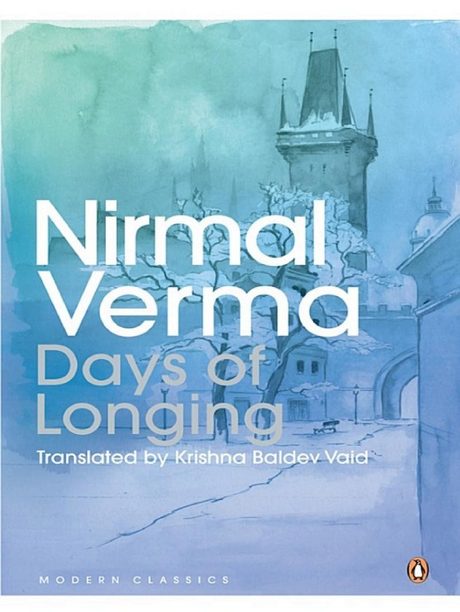
English: in print, Krishna Baldev Vaid, Penguin
Days of Longing
Nirmal Vermatranslated by Krishna Baldev Vaid1964about 148 pages
An Indian student in a Prague winter meets a woman passing through, and both of them know the date it ends.
Nirmal Verma spent years in Prague translating Czech writers, and his first novel takes place there: cheap rooms, snow, a foreign student with time on his hands, a woman travelling with a child and a history she does not hand over. They have a few weeks. Nothing about it is dramatic and everything about it is precise, because Verma writes weather and rooms and small silences better than he writes events. Under a hundred and fifty pages, and it feels European in a way no other book on this list does.
Why it is at 8
Eighth because it is the one book here that has nothing to do with village India, Partition or caste, and that range is worth defending. It is also the easiest to finish in a single evening. It ranks mid-table because the plot is deliberately thin, so if you need incident you will find it slow.
Read it ifyou like quiet European fiction and short books
Skip it ifvery little happening across a whole novel frustrates you
cold, still, melancholyBest for: one winter eveningpragueshortmodernist
9
English: in print as Mai: Silently Mother, Nita Kumar
Mai
Geetanjali Shreetranslated by Nita Kumar1993about 187 pages
A daughter spends her whole childhood deciding she will never be as weak as her mother, and spends adulthood revising that.
Three generations of a north Indian middle-class family, watched by a daughter who reads her mother's silence and bent back as surrender and swears she will do better. The men make the noise, the grandmother rules by other means, and Mai keeps absorbing. What the book does slowly and well is take the daughter's certainty apart, until you are no longer sure who in that house was actually holding it together. It is Geetanjali Shree's first novel and much quieter than the one she is famous for.
Why it is at 9
Ninth because it is the best short book here about the thing most Indian families never discuss directly, which is what our mothers did with the lives they had. It ranks below the top group because the technique is modest next to Tomb of Sand, but if that book's wildness put you off, start here instead.
Read it ifyou want a family novel that refuses easy verdicts
Skip it ifdomestic interiors without plot leave you restless
quiet, watchful, generationalBest for: readers who liked Tomb of Sand's ideasfamilywomencontemporary
Pairs with: Tomb of Sand, the same writer thirty years and one Booker later
10
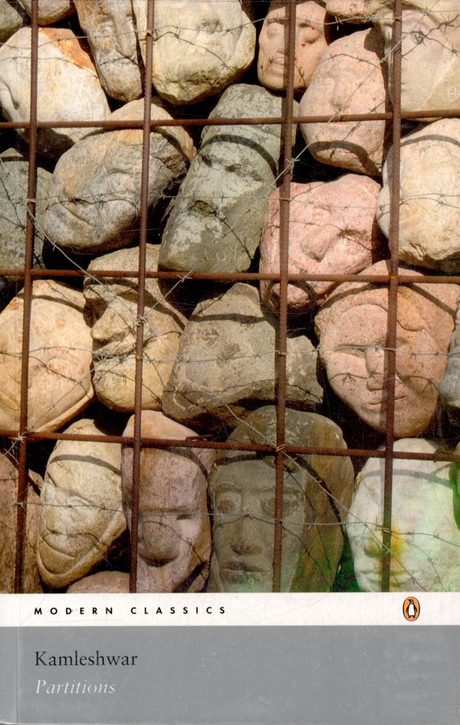
English: in print, Ameena Kazi Ansari, Penguin
Partitions
Kamleshwartranslated by Ameena Kazi Ansari2000about 388 pages
A writer convenes a court and summons history itself, from Babur to Jinnah, to answer for every line ever drawn through a people.
Published in Hindi as Kitne Pakistan, the book puts a figure called Adeeb, meaning the writer, in the chair of a court where the accused are historical actors and the charge is the manufacture of division. Babur appears. So do Jinnah, Nehru, Timur and others, each given their own defence in their own logic. Between the hearings Kamleshwar cuts to ordinary people living through the consequences, and widens the frame beyond 1947 to every partition the twentieth century managed. The structure is the argument.
Why it is at 10
Tenth because the ambition is enormous and the execution is uneven, which is an honest thing to say about a book I admire. Some hearings are electric and some read like a lecture with costumes. Read it after Tamas and This Is Not That Dawn, when you already have the ground-level version and want somebody to ask why.
Read it ifyou want a formally strange book that argues with history
Skip it ifyou want characters rather than positions
argumentative, historical, unevenBest for: readers who like formal experimentspartitionhistoryexperimental
11
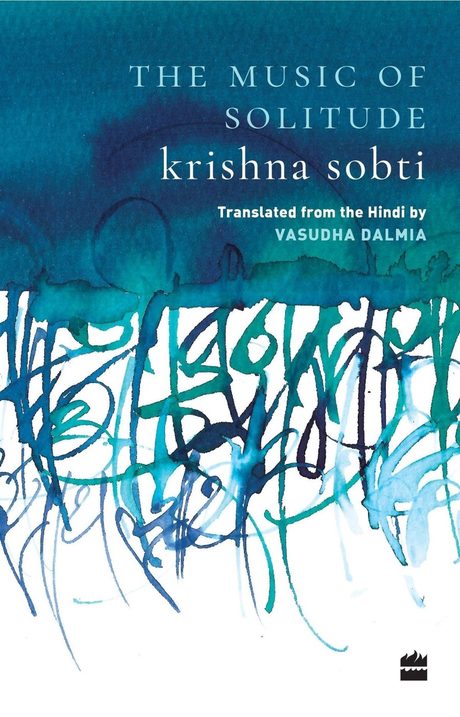
English: in print, Vasudha Dalmia, HarperCollins
The Music of Solitude
Krishna Sobtitranslated by Vasudha Dalmia2000about 193 pages
Two old neighbours in a Delhi housing complex talk each other through the last stretch, and that is the entire book.
Aranya and Ishan live in the same Delhi complex and are opposites in temperament. She is impulsive, argumentative and openly feminist; he is orderly, gentle and still attached to the idea of family despite having no family left. They eat together, argue about time and food and death, and keep each other company without any of it turning into a romance for the reader's benefit. Krishna Sobti published it as Samay Sargam in her late seventies, and the ease with which she writes old age shows.
Why it is at 11
Eleventh because it is a small book doing a rare thing, taking two old people seriously as people rather than as duties or as wisdom dispensers. There is almost no incident, so it sits low on a ranked list. It also happens to be the entry I have recommended most often to people looking after ageing parents.
Read it ifyou want a novel about growing old that is not sentimental
Skip it ifyou need incident, because there is essentially none
spare, wise, companionableBest for: readers with ageing parentsold agedelhiquiet
12
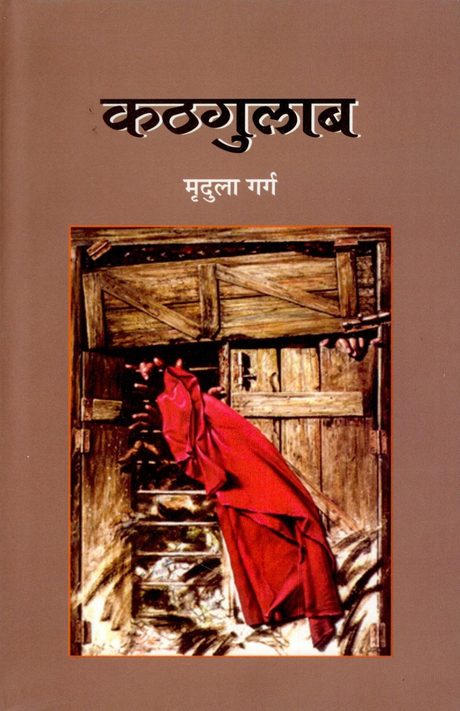
English: Country of Goodbyes, Manisha Chaudhry, hard to find
Kathgulab
Mridula Gargtranslated by Manisha Chaudhry1996about 274 pages
Five narrators hand the story to each other, and four of them are women who have paid for the same set of choices.
Mridula Garg builds the novel out of five voices that take the narration in turn, in India and in the United States, their lives brushing against each other across decades. The recurring material is what happens to women who want work, or independence, or the freedom to leave, and the price each of them is quietly billed for it. Garg does not soften the domestic violence or the institutional indifference, and she does not turn her women into symbols either. The wooden rose of the title carries the book's argument about what survives handling.
Why it is at 12
Twelfth on the ranking and higher than that on importance, because it is the most direct book here about women's lives across a whole century of supposed progress. It sits low only because of access: the English edition, Country of Goodbyes, published in 2003, is genuinely hard to buy new. If you read Hindi, read this in Hindi.
Read it ifyou want an unsentimental novel about women's work and freedom
Skip it ifshifting narrators annoy you, because there are five
multi-voiced, unsparing, feministBest for: readers of women's writingwomenmulti-voicefeminist
Heads up: domestic violence and sexual abuse
13
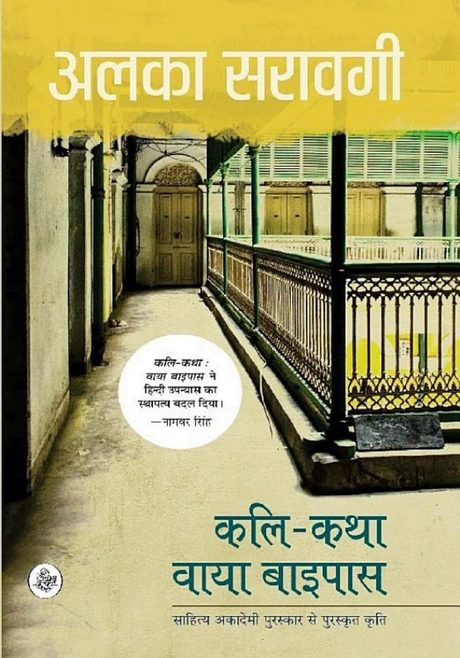
English: translated by the author herself, Rupa, 2002
Kali-Katha: Via Bypass
Alka Saraogitranslated by Alka Saraogi1998about 283 pages
A Marwari businessman in Kolkata has bypass surgery, comes out different, and starts walking the city he stopped seeing decades ago.
Kishore Babu survives heart surgery and something in him refuses to go back to normal, so he begins wandering Kolkata and remembering. What comes back is a century of a Marwari family in Bengal: the move from Rajasthan, the money, the freedom movement, the friends who chose differently, and the long compromise that turned a young idealist into a comfortable old man. The structure wanders the way he does, jumping decades mid-paragraph, which is either the pleasure of the book or the obstacle.
Why it is at 13
Thirteenth because it is the most niche book on this list and I still could not leave it out. It is the best novel anyone has written about the Marwari community in Bengal, a story usually told about people rather than by them. Alka Saraogi translated it into English herself, which is rarer than it sounds and worth reading for that alone.
Read it ifyou love Kolkata or want a community novel from inside
Skip it iftime-jumping structures make you lose your place
wandering, elegiac, KolkataBest for: Kolkata readers and family-saga fanskolkatamarwarifamily saga
Worth knowing
How to read the translation verdicts
Every entry above carries a label about its English edition, and there are only three states worth knowing. In print and good means you can buy it today and the English will not fight you. Hard to find means the translation exists and is decent but the edition is out of print, so you are looking at second-hand copies or a library. Hindi only in practice means do not bother hunting, because the English either does not exist or is not worth the search.
One thing that will confuse you when you go shopping. A few covers you see on this page belong to Hindi editions rather than English ones, because for some of these books the Hindi edition is the only one with a properly catalogued cover image. Godaan, Kathgulab and Kali-Katha are the three where that happened. The English editions are named inside each entry, so search by the English title rather than by the cover you see here.
If your Hindi reading is slow but not dead, there is a third way that works better than either extreme. Buy the Hindi and the English of the same book, read a chapter in English first so you know where you are going, then read that chapter in Hindi. Your speed comes back faster than you think, and Chander and Sudha is the gentlest book on this list to try it with.
Worth knowing
The book that should be number one and is not on the list
Maila Anchal by Phanishwar Nath Renu, published in 1954, is the novel most Hindi readers would fight me for leaving out, and they would be right. It is the book that brought the actual speech, songs and politics of village Bihar into serious Hindi fiction, and it is usually named in the same breath as Godaan.
It is not ranked here because of a rule I set for this list: a book only goes in if it has a verifiable current edition with a real cover, and if you can actually read it in English. Maila Anchal fails the second test. The English translation, The Soiled Border, came out in 1991 and has been effectively unavailable for years. If you read Hindi, move it to the top of your list and ignore my ranking. If you do not, this is the strongest argument I know for improving your Hindi.
Two more absences worth naming: Agyeya's Shekhar: A Life and Rahi Masoom Raza's Aadha Gaon, published in English as A Village Divided. Both are real Hindi landmarks, both have English editions in circulation, and neither came back from my checks with a verifiable cover, so I left them out rather than guess at an edition.
People also ask
Questions, answered
Which Hindi novel should I read first?
Raag Darbari, ranked first here, if you want to enjoy yourself rather than complete a task. It is funny, the English translation by Gillian Wright is very good, and you will recognise every character from your own city. If you want a love story instead, start with Chander and Sudha. Godaan is the more historically important starting point, and it is also the one most likely to make a new reader quit.
Are Hindi novels available in English translation?
Most of the major ones, yes, and the situation has improved sharply in the last decade. Penguin, HarperCollins India, Yale and Speaking Tiger have all published serious Hindi translations recently. The gaps are real though: some landmark novels have translations that went out of print in the nineties and never came back, which is why every entry on this list tells you the state of the English edition rather than assuming one exists.
Which Hindi novel won the International Booker Prize?
Ret Samadhi by Geetanjali Shree, published in English as Tomb of Sand in Daisy Rockwell's translation, won the International Booker Prize in 2022. It was the first book originally written in any Indian language to win it. The prize money is split equally between author and translator, which is part of why that win mattered so much for Indian translators specifically, not only for Hindi writers.
What is considered the greatest Hindi novel ever written?
Godaan by Premchand and Maila Anchal by Phanishwar Nath Renu are the two names that come up most in that argument, with Raag Darbari close behind on a different basis. Godaan wins on influence, since almost everything after it responds to it. Maila Anchal wins with readers who care about language, because Renu put real village speech on the page. There is no settled answer and the disagreement is the interesting part.
Is Hindi literature only about villages and Partition?
That is the reputation and it is unfair. Days of Longing is set in a Prague winter, The Music of Solitude is about two old neighbours in a Delhi flat complex, Kali-Katha is a Marwari family saga in Kolkata, and Tomb of Sand does whatever it feels like from one page to the next. Village and Partition novels dominate the canon because the mid-century writers were living through both, not because the language cannot do anything else.
Where can I buy Hindi novels and their English translations?
Rajkamal Prakashan, Vani and Bhartiya Jnanpith handle most of the Hindi originals and sell online. For the English editions, look for the specific translation named in each entry above rather than searching by title alone, since several of these books have two or three competing English versions of very different quality. For out-of-print translations, second-hand sellers and city libraries are usually a faster route than any retailer.
Before you go
What to read tonight
If you take one thing from this page, make it this: pick the translator, not just the book. The same Hindi novel in two English versions can be two different reading experiences, one of them alive and one of them embalmed, and the name on the copyright page is the only warning you get.
Tonight, start with Raag Darbari and read to the end of the first Shivpalganj council scene. If it makes you laugh, you have found your way in and the rest of this list will follow easily. If it does not, go to Chander and Sudha, which asks nothing of you except a heart. And if either one sends you back to reading Hindi at four minutes a page, that is not a waste of an evening, that is the beginning of getting it back.
Keep going
Lists that pair with this one
Indian Fiction
The 20 Best Indian Books in Translation, Ranked by Where to Start
Twenty books from ten Indian languages, ordered from the easiest way in to the one that will fight you, with the translator named every time.
Indian Fiction
14 Best Partition Novels and Books, Ranked by Where to Start
Fiction and first-hand testimony from both sides of the 1947 line, ordered so you begin with the one you can actually finish.
Indian Fiction
14 Bengali Novels in English Translation, Ordered as a Route
Start at the easy end with Feluda and Chowringhee, finish at Hansuli Turn, and see the translator named wherever I could confirm one.
Indian Fiction
16 Best Books to Understand India, Ranked by What They Explain
Sixteen books, ten doors into the same country: history, caste, the mega city, the village, money, and where to start tonight.
Authors
10 Saadat Hasan Manto Books in English (And Which Translation to Buy)
Ranked as a buying order, not a greatness order, so each book you add repeats the least of the one before it.