Partition reading has a first book problem. Somebody gets curious about 1947, goes online, and comes back holding a six hundred page political history of the Radcliffe Line. They quit around page forty and decide the whole subject is homework. Meanwhile the books that would have taken them apart in three evenings sit unread, most of them under two hundred pages.
So this list is ordered for the reader rather than for a syllabus. Every entry carries a label saying what it actually is: a novel, a collection of short stories, first-hand testimony, or narrative history. Those four forms do very different jobs, and treating them as interchangeable is the main reason people bounce off this subject. A novel can put you inside one family for a week. Testimony can tell you it really happened to somebody with a name. History can tell you who signed what. None of them can do the other two jobs.
Both sides of the line are here, and so are Urdu, Hindi, Punjabi and Bengali writers in translation, because the best writing about 1947 was not written in English. Every book carries a content note. This material includes abduction, mass killing and sexual violence, and you deserve to pick your moment rather than be ambushed on a Tuesday night. Ranked one to fourteen, gentlest entry first, hardest work later.
How I picked these
- Ranked by where to start, not by prize shelf. A short plain novel that gets a new reader to the end beats a finer book that loses them in chapter two.
- Both sides of the border, and both halves of the archive: writers from Lahore and Karachi sit next to writers from Delhi and Lucknow, and translations get the same weight as the English originals.
- Testimony is labelled as testimony. Three books here are non-fiction built on interviews or documents, and I never let them share a shelf with the novels without saying so.
- Every book verified through Google Books and Open Library with a real cover and a normal edition you can actually buy, so nothing here is a ghost listing.
- One very famous book is included with a warning attached instead of quietly dropped, because you will be handed it by a relative anyway.
- What got cut: academic essay collections, anything I could only find in a print-on-demand edition, and novels that use 1947 as background scenery for a love story.
The whole list at a glance
All 14 books, in order
| # | Book | Author | Year | Vibe | Best for |
|---|
| 1 | Train to Pakistan | Khushwant Singh | 1956 | spare, tense, ground level | your first Partition book |
| 2 | Cracking India | Bapsi Sidhwa | 1988 | funny, sharp, then awful | readers who want the Lahore view |
| 3 | Pinjar: The Skeleton | Amrita Pritam | 1950 | short, cold, unshakeable | a single evening |
| 4 | Mottled Dawn: Fifty Sketches and Stories of Partition | Saadat Hasan Manto | 1997 | brutal, dry, very fast | commutes and short attention |
| 5 | The Other Side of Silence: Voices from the Partition of India | Urvashi Butalia | 1998 | patient, humane, unsparing | readers who want the record |
| 6 | Tamas | Bhisham Sahni | 1974 | procedural, cold, wide angle | readers who ask who benefits |
| 7 | The Shadow Lines | Amitav Ghosh | 1988 | layered, quiet, devastating | confident readers |
| 8 | Sunlight on a Broken Column | Attia Hosain | 1961 | interior, elegant, slow burn | readers of family sagas |
| 9 | Remnants of Partition: 21 Objects from a Continent Divided | Aanchal Malhotra | 2017 | gentle, tactile, elegiac | readers the violence has exhausted |
| 10 | Basti | Intizar Husain | 1979 | dreamlike, mournful, allusive | patient literary readers |
| 11 | What the Body Remembers | Shauna Singh Baldwin | 1999 | long, sensory, angry | readers of big historical novels |
| 12 | Midnight's Furies: The Deadly Legacy of India's Partition | Nisid Hajari | 2015 | brisk, journalistic, damning | readers who want dates and decisions |
| 13 | Azadi | Chaman Nahal | 1975 | plain, sorrowful, long road | the refugee experience |
| 14 | Freedom at Midnight | Larry Collins and Dominique Lapierre | 1975 | cinematic, gossipy, tilted | narrative-first readers |
The list
The books, ranked
1

Novel, a Punjab village on the new border
Train to Pakistan
Khushwant Singh1956about 194 pages
A village where Sikhs and Muslims have shared the same well for generations gets one week to decide what it is.
Mano Majra is a village of about seventy families beside the Sutlej, a place where Sikhs and Muslims have shared festivals and grievances for generations and where the loudest thing that happens all day is a train going past. In the summer of 1947 a train arrives from Pakistan carrying corpses, and the village has to work out what it is going to do about its own neighbours. Khushwant Singh keeps the camera at ground level: a local strongman in love with a Muslim girl, a magistrate who wants the problem to leave his district, a city boy with borrowed theories. Under two hundred pages, and it moves like a thriller.
Why it is at 1
First because it is the door. It is short, the sentences are plain, the moral question sits inside people instead of being argued at you, and it asks you to know nothing. Ghosh and Hosain are better novelists in the technical sense and they are further down this list for a reason: neither of them will get a reluctant reader to page fifty the way this one does.
Read it ifyou want one short novel that shows how neighbours turn
Skip it ifyou want the politics of 1947 explained, because no leader ever appears
spare, tense, ground levelBest for: your first Partition booknovelpunjabclassic
Heads up: mass killing, a rape recounted briefly, trainloads of bodies
Pairs with: Mottled Dawn, which covers the same week in fifty short bursts
2

Novel, Lahore, told by a child
Cracking India
Bapsi Sidhwa1988about 306 pages
Lahore comes apart, watched by a Parsi girl with polio who is too young for anyone to bother lowering their voice around her.
Lenny is eight, Parsi, and lame from polio, which means she gets carried everywhere and adults talk freely in front of her. Her world is her beautiful ayah and the men who circle the ayah in the park: a masseur, an ice candy seller, a knife sharpener, Hindu and Muslim and Sikh, friends until the year they are not. Sidhwa lets the change arrive through a narrator who reports accurately without understanding, which turns out to be far more frightening than an adult telling you what to think. The Parsi angle matters too, a small community with no side in this fight, quietly doing arithmetic about which flag to stand under.
Why it is at 2
Second because it is the best novel here on the exact question of how ordinary friendship curdles into something that can hand a woman over, and because it gives you Lahore rather than Delhi. It sits one place below Train to Pakistan purely on ease of entry, since the child's voice takes twenty pages to settle. Published in 1988 as Ice-Candy-Man and later in the United States as Cracking India, same novel, two covers.
Read it ifyou want Partition from inside a city and inside a child
Skip it ifchild narrators annoy you, although this one has teeth
funny, sharp, then awfulBest for: readers who want the Lahore viewnovellahorechild narratorpakistan
Heads up: abduction and sexual violence, handled without spectacle
3
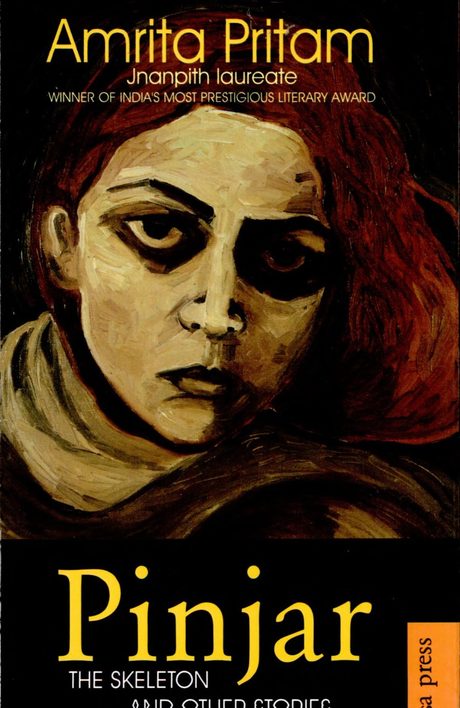
Novel, Punjab, a woman taken twice
Pinjar: The Skeleton
Amrita Pritamtranslated by Khushwant Singh1950about 254 pages
A Hindu girl is abducted by a Muslim man before Partition, and afterwards both new countries decide she belongs to nobody.
Puro is engaged and safe and ordinary until a man from a family with an old score takes her, and when she escapes back to her parents they will not open the door, because a returned daughter is a stain the whole family would have to wear. She marries her abductor, becomes Hamida, and lives a life she did not choose. Then Partition arrives on top of all that and starts producing thousands of women in her position, moving in the other direction across the same fields. Amrita Pritam wrote it in Punjabi in 1950, three years after the event, in barely a hundred pages. The restraint is the whole achievement.
Why it is at 3
Third because of what it does per page. It is the shortest serious book on this list and the one that most changed what I thought I knew, particularly about the recovery operations, where the two states swapped abducted women back across the border years later, sometimes tearing them out of second lives they had built. Khushwant Singh's translation is plain and has held up.
Read it ifyou have one evening and want the book that stays with you
Skip it ifyou need a hopeful arc, because this one refuses to supply one
short, cold, unshakeableBest for: a single eveningnovelpunjabitranslationwomen
Heads up: abduction, forced marriage, a family that refuses its daughter
4

Short stories, both sides, some two paragraphs long
Mottled Dawn: Fifty Sketches and Stories of Partition
Saadat Hasan Mantotranslated by Khalid Hasan1997about 199 pages
Fifty short pieces that get closer to 1947 than most novels manage in four hundred pages.
Manto wrote about Partition the way a coroner writes a report: fast, exact, no editorial. This collection gathers around fifty stories and sketches, including Toba Tek Singh, in which the two new governments agree to exchange the inmates of their lunatic asylums and one Sikh man simply refuses to accept that anybody can tell him which country his village is in. Several pieces here run half a page. The tiny vignettes in the Siyah Hashiye group are a few lines each and land like a slap in a quiet room. He was tried for obscenity in British India and again in Pakistan, which tells you he was doing the job properly.
Why it is at 4
Fourth because it is the best value here and the easiest to read in gaps: five minutes, one story, done, and you will be looking at the ceiling afterwards. It sits below the novels only because fragments do not build a world the way Sidhwa's Lahore does. If you read one thing from this entire list, read Toba Tek Singh and then sit still for a minute.
Read it ifyou read in short bursts and want nothing padded
Skip it ifyou want one continuous story to sink into for a week
brutal, dry, very fastBest for: commutes and short attentionshort storiesurdutranslation
Heads up: graphic violence and sexual violence, stated flatly and without warning
5
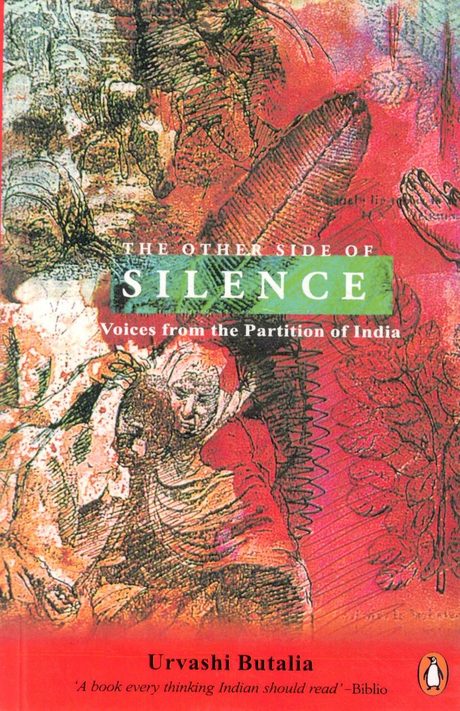
Testimony, both sides, non-fiction
The Other Side of Silence: Voices from the Partition of India
Urvashi Butalia1998about 388 pages
The book that went looking for the people the history books skipped: women, children, Dalits, and families who never spoke again.
Urvashi Butalia spent years interviewing survivors, starting inside her own family, where an uncle stayed behind in Lahore and converted. What she found is that the official story of 1947 is a story about two governments, and almost everything that happened to actual people falls outside it. Women killed by their own male relatives to prevent abduction. Children handed over and reclaimed years later by strangers with a legal document. Old people left in camps because nobody came. She keeps herself visible in the text, doubting, going back for a second interview, admitting when two accounts refuse to agree, so it reads like an investigation rather than a lecture.
Why it is at 5
Fifth, and first among the non-fiction, because it changed what Partition writing was allowed to be about. A novelist can invent a representative family. Butalia had to find real ones and then decide how much of what they said she had any right to print. If you have read two novels here and quietly wondered whether they were exaggerating, this is the book that answers you, and the answer is no.
Read it ifyou want first-hand voices instead of a plot
Skip it ifyou cannot sit with real accounts of families killing their own
patient, humane, unsparingBest for: readers who want the recordtestimonynon-fictionoral historywomen
Heads up: suicide, killings within families, sexual violence, recounted by survivors
6

Novel, a frontier town, translated from Hindi
Tamas
Bhisham Sahnitranslated by Daisy Rockwell1974about 305 pages
A dead pig appears on the steps of a mosque, and a town spends the next five days burning to a plan.
Nathu, a Dalit tanner, is paid by a local man to kill a pig and told it is wanted by the vet. The carcass turns up outside a mosque the next morning. Sahni then widens the frame: the Congress workers holding an earnest meeting about spinning wheels, the League men, the British deputy commissioner managing his figures, a Sikh village that decides on its own ending, the relief camp afterwards where nobody knows who is in charge. It works as a procedural about how a riot is manufactured and then administered. Daisy Rockwell's translation for Penguin reads cleanly without smoothing out the flatness Sahni wanted.
Why it is at 6
Sixth because it answers the question the earlier novels leave hanging: who starts it, and who profits. Sahni grew up in Rawalpindi and the book has the texture of a man who watched the machinery rather than only the fire. It ranks here rather than higher because the cast is large and the opening thirty pages ask you to hold a lot of names at once.
Read it ifyou want to see how a riot gets engineered and then managed
Skip it ifyou want one family to follow, because this book follows a whole town
procedural, cold, wide angleBest for: readers who ask who benefitsnovelhinditranslationriot
Heads up: communal killing, and the mass death of a village's women
7
Novel, Calcutta and Dhaka, the border as an idea
The Shadow Lines
Amitav Ghosh1988about 264 pages
A line on a map puts your grandmother's house in another country and makes her a foreigner at her own front door.
The narrator moves between Calcutta, Dhaka and London, and between decades, without announcing the jumps, because that is how memory actually files things. At the centre is his grandmother, born in Dhaka, now Indian, who cannot understand why there is no trench visible from the aeroplane if the two countries are genuinely separate. Ghosh is writing about 1947 and also about 1964, when riots in Dhaka and Calcutta answered each other across the border while the newspapers in each city declined to notice the other city's dead. The prose asks for your attention. Give it, and the last forty pages will take the floor out from under you.
Why it is at 7
Seventh because it is the finest novel on this list and a bad place to begin. Ghosh assumes you can hold three timelines at once and he does not slow down for you. What he gets in exchange is the only book here where the border itself is the main character, which is why it belongs on a Partition list even though almost nothing in it happens in 1947.
Read it ifyou like literary novels and non-linear time
Skip it ifyou want a straight chronological story with signposts
layered, quiet, devastatingBest for: confident readersnovelbengalbordersliterary
Heads up: riot violence and a death revealed late in the book
8
Novel, Lucknow, a household splitting before the country does
Sunlight on a Broken Column
Attia Hosain1961about 318 pages
A young woman in a Lucknow landowning family watches her cousins choose sides years before the map does.
Laila is orphaned and raised in a large Muslim taluqdari house in Lucknow where the women live behind purdah and the men argue about the Congress and the League over long dinners. The novel takes its time inside that house: the aunts, the cousins, the servants, the elaborate rules about who may speak to whom. Then the cousins pick sides, one for the League and one for the nationalists, and by the end part of the family is in Pakistan, part is in India, and the house itself is finished. Hosain wrote it in England after leaving Lucknow, and you can feel a woman describing rooms she knows she will not enter again.
Why it is at 8
Eighth because it does something nothing else here attempts: it shows you the years before, in ordinary time, so you understand what was actually lost. Nothing burns for the first two hundred pages, and that is the argument. It ranks below the faster books because it asks for patience, and its payments arrive slowly rather than in scenes you can quote.
Read it ifyou love slow family novels and rooms described properly
Skip it ifyou want the violence and the headline events up front
interior, elegant, slow burnBest for: readers of family sagasnovellucknowfamilywomen
Heads up: communal tension, illness and death, no graphic violence
Pairs with: The Shadow Lines, for the same kind of house on the other side of the map
9
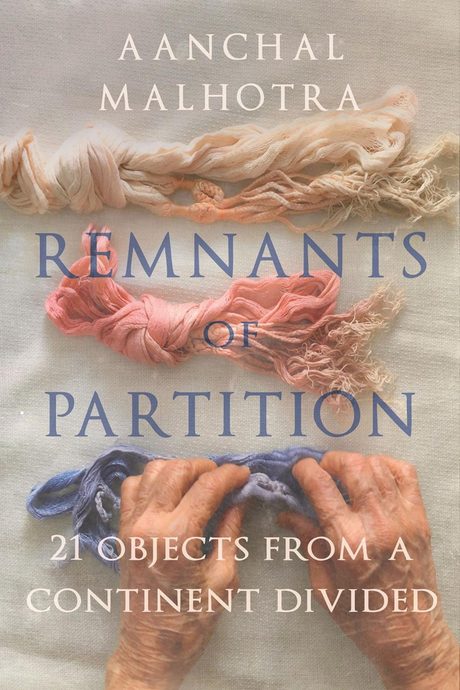
Testimony, through the things people carried
Remnants of Partition: 21 Objects from a Continent Divided
Aanchal Malhotra2017about 395 pages
Twenty-one objects that crossed the border, and the memories that only came out when someone asked about the object instead of the year.
Aanchal Malhotra started with a few utensils in her own family and worked outward, sitting with people in their eighties and nineties across India and Pakistan and asking not what happened in 1947 but what they brought with them. It turns out a household object opens a door that a direct question keeps shut. People who had refused to discuss the crossing for sixty years will talk for three hours about a jug. She photographs each thing, then lets the owner speak at length, and the interviews carry the book rather than her commentary. First published in India as Remnants of a Separation, and issued abroad under this title.
Why it is at 9
Ninth because it is the kindest way into this history and the easiest non-fiction here to read in pieces: one object, one life, about twenty pages, then you can close it. It sits below Butalia because Butalia is asking harder questions about what the state did and to whom. Malhotra is doing something gentler, and for a lot of readers that is the difference between finishing and stopping.
Read it ifyou want survivors' voices without a body count on every page
Skip it ifyou want analysis and argument rather than interviews
gentle, tactile, elegiacBest for: readers the violence has exhaustedtestimonynon-fictionobjectsmemory
Heads up: loss, displacement and grief, with much less graphic violence than most books here
10
Novel, Pakistan, a man made mostly of memory
Basti
Intizar Husaintranslated by Frances W. Pritchett1979about 249 pages
A Pakistani man in 1971 keeps sliding back into the town he left in 1947, because his country keeps breaking the same way twice.
Zakir teaches history in Lahore. The year is 1971, East Pakistan is going, the city is under blackout, and his mind will not hold still: it keeps returning to Rupnagar, the small town in India where he grew up among Hindus and Muslims, and to Sabirah, the woman who did not leave. Intizar Husain writes out of a tradition that owes as much to Urdu storytelling and older subcontinental tale-telling as to the European novel, so the book advances by association and echo rather than by plot. Frances W. Pritchett's translation keeps that strangeness intact instead of tidying it into something more familiar.
Why it is at 10
Tenth because it is the hardest book here and the one that pays a serious reader the most. It is also the only novel on this list that treats 1947 as a wound that keeps reopening rather than a single terrible year, which is exactly what a Pakistani writer sitting in Lahore in 1971 would see. Come to it third or fourth, never first.
Read it ifyou read slowly and enjoy books that move by memory
Skip it ifyou need plot, because there is almost none on offer
dreamlike, mournful, allusiveBest for: patient literary readersnovelurdutranslationpakistan
Heads up: war, displacement and sustained grief
11

Novel, Punjab, a household with two wives
What the Body Remembers
Shauna Singh Baldwin1999about 540 pages
A Sikh landowner takes a second wife, and the war inside that house turns out to be the smaller of the two wars coming.
Roop is sixteen, from a poor Sikh family, and becomes the second wife of Sardarji, an engineer whose first wife Satya has given him no children. Baldwin spends the first half of the novel inside that arrangement: what a second wife is for, what a first wife does about it, how a woman's worth gets counted in sons. Then 1947 arrives in the part of Punjab where these people live and the private arithmetic is overtaken by a public one. It runs past five hundred pages and it is deliberate about bodies: whose body is property, whose body becomes evidence, what a woman is expected to do when a mob reaches the edge of the village.
Why it is at 11
Eleventh because the Partition half is excellent and you have to earn it. The domestic opening is well observed but slow, and readers who came for 1947 get restless around page two hundred. I would still send you here for the fullest account on this list of what that year did specifically to Sikh women, including the killings inside families that Butalia documents from the other direction.
Read it ifyou want a long immersive novel and care about the women's story
Skip it ifyou want to reach 1947 in the first hundred pages
long, sensory, angryBest for: readers of big historical novelsnovelpunjabsikhwomen
Heads up: sexual violence, killings within families, childbirth in detail
12
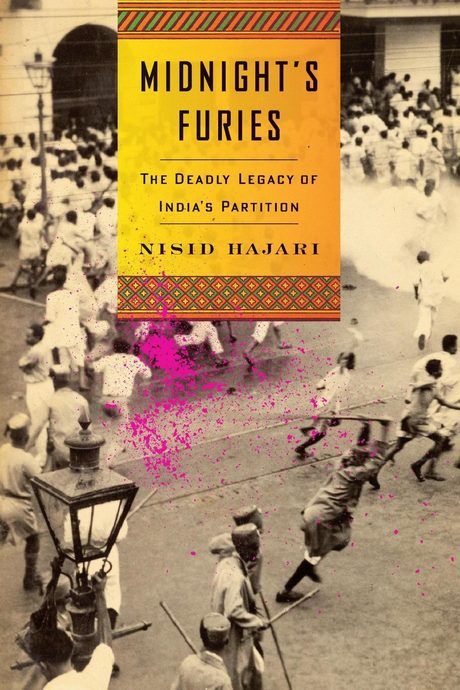
History, the politics and the men in the rooms
Midnight's Furies: The Deadly Legacy of India's Partition
Nisid Hajari2015about 365 pages
How Nehru, Jinnah and Mountbatten got to August 1947, and what their choices cost people they never met.
Hajari is a journalist and it shows in the best way: the political story moves at speed, from the failure of the Cabinet Mission to Direct Action Day in Calcutta, through the personal loathing between Nehru and Jinnah, Mountbatten's hurry, and a boundary line drawn by an English lawyer who had never set foot in India and kept secret until after the flags went up. He cuts constantly between the negotiating rooms and the districts where the decisions landed. It carries the story on into Kashmir and the first war, which is where this history actually goes rather than stopping neatly in August.
Why it is at 12
Twelfth because it is the best single volume for the politics, and because it is honest about how poorly the leadership comes out of a close look. It ranks low only because political history is the wrong first book on this subject. Read two novels and Butalia first, then come here for the names and the dates, and you will feel the difference between two kinds of knowing.
Read it ifyou want the political story told like reportage
Skip it ifyou already know the political outline and want people instead
brisk, journalistic, damningBest for: readers who want dates and decisionshistorynon-fictionpolitics
Heads up: massacre accounts described plainly
13
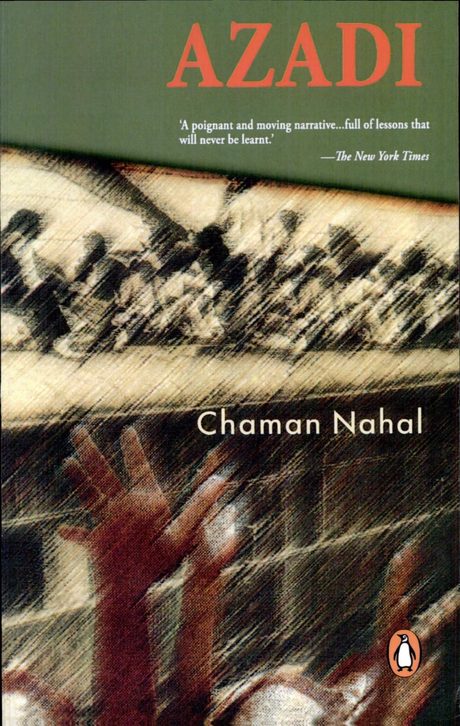
Novel, Sialkot to Delhi, the road itself
Azadi
Chaman Nahal1975about 348 pages
A Hindu grain merchant in Sialkot hears the announcement on the radio and spends the rest of the book walking to a country he has never seen.
Lala Kanshi Ram has a shop, a decent standing in his building, and a son, Arun, who is in love with a Muslim girl upstairs. The announcement comes over the radio and the family's world begins winding down piece by piece: the shop, the neighbours, the last careful conversations, then the camp, then the foot convoy east. Nahal is at his strongest in that middle stretch, the caravan itself, where thousands of people walk for weeks and the ordinary rules of family life, meals, privacy, dignity, dissolve one at a time. The Delhi chapters, where refugees learn what the new country thinks of them, are the part most novels leave out.
Why it is at 13
Thirteenth on craft rather than on subject. The prose is plainer than everything above it and the emotional beats get signalled well in advance, but no other book here gives you the refugee convoy at full length, week after week, mile after mile. If your family made that walk, this is the one that shows the walk.
Read it ifyou want the migration itself rather than the politics or the riot
Skip it ifyou want subtle prose, because this is direct and it tells you what to feel
plain, sorrowful, long roadBest for: the refugee experiencenovelrefugeesialkot
Heads up: attacks on convoys, sexual violence, deaths of children
14
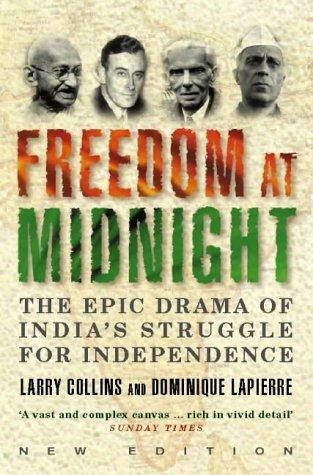
History, the viceroy's view, read with a correction handy
Freedom at Midnight
Larry Collins and Dominique Lapierre1975
The famous popular history of 1947: hugely readable, and tilted toward the man who gave the authors the most access.
Collins and Lapierre tell the countdown to independence with the pace of a thriller: Gandhi's last months, the Mountbatten household, Radcliffe and his maps, the princely states being talked into signing, and the assassination reconstructed hour by hour. It is genuinely difficult to stop reading, which is the reason it has stayed in print for fifty years. It is also a book built on remarkable access to Mountbatten himself, and historians have argued for decades that it repeats his version of events, flatters him where flattery is not deserved, and reduces Jinnah to a stock villain in a story that needed one.
Why it is at 14
Last, and here deliberately. Somebody will recommend this to you within a week of you showing interest in Partition, so you should know what it is before it arrives: superb storytelling, unreliable history, and a palace-level view of a catastrophe that happened almost entirely to people the palace never met. Read it fourteenth. Read Hajari and Butalia first, and it becomes a much more interesting book.
Read it ifyou want narrative momentum and will read a corrective afterwards
Skip it ifyou want history that is careful about whose account it is repeating
cinematic, gossipy, tiltedBest for: narrative-first readershistorynon-fictionpopular
Heads up: massacre accounts and the Gandhi assassination in detail
Worth knowing
Novel, stories, testimony, history: what the labels mean
Every entry on this list carries one of four labels, and they are not decoration. A novel invents a family so you can live inside one week of 1947 at full emotional pressure, and it can lie to you beautifully. Short stories give you the same year in flashes, which suits the subject, because most people's experience of Partition was a flash. Testimony is somebody real, named or anonymous, telling an interviewer what happened to them, and it carries an authority no novel can buy. History is the paperwork: who met whom, who signed, which telegram arrived late.
Mixing them up is how readers get hurt. People pick up Manto expecting a novel and find fifty punches instead. People pick up Butalia expecting a story and find an argument about method. Read the label first and you will choose better than most people browsing a bookshop table.
Worth knowing
A reading order that does not burn you out
This subject has a saturation point and everyone hits it. Two testimonies back to back and you go numb, which is worse than being upset, because numb is where you stop caring. So alternate the forms. A novel, then a testimony, then a novel again, and the real voices land against something shaped rather than against more of the same.
If you want a fixed four book path: Train to Pakistan, then Pinjar, then The Other Side of Silence, then Cracking India. That is roughly a thousand pages total, it covers a village and a woman and the survivors and a city, and by the end you will know which direction you want to go deeper in. If you need more after that, Tamas for the mechanics and The Shadow Lines for the idea of the border.
One permission worth giving yourself: you are allowed to put these down. Nobody is grading you, and a book you abandoned in October and finished in March still counts.
Worth knowing
A note on translations
Four of these were not written in English, and the translator changes the book more than most readers realise. The editions I used here: Tamas from Hindi by Daisy Rockwell for Penguin, Pinjar from Punjabi by Khushwant Singh, Basti from Urdu by Frances W. Pritchett, and Manto from Urdu by Khalid Hasan.
Manto in particular exists in several competing English versions, and they differ in tone quite a lot, since the whole difficulty of translating him is keeping the coldness without making it sound casual. Aatish Taseer and Matt Reeck with Aftab Ahmad have also published Manto selections. Check the copyright page before you buy so you know whose English you are actually reading, and if a cheap edition names no translator at all, put it back.
People also ask
Questions, answered
Which Partition book should I read first?
Train to Pakistan by Khushwant Singh. It is under two hundred pages, the language is plain, and it needs no background from you at all. One village, one week, one decision, and you close it understanding how ordinary people become a mob. If you finish it and want the same events told by someone who lived on the other side of the new border, go to Cracking India next.
Is Train to Pakistan a true story?
No, it is fiction. Mano Majra is an invented village and Juggut Singh is an invented character. What is real is the pattern: mixed villages along the new Punjab border, trains arriving with the dead, local men recruited into killings by outsiders, and administrators trying to keep numbers down in their own district. Khushwant Singh was a lawyer in Lahore before 1947, so he was writing near the events rather than from research.
What is the difference between Ice-Candy-Man and Cracking India?
Nothing except the title and the cover. Bapsi Sidhwa's novel was published in 1988 as Ice-Candy-Man and reissued in the United States in 1991 as Cracking India, because the original title puzzled American readers. Same text, same child narrator, same Lahore. Buy whichever edition you find. The 1998 film Earth, directed by Deepa Mehta, is based on this novel.
Are there Partition books written from the Pakistani side?
Yes, and three of the strongest books here are among them. Bapsi Sidhwa writes Lahore from inside it. Saadat Hasan Manto moved to Lahore in 1948 and died there, and his Partition stories refuse to take either government's side. Intizar Husain migrated to Pakistan in 1947 and spent his career writing about the town he left. Reading only Indian accounts of 1947 gives you exactly half of a story that has two halves by definition.
Is Freedom at Midnight accurate?
It is accurate about the sequence of events and unreliable about their meaning. Collins and Lapierre had extensive cooperation from Mountbatten and the book carries his framing throughout, which flatters the British administration and hardens Jinnah into a villain. Read it for narrative drive, then read Nisid Hajari or a working historian to see how much the perspective was doing. Popular history is not worthless, it just needs a second opinion.
What is the best non-fiction book about Partition?
The Other Side of Silence by Urvashi Butalia, because it put survivors, especially women and Dalits, at the centre of a history that had been written entirely about governments. Aanchal Malhotra's object-based interviews are the gentler companion to it, and Nisid Hajari is the one to read for the politics. Between those three you have the people, the memory and the paperwork, which is most of what there is.
Before you go
What to read tonight
If you are picking something for tonight, start Train to Pakistan and plan to finish it by tomorrow evening. It is short, it will tell you quickly whether you want more of this, and unlike almost everything else on the subject it does not ask you to arrive already informed.
And when you are three or four books in, go ask someone in your family. Most of us have one story that never got told properly: a house left behind, a train that was met at a station, a relative's name that quietly stopped being used at the dinner table. These books teach you which questions open a person up, and Malhotra's method is the best of them. Do not ask what happened in 1947. Ask what they carried with them. Then clear your afternoon, because you may be sitting there for three hours.
Keep going
Lists that pair with this one
Indian Fiction
The 20 Best Indian Books in Translation, Ranked by Where to Start
Twenty books from ten Indian languages, ordered from the easiest way in to the one that will fight you, with the translator named every time.
Indian Fiction
16 Best Books to Understand India, Ranked by What They Explain
Sixteen books, ten doors into the same country: history, caste, the mega city, the village, money, and where to start tonight.
Indian Fiction
16 Best Indian Short Story Collections (Where to Start in Each)
Sixteen collections worth your evening, ranked by how much patience each one asks for, with the exact story to read first in every book.
Indian Fiction
The 12 Best Indian Graphic Novels, and What the Art Actually Does
Twelve books where the drawing carries the story, ranked, with each art style named so you know what you are walking into.
Indian Fiction
12 Best Novels Set in Delhi, Plus 3 That Are Not Fiction
Delhi is at least five cities stacked on one map, so I have ranked these by which one you actually take away.