Manto is the rare writer where the buying decision is harder than the reading decision. He wrote a couple of hundred stories, died in 1955 at forty-two, and has been repackaged ever since into collections that overlap without warning you. Two books, different titles, different publishers, the same six famous stories inside. Nobody prints a contents list on the back cover.
So this is not a ranking of his genius. It is a buying order. The list runs in the sequence I would actually purchase these ten editions, one at a time, so that every new book gives you the most Manto you do not already own, in the best English available for it. A book can be excellent and still sit at number eight here, because you already bought most of it at number two.
The other half of the job is the translator. Manto in Khalid Hasan's English and Manto in Muhammad Umar Memon's English are noticeably different men, and there is a section further down on which one suits which reader. There is also a warning about the uncredited cheap reprints that flood every online store, because on a Manto book the translator's name is the whole difference between an edition and a photocopy.
One thing before we start. He is not a comfortable writer. Sex work, riots, sexual violence and the worst week of 1947 are his ordinary material, and he refuses to tell you who to blame. Every entry below says what it contains.
How I picked these
- Ordered as a buying sequence rather than a greatness list: every position has to answer what it adds that the books above it do not.
- The translator settled most of the ties. Where two collections carry the same story, the higher rank goes to the version that keeps Manto plain instead of making him elegant.
- Every edition was checked against Google Books and Open Library, and each one has a real cover, a named publisher and a page count that matches its contents.
- I skipped the uncredited reprints completely, including the ones with attractive covers and a suspiciously long list of contents.
- Two pocket editions sit at the bottom, clearly marked as pocket editions, because 'I am not sure I will like him' is a real position and it deserves a real answer.
- Three famous Khalid Hasan collections are discussed in a section instead of being ranked, and I say exactly why below.
The whole list at a glance
All 10 books, in order
| # | Book | Author | Year | Vibe | Best for |
|---|
| 1 | Bombay Stories | Saadat Hasan Manto | 2012 | unsentimental, street-level, sharp | first-time Manto readers |
| 2 | Mottled Dawn | Saadat Hasan Manto | 1997 | brutal, brief, unforgettable | the Partition stories |
| 3 | My Name Is Radha | Saadat Hasan Manto | 2015 | faithful, austere, thorough | readers who want one big volume |
| 4 | Why I Write | Saadat Hasan Manto | 2014 | combative, funny, self-aware | understanding the obscenity trials |
| 5 | Black Margins | Saadat Hasan Manto | 2003 | compressed, cold, exact | readers who like very short fiction |
| 6 | Naked Voices | Saadat Hasan Manto | 2008 | off the beaten path | second-time Manto readers |
| 7 | Manto: Selected Stories | Saadat Hasan Manto | 2008 | slim, modern, quick | gifting to a new reader |
| 8 | The Dog of Tithwal | Saadat Hasan Manto | 2021 | handsome, wide-ranging, familiar | gifting or keeping |
| 9 | The Price of Freedom | Saadat Hasan Manto | 2025 | pocket sized, partition | testing the water |
| 10 | Smell (Penguin Petit) | Saadat Hasan Manto | 2018 | brief, humid, unsettling | fifteen minutes on a phone |
The list
The books, ranked
1
Core buy
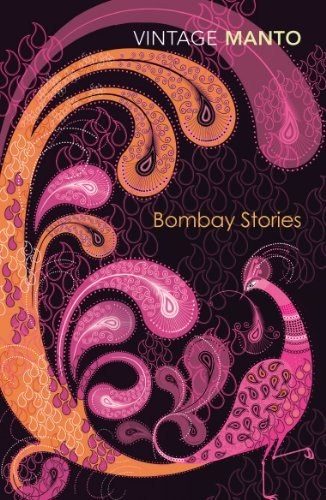
Bombay Stories
Saadat Hasan Mantotranslated by Matt Reeck and Aftab Ahmad2012
The Bombay Manto: pimps, film extras, sex workers and landlords, written by a man who lived among them and never took a moral position.
Manto spent his best working years in Bombay, writing for the film studios and living in the parts of the city the studios pretended not to know. These stories come from there. Sex workers who are treated as people rather than lessons, pimps with professional pride, film extras waiting for a call that never comes, plus the drivers and landlords and hangers-on around them. Reeck and Ahmad translate into an English that still sounds like a street rather than a seminar, which matters, because Manto's Urdu was plain and fast and unliterary on purpose. He shows you a person, gives them one bad hour, and leaves.
Why it is at 1
First because it is the Manto that new readers actually enjoy, and because this translation is not duplicated anywhere else on this list. Start with the city stories rather than the Partition ones, since the Partition material lands much harder once you know how he writes about ordinary people having an ordinary bad day.
Read it ifyou want the Bombay underworld written without judgment
Skip it ifyou came specifically for the Partition stories
unsentimental, street-level, sharpBest for: first-time Manto readersshort storiesbombaytranslation
Heads up: sex work, sexual violence and casual cruelty, described plainly
2

Core buy
Mottled Dawn
Saadat Hasan Mantotranslated by Khalid Hasan1997about 200 pages
The Partition book, and the one most Indian readers meet first, usually as a photocopied handout in college.
Khalid Hasan gathers the famous Partition stories here along with the very short pieces Manto wrote as black-bordered vignettes, some of them four lines long and worse than any full-length story. Toba Tek Singh is in this book, the one about an inmate of a Lahore asylum who will not accept that his village now sits on the other side of a new border. Hasan's English moves easily and never makes you stop, which is both the appeal and the case against him, since Manto's own sentences are rougher and stranger than these.
Why it is at 2
Second because you cannot claim to have read Manto without the Partition work, and this is the cheapest and most available way to get it. It ranks under Bombay Stories only because the material is brutal and goes down better once you have read him being funny about pimps. If you are buying one book at a railway stall, buy this one.
Read it ifyou want the Partition stories in one cheap volume
Skip it ifyou want a translation that keeps Manto's rough edges
brutal, brief, unforgettableBest for: the Partition storiespartitionshort storiespenguin
Heads up: communal massacre, rape and mutilation, sometimes in four lines
3
Core buy
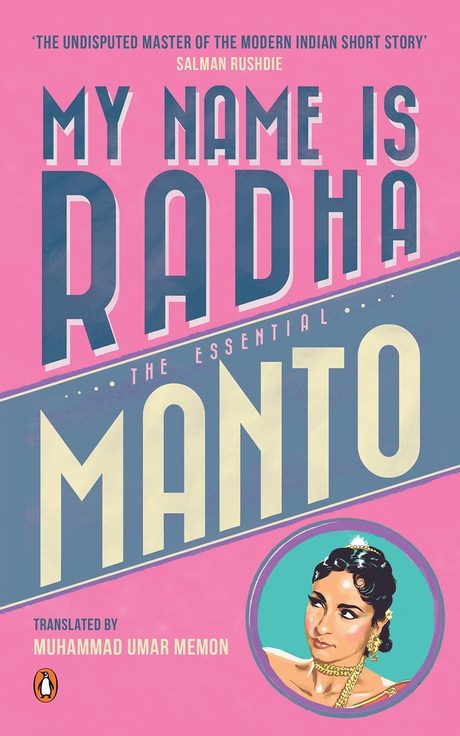
My Name Is Radha
Saadat Hasan Mantotranslated by Muhammad Umar Memon2015about 574 pages
The big one: 574 pages, the most careful English on this list, and the volume to own if you only own one.
Memon spent decades translating Urdu fiction and this is the fullest single-volume result, running to well over five hundred pages and taking in the Bombay stories, the Partition stories and a long run of pieces about performers, writers and the people who circle them. The title story comes out of the film studios where Manto worked. What separates the book from the cheaper selections is the discipline of the translation. Memon does not smooth him out, does not add a clarifying phrase, and lets the sentences stay as blunt as they are in Urdu. It reads like Manto instead of like good English prose.
Why it is at 3
Third because it hands you the most Manto per purchase and the most trustworthy English anywhere on the list. It sits behind the first two only because 574 pages is a heavy ask for someone still deciding whether they like him. Once you know that you do, this is the volume to keep, and it makes the slim selections feel like samplers.
Read it ifyou want the closest thing to Manto's actual sentences
Skip it ifyou want something you can finish this weekend
faithful, austere, thoroughBest for: readers who want one big volumeshort storiestranslationpenguin
Heads up: sex work, communal violence, suicide
4
Second wave
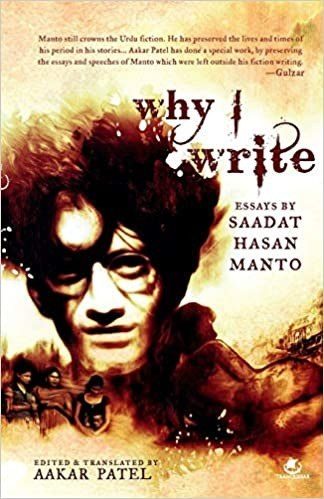
Why I Write
Saadat Hasan Mantotranslated by Aakar Patel2014about 184 pages
The essays, the courtroom statements and the letters, which is where you meet the man rather than the stories.
This is the nonfiction: essays, statements he made when he was hauled into court for obscenity, letters, and pieces where he takes his own drinking and his own poverty and turns them into copy. Aakar Patel translates it in plain journalistic English, which fits, because Manto was a working journalist and screenwriter who wrote fast and for money. He explains why he writes about brothels, argues with the people prosecuting him, and is funny for long stretches, right up to the point where he stops being funny.
Why it is at 4
Fourth because it overlaps with nothing else on this list, so it adds more new material than any other fourth purchase. It also explains half the arguments the story collections leave you having, and it is short. Buy this before you buy your fourth collection of stories, then go back and reread the first three.
Read it ifyou want Manto the man, arguing and broke
Skip it ifyou only want the fiction
combative, funny, self-awareBest for: understanding the obscenity trialsessaysnonfictiontranslation
Heads up: alcoholism and mental illness, written about by the man himself
5
Second wave
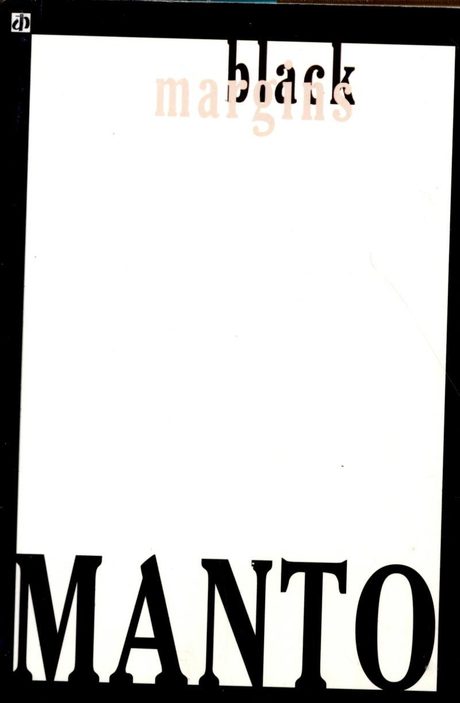
Black Margins
Saadat Hasan Mantotranslated by M. Asaduddin2003about 316 pages
The very short Partition pieces in a second translator's English, plus stories and an open letter to Nehru.
In 1948 Manto published a set of extremely short pieces about Partition, some no longer than a paragraph, and this Katha edition is where they sit in English alongside a wider selection of stories and an open letter aimed at the Prime Minister of India. The short pieces are the reason to buy it. Four lines can carry an entire riot, because he never tells you what to feel and never gives you a villain with a name. If you have only read the full-length stories, this shows you the other machine he had, the one that works by leaving almost everything out.
Why it is at 5
Fifth because those compressed pieces are the part of Manto that nothing else here captures the same way, and reading them in a second translator's English after Khalid Hasan is genuinely useful rather than repetitive. It is not higher because it is harder to find in a shop, and because you will already have met some of this material in Mottled Dawn.
Read it ifyou want the four-line Partition pieces
Skip it ifyou want long stories with room to breathe
compressed, cold, exactBest for: readers who like very short fictionpartitionvery short fictionkatha
Heads up: riot violence in extremely compressed form
6
Second wave
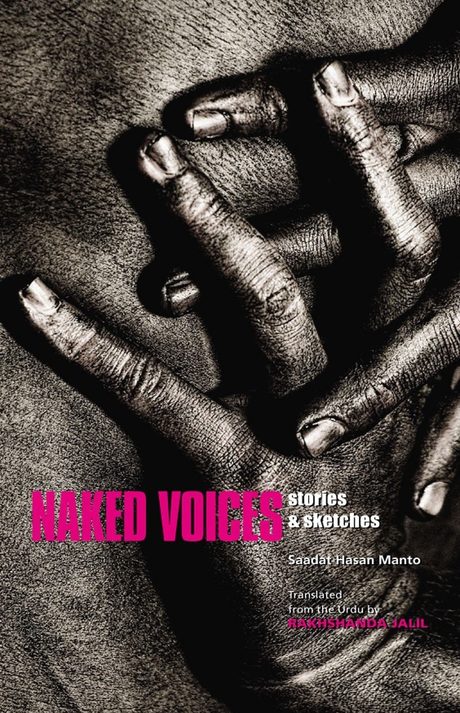
Naked Voices
Saadat Hasan Mantotranslated by Rakhshanda Jalil2008about 146 pages
Sixteen stories and three sketches chosen by a translator who deliberately avoided the greatest hits.
Rakhshanda Jalil's selection is the reason this book exists and the reason to own it. She goes for the pieces the bigger anthologies skip, so a reader who already has two collections still finds new work here. The three sketches include one where Manto writes about himself as though he were someone else, which is a strange and slightly cruel performance, and one of his letters to Uncle Sam, the running joke he aimed at American power. Jalil translates carefully and never performs. It is a small book, around 150 pages, and it works best as your fourth or fifth Manto rather than your first.
Why it is at 6
Sixth because once you own the core three, this is the purchase where the highest proportion of the pages will be new to you. It sits here rather than higher because a first-time reader needs the famous stories first, and this collection is built to avoid being that. Think of it as the book that stops your Manto shelf repeating itself.
Read it ifyou already own two collections and want new stories
Skip it ifyou have not read the famous stories yet
off the beaten pathBest for: second-time Manto readersshort storiessketchesroli books
Heads up: sex work and sexual violence
7
Buy with your eyes open
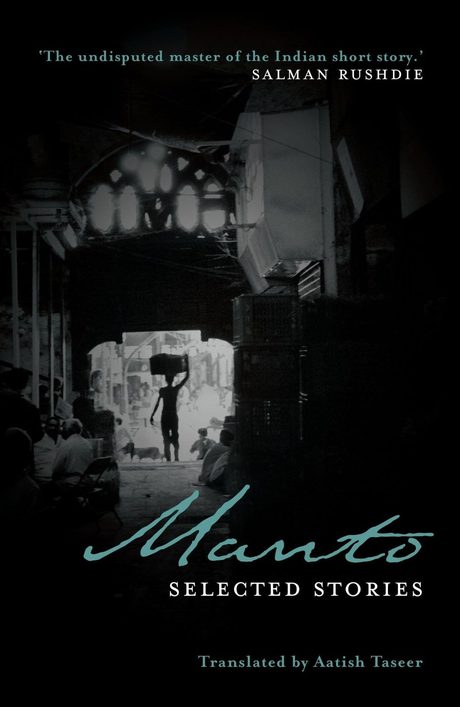
Manto: Selected Stories
Saadat Hasan Mantotranslated by Aatish Taseer2008about 116 pages
A slim, modern-sounding hundred pages: a great gift, a poor fifth purchase.
Just over a hundred pages, translated by Aatish Taseer into an English that is quick and current and stays out of the way. It carries the well known stories rather than the deep cuts, which is what makes it good as a gift and weak as a later purchase. The shortness is a real feature and not a compromise, since a reader who has never heard of Manto will finish this on a Sunday and come out wanting the big collections, whereas the same reader handed 574 pages will put it on a shelf and feel guilty for a year.
Why it is at 7
Seventh because of overlap, not quality. Almost everything in it turns up again in the bigger collections, so bought fifth it is mostly a rerun of things you own. Bought first, by someone nervous about a doorstop, or given to a friend who has never met this writer, it is the best object on the list.
Read it ifyou want a short, modern-sounding first taste
Skip it ifyou already own a big collection
slim, modern, quickBest for: gifting to a new readershort storiestranslationslim
Heads up: sexual content and violence
8
Buy with your eyes open
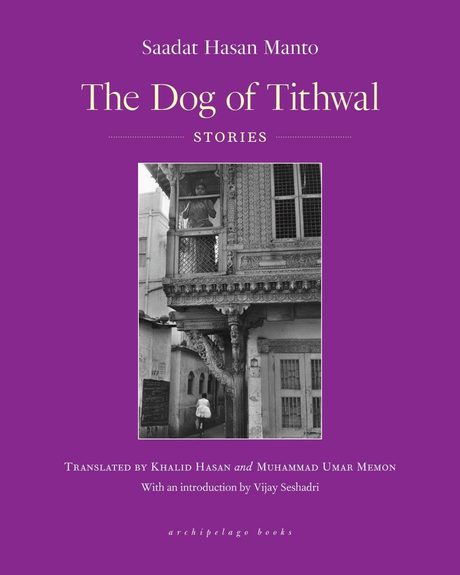
The Dog of Tithwal
Saadat Hasan Mantotranslated by Khalid Hasan and Muhammad Umar Memon2021about 431 pages
Thirty-two stories in the best-produced Manto you can buy in English, drawn from translations you may already own.
The American edition, thirty-two stories, with the translations coming from Khalid Hasan and Muhammad Umar Memon and a foreword by the poet Vijay Seshadri. The title story puts a stray dog between two hilltop positions of soldiers, one Indian and one Pakistani, with each side deciding the animal must belong to the other. It is the handsomest Manto in print, the sort of book that survives being lent out twice. The catch is arithmetic rather than literary: if you already own Mottled Dawn and My Name Is Radha, you own a good share of these translations.
Why it is at 8
Eighth entirely because of duplication. On the quality of the object alone it would sit in the top three, and if this is your first Manto and money is not tight, buy it and ignore my ranking completely. Bought after the core three, it repeats too much of what is already on your shelf to justify an import price.
Read it ifyou want one good-looking edition that covers everything
Skip it ifyou already own Mottled Dawn and My Name Is Radha
handsome, wide-ranging, familiarBest for: gifting or keepingshort storiesomnibustranslation
Heads up: communal violence and sexual violence
9
Pocket edition
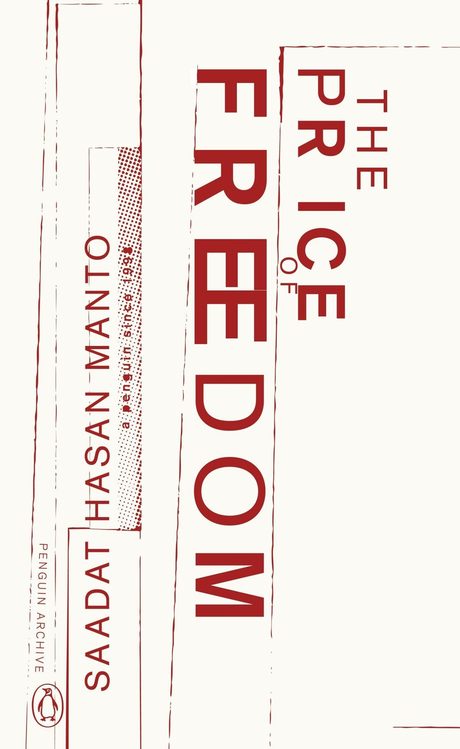
The Price of Freedom
Saadat Hasan Manto2025about 84 pages
Eighty-four pocket-sized pages of Partition Manto, made for the reader who has twenty minutes and no commitment.
Penguin put out a run of very short classics in 2025 to mark ninety years of the imprint, and Manto is one of them: eighty-four pages, Partition material, roughly the size of a phone. Nobody should buy this as their main Manto book. It exists for the reader standing in an airport with twenty minutes to spare, or for a teacher who wants to put a text in fifteen hands without a budget conversation. The one thing I could not confirm is who translated it, and on a Manto edition that is the first thing you should check.
Why it is at 9
Ninth because a sampler cannot outrank a real collection. It is on the list because the honest answer to 'what if I do not want to spend much' should not be silence. Read it, work out which half of him you responded to, then buy Bombay Stories or Mottled Dawn accordingly.
Read it ifyou want to test Manto for the price of a coffee
Skip it ifyou want a full collection to keep
pocket sized, partitionBest for: testing the waterpocket editionpartitionpenguin
Heads up: partition violence
10
Pocket edition
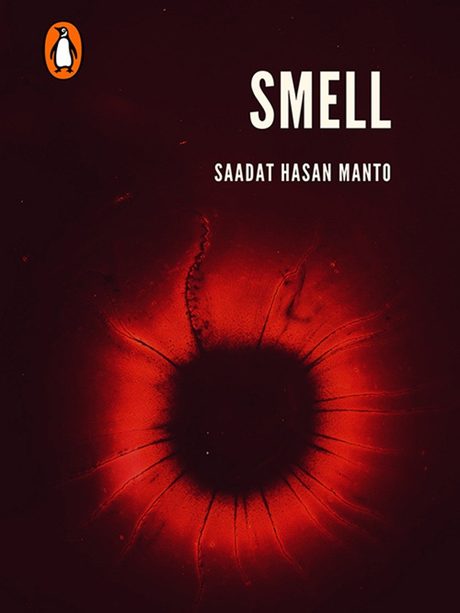
Smell (Penguin Petit)
Saadat Hasan Manto2018about 16 pages
One story, sixteen pages, sold on its own: the cleanest way to find out whether this writer is for you.
Smell is one of the stories that put Manto in front of a judge, and reading it now the surprise is how little of it is actually explicit. The offence was in his refusal to be embarrassed. It is a story about a man, a woman he barely knows, a monsoon night, and the way memory attaches itself to a smell rather than to a face, and it does all of that in about fifteen minutes of reading. Penguin sells it as a single, which is an odd format for a classic and a perfect one for a trial run.
Why it is at 10
Last because one story is not a book, and I would rather say so than pad the list. It earns a place because the question I get most is where to start when you are not sure you will like him at all. Sixteen pages settles that, and if the answer is yes, everything above is waiting for you.
Read it ifyou want one story before committing to a book
Skip it ifyou want a physical book for the shelf
brief, humid, unsettlingBest for: fifteen minutes on a phonesingle storyebookobscenity trials
Heads up: sexual content, and a class gap between the two characters that the story never softens
Worth knowing
Which translator suits which reader
Khalid Hasan is the one you meet first, because his translations fill the Penguin shelves in every Indian bookshop. His English flows, he never leaves you stuck on a phrase, and that ease is also the complaint: Manto's own sentences are blunter and odder than the ones you read in Hasan. If you want to be carried, start with him and do not feel bad about it.
Muhammad Umar Memon works on the opposite instinct. He keeps the awkward joins, resists the tidy phrase, and trusts you to sit with a sentence that does not resolve neatly. If you have read Manto in Hasan and quietly wondered why a writer with this reputation felt so smooth, Memon is the correction.
Matt Reeck and Aftab Ahmad, in Bombay Stories, write a contemporary English with the street left in, which is why that book is at number one for a new reader. Aatish Taseer is spare and quick and best for a first taste. Rakhshanda Jalil picks the stories everyone else ignores, which is what makes her collection the useful fourth book. Aakar Patel handles the essays the way a journalist would, which is exactly right for a man who filed copy to pay rent.
None of them are wrong. They sit at different distances from the original, and the fair summary is that Hasan gets you reading and Memon gets you closer.
Worth knowing
The overlap problem, and how to stop buying the same story twice
Manto died in 1955 and his Urdu originals have been out of copyright in India for about a decade, though the collections were overlapping long before that. The famous stories, Toba Tek Singh above all, appear in most Partition-focused selections. So your second and third purchases can turn out to be largely made of things you have already read, and nothing on the cover warns you.
The fix is a habit rather than a rule. Before buying a second collection, open the contents page on the listing and count how many titles you recognise. Six or more and you are buying a rerun with a different cover.
In practical terms: Bombay Stories and Mottled Dawn barely overlap, because one is the city and the other is the border. My Name Is Radha covers both and adds a great deal more, so it goes third if money is tight and first if it is not. Why I Write is essays, so it cannot repeat a story. The Dog of Tithwal draws on the same two translators as books two and three, which is exactly why an excellent book sits at number eight in a buying order.
Worth knowing
How to spot a padded reprint
Search any store for Manto and you will find editions with no translator named anywhere on the page, priced under two hundred rupees, often with a film still or a stock photograph of a typewriter on the cover. Some of them are fine. Many are reprints of whatever text was available, with no editor, no introduction, and no way to know which stories you are getting until the parcel arrives.
Three checks, in this order. Is a translator named on the cover or in the listing images? Is there a readable contents list before you pay? Does the page count make sense for the number of stories claimed, because a ninety page book promising forty stories is selling you fragments. If any one of the three fails, put it down and buy one of the ten above instead.
Worth knowing
Three editions you will see that are not ranked here
Kingdom's End, Bitter Fruit and Stars from Another Sky are all real, all translated by Khalid Hasan, and all easy to find secondhand. They are missing from the numbered list because I could not verify a current edition of each to the standard I hold these lists to, which includes a genuine cover image and a traceable publisher record. That is a note on my own checking, not a verdict on the books.
For the record: Kingdom's End is Hasan's larger selection of the stories, Bitter Fruit is the fat omnibus of the same translations, and Stars from Another Sky is the one people miss, a set of sketches about the Bombay film world of the 1940s written by a man who worked inside it and disliked most of the people in it. If you find that last one on a secondhand shelf, take it home.
People also ask
Questions, answered
Which Saadat Hasan Manto book should I buy first?
Bombay Stories, translated by Matt Reeck and Aftab Ahmad, unless you specifically want the Partition writing, in which case buy Mottled Dawn. The Bombay stories are the easier introduction because they are about ordinary people in a city rather than about mass violence, and the translation sounds like it was made this decade. Once you like him, My Name Is Radha gives you the largest and most faithful selection in one volume.
Which translation of Manto is the best?
Muhammad Umar Memon is the closest to the Urdu and the least likely to tidy Manto up, so his selection is the one to own if you want accuracy. Khalid Hasan is the most readable and the most widely available, and he is where most Indian readers start. Matt Reeck and Aftab Ahmad are the best fit for the Bombay stories. There is no single winner here, only different distances from the original.
Which Manto book has Toba Tek Singh in it?
Mottled Dawn has it, and so do most Partition-focused selections, which is precisely the problem. Before buying a second collection expecting new material, read the contents list on the shop page and count how many titles you already know. Toba Tek Singh, Colder Than Ice and Open It travel together through many editions, so two books can share a surprising number of pages.
Is Manto hard to read in English?
No. His sentences are short, the stories run to a few pages each, and there is no ornamental writing to get through. The difficulty is entirely in the subject matter, since he writes about brothels, riots and the 1947 Partition without any comfort at the end. Most people find they can read two or three stories at a stretch and then need to stop for a while.
Why are there so many Manto collections with the same stories?
Because his work is old enough to reprint freely in India, the stories are short enough to reshuffle endlessly, and about twenty of them are famous enough to sell a book on their own. Publishers keep building new selections around the same core. The result is a market where careful editions by named translators sit beside anonymous reprints, and the only reliable way to tell them apart is to look for the translator's name.
Should I read Manto in Urdu or Hindi instead?
If you read Urdu, read the originals, and the same goes for the Devanagari editions that are sold all over India, since Manto's Hindustani is plain and closer to speech than most literary prose. The English translations are a genuine substitute rather than a poor one, but they are still a substitute, and each translator makes different choices about how rough to let him sound.
Before you go
What to read tonight
If you are standing in a shop tonight, take Bombay Stories. If the shop only stocks the Penguin shelf, take Mottled Dawn and start with the shortest pieces rather than the longest, because four lines will tell you within ten minutes whether you can take this writer.
After that the order almost picks itself. Read the essays before you buy a fourth book of stories, since Manto explaining himself to a courtroom is a better introduction to Manto than anything anyone else has written, this list included. And when a story stops you cold, resist the urge to look up what it means. He wrote fast, for money, about people he actually knew, and the thing that stopped you is usually just an accurate sentence about somebody who existed.
Keep going
Lists that pair with this one
Indian Fiction
14 Best Partition Novels and Books, Ranked by Where to Start
Fiction and first-hand testimony from both sides of the 1947 line, ordered so you begin with the one you can actually finish.
Indian Fiction
16 Best Indian Short Story Collections (Where to Start in Each)
Sixteen collections worth your evening, ranked by how much patience each one asks for, with the exact story to read first in every book.
Indian Fiction
The 20 Best Indian Books in Translation, Ranked by Where to Start
Twenty books from ten Indian languages, ordered from the easiest way in to the one that will fight you, with the translator named every time.
Indian Fiction
12 Best Urdu Poetry Books in English, Ranked as a Ladder
Ordered from the book that needs no Urdu at all to the one you will only enjoy after the other eleven.
Indian Fiction
16 Best Books to Understand India, Ranked by What They Explain
Sixteen books, ten doors into the same country: history, caste, the mega city, the village, money, and where to start tonight.