The first time I read Lizzie Collingham's Curry I was eating a thali in a mall food court in Ahmedabad, and by page forty I had put my fork down. The tandoori chicken two tables away was invented inside living memory, in a restaurant, by a man with a business to run. The tomatoes in my dal came with the Portuguese. The chilli that makes Gujarati food taste Gujarati is a South American import that arrived on European ships roughly five hundred years ago. Almost nothing on that tray was ancient. It was an argument between traders, invaders and grandmothers, still going on.
That is what good food writing does to you. It takes the most familiar thing in your life and makes it strange for an hour. None of the thirteen books here is a recipe collection you flip through once and abandon, though three of them are cookbooks whose prose is the actual reason to own them. The rest are history, science, reportage and memoir that happen to be about what Indians eat.
The list is ranked one to thirteen, but the ranking works like a menu. I put them in the order I would feed them to somebody who has never read a food book: the wide history first, the science next, then the road, then the kitchen, then something loud and sweet at the end. Every entry carries its course. Quick picks are below if you want to leave in ten seconds with one title.
How I picked these
- It had to survive as a book. My test: could I read it on a bus, hundreds of kilometres from a stove, and still want to keep going.
- Cookbooks got in on their writing alone. Three here are true cookbooks, and they earned the spot with essays and headnotes, not with recipe counts.
- Every title was checked through Google Books and Open Library, with a real cover and a real edition behind it, so nothing here is a ghost you cannot actually buy.
- Cut: celebrity chef tie-ins, diet books wearing a food-writing costume, and picture books with three sentences a spread. Two I wanted, a Tamil tiffin memoir and a light illustrated history, got dropped when I could not confirm a clean edition and a firm first-publication year.
- Skipped on purpose: single-restaurant biographies and regional guides funded by a tourism board. Both read like brochures with better paper.
The whole list at a glance
All 13 books, in order
| # | Book | Author | Year | Vibe | Best for |
|---|
| 1 | Curry: A Tale of Cooks and Conquerors | Lizzie Collingham | 2006 | brisk, argumentative, revisionist | first-time food history readers |
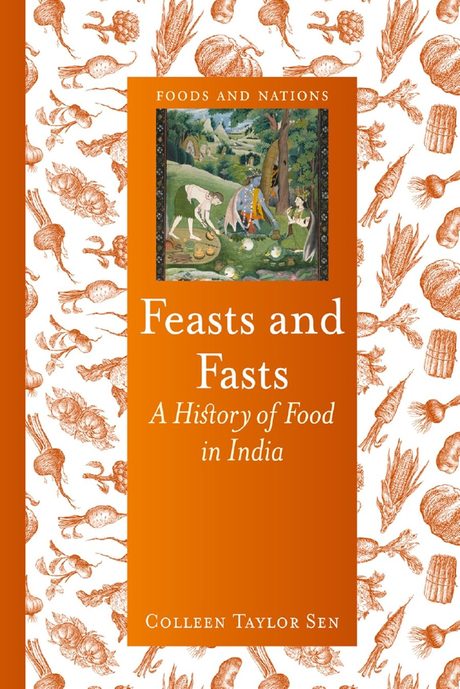
| 2 | Feasts and Fasts: A History of Food in India | Colleen Taylor Sen | 2014 | steady, thorough, calm | readers who want the full timeline |
| 3 | Indian Food: A Historical Companion | K. T. Achaya | 1994 | dense, factual, foundational | serious readers and researchers |
| 4 | Masala Lab: The Science of Indian Cooking | Krish Ashok | 2021 | nerdy, funny, practical | everyday home cooks |
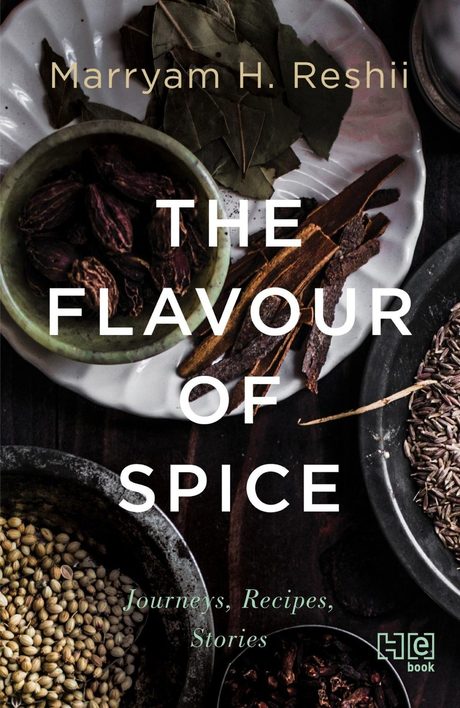
| 5 | The Flavour of Spice | Marryam H. Reshii | 2017 | warm, curious, expert | cooks who want depth on spice |
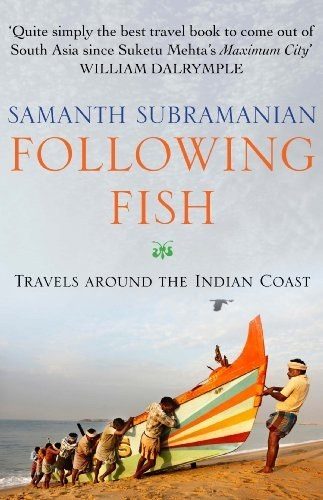
| 6 | Following Fish: Travels Around the Indian Coast | Samanth Subramanian | 2010 | patient, precise, coastal | one evening of good prose |
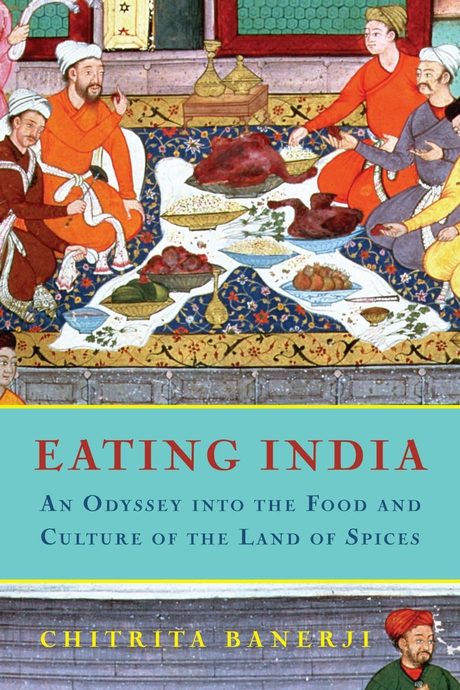
| 7 | Eating India: An Odyssey into the Food and Culture of the Land of Spices | Chitrita Banerji | 2007 | reflective, roaming, tender | readers who like travel memoir |
| 8 | The Penguin Food Guide to India | Charmaine O'Brien | 2012 | encyclopedic, useful, plain | travellers planning a trip |
| 9 | Climbing the Mango Trees: A Memoir of a Childhood in India | Madhur Jaffrey | 2005 | nostalgic, elegant, generous | gifting to almost anyone |
| 10 | My Bombay Kitchen: Traditional and Modern Parsi Home Cooking | Niloufer Ichaporia King | 2007 | precise, dry, affectionate | cooks who read headnotes |
| 11 | 50 Great Curries of India | Camellia Panjabi | 1994 | confident, clear, old-school | cooks stuck on gravies |
| 12 | An Invitation to Indian Cooking | Madhur Jaffrey | 1973 | opinionated, elegant, dated | readers who like food history |
| 13 | Rude Food: The Collected Food Writings of Vir Sanghvi | Vir Sanghvi | 2004 | loud, knowing, entertaining | dipping in and out |
The list
The books, ranked
1
Course one: the long history
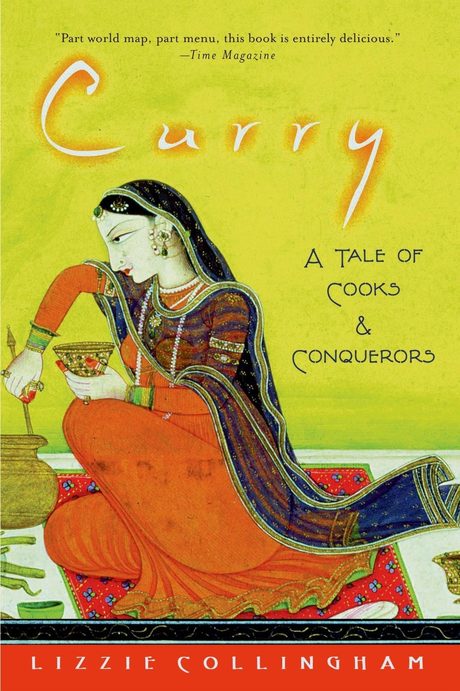
Curry: A Tale of Cooks and Conquerors
Lizzie Collingham2006about 354 pages
A history of India told through its dishes, where almost every classic turns out to be younger and more foreign than you assumed.
Collingham is a historian, and she treats the biryani, the vindaloo and the tandoori chicken as evidence rather than as heritage. The book moves from Mughal kitchens to Portuguese Goa to British clubs to railway station canteens to the curry houses of Birmingham, and every chapter shows a dish being assembled out of somebody's trade route or somebody's homesickness. It appeared in Britain a year before this edition under a different title, Curry: A Biography. Reading it feels like walking through your own kitchen with a stranger who keeps relabelling the jars.
Why it is at 1
Number one because it does the most work per page for a first-time reader, and because Collingham is that rare academic who writes with pace. Feasts and Fasts covers more centuries and Achaya carries more raw fact, but neither will keep you up past midnight. Start here, then argue with it.
Read it ifyou want the story of how Indian food got built, empire by empire
Skip it ifyou want the food described lovingly, because Collingham writes with a historian's appetite, which is to say very little
brisk, argumentative, revisionistBest for: first-time food history readersfood historyempireentry point
2
Course one: the long history
Feasts and Fasts: A History of Food in India
Colleen Taylor Sen2014about 351 pages
Five thousand years of Indian eating in one volume, from Indus Valley grain to the middle-class dining table.
Sen begins at the Indus Valley and does not stop until modern urban India, taking in Vedic sacrifice, the vegetarianism that grew out of Buddhism and Jainism, temple kitchens, Mughal courts, Portuguese and British arrivals, and the way a growing middle class rebuilt its own idea of a proper meal. It is written for a general reader, so the scholarship sits under the prose instead of on top of it. The chapters are short enough to take one a night, which is exactly how I got through it.
Why it is at 2
Second because it has the widest span here, and it is the best single volume if you want the whole story rather than a good argument about one part of it. It sits below Curry only because Sen is a guide where Collingham is a storyteller. Read both and you have most of the field.
Read it ifyou want the entire timeline in one book, chapter by chapter
Skip it ifyou need characters and scenes, because this is closer to a very good lecture course
steady, thorough, calmBest for: readers who want the full timelinefood historyreferenceindia
3

Course one: the long history
Indian Food: A Historical Companion
K. T. Achaya1994about 368 pages
The book every other Indian food writer quotes: half narrative history, half dictionary of everything we have ever eaten.
Achaya was a food scientist who spent his later years reconstructing what Indians actually ate, from the grains named in old Tamil poetry to the arrival of the potato. The first half runs chronologically. The second half is an A to Z of ingredients, dishes and terms, and that is where the pleasure hides, because you look up one entry and lose an hour to the entries around it. This is an Oxford academic book, priced and written like one, and it is still the foundation under most of this list.
Why it is at 3
Third, and third only because of how it reads. As a source it is first by a distance: the other writers here cite Achaya, and you can feel it in their chapters. If you plan to read more than two books from this list, own this one and treat it as the reference you keep returning to.
Read it ifyou want the primary source instead of somebody's retelling
Skip it ifyou want a book to read straight through, because half of it is a dictionary
dense, factual, foundationalBest for: serious readers and researchersfood historyreferenceacademic
4

Course two: the science bench
Masala Lab: The Science of Indian Cooking
Krish Ashok2021
Why your mother's tadka works, explained with chemistry, and without once suggesting your mother was doing it wrong.
Ashok is a Chennai engineer who took the rules every Indian kitchen runs on and asked which ones are physics and which are inherited superstition. He explains why spices go into hot fat, what a pressure cooker is really doing to a dal, why the order of onion, ginger and garlic matters, and why your fridge ruins some things while saving others. The tone is a friend showing off, in a good way, and the jokes land more often than they miss. There are recipes, but the method underneath them is the point.
Why it is at 4
Fourth on the list and first in usefulness. Nothing else here will change your cooking this week. It ranks below the histories because it is a manual rather than a narrative, so you finish it feeling capable instead of moved. If you cook every day, start here and come back to number one later.
Read it ifyou cook regularly and want to know why the rules exist
Skip it ifyou like the mystery of family recipes and would rather nobody took it apart
nerdy, funny, practicalBest for: everyday home cookssciencetechniquemodern
5
Course three: on the road
The Flavour of Spice
Marryam H. Reshii2017about 282 pages
A food critic goes spice by spice, from Kashmiri saffron fields to pepper country, asking what each one is actually doing in your pan.
Reshii spent decades reviewing restaurants before she wrote this, and it shows in how confidently she separates a spice's reputation from its job. She travels to where the things grow, sits with the people who grow them, and comes back with the economics and the taste in the same chapter. Kashmir, which is her own home, gets the best pages. Recipes run through the book, and they are the kind you actually attempt, because by the time you reach them you understand what the spice is for.
Why it is at 5
Fifth because it does the one thing the big histories skip: it stays on a single subject long enough to get past the anecdote. Where Collingham hands you the sweep, Reshii hands you the field and the farmer standing in it. The book wanders between reporting, memoir and recipe, and that looseness is my only real complaint.
Read it ifyou want to understand spices past the supermarket label
Skip it ifyou want a tight argument, because this book strolls where it likes
warm, curious, expertBest for: cooks who want depth on spicespicesreportagekashmir
6
Course three: on the road
Following Fish: Travels Around the Indian Coast
Samanth Subramanian2010
Nine journeys down the Indian coastline, following fish into medicine, religion, toddy shops, boatyards and dinner.
Subramanian travels the coast from Bengal round to Gujarat, and fish is the thread rather than the subject. He watches the Hyderabad ritual where a live fish is swallowed as an asthma cure, sits in Kerala toddy shops, chases the perfect hilsa in Bengal, and spends time with men who still build boats by hand. The reporting is patient, the writer keeps himself out of the way, and the sentences are the best on this list, which is how I justified rereading it twice and calling it research.
Why it is at 6
Sixth, and it would sit far higher if this list were ranked on prose alone. It lands here because its window is narrow by design: one ingredient, one coastline, no attempt at the whole country. As a single evening of reading it beats everything ranked above it.
Read it ifyou like travel writing where the writer stays quiet and watches
Skip it ifyou are vegetarian and would rather not read about fish being caught, cut and cooked
patient, precise, coastalBest for: one evening of good prosetravelreportagecoast
7
Course three: on the road
Eating India: An Odyssey into the Food and Culture of the Land of Spices
Chitrita Banerji2007about 292 pages
A Bengali writer settled abroad comes home and eats her way across the country, half hungry and half homesick.
Banerji left Kolkata for America and returned as a traveller in her own country, which gives this book its odd and useful double vision. She moves through Bengal, Kashmir, Goa, Kerala and Delhi, eating in homes far more often than in restaurants, and keeps circling one question: what does a food tell you about the people who guard it. She keeps circling back to who is permitted to eat what, and in whose kitchen, and that thread holds the book together better than the itinerary does.
Why it is at 7
Seventh because it is the emotional counterweight to the histories above it. Collingham and Sen tell you where a dish came from. Banerji tells you what it costs to be the woman cooking it. It loses a place or two on structure, since the chapters can feel like separate essays stitched together after the fact.
Read it ifyou want food writing about memory, exile and family
Skip it ifyou want dates and evidence, because this is a personal journey with no shopping list
reflective, roaming, tenderBest for: readers who like travel memoirmemoirtravelbengal
8
Course three: on the road
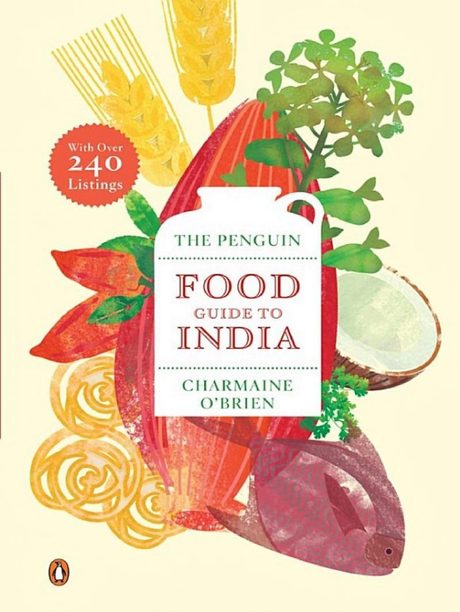
The Penguin Food Guide to India
Charmaine O'Brien2012about 559 pages
A state-by-state map of what India actually eats, thick enough to settle a family argument or prop open a door.
O'Brien is Australian, has spent years in India, and set out to record what people eat region by region rather than what restaurants sell them. Each section gives you the staples, the history behind them, the festival food, and notes on where to find the real version. It runs past five hundred pages, so nobody reads it front to back. You read the chapter for the state you are about to visit, then two more, because the neighbouring cuisine turns out to be a cousin.
Why it is at 8
Eighth because it is a tool rather than a read, and tools rank lower on a list about writing. As a tool it has no competition in one volume. The honest caveat is age: some of the eating recommendations are a decade old now, and restaurants in India rarely stay still that long.
Read it ifyou travel in India and want to eat what the locals eat
Skip it ifyou want narrative, because this is built for dipping and not for reading
encyclopedic, useful, plainBest for: travellers planning a tripregionalguidereference
9
Course four: the kitchen memoir
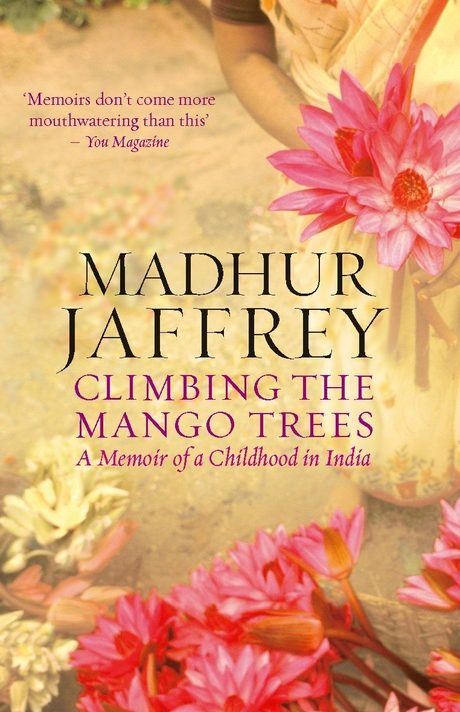
Climbing the Mango Trees: A Memoir of a Childhood in India
Madhur Jaffrey2005about 320 pages
Jaffrey's Delhi childhood in a large joint family, with Partition arriving in the middle of it and recipes waiting at the back.
Before she became the woman who taught the English-speaking world to cook Indian food, Madhur Jaffrey was a girl in a Delhi house full of relatives, eating mangoes pulled straight off the tree and whatever came up from the family kitchen. The memoir runs from that childhood through school, through the year Delhi came apart, to her leaving for drama school in London. Food is the lens and not the plot, which is why it works as a memoir first. Recipes for the dishes she remembers sit at the end.
Why it is at 9
Ninth because it is the best-written memoir here and the safest book to hand to anybody, including people who never cook. It ranks below the reportage because it is one family's story rather than an argument about a country, and the second half thins out a little once she leaves home.
Read it ifyou like memoirs where a house and a kitchen are the main characters
Skip it ifyou want food on every page, because long stretches are school, family and history
nostalgic, elegant, generousBest for: gifting to almost anyonememoirdelhichildhood
Heads up: the Partition chapters describe violence in Delhi
10
Course five: cookbooks worth reading
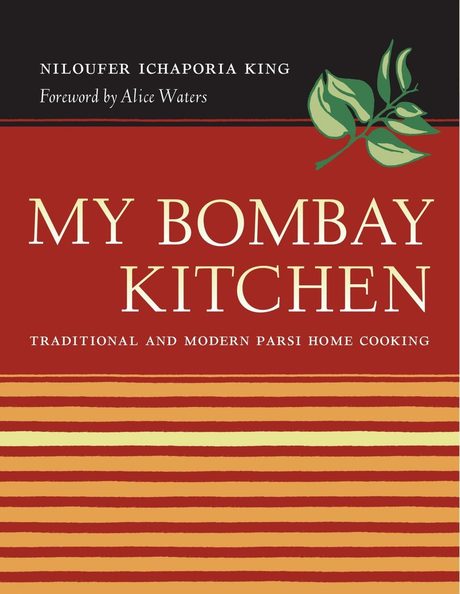
My Bombay Kitchen: Traditional and Modern Parsi Home Cooking
Niloufer Ichaporia King2007about 366 pages
Parsi home cooking written by an anthropologist, where the notes above the recipes read better than most food essays.
King grew up in Bombay and trained as an anthropologist, and this is what happens when a person with that training writes down her own community's cooking before it thins out. Dhansak, patra ni machhi, the wedding food, the ordinary weekday food, all of it sits under headnotes explaining who cooked it, when, and what it meant to the family that ate it. You can cook from this book. You can also read it in bed like a set of essays, which is what I did for a week before making a single dish.
Why it is at 10
Tenth because it is a cookbook and this list is about reading. Within its own category it is the finest thing here: no other Indian cookbook I know writes about a community with this much precision and this little sentiment. If there is any Parsi food in your life, move it up five places.
Read it ifyou want a cookbook that doubles as a record of a community
Skip it ifyou will never cook and want pure narrative from start to finish
precise, dry, affectionateBest for: cooks who read headnotescookbookparsibombay
11
Course five: cookbooks worth reading
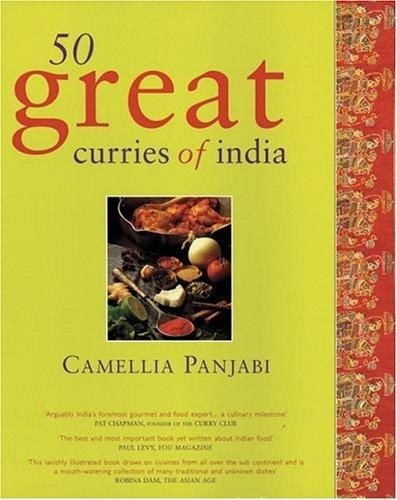
50 Great Curries of India
Camellia Panjabi1994
Ignore the fifty recipes if you like. The opening essay on how a curry is actually built is worth the whole price.
Panjabi spent her career in Indian hospitality and then in Indian restaurants in London, and she opens this book with sixty-odd pages explaining what a curry is made of: the sequence of the onion, the job of the souring agent, why a Kashmiri gravy behaves nothing like a Chettinad one. Then come the recipes, which are solid and heavily photographed. Most people buy it for those recipes and find the essay by accident. I would do it the other way around.
Why it is at 11
Eleventh because the reading portion is short, but that short portion is the clearest explanation of curry structure printed anywhere before Masala Lab arrived. Read the front section, then read Krish Ashok, and between them they will fix most of what is going wrong with your gravy.
Read it ifyou want to understand what a curry is before you cook one
Skip it ifyou want a book to read in bed, because after the essay it becomes a working cookbook
confident, clear, old-schoolBest for: cooks stuck on graviescookbookcurrytechnique
12
Course five: cookbooks worth reading
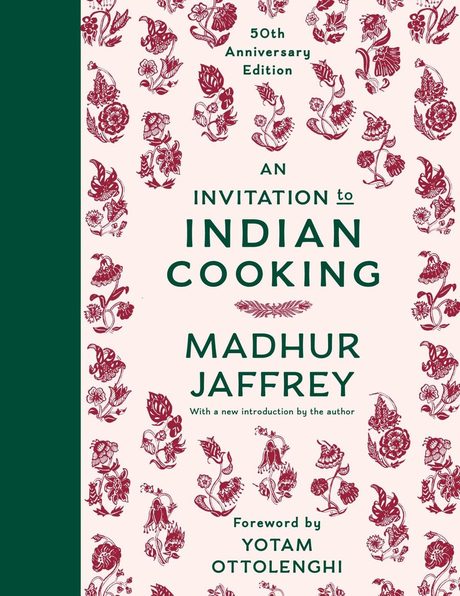
An Invitation to Indian Cooking
Madhur Jaffrey1973about 353 pages
The book that told the West curry powder was not a real thing, and did it with more style than most novels manage.
Jaffrey wrote this for Americans in the early seventies who believed Indian food came out of a single yellow tin. The recipes are careful and slow, but the writing is why it belongs here: the introduction and the notes above each dish are opinionated, funny, occasionally imperious, and full of a young woman explaining her home to readers who had decided in advance that it was exotic. Half a century later the tone still has teeth, and the food knowledge holds up better than the kitchen it assumes.
Why it is at 12
Twelfth because of who it was written for. In an Indian kitchen the instructions can feel slow, since the reader it imagines has never held a whole cumin seed. As a document of how Indian food was explained to the world, and as prose, it earns the place. Read the front matter even if you never cook a page of it.
Read it ifyou care about how Indian food was first explained to the West
Skip it ifyou already cook Indian food daily and want new technique
opinionated, elegant, datedBest for: readers who like food historycookbookclassic1970s
13
Course six: something loud and sweet
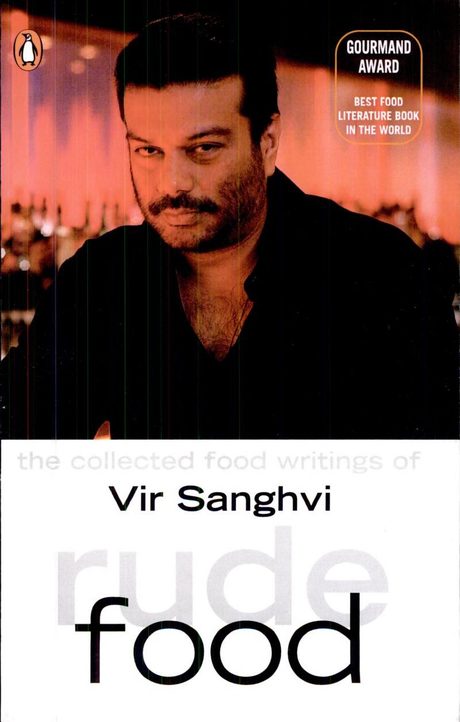
Rude Food: The Collected Food Writings of Vir Sanghvi
Vir Sanghvi2004about 372 pages
Collected columns from India's loudest food critic, best taken ten pages at a time with something fried within reach.
Sanghvi wrote about food for Indian newspapers for years, and this gathers the columns: how five-star hotels invented most of what the country now calls restaurant Indian food, why the chefs you have heard of became famous, what is wrong with the wine list, what is wrong with you for ordering that. He is opinionated to the point of being annoying and he is right often enough that you keep reading. No argument holds the book together, only appetite and confidence.
Why it is at 13
Thirteenth, and it sits here as dessert rather than as scholarship. Nothing else on the list explains restaurant India half as well: the hotel kitchens, the invented classics, the chef culture that followed. Read it after the histories, when you have enough context to spot the places where he is showing off.
Read it ifyou like a strong opinion delivered fast
Skip it ifyou want footnotes and a writer who keeps himself out of it
loud, knowing, entertainingBest for: dipping in and outcolumnsrestaurantsopinion
Worth knowing
Which of these you can actually cook from
Three of the thirteen are true cookbooks: My Bombay Kitchen, 50 Great Curries of India and An Invitation to Indian Cooking. Buy those if you want dinner on the table. Masala Lab sits beside them as a technique manual with recipes attached, and it will improve your cooking faster than any of the three, because it repairs method instead of handing you one more dish.
Two others carry recipes inside a book that is doing something else entirely. The Flavour of Spice attaches them to the reporting, and Climbing the Mango Trees keeps them at the back like family photographs. The remaining seven are pure reading, no kadhai required. If you buy one from each half, make it Masala Lab and Curry, and you will have covered both the how and the why.
Worth knowing
What is missing from this shelf
Nearly everyone here writes in English, lives in a city, and comes from a family with a kitchen worth writing about. That shapes what gets recorded and what does not. The North East barely appears in book form. Dalit food memory, with its own vocabulary of scarcity and of meat, is only now being written down and published. Muslim home cooking outside Hyderabad and Lucknow is thin on the ground, and so is anything serious about what daily-wage labour actually eats.
Thirteen books do not fix that, and I am not going to pretend otherwise. It is worth carrying while you read, because a book that says India ate this way almost always means a particular India, in a particular house, with somebody employed in the kitchen.
People also ask
Questions, answered
Which is the best book on Indian food history?
Curry: A Tale of Cooks and Conquerors by Lizzie Collingham, if you are only reading one. It has the best pace and the strongest argument, that Indian food as we know it was assembled out of trade, conquest and migration rather than handed down intact. For the widest span, go to Colleen Taylor Sen's Feasts and Fasts. For the deepest source, go to K. T. Achaya, whom both of them lean on.
Is Masala Lab worth reading if I already cook well?
Yes, and more so than for a beginner. If you already cook, you carry a hundred rules in your hands that you have never questioned, and Krish Ashok goes through them one at a time. Some turn out to be sound chemistry. Others turn out to be your family being stubborn for three generations. Beginners get a good manual out of it, but experienced cooks get the more interesting book, because they have more to unlearn.
Are there Indian food books that are not cookbooks?
Most of this list. Ten of the thirteen are history, travel writing, reportage or memoir, with no expectation that you own a kadhai. Start with Curry for history, Following Fish for travel, and Climbing the Mango Trees for memoir. Indian food writing has quietly become one of the better nonfiction shelves in Indian publishing, and almost none of it needs you to switch on a stove.
Which Indian food book should I read first?
Curry, unless you cook every day, in which case Masala Lab. Curry changes how you read a menu and gives you the frame that everything else fits into. Masala Lab changes what happens in your kitchen this week. Both are easy reading, both are widely available in India in paperback, and either one will push you towards the second book on this list within a month.
What is a good Indian food book to give as a gift?
Climbing the Mango Trees by Madhur Jaffrey, because it works for readers who cook and readers who never will, and it looks like something you chose rather than grabbed. If the person cooks seriously, My Bombay Kitchen is the better and rarer gift. Do not gift Achaya to anyone who has not asked for it, since it is a reference book and it reads like one.
Is Madhur Jaffrey still useful in an Indian kitchen?
For the writing, absolutely. For the recipes, it depends on you. An Invitation to Indian Cooking was written in 1973 for Americans who needed to be told what a whole spice was, so the instructions can feel slow to anybody who grew up around a tadka. Read the essays and headnotes for the voice, then take your method from Masala Lab or from your own family.
Before you go
What to read tonight
If you want to start tonight, pick by what you did today. Cooked something and it came out flat: read Masala Lab and open it at the chapter on heat. Ate out and paid too much for a dish you could name but not explain: read Curry. Stuck between the two, take Curry, because Masala Lab will still make sense afterwards and the reverse is less true.
Then, once you finish whichever one you picked, go and eat the most ordinary thing near your house, a plate of poha or a dosa or your mother's dal, and see how much of it you can now account for. That is what this shelf gives you: not new food, just the same plate with four hundred years of argument visible inside it.
Keep going
Lists that pair with this one
Nonfiction
15 Best Travel Books About India, Even If You Live Here
Ranked by what each one gives a reader who already knows what a railway platform smells like at four in the morning.
Indian Fiction
16 Best Books to Understand India, Ranked by What They Explain
Sixteen books, ten doors into the same country: history, caste, the mega city, the village, money, and where to start tonight.
Nonfiction
16 Best Books on Indian History for Beginners, in Order
Not a ranking but a route: one or two books per era, from the Indus valley to the news you read this morning.
Mood & Life
20 Books to Gift Anyone, Sorted by Who You Are Buying For
One book per recipient, from the friend who says he never reads to the boss you barely know, with a note on which ones look expensive.