The first Indian graphic novel I bought took me twenty minutes to finish. I felt robbed at that price and shelved it in a sulk. Two years later I opened the same book, spent four minutes on a single page, and realised the problem had been me. These are not fast books that happen to have pictures in them. The pictures are the sentences, and I had been skipping every second sentence.
So this list does one thing that Indian graphic novel roundups usually skip: every entry tells you what the art is like, because the art is the thing you are actually buying. A Pardhan Gond line drawing and a Bombay noir ink wash want completely different behaviour from your eyes. Knowing which one is coming is the difference between finishing a book and abandoning it on page nine.
Ranked one to twelve, my best first, with the reasoning in plain sight. Three well-known titles got cut for a boring practical reason I explain further down. If you only want to buy one and get on with your evening, the quick picks are right below.
How I picked these
- The art had to be doing work that prose could not. If a book would read exactly the same as a novel with the drawings removed, it is an illustrated book and it is not here.
- Every title had to come back from Google Books and Open Library with a real edition and a real cover. That rule cost me Delhi Calm, River of Stories and A Gardener in the Wasteland, three books I rate highly, none of which produced a verifiable cover.
- Indian in the way that matters for this list: made by creators from the subcontinent, or set here, and usually both.
- I allowed two books each from Sarnath Banerjee, Amruta Patil and Ram V, because the form is young enough here that those three people are a sizeable chunk of it.
- No superhero reprints, and no mythology flattened into a school text. Amar Chitra Katha built the audience that made every book on this list possible, which is a different job from being one of them.
The whole list at a glance
All 12 books, in order
| # | Book | Author | Year | Vibe | Best for |
|---|
| 1 | Bhimayana | Durgabai Vyam | 2011 | furious, patient, gorgeous | readers who want form and politics together |
| 2 | Kari | Amruta Patil | 2008 | smoky, queer, sardonic | readers who love voice over plot |
| 3 | Munnu | Malik Sajad | 2015 | heavy, angry, tender | readers ready for a long, hard book |
| 4 | Corridor | Sarnath Banerjee | 2004 | wry, scruffy, urban | Delhi readers and browsers |
| 5 | Adi Parva | Amruta Patil | 2012 | painterly, oral, unhurried | readers who already know the Mahabharata |
| 6 | Sita's Ramayana | Samhita Arni | 2011 | flat colour, folk, calm | first-time graphic novel readers |
| 7 | These Savage Shores | Ram V and Sumit Kumar | 2019 | gothic, colonial, bloody | Marvel and DC readers crossing over |
| 8 | The Barn Owl's Wondrous Capers | Sarnath Banerjee | 2007 | archival, bawdy, chaotic | Calcutta history nerds |
| 9 | Grafity's Wall | Ram V and Anand RK | 2018 | neon, young, restless | readers with one free evening |
| 10 | The People of the Indus | Nikhil Gulati | 2022 | clear, patient, factual | curious readers and students |
| 11 | Legends of Halahala | Appupen | 2013 | silent, mythic, bleak | patient, visual readers |
| 12 | Mumbai Confidential | Saurav Mohapatra and Vivek Shinde | 2013 | noir, brutal, fast | crime fiction readers |
The list
The books, ranked
1
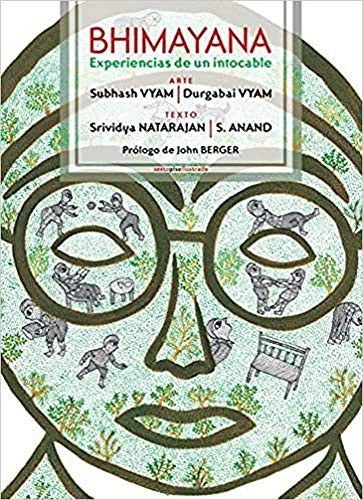
Pardhan Gond painting, almost no rectangular panels
Bhimayana
Durgabai Vyam2011about 104 pages
Ambedkar's life drawn by Gond artists who refused to put human beings inside boxes, and rebuilt the comic page to prove it.
This is Bhimrao Ambedkar's life told through the humiliations he documented himself: being made to sit apart at school, being refused water, being turned away from lodgings. Durgabai Vyam and Subhash Vyam drew it in the Pardhan Gond tradition, with text by Srividya Natarajan and S. Anand for Navayana. They declined to use square panels, so frames take the shape of fish and scorpions and birds, speech leaves people through beaked balloons, and water moves across the page like water. Present-day news reports of caste violence are stitched in beside the historical chapters.
Why it is at 1
First because nothing else here invents its own grammar. Most graphic novels borrow a page structure from American comics or from cinema; this one borrows from a wall painting tradition and comes out with something the form had not seen. It is also the rare political book that argues through its shapes rather than its speeches.
Read it ifyou want a book that changes how you think a page can work
Skip it ifyou need a straight linear biography, because this one loops
furious, patient, gorgeousBest for: readers who want form and politics togethercasteambedkargond artnon-fiction
Heads up: sustained depiction of caste violence and humiliation
Pairs with: Sita's Ramayana, the other book here where a folk art tradition drives the storytelling
2

charcoal and ink monochrome, with colour used like a slap
Kari
Amruta Patil2008about 197 pages
Two women jump together, only one of them leaves the city, and the one who stays narrates Mumbai from underneath it.
Kari lives in a shared flat, works an advertising job she treats with open contempt, and keeps returning in her head to the sewer under the city, which she describes as if she were its boatman. The narration is first person, wry and sharp, closer to a diary written by someone who reads too much than to comic dialogue. Amruta Patil was the first Indian woman to publish a graphic novel, and this was it. The art is mostly grey and black, so the pages where colour arrives hit like a change in weather.
Why it is at 2
Second because it has the best voice of any book on this list. Bhimayana wins on form, but Kari wins on sentences, and it does something rarer: it lets a queer woman be the ordinary centre of a city story rather than its subject or its lesson. Nearly twenty years on, no Indian graphic novel narrator has been better company.
Read it ifyou want a first-person voice you would follow anywhere
Skip it ifyou need a plot with a clear shape, because this drifts on purpose
smoky, queer, sardonicBest for: readers who love voice over plotmumbaiqueerliterary
Heads up: opens with a suicide attempt and returns to it
3
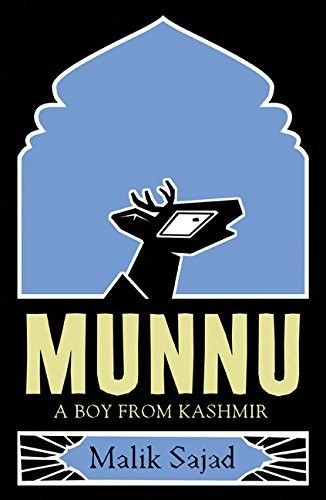
dense black woodcut-style ink, every page crowded
Munnu
Malik Sajad2015
A boy grows up in 1990s Srinagar, and every Kashmiri in the book is drawn as a hangul, the stag that is nearly extinct.
Munnu is the youngest in a Srinagar family, more interested in drawing than in school, and he grows into a newspaper cartoonist while the 1990s happen around him. Crackdowns, curfews, identity parades and disappearances are handled the way weather is handled in other childhood books, as the conditions rather than the subject. Malik Sajad's single formal decision carries enormous weight: Kashmiris appear as hangul deer, a protected and dwindling species, while everyone else is drawn as human. The ink is heavy, scratched, almost carved, and it never lets the page feel light.
Why it is at 3
Third because it is the most ambitious book here and the most exhausting, in a way it fully intends. It sits below Kari only because the last third loses some grip as the adult Sajad takes over from the boy. As a childhood memoir it is one of the best India has produced in any form.
Read it ifyou want the inside of a Kashmiri childhood rather than an argument about Kashmir
Skip it ifyou want a short read, because this is over three hundred crowded pages
heavy, angry, tenderBest for: readers ready for a long, hard bookkashmirmemoirpolitical
Heads up: military violence, torture, disappearance of civilians
4
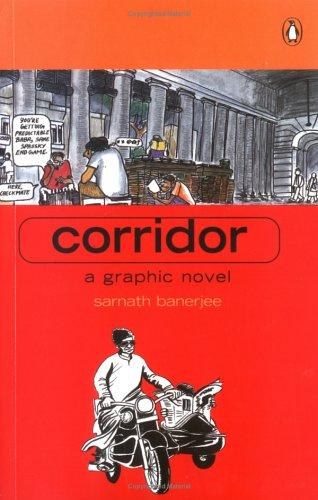
loose scratchy pen, photo collage, handwritten asides
Corridor
Sarnath Banerjee2004about 116 pages
The book usually called India's first graphic novel, and still the funniest thing set in Connaught Place.
Jehangir Rangoonwalla sells second-hand books in Connaught Place and dispenses advice to a rotating cast of men who wander in with their problems. A collector chases objects he does not need. A newly married man worries about his performance. A perpetual student in a Calcutta room theorises about everything and finishes nothing. There is no single plot, just a corridor of lives that keep brushing past each other. Sarnath Banerjee draws in a loose, deliberately unpretty line and drops in photographs, footnotes and asides whenever it suits him.
Why it is at 4
Fourth on merit and first in importance. Published in 2004, it is the book that showed Indian publishers there was a form here at all, and it holds up because it is genuinely funny about a very specific male loneliness. It ranks below the top three because it is a sketchbook of moods rather than a finished thing, which is also exactly why people love it.
Read it ifyou like wandering, digressive books about city drifters
Skip it ifyou want a story that goes somewhere and lands
wry, scruffy, urbanBest for: Delhi readers and browsersdelhicalcuttacomedyclassic
Pairs with: The Barn Owl's Wondrous Capers, the same author going bigger and stranger
5
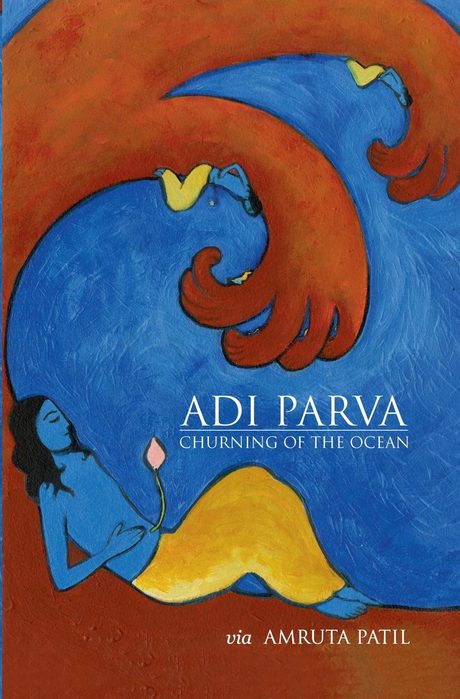
painted gouache and collage in full colour, no panel borders
Adi Parva
Amruta Patil2012about 276 pages
Ganga sits by a river and tells the beginning of the Mahabharata to whoever will listen, in painted pages you can hang on a wall.
The frame is a riverbank at night, where Ganga narrates the origin stories that sit before the Mahabharata everyone thinks they know: the churning of the ocean, the coming of the Kuru line, the snake sacrifice. Amruta Patil paints rather than draws, so most pages have no borders at all and read as single images with text laid into them. It is closer to sitting through an oral telling than to reading a comic, and the pace is slow by design. Sauptik continues the same telling if this one works on you.
Why it is at 5
Fifth because it is the most beautiful book on this list by a distance, and the least urgent. Pages you would frame sit next to stretches where the storytelling goes flat and the images have to carry everything. If you already know the Mahabharata roughly, this is a gift. If you do not, start elsewhere and come back.
Read it ifyou want mythology told slowly and painted seriously
Skip it ifyou need forward momentum, because this deliberately has none
painterly, oral, unhurriedBest for: readers who already know the Mahabharatamythologymahabharatapainting
Pairs with: Sauptik: Blood and Flowers, the second half of the same telling
6
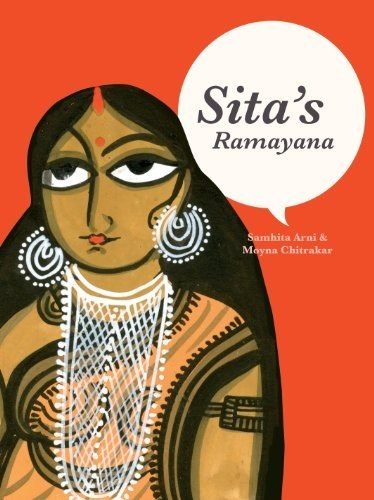
Patua scroll painting by Moyna Chitrakar, flat and bold
Sita's Ramayana
Samhita Arni2011
The Ramayana told from Sita's side, painted first as a Bengali scroll and written to afterwards.
The order of making matters here. Moyna Chitrakar, a Patua scroll painter from Bengal, painted the whole narrative in the tradition she was raised in, and Samhita Arni then wrote Sita's account to fit the images. So the words follow the pictures rather than the other way round, which almost never happens in comics. Sita narrates from the forest and from Lanka, and the war looks different when the person telling you about it is not the one holding a bow. Tara Books published it, and the flat, unshaded Patua colour is unlike anything else here.
Why it is at 6
Sixth on the ranking and first on my list of doorways. You already know the plot, so nothing competes for your attention with the art, and the art is doing something a Marvel reader has never seen. I rank it here rather than higher because the text stays fairly plain, and the retelling raises its points without pushing them very hard.
Read it ifyou have never read a graphic novel and want a soft landing
Skip it ifyou find retellings from the woman's side predictable by now
flat colour, folk, calmBest for: first-time graphic novel readersmythologyramayanafolk art
Pairs with: Bhimayana, the other book here built out of a living folk tradition
7
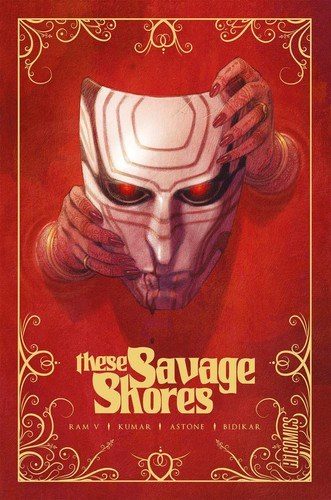
watercolour-washed period ink, cinematic and moody
These Savage Shores
Ram V and Sumit Kumar2019
London ships a vampire out east in 1766, and the Malabar coast turns out to have older monsters and better manners.
An English creature with an inconvenient appetite is put on a boat and sent to the Company's territories, where he meets something that has been feeding on this coast far longer than his kind has existed in Europe. Around that collision Ram V builds a story about empire, trade and who gets called a monster, with letters and journals threading through the panels. It ran as single issues before Vault collected it in 2019. Sumit Kumar's art is loose, wet and atmospheric, and the colour keeps the Indian sequences warm while the English ones stay drained and grey.
Why it is at 7
Seventh because it is the most straightforwardly entertaining book here, and the one I hand to friends who read Western comics and think Indian ones will be homework. The metaphor is not subtle, and it does not need to be. It sits mid-table only because the top six are doing rarer things with the form.
Read it ifyou want genre pleasure with a real historical spine
Skip it ifcolonial-vampire allegory sounds too neat for you
gothic, colonial, bloodyBest for: Marvel and DC readers crossing overhorrorhistoricalcolonialism
Heads up: graphic violence throughout
8

etched ink, archive prints, footnotes and diagrams
The Barn Owl's Wondrous Capers
Sarnath Banerjee2007about 284 pages
Eighteenth century Calcutta braided with a present-day hunt for a lost book, plus the Wandering Jew turning up uninvited.
Two timelines run at once. In one, a modern Calcutta man goes looking for a missing volume with the obsessiveness of a person avoiding his own life. In the other, Company-era Calcutta unfolds with its printers, brothels, quacks and Europeans on the make. Sarnath Banerjee cuts old engravings into his own ink work, hangs footnotes off the panels, and lets the myth of the Wandering Jew wander through the whole thing. It is his most ambitious book and his least disciplined, which are related facts.
Why it is at 8
Eighth because it aims higher than Corridor and lands less often. When the historical Calcutta sections work they are the best pages Banerjee has drawn, and when the book gets lost in its own footnotes you can feel the air go out. Read Corridor first, then this, and the second one will make more sense.
Read it ifyou liked Corridor and want the bigger, weirder follow-up
Skip it ifdigressions and footnotes make you impatient
archival, bawdy, chaoticBest for: Calcutta history nerdscalcuttahistoricalcomedy
Heads up: explicit sexual content
9
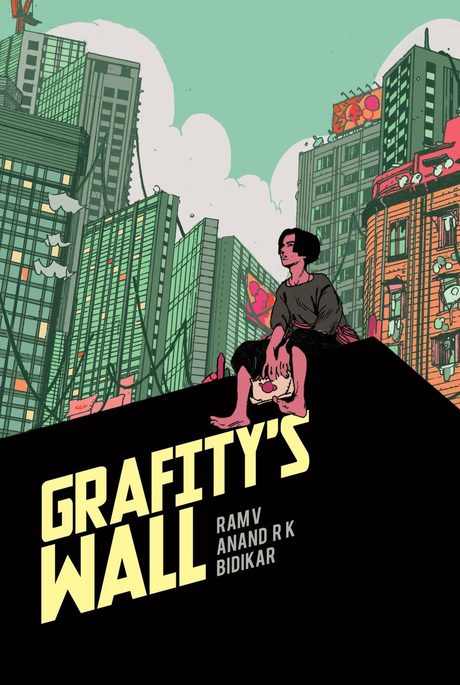
neon brush and marker, colour turned all the way up
Grafity's Wall
Ram V and Anand RK2018about 74 pages
Four young people in Mumbai orbit one wall, and the wall gets painted while their lives refuse to resolve.
A graffiti writer paints a wall in a Mumbai suburb, and the book uses that wall as the point where four lives keep crossing: the artist, a poet, a girl chasing work as an actor, and a boy whose neighbourhood is pulling him toward something worse. Nobody gets rescued, nobody gets discovered, and the ending is honest about how these stories usually go. It is around seventy pages, so it fits in one sitting, and Anand RK's colour work makes the city look the way it looks at eight in the evening.
Why it is at 9
Ninth because it does one thing beautifully and does not overreach. It is the best single-evening read here, and the truest to how ambition actually feels at twenty-two in an Indian city, which is to say mostly like waiting. It ranks below These Savage Shores because it is slighter, and it knows it.
Read it ifyou want something short, modern and set in a city you recognise
Skip it ifyou want a complete arc rather than four open endings
neon, young, restlessBest for: readers with one free eveningmumbaishortcontemporary
10

clean diagrammatic line art, maps and cutaways
The People of the Indus
Nikhil Gulati2022about 191 pages
Everything we actually know about the Indus Valley, drawn clearly enough that you will finally remember it.
Nikhil Gulati worked with the archaeologist Jonathan Mark Kenoyer to build a comic about the Indus civilisation that stays inside the evidence. You get city drainage, seals, trade routes, what the script does and does not tell us, and a running honesty about which parts are guesses. The drawing is plain and diagrammatic rather than showy, which is the right call, because the job here is to make you see a drain system and a bead workshop and understand why both matter. It is also careful about the political fights that surround this material.
Why it is at 10
Tenth because it is the only non-fiction pick and it earns its place on usefulness rather than beauty. Nothing else on this list will teach you more per page. It ranks here because the art serves the information rather than doing anything the information could not, which is the correct choice for the book and a limitation on this particular list.
Read it ifyou want the Indus Valley to finally stick in your head
Skip it ifyou are here for story and art, not for history
clear, patient, factualBest for: curious readers and studentsnon-fictionhistoryindus valley
11

silent black and white, no dialogue anywhere
Legends of Halahala
Appupen2013about 146 pages
Five wordless stories from an invented world, which means you either surrender to the pictures or you bounce off entirely.
Appupen has spent his career building Halahala, a world with its own gods, corporations and ruins, and this book gives you five of its stories with no dialogue at all. Some are love stories, some are about power eating its own people, and all of them ask you to read visual clues the way you would read sentences. The line work is dense and black and owes something to both temple carving and underground European comics. Nothing is explained, which is either the appeal or the problem depending on your patience.
Why it is at 11
Eleventh because it is the hardest sell here and still belongs on any honest list. A silent book asks more of a new reader than anything else on this page, and plenty of people put it down confused. But Appupen is the closest thing Indian comics has to a genuine world-builder, and this is the cleanest way into what he is doing.
Read it ifyou are willing to read pictures with no words to help you
Skip it ifyou want to be told what is happening
silent, mythic, bleakBest for: patient, visual readerswordlessfantasyworld-building
12
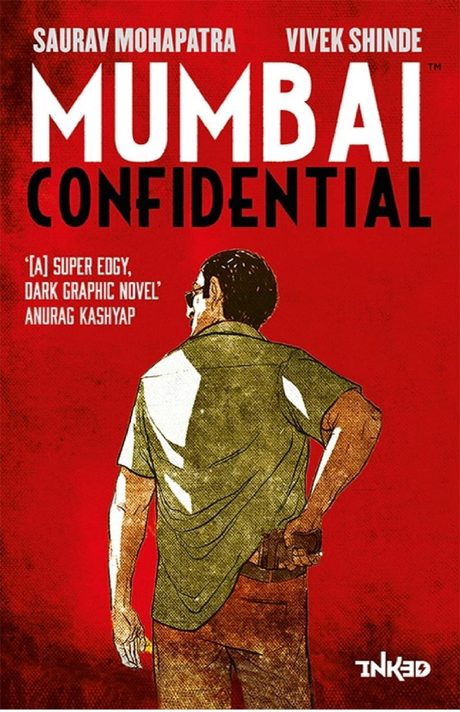
hard-shadow noir ink, heavy blacks
Mumbai Confidential
Saurav Mohapatra and Vivek Shinde2013about 146 pages
A wrecked ex-encounter cop gets dragged back into the case that ruined him, in the most straightforwardly pulpy book here.
Arjun Kadam used to be a rising name in the Mumbai Encounter Squad, the unit that carried out extrajudicial killings with official approval. Five years on he is an addict with nothing left, and the book pulls him back into that world for one more round. Saurav Mohapatra writes it as proper noir, with the moral rot spread evenly across the police, the press and the gangs, and Vivek Shinde draws it in slabs of black that make Mumbai look permanently three in the morning. Archaia published the first book in 2013.
Why it is at 12
Twelfth because it is the least ambitious book on this list and one of the most enjoyable. It is genre fiction done properly, using a real and ugly piece of Mumbai policing rather than an imported American plot. It sits last because everything above it is trying something the form had not done before, and this one is trying to be a very good crime comic.
Read it ifyou like hard-boiled crime and Mumbai after dark
Skip it ifyou want moral complexity rather than moral rot
noir, brutal, fastBest for: crime fiction readerscrimenoirmumbai
Heads up: drug addiction, police violence
Worth knowing
How to actually read one of these
The single biggest reason people give up on graphic novels is that they read only the words. Your eye has been trained by twenty years of prose to hunt for text, so it lands on the speech balloon, takes the information, and jumps to the next balloon. Two hundred pages of art go past unread and the book feels thin, which is when people decide the form is not for them.
Try this instead on the first ten pages of whichever one you buy. Read the page as a whole image before you read a single word on it. Notice the shape of the panels, where the gutters are wide and where they vanish, which panel is bigger than the rest and why. Then read the words. You will be slower and the book will be roughly three times longer, in the good sense.
This matters more for Indian graphic novels than for Western ones, because so many of the books here are built on painting traditions rather than on the American panel grid. Bhimayana and Sita's Ramayana are close to unreadable if you treat them as text with decoration, and close to unforgettable if you do not.
Worth knowing
Three books that should be on this list and are not
Delhi Calm by Vishwajyoti Ghosh, River of Stories by Orijit Sen and A Gardener in the Wasteland by Srividya Natarajan and Aparajita Ninan all belong in any serious account of Indian comics. River of Stories from 1994 is usually named as the first Indian graphic novel, ahead of Corridor, depending on who is arguing.
They are missing for a dull reason. Every book on this list had to come back from Google Books and Open Library with a verifiable edition and a real cover image, and those three did not, mostly because small-press Indian comics are catalogued badly. Rather than put up a book with a blank rectangle where the cover should be, or guess at an edition, I left them out and am telling you here. Look for all three in a good bookshop, especially River of Stories.
People also ask
Questions, answered
What was the first Indian graphic novel?
Corridor by Sarnath Banerjee, published by Penguin in 2004, usually gets the title, and it is the answer you will see most often. The honest version is messier. Orijit Sen's River of Stories came out in 1994, a full decade earlier, and has a strong claim that gets overlooked because it was small-press and hard to find. Corridor was the first one a big publisher put weight behind, which is a different achievement.
Which Indian graphic novel should I read first?
Sita's Ramayana, ranked sixth here, is the softest landing. You already know the story, so nothing competes with the Patua scroll art for your attention, and it is short. If you read Western comics already, start with These Savage Shores instead, because the genre machinery will feel familiar while everything around it will not. Save Bhimayana and Munnu for your third or fourth book.
Are Amar Chitra Katha comics graphic novels?
Not really, and that is not an insult. Amar Chitra Katha titles are short illustrated retellings aimed at children, usually adapting an existing story with a house art style. A graphic novel is a longer, single, authored work where the art carries meaning the words do not. Most people on this list grew up reading Amar Chitra Katha, and it built the readership that made their books possible.
Are Indian graphic novels suitable for children?
Mostly not. Kari opens with a suicide attempt, The Barn Owl's Wondrous Capers is explicitly sexual, Munnu and Mumbai Confidential are violent, and Bhimayana depicts caste humiliation in detail. Sita's Ramayana and The People of the Indus are the two here I would hand to a twelve-year-old without a conversation first. Check the content notes on each entry above, because I have flagged the ones that need flagging.
Why are Indian graphic novels so expensive?
Print costs. Colour pages, heavier paper and large formats cost several times what a paperback novel costs to produce, and the print runs are small because the readership is small, so the per-copy cost stays high. That is also why so many go out of print quickly. If a title on this list is available, buying it now is safer than bookmarking it, and libraries in the bigger cities stock more of these than people expect.
Are there good Indian graphic novels by women?
Yes, and two of the best are on this list. Amruta Patil was the first Indian woman to publish a graphic novel with Kari in 2008 and has since done the painted Parva books. Moyna Chitrakar painted the whole of Sita's Ramayana as a scroll before Samhita Arni wrote the text to it. Beyond this list, the Zubaan anthologies of women cartoonists are worth hunting down.
Before you go
What to read tonight
If you buy one book tonight and you have never done this before, buy Sita's Ramayana and read the first ten pages twice, once for the art and once for the words. If you have read comics all your life and want proof this country did something new with them, buy Bhimayana and look at how the panels are shaped before you read a single line.
After that the list branches. Corridor and The Barn Owl's Wondrous Capers go together as one writer growing more ambitious. Adi Parva leads straight into Sauptik. Kari and Munnu are the two that will stay with you longest and are also the two most likely to wreck a Sunday, so space them out. And if you find a copy of River of Stories in a second-hand shop in Delhi, buy it without thinking, because most people never see one.
Keep going
Lists that pair with this one
Genre
15 Best Graphic Novels for Beginners, Arranged as a Ladder
Ranked by how easy each one is to start with, not by greatness, so you do not quit on page forty of Watchmen like I did.
Indian Fiction
The 20 Best Indian Books in Translation, Ranked by Where to Start
Twenty books from ten Indian languages, ordered from the easiest way in to the one that will fight you, with the translator named every time.
Indian Fiction
18 Best Indian Mythology Fiction Books, Faithful to Wild
Ranked on one dial: how far each book strays from the epic it is built on, with an honest note on which are page-turners and which are literature.
Indian Fiction
16 Best Books to Understand India, Ranked by What They Explain
Sixteen books, ten doors into the same country: history, caste, the mega city, the village, money, and where to start tonight.
Indian Fiction
14 Best Partition Novels and Books, Ranked by Where to Start
Fiction and first-hand testimony from both sides of the 1947 line, ordered so you begin with the one you can actually finish.