My nani could tell the Mahabharata for two hours without repeating herself, and she always stopped at the same place: Draupadi in the sabha, the dice already thrown. She never said why she stopped there. I worked it out only after reading three grown-up versions of that scene and noticing that every writer stops there too, because that is where the story quits being about gods and starts being about a room full of powerful men who did nothing.
Indian mythology fiction is a full industry now, and the range inside it is wider than the shelf label suggests. At one end are books that follow the epic line by line and simply tell it in clean modern English. At the other end a king drinks a potion and becomes pregnant, Ravana narrates his own defeat, and Shiva turns up in a spotless engineered kingdom as an immigrant tribal chief. Both ends are legitimate. Mixing them up is how people end up disappointed by a perfectly good book.
So this list is not ranked best to worst. It runs on one dial: distance from the source. Number one is the entire epic rendered in plain English with nothing invented. Number eighteen is not a retelling at all, it is a murder investigation that treats Krishna as a treasure map. Every entry carries a distance mark out of five and a note on whether it is a page-turner or literature, since those are two different evenings.
Quick picks are below if you have ten seconds and a chai going cold.
How I picked these
- Fiction first: retellings, novels and one graphic novel. Scholarly studies and devotional commentaries got cut, even the good ones, because this list is for people who want a story.
- Every book verified through Google Books and Open Library with a real cover and a real edition, so nothing here is a ghost listing on a shopping site.
- Both epics plus the Puranic material, and both registers: books written to be admired and books written to be finished on a train.
- A repeat author had to earn the second slot with a genuinely different book. That is why Amish gets the Shiva opener and not the Ram Chandra series, which runs the same engine at a lower temperature, and why Kavita Kane gets one epic novel and one Puranic one.
- Where a book is dated to its original Indian language, I say so in the entry instead of pretending the English edition came first.
The whole list at a glance
All 18 books, in order
| # | Book | Author | Year | Vibe | Best for |
|---|
| 1 | The Mahabharata: A Modern Rendering | Ramesh Menon | 2004 | vast, steady, faithful | readers who want the full text |
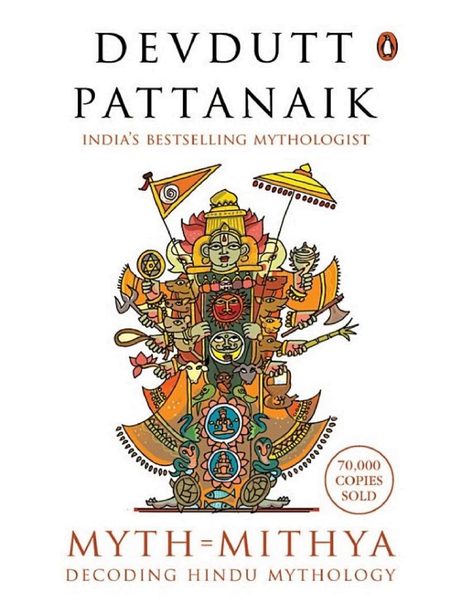
| 2 | Jaya: An Illustrated Retelling of the Mahabharata | Devdutt Pattanaik | 2010 | calm, curious, unhurried | first-timers and re-readers |
| 3 | Sita: An Illustrated Retelling of the Ramayana | Devdutt Pattanaik | 2013 | patient, plural, quietly radical | readers who like footnotes |
| 4 | The Serpent's Revenge: Unusual Tales from the Mahabharata | Sudha Murty | 2016 | warm, simple, brisk | beginners and family reading |
| 5 | Bhima: Lone Warrior | M. T. Vasudevan Nair | 1984 | bleak, muscular, unsentimental | readers who want real literature |
| 6 | Yajnaseni: The Story of Draupadi | Pratibha Ray | 1984 | solemn, interior, devout | readers who liked Palace |
| 7 | The Palace of Illusions | Chitra Banerjee Divakaruni | 2008 | intimate, angry, quick | the first novel to try |
| 8 | The Forest of Enchantments | Chitra Banerjee Divakaruni | 2019 | warm, wounded, argumentative | Palace of Illusions fans |
| 9 | Karna's Wife: The Outcast's Queen | Kavita Kane | 2013 | romantic, argumentative, quick | Karna sympathisers |
| 10 | Menaka's Choice | Kavita Kane | 2015 | courtly, romantic, quick | readers done with the epics |
| 11 | Prince of Ayodhya | Ashok K. Banker | 2003 | cinematic, dark, sprawling | epic fantasy readers |
| 12 | Adi Parva: Churning of the Ocean | Amruta Patil | 2012 | painterly, oral, digressive | one evening, one sitting |
| 13 | The Pregnant King | Devdutt Pattanaik | 2008 | strange, tender, philosophical | readers who like ideas |
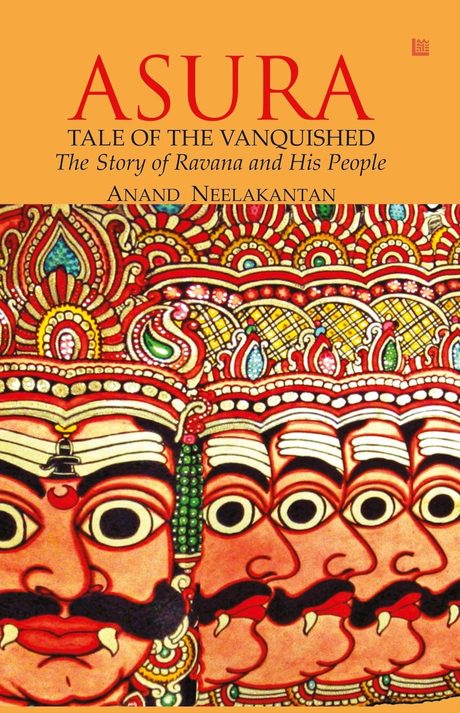
| 14 | Asura: Tale of the Vanquished | Anand Neelakantan | 2012 | bitter, loud, contrarian | readers who like arguments |
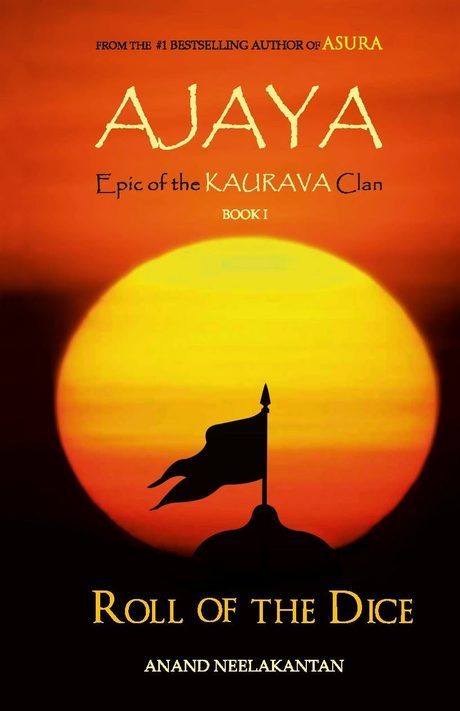
| 15 | Ajaya: Roll of the Dice | Anand Neelakantan | 2013 | political, angry, plotted | Kaurava sympathisers |
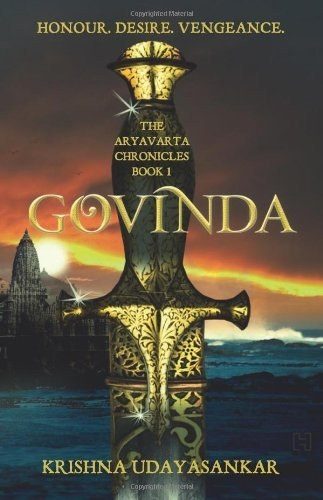
| 16 | Govinda | Krishna Udayasankar | 2012 | strategic, cool, dense | political fantasy readers |
| 17 | The Immortals of Meluha | Amish Tripathi | 2010 | fast, plotty, plain | long train journeys |
| 18 | The Krishna Key | Ashwin Sanghi | 2012 | pulpy, researched, restless | thriller readers |
The list
The books, ranked
1
Distance 1/5, the whole text
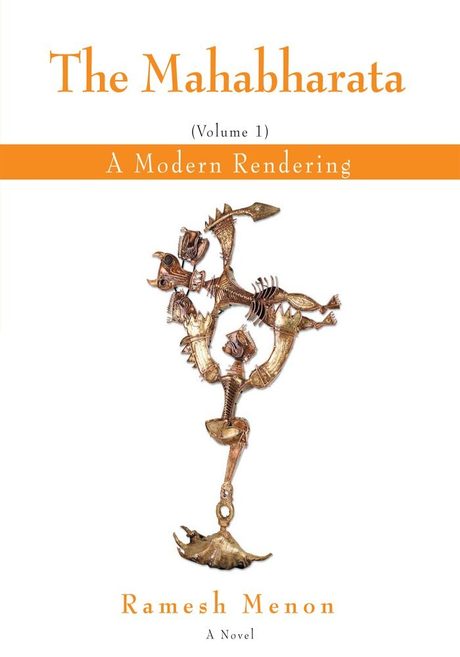
The Mahabharata: A Modern Rendering
Ramesh Menon2004about 734 pages
The entire Mahabharata in plain modern English prose, across two thick volumes, with nothing invented and very little left out.
Menon took the full epic and wrote it out as continuous English prose, keeping the order of events, the digressions, the genealogies and the long sermons that shorter retellings quietly drop. It is not a scholarly translation and he does not pretend otherwise. It is a rendering: the story told at full length by somebody who wants you to have the whole shape of it without a critical apparatus in the way. Reading it takes weeks. What you have at the end is the thing every other book on this list is arguing with, sitting in your own head in your own words.
Why it is at 1
Rank one because nothing here stays closer to the source. Menon adds no interior monologue, no modern politics and no invented characters, which makes him the baseline the rest of the dial is measured against. He is also the biggest ask on the list, two volumes and well over a thousand pages. If that sounds like homework, start at rank two and come back to this in a year.
Read it ifyou want the whole epic, uncut, in readable English
Skip it ifyour reading time is short, because this is a two volume commitment
vast, steady, faithfulBest for: readers who want the full textmahabharatafull renderingprose epic
Pairs with: Jaya, if you want the map before the marathon
2
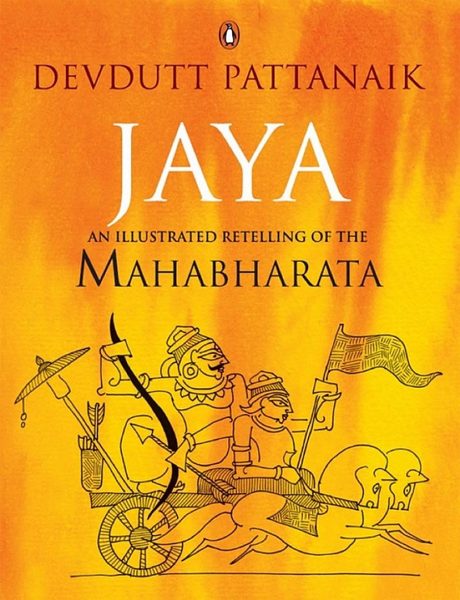
Distance 1/5, easy read
Jaya: An Illustrated Retelling of the Mahabharata
Devdutt Pattanaik2010about 447 pages
The whole Mahabharata in 108 short chapters, with the regional versions in the margins, told by a man who refuses to pick a side.
Pattanaik walks the Mahabharata from the ancestors to the last rites in 108 short pieces, each one short enough to finish on a bus ride. What separates it from a school summary is the margins. At the end of most chapters he notes how a Tamil version, a Javanese version or a village telling handles the same event differently, and lets the contradictions stand. His line drawings are close to stick figures and they help far more than you would expect. He never tells you who was right. He keeps showing you that the question is younger than the story.
Why it is at 2
Second because Pattanaik adds interpretation, not incident, so you finish with the plot intact and your assumptions loosened. It sits under Menon only on completeness, since this is the epic condensed and a lot of the strangeness lives in what gets condensed. Read it before the books that argue with the epic, because Asura and Ajaya are twice as much fun when you already know exactly what they are pushing against.
Read it ifyou want the full story before anyone starts arguing with it
Skip it ifyou want scenes and dialogue, because this reads like a very good guide
calm, curious, unhurriedBest for: first-timers and re-readersmahabharataretellingillustrated
Pairs with: The Palace of Illusions, once you have the map and want a voice
3

Distance 1/5, easy read
Sita: An Illustrated Retelling of the Ramayana
Devdutt Pattanaik2013about 343 pages
The Ramayana handled the same patient way, with the regional versions Valmiki never wrote and most of us never heard.
The companion to Jaya, this time for the Ramayana, again in short chapters with drawings and marginal notes. The notes are the real gift, because the Ramayana carries more variants than almost any story on earth. Sita born from the earth in one telling, Sita as Ravana's own daughter in a Jain version, Hanuman remembered as a scholar in one region and a wrestler in another. Pattanaik sets them side by side without ranking them or apologising for them. The book is calm, sometimes to a fault, and it assumes you are an adult who can hold two contradictory versions at once.
Why it is at 3
Third for the same reason as Jaya: it stays inside the tradition and adds context rather than invention. It sits a notch lower only because the Mahabharata gives a reteller more to work with, and because a few stretches here read like a reference book. It is still the best single map of the Ramayana in English.
Read it ifyou know the Ramayana from television and want the older, stranger versions
Skip it ifyou already read Jaya and now want a story rather than another survey
patient, plural, quietly radicalBest for: readers who like footnotesramayanaretellingfolk versions
4
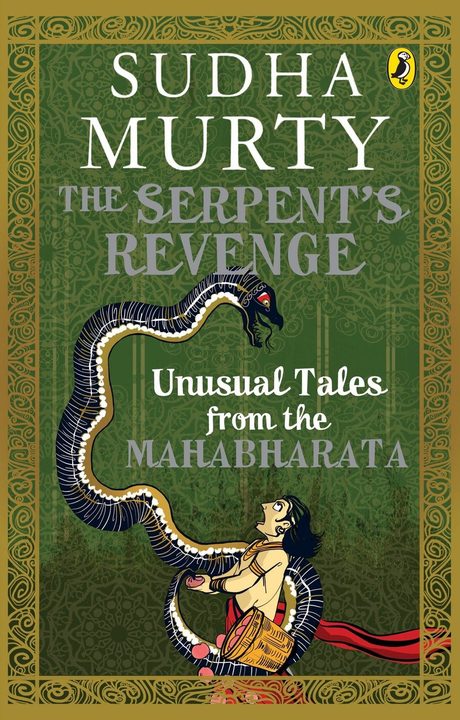
Distance 1/5, easiest on the list
The Serpent's Revenge: Unusual Tales from the Mahabharata
Sudha Murty2016about 187 pages
The Mahabharata's forgotten side stories, told the way a grandmother tells them, about twenty minutes each.
Murty collects the tales that fall out of every shortened Mahabharata: the curses that pay off decades later, the vows that quietly wreck a family, the minor figures whose single decision bends the war. Each piece runs a few pages and stands alone, so you can read one before bed without losing a thread. The language is plain enough for a twelve year old and the material is strange enough for an adult, which is the trick her books keep pulling off. Nobody is being defended and no case is being made. Someone is simply telling you what happened, and clearly enjoying it.
Why it is at 4
Fourth because it stays faithful and adds nothing except selection. It is also the easiest book here by a wide margin, which makes it the one to hand a cousin who says reading is boring. The cost is depth, since these are tales rather than a novel, so nobody stays with you the way Draupadi does in the books just below.
Read it ifyou want the epic in small pieces, or you are reading with a child
Skip it ifyou want psychology, because this is storytelling and not character study
warm, simple, briskBest for: beginners and family readingmahabharatashort taleseasy
5
Distance 2/5, literature
Bhima: Lone Warrior
M. T. Vasudevan Nairtranslated by Gita Krishnankutty1984about 323 pages
The Mahabharata told by the brother nobody consults, in the coldest and best prose on this list.
MT wrote this in Malayalam in 1984 as Randamoozham, which means the second turn, and Gita Krishnankutty's English translation arrived decades later. There is no magic in it and no divine hand. Bhima is a large, useful man sent ahead into every danger, handed every unpleasant job, and thanked by nobody, including his mother and his wife. The events are the ones you already know. What changes is the temperature. Seen from his side, the great war looks like a family spending its strongest son over eighteen days. The final pages are among the saddest in Indian fiction.
Why it is at 5
Fifth because the plot is untouched and only the vantage point moves, which keeps it near the faithful end of the dial. On quality alone it belongs at the top of the list. Read it back to back with Yajnaseni and you get the whole war from the two people who paid the most and were asked the least.
Read it ifyou want literature rather than fantasy and can take a bleak narrator
Skip it ifyou read mythology for gods, weapons and spectacle, because MT strips all of it out
bleak, muscular, unsentimentalBest for: readers who want real literaturemahabharatamalayalamtranslationliterary
Pairs with: Yajnaseni, the same war from Draupadi's side
6
Distance 2/5, literature
Yajnaseni: The Story of Draupadi
Pratibha Raytranslated by Pradip Bhattacharya1984about 474 pages
Draupadi tells her own life to Krishna, and the tone is closer to a confession than a defence.
Ray's Draupadi is not a firebrand queen. She is a woman married into a household of five brothers because of a sentence her mother in law said without looking up, and she spends the rest of her life managing everybody's dignity, including her own. The novel keeps the epic's events exactly as they are and fills the silences: what she thought while the dice were rolling, what she carried about Karna, what duty cost her on ordinary days when nothing was happening. Ray wrote it in Odia in 1984 and most readers meet it in Pradip Bhattacharya's English translation.
Why it is at 6
Sixth because it invents feeling and never facts. Divakaruni later took the same idea and made it faster and more romantic, which is why The Palace of Illusions is the famous one. Ray's version is harder work and far more devout, and it is the better book if you want a Draupadi who is not a modern woman in period costume.
Read it ifyou want the epic's own moral world rather than a contemporary one imposed on it
Skip it ifdevotional framing tires you, because this novel accepts dharma as real
solemn, interior, devoutBest for: readers who liked Palacemahabharatadraupadiodiatranslation
7

Distance 2/5, page-turner
The Palace of Illusions
Chitra Banerjee Divakaruni2008about 388 pages
Panchaali's version of the Mahabharata: fast, angry, and honest about the man she was not supposed to want.
Divakaruni hands Draupadi a first person voice that sounds like a woman telling you her story at two in the morning. Born out of fire, married to five men by an accident of phrasing, mistress of a palace built by an architect of illusions, and carrying a private ache for Karna, the one man she could not have. Then the war arrives, the palace burns, and none of it goes the way anybody promised. It is the most readable book on this list, and the one most likely to make somebody who reads two books a year finish a third.
Why it is at 7
Seventh because the inner life is invented while the events are not, which keeps it close to the source. This is the entry point of the whole genre and I have watched it convert several sceptics. The Karna thread is where purists get annoyed, since the epic offers no evidence for it, but the novel is upfront about being a reading rather than a record.
Read it ifyou want one strong voice, big feelings, and pages that turn themselves
Skip it ifyou want the epic's morality left alone, because this narrator judges it
intimate, angry, quickBest for: the first novel to trymahabharatadraupadifeminist retelling
8

Distance 2/5, page-turner
The Forest of Enchantments
Chitra Banerjee Divakaruni2019about 352 pages
The Ramayana as Sita would have written it, right up to the part where she stops explaining herself.
Divakaruni does for the Ramayana what she did for the Mahabharata, and lets Sita call her version the Sitayan. Childhood in Mithila, the marriage, the forest years that turn out to be the happiest stretch of her life, the abduction, and then the long humiliating aftermath in which a rescued woman is asked to prove herself twice. The strongest sections are the quiet ones in exile, where two people are simply married, poor and content. The last act is where the novel hardens, and it does not let Ram off the hook.
Why it is at 8
Eighth, one notch past Palace, because it argues more openly with its source and spends real time on women the Ramayana barely names. It is also the weaker novel of the two: the middle sags and the prose sometimes explains what a scene has already shown. Read it if Palace worked on you, and skip it if Palace did not.
Read it ifyou liked The Palace of Illusions and want the Ramayana given the same treatment
Skip it ifyou want a tight novel, because this one runs long through the middle
warm, wounded, argumentativeBest for: Palace of Illusions fansramayanasitafeminist retelling
9
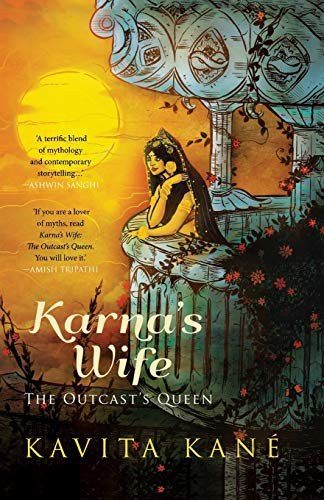
Distance 3/5, page-turner
Karna's Wife: The Outcast's Queen
Kavita Kane2013about 320 pages
A princess picks the charioteer's son at her own swayamvar, then spends the epic watching him choose the wrong friend.
Uruvi is a Kshatriya princess who selects Karna in front of a hall that fully expected her to pick Arjuna, and the marriage she wins comes with a seat at the worst table in the epic. She becomes his second wife, fights with him about Duryodhana, tries to pull him out of a friendship that is going to get him killed, and fails. Kane writes clean, quick, slightly soapy chapters. The pleasure sits in the arguments: two intelligent people, married, standing on opposite sides of a single loyalty, neither able to move the other an inch.
Why it is at 9
Ninth because Uruvi herself is largely an invention, which pushes the book a step further from the source than the Draupadi and Sita novels above it. Kane opened an entire shelf with this one and most of the imitators are worse. Take it as the readable middle of the genre rather than as literature and it delivers exactly what it promises.
Read it ifyou have always felt for Karna and want a domestic angle on the war
Skip it ifyou want restraint, because the emotional volume here stays high throughout
romantic, argumentative, quickBest for: Karna sympathisersmahabharatakarnainvented character
10

Distance 3/5, page-turner
Menaka's Choice
Kavita Kane2015about 435 pages
The apsara sent down to wreck a sage's penance turns out to have opinions about being used as a weapon.
Menaka is the celestial dancer Indra keeps sending to earth whenever a mortal's penance starts threatening the gods, and Vishwamitra is the sage she is ordered to interrupt. Kane takes a story the Puranas cover in a paragraph and builds a court around it: a heaven that treats beauty as foreign policy, an apsara who resents the assignment, and a woman who falls for the man she was sent to ruin and then has to give up the child. The prose is plain and the pace is quick. What carries it is that Kane's Menaka argues, calculates and refuses.
Why it is at 10
Tenth because it invents a full interior life and a working political heaven for a figure the texts barely stage, which takes it a step past the Draupadi and Sita novels above. It is here mainly to widen the list. Almost everything else comes from the two epics, and the Puranic material is where the genuinely strange stories live. Weaker than Karna's Wife on plot, better on argument.
Read it ifyou want mythology beyond the two epics, with a heroine who talks back
Skip it ifyou came for the Mahabharata or the Ramayana, because this sits outside both
courtly, romantic, quickBest for: readers done with the epicspuranicmenakaromance
11
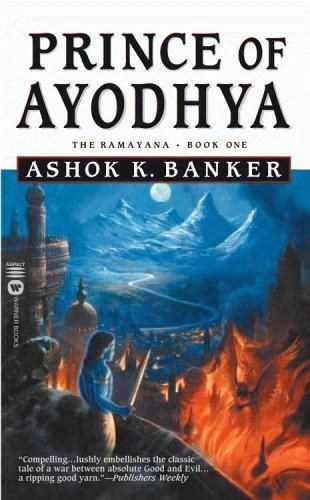
Distance 3/5, epic fantasy
Prince of Ayodhya
Ashok K. Banker2003about 553 pages
The Ramayana rebuilt as full blooded fantasy: a teenage Rama, a city bracing for a siege, and seven more books behind it.
Banker reached this genre a decade before the current wave and went at it with scale, turning the Ramayana into an eight book fantasy sequence. Book one keeps Rama in Ayodhya. A boy prince who has not been tested, a father coming apart, a sage arriving with terrible news, and an asura force gathering at the edge of the kingdom. The bones are the Ramayana. The flesh is heavy worldbuilding, dread, and long action sequences that Banker writes better than anyone else here.
Why it is at 11
Eleventh because the events stay recognisable while the scale and the genre change completely. It is also a commitment of eight books, and the series dips badly in the middle. Start it only if you actually enjoy fantasy doorstoppers, because the Pattanaik and Divakaruni entries above will serve a casual reader better in a tenth of the reading time.
Read it ifyou read fantasy series and want one built on the Ramayana
Skip it ifyou want a standalone, because this is the first course of eight
cinematic, dark, sprawlingBest for: epic fantasy readersramayanafantasy seriesaction
12
Distance 3/5, literature
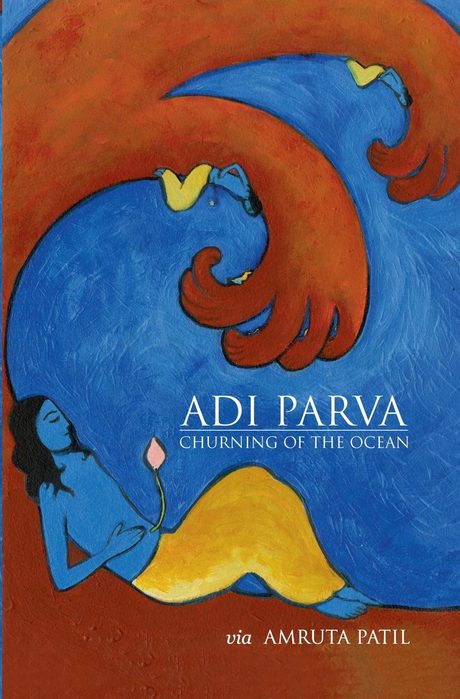
Adi Parva: Churning of the Ocean
Amruta Patil2012about 276 pages
The Mahabharata's beginnings as a painted graphic novel, narrated by the river Ganga, and unlike anything else here.
Patil takes the oldest layer of the Mahabharata, the churning of the ocean, the descent of the river, the tangled ancestry that eventually produces the Kuru line, and paints it. Ganga is the storyteller, speaking to listeners on a riverbank, which keeps the book circling back to who tells a story and what the telling costs them. The art moves between watercolour, charcoal and collage, and several pages sit closer to a mural than a comic panel. You can finish it in an evening and think about it for a month.
Why it is at 12
Twelfth because the content stays faithful while the form is the most experimental thing on this list. It is also the least beginner friendly, since Patil expects you to hold a dozen names at once without help. If you want the epic's strangeness without a thousand pages, this is the shortcut, and it is easily the most beautiful object here.
Read it ifyou like graphic novels and want mythology treated as art
Skip it ifyou need a clean linear plot, because this one circles and digresses on purpose
painterly, oral, digressiveBest for: one evening, one sittinggraphic novelmahabharataart
13
Distance 4/5, literature
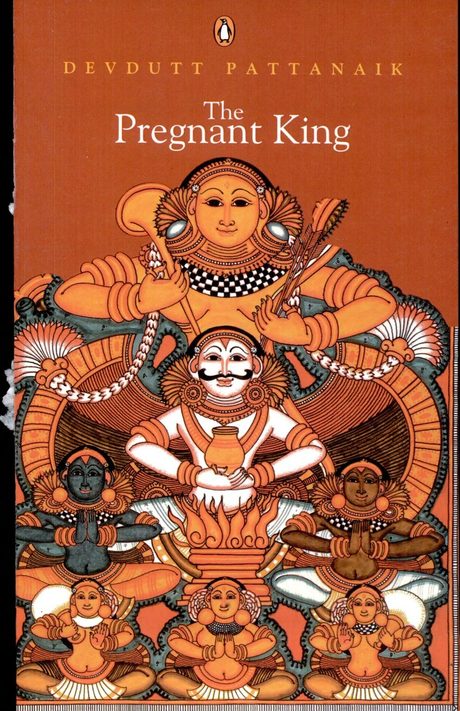
The Pregnant King
Devdutt Pattanaik2008about 364 pages
A king drinks a potion meant for his wives, becomes pregnant, and no law in his kingdom knows what to call him after that.
Pattanaik's only novel takes a small, strange story from the epic tradition and builds an entire court around it. Yuvanashva is a king without an heir. A ritual drink is prepared for his queens, he swallows it by mistake, and he gives birth to a son. Everything afterwards is a legal and emotional problem. He is a father by law, a mother by fact, and a king who cannot admit either without losing the throne. The Kurukshetra war happens somewhere offstage while other people who do not fit their assigned roles keep walking through the palace, which is plainly the point.
Why it is at 13
Thirteenth because the plot is Pattanaik's own even though every element is borrowed from the tradition, and that puts it well past the retellings above. It is the smartest book here on what these stories actually contain, and the one I hand to anyone who assumes the epics are conservative documents. The prose is flat in places. The thinking never is.
Read it ifyou want the epics used to ask a question rather than settle one
Skip it ifyou came for battle and spectacle, because this stays inside a palace
strange, tender, philosophicalBest for: readers who like ideasmahabharatagendernovel
14
Distance 4/5, page-turner
Asura: Tale of the Vanquished
Anand Neelakantan2012about 518 pages
Ravana narrates the Ramayana, and beside him an ordinary Asura foot soldier narrates the version where nobody wins.
Two voices alternate. Ravana, brilliant and vain and full of self-pity, building an empire and losing his family to it, and Bhadra, a common Asura man who fights for that empire and collects nothing from either side except injuries. Neelakantan's argument is blunt: the Ramayana we inherited is the winner's account, and the losers had cities, laws and grievances of their own. The prose is rough and the polemic is loud. Even so, the Bhadra chapters reach something the polished books here never do, which is what an epic feels like to the people who are only scenery in it.
Why it is at 14
Fourteenth because the events survive while the moral frame gets turned inside out, and once that happens you are a long way from the source. It made plenty of readers furious, which is a fair measure of its usefulness. As writing it is the weakest book on this list, repetitive in the middle and far too generous with Ravana's self-justification. Read it anyway, then argue with it.
Read it ifyou want the losing side to speak and you do not need elegant sentences
Skip it ifyou dislike books with an axe to grind, because this one grinds in the open
bitter, loud, contrarianBest for: readers who like argumentsramayanaravanainversion
15
Distance 4/5, page-turner
Ajaya: Roll of the Dice
Anand Neelakantan2013about 493 pages
The Mahabharata from the Kaurava side, where Duryodhana is called Suyodhana and the Pandavas are the cousins who get everything.
Neelakantan repeats the Asura move on the bigger epic. Suyodhana is a prince raised to believe merit should outrank birth, which is why he crowns Karna and why he cannot stomach the way his cousins are handed the future with a divine seal on it. Around him Neelakantan builds a working political system: caste rules being enforced, a priestly order guarding its position, ordinary people who will pay for a family quarrel they did not start. The dice game lands at the end of this volume rather than in the middle of a story.
Why it is at 15
Fifteenth, a step past Asura, because it does more than flip the narrator. It rewrites the politics of the epic into something close to a modern caste argument, which is either the best thing about it or the most irritating, depending entirely on you. It is also better built than Asura, with a real plot instead of two long monologues.
Read it ifyou have always suspected Duryodhana had a point worth hearing
Skip it ifyou want the epic's moral universe respected, because this book prosecutes it
political, angry, plottedBest for: Kaurava sympathisersmahabharataduryodhanainversion
16
Distance 5/5, page-turner
Govinda
Krishna Udayasankar2012about 458 pages
The Mahabharata with the gods taken out: Govinda Shauri is a politician and the miracles are technology somebody is hiding.
Udayasankar rebuilds Aryavarta as a political system with factions, treaties, and a suppressed order of engineers called the Firewrights whose knowledge every kingdom wants and nobody trusts. Krishna appears as Govinda Shauri, a cowherd turned statesman running a long game he explains to nobody, including the reader. The familiar people are all present, but their motives are strategic rather than cosmic. It reads like political fantasy, with a lot of scheming, a few good battles, and a plot that assumes you can keep up without being reminded who anyone is.
Why it is at 16
Sixteenth because divinity is removed rather than decentred, and once the gods leave the building the epic becomes a different kind of story altogether. It is the most underrated book on this list. It also has the driest opening, so give it eighty pages before you decide anything.
Read it ifyou like political fantasy and want the epic demystified
Skip it ifyou read mythology for the divine, because none of it survives here
strategic, cool, denseBest for: political fantasy readersmahabharatakrishnapolitical fantasy
17

Distance 5/5, page-turner
The Immortals of Meluha
Amish Tripathi2010about 362 pages
Shiva as a Tibetan tribal chief who walks into a perfect empire, drinks their medicine, and turns out to be the man in their prophecy.
Amish starts from the idea that the gods were people whose deeds got promoted to myth over a few thousand years. Shiva leads a small tribe, accepts an invitation to Meluha, a spotless and heavily engineered kingdom running on a drink called somras, and his throat turns blue, which is precisely what their prophecy said would happen to the man who saves them. The plot becomes a chase after an enemy who may not be the enemy. The writing is functional at best and the dialogue often sounds like a management meeting. The idea underneath is strong enough that none of that mattered.
Why it is at 17
Seventeenth because it does not retell a myth, it explains one away, and that is about as far from a faithful retelling as you can travel while still using the same names. It also shifted what Indian publishers were willing to commission, and several books on this list arrived in its wake. Judge it as fast fantasy rather than as prose.
Read it ifyou want a quick series to burn through on a long journey
Skip it ifyou care about sentences, because these ones will keep annoying you
fast, plotty, plainBest for: long train journeysshiva trilogyfantasyseries
18

Distance 5/5, page-turner
The Krishna Key
Ashwin Sanghi2012about 475 pages
A killer believes he is the Kalki avatar, a historian is framed for murder, and Krishna's story becomes a treasure hunt across India.
Sanghi writes Indian conspiracy thrillers and this is the one built on Krishna. A historian who has spent his career arguing that Krishna was a real man in real geography wakes up to a friend's corpse and his own name on the police file. The chase runs through Dwarka, Mathura, Vrindavan and a trail of clues about a lost artefact. Between chapters Sanghi drops short passages in Krishna's own voice, telling the myth straight. It is airport fiction with an unusual amount of research bolted on, and the research is the reason to pick it up.
Why it is at 18
Eighteenth, the far end of the dial, because the myth is no longer being retold, it is being used as the engine of a present-day plot. As a thriller it is uneven, with coincidences stacked high and a villain who explains himself at length. As a tour of the archaeological arguments around Krishna, it works surprisingly well.
Read it ifyou like Dan Brown style chases and want an Indian one
Skip it ifyou want mythology handled with reverence, because this treats it as clues
pulpy, researched, restlessBest for: thriller readersthrillerkrishnaconspiracy
Worth knowing
How the distance score works
Every book carries a distance mark from 1 to 5. A 1 keeps the events, the order and the moral frame of the source and adds only interpretation. A 2 keeps every fact and invents interior life, usually by handing the story to one character who never got to speak. A 3 invents people or scale the epic does not contain. A 4 keeps the events and flips the moral frame, so the villain gets a case. A 5 takes the myth apart and rebuilds it as something else: a political thriller, a rationalised history, a fantasy about an avatar who has not turned up yet.
The score is not a quality rating. Some of the best writing here sits at 2, some of it sits at 5, and the roughest prose on the list sits at 4. Use the number to choose the argument you are in the mood for, then read the entry to find out whether the book is any good.
Worth knowing
A reading path if you are starting cold
Read Jaya first, one chapter a night for a month. It puts the whole plot in your head without an agenda attached, and everything else here becomes twice as interesting once the plot is there. Then take The Palace of Illusions, because after a map you want a voice. Then pick your fight: Asura for the losing side, Bhima: Lone Warrior for literature, The Immortals of Meluha for a train.
If you already know the epics from the television serials, skip the first four and start at Bhima. If you read graphic novels, start with Adi Parva instead, which will tell you inside twenty pages whether this whole genre is for you. Ramesh Menon at rank one is the destination rather than the doorway, so leave him until the genre has hooked you.
People also ask
Questions, answered
Which Indian mythology book should I read first?
Jaya by Devdutt Pattanaik, if you want the Mahabharata in your head before anyone starts arguing with it. It runs in 108 short chapters, so one a night works and you never lose the thread. If you would rather begin with a novel, take The Palace of Illusions, which gives you the same war through Draupadi's eyes and reads much faster than its size suggests. Both are easy to find in any Indian bookshop and both are cheap.
Is the Shiva Trilogy by Amish Tripathi worth reading?
Yes, if you treat it as fast fantasy rather than literature. The premise, that gods were people whose deeds hardened into myth, carries the whole series, and the plotting will keep you turning pages on a long journey. The sentences are plain and the dialogue is often clumsy. Readers who care mainly about prose usually give up inside a hundred pages, and readers who care about story finish all three books in a fortnight. Work out which one you are first.
What is the difference between a retelling and the original Mahabharata?
The original is an enormous layered text with hundreds of side stories and no single point of view. A retelling picks one thread, usually one voice, and cuts the rest. Pattanaik keeps the structure and shortens it. Divakaruni and Pratibha Ray keep the events and add a woman's inner life. Neelakantan keeps the events and changes who is in the right. None of them replaces the epic, and every one of them makes a full translation easier to attempt later.
Which mythology books tell the story from a woman's point of view?
The Palace of Illusions and The Forest of Enchantments by Chitra Banerjee Divakaruni, Yajnaseni by Pratibha Ray, and Karna's Wife and Menaka's Choice by Kavita Kane. Ray's is the most traditional in temper and Kane's the most commercial in style. If you want only one, start with The Palace of Illusions, then read Yajnaseni to see the same woman written by somebody who accepts the epic's moral world instead of putting it on trial.
Are mythology retellings disrespectful to Hinduism?
Some readers find the inversions offensive and it is worth saying that plainly rather than pretending nobody minds. Asura and Ajaya argue that the traditional villains were wronged, and Amish rewrites gods as human beings. The tradition itself has always carried competing versions, including Jain and regional Ramayanas where characters switch sides, which Pattanaik documents in Sita. Read these as fiction built on a shared inheritance and they are fine. Read them as scripture and several will upset you.
Can I read these if I do not know the epics at all?
Yes, with one rule. Start with a retelling that covers the whole story rather than a book that argues about it. Jaya, Sita or The Serpent's Revenge will each hand you the plot and the names. After that everything else here makes sense, including the inversions, which only land when you know what they are inverting. Going straight to Asura without the Ramayana is like watching a courtroom drama with the first act missing.
Before you go
What to read tonight
If you want to start tonight, get Jaya and read three chapters before you sleep. It is the cheapest way to find out whether the epics have any hold on you, and if they do, the rest of this list opens up. If you already know the story and want a novel instead, The Palace of Illusions is the one to take into a Sunday afternoon.
Once you have read four or five of these, do the thing nobody recommends: find a full translation of the Mahabharata, or one regional Ramayana, and read a hundred pages of the actual text. Every writer on this list is having an argument with it, and the argument gets far better once you have met the other side. That is the quiet reward of this genre. The retellings keep sending you back to the source.
Keep going
Lists that pair with this one
Authors
The 14 Best Devdutt Pattanaik Books, in the Right Reading Order
Ranked as a sequence rather than a leaderboard, with the exact point where his books start repeating themselves.
Authors
Amish Tripathi Books in Order: All 12, and Where to Start
Publication order, story order, and the order you should actually read them in, across the Shiva Trilogy, the Ram Chandra series and the Indic Chronicles.
Indian Fiction
The 20 Best Indian Books in Translation, Ranked by Where to Start
Twenty books from ten Indian languages, ordered from the easiest way in to the one that will fight you, with the translator named every time.
Indian Fiction
The 12 Best Indian Graphic Novels, and What the Art Actually Does
Twelve books where the drawing carries the story, ranked, with each art style named so you know what you are walking into.
Indian Fiction
20 Best Books by Indian Women Authors, From 1905 to 2025
Ranked by how hard I would push each one at a stranger, with a door on every book so you know how much patience it asks for.