A cousin of mine keeps three Devdutt Pattanaik books on a shelf and has finished none of them. That is the most common Pattanaik situation in India. He is in every airport bookshop, every Amazon carousel, every boxset an uncle gifts you in December, and most people own him without reading him. Some of that is the sheer number of titles, dozens of them, with covers that all look like siblings and blurbs that promise the same thing.
The real problem with his catalogue is not quality, it is overlap. Read four of his books back to back and you will meet the same five ideas four times in different clothes. So this list is a sequence, not a popularity chart. Number one is where to begin, number fourteen is where to stop, and somewhere in the middle I mark the point where you should put the credit card away and go read a primary text instead.
It is written for a reader who watched a mythology serial as a kid, owns a Gita that nobody has opened, and now wants to understand the machinery rather than collect more stories. If you are buying a gift, the quick picks below will take you ten seconds. If you got stuck halfway through Jaya and felt guilty about it, read the section on the repetition tax first, because the problem might not be you.
How I picked these
- Reading order over popularity. The number next to each book is where it belongs in your sequence, not how many people bought it.
- One book per idea. He recycles a small set of arguments across a large number of titles, so I kept the original of each idea and dropped the reissues that say it again.
- Every title checked through Google Books and Open Library with a real cover. Two books I rate, Business Sutra and Shikhandi, are discussed in the FAQ instead of ranked, because I could not verify a clean current edition for them.
- The children's books stayed in. Two of them are better first doorways than the adult retellings, and pretending otherwise would cost you an evening you did not need to spend.
- I left out the Devlok transcript volumes and the pocket-sized Penguin Petit singles. Both are short-form spin-offs, and you will meet most of that material in the main books anyway.
- Where a famous book is thin, I say so. Several entries here come with a caveat attached rather than a round of applause.
The whole list at a glance
All 14 books, in order
| # | Book | Author | Year | Vibe | Best for |
|---|
| 1 | Jaya: An Illustrated Retelling of the Mahabharata | Devdutt Pattanaik | 2010 | brisk, annotated, matter of fact | a first Pattanaik book |
| 2 | Myth = Mithya: Decoding Hindu Mythology | Devdutt Pattanaik | 2006 | dense, clarifying, slightly academic | readers who ask why |
| 3 | Sita: An Illustrated Retelling of the Ramayana | Devdutt Pattanaik | 2013 | steady, questioning, generous | readers raised on TV Ramayan |
| 4 | Shyam: An Illustrated Retelling of the Bhagavata | Devdutt Pattanaik | 2018 | warm, sprawling, quietly sad | readers who finished Jaya |
| 5 | My Gita | Devdutt Pattanaik | 2015 | structured, patient, argumentative | lapsed Gita readers |
| 6 | 7 Secrets of Shiva | Devdutt Pattanaik | 2011 | visual, dense, essayistic | temple art and symbol nerds |
| 7 | 7 Secrets of Vishnu | Devdutt Pattanaik | 2011 | orderly, illustrated, explanatory | readers who like systems |
| 8 | 7 Secrets of the Goddess | Devdutt Pattanaik | 2014 | sharp, careful, political | readers curious about ritual at home |
| 9 | 7 Secrets from Hindu Calendar Art | Devdutt Pattanaik | 2009 | scrappy, original, visual | design and art curious readers |
| 10 | The Book of Ram | Devdutt Pattanaik | 2009 | compact, historical, even-handed | readers who finished Sita |
| 11 | The Pregnant King | Devdutt Pattanaik | 2008 | melancholy, formal, quietly radical | readers who want a novel |
| 12 | Olympus | Devdutt Pattanaik | 2016 | comparative, brisk, argumentative | readers who like comparison |
| 13 | The Girl Who Chose: A New Way of Narrating the Ramayana | Devdutt Pattanaik | 2016 | clear, brief, purposeful | children and reluctant adult readers |
| 14 | The Boys Who Fought | Devdutt Pattanaik | 2017 | plain, fair, kid-friendly | children ten and above |
The list
The books, ranked
1
Door in: start here for the story
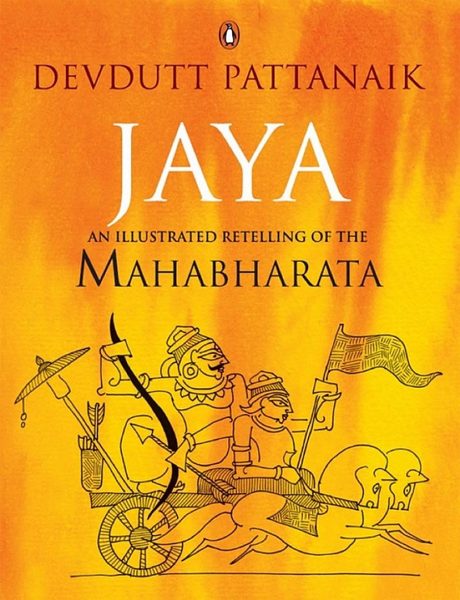
Jaya: An Illustrated Retelling of the Mahabharata
Devdutt Pattanaik2010about 447 pages
The whole Mahabharata in 108 short chapters, with the side stories your grandmother skipped and a note on every regional variation.
Pattanaik cuts the entire epic into 108 chapters, each short enough to finish in a chai break. What separates it from every other retelling is the margin. After each chapter he adds notes on how Odia, Tamil, Javanese and folk versions tell the same episode differently, which is how the book quietly teaches you that there was never one Mahabharata to begin with. The stick-figure drawings are his own and they look like a lecture whiteboard, so some readers find them charming and some find them cheap. The prose stays flat on purpose, because he wants the structure of the story visible rather than the writing.
Why it is at 1
First because it is the easiest door and the most rewarding one. You get the full epic, you get the variants, and you finish able to hold an actual conversation about Karna instead of nodding along to one. Sita is the better written book of the pair, but Jaya is the one that hands you the map.
Read it ifyou want the full Mahabharata without a thousand-page commitment
Skip it ifyou want novelistic prose, because this reads like an annotated summary
brisk, annotated, matter of factBest for: a first Pattanaik bookmahabharataretellingstart here
2
Door in: start here for the ideas
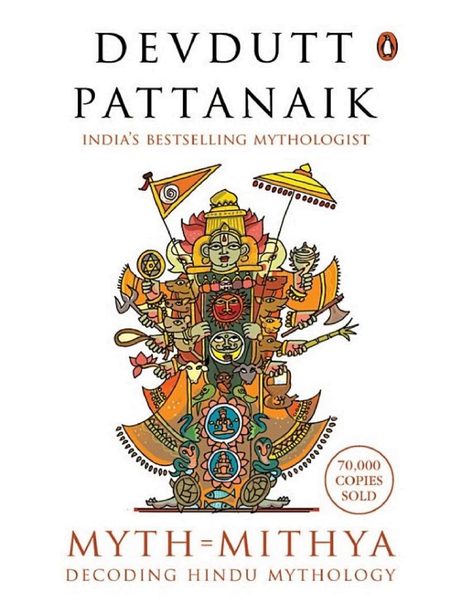
Myth = Mithya: Decoding Hindu Mythology
Devdutt Pattanaik2006about 273 pages
Not a story collection but a decoder ring: what the gods, the symbols and the rituals are actually arguing about.
This is the book that made his name, published in 2006 as Myth = Mithya: A Handbook of Hindu Mythology and later reissued with the Decoding subtitle, so check before you buy it twice. It answers the questions people are too embarrassed to ask aloud. Why does Shiva sit still while Vishnu keeps taking birth. Why is the goddess a bride in one temple and a blood-drinking mother in the next. Why do Hindus have one god and also a few hundred million. He treats mythology as a language a culture uses to think about itself, then teaches you the grammar of it. Short, dense, full of small diagrams.
Why it is at 2
Second, and honestly first if you arrived from a philosophy shelf rather than a story shelf. Jaya gives you a plot, this gives you the operating system running underneath everything else he has written. Read it early and half of the 7 Secrets series becomes optional, which is a compliment to this book and a warning about that one.
Read it ifyou want the logic sitting under the stories
Skip it ifyou were hoping for narrative, because this is closer to a lecture
dense, clarifying, slightly academicBest for: readers who ask whyhindu mythologyprimerideas
3

Door in: the Ramayana from her side
Sita: An Illustrated Retelling of the Ramayana
Devdutt Pattanaik2013about 343 pages
The Ramayana rebuilt with Sita at the centre, plus the regional versions where she is a great deal less obedient than you were taught.
Same 108-chapter format as Jaya, same notes running down the margins, this time applied to the Ramayana with Sita's choices in the frame instead of Ram's duty. The best material is in the variants. In some tellings she is Ravana's own daughter. In others she kills a demon that Ram could not. In one she walks away at the end and does not look back. Pattanaik lays them side by side without ranking them, which is the entire point of the exercise. If you grew up on the Sunday morning television Ramayana, this feels like somebody opening a window in a room you assumed had no windows.
Why it is at 3
Third because it is the better written half of the pair, but the Ramayana is a smaller and tighter story and you will get more mileage from Jaya first. Read them back to back if you can, since the comparison is where his real argument lives: one epic is about rules and the other is about consequences.
Read it ifyou know the Ramayana and want it unsettled a little
Skip it ifyou want a devotional retelling, because this keeps asking awkward questions
steady, questioning, generousBest for: readers raised on TV Ramayanramayanasitaretelling
4
The deep middle
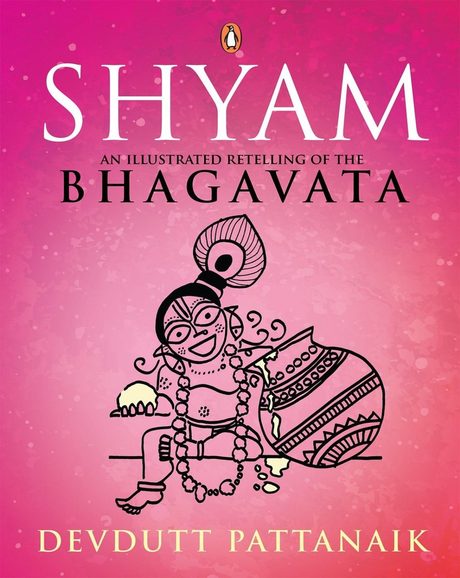
Shyam: An Illustrated Retelling of the Bhagavata
Devdutt Pattanaik2018about 371 pages
Krishna from butter thief to an old man dying alone under a tree, told as one continuous life instead of a highlight reel.
The Bhagavata Purana is the Krishna book, and most of us only know its middle: the flute, the gopis, the raas. Pattanaik runs the whole arc, from a birth in a prison cell to a death that is small, quiet and almost embarrassing. It is his most emotionally loaded retelling, partly because Krishna keeps changing job description across it, cowherd to lover to diplomat to charioteer, and partly because the ending refuses to be grand about any of it. Same 108 chapters, same margin notes on regional versions, same line drawings. If Jaya taught you the format, this is where the format finally carries some weight.
Why it is at 4
Fourth because it completes the three big retellings and it is the one everybody skips. Jaya and Sita take all the attention, and Shyam is the one I would defend hardest, because the Krishna material is exactly where his refusal to moralise pays off. Come to it after one of the other two, not before.
Read it ifyou want Krishna as a whole life rather than a season
Skip it ifyou want the devotional Krishna and nothing more complicated
warm, sprawling, quietly sadBest for: readers who finished Jayakrishnabhagavataretelling
5
The deep middle
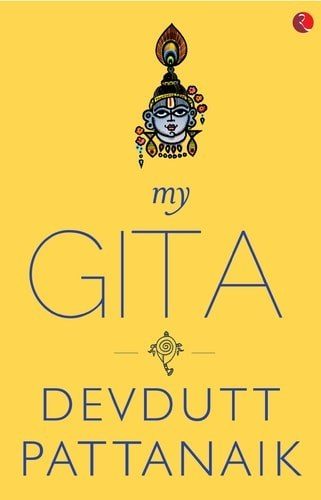
My Gita
Devdutt Pattanaik2015
The Bhagavad Gita rearranged by theme instead of chapter, with the battlefield read as a metaphor rather than a manual.
Rather than walking verse by verse, he breaks the Gita into eighteen ideas and rebuilds the argument around them: what property is, what fear does, why Arjuna's problem was never really the war in front of him. The My in the title is doing honest work, because he states up front that this is his reading and that yours may differ, which is rarer in Gita commentary than it should be. There are diagrams. There are a great many diagrams. For a text most Indian homes own and almost nobody finishes, it is the most usable version I have read.
Why it is at 5
Fifth because it does something the retellings cannot: it takes a scripture people treat as an instruction manual and turns it back into an argument you are allowed to lose. It does repeat concepts from Myth = Mithya, so read that first or this will feel like a rerun. If you have started the Gita twice and quit twice, this is the attempt that sticks.
Read it ifyou have tried the Gita before and stalled
Skip it ifyou want a traditional verse-by-verse commentary with Sanskrit
structured, patient, argumentativeBest for: lapsed Gita readersbhagavad gitaphilosophynonfiction
6
The 7 Secrets series, pick one
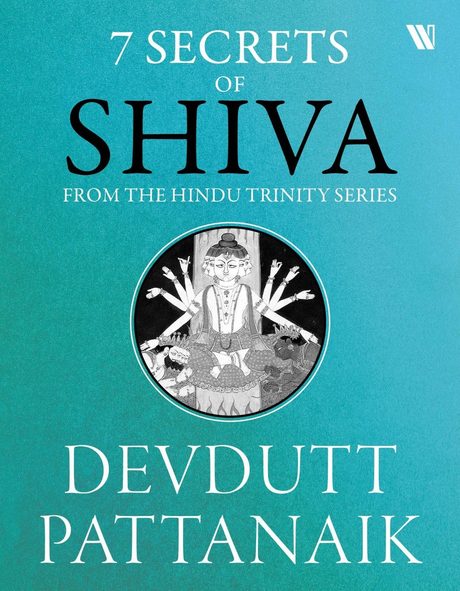
7 Secrets of Shiva
Devdutt Pattanaik2011about 322 pages
Why the god of destruction sits with his eyes shut, read through seven images you have already seen on a thousand calendars.
The 7 Secrets books run on temple art and calendar prints rather than narrative. Each chapter takes an image, the linga, Shiva as Bhairava, the family portrait with Parvati and the boys, and works out what the culture was encoding in it. Shiva is the hermit who has to be argued into becoming a householder, and Pattanaik makes that tension the spine of the whole book. The layout is unusual and worth knowing about before you buy: every left-hand page carries pictures with captions, every right-hand page carries the essay. Read the captions properly, they are not decoration.
Why it is at 6
Sixth, and the best of the four 7 Secrets volumes, because Shiva is the god whose symbolism resists a neat summary and the format has the most to chew on here. Take one of these four, not all four. The core ideas repeat across the series and by the third book you will be skimming and feeling bad about it.
Read it ifyou like decoding images and symbols
Skip it ifyou want stories, because this sits closer to art criticism
visual, dense, essayisticBest for: temple art and symbol nerdsshivasymbolism7 secrets
7
The 7 Secrets series
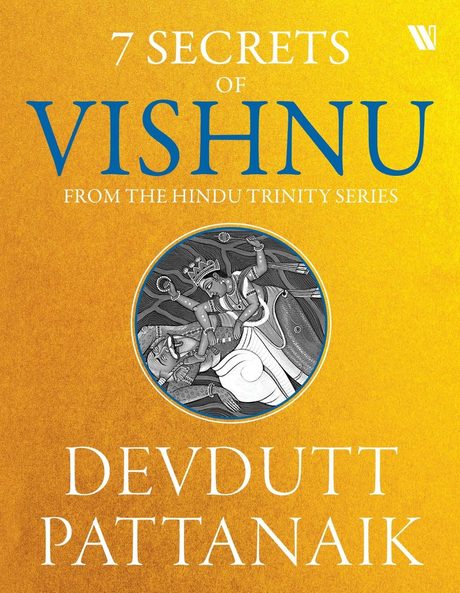
7 Secrets of Vishnu
Devdutt Pattanaik2011about 295 pages
Ten avatars read as one long argument about how a society grows up, told through the prints on your grandmother's wall.
The companion volume, built exactly the same way, images on the left and the essay on the right. Vishnu is the god who keeps returning to the world, and the ten descents get treated as stages rather than a greatest hits list: fish, tortoise, boar, man-lion, short priest, angry axeman, obedient prince, trickster cowherd. Along the way he explains why Lakshmi is shown at Vishnu's feet in almost every print, and why that is not the insult it looks like to a modern eye. The reading holds together even in the places where you want to argue with it.
Why it is at 7
Seventh because it is the most systematic book in the series and the one that best explains the visual grammar of an Indian household, the wall calendar, the sticker on the dashboard, the poster behind the shop counter. It ranks under the Shiva volume only because the material is tidier and therefore less surprising.
Read it ifyou want the avatars as a sequence with a logic
Skip it ifyou already read the Shiva volume and want fresh ideas
orderly, illustrated, explanatoryBest for: readers who like systemsvishnuavatars7 secrets
8
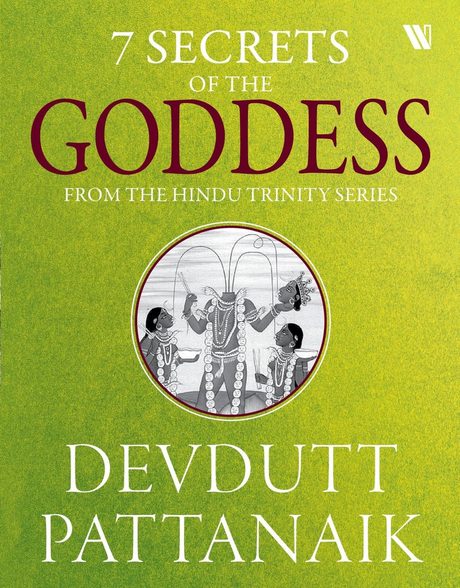
The 7 Secrets series
7 Secrets of the Goddess
Devdutt Pattanaik2014about 328 pages
Gauri, Kali, Lakshmi and the rest read as competing answers to one question: what does nature owe culture?
The strongest idea here is a split he keeps returning to, the goddess as nature who needs nothing from us against the goddess as culture who is bound by our rules, with everything from Durga's lion to Sita's exile sitting somewhere along that line. He is careful in this one in a way he is not always careful, because the material runs straight into live arguments about women, purity and worship inside Indian homes. Same format as the others, pictures left, essay right. It is the most quietly political book in the series and the one most likely to start a fight at dinner.
Why it is at 8
Eighth because it is the volume that most often changes how a reader sees their own house: the puja shelf, the fasting, the unspoken rules about who touches what. It sits below the Shiva and Vishnu books because the writing turns repetitive in the back half, not because the thinking does.
Read it ifyou want the goddess beyond Durga Puja posters
Skip it ifyou want feminist theory, because this is symbolism first
sharp, careful, politicalBest for: readers curious about ritual at homegoddessshakti7 secrets
9

The 7 Secrets series, where it began
7 Secrets from Hindu Calendar Art
Devdutt Pattanaik2009
The book that started the series, built entirely out of the mass-market god prints hanging in Indian shops and kitchens.
Before the Shiva and Vishnu volumes there was this one, and its subject is the cheapest and most widely distributed religious art in the country: the calendar print that comes free with a sack of rice. He takes seven of those images and reads them as documents, which makes the book double as an argument that popular art is not degraded art. It is the least polished of the four and the most original, because he had not yet settled into a formula. Later editions circulate as 7 Secrets of Hindu Calendar Art, so do not order both by accident.
Why it is at 9
Ninth in the reading order though first in the series by date, and it belongs here because the format makes most sense once you have watched it done well a couple of times. If you only ever read one book about why Indian religious imagery looks the way it does, this is the one carrying the freshest thinking.
Read it ifyou are curious about popular religious art
Skip it ifyou want polish, because this one is rougher around the edges
scrappy, original, visualBest for: design and art curious readerscalendar artsymbolism7 secrets
10

The deep middle, short version
The Book of Ram
Devdutt Pattanaik2009about 228 pages
A slim study of how one prince became the most argued-over god in India, and what each retelling wanted out of him.
Closer to a long essay than a book, and it does the thing the Sita retelling does not: it tracks Ram through history rather than through plot. Valmiki's Ram, Tulsidas's Ram, the Ram of the Tamil and Thai and Jain versions, the Ram of political posters and street corners. By the last page you can see how a figure gets rebuilt by every century that needs him for something. He stays even-handed on ground where staying even-handed takes effort, and the book is stronger for refusing to pick a side.
Why it is at 10
Tenth because it is the natural follow-up to Sita and it answers the question that book leaves hanging: if there are this many Ramayanas, how did one of them win. Short enough for a single sitting on a Sunday. It ranks under the big retellings on scale alone, not on quality.
Read it ifyou want the history behind the god
Skip it ifyou want the narrative Ramayana, because this is analysis
compact, historical, even-handedBest for: readers who finished Sitaramhistoryshort read
11
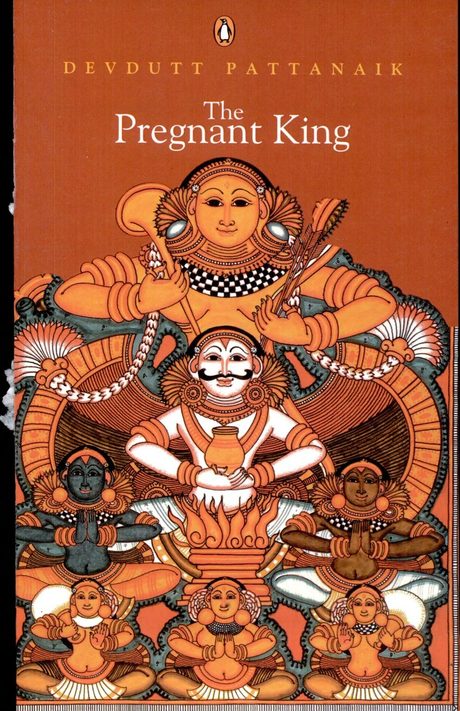
Sideways: the one real novel
The Pregnant King
Devdutt Pattanaik2008about 364 pages
A king drinks a potion meant for his wives, becomes pregnant, and finds that his kingdom has no category for whatever he now is.
Yuvanashva rules well and fights well and cannot father a child. A ritual goes wrong, he drinks what he was not supposed to drink, and he ends up carrying a son. The rest of the novel is a society trying to file him correctly: father or mother, king or queen, and whose name the throne passes under. It sits inside the world of the Mahabharata, with Shikhandi and Arjuna's year as a woman moving in the background, and it is a proper novel with people who bleed rather than a decoder with diagrams. It is also the best writing he has done.
Why it is at 11
Eleventh in the reading order and first if the only question is which book is best. It sits here because it is the wrong door for a beginner: it assumes you already know the furniture of the epic, and it is a slow, sad read that gives nothing away early. Come to it after Jaya and it lands twice as hard.
Read it ifyou want fiction with characters rather than an explainer
Skip it ifyou need a plot that moves quickly
melancholy, formal, quietly radicalBest for: readers who want a novelnovelgendermahabharata
Heads up: gender identity, infertility and social exclusion are central to the story
12
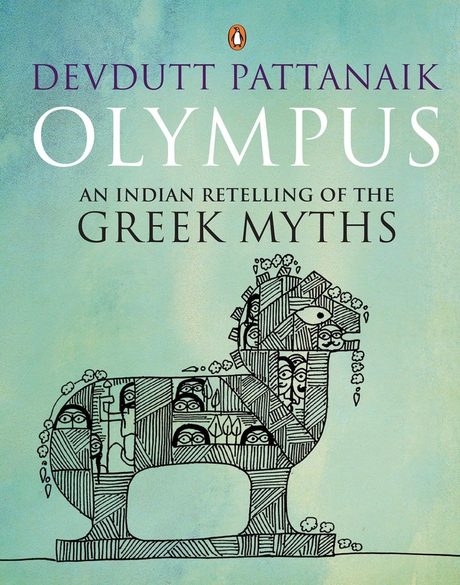
Sideways: the Greek detour
Olympus
Devdutt Pattanaik2016about 285 pages
Greek myths read by an Indian mythologist who keeps asking why those gods are so obsessed with getting one life right.
He turns the same decoder on Zeus, Athena, Oedipus and the rest, and the value sits in the comparison rather than the retellings, which are competent and fast but nothing you could not get elsewhere. His argument is that Greek myth assumes a single life and therefore builds everything around glory, fate and a fixed self, while Indian myth assumes rebirth and builds around cycles and a self that keeps dissolving. Once you see that, the distance between Achilles and Arjuna stops looking like a difference of temperament and starts looking structural.
Why it is at 12
Twelfth because it is a side dish and it only works once you know the Indian material well enough to feel the contrast. Read as a standalone introduction to Greek mythology it is thin, and there are better books for that job. Read as the next chapter of an argument he has been making since Myth = Mithya, it is the most interesting thing he has written outside India.
Read it ifyou already know his Indian books well
Skip it ifyou want a proper Greek mythology primer
comparative, brisk, argumentativeBest for: readers who like comparisongreek mythcomparativesideways
13
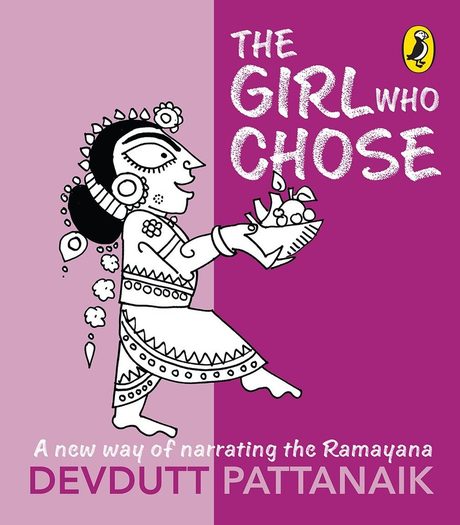
Short: for younger readers and hurried ones
The Girl Who Chose: A New Way of Narrating the Ramayana
Devdutt Pattanaik2016about 128 pages
The Ramayana in about a hundred pages, organised around the five choices Sita makes that move the entire plot.
Written for children and perfectly readable by an adult on a train. The device is simple and it works: five decisions Sita takes, each one a hinge the story turns on, with the cumulative point being that she is not a woman carried along by events. Large type, plenty of illustration, and the marginal notes survive in a lighter form. I have handed this to two grown adults who found Jaya intimidating, and both of them finished it in one evening and asked what to read next.
Why it is at 13
Thirteenth in the order and the book I recommend most often to people who tell me they do not read. It costs one evening and it leaves you holding a real argument instead of a plot summary. Do not read it straight after the full Sita retelling, though, because it will feel like a recap of a book you just closed.
Read it ifyou want the Ramayana in a single evening
Skip it ifyou just finished the full Sita retelling
clear, brief, purposefulBest for: children and reluctant adult readersramayanachildrenshort read
14
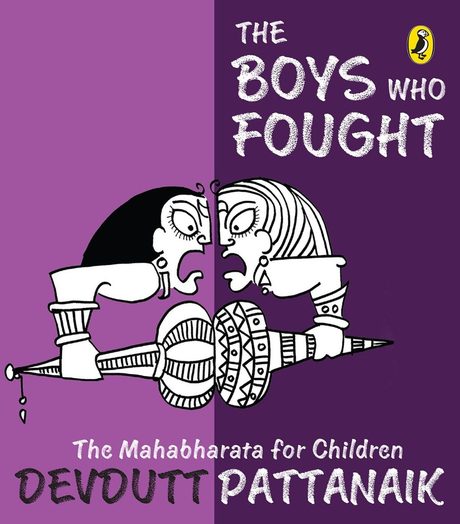
Short: the companion for younger readers
The Boys Who Fought
Devdutt Pattanaik2017about 187 pages
The Mahabharata for children, built around what the Pandavas and the Kauravas each believed they were owed.
The companion to The Girl Who Chose, and the harder job of the two, because the Mahabharata has no clean heroes and he refuses to manufacture any for a young audience. Duryodhana is given a case to make, and Yudhishthira gets a scolding over the dice game. The frame is dharma as a question about what the strong owe the weak rather than a contest between good and evil, and it lands, because children handle moral mess better than adults expect them to. Illustrated throughout, short chapters, and he does not soften the ending.
Why it is at 14
Last, and that is a statement about reading order rather than worth. It is the best short entry to the Mahabharata for anyone under fifteen, and a decent refresher for anyone over thirty who has forgotten who Abhimanyu was. If you are buying for a ten-year-old cousin, buy this and The Girl Who Chose as a pair and you are done.
Read it ifyou are buying for a young reader
Skip it ifyou want the adult version with the regional variants
plain, fair, kid-friendlyBest for: children ten and abovemahabharatachildrenshort read
Worth knowing
The repetition tax, and why your fourth Pattanaik book disappoints you
Every one of his books runs on the same small engine, and once you can name the parts you will spot them by page three of anything he writes. There is the forest and the field, nature that does not care about you set against culture that does. There is matsya nyaya, the law of the fish, where the big eat the small unless somebody decides otherwise. There is Brahma, Vishnu and Shiva read as three postures towards the world rather than three persons in a family. There is the line that the goddess is nature and the god is culture's answer to her.
None of that is a criticism of the ideas, which are good and which hold up. It is a warning about dosage. The first book that teaches you the engine feels like somebody switched a light on in a room you had been feeling your way around. The fourth feels like a polite man repeating himself. Three or four of his books, chosen from different rows of this list rather than four in a row from the same series, is the sweet spot. After that the returns fall off a cliff, and you would learn more from a primary text in translation or from a historian who disagrees with him.
Worth knowing
Three reading orders, pick the one that matches why you are here
Story first: Jaya, then Sita, then Shyam, then The Book of Ram if you are still hungry. This is the route for someone who wants the epics properly in their head and does not much care about theory.
Ideas first: Myth = Mithya, then any single one of the 7 Secrets books, then My Gita, then Olympus for the comparison. This is the route for someone who arrived from a philosophy, psychology or management shelf and wants a framework they can use.
Buying for somebody else: The Girl Who Chose and The Boys Who Fought as a pair for a child, Jaya on its own for an adult who reads occasionally, and The Pregnant King for the friend who reads literary fiction and will be suspicious of anything labelled mythology.
People also ask
Questions, answered
Which Devdutt Pattanaik book should I read first?
Jaya, if you want the stories, because it gives you the whole Mahabharata in short chapters and teaches you his method while it does it. Myth = Mithya, if you want the ideas, because it explains the symbolic logic that everything else he writes is built on. Do not start with the 7 Secrets series or with Olympus, since both assume you already speak the language he set up in those two.
Is Jaya or Sita the better book?
Sita is better written and better argued, sentence for sentence. Jaya is the better first book, because the Mahabharata is the larger world and the variants he collects in the margins are richer there. Read Jaya first and Sita second, ideally within the same couple of months, because his point about the two epics only appears when you hold them next to each other.
Are Devdutt Pattanaik's books accurate?
He is retelling and interpreting, not doing textual scholarship, and he says so. Academics have taken issue with how much he simplifies, and traditionalists have taken issue with how freely he reinterprets, so he takes fire from two directions at once. Treat his books as a well-organised way into the material and an argument you are allowed to reject, not as a citation you can quote in an exam. If you want sourced scholarship, go to translations and academic editions instead.
How many of his books do I actually need to read?
Three or four, chosen from different parts of this list. One big retelling, one decoder, one of the 7 Secrets volumes, and optionally the novel. Past that you start paying the repetition tax, where each new book restates ideas you already met and adds one fresh chapter. The people who own fifteen of his titles are collecting, not learning, and the shelf in my cousin's house proves it.
What about Business Sutra and Shikhandi?
Both are worth your time and neither is ranked above, because I could not verify a clean current edition for either while building this list. Business Sutra applies his framework to Indian workplaces and hierarchy, and it is the one to hand a manager who thinks mythology is irrelevant to a spreadsheet. Shikhandi collects queer figures from Hindu lore and argues that the tradition was far less squeamish than its present-day defenders. Check current editions before ordering.
Are the illustrations worth it, or are they filler?
They divide people, and both camps have a point. His line drawings are crude by design, closer to a lecturer's whiteboard than to art, and if you were expecting Amar Chitra Katha you will be disappointed. In the 7 Secrets books the images are the argument and skipping them makes the essays harder to follow. In the retellings they are optional. Judge by which book you are holding.
Before you go
What to read tonight
Take the sequence if you take nothing else. Read Jaya this week, and if you close it wanting the argument rather than more story, go straight to Myth = Mithya and skip the 7 Secrets series entirely. If you close it wanting more story, go to Sita, then Shyam, and leave a month between them so the format does not begin to grate.
Then stop, at least for a while. Four of his books is a real education in how Indian myth thinks, and the fifth will teach you less than the first hundred pages of an actual Mahabharata in translation. Bibek Debroy's unabridged version is sitting there waiting for you, and after this list you will be able to read it without drowning, which is more than most people who buy it can say.
Keep going
Lists that pair with this one
Indian Fiction
18 Best Indian Mythology Fiction Books, Faithful to Wild
Ranked on one dial: how far each book strays from the epic it is built on, with an honest note on which are page-turners and which are literature.
Authors
Amish Tripathi Books in Order: All 12, and Where to Start
Publication order, story order, and the order you should actually read them in, across the Shiva Trilogy, the Ram Chandra series and the Indic Chronicles.
Indian Fiction
16 Best Books to Understand India, Ranked by What They Explain
Sixteen books, ten doors into the same country: history, caste, the mega city, the village, money, and where to start tonight.
Authors
The 11 Best Sudha Murty Books, Ranked for Kids, Teens and Adults
Eleven books worth your money out of the forty on the shelf, sorted by who each one is actually for.
Authors
Jane Austen Books Ranked: All Six Novels, and Where to Start
Two orders that disagree: the ranking I will defend, and the reading order that actually works if you are starting this week.