I bought Sea of Poppies at a station bookstall because the cover promised an adventure at sea, and I quit around page forty. Not out of boredom, but because I could not follow a word the sailors were saying. Three years later I picked it up again, stopped trying to translate every sentence in my head, and finished all three volumes in one monsoon. That gap of three years is the reason this list exists.
Ghosh is not a difficult writer. He is a writer who asks you to walk in through the right door, and there are three of them. The Bengal door is where a family or a river carries the story and the history arrives quietly. The empire door is where opium, teak and armies do the driving, and you get five hundred pages of the nineteenth century with a cast of forty. The ideas door is his nonfiction, where he stops telling stories and tells you why we cannot tell the right ones about a warming planet.
The ranking below runs one to twelve, best first, and best here means the book I would put in a stranger's hands with the most confidence. Every entry says which door it belongs to. If you have ten seconds, the quick picks decide for you, and the Ibis reading order sits further down with a straight answer about that dialect problem.
How I picked these
- Ranked for a reader who is not already a fan, not for the critics who have argued about him since 1988.
- Fiction and nonfiction sit in one ranking, because most people arrive asking which Ghosh, not which shelf.
- I left out The Circle of Reason, his 1986 debut, and Jungle Nama, the verse retelling. The debut is a book for people who have already read four others, and Jungle Nama is a forty-minute read rather than a place to begin.
- The Ibis trilogy is ranked as three separate books, because plenty of readers stop after one and I wanted to say plainly which one that should be.
- Every book here was checked against Google Books and Open Library with a real cover, so there are no ghost editions on the list.
The whole list at a glance
All 12 books, in order
| # | Book | Author | Year | Vibe | Best for |
|---|
| 1 | The Shadow Lines | Amitav Ghosh | 1988 | quiet, elliptical, devastating | first-time Ghosh readers |
| 2 | Sea of Poppies | Amitav Ghosh | 2008 | salty, crowded, propulsive | readers who love long sagas |
| 3 | The Hungry Tide | Amitav Ghosh | 2004 | tidal, tense, humane | nervous first-time readers |
| 4 | The Glass Palace | Amitav Ghosh | 2000 | sweeping, patient, sad | fans of family sagas |
| 5 | In an Antique Land | Amitav Ghosh | 1992 | curious, warm, scholarly | readers who enjoy history detours |
| 6 | River of Smoke | Amitav Ghosh | 2011 | mercantile, textured, slower | trilogy completists |
| 7 | The Great Derangement | Amitav Ghosh | 2016 | brisk, arguing, unsettling | one Sunday afternoon |
| 8 | The Calcutta Chromosome | Amitav Ghosh | 1995 | eerie, feverish, unresolved | readers who like weird fiction |
| 9 | Flood of Fire | Amitav Ghosh | 2015 | martial, sprawling, final | finishing the Ibis trilogy |
| 10 | Smoke and Ashes | Amitav Ghosh | 2023 | investigative, personal, angry | after the Ibis trilogy |
| 11 | The Nutmeg's Curse | Amitav Ghosh | 2021 | furious, historical, essayistic | readers of climate nonfiction |
| 12 | Gun Island | Amitav Ghosh | 2019 | restless, topical, uneven | completists only |
The list
The books, ranked
1

The Bengal door
The Shadow Lines
Amitav Ghosh1988about 260 pages
A Calcutta boy pieces together two families across Dhaka, Calcutta and London, and finds a riot the history books left out.
The narrator grows up in Calcutta on stories told by his older cousin Tridib, a man who has been to England and can describe places better than the people who live in them. The book moves without warning between decades, between an Indian family and an English one, and between a boy's imagination and what actually happened. Then it arrives at the violence of 1964, which the narrator lived through as a schoolboy and later cannot find in any newspaper archive. That search is the spine of the novel. Ghosh is asking what a border does to memory, and he asks it through people rather than theory.
Why it is at 1
First because it is the only Ghosh novel where every single thing he is good at fits inside 250 pages. The later books are bigger, better researched and more ambitious, and none of them hit as hard per page. If you read one book by him and never come back, this is the one that will follow you around for a decade.
Read it ifyou want memory, borders and family in one short novel
Skip it ifyou need a straight timeline, because this one loops without warning
quiet, elliptical, devastatingBest for: first-time Ghosh readersbengalmemorybordersliterary fiction
Pairs with: The Hungry Tide, if you want to stay in Bengal but move to the water.
2

The empire door
Sea of Poppies
Amitav Ghosh2008about 565 pages
A widow, a bankrupt raja, an American sailor and a French orphan end up on the same ship out of Calcutta in 1838.
The Ibis is a former slave ship, repurposed to carry indentured workers from Bihar to Mauritius, and Ghosh fills it with people who have nothing in common except that the opium trade has ruined them. Deeti runs from a village where the poppy has pushed out food crops. Neel Rattan Halder loses an estate and a title to a British contract he did not read carefully. Zachary Reid, a ship's carpenter from Baltimore, keeps getting promoted because nobody looks too closely at him. The pleasure is old fashioned: a ship, a storm, a jailbreak, and a crowd of voices all talking at once.
Why it is at 2
Second because it is the most fun he has ever written, and it is the way into the trilogy that made his name outside India. It reached the Booker shortlist in 2008. The only reason it is not first is that opening stretch, where the dialect will make you feel slow. Push through and it becomes an adventure novel with a history degree.
Read it ifyou want a big historical adventure with a huge cast
Skip it ifyou need to understand every word on a first reading
salty, crowded, propulsiveBest for: readers who love long sagasibis trilogyopiumhistorical fiction
3
The Bengal door
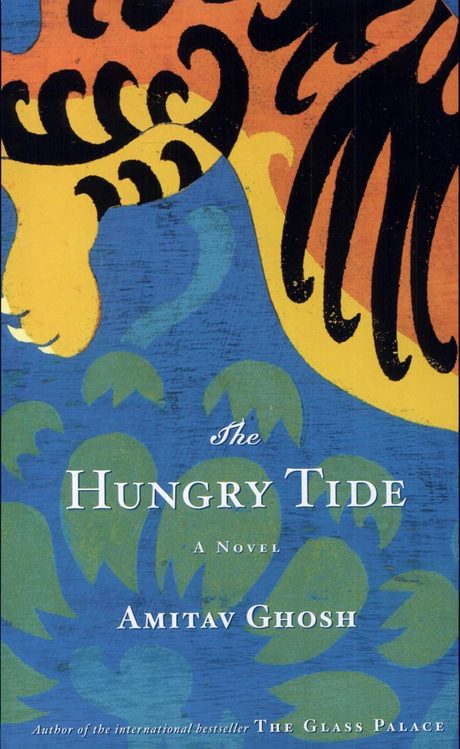
The Hungry Tide
Amitav Ghosh2004about 354 pages
A dolphin scientist and a Delhi translator meet in the Sundarbans, where the islands rearrange themselves twice a day.
Piya Roy, a cetologist raised in America, comes to the Sundarbans to track river dolphins. Kanai Dutt, a translator from Delhi with a high opinion of himself, comes to read a notebook his dead uncle left behind. Between them stands Fokir, a fisherman who cannot read and knows the water better than any instrument. The tide country is the third character: mangrove islands that flood and reappear, tigers that take people every year, and a settlement cleared by the state in 1979 whose ghost sits under the whole book. Ghosh is writing about who gets to speak for a place, without turning it into a lecture.
Why it is at 3
Third because it is the easiest Ghosh to fall into and the one most people actually finish. The story is contemporary, the cast is small, and the geography does the heavy lifting instead of footnotes. It sits below Sea of Poppies only because the love triangle at the centre is the weakest thing in it. Read it before Gun Island, since Piya turns up there too.
Read it ifyou want nature writing that still keeps a pulse
Skip it ifyou dislike novels where a scientist explains her work at length
tidal, tense, humaneBest for: nervous first-time readerssundarbansbengalclimate
4
The empire door
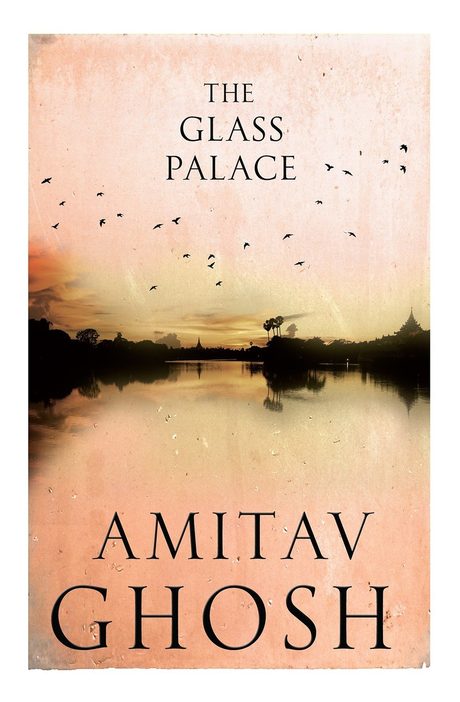
The Glass Palace
Amitav Ghosh2000about 604 pages
A boy watches the British march a king out of Mandalay, then spends sixty years getting rich on Burmese teak.
It opens in 1885 with British troops walking King Thebaw and Queen Supayalat out of the palace and into exile in India, watched by Rajkumar, an orphaned Indian boy working at a food stall. He grows into a timber merchant. The novel then follows his family, and the family of Dolly, an attendant from the royal household, through teak camps in Burma, rubber estates in Malaya, and the Second World War, when Indian soldiers in the British army had to work out whose war they were fighting. This is Ghosh at his most nineteenth century, in the good sense: fortunes, marriages, betrayals, an ending you feel in your chest.
Why it is at 4
Fourth because it makes you care about three generations before you notice you have been taught the modern history of Burma. It sits below the first Ibis book only because the last third thins out as the cast scatters across three countries. If family sagas move you more than sea stories, swap this with number two and start here instead.
Read it ifyou want a three-generation saga with real history inside it
Skip it ifyou lose track of who is who in large family trees
sweeping, patient, sadBest for: fans of family sagasburmaempirefamily saga
5

The ideas door
In an Antique Land
Amitav Ghosh1992about 296 pages
Ghosh does fieldwork in an Egyptian village while chasing a twelfth-century merchant and his Indian slave through old letters.
In the early 1980s Ghosh lived in two villages in the Nile delta as a young anthropologist, learning Arabic and being cross-examined daily by farmers about whether Indians really burn their dead. Braided into that is a piece of detective work. From letters preserved for centuries in a Cairo synagogue storeroom, he reconstructs the trading life of Abraham Ben Yiju, a Jewish merchant who lived and traded in Mangalore, and of Bomma, the Indian slave who worked with him. Two worlds, eight hundred years apart, both showing an Indian Ocean where people moved and mixed far more freely than the modern map suggests.
Why it is at 5
Fifth, and the best of the nonfiction by a distance. The village chapters are funny in a way his novels rarely allow, and the historical half reads like a mystery with pages torn out. It ranks below the four novels above it because the two threads never quite braid into one book. Read it if the Ibis novels leave you wanting the research.
Read it ifyou like travel writing with a historian's patience
Skip it ifyou want a plot that resolves at the end
curious, warm, scholarlyBest for: readers who enjoy history detoursnonfictionegyptindian oceanhistory
6
The empire door
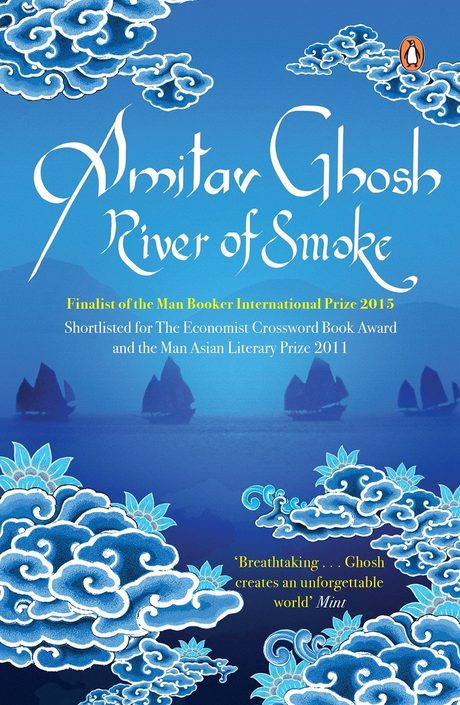
River of Smoke
Amitav Ghosh2011about 583 pages
Book two leaves the ship for Canton, where a Parsi trader from Bombay bets everything on one cargo of opium.
A storm scatters the cast of Sea of Poppies and the story picks up in Canton, in the foreign enclave where European and Indian traders lived under Chinese rules they mostly ignored. At the centre is Bahram Modi, a Parsi merchant who married into a Bombay shipbuilding family and wants one enormous score so he can finally be his own man. Around him are a plant hunter looking for a rare camellia, a painter's son writing gossipy letters home, and a Chinese commissioner arriving with orders to end the opium business for good. Less adventure than book one, and a much larger world.
Why it is at 6
Sixth because it is the middle book and it behaves like one. Ghosh trades the ship's crowd for a city and a trade dispute, so readers who came for Deeti often stall here. Stay for Bahram, the best character in the whole trilogy, and for the moment a private business decides it can go to war with a country.
Read it ifyou want the economics of empire in novel form
Skip it ifyou only came back for the Ibis crew from book one
mercantile, textured, slowerBest for: trilogy completistsibis trilogycantonopium war
7
The ideas door
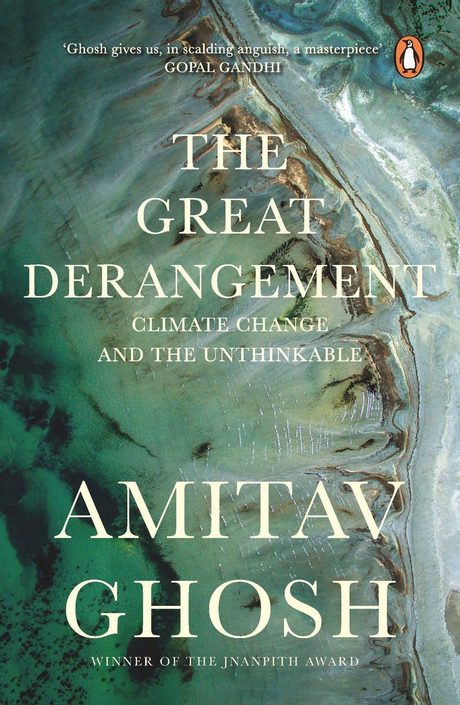
The Great Derangement
Amitav Ghosh2016about 200 pages
Two hundred pages arguing that serious novels cannot handle climate change, from a novelist who caught his own books failing at it.
Ghosh opens with a tornado that hit Delhi in 1978, which he walked through as a student, and admits he has never been able to put it in a novel because readers would find it unbelievable. From there he builds his case: the modern literary novel was trained to prefer the probable, so freak weather got pushed off to science fiction and thrillers, and the biggest story of our century has no room in the form. He then turns to history and to politics, on how Asia's part in the carbon story gets told wrong. It began as a set of lectures and it still moves like good talking.
Why it is at 7
Seventh, and the highest of the argument books after In an Antique Land, because this is the one Ghosh title that changed how I read other people's novels. It is short, it argues in the open, and it is honest about his own failures. It is not higher because the political section is thinner than the literary one, and because an argument, however good, is not a story.
Read it ifyou want an argument you can finish in one sitting
Skip it ifyou want charts and data, since this is a literary case
brisk, arguing, unsettlingBest for: one Sunday afternoonnonfictionclimateessays
8
The Bengal door
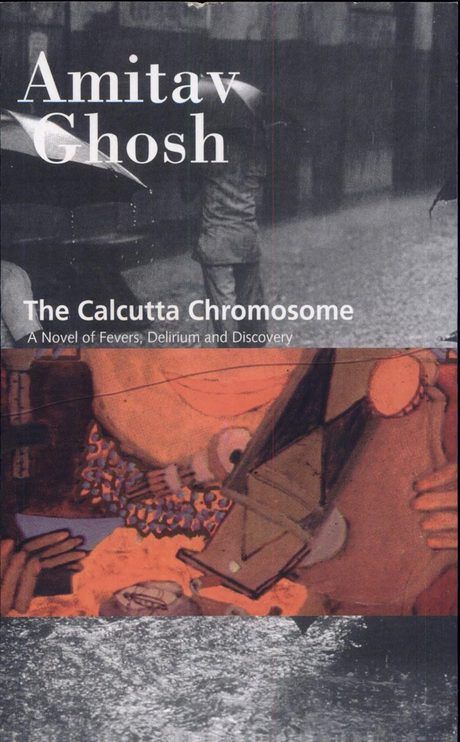
The Calcutta Chromosome
Amitav Ghosh1995about 268 pages
A near-future clerk in New York finds a damaged ID card and pulls a thread that leads back to Victorian malaria research.
Antar works alone in a New York apartment for a global bureaucracy, feeding old records into a machine, when a battered ID card surfaces belonging to a man called Murugan who disappeared in Calcutta. Murugan's obsession was Ronald Ross, the British doctor who worked out how malaria travels through mosquitoes, and his theory was that the discovery had been steered by Indian assistants running a secret counter-science of their own. The novel is part ghost story, part medical thriller, part conspiracy, and it refuses to explain itself at the end. Nothing else in his work sounds remotely like it.
Why it is at 8
Eighth because it is the most inventive book he has written and the least controlled. Readers either call it the hidden gem or the one they could not finish, and both camps have a point. It sits here rather than higher because the ending withholds so much that some people feel cheated. Come to it after two other Ghosh books, not before.
Read it ifyou like science fiction that leaves the door open
Skip it ifyou need an ending that answers the questions it raised
eerie, feverish, unresolvedBest for: readers who like weird fictionscience fictioncalcuttamedicine
9
The empire door
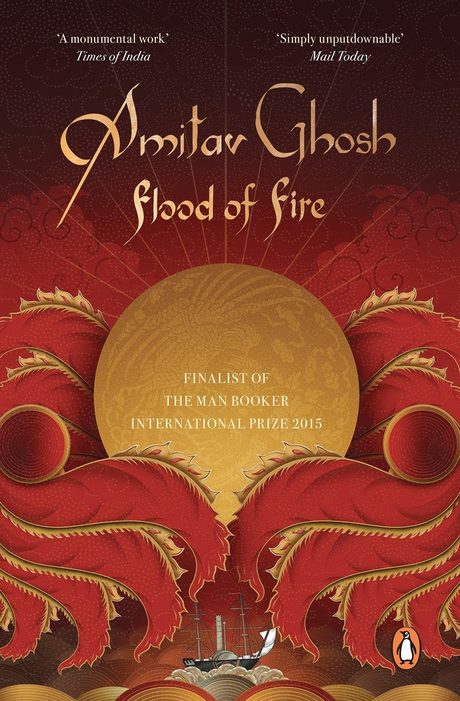
Flood of Fire
Amitav Ghosh2015about 712 pages
The trilogy ends in a shooting war, seen partly through an Indian sepoy sent to fight for the traders who ruined his sister.
Britain sends an expeditionary force to China to protect the opium business, and a large part of that force is Indian. Ghosh's route into the war is Kesri Singh, a career soldier and Deeti's brother, who has spent his life inside a regiment that is now being used as a debt collector. Around him the survivors return: a widow travelling to Canton to claim her late husband's estate, a former convict remaking himself under a new name, an American sailor drifting toward the worst version of himself. It ends where the trilogy was always heading, with a war won by the wrong side and an island called Hong Kong changing hands.
Why it is at 9
Ninth because it delivers the war the first two books kept promising, and Kesri's chapters on regimental life are the freshest writing in it. It ranks under the other two Ibis novels because the plotting gets busy and one major character's turn feels forced rather than earned. Still the right ending, and nobody stops at book two once they know it is coming.
Read it ifyou have read the first two and want the war itself
Skip it ifyou have not read Sea of Poppies, since nothing here stands alone
martial, sprawling, finalBest for: finishing the Ibis trilogyibis trilogyopium warsepoys
10
The ideas door
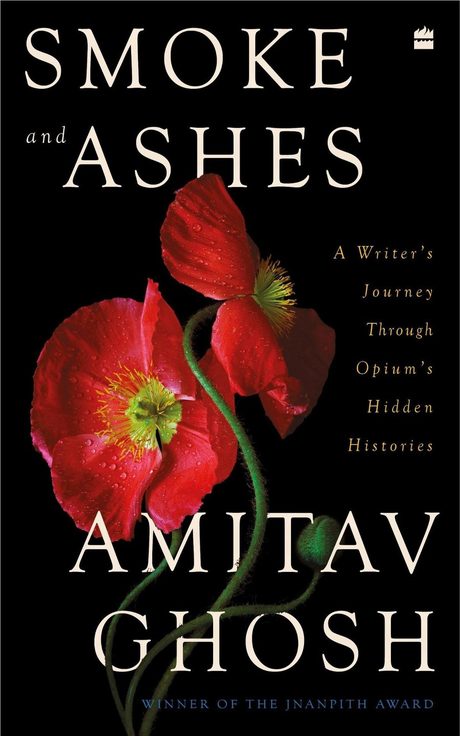
Smoke and Ashes
Amitav Ghosh2023about 410 pages
The research behind the Ibis trilogy, written up as history: how opium built Bombay, Calcutta and several respectable American fortunes.
After a decade in the archives for three novels, Ghosh wrote the nonfiction version. It follows the poppy from the fields of Bihar to Chinese ports, and then follows the money: the Indian merchants who got rich, the British administration that ran a narcotics business as public policy, and the New England families whose polite old wealth started in the China trade. He keeps himself in the frame throughout, including what the research turned up about his own family's movements. Parts read like a travel book and parts like a charge sheet, and the two modes hold together better than they should.
Why it is at 10
Tenth because it is genuinely good and genuinely optional. If the Ibis trilogy took hold of you, this is the commentary track and it will send you back to book one. If you have not read the novels, the same material arrives with much less pleasure attached. That dependence is the only reason it sits this low.
Read it ifyou finished the Ibis trilogy and want the sources
Skip it ifyou have not read the novels yet
investigative, personal, angryBest for: after the Ibis trilogynonfictionopiumhistory
11
The ideas door
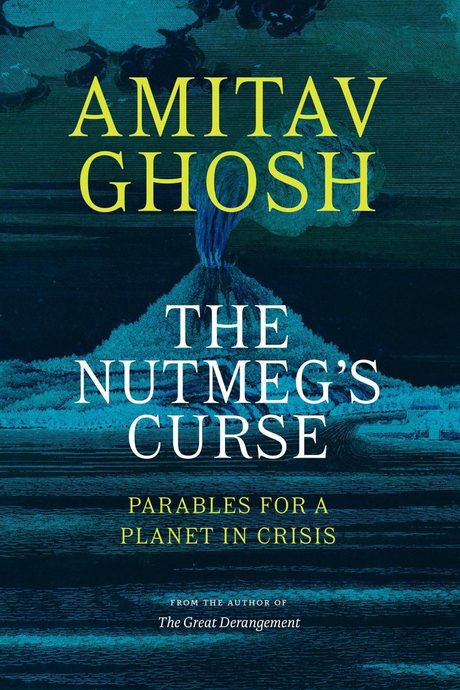
The Nutmeg's Curse
Amitav Ghosh2021about 350 pages
Starts with a Dutch massacre on a nutmeg island in 1621 and argues the climate crisis began as a colonial habit.
In 1621 the Dutch East India Company took the Banda Islands by killing or enslaving most of the people living on them, because those islands held the world's nutmeg. Ghosh uses that as his opening parable and works outward from it, arguing that treating land as inert stuff to be emptied and used is not a modern accident but a habit four centuries old. He brings in indigenous ways of seeing the earth, the politics of the pandemic years, and the uncomfortable fact that plantation owners understood the planet as a machine long before anyone built one.
Why it is at 11
Eleventh because the thesis is fully stated in the first fifty pages and then repeated with new examples for two hundred more. When it lands, it lands hard. It sits below The Great Derangement, which makes a sharper case in half the space. Read this one only if that book left you hungry for the colonial half of the story.
Read it ifyou want the colonial roots of the climate crisis
Skip it ifyou dislike books that circle the same point repeatedly
furious, historical, essayisticBest for: readers of climate nonfictionnonfictionclimatecolonialism
12
The Bengal door
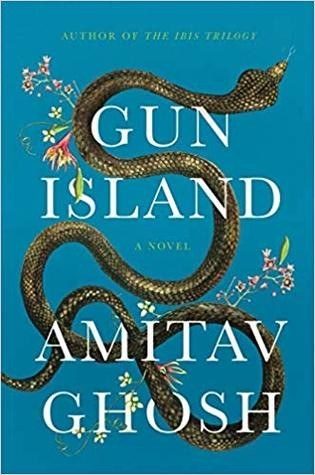
Gun Island
Amitav Ghosh2019about 352 pages
A rare book dealer chases a Bengali folk legend from the Sundarbans to Venice, and keeps bumping into coincidences.
Deen Datta, a Brooklyn dealer in rare books, gets pulled into the legend of a merchant chased across the seas by the snake goddess Manasa Devi. The chase takes him to a shrine in the Sundarbans, then to Los Angeles during a wildfire, then to Venice, where young Bengali men who crossed half the world on foot and in boats are working the edges of the city. Piya from The Hungry Tide is here too. The real subject is migration on a heating planet, and the argument from The Great Derangement is visible in the machinery of the plot.
Why it is at 12
Last, and I say that as someone who has read everything he has published twice. The ideas are the right ideas and the Venice chapters carry real reporting, but the story runs on coincidence and several characters talk like footnotes with legs. Come to Gun Island once you already trust him, and read it as a companion to his climate nonfiction rather than as a novel.
Read it ifyou have read The Hungry Tide and want its loose sequel
Skip it ifyou want characters who sound like people rather than arguments
restless, topical, unevenBest for: completists onlyclimatemigrationsundarbans
Worth knowing
The three doors, and how to find yours
The Bengal door is The Shadow Lines, The Hungry Tide, The Calcutta Chromosome and Gun Island. Rivers, families, Calcutta, the delta, and history arriving through people who never asked for it. Walk in here if you want to feel something before you learn something.
The empire door is Sea of Poppies, River of Smoke, Flood of Fire and The Glass Palace. Big casts, big ships, teak and opium and armies, with five hundred pages as the normal size. Walk in here if you already like historical fiction and want the version where India is not the scenery.
The ideas door is In an Antique Land, The Great Derangement, Smoke and Ashes and The Nutmeg's Curse. No plot, a thesis, and a writer who tells you exactly what he thinks. Walk in here if you read nonfiction on the train and save novels for holidays.
Almost everyone who bounces off Ghosh walked in through the wrong door. A reader who loves quiet contemporary novels will not survive Flood of Fire, and a reader who wants a war will find The Shadow Lines slow for sixty pages. Pick the door first, then pick the book.
Worth knowing
The Ibis trilogy: reading order and the dialect problem
Read them in publication order, which is also story order: Sea of Poppies, then River of Smoke, then Flood of Fire. There is no clever alternative sequence and no reason to invent one. The thing worth knowing in advance is that book two moves to a different city and drops most of the crew from book one, which is exactly where readers quit. If you expect that, you will not think the story has lost its way.
Now the dialect, because it is the real reason people abandon Sea of Poppies. The book is written in the working languages of that ocean: Bhojpuri turns of phrase from the Bihar villages, the pidgin that lascar sailors used across half the world, and the Anglo-Indian slang that later filled dictionaries like Hobson-Jobson. Ghosh does not gloss any of it as you go. The first eighty pages feel like eavesdropping on a crowded platform where three languages are running at once.
The fix is not a dictionary. Read at your normal speed, let the unfamiliar words slide past, and trust that the sentence around them always carries the meaning. By chapter six your ear has adjusted and you stop noticing. There is a glossary of sorts at the back of Sea of Poppies, the Ibis Chrestomathy, but it is written in the voice of one of the characters and works far better as dessert after the meal than as a manual during it.
People also ask
Questions, answered
Which Amitav Ghosh book should I read first?
The Shadow Lines, unless you already love long historical novels, in which case start with Sea of Poppies. Shadow Lines is short, it feels contemporary, and it shows you what he can do with memory and family without asking you to hold a century of trade history in your head. If you mostly read nonfiction, start with The Great Derangement and see whether his voice suits you before you commit to a 600 page novel.
What is the correct Ibis trilogy reading order?
Sea of Poppies, then River of Smoke, then Flood of Fire. Publication order and story order are the same here, so there is nothing to shuffle. The one thing worth knowing is that book two changes city and cast, so it reads like a different novel for the first hundred pages. Book three brings almost everyone back and pays off both of the earlier volumes.
Is Sea of Poppies difficult to read?
The first eighty pages are, and then it stops being difficult. The dialogue mixes Bhojpuri, sailor pidgin and Anglo-Indian slang with no glossary in sight, which makes careful readers feel slow and stupid. Do not look the words up. Read at your usual pace, let the unknown ones pass, and your ear will sort them out by the second week. Most people who abandon this novel abandon it in the first three days.
Did Amitav Ghosh ever win the Booker Prize?
No. Sea of Poppies reached the Booker shortlist in 2008, the year The White Tiger took the prize, and that is the closest he has come to that particular one. It matters less than it sounds. The Ibis trilogy is the work most people mean when they talk about his best writing, and the prize record of the other two volumes tells you nothing useful about them.
Do I need to read The Hungry Tide before Gun Island?
You do not need to, but you will get more from Gun Island if you have. Piya, the dolphin researcher from The Hungry Tide, appears in the later novel, and the Sundarbans chapters assume you already care about that country. Reading them in order also makes the shift in his concerns very clear, from a place and its people in 2004 to migration and weather in 2019.
Is Amitav Ghosh's nonfiction worth reading if I only read novels?
Start with In an Antique Land, which is nonfiction that behaves like a novel, with characters, a village and a mystery running underneath. If that works for you, The Great Derangement is next, and it is short enough to finish on a Sunday. Leave The Nutmeg's Curse until you are sure you want the long version of the same argument, and save Smoke and Ashes for after the Ibis trilogy.
Before you go
What to read tonight
If you want to start tonight, buy The Shadow Lines and give it two clear hours, because the first thirty pages are quiet and the payoff is stacked at the end. If you want a holiday book instead, take Sea of Poppies somewhere with bad phone signal and agree with yourself not to fight the language for the first week.
Choosing between his two big historical projects is simpler than it looks. The Glass Palace is a family saga that happens to teach you Burma, while the Ibis trilogy is a history of the opium trade that happens to contain brilliant people. Pick by which of those you want to carry home. And once you finish the trilogy, Smoke and Ashes is sitting there ready to tell you which parts were true, which is a strange and satisfying way to close out a reading year.
Keep going
Lists that pair with this one
Indian Fiction
16 Best Books to Understand India, Ranked by What They Explain
Sixteen books, ten doors into the same country: history, caste, the mega city, the village, money, and where to start tonight.
Indian Fiction
14 Novels Set in Kolkata, From Colonial Calcutta to Now
Ranked by how much of the real city ends up in your head, and labelled with the era each one drops you into.
Indian Fiction
14 Best Partition Novels and Books, Ranked by Where to Start
Fiction and first-hand testimony from both sides of the 1947 line, ordered so you begin with the one you can actually finish.
Authors
The 12 Best Khushwant Singh Books, Ranked Honestly
He wrote one great novel, two serious histories, and a long shelf of newspaper columns sold as books. Here is which is which.
Indian Fiction
The 20 Best Indian Books in Translation, Ranked by Where to Start
Twenty books from ten Indian languages, ordered from the easiest way in to the one that will fight you, with the translator named every time.