The Penguin India edition of A Suitable Boy runs to 1,372 pages, roughly the weight of a small dog and about six weeks of your evenings. People who finish it rarely say it was hard. They say it went quickly, which is a strange compliment to pay a book that size, and it is the exact thing this list is trying to find you again.
Length and difficulty are not the same thing, and the commonest mistake after Seth is choosing the next book by thickness. A Suitable Boy is enormous and easy. The God of Small Things is a third of the size and will have you rereading paragraphs. So every book here carries three facts above the title: how many pages in a named edition, which kind of hard it is, and how many days it takes at thirty pages a night.
The ranking runs on how much of the Suitable Boy experience comes back, and I mean three specific things: a cast big enough that you start caring who marries whom, a country arguing with itself in the background, and a plot that keeps moving while the arguing goes on. Prestige did not decide the order.
Twelve books, ranked one to twelve, with the two shortest at the bottom because they take longer per page than anything above them. Quick picks below if you want to start tonight.
How I picked these
- A real page count from a named edition, taken from the edition my checker actually pulled, because Indian, British and American printings of the same novel can differ by two hundred pages.
- Big cast or big country. Novels that are long because one consciousness is thinking slowly did not make it, however good they are.
- Every title checked through Google Books and Open Library with a real cover on file.
- I dropped Kiran Nagarkar's Cuckold, which belongs here on merit, because no edition anywhere had a usable cover image to show you. That is a failure of the internet, not of the book.
- Two authors appear twice, Rohinton Mistry and Amitav Ghosh, because they own this shelf and pretending otherwise would be dishonest.
- No Shantaram, no campus romances, and only one mythology retelling, because those have their own lists on this site.
The whole list at a glance
All 12 books, in order
| # | Book | Author | Year | Vibe | Best for |
|---|
| 1 | A Fine Balance | Rohinton Mistry | 1995 | plain, warm, devastating | readers who loved Seth's cast |
| 2 | Sea of Poppies | Amitav Ghosh | 2008 | salty, funny, kinetic | readers who want momentum |
| 3 | Midnight's Children | Salman Rushdie | 1981 | loud, digressive, dazzling | readers with an hour a night |
| 4 | Sacred Games | Vikram Chandra | 2006 | sprawling, profane, addictive | readers who want Bombay whole |
| 5 | Delhi: A Novel | Khushwant Singh | 1990 | bawdy, brisk, unsentimental | Delhi readers and history lovers |
| 6 | Family Matters | Rohinton Mistry | 2002 | quiet, tender, unsparing | readers who want a smaller story |
| 7 | The Great Indian Novel | Shashi Tharoor | 1989 | clever, showy, satirical | readers who like literary in-jokes |
| 8 | The God of Small Things | Arundhati Roy | 1997 | lush, circling, ominous | readers who reread sentences |
| 9 | Tomb of Sand | Geetanjali Shree | 2018 | playful, digressive, strange | patient readers on holiday |
| 10 | The Palace of Illusions | Chitra Banerjee Divakaruni | 2008 | brisk, intimate, romantic | first long novel of your life |
| 11 | The Shadow Lines | Amitav Ghosh | 1988 | quiet, layered, precise | readers who like structure |
| 12 | Clear Light of Day | Anita Desai | 1980 | still, hot, exact | readers who like atmosphere |
The list
The books, ranked
1
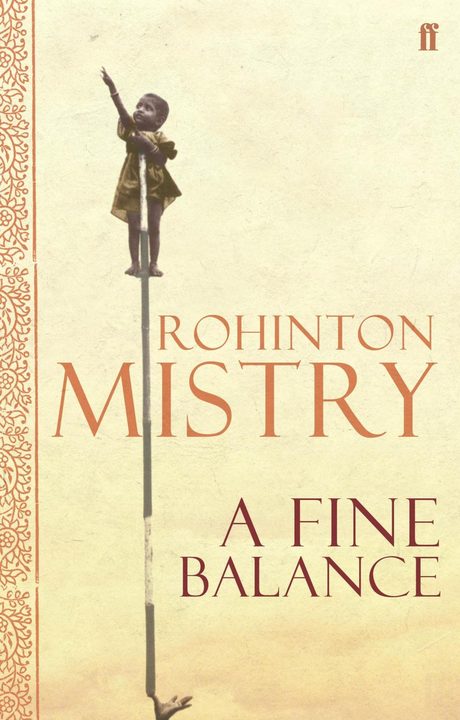
816 pages (Faber), easy prose, hard heart, 27 days at 30 a night
A Fine Balance
Rohinton Mistry1995about 816 pages
Four strangers share a flat in an unnamed city during the Emergency, and Mistry writes them with more tenderness than the country ever shows them.
A widow taking in tailoring work to stay independent, two tailors who left their village because their caste made staying impossible, and a student whose parents sent him to the city for a better life. They end up in one small flat while the Emergency tightens outside it. Mistry writes plainly, almost transparently, and he is very funny in the early stretches, which is precisely what makes the rest land the way it does. The city is never named and everybody who has lived in Bombay knows exactly which city it is.
Why it is at 1
First because it is the closest anyone has come to what Seth does: a big cast you hold in your head without effort, ordinary lives set against a national argument, prose that never asks to be admired. Where Seth stays warm the whole way, Mistry turns cruel in the last third. It is the better novel and much the harder one to recover from.
Read it ifyou want a huge readable novel about ordinary Indian lives
Skip it ifyou need hope at the end, because this book does not supply any
plain, warm, devastatingBest for: readers who loved Seth's castemergencybombayfamily
Heads up: forced sterilisation, caste violence, suicide
2

565 pages (FSG), looks hard, is not, 19 days at 30 a night
Sea of Poppies
Amitav Ghosh2008about 565 pages
Opium farmers, a bankrupt raja, a runaway widow and an American sailor all end up on one ship leaving Calcutta in 1838.
The Ibis is being fitted out to carry indentured labour across the sea, and Ghosh assembles her passengers from every corner of the opium economy: a Bihari peasant whose fields grow poppy instead of food, a widow escaping her husband's pyre, a mixed-race sailor passing as white, a zamindar ruined by an English trading house. The famous thing about the book is the language, a swirl of lascar sailor talk, Bhojpuri and Anglo-Indian slang. Give it forty pages. Your ear adjusts, and then it becomes the most purely enjoyable Indian novel of the last twenty years.
Why it is at 2
Second because it is the most fun here and it never stops moving. Seth gives you one town and a marriage question, Ghosh gives you an ocean and a ship, but the pleasure is identical: dozens of people whose paths you watch slowly converge. It misses first place only because it is book one of a trilogy and ends mid-voyage, which is either an invitation or an irritation.
Read it ifyou want a big cast and a story that never stalls
Skip it ifunexplained slang in dialogue frustrates you
salty, funny, kineticBest for: readers who want momentumhistoricalopium tradetrilogy
Pairs with: River of Smoke, the second Ibis book, if you finish this one hungry.
3
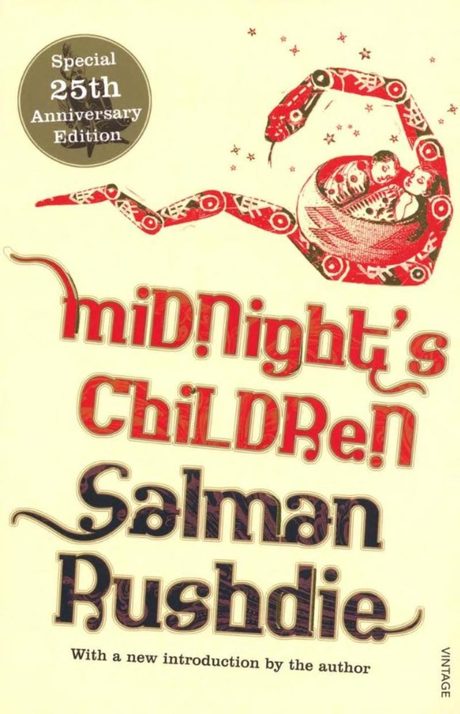
674 pages (Random House), genuinely hard, 23 days at 30 a night
Midnight's Children
Salman Rushdie1981about 674 pages
A boy born at the stroke of midnight on 15 August 1947 finds his life handcuffed to the country's, and neither of them recovers.
Saleem Sinai narrates his own life to a woman in a pickle factory, and his life keeps turning out to be the nation's life in a bad wig: Partition, the wars, the Emergency, all of it happening to his body. The telling is loud, digressive and full of jokes, and Saleem is unreliable in ways he cheerfully admits. This is the book that made Indian writing in English sound like Indian speech rather than a British import, and every novelist on this list working after 1981 is standing in the space it opened.
Why it is at 3
Third on merit and lower than you might expect on comfort. It has the scope of A Suitable Boy and none of the ease: the sentences pile up, the narrator interrupts himself, and reading it in fifteen-minute bursts will lose you the thread. Forty pages at a sitting is the minimum. It rewards that and punishes anything less.
Read it ifyou want the novel that changed Indian writing in English
Skip it ifyou want a narrator who tells you things straight
loud, digressive, dazzlingBest for: readers with an hour a nightpartitionmagic realismclassic
4
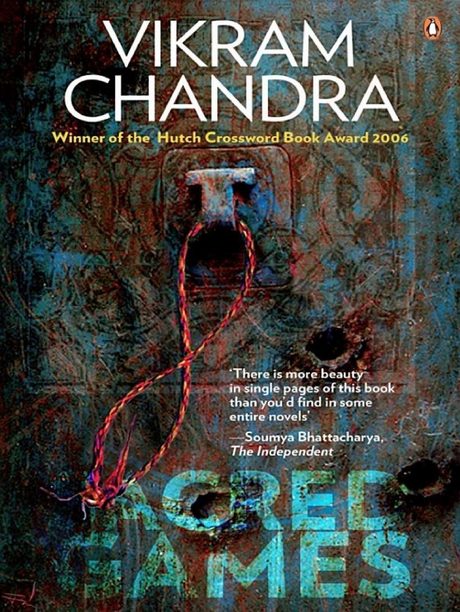
936 pages (Harper), easy prose, enormous bulk, 31 days at 30 a night
Sacred Games
Vikram Chandra2006about 1351 pages
A Bombay police inspector and a Bombay gangster tell their halves of the same story, and the city fills all the space between them.
Sartaj Singh, a middling Sikh inspector with a failed marriage, gets a tip about a bunker in the suburbs where the gangster Ganesh Gaitonde has sealed himself in. From there the book alternates: Sartaj working the case in the present, Gaitonde narrating his rise from nothing. Around the two of them Chandra builds the whole apparatus, film financiers, intelligence officers, small-time informers, mothers, until the crime plot is nearly the least interesting thing in it. The Netflix series took the frame and threw most of the book away, so having watched it costs you nothing.
Why it is at 4
Fourth because it delivers the Suitable Boy pleasure at Suitable Boy scale: hundreds of pages of people simply living, with a plot underneath to pull you through. The prose is the easiest here after Mistry. What keeps it out of the top three is padding, particularly the long inset chapters that step away from both narrators. Skimming those is allowed.
Read it ifyou want a very long book that reads fast
Skip it ifyou dislike graphic violence and police procedure
sprawling, profane, addictiveBest for: readers who want Bombay wholecrimebombaypolice
Heads up: graphic violence, sexual violence, communal riots
5

460 pages (Penguin), easy and rude, 16 days at 30 a night
Delhi: A Novel
Khushwant Singh1990about 460 pages
Khushwant Singh's Delhi is narrated by an ageing reprobate and the hijra he loves, with six centuries of the city's history cut in between.
The frame is a shabby present-day narrator, a journalist who has spent his life on the fringes of Delhi society, and Bhagmati, the hijra he keeps returning to. Between their chapters Singh drops into the city's past and lets it speak in the first person: a poet, a Mughal, a sweeper, an invader, a builder of tombs. The historical chapters are brisk and frequently filthy, and the book ends in 1984 in a way that is very hard to read calmly. Singh was seventy-five when it came out and clearly past caring who he offended.
Why it is at 5
Fifth because it does the state-of-the-nation job through a city rather than a family, and because it is the fastest read here after The Palace of Illusions. It is also the most uneven book on the list: some historical chapters are superb and two or three are duds you can skip without losing anything. Nothing else here is this rude.
Read it ifyou want Delhi's history told by the people who lived in it
Skip it ifcrude sexual comedy inside a historical novel puts you off
bawdy, brisk, unsentimentalBest for: Delhi readers and history loversdelhihistoricalsatire
Heads up: explicit sex, communal violence, the 1984 anti-Sikh pogrom
6

532 pages (Faber), easy, 18 days at 30 a night
Family Matters
Rohinton Mistry2002about 532 pages
An old Parsi man with Parkinson's is passed between his stepchildren's flat and his daughter's, and a family quietly comes apart over money and space.
Nariman Vakeel breaks an ankle and can no longer manage alone, so he lands in his daughter Roxana's two-room flat in Bombay, where there is no room and less money. Mistry then does the thing he does better than anyone: watching decent people get ground down by an arithmetic they cannot solve. There is a marriage in the background that explains Nariman's entire life, revealed slowly and painfully. It is smaller than A Fine Balance and far less punishing, and it is the best novel I know about what looking after a parent actually costs the people doing it.
Why it is at 6
Sixth because the cast is small and the country stays in the background, so it gives back less of the Seth effect than anything above it. Everything else about it is first rate. If A Fine Balance sounds like more suffering than you want in one month, start here instead: same author, same city, a third of the cruelty.
Read it ifyou want a domestic novel about ageing parents and money
Skip it ifyou are currently caring for a sick parent yourself
quiet, tender, unsparingBest for: readers who want a smaller storyparsibombayfamily
7
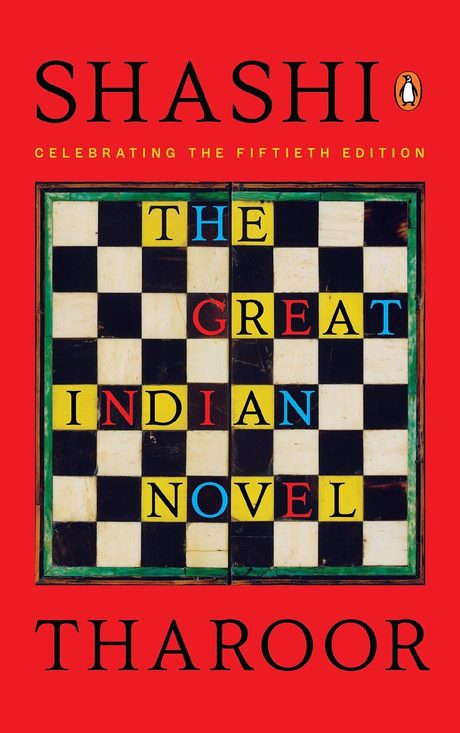
495 pages (Penguin), medium, needs context, 17 days at 30 a night
The Great Indian Novel
Shashi Tharoor1989about 495 pages
Tharoor retells the Mahabharata as the story of the Indian independence movement, with Gandhi as Bhishma and an enormous number of puns.
The conceit is simple and the execution is not. The epic's characters become the figures of twentieth century Indian politics, and the eighteen books of the Mahabharata become eighteen books about the freedom struggle, Partition and the Emergency, all of it dictated by Ved Vyas to a reluctant secretary. Tharoor is showing off on every page, and whether that delights or annoys you will decide how you feel about the whole enterprise. The satire is sharpest on the generation that inherited the republic rather than the one that won it.
Why it is at 7
Seventh, with a condition attached. If you know the Mahabharata roughly and the Nehru era roughly, this is the cleverest book on the list and very funny with it. If you know neither, half the jokes arrive as noise and you will feel locked out of your own book. That dependence on what you already know is the only reason it is not higher.
Read it ifyou know your Mahabharata and your Nehru era
Skip it ifyou want a novel that works without prior homework
clever, showy, satiricalBest for: readers who like literary in-jokessatiremahabharatapolitics
8
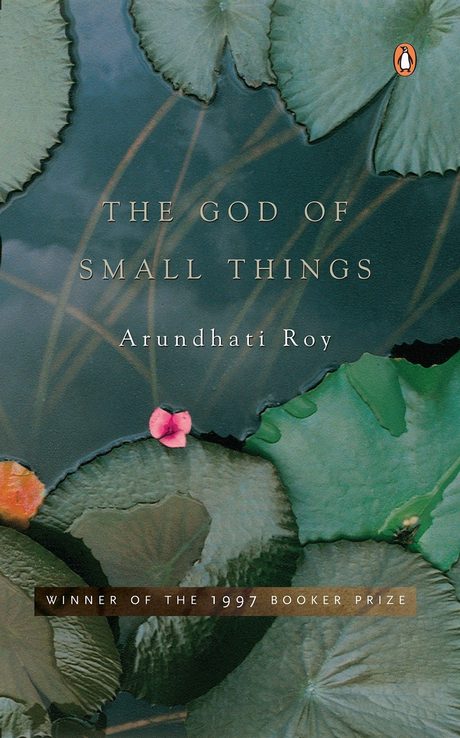
343 pages (Penguin), hard prose, short book, 12 days at 30 a night
The God of Small Things
Arundhati Roy1997about 343 pages
Two twins in Kerala, one afternoon that breaks their family, and a sentence-by-sentence style that either takes hold of you or does not.
Estha and Rahel are seven years old when something happens by the river in Ayemenem that scatters their family across two decades and two continents. Roy tells it out of order, circling the event, so you know the outcome long before you know the cause and the dread builds anyway. The prose invents words, repeats phrases like refrains, and sees everything through a child's grammar. That style is the whole argument about this book. Some readers find it the most alive writing in Indian English. Others are exhausted by page fifty.
Why it is at 8
Eighth, which is a ranking about fit rather than quality. It has none of the Suitable Boy machinery: small cast, one family, no parliament. What it does share is Kerala politics running underneath a domestic story. Put it here as the palate cleanser between two long ones rather than as your month-long project.
Read it ifyou want language that takes a risk on every page
Skip it ifyou want plain prose and events in the order they happened
lush, circling, ominousBest for: readers who reread sentenceskeralaliteraryfamily
Heads up: child sexual abuse, caste violence, the death of a child
9

395 pages (Harper), genuinely hard, 14 days at 30 a night
Tomb of Sand
Geetanjali Shreetranslated by Daisy Rockwell2018about 395 pages
An eighty-year-old widow turns her face to the wall and refuses to get up, then gets up and does something nobody in her family expects.
Ma has lost her husband and taken to her bed with her back to the room. Her family manage her decline with the usual mixture of concern and irritation, and then she rises, moves in with her daughter, makes a friend nobody approves of, and sets off towards the Pakistan border. Shree writes with doors, crows and the border itself as speaking characters, and Daisy Rockwell's translation keeps the wordplay of the Hindi instead of smoothing it into standard English. The first hundred pages are a wall. Cross it and the last third is extraordinary.
Why it is at 9
Ninth because the promise of this list is books worth a month, and this is the one where I owe you the entry cost up front. Structurally it shares almost nothing with Seth. It is here as the most ambitious Indian novel of the last decade, the only one on this list written first in Hindi, and the winner of the International Booker in 2022. Start it on a holiday, not on a work night.
Read it ifyou want a novel that plays hard with form
Skip it ifyou want a story that starts moving early
playful, digressive, strangeBest for: patient readers on holidaytranslationhindipartition
10

388 pages (Pan Macmillan), easy, 13 days at 30 a night
The Palace of Illusions
Chitra Banerjee Divakaruni2008about 388 pages
The Mahabharata told by Draupadi, who finally gets opinions about the five husbands, the dice game and the war fought over her.
Divakaruni hands the epic to the woman at the centre of it and lets her narrate from her birth to the end of the war. Draupadi here is proud, sharp and often wrong, and the book is most alive when it stays with her irritations: five husbands sharing her by rota, a mother-in-law running the household, a lifelong pull towards Karna that she never acts on. The prose is straightforward and the pace is quick. Purists will object to the liberties taken. Readers who have never got through the epic will finish this one.
Why it is at 10
Tenth because it is the least like A Suitable Boy on this list and by far the most likely to be finished. It is here as the on-ramp. If you have never completed a novel over 350 pages, start with this, take the win, then come back for Sea of Poppies. Treat it as a doorway rather than a destination.
Read it ifyou want the Mahabharata from the inside and quickly
Skip it ifyou want the epic treated with reverence
brisk, intimate, romanticBest for: first long novel of your lifemythologymahabharataretelling
11
264 pages, looks easy, is not, 9 days at 30 a night
The Shadow Lines
Amitav Ghosh1988about 264 pages
A boy in Calcutta assembles his family's story out of other people's memories, and the borders on the map turn out to explain nothing.
An unnamed narrator moves between Calcutta, Dhaka and London, and between the 1960s and his own present, piecing together what happened to his cousin Tridib. Ghosh gives you the pieces out of order and expects you to hold them, and the payoff is a chapter near the end where a riot in two cities on opposite sides of a border becomes one single event. The novel's argument is that the lines drawn in 1947 created the very fear they claimed to prevent. It is 264 pages and it will take you as long as a 500-page book.
Why it is at 11
Eleventh purely on fit, since it has a small cast and no plot engine at all. On craft it might be the best-made novel here. It sits low because a reader arriving from A Suitable Boy wants motion, and this book wants patience. Read it after one of the big ones, when you have the appetite for something that works by accumulation.
Read it ifyou like memory, borders and a structure that jumps
Skip it ifyou want to know who is speaking on every page
quiet, layered, preciseBest for: readers who like structurepartitionmemorycalcutta
12

232 pages, shortest and slowest, 8 days at 30 a night
Clear Light of Day
Anita Desai1980about 232 pages
Two sisters in an old Delhi house pick at forty years of resentment over a single visit, and almost nothing happens, loudly.
Tara comes back to the family house in Old Delhi with her diplomat husband, and her sister Bim has stayed in it her whole life, teaching, looking after their brother, letting the garden go. The novel moves backwards through the family's history to the summer of 1947, when the house emptied out and Bim's life quietly closed around her. Desai works almost entirely in atmosphere, heat, dust, a dog, a well, and the resentments come out sideways inside ordinary conversation. It is the most old-fashioned novel here and the most exact about how siblings wound each other.
Why it is at 12
Twelfth and last for the same reason it is worth reading: it is the slowest book per page on this list. There is no plot pulling you and no cast to keep track of, only two women in a hot house in Old Delhi. If your reason for wanting a long Indian novel is the immersion rather than the story, this delivers it in a quarter of the pages.
Read it ifyou want a quiet novel about sisters and time
Skip it ifyou need something to happen in the first hundred pages
still, hot, exactBest for: readers who like atmospheredelhisiblingsliterary
Worth knowing
How the day count works
Thirty pages a day is about an hour for most people, and an hour is a realistic thing to defend on a weekday. At that rate a 600-page novel takes twenty days, an 800-page novel takes twenty-seven, and A Suitable Boy itself takes forty-six, which is why it took you two months and why you can stop feeling bad about that.
The number in each label assumes thirty pages a day, seven days a week. If you only read at weekends, multiply by three and a half. The one rule that actually matters with long novels is that you cannot take a two-week break in the middle. The cast falls out of your head, you come back, you cannot remember who anyone is, and the book dies on your bedside table. Slow and daily beats fast and interrupted, every single time.
Worth knowing
Long is not the same as hard
There are three kinds of difficulty on this list and readers confuse them constantly. The first is prose difficulty, sentences you have to read twice, which is Arundhati Roy and Geetanjali Shree. The second is structural difficulty, a chronology that jumps and a narrator who withholds, which is The Shadow Lines. The third is plain bulk, where every page is easy and there are nine hundred of them, which is Sacred Games and, for that matter, A Suitable Boy.
Bulk is the kind of hard most people can handle and most people fear. Prose difficulty is the kind people underestimate. Clear Light of Day is 232 pages and will take you longer than Delhi at 460, because Anita Desai writes in a register where nothing happens loudly and you have to stay awake to what is happening quietly. That is why the two shortest books sit at the bottom of this ranking. They are not lesser books. They are slower per page, and this list is honest about your evenings.
Worth knowing
If you want to read all twelve
Do it in this order rather than by rank: Palace of Illusions, Sea of Poppies, A Fine Balance, Family Matters, Delhi, Sacred Games, The Great Indian Novel, Midnight's Children, The God of Small Things, The Shadow Lines, Clear Light of Day, Tomb of Sand. That runs from easiest to hardest and keeps the two Mistrys apart, and it ends with the two books that need the most from you at a point where you have the stamina for them.
People also ask
Questions, answered
Which book is most like A Suitable Boy?
A Fine Balance by Rohinton Mistry, and it is not close. Same enormous cast that you somehow keep straight, same plain prose that never shows off, same trick of setting ordinary lives against a national crisis. The difference is temperature. Seth is warm and forgiving and ends roughly where you hope. Mistry is neither, and the last hundred pages are brutal. Read it anyway, then leave a week before you start anything else.
How long does it take to read A Suitable Boy?
The Penguin India edition runs 1,372 pages, so at thirty pages a day, roughly an hour a night, you finish in about forty-six days. Most people take much longer because they stop and restart, which is the real danger with a novel this size rather than the difficulty of the prose. Read it daily without a long gap and you will be surprised how fast it goes, because Seth is genuinely easy to read.
Is there a sequel to A Suitable Boy?
Vikram Seth announced one called A Suitable Girl, set decades later with Lata as a grandmother, and it has been pushed back repeatedly since 2009. It has still not been published and no firm date has been confirmed, so treat any listing that suggests otherwise with suspicion. If you want the same feeling now rather than someday, A Fine Balance and Sea of Poppies are the two closest things on this list.
Which long Indian novel is the easiest to read?
The Palace of Illusions at 388 pages, and then Sacred Games, which is nine hundred pages of very easy sentences. Ease and length are separate measurements. Sacred Games is nearly three times the size of The God of Small Things and asks less of you per page. If you are building the habit, go short and easy first, then long and easy, and only then try something hard and short.
Do I need to know Indian history to read these?
For most of them, no. A Fine Balance, Sea of Poppies, Family Matters and Sacred Games explain whatever you need as they go along. The Great Indian Novel is the exception and it genuinely expects you to know both the Mahabharata and the Nehru era, or half the jokes pass straight over your head. Midnight's Children goes down easier if you know roughly what happened in 1947, 1971 and 1975.
Should I read Midnight's Children or A Fine Balance first?
A Fine Balance, unless you already read a lot of literary fiction. Mistry's sentences carry you along and Rushdie's make you work, so the Mistry gives you the win and the confidence that comes with it. Take Midnight's Children second, in longer sittings, when you have a clear hour rather than fifteen minutes on a commute. Doing it the other way round is how people end up quitting both.
Before you go
What to read tonight
Pick by your evenings, not by your ambition. If you have an honest hour a night for the next month, start A Fine Balance tonight and read nothing else alongside it. If all you have is twenty minutes on a train, Sea of Poppies survives interruption better than anything else here, because each chapter has its own centre of gravity. And if you have already tried and failed at long novels twice, The Palace of Illusions is not a compromise, it is a way of proving to yourself that you finish things.
One last piece of advice from a man who has abandoned more thousand-page novels than he has finished. Keep a scrap of paper in the book and write down every new name as it arrives, with three words about who they are. It looks like homework in the first week. It is the reason you will still be reading in the fourth.
Keep going
Lists that pair with this one
Indian Fiction
16 Best Books to Understand India, Ranked by What They Explain
Sixteen books, ten doors into the same country: history, caste, the mega city, the village, money, and where to start tonight.
Indian Fiction
14 Best Partition Novels and Books, Ranked by Where to Start
Fiction and first-hand testimony from both sides of the 1947 line, ordered so you begin with the one you can actually finish.
Indian Fiction
The 20 Best Indian Books in Translation, Ranked by Where to Start
Twenty books from ten Indian languages, ordered from the easiest way in to the one that will fight you, with the translator named every time.
Indian Fiction
16 Best Novels Set in Mumbai, Mapped Neighbourhood by Neighbourhood
Sixteen Bombay novels ranked by how much of the city you carry out with you, from a Worli chawl to a tower in Vakola.
Indian Fiction
12 Best Novels Set in Delhi, Plus 3 That Are Not Fiction
Delhi is at least five cities stacked on one map, so I have ranked these by which one you actually take away.