I finished my first Perumal Murugan book on a Sunday afternoon and then sat on the balcony doing nothing for half an hour. It was a hundred and eighty pages about a goat. That is the part nobody warns you about. His books are small, plain, translated from Tamil, set in the same few villages around Tiruchengode in western Tamil Nadu, and they take the roof off.
Read four or five and a pattern shows up. Somebody is always being pressed by people who insist they mean well. A wife with no child, a boy owed to a landlord for a debt he never took, a brother handed the worst share of the family land, a bachelor nobody will give a daughter to. The pressure comes from family, from caste, from the price of water, from a temple calendar. So next to every book here I have named who is doing the squeezing, because that is the fastest way to tell whether a particular one is for you.
The ranking is a reading path, one to twelve, best starting point first. It weighs how good a book is against how much it asks of you on the day you open it, which is why his most complete novel sits in the middle instead of at the top. Everything here is translated from Tamil and I have named the translator for each. The 2015 episode gets a short factual section near the bottom, not a lecture.
How I picked these
- English editions only, each one verified through Google Books and Open Library with a real cover, so there are no ghost editions on this page.
- The year on every entry is the Tamil first publication, not the English edition, so you can see the order he actually wrote them in. The translations arrived in a completely different sequence.
- Ranked as a reading path, not a greatness table. Seasons of the Palm is probably the best written novel here and it sits at five, because handing it to someone on day one is a good way to lose them.
- Estuary is the one novel of his in English that I left off. I could not verify an edition with a real cover through either source, and of everything he has written it is the one I would give a new reader last.
- Edited anthologies and his non-fiction are out. This is the fiction, plus one story collection and one book of poems.
The whole list at a glance
All 12 books, in order
| # | Book | Author | Year | Vibe | Best for |
|---|
| 1 | Poonachi or The Story of a Black Goat | Perumal Murugan | 2016 | fable, dry, quietly furious | first-time Murugan readers |
| 2 | One Part Woman | Perumal Murugan | 2010 | tender, claustrophobic, humane | readers who love marriage novels |
| 3 | Pyre | Perumal Murugan | 2013 | tense, spare, unbearable | readers who want one short devastating novel |
| 4 | Fire Bird | Perumal Murugan | 2012 | patient, warm, unsettled | readers of long family novels |
| 5 | Seasons of the Palm | Perumal Murugan | 2000 | sunlit, cruel, unforgettable | readers ready for the hardest book |
| 6 | A Lonely Harvest | Perumal Murugan | 2014 | domestic, watchful, steady | readers who want the women's side |
| 7 | Trial by Silence | Perumal Murugan | 2014 | silent, tense, domestic | completists of the trilogy |
| 8 | The Goat Thief | Perumal Murugan | 2017 | compressed, sly, uneven | commuters and short story readers |
| 9 | Resolve | Perumal Murugan | 2008 | comic, repetitive, sharp | readers tired of grim village novels |
| 10 | Current Show | Perumal Murugan | 1993 | feverish, dark, fragmented | readers who like formal experiments |
| 11 | Rising Heat | Perumal Murugan | 1991 | angry, sprawling, young | readers who like early work |
| 12 | Songs of a Coward: Poems of Exile | Perumal Murugan | 2017 | bare, wounded, defiant | readers who finished One Part Woman |
The list
The books, ranked
1

The squeeze: one more mouth in a poor house
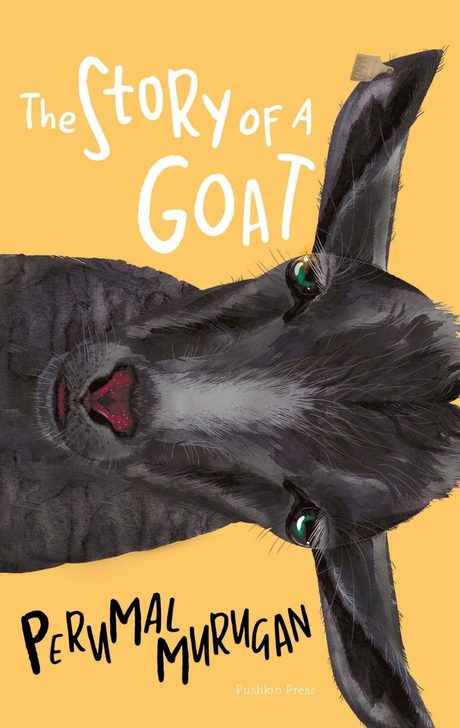
Poonachi or The Story of a Black Goat
Perumal Murugantranslated by N. Kalyan Raman2016
An old couple are handed a runt black goat, and keeping her alive turns into a quiet account of everyone the state cannot see.
A tall stranger gives an old farmer a black kid so small she fits in his palm, and the rest of the book is the work of keeping her alive: the milk she cannot get, the drought, the government office where every animal in the district has to be registered and stands in a queue to be counted. Murugan wrote it after his years of silence, and his own preface says he turned to animals because writing about human beings had become risky. For forty pages it reads like a folk tale you half remember. Then you notice what the queue is for.
Why it is at 1
First because it costs you one afternoon and hands you the whole writer: the small life, the dry humour, the state turning up where you did not expect it. It is also the gentlest entry if you are new to Indian fiction in translation, since nothing in it needs a footnote or a map.
Read it ifyou want a short book that keeps working on you for days
Skip it ifyou cannot read about an animal going hungry, because the goat's body carries the argument
fable, dry, quietly furiousBest for: first-time Murugan readersfableallegorytamil nadu
Heads up: animal suffering and hunger
2

The squeeze: two families and twelve childless years
One Part Woman
Perumal Murugantranslated by Aniruddhan Vasudevan2010about 211 pages
A couple who genuinely love each other are taken apart, slowly, by everybody's helpful suggestions about why they have no child.
Kali and Ponna have been married twelve years with no child, and in their village that is public property. Mothers, uncles, neighbours and priests keep arriving with vows, remedies, the offer of a second wife, one more temple to try. Murugan spends most of the novel inside the marriage itself, which is warm and teasing and physical, so every visit from a relative lands in it like a stone in a pot. The plot turns on the chariot festival at the hill temple, where by an old custom one night of the year loosens the rules. He sets the custom down plainly and lets you sit with it.
Why it is at 2
Second because it is the book people mean when they say his name, and because I know no other Indian novel this good on a happy marriage being worn down from outside. It is behind Poonachi only because it asks more of you, and because the last page opens a door that takes two more books to close.
Read it ifyou want a marriage novel where the antagonist is an entire village
Skip it ifyou need a resolved ending, because this one stops mid-breath
tender, claustrophobic, humaneBest for: readers who love marriage novelsmarriagecastevillage life
Heads up: caste, and the stigma around childlessness
3
The squeeze: one village against one inter-caste marriage
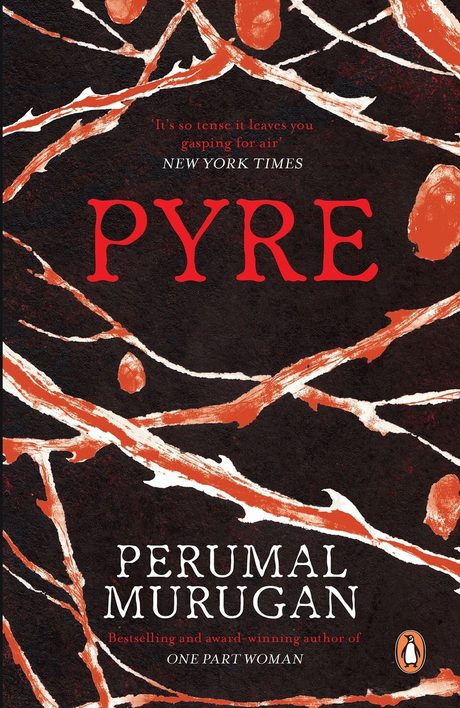
Pyre
Perumal Murugantranslated by Aniruddhan Vasudevan2013about 193 pages
A young couple marry across caste and come home to his village, where nobody shouts and nothing is fine.
Kumaresan brings his new wife Saroja back to his mother's house, which sits by itself on a rock. He is sure the place will get used to her. The village has one question, asked over and over in slightly different words: whose daughter is she. Most of the novel is waiting. Heat on the rock, gossip moving house to house, a mother grieving at full volume for the benefit of the street, a young woman alone in a hut all day while her husband is out selling soda. Murugan holds the temperature just under boiling for a hundred and ninety pages.
Why it is at 3
Third because it is the most efficient thing he has written and the book I have pushed on the most people. It ranks under One Part Woman only because it is bleaker, and because you can see where it is going by the second chapter. That is deliberate. The dread is the reading experience.
Read it ifyou want the shortest and hardest way into what he does
Skip it ifcaste violence in fiction sits too close to the news for you right now
tense, spare, unbearableBest for: readers who want one short devastating novelcastemarriageviolence
Heads up: caste violence
4
The squeeze: four brothers and one father's land
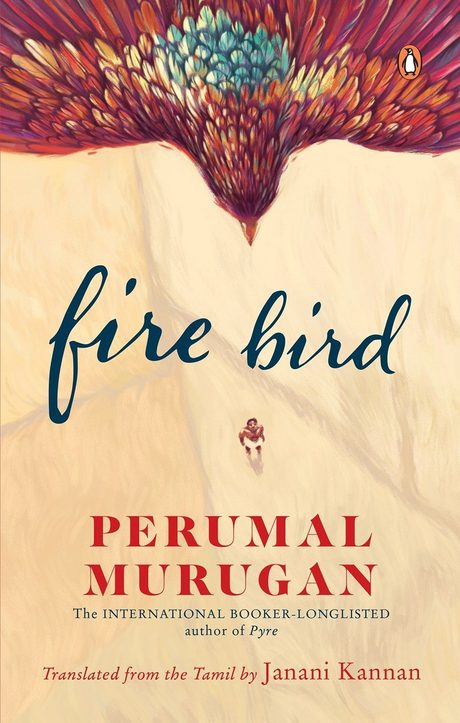
Fire Bird
Perumal Murugantranslated by Janani Kannan2012about 264 pages
After the family land is split, a man loads a cart and goes looking for a field nobody else has a claim on.
Muthu is handed the worst share when his father divides the land among his sons, so he sets out with a guide to buy new ground far enough away to be his alone. Half the novel is the search: soil, water table, the price of a well, the character of a whole village judged from its bus stand and its tea shop. The other half is what the leaving does to his marriage, and to a man who has spent his life being the reasonable one. It moves at the speed of a bullock cart, and that turns out to be the correct speed.
Why it is at 4
Fourth because it is his warmest and most grown-up book, and the one to pick if you like family novels where the real fight is over property. Google Books lists a later edition as the JCB Prize for Literature 2023 winner. It sits below Pyre because it is three times the length and asks for patience before it pays you back.
Read it ifyou like slow family novels about land, money and brothers
Skip it ifyou want incident, because this is a book of negotiations and waiting
patient, warm, unsettledBest for: readers of long family novelsfamilylandinheritance
5

The squeeze: a landlord, a debt, a boy who never took it
Seasons of the Palm
Perumal Murugantranslated by V. Geetha2000about 320 pages
A Dalit boy is bonded to a landlord over a debt that was never his, and his closest company is a herd of goats.
Shorty herds his master's animals, eats what the household has finished with, and measures the day in goats, thorns, water and the distance to the next beating. Murugan writes him from the inside, so the book is full of things a child finds funny or interesting or edible, and the horror arrives in the gaps between them. Several children's days are braided together rather than told in a line, which takes some getting used to. Then the last stretch arrives and the book stops being a portrait of a childhood.
Why it is at 5
Fifth, and this is the one I would defend as his finest piece of writing. It sits here rather than at the top because the braided structure and the plainness of the cruelty make it a bad first date with a writer. Read it after Pyre, when you already trust him to be going somewhere with it.
Read it ifyou want the caste system written at a child's eye level
Skip it ifyou need a conventional plot and chapters that behave themselves
sunlit, cruel, unforgettableBest for: readers ready for the hardest bookcastechildhoodbonded labour
Heads up: caste violence, bonded child labour, and an ending that is hard to take
6
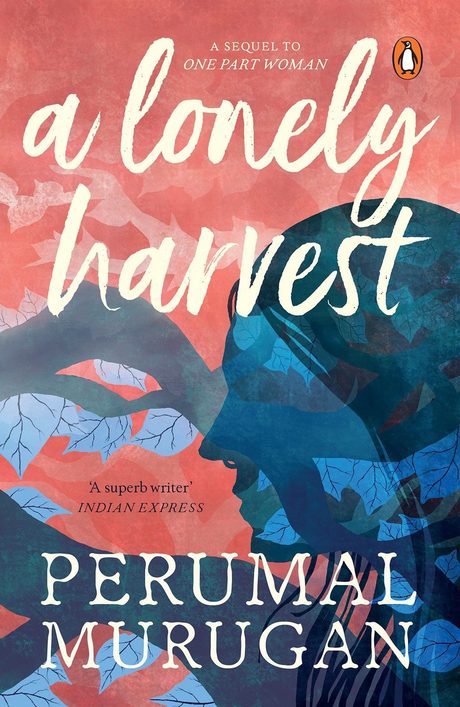
The squeeze: a house of women and a street with opinions
A Lonely Harvest
Perumal Murugantranslated by Aniruddhan Vasudevan2014about 207 pages
One of two sequels that restart on the last page of One Part Woman and follow Ponna into a household of women.
Both sequels begin at the same moment, the morning after the festival, and then take opposite roads. This is the branch where Ponna's life reorganises around her mother-in-law and her own family, and where the novel becomes a book about work: the farm, the goats, the money, who eats first, and what it does to a woman to know she is being discussed in every house on the street. It is quieter than One Part Woman and much better than a sequel has any right to be.
Why it is at 6
Sixth because it only exists for people who have read the first book, and because it is the stronger of the two branches. The women here get more attention than anyone else in his work. One warning: opening either sequel tells you how One Part Woman ends, so keep them in that order and do not read the back covers.
Read it ifyou finished One Part Woman and want the version where the women hold the house together
Skip it ifyou have not read One Part Woman yet, because this gives away its ending
domestic, watchful, steadyBest for: readers who want the women's sidesequelwomenhousehold
7
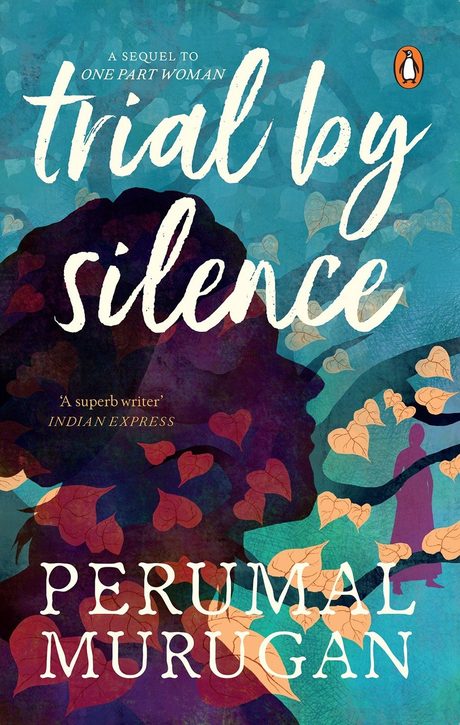
The squeeze: a marriage that has to carry on
Trial by Silence
Perumal Murugantranslated by Aniruddhan Vasudevan2014about 195 pages
The other sequel: same last page, opposite turn, and a husband and wife who now have to live with the festival night.
This branch keeps the marriage and puts the festival inside it. Kali will not speak about what happened, Ponna cannot make him, and both families arrive with prayers, advice and their own theories about who is to blame. Murugan is very good here on the mechanics of a sulk that has gone on so long it has become furniture in the house. It is a small, patient novel about whether two people can climb back over a thing neither of them will name out loud.
Why it is at 7
Seventh because it is the slighter of the two sequels. The material is narrower, the ending feels less earned, and Ponna gets less room to be interesting than she does in A Lonely Harvest. Read it anyway if you closed the first book wanting the marriage to survive, because this is the only place that version exists.
Read it ifyou want the branch where the marriage survives the festival
Skip it ifyou only have room for one sequel, in which case take A Lonely Harvest
silent, tense, domesticBest for: completists of the trilogysequelmarriagesilence
8

The squeeze: ten men caught in small, shameful corners
The Goat Thief
Perumal Murugantranslated by N. Kalyan Raman2017about 232 pages
Ten short stories out of the same country as the novels, most of them about a man in a corner he cannot explain his way out of.
The stories come from the same western Tamil Nadu country as the novels, and most are short enough to finish between two stops on a train. Murugan works in compression here. A marriage, a village hierarchy, a small betrayal, all set up and knocked over in a few pages, and more than one of them ends a line before you are ready for it. The title story is the one people remember. If you want to test whether this writer is for you without committing to a novel, this is the cheapest experiment on the list.
Why it is at 8
Eighth because a story collection is an odd thing to hand someone as a first book, and a very good thing to reach for once you have finished a novel or two. It also travels well. You can read one story on a commute and lose nothing, which is more than I can say for Fire Bird.
Read it ifyou read in short bursts and want to sample him cheaply
Skip it ifyou want the long slow build his novels are known for
compressed, sly, unevenBest for: commuters and short story readersshort storiestranslation
9
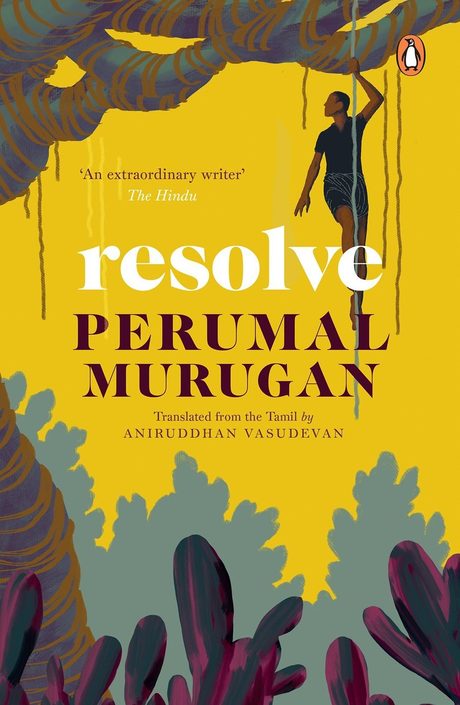
The squeeze: the marriage market, from the man's side
Resolve
Perumal Murugantranslated by Aniruddhan Vasudevan2008about 338 pages
A man with land, a job and no bride keeps being taken to see girls, and keeps coming home alone.
Marimuthu has everything the arrangement is supposed to reward: land, a job, a family with standing in the area. He still cannot get a wife, and the novel follows him through viewing after viewing, broker after broker, tea after tea, while the arithmetic of dowry, complexion, caste and gossip is worked out loud in front of him. It is funny the way rishta season is funny, which is to say that everyone in the room is laughing except the person being measured. At three hundred pages it goes on, and the going on is the argument.
Why it is at 9
Ninth because it is his funniest book and his least necessary one. If you have decided that village fiction means unrelieved grief, this is the corrective. It is not higher because the repetition that makes the point also makes the middle drag, and because the women in it are seen almost entirely from outside.
Read it ifyou want the comedy of arranged marriage told from the rejected side
Skip it ifyou have sat through your own viewings and would rather not relive them
comic, repetitive, sharpBest for: readers tired of grim village novelsarranged marriagecomedydowry
10
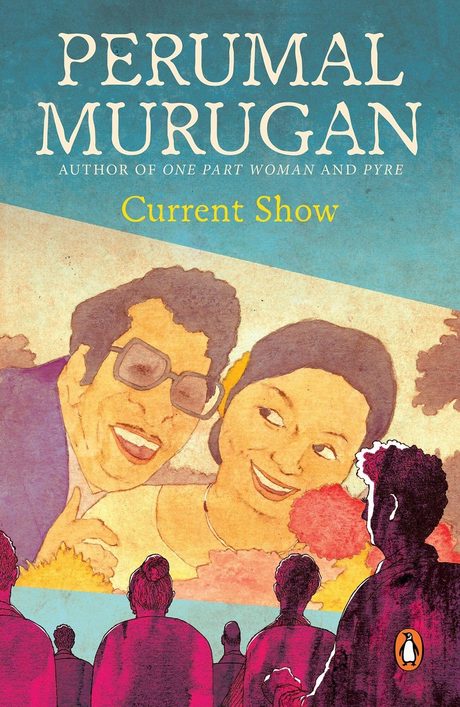
The squeeze: a cinema tent, a soda crate, nowhere to sleep
Current Show
Perumal Murugantranslated by V. Geetha1993about 139 pages
A boy sells soda inside a small-town cinema tent, and the book is as hot, dark and disorienting as the tent itself.
Sathi works the intervals in a touring cinema, hauling crates through a crowd that is watching something else. His world is the tent, the boys who work it beside him, the pecking order among them, and whatever they can put into their bodies to get the night over with. Murugan cuts the way a careless projectionist splices, scene to scene with no warning and no chapter to hold on to. It came early in his career and it is the least conventional book of his in English, closer to a fever than to a plot.
Why it is at 10
Tenth because it is the one book here I would not press on anybody. It is also the one that proves he was never a quiet realist by temperament. Come to it after four or five of the others, when you are curious about the machinery rather than the story, and give it an evening with no interruptions.
Read it ifyou like formally strange books and can handle the dark
Skip it ifyou need a plot you can follow in a single pass
feverish, dark, fragmentedBest for: readers who like formal experimentscinemapovertyexperimental
Heads up: substance use, poverty, violence between boys
11
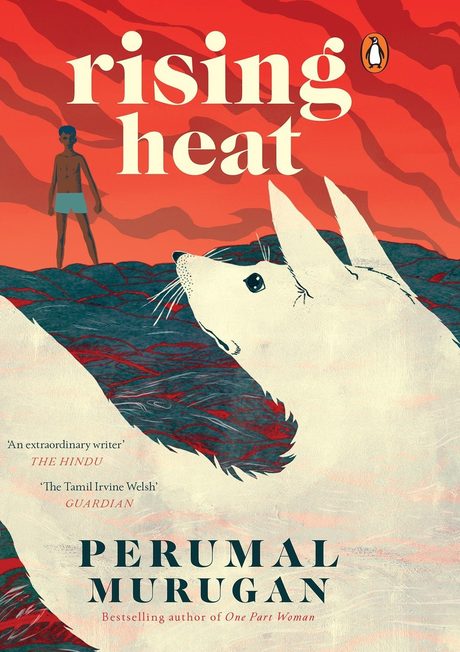
The squeeze: a housing colony on a farming family's field
Rising Heat
Perumal Murugantranslated by Janani Kannan1991about 256 pages
His first novel: a family sells its fields to a housing scheme and finds out that money and ground are not the same thing.
A boy watches his family's land turn into surveyed plots and then into a colony with new neighbours and new rules. The compensation arrives and is spent. The well turns bad, the father loses his standing, and a household that used to feed itself starts buying vegetables from a shop. Murugan wrote this in his twenties and you can feel it in the book: the anger is loose, the structure sprawls, scenes repeat themselves. What survives all of that is the subject, which is now happening on the edge of every Indian city you can name.
Why it is at 11
Eleventh on the path, first in the career. Read it once you have enough of him behind you to enjoy watching a writer before he learned restraint. If you live in a city that is eating its own farmland, and most of us do, it will land harder than its craft alone deserves.
Read it ifyou care about land, development and what a windfall does to a family
Skip it ifyou want the controlled late Murugan of Pyre or Poonachi
angry, sprawling, youngBest for: readers who like early worklanddevelopmentdebut
12
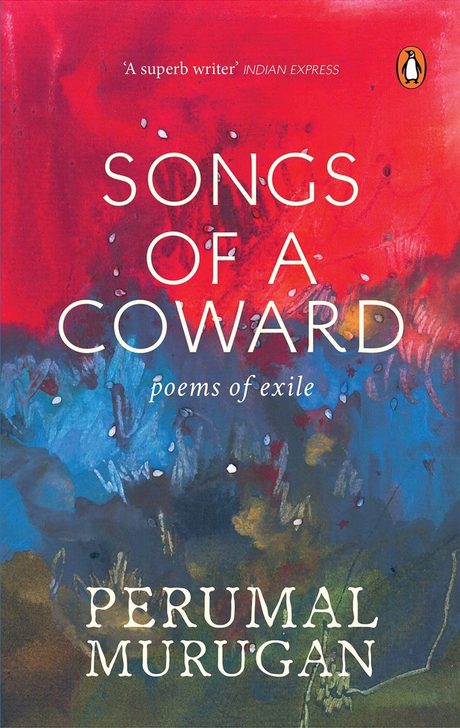
The squeeze: a writer told to stop writing
Songs of a Coward: Poems of Exile
Perumal Murugantranslated by Aniruddhan Vasudevan2017about 308 pages
The poems he wrote while he was not writing novels, spoken by a coward who explains what cowards are good at.
In January 2015 Murugan announced that the writer in him was dead and left the town where he taught, and these poems come out of that stretch of his life. The speaker calls himself a coward and then lists, quite calmly, what a coward is good at: keeping quiet, folding early, staying alive, letting the crowd go past. Some run two lines, others go on for a page. Aniruddhan Vasudevan, who translated the novels, translated these too, so the voice carries over. Next to One Part Woman they read like the only direct reply he made.
Why it is at 12
Last because poetry is a different ask, and because these poems need the story behind them to do their work. If you finish One Part Woman and want to know what the following year cost him, this is the book. Taken on their own, out of that context, they are plainer and thinner than his prose.
Read it ifyou want the writer speaking in his own voice about the silence
Skip it ifyou do not read poetry and are not curious about the 2015 story
bare, wounded, defiantBest for: readers who finished One Part Womanpoetryexilefree speech
Worth knowing
How the two sequels actually work
One Part Woman ends where most novels would put a cliffhanger. In 2014 Murugan published two sequels in Tamil, and here is the part everybody gets wrong: they are not book two and book three. Both begin at the same moment, the morning after the festival, and then travel in opposite directions. A Lonely Harvest takes one road, Trial by Silence takes the other, and neither continues the other. You can read one of them, or both, in either order.
Two practical notes. Both sequels reveal how the first novel ends within a few pages, so read One Part Woman first and stay off the back covers. And if you only want one, take A Lonely Harvest, which is the better novel by a clear margin.
Worth knowing
What happened in 2015, briefly
One Part Woman was published in Tamil in 2010 and in English in 2013. Years after it came out, caste and religious groups in and around Tiruchengode objected to the temple custom described in the book, copies were burned at protests, and a settlement pushed by the local administration in January 2015 ended with an apology and the withdrawal of unsold copies. Days later Murugan posted online that Perumal Murugan the writer was dead, stopped writing, and left the town where he taught. In July 2016 the Madras High Court dismissed the petitions against the book and said the author should be free to get back to his work. He did. Poonachi was the first novel he published after that.
That is all the politics I want on this page. It matters here for two practical reasons. It explains the gap in the middle of his career, and it explains the two books that came out of the gap, Poonachi and Songs of a Coward, both of which are about being small and staying alive.
Worth knowing
A note on the translators
Four people carry his English. Aniruddhan Vasudevan does One Part Woman, Pyre, both sequels, Resolve and the poems, and his versions read the most naturally as English sentences. N. Kalyan Raman does Poonachi and The Goat Thief. V. Geetha translated the two earliest novels, Seasons of the Palm and Current Show, which are also the two hardest in style. Janani Kannan does Rising Heat and Fire Bird.
None of them flattens the Tamil into standard literary English, which is why the books keep their own words for kinship, food, land and shame, and why a glossary is rarely needed. Read a page aloud. You will hear a different rhythm under the English, and that is the translator leaving it in on purpose.
People also ask
Questions, answered
Which Perumal Murugan book should I read first?
Poonachi, if you want the short answer. It is about a hundred and eighty pages, it needs no background, and it contains everything he does: poverty written without pity, dry comedy, and an ending that arrives quietly. If you would rather start with the famous one, read One Part Woman, but know that it ends on an open note and that two sequels follow it.
Was One Part Woman banned in India?
No. Caste and religious groups protested against it and copies were burned, and in January 2015 a local settlement led to an apology and the withdrawal of unsold copies, after which Murugan announced he had stopped writing. In July 2016 the Madras High Court dismissed the petitions against the novel. It has been in print and freely available since then, in Tamil and in English.
In what order should I read One Part Woman and its sequels?
One Part Woman first, always. After that the order does not matter, because A Lonely Harvest and Trial by Silence both start from the same moment and take different paths, and neither one follows the other. If you want just one, pick A Lonely Harvest. Both sequels give away the ending of the first book almost immediately, so do not start with either.
Are Perumal Murugan's books hard to read in English?
The sentences are easy. He writes short, concrete, unfussy prose and the translations keep it that way, so a reader who finds most literary fiction heavy will get through Poonachi or Pyre without trouble. What is hard is the material, not the language. The two that also make demands on your attention are Current Show, which jumps between scenes, and Seasons of the Palm, which braids several children's days together.
Which Perumal Murugan book won the JCB Prize for Literature?
Fire Bird, translated from Tamil by Janani Kannan, is listed by Google Books in a later edition as the JCB Prize for Literature 2023 winner. It is his longest and calmest novel, about a man searching for a piece of land after the family property is divided. Start elsewhere and come to it once you already like him, because it takes its time getting going.
Is Poonachi a children's book about a goat?
No. It is written like a fable and there is a goat at the centre of it, but the book is about hunger, surveillance, poverty and what a state does with the creatures it counts. Small children will not get it and some scenes are distressing. Older teenagers usually do get it, and it works well as a first serious book for a reader who normally avoids serious books.
Before you go
What to read tonight
If it is a weeknight and you want to start something now, open Poonachi. It is one sitting, and by the last page you will know whether the rest of this writer is for you. If you are choosing between the two famous ones, the split is simple: One Part Woman when you want a marriage, Pyre when you want a village. Read them a few weeks apart rather than back to back, because they rhyme, and the second one loses something if it follows too closely.
Once four of these are behind you and the villages have started turning up in your head at odd hours, go to Seasons of the Palm. It is the hardest one and it pays the most. Keep the evening after it free, because you will not be good for anything else.
Keep going
Lists that pair with this one
Indian Fiction
12 Tamil Novels in English Translation, Ranked as a Route In
Ranked in the order I would actually hand them to you, from the easiest door in to the five volume giant at the end.
Indian Fiction
The 20 Best Indian Books in Translation, Ranked by Where to Start
Twenty books from ten Indian languages, ordered from the easiest way in to the one that will fight you, with the translator named every time.
Indian Fiction
17 Best Books About Caste, Starting With the Ones Written From Inside
Ordered by who was holding the pen: Dalit and Bahujan writers first, sympathetic outsiders last, with an honest skip line on every one.
Indian Fiction
13 Novels Set in Small Town India, Ranked by How Tight the Grip Is
The metros are banned from this page, so what is left is thirteen towns with one college, one cinema, one bus out, and a grip score each.
Mood & Life
20 Best Short Novels Under 200 Pages, Ranked by Length
Every book here is under 200 pages in the edition we link, and the list runs shortest first, so you can pick by the hours you actually have left tonight.