I bought a copy of Being and Time at twenty two because a girl I liked owned one. I got eleven pages in, decided my brain was not built for this, and stayed away from philosophy for about five years. That is roughly like reading a legal contract in Latin and concluding you are illiterate.
The problem was never difficulty. It was order. Philosophy books are written for readers who already hold the map, and nobody hands you the map when you buy your first one. So this list runs by entry difficulty rather than importance. Number one you can start tonight knowing nothing at all, and number fourteen will defeat you if you begin there, which is exactly what happened to me.
Each book carries the question it actually answers, because that is how people pick philosophy in real life. Nobody wakes up wanting epistemology. They wake up furious with a colleague, or unable to explain why a job that pays well feels like nothing, and there is a book here for each of those. For every entry I have also said where readers usually stop and whether pushing through is worth the trouble.
Indian philosophy sits inside this list properly rather than as a polite footnote at the end. Three of the fourteen come from those traditions, and one of them is probably the best first philosophy book for an Indian reader specifically, because you already know the story it lives inside.
How I picked these
- Entry difficulty sets the order, not importance. Plato and Nietzsche matter more than half this list and they sit at the bottom, because that is where beginners stop reading.
- Only books a person can survive alone, with no lecturer and no seminar. That cut most of the standard university list, including Kant, Hegel and Heidegger. A book that needs a teacher is not a beginner's book, whatever the syllabus claims.
- Indian philosophy gets three slots and an explanation of what the schools were arguing about, instead of one Gita at the end as decoration.
- For the five ancient texts I name the exact translation I mean, because a bad translation of the Gita or the Tao Te Ching is the difference between a book you finish and a book you resent.
- I left out Man's Search for Meaning, which almost every list of this kind includes. It is a fine book and it is a survival memoir rather than philosophy, and treating it as philosophy is how readers end up believing the subject is a stack of inspirational quotes.
- Every edition checked through Google Books and Open Library, so the covers and translations here are real ones.
The whole list at a glance
All 14 books, in order
| # | Book | Author | Year | Vibe | Best for |
|---|
| 1 | A Little History of Philosophy | Nigel Warburton | 2011 | clear, brisk, friendly | the actual first book |
| 2 | The Consolations of Philosophy | Alain de Botton | 2000 | warm, practical, illustrated | sceptics who want proof it helps |
| 3 | Sophie's World | Jostein Gaarder | 1991 | curious, strange, teacherly | teenagers and story learners |
| 4 | Meditations | Marcus Aurelius | 2002 | stern, plain, steadying | anger and other people |
| 5 | Letters from a Stoic | Seneca | 1969 | chatty, shrewd, useful | anxiety about the future |
| 6 | The Bhagavad Gita | Eknath Easwaran | 1985 | direct, demanding, familiar | choices with no clean option |
| 7 | What the Buddha Taught | Walpola Rahula | 1959 | clear, exact, unsentimental | understanding desire and self |
| 8 | Tao Te Ching | Lao Tzu | 1963 | spare, paradoxical, quiet | readers who want less |
| 9 | Indian Philosophy: A Very Short Introduction | Sue Hamilton | 2001 | dense, orderly, academic | placing Indian texts in context |
| 10 | Justice: What's the Right Thing to Do? | Michael J. Sandel | 2009 | argumentative, current, clear | political arguments you keep losing |
| 11 | The Problems of Philosophy | Bertrand Russell | 1912 | plain, rigorous, short | one long evening |
| 12 | The Myth of Sisyphus | Albert Camus | 1942 | cold, lucid, bracing | meaninglessness taken head on |
| 13 | The Last Days of Socrates | Plato | 1993 | ancient, sharp, unsettling | seeing the method in action |
| 14 | Thus Spoke Zarathustra | Friedrich Nietzsche | 1883 | wild, poetic, difficult | after everything above it |
The list
The books, ranked
1
Answers: what is the whole map, in one book?
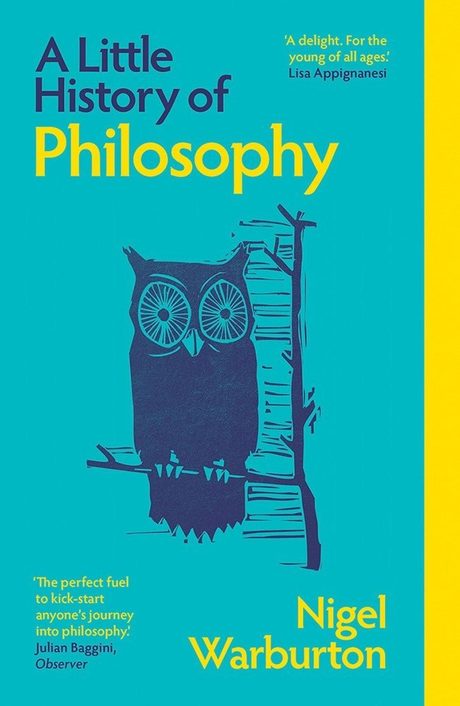
A Little History of Philosophy
Nigel Warburton2011about 263 pages
Short chapters, one thinker each, from Socrates to the present, written the way a patient teacher would explain it over chai.
Warburton gives every major figure in Western philosophy a few pages: what they were reacting against, what they argued, what was wrong with it, and who turned up next to say so. There is no jargon and no showing off, and each chapter hands you to the following one, so the whole thing runs like a story with a very long cast. You will not become a philosopher by finishing it. You will finally know what the words mean, which is the actual blocker for most beginners.
Why it is at 1
First because it removes the reason people quit. Almost nobody bounces off philosophy because an idea is too hard. They bounce because a book assumes they already know who Hume was arguing with. Read this over two weeks at a chapter a night and every other book on this list gets easier.
Read it ifyou want the map before you choose a destination
Skip it ifyou already know the outline and want to argue with a primary text
clear, brisk, friendlyBest for: the actual first bookoverviewwestern philosophybeginner
2
Answers: can any of this help with my actual problems?
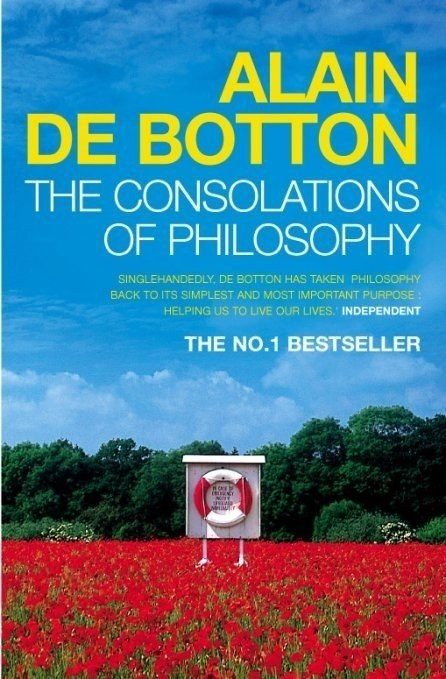
The Consolations of Philosophy
Alain de Botton2000about 285 pages
Six philosophers assigned to six ordinary miseries: no money, no friends, no confidence, a broken heart, a body you did not choose.
De Botton takes six thinkers and puts each one to work on a specific complaint. Socrates on being unpopular, Epicurus on not having enough money, Seneca on frustration, Montaigne on feeling inadequate, Schopenhauer on heartbreak, Nietzsche on difficulty. Every chapter mixes biography, argument and pictures, which academic philosophers found irritating and which is precisely why beginners finish the book. It is not a survey and never claims to be. It is a demonstration that these arguments were built for use, by men who were also miserable on ordinary Tuesdays.
Why it is at 2
Second because it answers the question that actually stops people, which is whether any of this is any use to them. De Botton is popularising, so a philosophy student will find him thin, and that is a fair complaint about him and a poor reason for you to skip it. Read it after Warburton and you will know which of the six you want properly.
Read it ifyou want philosophy aimed at a problem you actually have
Skip it ifyou find popular philosophy too simple to take seriously
warm, practical, illustratedBest for: sceptics who want proof it helpsappliedessaysbeginner
3
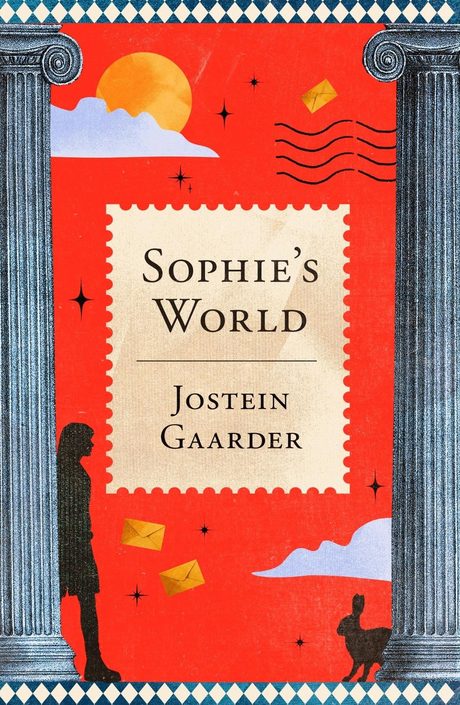
Answers: can I learn the history as a story?
Sophie's World
Jostein Gaardertranslated by Paulette Møller1991about 604 pages
A fourteen year old girl starts receiving anonymous letters asking who she is, and gets a full philosophy course in the post.
Sophie Amundsen finds a note in her letterbox asking who she is, then another asking where the world came from, then a correspondence course from a philosopher she has never met. Over a few hundred pages she receives the entire Western tradition in order, wrapped inside a plot that turns very strange in a way I will not spoil. The teaching sections are genuinely good. The novel around them is odd and slightly creaky, and the twist divides readers permanently, but a lot of people got their first philosophy here.
Why it is at 3
Third because it teaches the same material as Warburton with a story built around it, and for some readers that scaffolding decides whether they finish or abandon. It sits below Warburton because the fiction gets in the way about as often as it helps. If there is a teenager in the house, hand them this one.
Read it ifyou learn better when the lesson sits inside a story
Skip it ifyou want the ideas without a novel wrapped around them
curious, strange, teacherlyBest for: teenagers and story learnersnovelhistory of philosophytranslated
4

Answers: how do I stop letting people ruin my day?
Meditations
Marcus Aureliustranslated by Gregory Hays2002about 258 pages
The private notebook of a Roman emperor telling himself, over and over, to calm down and get on with the work.
Marcus Aurelius wrote this around 170 CE in army camps on the frontier, for nobody but himself, which is why it repeats and doubles back and never tries to impress anybody. He reminds himself that people will be rude tomorrow, that fame is worth nothing, that he will die and so will everyone who remembers him, and that none of this excuses behaving badly today. Gregory Hays put it into plain modern English in 2002, and that is the edition to buy, because the Victorian versions read like scripture and put readers off for life.
Why it is at 4
Fourth, and the first primary text here, because you can open it anywhere and come away with something. There is no argument to follow and nothing you need to have read first. The risk runs the other way: it is so quotable that people read forty pages, screenshot three lines and never return. A page a morning for a month will change how you handle the third annoying email of the day.
Read it ifyou want something usable at seven in the morning
Skip it ifyou want structured argument rather than a repeating notebook
stern, plain, steadyingBest for: anger and other peoplestoicismromenotebook
5
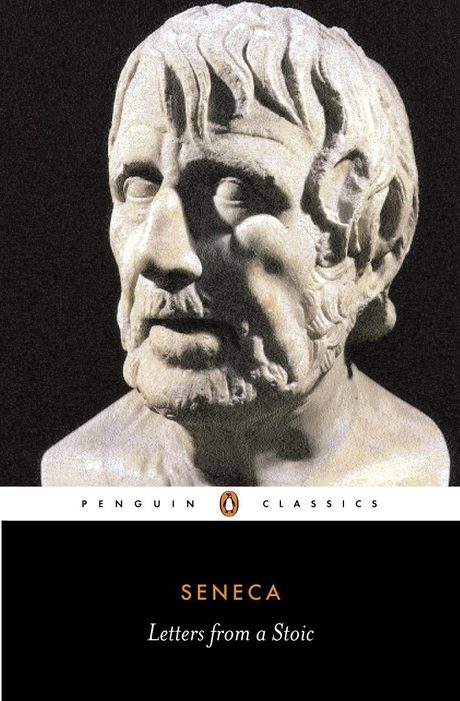
Answers: how do I stop rehearsing disasters that have not happened?
Letters from a Stoic
Senecatranslated by Robin Campbell1969about 294 pages
A Roman politician writes to a friend about fear, money, illness and time, and it reads like something sent last week.
Seneca wrote these letters to Lucilius around 65 CE, and the Penguin selection gathers the ones worth your evening. He is on grief, on staying busy as a way of avoiding your own life, on how we suffer more in imagination than in fact, on spending money to impress people who are not watching. He was also enormously rich and advised Nero, which makes the passages about simplicity hard to take entirely straight, and the letters are better for that tension rather than worse.
Why it is at 5
Fifth because a letter is the easiest possible unit of philosophy. Each one runs two or three pages, is addressed to a person, and carries a single idea. Seneca is more practical than Marcus Aurelius and less consoling, and the hypocrisy problem is real rather than imagined. Read three, put it down for a week, come back. Nobody is grading you.
Read it ifyou want short pieces you can finish on a commute
Skip it ifa very rich man preaching simplicity will annoy you
chatty, shrewd, usefulBest for: anxiety about the futurestoicismlettersrome
6
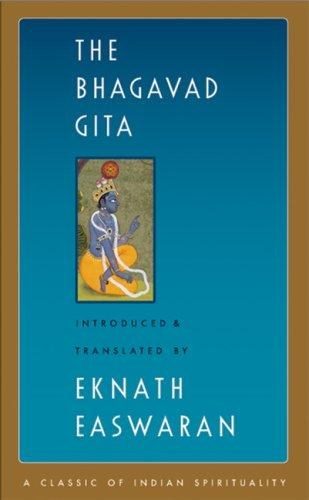
Answers: how do I act when every choice costs something?
The Bhagavad Gita
Eknath Easwarantranslated by Eknath Easwaran1985about 294 pages
A soldier puts down his bow rather than fight his own family, and his charioteer spends the rest of the book explaining why he must.
Arjuna stops on the battlefield because the army facing him holds his cousins, his teachers and his elders, and Krishna answers him for eighteen chapters. The subject is not really war. It is what to do when every available option damages somebody, and how to act without being owned by the outcome. Easwaran keeps it in plain modern English and puts a long introduction in front of it, which matters, because most Indian readers first meet this text as something recited at home rather than something to argue with.
Why it is at 6
Sixth, and for many Indian readers the real first book, because you already know the story it sits inside and can skip the setup everyone else needs. It works as philosophy even if you hold no religious belief: take the theology out and a serious argument about duty and detachment is still standing. Read it with the introduction rather than without.
Read it ifyou want the argument under a text you already half know
Skip it ifyou want a devotional reading, because this one is analytical
direct, demanding, familiarBest for: choices with no clean optionindian philosophyhinduismtranslated
7
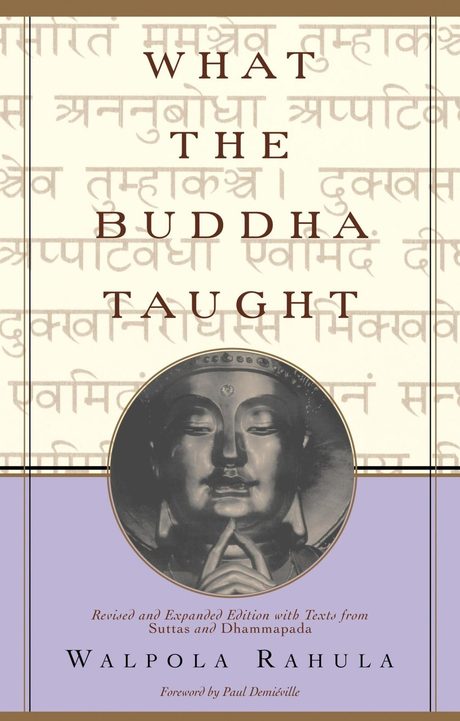
Answers: why does wanting things hurt?
What the Buddha Taught
Walpola Rahula1959about 309 pages
A Sri Lankan monk sets out the four noble truths in about a hundred and fifty pages, with no incense and no promises.
Rahula presents the core of early Buddhism as a set of propositions rather than a faith: what suffering means in the technical sense, where it comes from, why the self you defend all day may not be the solid object you assume, and what the eightfold path actually asks of you. He quotes the older texts constantly and lets them speak. The tone is a careful scholar who happens to be a monk, so nothing is sold to you and nothing is softened for a western reader.
Why it is at 7
Seventh because it is the clearest short introduction to any Indian school of thought, and because it will correct most of what you absorbed about Buddhism from Instagram. It is harder than the Gita in one specific place: the argument about the self takes real effort and readers quit there. That chapter is the entire point, so slow down instead of skipping.
Read it ifyou want Buddhism as argument rather than as mood
Skip it ifyou want meditation instructions, because this is doctrine
clear, exact, unsentimentalBest for: understanding desire and selfbuddhismindian philosophyshort
8
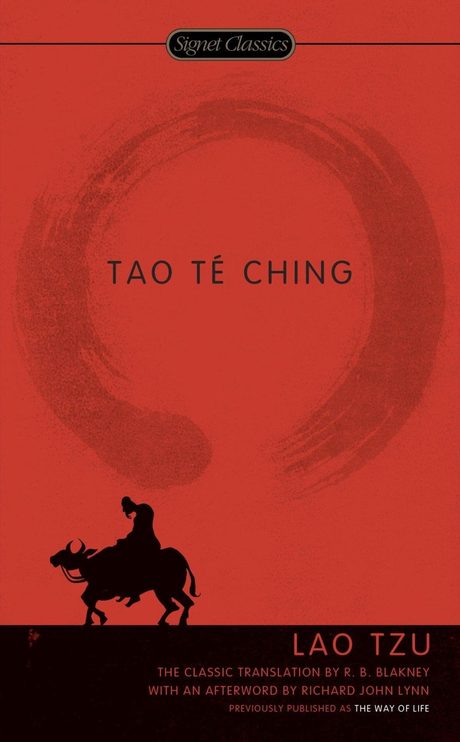
Answers: what if doing less is the better move?
Tao Te Ching
Lao Tzutranslated by D. C. Lau1963about 123 pages
Eighty one short chapters about water, power and restraint, written in China more than two thousand years ago.
The Tao Te Ching runs to eighty one brief chapters, most of them under a page, arguing that the yielding thing outlasts the rigid one and that the best ruler is the one nobody notices. It contradicts itself deliberately and refuses to define its central term, which makes it either the deepest thing you will read this year or an elaborate way of saying nothing, depending on your mood that week. D. C. Lau's Penguin translation from 1963 keeps it spare and does not decorate it, which is what you want the first time.
Why it is at 8
Eighth because it takes an hour to read and years to argue with. There is no argument to follow in the usual sense, so a reader trained on Western philosophy often finishes it irritated. That reaction is worth having. Read it after the Stoics and notice that both sides are answering the same question about control from opposite directions.
Read it ifyou like short strange texts you can reread forever
Skip it ifyou want claims you can test and arguments you can attack
spare, paradoxical, quietBest for: readers who want lesstaoismchinapoetry
9
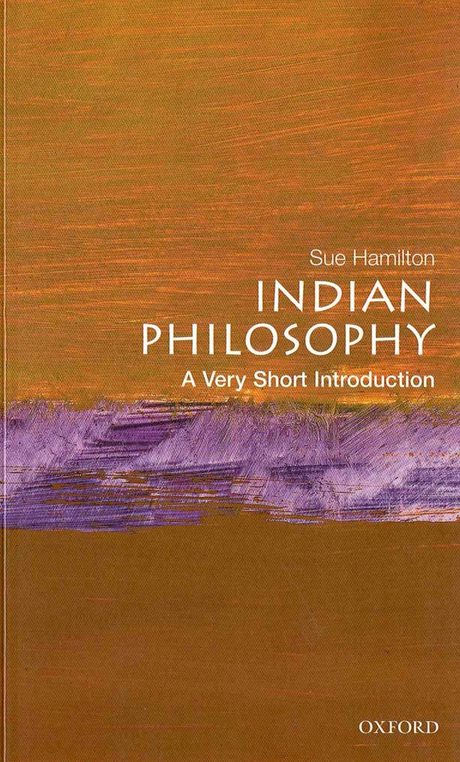
Answers: what is Indian philosophy actually arguing about?
Indian Philosophy: A Very Short Introduction
Sue Hamilton2001about 198 pages
A short guide to the schools, the debates and the vocabulary, so the Indian tradition stops looking like one undifferentiated blur.
Hamilton lays the Indian schools out as what they were, rival positions arguing with each other for centuries about knowledge, perception, the self and liberation. You get the vocabulary, the disagreements, and enough structure to place the Gita, the Buddhist material and the Upanishads relative to one another. It is compressed and reads like a very good lecturer with limited time, so expect to reread chapters. For the fuller version, the old Chatterjee and Datta textbook is still in print in India and still does the job.
Why it is at 9
Ninth because without something like it the Indian material stays a pile of quotations. Most of us grow up with the Gita and some Vedanta and never learn that there were Indian schools who denied god, denied the self, and argued for a thousand years about what counts as valid knowledge. It is dense compared with everything above it, which is why it sits here and not at number three.
Read it ifyou want the map of the Indian schools, not one text
Skip it ifyou want a leisurely read, because this one is compressed
dense, orderly, academicBest for: placing Indian texts in contextindian philosophyoverviewshort
10
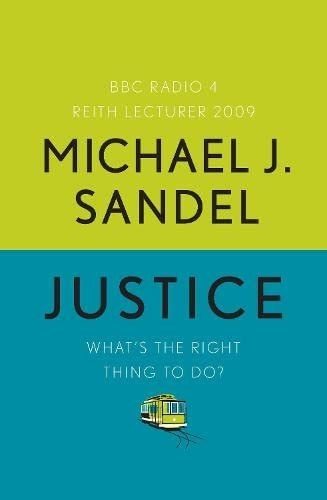
Answers: what do I owe a stranger?
Justice: What's the Right Thing to Do?
Michael J. Sandel2009about 308 pages
A lecturer walks you through runaway trolleys, price gouging, conscription and quotas until your first instinct stops holding up.
Sandel built this out of the course he teaches, and the method is the value. He hands you a hard case, lets you pick a side, then produces a second case where the principle you just chose gives an answer you hate. He works through utilitarianism, libertarianism, Kant and Rawls in that order, always through real arguments about money, war, markets and who deserves what. It is the most immediately useful book on this list if you argue about politics with anybody.
Why it is at 10
Tenth because it is easy to read and genuinely hard to answer, which is the right order for a beginner. This is where the list stops explaining what philosophers thought and starts making you do the work yourself. Sandel holds a position of his own and lets it show in the closing chapters, so read those with your guard up.
Read it ifyou argue about fairness, markets or reservations
Skip it ifyou want your existing politics confirmed rather than tested
argumentative, current, clearBest for: political arguments you keep losingethicspoliticsmodern
11
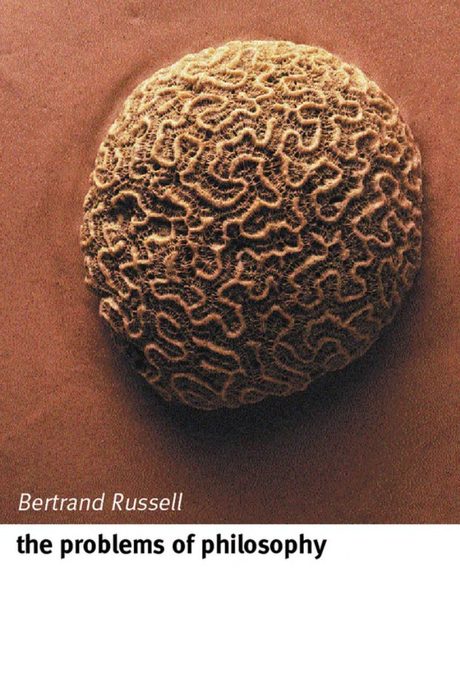
Answers: how do I know anything is real?
The Problems of Philosophy
Bertrand Russell1912about 102 pages
Russell starts with an ordinary table in front of him and shows that you cannot prove much about it, in under two hundred pages.
Russell begins with a table and asks what you actually know about it as opposed to what you assume, and by the third chapter the floor has quietly gone. He covers appearance and reality, induction, whether we know anything about other minds, and what philosophy is for given how little it has settled. The prose is beautifully plain and the book is short. Written in 1912, it is still the standard first taste of the questions professional philosophers spend whole careers on.
Why it is at 11
Eleventh because this is where philosophy stops being about how to live and starts being about what can be known, and that switch loses a lot of readers. Russell makes it as painless as the subject allows, and his final chapter on the value of philosophy is the best defence of the whole business I have read. One long evening will do it.
Read it ifyou want the questions academic philosophy actually works on
Skip it ifyou only want philosophy that tells you how to live
plain, rigorous, shortBest for: one long eveningepistemologyclassicshort
12
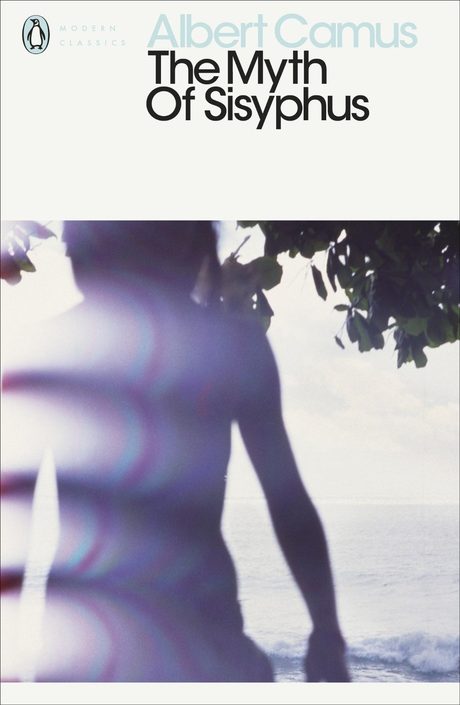
Answers: if it ends anyway, why keep going?
The Myth of Sisyphus
Albert Camustranslated by Justin O'Brien1942about 224 pages
Camus opens by calling suicide the one serious philosophical question, then argues his way to the opposite conclusion.
Camus asks whether a life with no built in meaning is worth continuing, and refuses both of the usual exits. He will not invent a god to supply the meaning, and he will not accept despair as an answer either. The closing image is the man condemned to roll a rock uphill forever, whom Camus asks us to imagine happy, because the rock is his and he is awake to it. The middle chapters on other writers are hard going, and the argument earns the effort.
Why it is at 12
Twelfth because it is the first book here that makes you sit inside the problem rather than walking you around it. Skip the chapters on Kafka and Dostoevsky on a first read if they lose you, then return. One plain thing, since this subject brings people here in a bad week: a book is not treatment, and if the question feels less like philosophy and more like your own life right now, talk to somebody who can actually help.
Read it ifyou want the question taken seriously instead of soothed
Skip it ifyou are in a bad patch and need comfort rather than argument
cold, lucid, bracingBest for: meaninglessness taken head onexistentialismessaytranslated
Heads up: the essay opens with suicide as its central question and returns to it throughout
13
Answers: is any belief worth dying for?
The Last Days of Socrates
Plato1993about 282 pages
Four short dialogues covering Socrates' trial, his refusal to escape, and the afternoon he drank the poison.
The Penguin volume collects Euthyphro, the Apology, Crito and Phaedo: Socrates arguing about what holiness is, defending himself before the city that is about to execute him, turning down a friend's offer of escape on principle, and then discussing death with his friends while the poison is prepared. Plato wrote these in the fourth century BCE. This is the best entry to him, much better than starting with the Republic, because you watch the method working on questions with a man's life attached.
Why it is at 13
Thirteenth because the dialogue form is harder than it looks. Socrates asks a question, somebody agrees too quickly, and forty pages later they are somewhere strange, so reading it fast leaves you with nothing at all. Read the Apology first and on its own. If it grips you the other three are waiting, and Phaedo is where most beginners stall.
Read it ifyou want Plato without committing to the Republic
Skip it ifquestion and answer dialogue is tedious for you to follow
ancient, sharp, unsettlingBest for: seeing the method in actionplatogreecedialogues
14
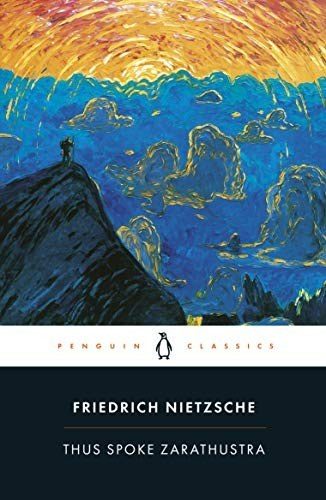
Answers: what do I do once I stop believing?
Thus Spoke Zarathustra
Friedrich Nietzschetranslated by R. J. Hollingdale1883
A prophet comes down from a mountain to announce that god is dead, and almost nobody inside the book understands him either.
This is Nietzsche's strangest book: part sermon, part parody of scripture, part poem, with a hermit descending to preach the overman to a crowd that would rather watch a tightrope walker. The famous ideas are all here, the death of god, eternal recurrence, the attack on pity and herd morality, and they arrive as images rather than as arguments you can check. Hollingdale's Penguin translation is the standard English one. Nietzsche's sister later attached his work to politics he had spent his life attacking, so read the book instead of the legend.
Why it is at 14
Fourteenth because it is the most misread title here and the one people quote after thirty pages. It gives you nothing solid to hold, so without the earlier books you will collect slogans and believe you understood something. Read Beyond Good and Evil first if you want the argued version. Come here last, and come slowly.
Read it ifyou have read some philosophy and want the strange stuff
Skip it ifyou need clear propositions rather than prophecy and poetry
wild, poetic, difficultBest for: after everything above itnietzschegermandifficult
Worth knowing
Why some of the years look strange
Five of these were written long before printing existed: Meditations, Seneca's letters, the Gita, the Tao Te Ching and the Plato. For those five the year in the header is the year of the English edition I am pointing you at, not the year the text was composed, because a work that circulated in manuscript for centuries has no single honest publication date. Each entry says when it was actually written.
That is a shopping instruction rather than pedantry. For these five, which translation you buy matters more than the price, the publisher or the cover, and a free public domain version from the 1890s is the most common reason a beginner concludes that Marcus Aurelius is boring.
Worth knowing
Which translation to buy
For Meditations, get Gregory Hays from 2002. For the Gita, Eknath Easwaran gives you the plainest modern English with an introduction that earns its place, while Gita Press editions are available in every Indian railway station bookstall, cost very little, and lean devotional rather than analytical. Either of those is fine. An uncredited reprint with no translator named anywhere on it is not.
For the Tao Te Ching, D. C. Lau's Penguin translation from 1963 is spare and does not perform. For Plato, buy the Penguin volume rather than reading a free scan of a Victorian rendering. One rule covers all of it: if the seller will not tell you who translated the book, do not buy that copy.
People also ask
Questions, answered
Which philosophy book should I read first?
A Little History of Philosophy by Nigel Warburton, for almost everybody. It gives you the outline and the vocabulary in short chapters, and once you have it the primary texts stop feeling like a private conversation you walked in on. If you want something usable rather than educational, start with Meditations instead and read a page each morning. Both are cheap, both are widely available in India, and neither asks you to commit to anything.
Is philosophy too hard for beginners?
The reading is hard, the order is what defeats people. Most beginners start with a famous name, get eleven pages into Nietzsche or Kant, and conclude the problem is their brain rather than the sequence. Start with an overview, move to a primary text that needs no background, and only then read the difficult ones. Follow that order and philosophy is no harder than any other subject you have taught yourself.
Should I start with Western or Indian philosophy?
Start where you already have context, which for most Indian readers means the Gita, because you know the story around it and can go straight to the argument. Then read a short overview of the Indian schools so the rest of the tradition stops looking like one thing. Western philosophy is easier to find in bookshops and easier to find companions for, so most people end up reading both. There is no correct order, only the one you will finish.
Is the Bhagavad Gita a philosophy book or a religious one?
It is both, and it survives the separation. Read as scripture it is devotional and Krishna is god speaking. Read as philosophy it is a serious argument about how to act when every option harms somebody, and about detachment from results, which stands up without any belief attached. Eknath Easwaran's translation handles the argument clearly. Gita Press editions are cheaper and lean towards the devotional reading, so pick according to what you want from it.
Do I have to read philosophy in chronological order?
No, and trying is how people give up. Chronological order puts the Presocratics first, which is the least rewarding place a beginner can start. Read by difficulty and by the question in your head instead. The one thing worth respecting is that arguments answer earlier arguments, so read one overview early and you will know who is replying to whom without needing the full timeline.
Which philosophy books should beginners avoid at first?
Being and Time, the Critique of Pure Reason, Hegel, and Wittgenstein's Tractatus. Every one of them is important and every one assumes a reader who has already done years of work. Plato's Republic is the other common trap, since it gets recommended constantly and the middle sections are heavy going. Start with the four dialogues in The Last Days of Socrates instead, and come back to the Republic when Plato has stopped being homework.
Before you go
What to read tonight
If you want to start tonight, open A Little History of Philosophy and read one chapter, or open Meditations at any page and give it ten minutes. Both work on a phone in bed and neither asks you to commit to a project.
If you are choosing between the two most common starting points, decide by what you want from it: Warburton if you want to follow the argument other people are having, the Gita if you want something to do on Monday about a decision that is costing you. And when a book beats you, and one of them will, put it down without concluding anything about your intelligence. Every reader alive has a shelf of philosophy they were not ready for yet. The books wait, which is the one advantage they hold over teachers.
Keep going
Lists that pair with this one
Mood & Life
16 Books About Existential Crisis, Gentlest to Heaviest
Ordered by how much weight each one puts on you at 2 a.m., starting with the ones that are safe to read tonight.
Mood & Life
20 Best Books to Read in Your 20s, Grouped by the Problem
Four problems run this decade, work, love, money and meaning, so the list is sorted that way instead of pretending one book fixes all four.
Mood & Life
16 Self-Help Books That Actually Work (And 4 That Do Not)
I judged every one of these by a single test: six months after you finish, does anything change on an ordinary Tuesday?
Books Like
15 Books Like Sapiens: Big Arguments You Can Actually Finish
Every one is real, verified and ranked by how much of the Sapiens feeling comes back, including the book that argues Harari is wrong.