16 Books About Existential Crisis, Gentlest to Heaviest
Ordered by how much weight each one puts on you at 2 a.m., starting with the ones that are safe to read tonight.
By Bhavik SarkhediUpdated August 2026Covers and data: Google Books, Open Library
Everyone I know has had the two in the morning version of this. You are lying in the dark, the day was fine, nothing in particular is wrong, and a question turns up that you cannot answer. What is any of this for. It fades by breakfast and comes back next month.
Books help with it more than people expect, and they help in two different ways. Some sit beside you and say the feeling is old and shared, which is company. Others take the question seriously and try to answer it, which is work. The trouble is that the second kind can flatten you if you open it on a bad night, and most reading lists throw Camus and Dostoevsky at you as though mood were not a factor.
So this one is ordered gentlest first. Number one is safe at two in the morning. Number sixteen is not, and I say why each time. Three tiers run through it: safe at 2 a.m., read in daylight, wait until you are steady. Content notes sit on the books that need them, because suicide, self harm and depression turn up often in this corner of the shelf.
One plain thing before the list. None of this is treatment. If the feeling has teeth, if you are thinking about hurting yourself, a book is the wrong tool and a person is the right one, whether that person is a doctor, a helpline or the friend you have been avoiding.
Ordered by weight, not by quality. The best book here sits in the middle of the list and the gentlest one is nowhere near the best written, and I say so where it matters.
Every book verified through Google Books and Open Library with a real cover and a real edition.
Fiction and philosophy both allowed, because a novel can do things an essay cannot, and one essay here answers the question better than any of the novels manage.
Cut the plays. Waiting for Godot and No Exit belong on this subject and both read badly in bed, so they lost their places to books you can hold at night.
Cut the self help. Nothing here promises a purpose in five steps, since that promise is exactly why people stopped trusting this section of the bookshop.
Honest content notes. Several of these books contain suicide, and two of the authors died by it, which is worth knowing before you start rather than after.
A brahmin's son leaves everything twice, once for the ascetics and once for the world, before a river teaches him what neither could.
Siddhartha is a young brahmin in the time of the Buddha who cannot accept a truth that has been handed to him rather than found. He leaves home for the forest ascetics, meets Gotama and politely declines to follow him, then goes the other way entirely into trade, money and a courtesan's rooms, before ending up as a ferryman beside a river. Hesse wrote it in German in the early twenties and it reads like a fable, short chapters and plain sentences. The idea underneath is simple and hard to accept: nobody can hand you the answer, because wisdom does not travel through language.
Why it is at 1
First because it is the least dangerous book here. Nothing in it mocks you, nothing argues that your life is absurd, and the pace is slow enough that three pages before sleep is a real option. It is also the least rigorous on the list, since Hesse's India is a European's dream of India. Take it as a mood rather than as scholarship.
Read it ifyou want calm, a fable, and an answer that arrives slowly
Skip it ifyou want rigour or an accurate picture of Indian religion
calm, fabular, slowBest for: reading three pages before sleepphilosophical fictionspiritualclassic
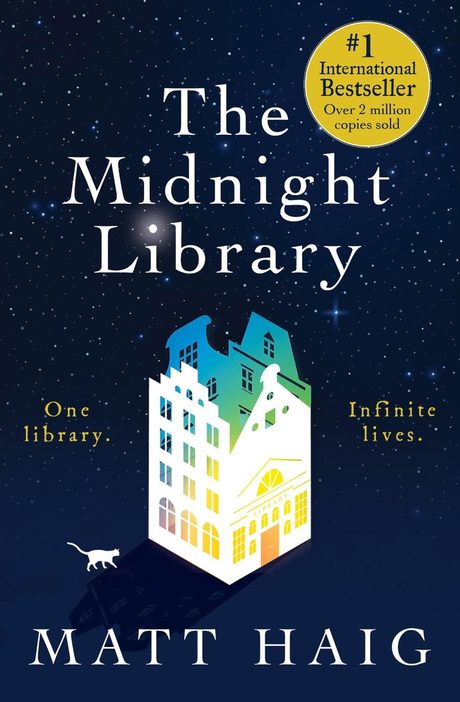
A woman who has decided to end her life lands in a library where every book on the shelf is a life she did not choose.
Nora Seed loses her job, her cat and her last reason on the same day, and wakes in a library between life and death where every volume holds a version of her life that went differently. She tries them one at a time: the Olympic swimmer, the rock star, the glaciologist, the wife who stayed. Haig writes plainly and moves fast, and the real subject is regret rather than physics. The library is a device rather than a puzzle, so anyone hoping for a serious theory of parallel lives will find the thinking thin, and the emotional beat still lands.
Why it is at 2
Second because it is a soft landing. This is the book to hand somebody who is in the middle of the feeling, since it treats a suicidal person with real kindness and gives them a reason to want the morning. It is also the least demanding thing here, which is either the whole point or the whole problem depending on your mood.
Read it ifyou want kindness and something you can finish quickly
Skip it ifyou want real philosophy rather than a warm device
kind, easy, hopefulBest for: a genuinely bad weekcontemporary fictionregrethope
A widower who has scheduled his own death keeps being interrupted by neighbours who cannot reverse a trailer, and it saves him.
Ove is fifty nine, recently widowed, recently pushed out of the job he gave his life to, and he has worked out exactly how and when he intends to die. Every attempt gets interrupted, usually by the pregnant Iranian neighbour who has moved in across the road and needs help with a car. Backman writes him first as an insufferable man with rules about everything, then shows you slowly where each rule came from. It is sentimental and it knows that about itself. The comedy is precise, and the grief underneath never gets softened for your comfort.
Why it is at 3
Third because it asks the same question as the heavy books, which is what a life is for once the person you built it around is gone, and it answers with neighbours. Below Haig only because the sentiment is laid on thicker. If manufactured feeling irritates you, walk past, because this book will squeeze you and you will watch it squeezing.
Read it ifyou want grief handled with comedy and a soft ending
Skip it ifyou find sentimental novels manipulative
grumpy, warm, funnyBest for: readers who like cryingswedish fictiongriefcomedy
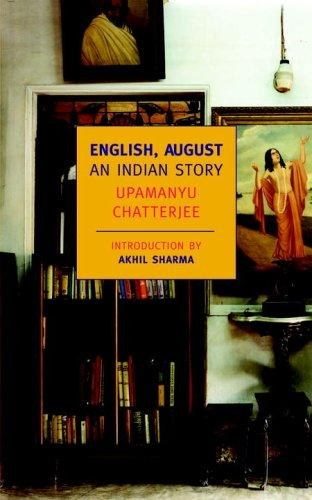
A young IAS officer is posted to a small town where nothing happens, and finds that boredom asks the same questions as despair.
Agastya Sen is twenty four, English speaking, Delhi raised, and sent for district training to Madna, a town with heat, mosquitoes and no visible reason to be awake in it. He smokes, lies to everyone about his life, skips appointments, reads Marcus Aurelius on the floor of a rented room, and drifts. Chatterjee published this in 1988 and it reads like something written last year, because the condition it describes is now standard issue: a young man with a good job, no faith in the job, and no idea what he would rather be doing instead.
Why it is at 4
Fourth, the only Indian novel here, and the one that will land closest if you are twenty five in an Indian city with a respectable salary and a private fog. It sits in the gentle tier because the comedy protects you the whole way through. It resolves nothing at the end, which is either honest or annoying, and I think it is honest.
Read it ifyou want the Indian version of this feeling, told as comedy
Skip it ifyou need a plot, or an ending that settles anything
Sayaka Muratatranslated by Ginny Tapley Takemori2016about 110 pages
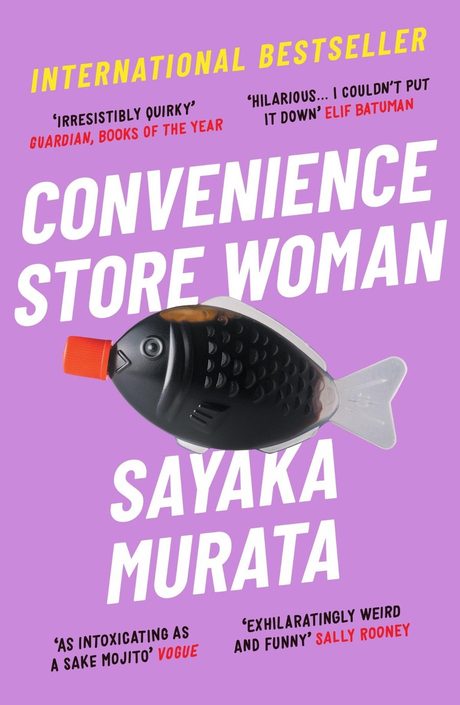
A woman who has worked the same convenience store for eighteen years is perfectly fine, and everybody around her insists she cannot be.
Keiko Furukura is thirty six and has worked at the same Tokyo convenience store since university, learning how to pass as a person by copying her colleagues' speech, clothes and opinions. She is content. Her family and friends treat that contentment as a fault to be corrected, and the pressure to marry and get a proper career eventually pushes her into an arrangement with a genuinely awful man. Murata writes short, dry and slightly alien, and the joke turns over as you read: the strange one is not Keiko, it is a society that cannot allow a person to be happy in the wrong shape.
Why it is at 5
Fifth because it flips the question. Every other book here asks what a life means, and Murata asks who decided your life needs a meaning that other people can recognise. Gentle tier because it is short, funny and never cruel to its narrator. If you are the one at every family function being asked when you will settle down, this is a hundred and sixty pages of relief.
Read it ifyou feel pressure to want what everyone else wants
Skip it ifyou want warmth, because the tone stays cool throughout
A psychiatrist who survived the camps argues that meaning is never handed to you, it is found, even in the worst place on earth.
Viktor Frankl was a Viennese psychiatrist deported to the camps, and the first half of this book is his account of what he watched people do there, told without melodrama and without asking for your sympathy. The second half sets out logotherapy, his argument that the search for meaning is the central human drive, and that meaning arrives through work, through love, and through the stance you take towards suffering you cannot avoid. It first appeared in German in 1946. His claim is not that suffering is good. It is that a person who has a why can carry almost any how.
Why it is at 6
Sixth, last of the gentle tier, and my pick for best overall. The subject matter is the heaviest on this page and the effect is the opposite of heavy, because Frankl is a doctor talking to you rather than a novelist making you feel things. If you read one book from this list, read this. If you read two, read this and the Camus essay at thirteen.
Read it ifyou want an argument you can use, from someone who tested it
Skip it ifyou cannot read about the Holocaust at the moment
steady, humane, clearBest for: anyone who needs a whymemoirpsychologymeaning
Haruki Murakamitranslated by Jay Rubin1987about 340 pages
A student in late sixties Tokyo is caught between the fragile girl he loved before a suicide and the very alive one in front of him.
Toru Watanabe's best friend kills himself at seventeen with no explanation, and the novel follows Toru through university in Tokyo while two women pull him in opposite directions: Naoko, who is coming apart quietly in a sanatorium in the hills, and Midori, who is loud, funny and present. Murakami wrote this as straight realism, with none of his usual talking cats or parallel worlds, and the result is a book about how a young death rearranges everybody it leaves behind. The mood is autumn, rain, cheap student rooms and long train journeys.
Why it is at 7
Seventh and the start of the daylight tier. The prose is gentle and the accumulation is not, because grief here arrives through repetition rather than shock, and by the final fifty pages it has piled up on you. Read it in a normal week and it is lovely. Read it in a bad one and the fragility is catching, which is exactly why it is out of tier one.
Read it ifyou want first love, grief and Tokyo rain in one book
Skip it ifthe suicide of someone young is close to you right now
melancholy, tender, rainyBest for: readers in their twentiesjapanese fictiontranslatedgrief
Heads up: multiple suicides, mental illness, explicit sex
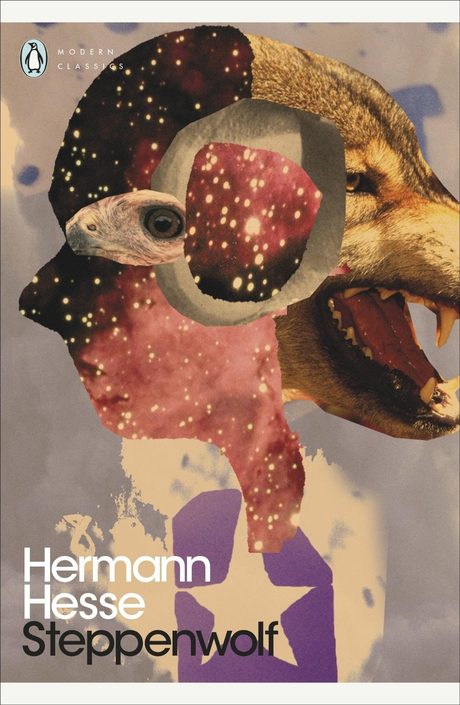
A middle aged man who believes he is half wolf and half respectable citizen is handed a pamphlet about himself, then a night that takes him apart.
Harry Haller is fifty, living alone in rented rooms, contemptuous of the comfortable world he cannot leave, and seriously planning to cut his throat on his next birthday. A stranger hands him a small book that describes his condition exactly. Then he meets Hermine, who teaches him to dance, and eventually walks into a Magic Theatre where his personality is dismantled in front of him. Hesse wrote it during his own middle aged collapse and it shows. The first half is the sharpest description of self loathing I have read, and the second half goes surreal in a way that splits readers down the middle.
Why it is at 8
Eighth because the diagnosis is superb and the cure is a hallucination. If you are somewhere between forty and sixty and looking at a life that is respectable and airless, no book here will describe you more precisely. Daylight tier because the self hatred runs for two hundred pages before any relief arrives, and the relief is strange rather than warm.
Read it ifyou feel split between the respectable life and another one
Skip it ifsurreal endings and heavy symbolism put you off
bitter, feverish, strangeBest for: readers in midlifegerman fictionclassicmidlife
A travelling salesman wakes up as an insect, and his family's first worry is that he is going to miss his train.
Gregor Samsa wakes one morning changed into a large insect. What follows is not horror but administration: his own anxiety about the sales trip, his manager arriving to ask why he is late, his family working out where to keep him and who will now earn. Kafka never explains the change and never needs to, since the comedy and the horror both live in everyone's reaction to it. As a description of what it feels like to stop being useful to the people who depend on your income, nothing has beaten it in over a century. It runs about sixty pages.
Why it is at 9
Ninth because it is short, funnier than people expect, and entirely without comfort. There is no lesson waiting at the end. Daylight tier because the ending is cold and arrives with no warning, and reading it at two in the morning while you already feel like a burden on your family is a genuinely bad idea.
Read it ifyou want the whole feeling delivered in one sitting
Skip it ifyou currently feel like a burden on your family
absurd, cold, funnyBest for: first time Kafka readersclassicabsurdismshort
Milan Kunderatranslated by Michael Henry Heim1984about 306 pages
Four people in and around Prague in 1968, and a question about whether a life you only get once can be said to weigh anything.
Tomas is a surgeon and a compulsive adulterer, Tereza is the woman who arrives with a heavy suitcase and stays, Sabina paints and leaves everybody, Franz is the man who takes her seriously. Around them Soviet tanks roll into Prague and the country shuts. Kundera keeps interrupting his own novel to argue with you about weight and lightness, and about whether a choice you cannot repeat can be judged at all. The philosophy and the plot share a bed, which is either the pleasure of this book or the irritation of it, and I have felt both on different readings.
Why it is at 10
Tenth because it dresses the question in adult clothes: not what is life for, but does anything I choose carry weight if I get exactly one run at it. Daylight tier because the arguing sections need concentration, not because they will hurt you. Kundera's handling of the women has aged badly, and it is worth reading with that fact in your pocket.
Read it ifyou want philosophy folded into a novel about love and politics
Skip it ifauthorial digressions and dated sexual politics annoy you
clever, cool, argumentativeBest for: readers who enjoy essaysczech fictiontranslatedphilosophy
A man does not cry at his mother's funeral, kills a stranger on a beach, and is convicted mostly for the first thing.
Meursault gets a telegram about his mother's death, attends the funeral without visible grief, goes swimming the next day, starts seeing a woman, and later shoots a man on a hot beach in Algiers. The second half is his trial, where the prosecution builds its case less on the killing than on his refusal to perform sorrow. Camus writes in short flat sentences that make you complicit in the flatness, which is the trick of the thing. It is a novel about a man who will not lie about what he feels, inside a society that requires the lie.
Why it is at 11
Eleventh, and the most misread book on this list. People remember it as cold nihilism, and the closing pages are nearer the opposite: a man finally awake to being alive because he is about to stop. Daylight tier because the flatness is catching and the killing is casual. Read it before the Camus essay at thirteen, since the novel is the story and the essay is the argument.
Read it ifyou want the classic starting point, told as a story
Skip it ifyou need a narrator who explains what he feels
flat, sunlit, unsettlingBest for: readers new to Camusfrench fictionabsurdismclassic
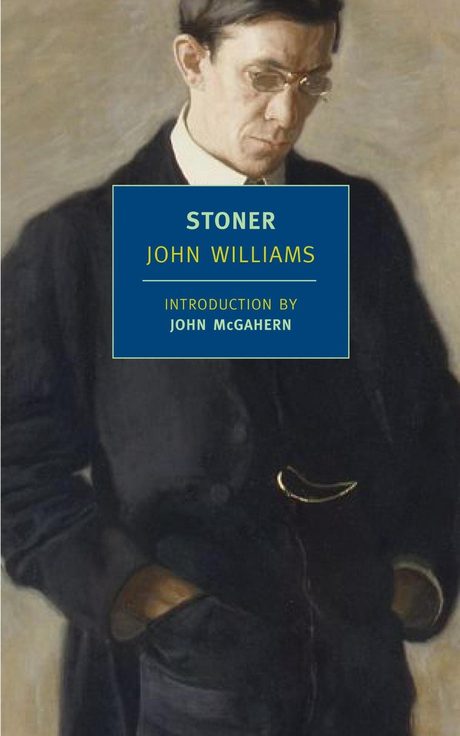
A farm boy becomes an English professor, has a cold marriage and one good love, and dies more or less unnoticed.
William Stoner leaves a Missouri farm for the state university to study agriculture, sits through a compulsory literature class, and quietly changes direction for good. The rest is one life: a marriage that goes cold within months, a daughter he loses to that coldness, a departmental feud that costs him everything he cares about at work, and one affair that turns out to be the happiest thing that ever happens to him. Williams tells it in calm unhurried prose with no irony anywhere. The novel was ignored when it came out and found its readers decades later.
Why it is at 12
Twelfth, first of the steady tier, and the one that surprises people, because nothing violent happens in it. That is the problem. Stoner is about a life that mostly does not go the way it should have, written so honestly that if your own is currently stuck, it will find the bruise and lean on it. Extraordinary novel, terrible timing on a bad night.
Read it ifyou want a plain, honest account of one ordinary life
Skip it ifyour own work and marriage feel stuck right now
quiet, sad, exactBest for: readers who want honestyliterary fictionacademiamarriage
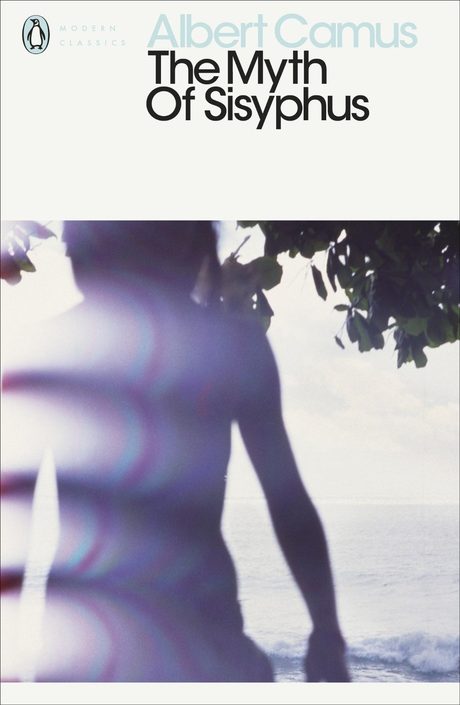
The essay that opens by asking whether life is worth living, then refuses suicide and religion as answers with equal firmness.
Camus starts with the one question he thinks matters, which is whether a person should go on living in a universe that offers no reason to, and then spends the essay closing every convenient exit. Suicide he treats as a surrender to the problem rather than a solution to it. Religion and the philosophies that smuggle meaning back in he calls a leap. What he proposes instead is holding the contradiction open: keep asking, get no answer, and live anyway with more attention rather than less. The last pages take the man condemned to roll a rock uphill forever and ask you to picture him satisfied.
Why it is at 13
Thirteenth, and the best answer here to the question this list is named after. It is in the steady tier for a different reason than its neighbours, because it will not upset you, it will out think you. This is a 1942 essay with dense stretches on Kierkegaard and Husserl. Give it an hour of real attention rather than five minutes on your phone at 2 a.m.
Read it ifyou want the argument itself and not a story about it
Skip it ifyou cannot give a book an hour of full attention
rigorous, dry, bracingBest for: readers who want an argumentphilosophyabsurdismessay
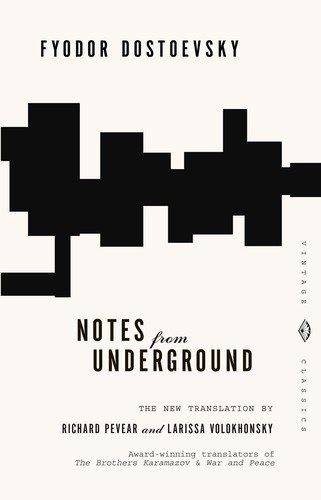
A retired clerk in a Petersburg basement explains, at length and with relish, why he has ruined his own life on purpose.
The narrator is forty, bitter, out of the civil service and living in a rented corner, and the first half is him arguing with a reader he has invented specifically so he can insult them. He attacks the idea that people act in their own interest, insisting that a man will choose harm just to prove he is free to. The second half is a memory: a humiliating dinner with old schoolmates, then a night with a young woman called Liza in which he is offered kindness and sets about destroying it. Written in 1864, and modern self sabotage has not improved on it.
Why it is at 14
Fourteenth because it is the most accurate and least comfortable book on this page. Everybody finds a piece of themselves in the Underground Man and nobody enjoys the find, particularly the part where he mistakes cruelty for honesty. Steady tier because there is no relief anywhere in it and the last thirty pages are genuinely upsetting. Read it when you are curious, not when you are low.
Read it ifyou want the source text for spite and self sabotage
Skip it ifyou are currently pushing away the people who are kind to you
bitter, brilliant, airlessBest for: readers who want the sourcerussian fictionclassictranslated
Heads up: cruelty, degradation, misogyny from the narrator
A talented student wins a magazine internship in New York and watches her own mind close around her over a single summer.
Esther Greenwood has the summer everybody wanted: a prize internship at a women's magazine in New York, a hotel room, free clothes, parties she does not enjoy. She is also going numb, and Plath tracks the process from the inside with unnerving calm, through the return home, the sleeplessness, the collapse, the hospital, and the electroconvulsive therapy that follows. It came out in 1963 under a pseudonym, weeks before Plath died, which colours the way everyone reads it. The writing is funnier and sharper than its reputation suggests, and that is part of what makes the descent so hard to watch.
Why it is at 15
Fifteenth because it is the most precise account of a mind closing that I have read, and precision is what makes it dangerous in the wrong week. Steady tier with no hesitation. If you are well, it will teach you more about the inside of a breakdown than any clinical description can. If you are not well, take the Frankl or the Haig instead.
Read it ifyou want the clearest first person account of a breakdown
Skip it ifyou are currently depressed or early in recovery
sharp, funny, frighteningBest for: readers who are steadyamerican fictionmental healthclassic
Osamu Dazaitranslated by Donald Keene1948about 192 pages
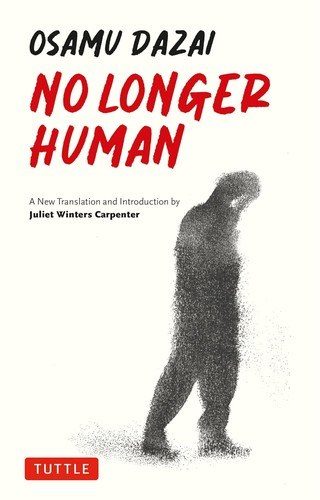
Three notebooks by a man who has never once felt human, and who has spent his life performing a person for other people.
Yozo grows up unable to feel what other people seem to feel, so he becomes a clown instead, making his classmates laugh so that nobody looks at him too closely. The notebooks carry him through art school, alcohol, morphine, a run of women, an attempted double suicide he survives, and the steady dismantling of whatever he was. Dazai published it in 1948, shortly before he died, and in Japan it is treated as something close to a confession. It is short, calm and completely free of self pity, which is exactly what makes it as bad as it is.
Why it is at 16
Sixteenth, the heaviest book on the list, and it is last on purpose. There is no redemption, no lesson and no light at the end, and the calm of the voice is what does the damage, because it never once asks you to feel sorry for him. Read it when you are well and curious about how far this feeling can travel. Do not read it tonight if tonight is bad.
Read it ifyou are steady and want the far end of this feeling
Skip it ifyou are struggling, because there is no comfort here at all
Weight here means what a book does to you, not what happens inside it. Man's Search for Meaning is set in Auschwitz and sits in the gentle tier, because Frankl is a doctor putting a hand on your shoulder. Stoner contains no war, no violence and no crime, and it sits in the steady tier, because it describes a life that quietly failed to become what it should have been and it never once looks away.
So: safe at 2 a.m. means you can read it in a bad state and be no worse off in the morning. Read in daylight means the book is honest enough to leave a mark, so give it a normal day and other people in the house. Wait until you are steady means it will find something tender and press on it, which is worth doing eventually, just not tonight. I have misjudged my own tier before, and being wrong downward costs you far less than being wrong upward.
Worth knowing
What I left off, and why
Nausea is the cut I regret, because Sartre gets closer to the physical sensation of this crisis than anyone else, and the novel wrapped around that sensation is a slog for most readers. The Trial belongs on the subject and lost its place because The Metamorphosis does the same work in a sixth of the pages. Waiting for Godot is a play, and plays read badly in bed. I also skipped the entire shelf of books promising purpose in five steps, since a list about a real question should not finish with a worksheet.
People also ask
Questions, answered
What should I read during an existential crisis?
Start with Man's Search for Meaning if you want an argument to hold on to, or The Midnight Library if you need something kind tonight. Both are short. Save Camus, Dostoevsky and Plath for a week when you are steadier, because those three are honest about how bad it gets and honesty is heavy at two in the morning. If the feeling has been constant for weeks, talk to a doctor as well as reading.
Is it bad to read depressing books when you feel low?
It depends on the book and on how low you are. Books that show you your own feeling from the outside often help, because being described accurately is a relief. Books that offer no exit at all, like No Longer Human, can make a bad night measurably worse. My rule is simple: if you are in it, read someone who survived it. If you are merely curious about it, read whatever you like.
Which Camus should I read first?
The Stranger, then The Myth of Sisyphus. The novel gives you the feeling and takes about three hours. The essay gives you the argument and takes considerably longer, because it spends real time with philosophers most readers have never met. Doing it the other way round works too, though people who begin with the essay often stall halfway and never reach the good part, which is the final twenty pages.
What is the difference between an existential crisis and depression?
Roughly, a crisis of meaning is about why and depression is about capacity, although they overlap and often turn up together. A crisis of meaning tends to arrive with your energy intact: you can still work, you simply cannot see the point of working. Depression usually takes the energy as well. I am not a clinician and that is a rough line, so if you cannot tell which one you are in, that is itself a good reason to ask somebody qualified.
Are there Indian books about an existential crisis?
English, August by Upamanyu Chatterjee is the one I would hand anybody, because it puts the feeling inside an Indian district posting and makes it funny without making it small. Siddhartha is set in India but written by a German who never lived here, so read it as a fable rather than as a picture of the place. Beyond this list, try R K Narayan's later novels, where quiet crises happen to very ordinary men.
Before you go
What to read tonight
If tonight is bad, read the first thirty pages of Man's Search for Meaning and stop there. Frankl will not fix anything by morning, and he will put a floor under you, which is a different thing and a more useful one. If tonight is fine and you are simply curious about the question, begin with The Stranger and let it walk you into the Camus essay next week.
If you get through four or five of these and the fog is still sitting on you a month later, treat that as information rather than as a personality. Books are excellent company for this feeling. They are poor treatment for it, and knowing which one you need is most of the skill.