The first classic I ever quit was Great Expectations. I was fourteen, the school library copy smelled of damp, and I got to about page forty before deciding that reading was a thing other people enjoyed. Nobody had told me the obvious part: I had walked in at the hardest end of the shelf. Two years later somebody handed me Animal Farm, I finished it on one bus ride, and the whole category reopened.
Most beginners do not fail at classics. They fail at the order. School hands you Dickens and Bronte early because those are on a syllabus, not because they are gentle, so a new reader meets nineteenth century sentence rhythm before the ear is ready for it. Meet that same rhythm after five easier books and it stops feeling like work.
So this is a ladder, not a ranking of greatness. Twenty one books across four rungs, ordered by friction: how much effort the opening thirty pages ask of you before the book starts carrying you instead. Rung one asks for nothing. Rung four asks for patience and pays it back with interest. Five Indian classics sit inside the ladder where they earned their place, not in a polite section at the end. Read straight down, or find your rung and start there.
How I picked these
- Friction, not fame. Every book is placed by how hard its first thirty pages are for someone who does not read much, which is why Orwell sits at the top and Dickens at the bottom.
- Short before long wherever the choice existed. Most of these run under 250 pages in a standard edition, because the habit we are building is finishing things.
- Five Indian classics, placed on merit rather than as a courtesy. R. K. Narayan gets three slots because his is the plainest good English in Indian literature and it makes a perfect on ramp.
- Cut: Wuthering Heights. I love it and it destroys beginners. Two narrators, a chronology that folds back on itself, and nobody to root for. Read it in year two.
- Cut: Godaan by Premchand. Every English edition I checked came back without a verified cover or a reliably in print translation, and I will not send you hunting. Untouchable by Mulk Raj Anand does a similar job and is easy to buy.
- Every title here was checked against Google Books and Open Library, so the editions and covers are real ones you can actually order.
The whole list at a glance
All 21 books, in order
| # | Book | Author | Year | Vibe | Best for |
|---|
| 1 | Animal Farm | George Orwell | 1945 | plain, brutal, unforgettable | an absolute first classic |
| 2 | Of Mice and Men | John Steinbeck | 1937 | spare, tender, devastating | readers who cry at films |
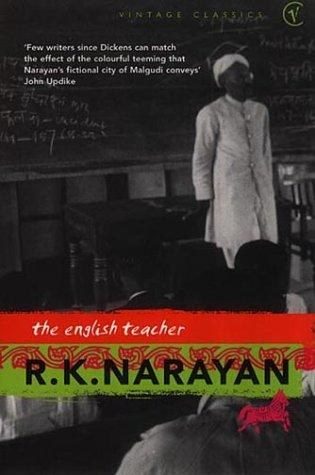
| 3 | Swami and Friends | R. K. Narayan | 1935 | warm, wry, unhurried | a first Indian classic |
| 4 | The Old Man and the Sea | Ernest Hemingway | 1952 | spare, stubborn, elemental | one evening, one book |
| 5 | Malgudi Days | R. K. Narayan | 1943 | gentle, observant, everyday | commutes and short sittings |
| 6 | Fahrenheit 451 | Ray Bradbury | 1953 | hot, urgent, poetic | a first dystopian novel |
| 7 | To Kill a Mockingbird | Harper Lee | 1960 | warm, slow burning, serious | readers who like coming of age |
| 8 | Lord of the Flies | William Golding | 1954 | tense, hot, unsettling | readers who like dark stories |
| 9 | Train to Pakistan | Khushwant Singh | 1956 | plain, tense, sorrowful | a first Partition novel |
| 10 | The Guide | R. K. Narayan | 1958 | sly, funny, quietly sad | your second Narayan |
| 11 | Untouchable | Mulk Raj Anand | 1935 | angry, close, unsparing | readers who want caste addressed |
| 12 | The Catcher in the Rye | J. D. Salinger | 1951 | restless, funny, lonely | readers in their teens or twenties |
| 13 | Nineteen Eighty-Four | George Orwell | 1949 | grey, airless, relentless | readers who finished Animal Farm |
| 14 | Brave New World | Aldous Huxley | 1932 | cold, clever, uncomfortable | readers who like ideas |
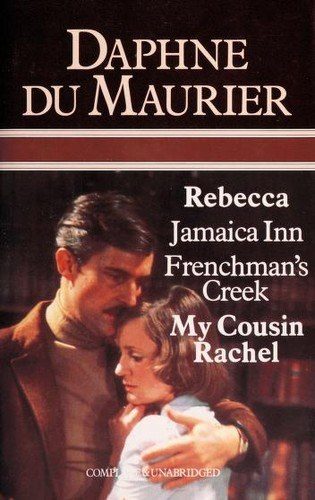
| 15 | Rebecca | Daphne du Maurier | 1938 | gothic, jealous, gorgeous | thriller readers new to classics |
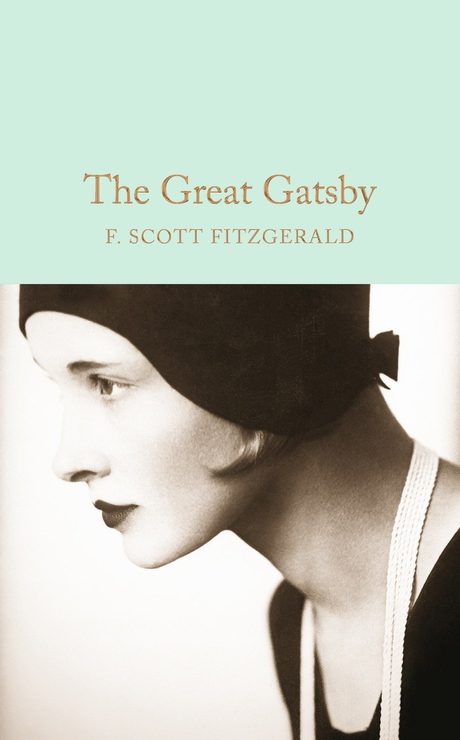
| 16 | The Great Gatsby | F. Scott Fitzgerald | 1925 | glittering, hollow, sad | readers who like sentences |
| 17 | The Picture of Dorian Gray | Oscar Wilde | 1890 | witty, decadent, sinister | the bridge into older prose |
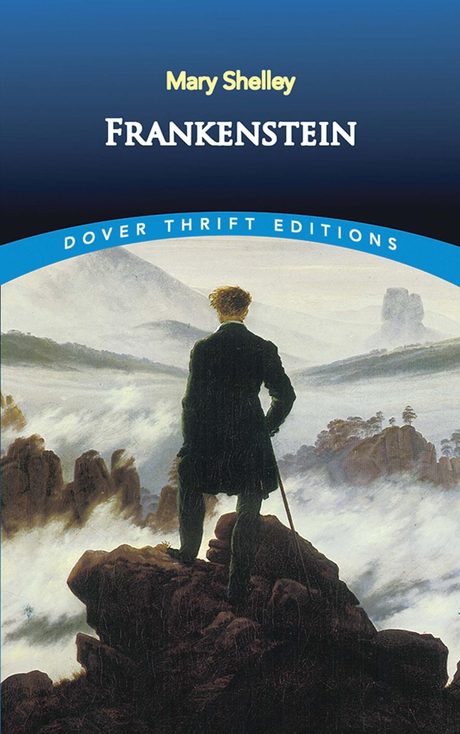
| 18 | Frankenstein | Mary Shelley | 1818 | ornate, mournful, radical | readers ready for older prose |
| 19 | Pride and Prejudice | Jane Austen | 1813 | sharp, funny, social | readers who enjoy family politics |
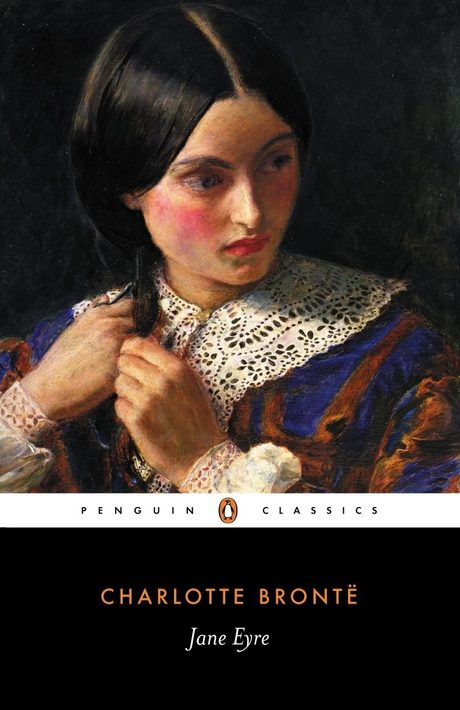
| 20 | Jane Eyre | Charlotte Bronte | 1847 | fierce, gothic, first person | readers who like intensity |
| 21 | Great Expectations | Charles Dickens | 1861 | sprawling, funny, melancholy | your sixth classic, not your first |
The list
The books, ranked
1
Rung 1: walk straight in
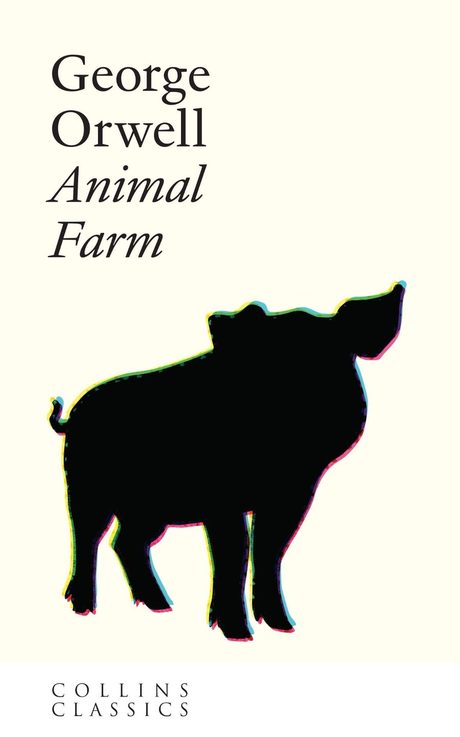
Animal Farm
George Orwell1945about 161 pages
Farm animals throw out the farmer, write their own rules, then quietly rewrite them. The shortest political education you will ever get.
The animals of Manor Farm evict their drunk owner and set up a republic run on seven commandments painted on the barn wall. Then the pigs take over the paperwork, and the commandments start changing overnight. Orwell wrote it as a fable about the Soviet Union, but he built it from sentences a twelve year old can read and a fifty year old cannot forget. It runs about a hundred pages. You will finish it in one evening, then sit still for a while doing quiet arithmetic about every government you have lived under.
Why it is at 1
First because it has almost no entry cost and an enormous return. Plain vocabulary, short chapters, a story that moves like a folk tale, and more thinking per page than books four times its length. If you read one book off this list, make it this one. If you quit this one, classics may genuinely not be your thing yet.
Read it ifyou want a classic you can actually finish tonight
Skip it iftalking animals as political argument sounds childish to you
plain, brutal, unforgettableBest for: an absolute first classicsatirepoliticsunder 150 pages
2
Rung 1: walk straight in
Of Mice and Men
John Steinbeck1937about 3 pages
Two migrant workers, one shared dream of a small farm, and an ending that follows you around for a week afterwards.
George and Lennie move from ranch to ranch in Depression era California, saving for a patch of land of their own. George is small and sharp, Lennie is enormous and gentle and has no idea of his own strength, and the entire book lives in the gap between what they plan and what the world permits. Steinbeck writes almost entirely in dialogue and stage direction, closer to a play than a novel, so there is nothing to decode. It runs about a hundred pages and the last ten are among the hardest in American fiction.
Why it is at 2
Second because it reads as easily as Animal Farm while hitting a completely different nerve, the private one about friendship and dependence. It sits below Orwell only because the ending is heavy enough that a first time reader may want one easy win first. Take them in this order and you get both.
Read it ifyou want plain prose with an emotional gut punch
Skip it ifyou need endings that leave you comfortable
spare, tender, devastatingBest for: readers who cry at filmsamerican classicfriendshipshort novel
Heads up: an act of violence and a mercy killing in the final pages
3
Rung 1: walk straight in
Swami and Friends
R. K. Narayan1935about 200 pages
A ten year old in a small South Indian town, worried about cricket, homework and his best friend, told without a drop of nostalgia sugar.
Swaminathan lives in Malgudi, the South Indian town Narayan invented and then used for the rest of his working life. He hates his arithmetic teacher, starts a cricket club with his friends, falls in and out with a boy named Rajam, and briefly runs away from home for reasons that make perfect sense when you are ten. Narayan's English is the simplest good English in Indian literature: no ornament, no showing off, every sentence going straight from him to you. If school taught you that Indian classics mean heavy prose, this is the correction.
Why it is at 3
Third because it is the gentlest possible door into Indian classics and the fastest proof that easy prose and serious writing are the same skill. It ranks above the other two Narayan books here only on length and simplicity. Start with this, and Malgudi Days and The Guide open later without any effort at all.
Read it ifyou want a warm, funny childhood you actually recognise
Skip it ifyou need high stakes and a plot in a hurry
warm, wry, unhurriedBest for: a first Indian classicindian classicchildhoodmalgudi
4
Rung 1: walk straight in
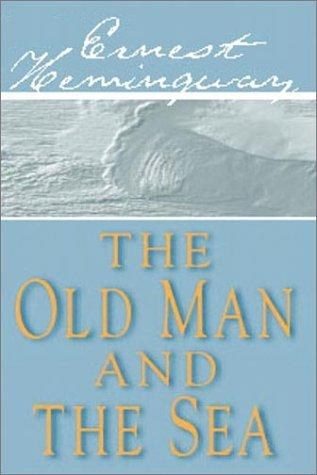
The Old Man and the Sea
Ernest Hemingway1952about 134 pages
An old fisherman, one enormous marlin, and eighty four days of bad luck. Barely a hundred pages and it holds a whole life.
Santiago has not caught a fish in eighty four days, so the boy who used to sail with him has been shifted to a luckier boat. He rows out alone anyway, hooks a marlin bigger than his skiff, and the two of them spend days tied together by a line while the old man talks to himself, to the fish, and to a sea he respects far more than he fears. Hemingway strips his sentences to nouns and verbs. There is no symbolism you need a teacher to decode, only a man refusing to let go.
Why it is at 4
Fourth because it is the shortest genuine classic here and the one you can finish between dinner and sleep. It sits under Narayan only because Hemingway's flat, repeating rhythm irritates some readers on first contact. Give it twenty pages. Once that rhythm clicks, half of twentieth century American writing becomes readable to you.
Read it ifyou have one free evening and want a whole classic
Skip it iflong stretches of solitude on a boat sound dull
spare, stubborn, elementalBest for: one evening, one bookamerican classicnovellasea
5

Rung 1: walk straight in
Malgudi Days
R. K. Narayan1943about 260 pages
Short stories from that same invented town, each one the length of a chai break, each one about somebody you have already met.
A postman who cannot bring himself to deliver bad news. An astrologer with something to hide. A man whose whole fortune rides on a rented cart. These are short stories set in Malgudi, most of them running six to ten pages, which makes this the friendliest book on the list for an attention span that social media has been chewing on. You read one at a bus stop and one before bed, and after twenty of them you notice that Narayan has quietly built you an entire town, with its economy, its gossip and its small daily heartbreaks.
Why it is at 5
Fifth because story collections are the kindest entry point in all of reading, and this is the finest one India has in English. It comes after Swami and Friends because a novel teaches you to keep going while stories give you permission to stop. Keep it beside you as a palate cleanser for the rest of the ladder.
Read it ifyour attention span is currently ruined and you know it
Skip it ifyou want one long story to sink into
gentle, observant, everydayBest for: commutes and short sittingsindian classicshort storiesmalgudi
6
Rung 2: one gear change
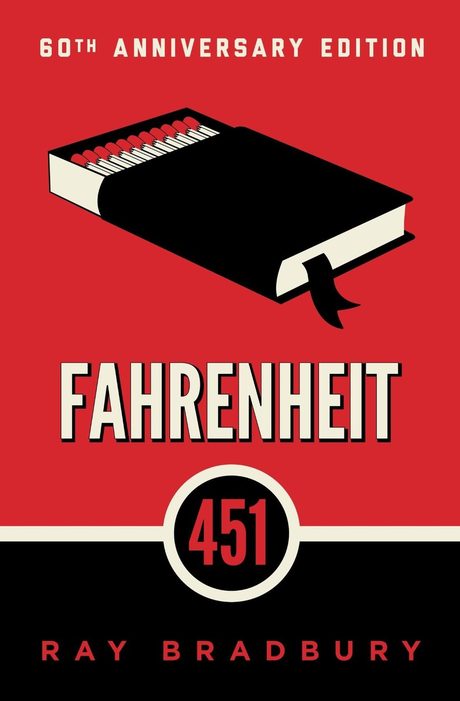
Fahrenheit 451
Ray Bradbury1953about 272 pages
Firemen burn books instead of putting out fires, and one of them starts stealing the things he is paid to destroy.
Montag burns books for a living in a country that decided reading was making people unhappy. His wife keeps the wall sized screens running all day and overdoses without entirely meaning to. Then a neighbour asks whether he is actually happy, and the question refuses to leave. Bradbury writes at a sprint, stacking image on image, closer to poetry than to plain prose. That is the gear change this rung asks for: sentences that arrive sideways. Accept the style and the book moves faster than almost anything else on the ladder.
Why it is at 6
Sixth, opening rung two, because it asks for exactly one adjustment and nothing more. The world is easy to picture, the pace is quick, and the argument about screens eating attention has aged into something uncomfortably current. It makes a better first dystopia than 1984 because it is half the length and lets you back out again.
Read it ifyou want a dystopia that reads like a fever
Skip it ifdense, image heavy prose puts you off
hot, urgent, poeticBest for: a first dystopian noveldystopiacensorshipamerican classic
7
Rung 2: one gear change
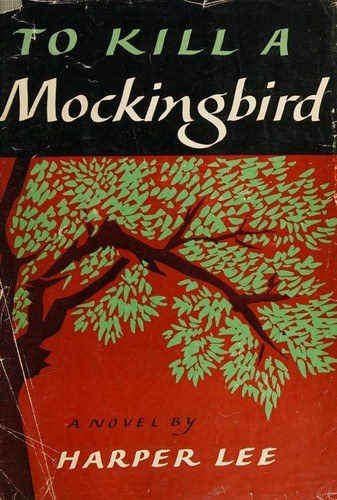
To Kill a Mockingbird
Harper Lee1960about 346 pages
A small Alabama town, a trial that splits it, and a six year old narrator who does not fully understand what she is watching.
Scout Finch is six when the book opens and she narrates her own childhood in a small Alabama town during the Depression: a shut in neighbour nobody has seen, a summer friend, and a father who takes on the defence of a Black man accused of raping a white woman. The trial occupies the middle and childhood occupies the rest, which is the design, since Scout keeps mistaking a moral emergency for an ordinary summer. The voice is warm and the sentences are easy. The subject is neither.
Why it is at 7
Seventh because the reading is straightforward while the length, around three hundred pages, and the slow opening hundred ask more patience than rung one did. Stay with the childhood chapters even when nothing appears to happen, since they are laying the ground the trial stands on. Worth saying plainly: the book has aged into an argument about its white saviour framing, and that argument is a fair one.
Read it ifyou want a moral story told through a child's eyes
Skip it ifyou want the plot moving by chapter one
warm, slow burning, seriousBest for: readers who like coming of ageamerican classiccourtroomchildhood
Heads up: racism, racial slurs, a rape accusation at the centre of the plot
8

Rung 2: one gear change
Lord of the Flies
William Golding1954about 225 pages
Schoolboys stranded on an island build a society, then take it apart. The most efficient horror story on this ladder.
A plane carrying British schoolboys goes down on an uninhabited island with no surviving adults. They elect a leader, agree on rules, keep a signal fire burning, and inside a few weeks the whole arrangement rots from within. Golding taught school for years, which is why the boys behave like actual boys rather than like symbols, and the accuracy is what makes it frightening. The prose is more descriptive than Orwell's, with long passages of heat and jungle and shifting light, so it asks a little more of you.
Why it is at 8
Eighth because the story pulls hard while the descriptive stretches, especially early on, slow some readers to a crawl. Read it after Animal Farm and you will catch the two books arguing with each other about whether people are corrupted by power or were already carrying the rot. That is the best two book conversation on this list.
Read it ifyou want a classic that works as a thriller
Skip it ifcruelty involving children is a hard limit
tense, hot, unsettlingBest for: readers who like dark storiessurvivalallegorybritish classic
Heads up: violence involving children, several deaths
Pairs with: Animal Farm, which asks the same question from the opposite end
9

Rung 2: one gear change
Train to Pakistan
Khushwant Singh1956about 194 pages
Partition reaches one Punjabi village where Sikhs and Muslims have always shared a well, and the village has days to decide who it is.
Mano Majra sits on the border, and until the summer of 1947 its Sikh and Muslim families live close enough that the village keeps one shared routine, set by the trains passing through. Then a train arrives full of bodies. Singh writes like the journalist he was, short sentences, no ornament, and he keeps the politics off stage so the change reaches you the way it reaches the villagers: as rumour, then fear, then a decision somebody has to make. Under two hundred pages, and it moves like a thriller with a hole in your chest.
Why it is at 9
Ninth because the prose is easy while the material is heavy, and heaviness asks for a different kind of stamina than difficulty does. As a first book about Partition it is unbeatable, since it stays at village scale instead of lecturing you about history. If your family is from the subcontinent, some of this is your story with the names changed.
Read it ifyou want Indian history at human scale
Skip it ifyou are not ready for communal violence on the page
plain, tense, sorrowfulBest for: a first Partition novelindian classicpartition1947
Heads up: communal violence, sexual assault, mass death
10
Rung 2: one gear change
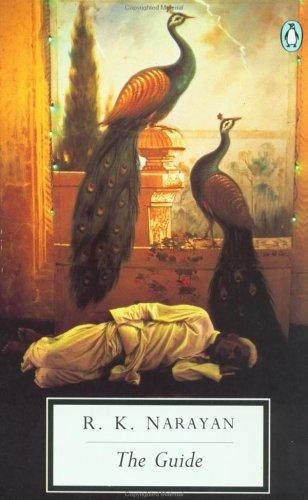
The Guide
R. K. Narayan1958about 234 pages
A charming small town tour guide talks his way into love, then money, then prison, then accidental sainthood.
Raju begins as a railway station guide who tells tourists whatever they want to hear, becomes the manager and lover of a married dancer, wrecks it through his own cleverness, and walks out of jail into a village that mistakes him for a holy man. Narayan tells it in two braided timelines, present and past, and that braid is the only structural demand the book makes. The comedy runs dry and constant underneath, and the whole thing turns serious without ever announcing that it has done so.
Why it is at 10
Tenth because holding two timelines at once is a small step up from Swami and Friends. It is also the best novel Narayan wrote, so the climb pays. Read it after one of his easier books rather than as your first Indian classic, and the jokes land considerably harder because you already know how he thinks.
Read it ifyou like unreliable charmers and very dry comedy
Skip it ifbraided timelines confuse you early on
sly, funny, quietly sadBest for: your second Narayanindian classicmalgudisatire
11
Rung 2: one gear change
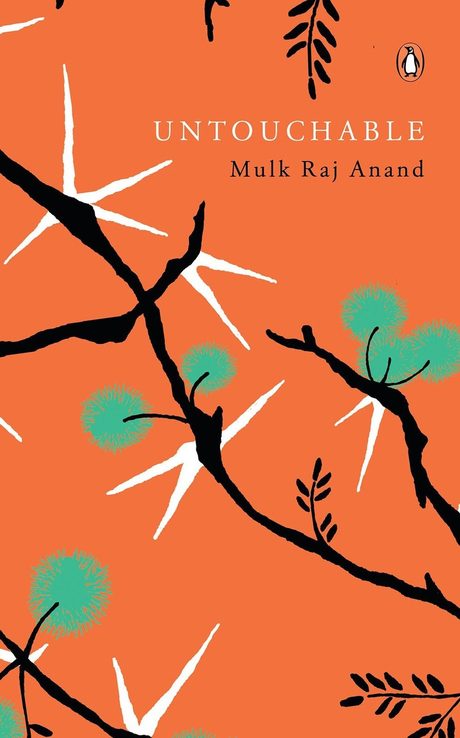
Untouchable
Mulk Raj Anand1935about 149 pages
One day in the life of an eighteen year old latrine cleaner in colonial India, written in 1935 and still hard to sit with.
Bakha cleans toilets in a north Indian cantonment town, and Anand gives you a single day of his life from morning to night: the work, the hunger, the tea he is not permitted to hold a cup for, a humiliation in the street, and a flicker of hope arriving from three different directions at the end. The book is short and the sentences are simple, but Anand keeps you inside Bakha's head, so every insult lands before he has the words for it. The caste arithmetic in it has not fully expired.
Why it is at 11
Eleventh and the last of rung two, because the reading is easy while the sitting with it is not. Anand's structure is the cleanest teaching device on this list: one day, one boy, three proposed solutions, no comfortable answer at the end. Placed here rather than lower because the anger in it works best once a few calmer books sit behind you.
Read it ifyou want the Indian classic school quietly skipped
Skip it ifyou want fiction to stay away from politics
angry, close, unsparingBest for: readers who want caste addressedindian classiccasteone day
Heads up: caste humiliation, casteist slurs, an assault
12
Rung 3: give it thirty pages
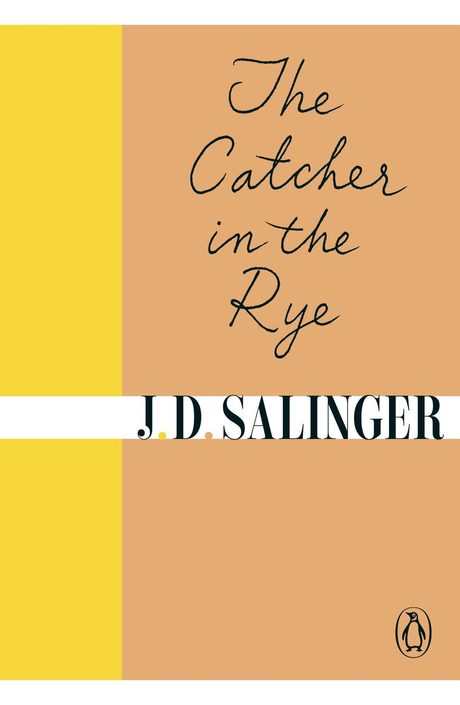
The Catcher in the Rye
J. D. Salinger1951about 207 pages
A sixteen year old walks out of boarding school and wanders New York for three days, talking at you the whole time.
Holden Caulfield has been thrown out of another school, cannot face going home yet, and spends three days in New York calling everybody a phony while quietly coming apart. There is barely a plot. What there is instead is a voice, a teenager's monologue that circles, doubles back, contradicts itself, and never once sounds like an adult writing a teenager. That voice is also the wall: for the first thirty pages Holden reads as an insufferable rich kid, because he is one, and the grief underneath him only surfaces later.
Why it is at 12
Twelfth, opening rung three, because the difficulty here is tonal rather than linguistic. Nothing is hard to read and everything depends on whether you can stay in the company of a narrator you occasionally want to slap. Indian readers often find him whinier than American readers do. Give it fifty pages before deciding, and read it before you turn thirty.
Read it ifyou can enjoy a narrator who irritates you on purpose
Skip it ifyou need a plot that goes somewhere
restless, funny, lonelyBest for: readers in their teens or twentiesamerican classicadolescencevoice
Heads up: depression, a sibling's death, an encounter with a sex worker
13
Rung 3: give it thirty pages
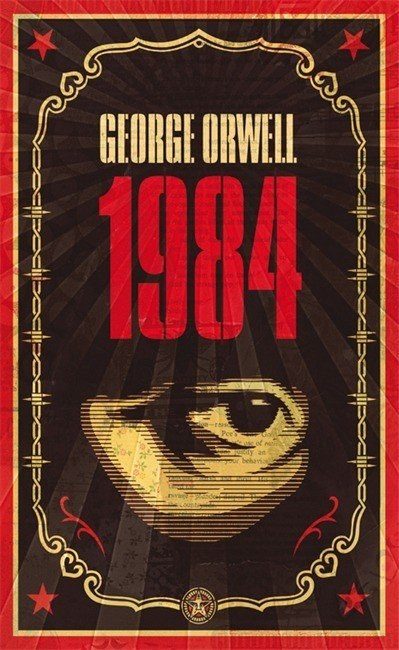
Nineteen Eighty-Four
George Orwell1949
A man keeps a secret diary inside a state that watches everything, including the language you would need to think a forbidden thought.
Winston Smith edits old newspapers so that history matches whatever the Party said this week. He starts a diary, then a love affair, both of them crimes, and the machinery closes in with a patience that is worse than speed would be. Orwell's writing stays plain, but the novel stops twice to hand you long stretches of political theory, and there is an appendix on the invented language at the back. That is the friction. The final third is the most frightening writing on this ladder and it earns every bit of its reputation.
Why it is at 13
Thirteenth because Orwell asks you to read essay sections inside a novel, which is one demand more than Animal Farm makes of you. Do not begin your Orwell here. Take the fable first, then this, and the ideas you met as pigs and windmills come back wearing uniforms. The vocabulary this book handed the world is worth meeting at the source.
Read it ifyou want the dystopia everyone quotes and few finish
Skip it iflong political digressions inside fiction lose you
grey, airless, relentlessBest for: readers who finished Animal Farmdystopiasurveillancebritish classic
Heads up: torture in the final act
14
Rung 3: give it thirty pages
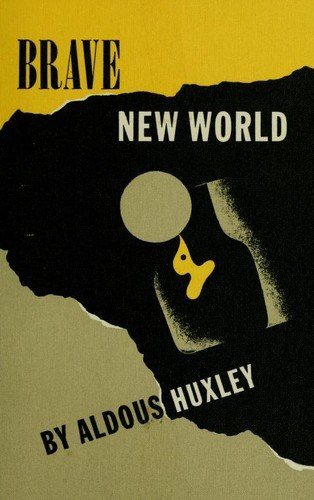
Brave New World
Aldous Huxley1932about 246 pages
A future where nobody is punished and everybody is comfortable, which turns out to be the more effective way of running a prison.
People are grown in bottles, sorted into castes before birth, conditioned in their sleep, and kept content by a drug called soma and a great deal of casual sex. Then a man raised outside the system is brought in as a curiosity, and the whole arrangement has to justify itself to him. The first fifty pages are the hard part, because Huxley front loads his invented jargon and walks you through a hatchery before the story starts. Get past that and the second half becomes an argument you keep having with yourself for years.
Why it is at 14
Fourteenth because of that front loaded opening, which is the single most common place readers put this book down. It belongs beside 1984 as the other half of one debate: Orwell feared the boot, Huxley feared the distraction, and anyone who has lost an evening to a scrolling feed already knows which prediction landed.
Read it ifyou want the smarter half of the dystopia argument
Skip it ifinvented jargon in the opening chapters frustrates you
cold, clever, uncomfortableBest for: readers who like ideasdystopiasatirebritish classic
Pairs with: Nineteen Eighty-Four, read back to back for the full debate
15
Rung 3: give it thirty pages
Rebecca
Daphne du Maurier1938about 456 pages
A shy young wife arrives at her husband's famous house and finds that his dead first wife is still running it.
A narrator who is never named marries a rich widower after a short courtship and comes home to Manderley, where the staff, the rooms and above all the housekeeper still belong to Rebecca, the first Mrs de Winter. Nothing supernatural occurs. The haunting is entirely social, a new wife measured against a dead woman by everyone including herself, until a discovery around the halfway mark turns the book into something else entirely. The prose is smooth and modern and du Maurier was a plot engineer of the first order.
Why it is at 15
Fifteenth, and the easiest long book on this ladder. It sits here rather than higher only because it runs past four hundred pages and the opening hundred are deliberately slow and airless. Once the tension turns, it becomes the most purely enjoyable reading on the list. If you like thrillers and think classics are homework, this is your rebuttal.
Read it ifyou want a classic that behaves like a thriller
Skip it ifyou need a heroine with agency from page one
gothic, jealous, gorgeousBest for: thriller readers new to classicsgothicsuspensebritish classic
16
Rung 3: give it thirty pages
The Great Gatsby
F. Scott Fitzgerald1925about 160 pages
A rich stranger throws enormous parties every weekend for the one guest who never comes. Under two hundred pages, every one of them polished.
Nick Carraway rents a small house next to a mansion on Long Island where a man called Gatsby throws parties that the whole coast attends and nobody quite understands. What emerges is a story about money, a woman across the bay, and the exact distance between old wealth and new. The book is short, but every sentence is doing decorative work, so you move through it slower than the page count suggests. The plot is thin by design. What you are here for is the writing and the ache underneath it.
Why it is at 16
Sixteenth because the density is genuine: this is the first book on the ladder where you will reread a paragraph for pleasure rather than for confusion. It also lands far better after twenty five than before, since the subject is a man rebuilding himself for someone who has already moved on. School ruins this book by assigning it too early.
Read it ifyou want prose worth rereading a line of
Skip it ifyou want plot rather than atmosphere and longing
glittering, hollow, sadBest for: readers who like sentencesamerican classicjazz ageshort novel
17

Rung 3: give it thirty pages
The Picture of Dorian Gray
Oscar Wilde1890about 268 pages
A beautiful young man stays beautiful while his portrait upstairs absorbs everything he does. Wilde's only novel, and his best jokes.
Dorian sits for a portrait, listens to an older aristocrat explain that youth and beauty are the only assets worth owning, and wishes aloud that the painting would age in his place. It works. The novel then follows him through a corruption the canvas records and his face does not. Roughly half of the book is plot and the other half is Lord Henry talking, and Wilde's epigrams are good enough that they slow you down in the pleasantest way. Victorian sentence length is the only real obstacle here.
Why it is at 17
Seventeenth, closing rung three, and the bridge to the older books below it. The sentences run long by modern standards, but the wit keeps hauling you forward, which makes this the gentlest introduction to nineteenth century prose rhythm available. Read it before Frankenstein or Dickens and your ear arrives at those books already half tuned.
Read it ifyou like wit, decadence and a moral horror story
Skip it iflong Victorian paragraphs make you sleepy
witty, decadent, sinisterBest for: the bridge into older prosegothicvictorianwit
18
Rung 4: the climb
Frankenstein
Mary Shelley1818about 180 pages
A student builds a living man out of dead parts, is horrified by what he made, and abandons it. Shelley wrote it at nineteen.
Victor Frankenstein assembles a creature, brings it to life, takes one look at the result and runs. The creature, abandoned and startlingly articulate, teaches itself to read and comes looking for its maker with a request. Shelley built the book in nested layers, a letter containing Victor's account containing the creature's account, and that nesting is what trips most modern readers. There is no lab coat and no bolt through the neck anywhere in it. What there is instead is a long argument about who is responsible for a life you chose to start.
Why it is at 18
Eighteenth, opening rung four, because this is where the sentences turn properly old. Romantic era prose is ornate, the Alps get described at length, and the pace drops below anything above it here. Push through and the creature's own chapters turn out to be the most modern writing in the book, which is why somebody rewrites this story every decade.
Read it ifyou want the origin point of science fiction and horror
Skip it iflong scenic description tests your patience
ornate, mournful, radicalBest for: readers ready for older prosegothicscience fictionromantic era
19

Rung 4: the climb
Pride and Prejudice
Jane Austen1813about 382 pages
Five sisters, no money, and a marriage market where one wrong sentence at a dance can decide a whole life. Funnier than its reputation.
The Bennet family has five unmarried daughters and an estate that will pass to a male cousin, so marriage here is not romance, it is survival arithmetic. Elizabeth Bennet is sharp enough to see the entire game and proud enough to misjudge the one man who matters. Austen's comedy lives in her sentences rather than in her situations, and it turns savage once your ear tunes to it. Indian readers get an unfair advantage: the aunties, the property anxiety and the whole rishta economy are recognisable equipment.
Why it is at 19
Nineteenth because the difficulty is concentrated in the first fifty pages, where formal address, an entailed estate and a parade of new names all arrive together. After that it moves fast and becomes the funniest book on the ladder. It ranks above Jane Eyre because the payoff comes sooner and the tone stays light throughout.
Read it ifyou like social comedy and slow burning romance
Skip it ifdrawing room manners bore you senseless
sharp, funny, socialBest for: readers who enjoy family politicsregencyromancebritish classic
20
Rung 4: the climb
Jane Eyre
Charlotte Bronte1847about 801 pages
An orphan with no money and no beauty refuses to be small, and narrates her own life at you with total conviction.
Jane is orphaned, sent to a charity school that nearly finishes her, and comes out of it as a governess in a house with a locked upper floor and a difficult master. The romance is the famous part, but what actually carries the book is the voice: a plain woman insisting, in 1847, on her right to want things. It is long, it moves through five distinct phases, and one stretch in the middle involving a moor and a family of cousins tests absolutely everybody. The final quarter repays the entire climb.
Why it is at 20
Twentieth because of length and that middle sag, which is where most readers stall out. Take it in phases rather than in one push and it goes down easily. It sits below Austen on friction alone, never on quality, and if you prefer intensity to wit you may well find this the better of the two.
Read it ifyou want a heroine who argues with the whole world
Skip it iflong middle sections make you abandon books
fierce, gothic, first personBest for: readers who like intensityvictoriangothicromance
Heads up: child cruelty at a boarding school, a death from illness
21

Rung 4: the climb
Great Expectations
Charles Dickens1861about 588 pages
A blacksmith's apprentice comes into money from an unknown source and slowly turns into someone he would once have despised.
Pip meets an escaped convict in a graveyard as a small boy, is summoned to a decaying house where a jilted bride has stopped every clock, and later receives a fortune from a benefactor he is forbidden to name. Dickens published it in weekly instalments, which means a hook every few pages and a cast that keeps on expanding. The sentences run long, the comic names come thick, and the opening hundred pages ask for real patience. It also has the most satisfying plot on this list once the pieces begin locking together.
Why it is at 21
Last, and not because it is the weakest book here. It is simply the highest friction: length, Victorian sentence structure, and a very large cast arriving early. Save it until five or six of the books above are behind you, and it turns into a pleasure rather than the thing that made me stop reading at fourteen.
Read it ifyou are ready for a long Victorian novel with a real payoff
Skip it ifyou have a book on this list you have not started yet
sprawling, funny, melancholyBest for: your sixth classic, not your firstvictoriancoming of agelong read
Worth knowing
The four rungs, and how to use them
Rung one asks nothing at all: short books, plain sentences, stories that start moving on the first page. Rung two asks for a single adjustment, usually a style you have to tune into or a subject that weighs something. Rung three asks you to stay with a voice or an idea for a while before it pays you back. Rung four asks for patience with old sentence rhythm, and returns the most for it.
You do not have to climb in strict order. What you should not do is start at rung four because a syllabus or a list told you those are the real books. All twenty one of these are real books. The ladder measures your reading muscle, not literary worth, and that muscle is built the way any other one is, by adding weight slowly and stopping before you hurt yourself.
Worth knowing
The thirty page rule
This is the only rule I keep with classics. Give a book thirty pages of honest attention with your phone in another room. If it has not started carrying you by page thirty, close it, put it back, and drop one rung. No guilt, no entry in a reading journal about discipline. The book is not too good for you and you are not too lazy for it. You met it at the wrong time, that is all.
The exceptions are marked in the entries above. Brave New World, Pride and Prejudice and Great Expectations all pile their difficulty into the opening, and all three turn around somewhere between page fifty and page one hundred. Where a book needs a longer trial than thirty pages, I have said so in its why here line. Everywhere else on this ladder, thirty pages is a fair test and you owe the book nothing more.
People also ask
Questions, answered
Which classic book should a beginner read first?
Animal Farm by George Orwell, in most cases. It runs about a hundred pages, the vocabulary is deliberately plain, the story moves like a folk tale, and you can finish it in one evening, which is the single most useful thing a first classic can do for you. If you would rather begin with something Indian, Swami and Friends by R. K. Narayan does the same job with a gentler subject and an even easier sentence.
Are classic books hard to read?
Some are, and the difficulty is rarely vocabulary. It is sentence rhythm. Books written before roughly 1900 use longer clauses and more formal address, so your ear needs tuning, much the way it needs tuning to an unfamiliar accent. Books from the nineteen thirties onward read almost like today. That is exactly why this list opens with Orwell, Steinbeck and Narayan and leaves Dickens and the Brontes for the end.
How many pages should I give a classic before quitting?
Thirty pages, with your phone in another room. If the book has not taken over by then, stop, move one rung easier on this list, and come back to it in a year. Three books here load their difficulty into the opening and deserve longer: Brave New World, Pride and Prejudice and Great Expectations all turn around between page fifty and page one hundred. Those three are flagged in their entries above.
Which Indian classics should a beginner read?
Start with Swami and Friends or Malgudi Days by R. K. Narayan, because his English is the plainest good prose in Indian literature. Then Train to Pakistan by Khushwant Singh for Partition at village scale, The Guide for Narayan working at full strength, and Untouchable by Mulk Raj Anand when you are ready to be made uncomfortable. Those five sit on this list in exactly that order of difficulty.
Should I read abridged or simplified versions of classics?
No, with one exception. Abridged editions cut the sentences that make a book worth reading and keep the plot, which you could get from a summary in five minutes. The exception is a child under twelve meeting a story for the first time. For an adult beginner, the answer is choosing an easier classic rather than an easier version of a hard one, and that is what the rungs on this list are for.
Do I need to read classics in any particular order?
Not in publication order, no. Order them by friction, which is what this list does. Reading Animal Farm before 1984, or The Picture of Dorian Gray before Frankenstein and Dickens, makes the harder book noticeably easier, because you meet the ideas and the sentence rhythm one step at a time instead of all at once. Beyond those pairings, pick whichever description makes you want to open something tonight.
Before you go
What to read tonight
If it is late and you want to start something right now, take Animal Farm down and accept that you will be finished before you are sleepy. If you have two free evenings, do Of Mice and Men and then Swami and Friends, which will leave you convinced that classics come in two flavours, brutal and warm, and that both of them belong to you.
After that, stop reading down the ladder in a straight line and start following one thread instead. If Orwell worked, go to 1984 and then Fahrenheit 451. If Narayan worked, take The Guide next. If Rebecca worked, you are a plot reader, and Great Expectations will treat you well sooner than you expect it to. The point of a ladder is that you climb off it once your legs know what they are doing.
Keep going
Lists that pair with this one
Mood & Life
20 Best Short Novels Under 200 Pages, Ranked by Length
Every book here is under 200 pages in the edition we link, and the list runs shortest first, so you can pick by the hours you actually have left tonight.
Mood & Life
18 Books for People Who Don't Like Reading (Short and Fast)
Sorted by how much of your evening they ask for, starting with books you can finish tonight.
Authors
The 12 Best R. K. Narayan Books, Ranked, and Where to Start
Twelve books ranked for a reader picking him up today, each with a sting rating for how hard the ending lands.
Mood & Life
20 Best Books to Read in Your 20s, Grouped by the Problem
Four problems run this decade, work, love, money and meaning, so the list is sorted that way instead of pretending one book fixes all four.
Mood & Life
19 Best Coming of Age Novels, and the Right Age to Read Each
Every one of these has a window when it lands hardest, so I marked all nineteen and ranked them by how long that window stays open.