There is a shelf in most Indian homes where good intentions go to die. Mine had a Booker winner sitting on it for four years, spine uncracked, because somebody had told me it was important. I finally read it on a train to Bhuj and finished it in two sittings, which taught me what the actual problem had been: nobody had told me what the book was like, only that it had won.
That is what the Booker sticker does. It certifies quality and says nothing at all about the experience. Some winners move like thrillers and could be handed to a cousin who last read a novel in school. Others want a dictionary, a family tree and a free weekend. Both kinds are on this list, labelled, so you know what you are agreeing to before page one.
So the ranking is reward divided by effort, not literary merit alone. A book that gives you plenty for a little sits above a book that gives you more and charges three times the work. Every entry names the prize and the year, checked against the prize records, because the Booker and the International Booker are two separate awards and the internet mixes them up daily.
Fourteen ranked below, best first. After them, three winners I will happily defend as great books and still call homework, because you deserve to know which ones will fight you.
How I picked these
- Only real winners. Every prize and year here was checked against the Booker winners table and the International Booker page before I wrote a word. Shortlists do not count, which is why Never Let Me Go is missing.
- Reward over effort. I ranked by what a book returns for the hours it takes, so a short fierce novel can sit above a bigger achievement.
- Both Bookers, kept separate. Two entries won the International Booker, which goes to translated fiction and splits the money with the translator. I say so in the entry instead of blurring them together.
- Indian and Indian-origin winners get real space, six of them, because that is where most of our readers start and the coverage elsewhere is thin.
- What got cut: winners I have not finished, and winners whose pleasure belongs mostly to people who already read literary fiction for a living. Three of those are named in the homework section rather than quietly dropped.
The whole list at a glance
All 14 books, in order
| # | Book | Author | Year | Vibe | Best for |
|---|
| 1 | The God of Small Things | Arundhati Roy | 1997 | green, humid, doomed | first-time Booker readers |
| 2 | The Remains of the Day | Kazuo Ishiguro | 1989 | polite, repressed, devastating | readers who like slow burns |
| 3 | Shuggie Bain | Douglas Stuart | 2020 | tender, grimy, relentless | readers who want to be moved |
| 4 | The White Tiger | Aravind Adiga | 2008 | furious, funny, fast | one-sitting readers |
| 5 | Heart Lamp | Banu Mushtaq | 2025 | sharp, domestic, wry | commuters and story readers |
| 6 | Life of Pi | Yann Martel | 2001 | bright, strange, philosophical | readers who like a twist |
| 7 | Lincoln in the Bardo | George Saunders | 2017 | funny, ghostly, grief-struck | readers bored of normal novels |
| 8 | The Sellout | Paul Beatty | 2015 | manic, brilliant, exhausting | satire readers |
| 9 | Girl, Woman, Other | Bernardine Evaristo | 2019 | warm, plural, propulsive | readers who like linked stories |
| 10 | Midnight's Children | Salman Rushdie | 1981 | loud, sprawling, magical | patient readers of Indian history |
| 11 | Wolf Hall | Hilary Mantel | 2009 | cold, clever, immersive | history readers with time |
| 12 | Prophet Song | Paul Lynch | 2023 | claustrophobic, urgent, bleak | readers who want shaking |
| 13 | The Inheritance of Loss | Kiran Desai | 2006 | melancholy, misty, unhurried | patient literary readers |
| 14 | Tomb of Sand | Geetanjali Shree | 2018 | playful, digressive, huge | ambitious readers with time |
The list
The books, ranked
1
Booker 1997, low friction, huge payoff
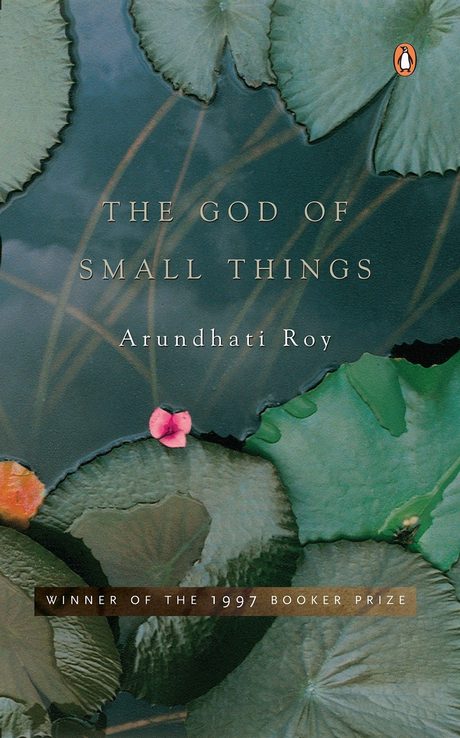
The God of Small Things
Arundhati Roy1997about 343 pages
Twins in Kerala, one afternoon by the river, and a family that spends two decades not saying what happened.
Rahel and Estha are seven-year-old twins in Ayemenem, and the book moves between that year and their reunion as adults, circling the same afternoon from both ends. Roy writes children the way children actually think, in invented compound words and private rules, and lets the adult world press in around them: a mother in love with the wrong man by caste, a communist uncle, a grandmother running a pickle factory. You learn early that something terrible happened. Watching it arrive anyway, slowly, from two directions, is the whole engine of the thing.
Why it is at 1
First because it asks the least and returns the most. The prose looks difficult on the page and reads easily in the head, the setting is one many Indian readers know in their bones, and it is the rare prize winner people actually finish. Ishiguro at number two writes cleaner sentences. Roy writes better ones.
Read it ifyou want language that plays and a story that hurts
Skip it ifyou need events in order and hate knowing the ending early
green, humid, doomedBest for: first-time Booker readersindiakeralafamilyliterary
2

Booker 1989, quiet, and it wrecks you
The Remains of the Day
Kazuo Ishiguro1989about 281 pages
An English butler takes a short drive through the countryside in 1956 and slowly works out that he gave his life to the wrong man.
Stevens is a butler at a great English house, and he sets off on a motoring holiday to visit a former colleague, Miss Kenton. That is the entire plot. What happens instead is that his memories keep intruding, and through the gaps in his own careful telling you see what he cannot: that his employer stood on the wrong side of history, and that a woman loved him while he was busy discussing the silver. Ishiguro never lets Stevens admit any of it. You have to do the noticing, which is why the last twenty pages land the way they do.
Why it is at 2
Second because the technique is close to perfect and the reading is genuinely easy, line by line. It sits under Roy only because the world is small and English and the emotional bill arrives very late. Give it a hundred pages and it will collect in full.
Read it ifyou like restraint and want a narrator who lies to himself
Skip it ifyou need plot, action, or people who say what they mean
polite, repressed, devastatingBest for: readers who like slow burnsenglandregretliterary
3

Booker 2020, heavy going, worth it
Shuggie Bain
Douglas Stuart2020about 411 pages
A boy in 1980s Glasgow loves his alcoholic mother well past the point where love can help either of them.
Agnes Bain is glamorous, proud and drinking herself to death in a Glasgow gutted by pit closures. Her youngest son Shuggie stays after everyone else leaves, keeping her dignity going with the coin meter and a hairbrush. He is also a soft boy in a hard place, and Stuart is as clear about that cruelty as he is about the drink. Poverty here is written from the inside, without misery tourism and without a lesson at the end. What hurts is not the squalor. It is the tenderness between the two of them, which never once helps.
Why it is at 3
Third because the emotional return is enormous, and I should be honest about the cost: it is a long book about a child watching an adult fail, and the Glaswegian dialogue takes fifty pages to settle into your ear. After that you will not put it down. Do not start it in a bad week.
Read it ifyou can sit with grief and want writing that earns it
Skip it ifaddiction at home is too close to your own life right now
tender, grimy, relentlessBest for: readers who want to be movedglasgowaddictionmother and son
Heads up: alcoholism, child neglect, sexual abuse, homophobic violence
4

Booker 2008, one evening, no excuses
The White Tiger
Aravind Adiga2008about 16 pages
A driver from Bihar writes to the Chinese premier explaining, cheerfully, how he murdered his employer and became a businessman.
Balram Halwai narrates his own life across seven nights of letters to Wen Jiabao, and he is funny, vain and completely without remorse. He starts in a village he calls the Darkness, becomes a driver for a rich family in Gurgaon and Delhi, and works out that the only exit from service is a crime. The satire is broad and the anger under it is real. Adiga was accused of writing Indian poverty for a foreign audience, and there is something in that charge, but the voice is so alive that the argument feels like part of the book.
Why it is at 4
Fourth, and the one I hand to anyone who says they cannot read literary fiction. It moves like a thriller, the chapters are short, and you can finish it between dinner and sleep. It ranks under the top three because everyone around Balram is a type rather than a person, which is the price satire charges.
Read it ifyou want anger, speed and a narrator you enjoy distrusting
Skip it ifyou want a fair or affectionate portrait of India
furious, funny, fastBest for: one-sitting readersindiasatireclass
5

International Booker 2025, read three, stop, come back
Heart Lamp
Banu Mushtaqtranslated by Deepa Bhasthi2025about 222 pages
Stories about Muslim women in small-town Karnataka, written by a lawyer who spent decades listening to them in real life.
Banu Mushtaq has written in Kannada for decades while working as a lawyer, journalist and activist, and these stories come straight out of that life. The women in them are wives, mothers and daughters inside Muslim households in southern India, and their fights are domestic and enormous at the same time: a second marriage, a husband's indifference, a mother with one mouth too many to feed. Deepa Bhasthi's translation keeps the Kannada, Urdu and Dakhni rhythms alive in the English instead of sanding them smooth. The tone is not solemn either. Mushtaq is often very funny about people behaving badly.
Why it is at 5
Fifth because it is the easiest book here to start and the hardest to stop. Stories mean you can read one on a commute and put it down without losing the thread. It won the International Booker in 2025, which is the translated-fiction prize rather than the one Roy and Adiga won, and it is the newest thing on this list by a distance.
Read it ifyou like short stories and women who refuse quietly
Skip it ifyou want one long narrative to sink into for a week
sharp, domestic, wryBest for: commuters and story readersindiakannadatranslationshort stories
6
Booker 2002, easy on top, tricky underneath
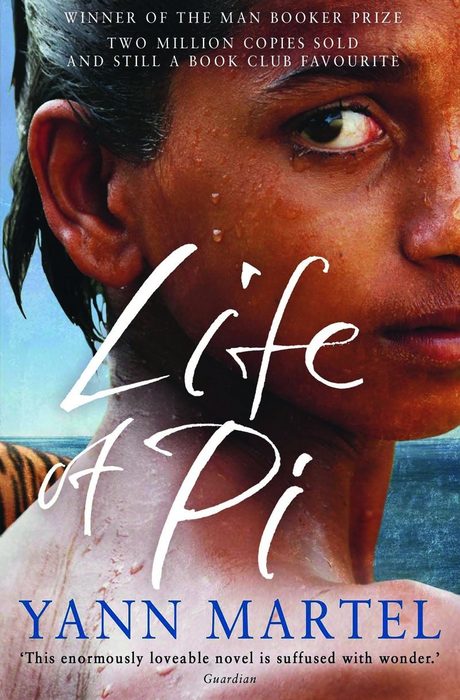
Life of Pi
Yann Martel2001about 465 pages
A zookeeper's son from Pondicherry survives months in a lifeboat with a Bengal tiger, then offers you a second version of the story.
Pi Patel grows up in Pondicherry, practises three religions at once because nobody can give him a good reason not to, and ends up adrift in the Pacific after the ship carrying his family and their zoo goes down. Most of the book is survival logistics: water, fish, sunburn, and a daily negotiation with a tiger named Richard Parker. Then, near the end, Martel hands you an alternative account of the same voyage with no animals in it and asks which one you would rather believe. That question is the book, and it is why people still argue about the ending.
Why it is at 6
Sixth because it reads like an adventure and thinks like philosophy, which is a rare double. It gives up ground to the books above on feeling: you admire Pi more than you ache for him. If the film put you off, know that the novel is stranger and considerably better.
Read it ifyou want a survival story with a question hidden inside it
Skip it ifanimal suffering is hard for you, because there is plenty
bright, strange, philosophicalBest for: readers who like a twistsurvivalindiafaith
Heads up: animal deaths, cannibalism implied
7
Booker 2017, odd format, fast read
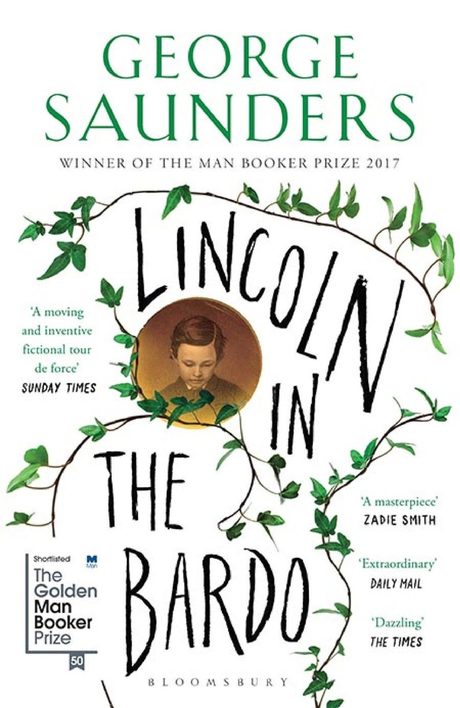
Lincoln in the Bardo
George Saunders2017about 371 pages
Abraham Lincoln's dead son spends one night in a graveyard full of ghosts who refuse to admit that they are dead.
Willie Lincoln dies of typhoid in 1862 and his father keeps coming to the crypt at night to hold the body. Around them, the graveyard's other residents argue, gossip and refuse to move on, stuck in a bardo they insist is only a temporary arrangement. Saunders tells it two ways at once: fragments of speech with the speaker's name printed underneath, and stacked quotations from real and invented histories. On page one it looks like a script assembled out of footnotes. Ten pages later your brain stops noticing the shape and it moves faster than an ordinary novel.
Why it is at 7
Seventh, and the format is the only reason it is not higher. Plenty of readers open it, see the layout and shut it again. Get past that and this is the funniest and most surprising book here, with real grief sitting inside the comedy. Give it thirty pages before you decide.
Read it ifyou enjoy formal experiments and dark comedy in the same book
Skip it ifunusual page layouts make you abandon a book on sight
funny, ghostly, grief-struckBest for: readers bored of normal novelsghostsgriefexperimental
8
Booker 2016, short, dense, relentless
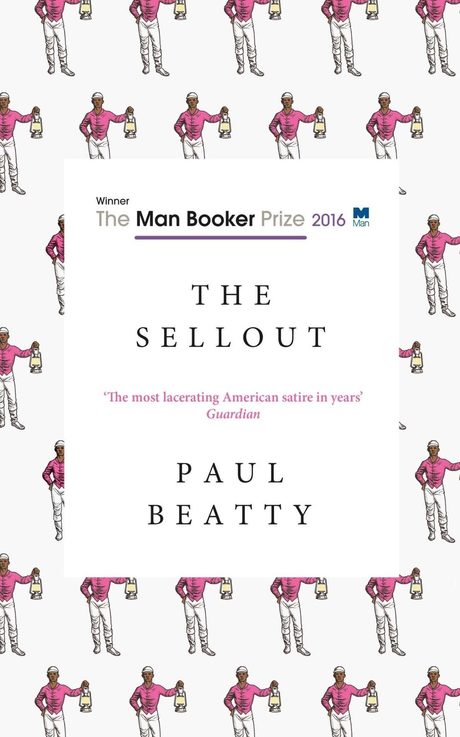
The Sellout
Paul Beatty2015about 215 pages
A Black man in a Los Angeles suburb reinstates segregation and takes a slave, and ends up in front of the Supreme Court.
The narrator grows up as the subject of his father's home-schooled psychology experiments in Dickens, an agricultural pocket of Los Angeles that the city quietly wipes off the map. To bring it back he segregates the local school and accepts an elderly man's request to become his slave. Beatty writes satire at the pitch of a stand-up set that never pauses for applause, joke stacked on joke, reference on reference. It is the funniest book on this list and also the one most likely to leave you uneasy about what you were laughing at.
Why it is at 8
Eighth because the comedy is as good as comedy gets and the density is punishing. Beatty makes three jokes a sentence and expects you to catch American references going back to the 1970s. Indian readers will miss a fair number, and the book slows down for nobody. Excellent in short bursts, exhausting across a weekend.
Read it ifyou want savage satire and can handle being lost sometimes
Skip it ifyou need every joke explained or dislike racial provocation
manic, brilliant, exhaustingBest for: satire readerssatireraceamerica
Heads up: constant racial slurs, used satirically
9
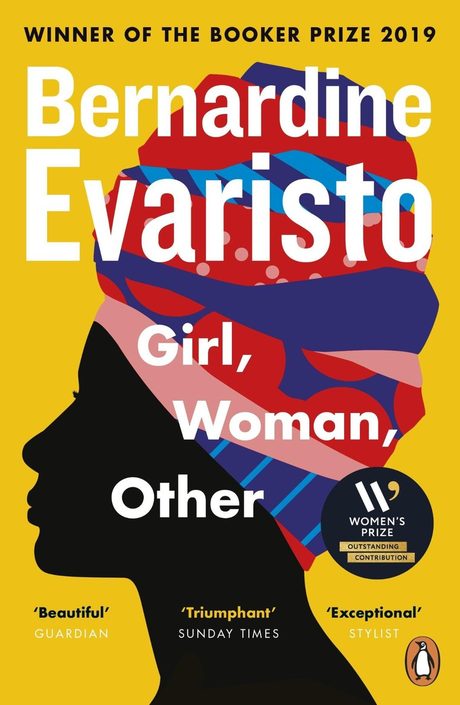
Booker 2019, shared, twelve lives, almost no full stops
Girl, Woman, Other
Bernardine Evaristo2019about 258 pages
Twelve mostly Black British women, their mothers and their daughters, in a novel written almost entirely without full stops.
Evaristo gives each of twelve characters her own chapter, then lets them turn out to be each other's mothers, students, exes and enemies. Amma is a playwright finally getting her National Theatre opening. Carole works in banking and has edited herself into a shape her mother no longer recognises. Winsome came over from Barbados in the 1950s. The writing runs in short unpunctuated lines that look like poetry, which sounds difficult and is in fact the quickest reading on this list. You will finish a chapter and realise you never once stopped for breath.
Why it is at 9
Ninth because the reading is quick and the range is wide, though twelve lives in one book means you will love four of them and merely put up with three. It shared the 2019 prize with Margaret Atwood's The Testaments. Between those two, this is the one worth your evening.
Read it ifyou want many voices and a book that keeps moving
Skip it ifyou need one protagonist to follow the whole way through
warm, plural, propulsiveBest for: readers who like linked storiesbritainwomenlinked stories
10
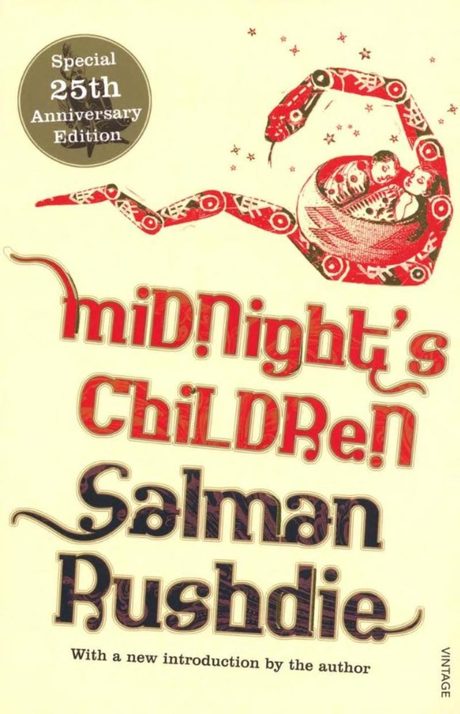
Booker 1981, the big one, and it is work
Midnight's Children
Salman Rushdie1981
A boy born at the exact moment of Indian independence finds his life handcuffed to the country's, telepathy included.
Saleem Sinai is born at midnight on 15 August 1947 and grows up certain that whatever happens to India is also happening to him. He can hear the thousand other children born in that same hour. Around this Rushdie runs the first thirty years of the republic: Partition, the wars, the Emergency, Bombay film money, and a pickle factory holding the frame narrative together. The style is loud, punning, digressive and openly unreliable, since Saleem keeps getting his facts wrong and shrugging about it when caught.
Why it is at 10
Tenth on a reward-for-effort ranking, and I know that will irritate people. It is the most important novel here and the one most likely to defeat you around page 150, when the family tree gets crowded and the jokes keep arriving. Read it after two or three others from this list, never first.
Read it ifyou want modern Indian history told as a tall tale
Skip it ifyou want a straight story or a narrator who tells the truth
loud, sprawling, magicalBest for: patient readers of Indian historyindiapartitionmagical realism
11

Booker 2009, slow start, total immersion
Wolf Hall
Hilary Mantel2009about 657 pages
Thomas Cromwell, a blacksmith's son, becomes the most useful man in Henry VIII's England and knows exactly what it will cost him.
Mantel takes the Tudor court and hands it to Cromwell, usually the villain of this story, and writes him as a competent, funny, watchful man who remembers being beaten as a child and never quite stops remembering. The plot is Henry's attempt to leave Katherine for Anne Boleyn and the machinery Cromwell builds to make that legal. Mantel writes in the present tense and uses the word he for Cromwell so relentlessly that the first fifty pages are genuinely confusing. Then the trick clicks and you are standing inside his head, watching a country change shape.
Why it is at 11
Eleventh because the payoff is enormous and the entry fee is steep: you need some Tudor bearings, or the patience to look things up as you go. English readers grow up soaked in this history and most Indian readers do not, which changes the experience more than critics admit. Once you are in, no book here is better company.
Read it ifyou like politics, competence and long books you live inside
Skip it ifEnglish royal history bores you or pronouns trip you up
cold, clever, immersiveBest for: history readers with timehistorytudorpolitics
12
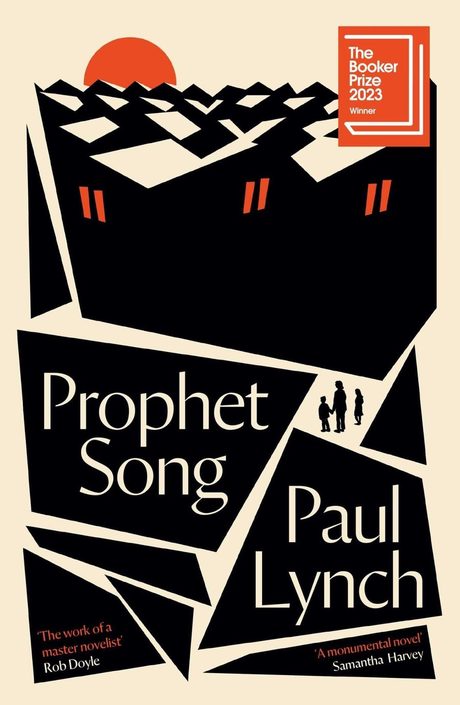
Booker 2023, short, airless, hard to shake
Prophet Song
Paul Lynch2023about 283 pages
A scientist and mother in Dublin watches Ireland turn into a police state while trying to hold her family together.
Eilish Stack's husband, a trade unionist, is taken in for questioning by a new state security service and does not come home. From there Lynch tracks the ordinary, unbearable decisions: whether to leave, whether to keep the children in school, whether to believe her sister on the phone from Canada. He writes in long paragraphs with no quotation marks and almost no breaks, so the pages will not let you out. The point is never the politics of an invented Ireland. It is what a refugee decision looks like from inside an ordinary life that used to be fine.
Why it is at 12
Twelfth, and the low placing is about mood rather than quality. This is a short book that gives you no air, and the format makes skimming impossible. If you read the news about migration and feel a distance, this closes it in about two hundred pages. Just do not pick it up hoping for comfort.
Read it ifyou want a warning delivered at very close range
Skip it ifyou are already anxious about the state of the world
claustrophobic, urgent, bleakBest for: readers who want shakingdystopiairelandfamily
Heads up: state violence, war, disappearance of a family member
13
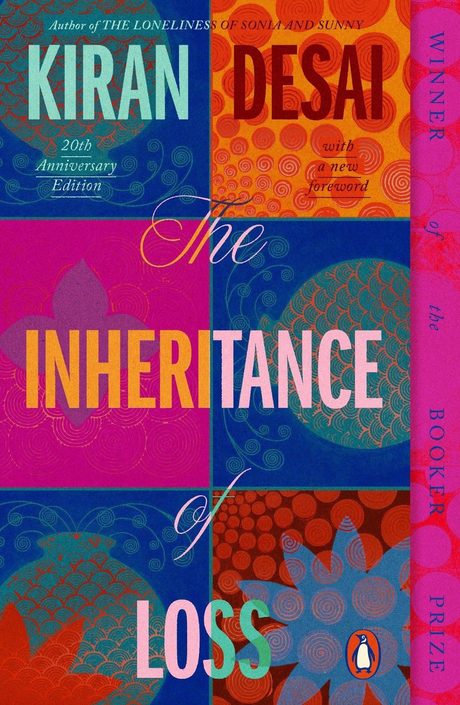
Booker 2006, lovely, and it drifts
The Inheritance of Loss
Kiran Desai2006about 360 pages
A retired judge, his orphaned granddaughter and their cook in Kalimpong, while the cook's son washes dishes illegally in New York.
The setting is Kalimpong in the mid-1980s with a Nepali insurgency building in the hills, and Desai splits the novel between that damp house and a Manhattan basement kitchen where the cook's son Biju drifts between jobs he cannot hold. The judge is a bitter man shaped by his own years in England. The granddaughter falls for her maths tutor, who joins the insurgents. Desai is very good on humiliation, the small daily kind that colonial hangovers leave behind in people who inherited them without ever asking for them.
Why it is at 13
Thirteenth because the writing is fine and the book never builds much momentum. Every chapter works on its own. The whole drifts, and Biju's New York sections read like a separate novel stapled to the side. Worth your time if the theme calls to you, very easy to abandon if it does not.
Read it ifyou like sad, wry books about people stuck between countries
Skip it ifyou need a plot that pulls you forward by the collar
melancholy, misty, unhurriedBest for: patient literary readersindiadiasporahimalaya
14

International Booker 2022, the hardest climb here
Tomb of Sand
Geetanjali Shreetranslated by Daisy Rockwell2018about 546 pages
An eighty-year-old widow turns her face to the wall, then gets up, gets a new life, and takes her daughter to Pakistan.
Ma sinks after her husband dies, refuses to leave her bed, and then rises with an appetite for everything her family finds improper: a friend named Rosie, a border crossing, a past none of them knew about. Shree writes in Hindi with crows, doors and roads talking back to the narrator, and Daisy Rockwell's translation keeps the puns working in English rather than flattening them into sense. The Hindi original, Ret Samadhi, came out in 2018 and the English translation followed in 2021, which is why the year above may not match the edition you buy.
Why it is at 14
Last here and still worth the shelf space, because the reward is real and so is the cost. This is a very long book of digressions, wordplay and talking objects, and most readers stall inside the first fifty pages. It won the International Booker in 2022, the prize for translated fiction, which is a different award from the one Rushdie and Roy took. Read it after five others, not before.
Read it ifyou love playful language and have genuine patience
Skip it ifyou want a plot that behaves or a book you can finish quickly
playful, digressive, hugeBest for: ambitious readers with timeindiahinditranslationpartition
Worth knowing
The three that are homework
Every list like this one pretends that all prize winners are pleasures. Three are not, and I would rather say so now than have you buy one on my recommendation and quit in week two. The Luminaries by Eleanor Catton won in 2013 and sits on an astrological structure where each section runs half the length of the one before it, which is clever and also means the book thins out at exactly the rate your attention does. It is enormous, it is a Victorian gold-rush mystery, and it rewards note-taking. That is a hobby rather than a read.
Milkman by Anna Burns won in 2018 and refuses to name a single person. Everybody is maybe-boyfriend, third brother-in-law, milkman, and the sentences run long and loop back on themselves the way frightened people actually talk. It is a serious book about surveillance in Northern Ireland during the Troubles, and it is a brick wall for the first eighty pages. Readers who break through become evangelists. Readers who do not come away feeling stupid, which is unfair to them and says more about the book than about their brains.
Possession by A. S. Byatt won in 1990 and contains long stretches of invented Victorian poetry and academic letters that you are meant to read properly rather than skim. There is a good love story underneath all of it. Reaching that story requires an appetite for pastiche. If you did not enjoy studying literature the first time, this will feel like being sent back to class with a reading list.
None of the three is a bad book. All three ask you to enjoy the difficulty itself, and enjoying difficulty is a taste, not a virtue. If that is your taste, start with Milkman, which pays the best.
Worth knowing
Booker or International Booker, and why the difference matters
Two names, two prizes, one permanent confusion. The Booker Prize goes to a novel written in English and published in the UK or Ireland. The International Booker Prize goes to a book translated into English, and the money is split evenly between the author and the translator, which is why Deepa Bhasthi and Daisy Rockwell are named in their entries above rather than tucked into a copyright page.
For an Indian reading list the distinction carries weight. Roy, Rushdie, Adiga and Kiran Desai won the English-language prize. Banu Mushtaq and Geetanjali Shree won the translation prize, which means Kannada and Hindi fiction reached that audience without having to be written in English first. Anyone who tells you Tomb of Sand won the Booker is not exactly lying, but they are flattening a difference the translators worked hard for.
People also ask
Questions, answered
Which Booker Prize winner should I read first?
The White Tiger if you want something fast that you will definitely finish, and The God of Small Things if you want the best book on this list. Both are Indian, both sit around three hundred pages, and neither needs any background reading. Save Midnight's Children and Wolf Hall for later, once your reading legs are back under you. Starting with the hardest winner is exactly how people decide that prize books are not for them.
Is the International Booker Prize the same as the Booker Prize?
No. The Booker Prize goes to a novel written in English and published in the UK or Ireland. The International Booker Prize goes to fiction translated into English, and the prize money is shared between author and translator. On this list, Heart Lamp and Tomb of Sand won the International Booker, in 2025 and 2022. Everything else won the English-language prize. Plenty of articles blur the two together, so check the year and the exact prize name before you quote it to anyone.
Which Indian authors have won the Booker Prize?
Arundhati Roy won in 1997 for The God of Small Things, Kiran Desai in 2006 for The Inheritance of Loss, and Aravind Adiga in 2008 for The White Tiger. Salman Rushdie, born in Bombay, won in 1981 for Midnight's Children. On the translation side, Geetanjali Shree won the International Booker in 2022 for Tomb of Sand and Banu Mushtaq in 2025 for Heart Lamp. That is six winners with Indian roots, and every one of them is on this list.
Are Booker Prize winners hard to read?
Some are, most are not. The prize rewards ambition, and ambition occasionally shows up as difficulty, but The White Tiger, Life of Pi and Girl, Woman, Other are easier going than plenty of airport bestsellers. The hard ones are hard in specific, nameable ways: an odd layout, unfamiliar history, or a flat refusal to name characters. Knowing which kind of difficulty you are walking into is most of the battle, which is why every entry here tells you what it will cost.
What is the shortest Booker Prize winner worth reading?
From this list, The Sellout and Heart Lamp are the quickest to get through, for very different reasons. The Sellout is compact and dense, so it reads short and thinks long. Heart Lamp is a story collection, which means you can finish a piece in fifteen minutes and stop without losing your place. Prophet Song is also brief but gives you no breathing room at all, so it never feels short while you are inside it.
Should I read Booker winners in order of year?
There is no reason to. The prize is not a series and the winners do not talk to each other. Order by appetite instead: start with something fast, then take on one that asks more of you. If you want a rough progression, go The White Tiger, then The Remains of the Day, then Shuggie Bain, then Midnight's Children. That runs easy to hard without dropping the quality at any step along the way.
Before you go
What to read tonight
If you want to start tonight, open The White Tiger and read the first two nights of Balram's letters before you sleep. It is the least intimidating way onto a prize shelf that has frightened off a lot of good readers. If you want the one you will still be thinking about next year, it is Roy, and it will take a week you will not resent losing.
Stuck between two of them, use the cost line rather than the reviews: pick whichever difficulty matches what you can actually give a book this month. And once you have finished three from here, go back to a winner that beat you years ago. Books do not change, but readers do, and the novel that flattened you at twenty-two often folds without a fight at thirty.
Keep going
Lists that pair with this one
Indian Fiction
The 20 Best Indian Books in Translation, Ranked by Where to Start
Twenty books from ten Indian languages, ordered from the easiest way in to the one that will fight you, with the translator named every time.
Indian Fiction
16 Best Books to Understand India, Ranked by What They Explain
Sixteen books, ten doors into the same country: history, caste, the mega city, the village, money, and where to start tonight.
Mood & Life
Classic Books for Beginners: 21 Ranked Easiest to Hardest
Twenty one classics arranged on a four rung ladder, easiest first, so you finish the first one instead of abandoning it at page thirty.
Indian Fiction
12 Best Novels Set in Delhi, Plus 3 That Are Not Fiction
Delhi is at least five cities stacked on one map, so I have ranked these by which one you actually take away.