A friend finished Atomic Habits in three days, bought a whiteboard, drew a habit tracker on it, and by the second Sunday the whiteboard was propping up a money plant. Then he asked me what to read next, which is how most people end up on a list like this one. The honest answer is that the next book was never the problem. Atomic Habits works because it hands you one mechanism, your environment doing the job your willpower kept failing at, and you either installed that mechanism or you did not.
So this list is built differently. Every book is reduced to a single mechanism, printed above the title. Read the mechanism first. If you already run it, skip the book and save four hours, because you would be reading three hundred pages of stories about something you already do on autopilot.
The fourteen books sit on four shelves. The habits shelf is for people who keep quitting. The attention shelf is for people who can concentrate right up until the next notification arrives. The time shelf is for people whose calendar belongs to everybody else. The fourth shelf holds three books that think this entire genre is a trap, and they come last because one of them is the best book here.
Ranked one to fourteen, but the number is shelf order, not quality order. The quick picks below say which is genuinely the best, which is the fastest, and which one to read if the problem is your phone.
How I picked these
- One mechanism per book, named up front. If I could not say what a book asks you to do differently on Monday morning, it did not get in.
- I left out the famous Charles Duhigg habit book from 2012 on purpose. James Clear borrowed its cue and reward machinery and made it easier to use, so reading it afterwards feels like reading an earlier draft of a book you already own.
- Nothing that runs on motivation alone. If the method is wanting it more, it is not here.
- Three books that argue against the productivity project are included, because a reader who has kept a habit tracker for two years usually needs an argument, not another tracker.
- Every title checked through Google Books and Open Library, so the covers and editions are real, and the year shown is first publication rather than the reprint in front of you.
The whole list at a glance
All 14 books, in order
| # | Book | Author | Year | Vibe | Best for |
|---|
| 1 | Tiny Habits | BJ Fogg | 2019 | gentle, practical, repetitive | people who cannot get started |
| 2 | How to Change | Katy Milkman | 2021 | evidence-led, brisk, unsentimental | readers who want the research |
| 3 | Switch: How to Change Things When Change Is Hard | Chip Heath | 2010 | storytelling, corporate, memorable | managers, parents, anyone leading change |
| 4 | The Checklist Manifesto | Atul Gawande | 2009 | reportage, clear, quietly radical | professionals under pressure |
| 5 | Nudge | Richard H. Thaler | 2008 | wry, academic, foundational | people who prefer ideas to routines |
| 6 | Deep Work | Cal Newport | 2016 | stern, argumentative, useful | knowledge workers and students |
| 7 | Indistractable | Nir Eyal | 2019 | practical, self-aware, brisk | phone-first distraction |
| 8 | Stolen Focus | Johann Hari | 2022 | reported, angry, readable | readers who want the systemic view |
| 9 | Essentialism | Greg McKeown | 2014 | one idea, hammered home | over-committed professionals |
| 10 | Make Time | Jake Knapp | 2018 | friendly, modular, low pressure | busy people who hate systems |
| 11 | The One Thing | Gary Keller | 2013 | blunt, repetitive, effective | readers scattered across goals |
| 12 | Four Thousand Weeks | Oliver Burkeman | 2021 | philosophical, funny, unsparing | burnt-out optimisers |
| 13 | Slow Productivity | Cal Newport | 2024 | calm, historical, corrective | creatives and senior professionals |
| 14 | How to Do Nothing | Jenny Odell | 2019 | essayistic, meandering, sharp | readers tired of optimisation |
The list
The books, ranked
1

Mechanism: shrink it, then anchor it to something you already do
Tiny Habits
BJ Fogg2019about 317 pages
The smallest possible version of the Atomic Habits idea, from the Stanford researcher whose model James Clear built on.
Fogg spent decades at Stanford watching people try to change, and his conclusion is almost insultingly simple: shrink the behaviour until it is too small to argue with, attach it to something you already do without thinking, then celebrate the second you finish it. Two push ups after you use the toilet. One sentence the moment you sit at your desk. The celebration bit sounds ridiculous and is the part that does the work, because he is training a feeling rather than a schedule. The book is warm, a little repetitive, and full of examples from ordinary people instead of Olympians.
Why it is at 1
First because it is the closest thing to a sequel. If Atomic Habits gave you the four laws and you still could not start, Fogg's version is smaller and kinder, and his anchoring instruction is more concrete than anything in Clear. One caveat: if you start easily and quit later, this is the wrong book and rank two is yours.
Read it ifyou keep failing at the starting line rather than the finish
Skip it ifyou find American self-help warmth hard to sit through, because there is a lot of it
gentle, practical, repetitiveBest for: people who cannot get startedhabitsbehaviour designstarting
2
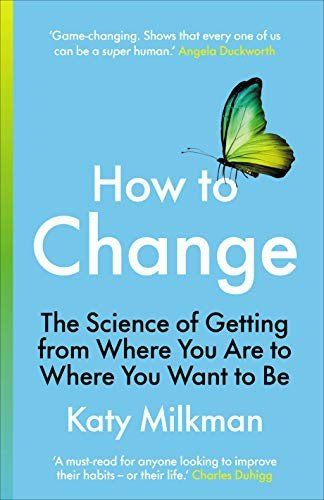
Mechanism: diagnose the obstacle first, then pick the tactic
How to Change
Katy Milkman2021about 272 pages
A behavioural scientist argues there is no single trick, and matches each way of failing to the fix that suits it.
Milkman teaches at Wharton and runs field experiments with gyms, hospitals and universities, so the book rests on what people actually did rather than what they told a survey. The frame is diagnostic: forgetting needs a different fix from laziness, which needs a different fix from low confidence. She gives you temptation bundling, where the audiobook you love is allowed only at the gym, and the fresh start effect, which explains why a new month feels like a clean sheet when nothing has changed. It is the most scientific book on this shelf and the least chatty.
Why it is at 2
Second because it repairs the one weakness every habit book shares, Clear included: they assume everybody fails the same way. Milkman makes you name your obstacle before choosing a tactic, so you stop applying a starting fix to a quitting problem. Drier than Fogg, better argued, and the one I would give a sceptic.
Read it ifyou like studies and want the reason a tactic works
Skip it ifyou want one system you can install tonight without thinking
evidence-led, brisk, unsentimentalBest for: readers who want the researchbehavioural sciencehabitsresearch
3
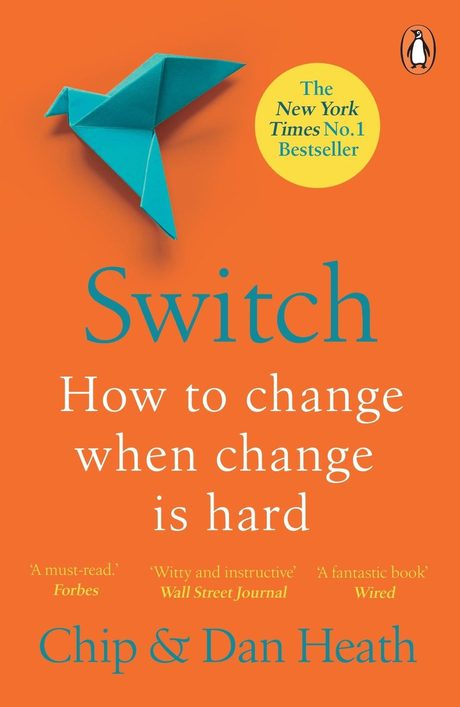
Mechanism: shape the path so the change needs less willpower
Switch: How to Change Things When Change Is Hard
Chip Heath2010about 322 pages
The change book for when the person who has to change is not you.
Chip and Dan Heath borrow a picture from the psychologist Jonathan Haidt: your rational side is a rider, your emotional side is an elephant, and the rider cannot win a wrestling match, so the real job is shaping the path they are both walking down. Most case studies are organisations, hospitals, villages, companies with a process nobody follows, which sounds far from your morning run until you notice that a household is also an organisation with a process nobody follows. It is the most quotable book here and the one I have reused most often in client work.
Why it is at 3
Third because it is the only book on this shelf that scales past one person. Fogg and Milkman fix you, Switch fixes a team, a family, a client who will not follow the process. The caveat is real: the business stories repeat by the last third, and the framework is easier to admire than to run.
Read it ifyou have to move other people and not only yourself
Skip it ifyou want a personal morning routine and do not care about teams
storytelling, corporate, memorableBest for: managers, parents, anyone leading changechangeteamsbehaviour
4

Mechanism: move the remembering out of your head and onto paper
The Checklist Manifesto
Atul Gawande2009about 223 pages
A surgeon makes the case that the dumbest tool in the building beats expertise once things get complicated.
Gawande is a surgeon, and he started this after noticing that highly trained people miss simple steps exactly when the situation gets messy. He goes to aviation, to skyscraper construction, to a restaurant kitchen, and returns with the same finding each time: a short, unglamorous list catches what memory drops. Then he tests one in operating theatres across several countries and watches what happens. It reads like a long magazine piece, moves fast, and is the only book on this list that changed how I run a working day rather than a morning.
Why it is at 4
Fourth because it is the cheapest mechanism here. A checklist takes ten minutes to write and asks nothing of your motivation, identity or tracker, which is the sort of thing habit books skate past while chasing a deeper fix. It is also the shortest and best written book on this shelf, so it is what I hand to people who do not read this genre.
Read it ifyou keep missing steps you genuinely already know
Skip it ifyou want personal habit change, since this is mostly about work and teams
reportage, clear, quietly radicalBest for: professionals under pressuresystemsworkmedicine
5

Mechanism: change the default, because most people never switch it
Nudge
Richard H. Thaler2008about 322 pages
The book behind every opt-out box you have ever ignored, and the clearest argument that environment beats intention.
Thaler and Cass Sunstein call it choice architecture: how an option is presented changes what people pick, and since there is no neutral way to present anything, somebody is always designing your choice for you. Cafeteria layouts, pension plans, organ donation forms, the small print that decides whether you are in or out unless you act. It is an economics book written for the rest of us, funny in places and occasionally too pleased with itself. Read it and you start seeing defaults everywhere, in your bank app, your phone settings, your fridge.
Why it is at 5
Fifth, closing the habits shelf, because it works at the scale of a country rather than a person. The idea underneath is the same one that makes Atomic Habits work, though: put the good option in your way and the bad option out of reach. Treat this as the theory behind your fruit bowl.
Read it ifyou want the theory behind why environment design works
Skip it ifyou want personal tactics, because this one is policy first
wry, academic, foundationalBest for: people who prefer ideas to routineseconomicschoice designpolicy
6
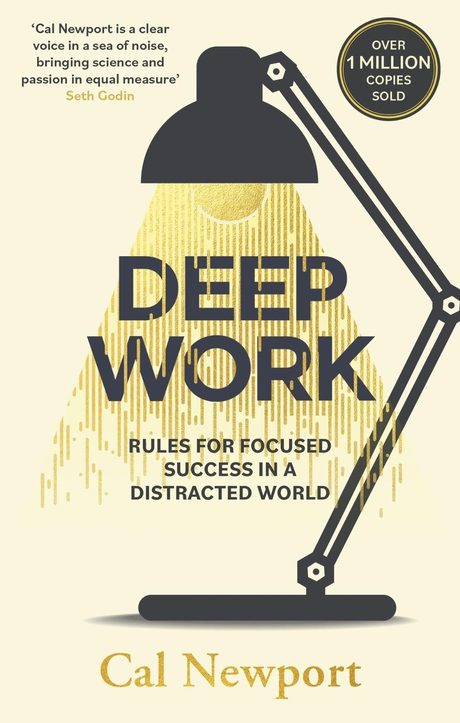
Mechanism: block the hours, then ritualise the ending
Deep Work
Cal Newport2016about 190 pages
The argument that undistracted work is getting rarer and more valuable at once, plus four ways to build the practice.
Newport is a computer science professor who has never had a social media account, and the book comes in two halves. The first argues that concentrating for long stretches is becoming scarce while the market pays more for it. The second is the practice: scheduled blocks, a shutdown ritual that ends the day properly, deliberate boredom so your brain stops expecting a hit every few minutes. The tone is stern and mildly smug about the author's own discipline, but the shutdown ritual alone earns the price, and I have run it for years.
Why it is at 6
First on the attention shelf because it changes what you believe about your day, not only what you do in it. If Atomic Habits fixed your gym problem and you still cannot finish one hard piece of thinking, start here. The caveat: Newport lives on a professor's calendar, and parts of this do not survive an office with a manager in it.
Read it ifyour work needs long uninterrupted thinking and you never get it
Skip it ifyour job is meetings and messages with no say over your own calendar
stern, argumentative, usefulBest for: knowledge workers and studentsfocusworkattention
7
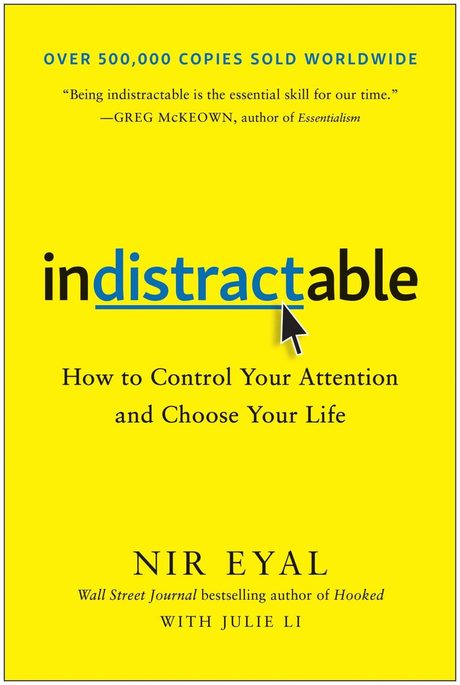
Mechanism: trace the pull back to the discomfort you are escaping
Indistractable
Nir Eyal2019about 289 pages
The man who taught tech companies to build habit-forming products wrote the manual for resisting them.
Eyal's case is that distraction is not caused by the phone, it is caused by the feeling you had one second before you reached for it, usually boredom, anxiety, or the small dread of a hard task. So he starts on the inside, with ways to sit through the ten minutes when an urge is loudest, then works outward: timeboxing a calendar around your values, renegotiating with colleagues, cutting external triggers. There is a section on children and screens that is far more sensible than most of what gets written on the subject.
Why it is at 7
Second on this shelf because it fills the hole Newport leaves. Deep Work tells you to schedule the focus, Eyal tells you what to do at the exact moment you reach for the phone anyway. Lighter book, heavier idea. And yes, he designed the hooks first, which he takes on directly instead of hiding it.
Read it ifyou know exactly what to do and still pick up the phone
Skip it ifyou want a critique of the industry rather than personal responsibility
practical, self-aware, briskBest for: phone-first distractionattentionphoneshabits
8

Mechanism: none, and that is the point
Stolen Focus
Johann Hari2022about 353 pages
A reporter travels the world to argue that your attention was taken from you rather than lost by you.
Hari interviews researchers across several countries and builds a case that the collapse of attention is environmental: app design, the disappearance of unstructured play, sleep debt, food, pollution, work that never switches off. The chapter on flow is the one I keep returning to, and the pages on children's play made me put the book down and think about how my daughter spends her afternoons. It is a journalist's book, so it moves fast, tells stories, and occasionally pushes a single study further than the researcher would.
Why it is at 8
Third on this shelf, and it sits here as a counterweight. Newport and Eyal both locate the fix inside you, and after two of those in a row it helps to read somebody arguing that the problem is manufactured. Read it for the reframe rather than the tactics, and read it with your eyes open: Hari left his newspaper job after a plagiarism scandal in 2011, and some critics have never let it go.
Read it ifyou suspect the problem is bigger than your self-control
Skip it ifyou want a method, since this book mostly hands you an argument
reported, angry, readableBest for: readers who want the systemic viewattentiontechnologyreportage
9

Mechanism: no by default, so the yes actually means something
Essentialism
Greg McKeown2014about 274 pages
One idea stretched across a whole book: most of it is noise, and refusing is a skill you can practise.
McKeown's claim is that a capable person's calendar slowly fills with other people's priorities until the work that mattered has nowhere to sit, and the cure is a discipline of refusal. He gives you the ninety percent rule, where anything short of an enthusiastic yes counts as a no, and a lot of language for turning things down without burning the bridge. The examples come from consulting and Silicon Valley, and the book repeats itself more than it needs to. The core move, treating your yes as scarce, has held up in my own work for years.
Why it is at 9
First on the time shelf because it attacks the input rather than the schedule. Most time books help you fit more in. This one asks why you agreed to any of it. The writing is padded and the tone can feel like a keynote, but if your calendar belongs to other people, this is the right first book.
Read it ifyour days are full of things other people asked for
Skip it ifyou have no say over your workload, since the advice assumes some room to refuse
one idea, hammered homeBest for: over-committed professionalsprioritiessaying notime
10
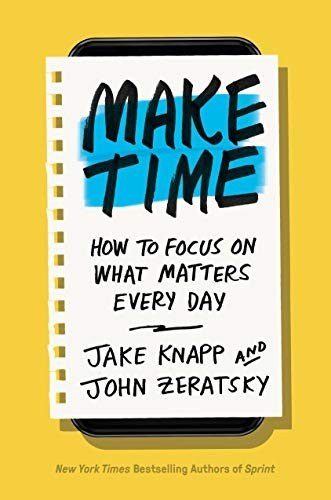
Mechanism: one highlight a day, defended
Make Time
Jake Knapp2018
Two former Google designers hand you a menu of tactics and tell you to steal only the ones that fit.
Knapp and John Zeratsky built products at Google and Google Ventures, then left and wrote the least preachy productivity book I know. The spine is four steps: choose a single highlight for the day, block the distraction, look after your energy, then note what worked. Around that spine sit dozens of small tactics, and the authors openly tell you to ignore most of them. The design is friendly, the chapters are short, and nowhere does it suggest you must become a different species of human first.
Why it is at 10
Second on this shelf because it is the most usable book here for somebody with an ordinary job and an ordinary amount of control. Essentialism gives you a philosophy of refusal, Make Time gives you Tuesday. It misses the top spot only because a menu lets a certain kind of reader drift, the kind who wants to be told exactly what to do.
Read it ifyou want small tactics you can test this week
Skip it ifyou want one rigorous system instead of a buffet
friendly, modular, low pressureBest for: busy people who hate systemstimetacticsfocus
11

Mechanism: one focusing question, asked every morning
The One Thing
Gary Keller2013
A single question, repeated until it sticks: what is the one thing I can do that makes everything else easier?
Keller built a property company and wrote this with Jay Papasan around one question you ask of your year, your month and your morning. Underneath it sits a claim that most goals collapse because they were never narrowed to a single next action that makes the rest lighter. The book also spends time knocking down ideas it calls myths, multitasking and the belief that discipline is a personality trait among them. The business-book packaging is heavy, with bold pull quotes on every other page, and the idea could have been a long essay.
Why it is at 11
Third on the time shelf and the most divisive pick on the list. The question works, I use it, and you can still get the whole book from one page while the rest repeats itself in different fonts. It stays because for one kind of reader, the person who wants a single sentence to carry a whole week, this is the cheapest upgrade available.
Read it ifyou want one question rather than a whole system
Skip it ifpadded business books irritate you, because this is one of them
blunt, repetitive, effectiveBest for: readers scattered across goalsfocusgoalspriorities
12

Mechanism: accept the arithmetic, then choose what to neglect
Four Thousand Weeks
Oliver Burkeman2021about 224 pages
The book that made me stop trying to get on top of everything, on the grounds that getting on top of everything is not available.
Burkeman spent years as a productivity columnist trying every system going, and this is what he wrote after deciding the whole project rests on a lie. If a life runs to roughly four thousand weeks, the fantasy is not efficiency, it is the belief that one day the decks will be clear and real life can start. He works through the philosophy of limits, the way distraction shields us from the discomfort of what matters, and why an inbox is built never to end. Funny, humane, and quietly brutal in the last third.
Why it is at 12
Twelfth by shelf order and first by quality. If you have read three habit books and still feel restless, the missing piece is not another mechanism, it is permission to be finite. Read it after Atomic Habits rather than instead of it, so you have something worth arguing with.
Read it ifyou are tired of optimising and want to think about limits
Skip it ifyou want tactics, since this book spends its time removing them
philosophical, funny, unsparingBest for: burnt-out optimiserstimephilosophylimits
Heads up: the argument runs through mortality throughout, which can land badly during grief
Pairs with: Read it directly after Slow Productivity at rank 13, which supplies the Monday morning half of the same argument.
13

Mechanism: fewer things, natural pace, obsessive about quality
Slow Productivity
Cal Newport2024about 216 pages
Newport's answer to his own earlier books: do fewer things, and stop measuring yourself by visible activity.
Newport looks at how writers, scientists and artists worked before offices started counting output in messages sent, and pulls three principles from it: do fewer things, work at a natural pace, obsess over quality. The historical passages are the pleasure of the book, because watching how a novelist or a physicist really spent their months persuades more than any instruction could. What it lacks is honesty about who gets to use this: a tenured author can refuse work in a way a twenty-six year old in a Bengaluru office cannot.
Why it is at 13
Thirteenth because it argues with the genre while still belonging to it. Burkeman tells you to accept your limits, Newport tells you to reorganise your work around them, which makes this the practical half of one argument. Read it if Four Thousand Weeks convinced you and left you with no idea what to do on Monday.
Read it ifyou want an alternative to being judged on visible busyness
Skip it ifyou are early in your career and cannot yet refuse anything
calm, historical, correctiveBest for: creatives and senior professionalsworkpacequality
14
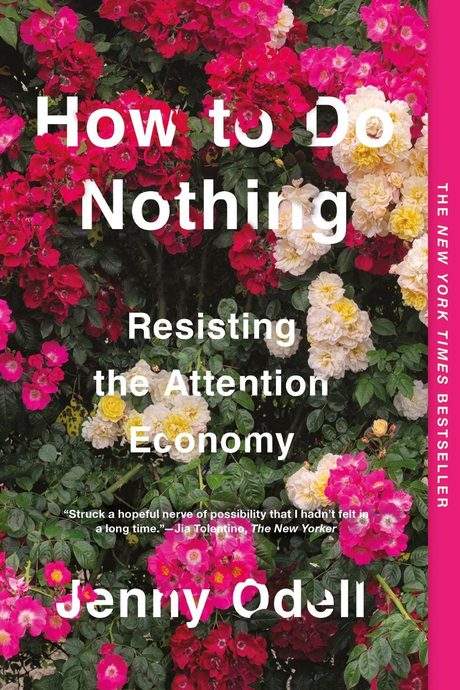
Mechanism: refusal, plus attention paid to one real place
How to Do Nothing
Jenny Odell2019about 257 pages
An artist argues that resisting the attention economy starts with noticing where you physically are, birds included.
Odell teaches art, spends a lot of time in a rose garden in Oakland, and treats attention as something you owe your surroundings rather than a resource to be spent. The book wanders through labour history, bioregionalism, art projects and the birds she taught herself to recognise, and it refuses to convert any of that into a productivity outcome. The refusal is the argument. It is the least practical book on this list and the most likely to change what you do with a Sunday afternoon.
Why it is at 14
Last because it sits furthest from where you started, and ending here is deliberate. Atomic Habits is about installing behaviour, while Odell asks what all this installed behaviour is for and answers with a garden and a pair of binoculars. If the mechanism idea has begun to feel like a treadmill by book thirteen, this is your exit.
Read it ifyou want an essay that argues rather than a method that instructs
Skip it ifyou want something to apply on Monday, because this resists that on purpose
essayistic, meandering, sharpBest for: readers tired of optimisationattentionessaysrefusal
Worth knowing
How to use the mechanism line
Above every title on this list is one line beginning with the word Mechanism. It names the single thing the book asks you to change. This exists because self-help books are long for commercial reasons, not intellectual ones, and most of them carry one idea plus two hundred pages of evidence that the idea is true.
The rule is simple. Read the mechanism, then ask whether you already run it. If your gym bag is packed the night before and sits by the door, you have already installed the environment idea and a book about it will only flatter you. If the mechanism is new and it makes you uncomfortable, that discomfort is the sign you needed that particular book rather than the one everybody quotes.
Worth knowing
Two famous books I left off, and why
Charles Duhigg's habit book is the standard recommendation after Atomic Habits, and it is the one I keep steering people away from. The loop it made famous, the cue and the reward and the routine in between, is the exact machinery Clear rebuilt in a friendlier form. Read it if you want the origin story of an idea you already have. Skip it if you want a new one.
Getting Things Done by David Allen is the other absentee. It is a serious system and thousands of people run it happily, but it was designed for a desk, a physical inbox and a filing cabinet, and installing it properly costs you a weekend before it returns anything. If your problem is the volume of open loops at work rather than habits, go and get it. It just is not what an Atomic Habits reader is usually asking for.
Worth knowing
One thing this shelf cannot do
None of these books is treatment. If you cannot hold attention on anything, if starting a simple task feels physically impossible, or if the flatness has lasted months, that is a question for a doctor and not for a paperback. Several of these authors say the same thing in their own introductions, and Hari at rank eight is explicit about it. Books are useful for ordinary friction. They are not diagnosis, and treating them as diagnosis wastes a year.
People also ask
Questions, answered
What should I read after Atomic Habits?
Start by naming your failure. If you cannot begin, read Tiny Habits, which shrinks the same idea until starting is trivial. If you begin and quit, read How to Change, which matches a tactic to each kind of failure. If you can hold a routine but not your attention, read Deep Work. If you are tired of the whole business, read Four Thousand Weeks and let somebody argue with you for a change.
Why is the Charles Duhigg habit book not on this list?
Because it is the most redundant thing you can read after Atomic Habits. Clear took the cue and reward loop that Duhigg made famous, simplified it, and attached practical instructions, so going backwards gives you the same machinery with more journalism around it. It is a good book that arrived first. It is just a poor choice for the exact reader who has finished Clear and wants something new.
Do habit books actually work, or are they entertainment?
They work in a narrow way. A book can hand you a mechanism, and a mechanism is genuinely worth having, but reading is not doing and finishing the book delivers a small hit of progress that has nothing to do with your life changing. The test is whether anything in your physical environment looks different a week later. If nothing moved, you were entertained, and there is no shame in it.
Which book here is the best written?
Four Thousand Weeks by Oliver Burkeman, with The Checklist Manifesto by Atul Gawande close behind. Both are the work of writers who happen to be arguing rather than experts who hired help. If you find most self-help hard to swallow because of the prose, those two are the safest entry points on this list, and Jenny Odell at rank fourteen is the one for readers who prefer essays to instructions.
Is it worth reading several of these, or just one?
One per shelf, spread across a year. Reading four habit books back to back produces the pleasant feeling of movement and almost no movement, since they overlap heavily and the second one mostly confirms the first. Pick the shelf that matches your actual problem, read one book from it, run the mechanism for a month, then go and see whether you still want the next book.
Are these useful in an Indian office with no control over my time?
Some of them, honestly. The books that assume you can refuse work, Essentialism and Slow Productivity in particular, were written for people with seniority or tenure and read very differently at twenty-six in a Bengaluru office. Make Time, Tiny Habits and The Checklist Manifesto need no permission from anyone. Start there, and save the refusal books for the point where you actually have room to refuse.
Before you go
What to read tonight
If you are choosing tonight, do it by symptom rather than by cover. Cannot start, go to Fogg. Start and quit, go to Milkman. Can work but cannot concentrate, go to Newport. Calendar owned by other people, go to McKeown. Doing all of it and still feeling behind, go straight to Burkeman and let him take the tracker away from you.
Whichever you pick, write its mechanism on a sticky note and put it where the behaviour happens, not on your desk where good intentions go to be admired. Then give it a month before buying the next book. The reason this genre keeps selling is that reading about change feels almost exactly like changing, and the only reliable way to tell them apart is to look at what your Tuesday looked like four weeks later.
Keep going
Lists that pair with this one