Somewhere between twenty nine and thirty four the questions change, and nobody announces it. The twenties question is what will I become. The thirties question turns up quietly on a Sunday evening or in a lift on the way to a meeting you have already run a hundred times, and it sounds more like, is this it, and why does nobody else seem bothered.
The twenties list on this site is about becoming somebody. This one is about the invoice: money that is now real money with fifteen year consequences, a marriage or a decision not to have one, parents whose medical reports you read yourself now, a career that stopped moving up and started moving sideways, friends you love and have not seen in two years.
So these 18 books sit under the six questions the decade actually asks, ranked by how soon most people need them rather than by literary reputation. Every entry carries a line about what changes if you read the book at 35 instead of 25, because two or three of these are wasted on a twenty five year old and one of them is unbearable at forty.
You do not need all eighteen. Two books from whichever question is loudest for you right now makes a decent year, and the rest will still be here in 2027.
How I picked these
- The text test. Would I actually send this to a friend who has just told me something is wrong. Books that only look good on a shelf did not make it.
- One book per problem, except money, where philosophy and plumbing are separate jobs and an Indian reader needs both.
- Every title checked through Google Books and Open Library, so the editions and covers here are real ones.
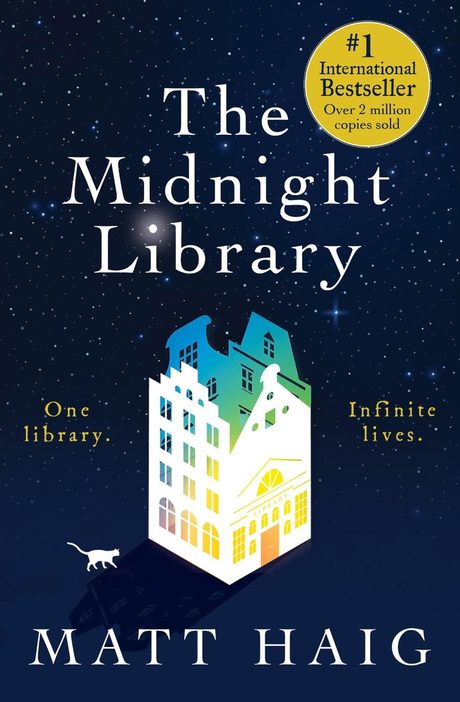
- I cut The Midnight Library, which appears on almost every list like this. The premise is lovely and the delivery is a sermon, and by 35 you have heard that sermon from relatives.
- Half the list is fiction, because most of what this decade brings cannot be delivered as advice, and a novel gets past the part of you that argues back.
- Indian books wherever an Indian reader will feel the difference: family money, an unwell relative, a household with too many opinions living inside it.
The whole list at a glance
All 18 books, in order
| # | Book | Author | Year | Vibe | Best for |
|---|
| 1 | Four Thousand Weeks | Oliver Burkeman | 2021 | calm, argumentative, freeing | the always behind feeling |
| 2 | Being Mortal | Atul Gawande | 2014 | calm, practical, sobering | adult children of ageing parents |
| 3 | The Psychology of Money | Morgan Housel | 2020 | short chapters, plain, wise | first real savings decisions |
| 4 | The Course of Love | Alain de Botton | 2016 | unsentimental, wise, dry | long relationships and marriages |
| 5 | All About Love | bell hooks | 2000 | direct, warm, uncompromising | relationship and family patterns |
| 6 | Stoner | John Williams | 1965 | plain, cold, devastating | career plateau years |
| 7 | Em and the Big Hoom | Jerry Pinto | 2012 | funny, tender, unsparing | the family you came from |
| 8 | A Fine Balance | Rohinton Mistry | 1995 | long, warm, merciless | a serious month of reading |
| 9 | When Breath Becomes Air | Paul Kalanithi | 2016 | clear, unsentimental, sad | a mid career reckoning |
| 10 | Mating in Captivity | Esther Perel | 2006 | frank, clinical, humane | long term couples |
| 11 | Let's Talk Money | Monika Halan | 2018 | practical, patient, Indian | salaried Indian households |
| 12 | Tomorrow, and Tomorrow, and Tomorrow | Gabrielle Zevin | 2022 | warm, clever, aching | friendship drift years |
| 13 | Little Fires Everywhere | Celeste Ng | 2017 | sharp, suburban, uneasy | new parents and near parents |
| 14 | Ghachar Ghochar | Vivek Shanbhag | 2013 | short, controlled, sinister | one evening, long aftertaste |
| 15 | Deep Work | Cal Newport | 2016 | blunt, useful, slightly smug | attention and career plateau |
| 16 | Range | David Epstein | 2019 | reassuring, evidence led | career switchers |
| 17 | The Second Mountain | David Brooks | 2019 | earnest, uneven, useful | post achievement flatness |
| 18 | Sapiens | Yuval Noah Harari | 2011 | broad, confident, argumentative | a sense of scale |
The list
The books, ranked
1

Question one: where is the time going
Four Thousand Weeks
Oliver Burkeman2021about 224 pages
You get about four thousand weeks, you will never get on top of everything, and Burkeman argues that this is the good news.
Burkeman spent years as a productivity columnist trying every system going, and this is the book he wrote after he stopped believing in any of them. The arithmetic in the title carries the argument: a long life runs to roughly four thousand weeks, which is not enough for the things you want, and no method will ever make it enough. What follows is not resignation. It is a case for choosing on purpose, missing things deliberately, and noticing that a cleared inbox and a full life have never been related. Short, argumentative, and closer to philosophy than to time management.
Why it is at 1
Number one because it sits underneath every other question here. At 25 this reads as an excuse to slow down. At 35, when the calendar is already full of other people's requirements and the list of things you will now never get to has become visible, it reads as a permission slip with a warning attached. Read it before the money books, because it changes what you think you are optimising for.
Read it ifyou feel permanently behind on a schedule nobody actually set
Skip it ifyou want tactics, because this book takes your systems apart
calm, argumentative, freeingBest for: the always behind feelingtimephilosophyanti productivity
2
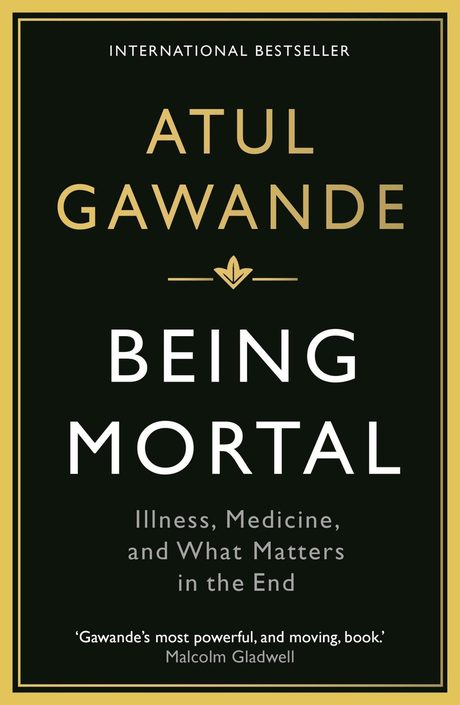
Question five: parents, bodies, the exit
Being Mortal
Atul Gawande2014about 283 pages
The book you want to have read before the phone call about a parent, rather than during the week after it.
Gawande is a surgeon writing about the subject his training skipped: what medicine should do once it can no longer fix anybody. He moves between his patients and his own father's illness, and the argument builds slowly. Modern medicine is very good at adding weeks and quite bad at asking what those weeks are for. The most useful pages are practical ones: the questions to ask a doctor, the gap between what a family wants and what the person in the bed wants, and why safety and dignity pull in opposite directions inside every old age home ever built.
Why it is at 2
Second because of timing. Nearly everybody in their thirties gets a version of that call, about a parent, an aunt, a scan, a fall. At 25 this book is an abstraction you admire. At 35 it is a manual, and having read it beforehand is the difference between making decisions and being handed them in a hospital corridor at two in the morning.
Read it ifyour parents are over sixty and none of this has been discussed
Skip it ifyou are inside a fresh loss right now
calm, practical, soberingBest for: adult children of ageing parentsmedicineageingdeath
Heads up: terminal illness, dying parents, end of life care
3

Question two: money as a real number
The Psychology of Money
Morgan Housel2020about 256 pages
Money behaviour is a family history problem wearing the costume of a maths problem, and Housel says so in short chapters.
Housel argues that doing well with money has little to do with what you know and a great deal to do with how you behave, which is shaped by things that never appear in any spreadsheet: when you were born, what your parents were afraid of, what happened to your first salary. The book is a set of short chapters, one idea each, on greed, luck, envy, the difference between being rich and being wealthy, and the underrated skill of not needing to be proved right. There is no advice about which fund to buy. There is plenty about why you would sell it in a panic.
Why it is at 3
Third because money changes character in this decade. In your twenties it is a survival number. In your thirties it becomes a set of decisions with fifteen year consequences, usually made jointly with somebody else, usually while tired. Housel hands you the psychology, Halan further down this list hands you the plumbing, and an Indian reader honestly needs both books rather than one.
Read it ifyou earn decently and still feel behind on money
Skip it ifyou want product level advice for the Indian market
short chapters, plain, wiseBest for: first real savings decisionsmoneybehaviouressays
4

Question three: love after the beginning
The Course of Love
Alain de Botton2016
A novel about the part every romcom skips: the fifteen years after the wedding, with a running commentary underneath.
Rabih and Kirsten meet in Edinburgh, marry, buy a flat, have children, fight about the dishwasher and about sex and about money, and slowly become two people who each know the fastest way to hurt the other. De Botton tells the story straight and then interrupts it with short essays about what is actually happening under the surface of the argument. That structure is either irritating or a gift, depending on your week. The claim underneath is one romantic culture avoids: everybody is fairly difficult to live with, and love is a skill you practise rather than a feeling that either survives or does not.
Why it is at 4
Fourth, and the most useful book here for anyone three to ten years into a marriage. At 25 it reads as cynicism about romance. At 35, halfway through the second identical argument in a month, it reads as a diagnosis and, strangely, as comfort. The essay interruptions are what make it work, because you get the fight and the explanation on the same page.
Read it ifyou are years into a relationship and quietly confused by it
Skip it ifyou want story, because the novel is mostly a delivery system for the argument
unsentimental, wise, dryBest for: long relationships and marriagesmarriagelovenovel of ideas
5
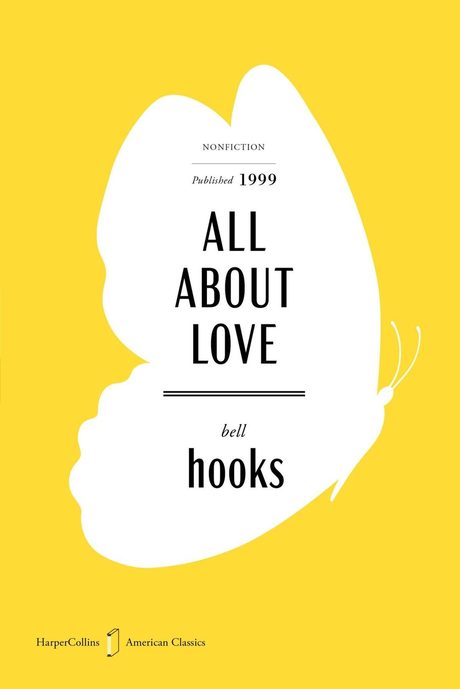
Question three: love after the beginning
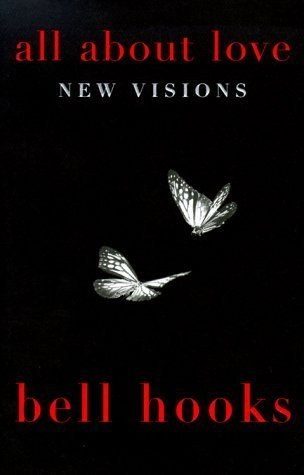
All About Love
bell hooks2000about 248 pages
Love as something you do on purpose rather than something you fall into, argued by somebody who will not let the word stay vague.
hooks starts from the position that most of us were never taught what love is, only what it looks like, and that we use the word for things that are closer to attachment, need or habit. She works through family, friendship, romance, community and self regard, returning each time to a definition she borrows and then defends: love is an action you extend deliberately for another person's growth. The chapters on how children learn that love and cruelty can share a house are the hardest and the most valuable. Short, direct, and completely unsentimental about a subject that usually invites the opposite.
Why it is at 5
Fifth because your thirties are when you find out which of your relationships are love and which are unfinished business from the house you grew up in. At 25 this sounds like theory. At 35, especially if you are now raising somebody or renegotiating with your own parents as an adult, it reads as an instruction manual you should have been given earlier.
Read it ifyou want a definition of love you can actually act on
Skip it ifyou dislike books that argue from moral first principles
direct, warm, uncompromisingBest for: relationship and family patternslovefamilyessays
Heads up: childhood abuse discussed directly
6
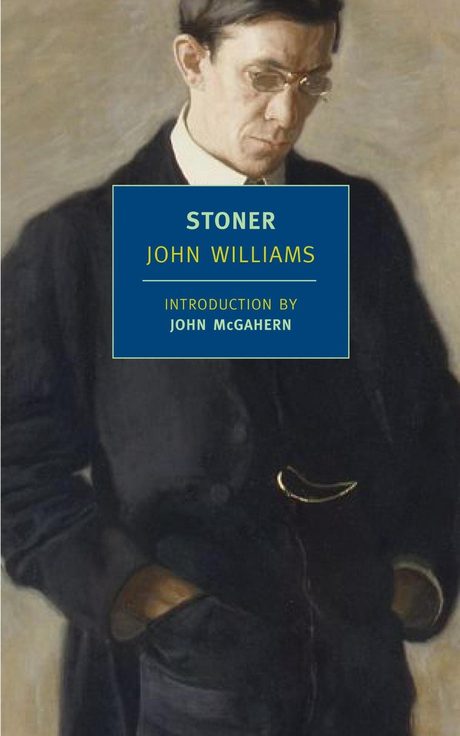
Question four: the work that stopped moving
Stoner
John Williams1965about 320 pages
A man teaches at a university, marries badly, achieves almost nothing, and the novel is unforgettable anyway.
William Stoner is a farm boy sent to university to study agriculture, who sits through a compulsory English class and quietly changes the direction of his life. He becomes a teacher, marries a woman who turns cold in a way nobody in the book explains, loses a departmental war to a colleague, has one love affair and dies. That is the plot. Williams writes it in prose so plain it feels transparent, and the effect is odd: a life any obituary would call unsuccessful turns out, from the inside, to be full of meaning, injury and small stubbornness. I have never sold a book to more people with a worse pitch.
Why it is at 6
Sixth, and it does what none of the non fiction here can. It shows you a career that plateaued and a marriage that failed while offering no lesson about either. At 25 it is a sad book about an old man. At 35, when your own work has stopped climbing and the weeks have started to repeat, it is about you, and reading it steadies you rather than sinking you.
Read it ifyou can take a quiet book about an ordinary life
Skip it ifyou need hope in the final chapter, because none arrives
plain, cold, devastatingBest for: career plateau yearsliterary fictionworkmarriage
7

Question six: the family you came from
Em and the Big Hoom
Jerry Pinto2012about 212 pages
A one bedroom Mumbai flat, a mother with bipolar disorder, and the funniest sad book in Indian English.
The narrator grows up in a small flat in Mahim with his sister, his steady father whom everyone calls the Big Hoom, and his mother Imelda, called Em, who is brilliant, filthy mouthed, chain smoking, and ill in a way the family lives around rather than solves. Pinto builds the book from conversations, letters and memory, and the astonishing part is how funny Em is on the page while everybody around her is quietly exhausted. It is the most honest Indian book about mental illness at home: no recovery arc, no cure, just love and fatigue sharing a small room for years.
Why it is at 7
Seventh because your thirties are when the family you came from stops being background and becomes logistics. At 25 you read this as a portrait of someone else's mother. At 35, when you are the one making the calls, managing the medication, being embarrassed in public and loving her anyway, it reads less like a novel and more like documentation.
Read it ifyour family has an illness everybody quietly works around
Skip it ifyou are close to somebody in crisis right now
funny, tender, unsparingBest for: the family you came fromindian fictionmental healthfamily
Heads up: bipolar disorder, suicide attempts
8
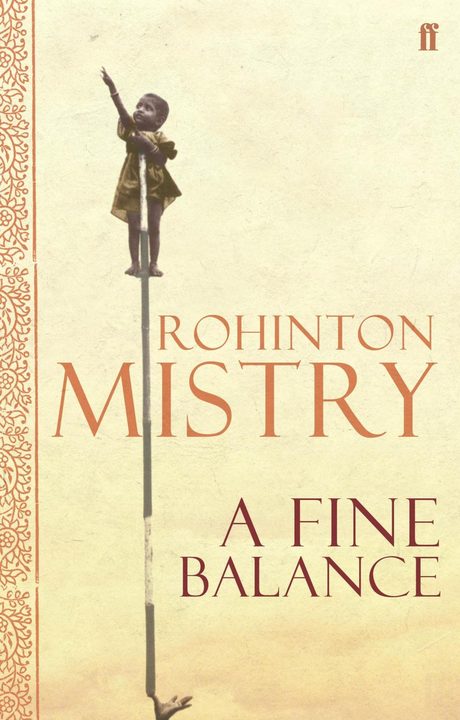
Question six: the family you make
A Fine Balance
Rohinton Mistry1995about 816 pages
Four strangers share a Bombay flat during the Emergency, and Mistry builds something you do not fully recover from.
It is the mid 1970s. A widow trying to hold on to her independence takes in two tailors from a village and a student paying guest, and for a while the four of them make a household out of very little, with a strictly enforced rule about the state of the kitchen. Around them the Emergency is happening: slum clearance, forced sterilisation, the police, the machinery of a state that has stopped asking. Mistry writes ordinary kindness with enormous patience and then lets history walk straight through it. The middle section, where the four of them are briefly happy, is what makes the rest bearable and unbearable at once.
Why it is at 8
Eighth, and the heaviest book on this list. At 25 it is an education about a period of Indian history you were probably taught badly. At 35 it lands somewhere else, because by then you know how fast a life that took years to build can be taken apart by something impersonal, and that is the subject. Read it when you are steady, not when you are low.
Read it ifyou want the great Indian novel about ordinary people and the state
Skip it ifyou are fragile right now, because this book spares you nothing
long, warm, mercilessBest for: a serious month of readingindian fictionthe emergencyepic
Heads up: state violence, forced sterilisation, extreme poverty, suicide
9
Question five: parents, bodies, the exit
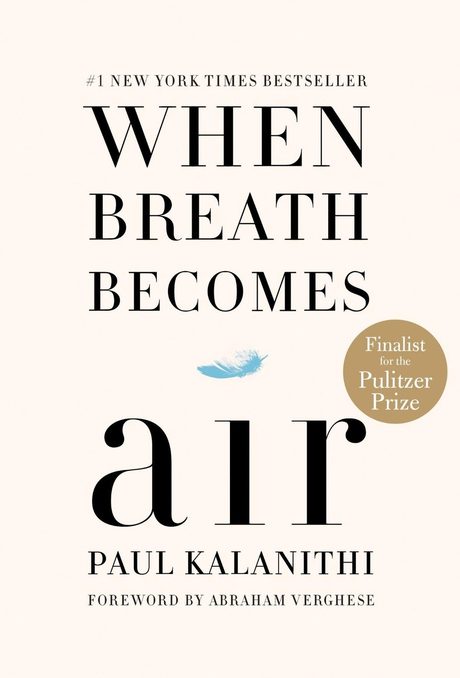
When Breath Becomes Air
Paul Kalanithi2016about 258 pages
A neurosurgeon at the end of a decade of training gets a lung cancer diagnosis, and writes about the ambition he has to put down.
Kalanithi spent ten years training as a neurosurgeon, which is a decade in which most doctors postpone everything else in their lives. At thirty six, months from finishing, he was diagnosed with lung cancer. The book holds both halves: the training, with its unusual closeness to other people's dying, and then the reversal, when he becomes a patient inside the same system and has to decide what to do with time that will not stretch to fit the plan. His wife wrote the final chapter. It is short and unbearably clear, and it works less as a sad book than as a book about what work was for.
Why it is at 9
Ninth, and it pairs directly with Being Mortal: Gawande gives you the system, Kalanithi puts you in one bed inside it. At 25 it moves you in an abstract way. At 35, when you have made your own ten year bet on a career, its question turns personal. If the timeline shortened tomorrow, would this still be the thing you were doing with the weeks.
Read it ifyou have bet a decade on one career and want to think about that
Skip it ifsomebody close to you is in treatment right now
clear, unsentimental, sadBest for: a mid career reckoningmemoirmedicinemortality
Heads up: terminal illness, the death of the author
10
Question three: love after the beginning
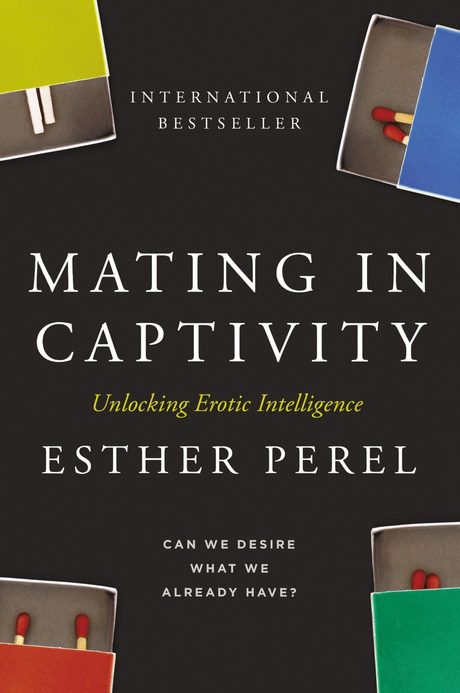
Mating in Captivity
Esther Perel2006about 274 pages
Why the safest relationship in your life can also become the least alive one, from a therapist who refuses to blame either person.
Perel works with couples who love each other and have stopped wanting each other, and her argument is that this is structural rather than a personal failure. Intimacy asks for closeness, safety and full information. Desire asks for distance, mystery and a little risk. Modern marriage demands both from the same person, and then treats the shortfall as proof that something is broken. The case studies are frank, the writing is clean, and she declines to hand you a technique. What she offers instead is a way to talk about the subject in which neither person is the defendant.
Why it is at 10
Tenth, and aimed precisely at the years when the relationship is fine and flat. At 25 the problem it describes has not arrived yet. At 35, after enough shared logistics, small children or simple familiarity, it names something many couples cannot name and therefore file as a personal defect. Read it with the other person if you can manage that conversation.
Read it ifthe relationship is good and something in it has gone quiet
Skip it ifyou want a step by step programme, because she refuses to write one
frank, clinical, humaneBest for: long term couplesrelationshipsdesiretherapy
Heads up: explicit discussion of sex and infidelity
11
Question two: money as a real number
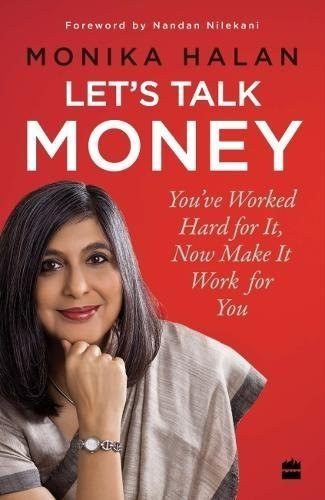
Let's Talk Money
Monika Halan2018
The Indian money book that tells you what to actually do: which account, which insurance, in which order, in rupees.
Halan writes for the Indian salaried household and does the boring, useful work: how to split your money into spending, saving and investing, why your insurance policy is probably a bad investment wearing a costume, how to think about EMIs, an emergency fund, term cover, and what to do when a relative sells you a product across the dinner table. The tone is patient and slightly stern. Nowhere in it is there a promise of quick returns, which is one way you know it is honest. If you have ever nodded through a conversation about ELSS and gone home none the wiser, this is the fix.
Why it is at 11
Eleventh because philosophy without plumbing does nothing to a bank balance. Housel explains why you behave badly with money, Halan tells you which form to fill, inside the Indian system, with Indian products and Indian family pressure accounted for. At 25 you read it and postpone. At 35, with a loan and possibly a child, you read it and act in the same week.
Read it ifyou are an Indian salaried earner who wants specifics
Skip it ifyou want global markets or stock picking
practical, patient, IndianBest for: salaried Indian householdsmoneyindiapersonal finance
12

Question four, and the friends who drift
Tomorrow, and Tomorrow, and Tomorrow
Gabrielle Zevin2022
Two friends make video games together for thirty years, and the novel is really about the friendship that has to survive the work.
Sam and Sadie meet as children in a hospital games room, lose touch, run into each other in a subway station in their twenties, and start making video games together. The novel follows them and their producer Marx across three decades of collaboration, success, betrayal, injury and long silences. You do not need to care about games at all. The subject underneath is a kind of love with no available category: two people who are not partners and not siblings and are permanently central to each other, and who keep injuring each other through the work they share.
Why it is at 12
Twelfth because friendship in your thirties is a slow crisis that no list warns you about. People move cities, have children, stop replying, and there is no vocabulary for that grief because nobody died. At 25 this is a fun novel about creative ambition. At 35 the ambition is background and the drifting is the whole story.
Read it ifyour closest friendships have gone quiet without any fight
Skip it ifyou want romance, because the book keeps refusing to give you one
warm, clever, achingBest for: friendship drift yearsfriendshipfictionwork
Heads up: a violent death, chronic pain, grief
13
Question six: the family you make
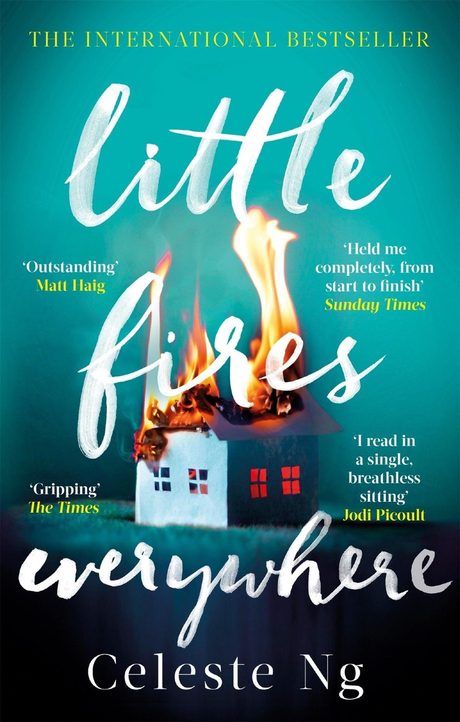
Little Fires Everywhere
Celeste Ng2017about 360 pages
A planned suburb, two mothers with opposite ideas of a good life, and a custody case that splits the town in half.
Elena Richardson has a plan, a schedule and a good house in a planned Ohio suburb where the lawns are regulated. Mia, an artist, arrives as her tenant with a teenage daughter and almost no possessions. The two households mix, the children cross between them, and then a custody case involving a Chinese American baby and a wealthy white couple turns the town into two camps. Ng writes about mothering with an unusual absence of sentiment: what it costs, what it forgives, and how a woman who has done everything in the correct order reacts to somebody who did not.
Why it is at 13
Thirteenth because it is the sharpest novel here about the choice most people make in this decade, which is what kind of household to build and what to give up in order to have it. At 25 you read it as a story about the daughters. At 35 you notice, uncomfortably, that you understand the mother with the schedule, and that recognition is the point.
Read it ifyou are deciding what kind of household you want to build
Skip it ifyou want characters you can like all the way through
sharp, suburban, uneasyBest for: new parents and near parentsfictionmotherhoodclass
14
Question six: what money does to a family
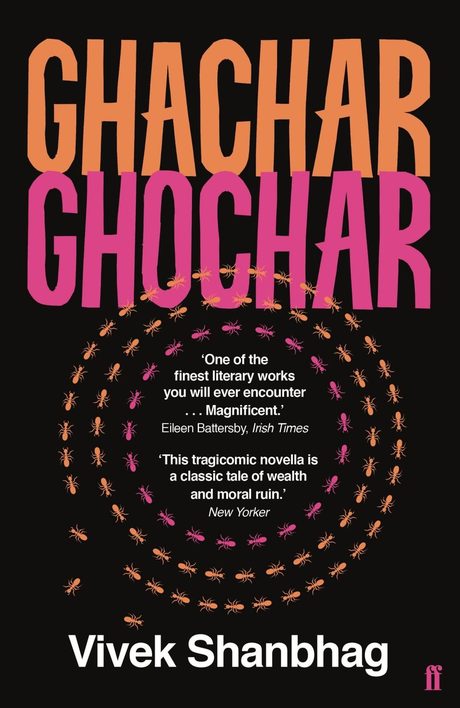
Ghachar Ghochar
Vivek Shanbhagtranslated by Srinath Perur2013about 103 pages
A Bangalore family gets rich and quietly rots, in a novel you can finish in one evening and will think about for months.
A family that spent years counting every rupee in a cramped Bangalore house suddenly has money, through an uncle's spice business, and moves somewhere bigger. The narrator does very little except sit in a cafe and notice what the money has done: the new shape of authority in the house, what the women are now permitted, what everybody has agreed not to say aloud. The title is a nonsense phrase one character uses for something tangled past fixing. Very short, extremely controlled, and the last pages carry a threat the book never explains, which is why people reread it.
Why it is at 14
Fourteenth, and the fastest read here, one evening at most. It belongs on this list because the thirties are usually when family money and family power get renegotiated: a business, a house, a father who is no longer the earner. At 25 it is a neat short novel from Kannada. At 35, if any of that has happened in your own family, it reads as a warning.
Read it ifyou want one evening and a book that keeps working afterwards
Skip it ifyou need resolution, because this one withholds it on purpose
short, controlled, sinisterBest for: one evening, long aftertastekannadatranslationfamily money
15
Question four: the work that stopped moving
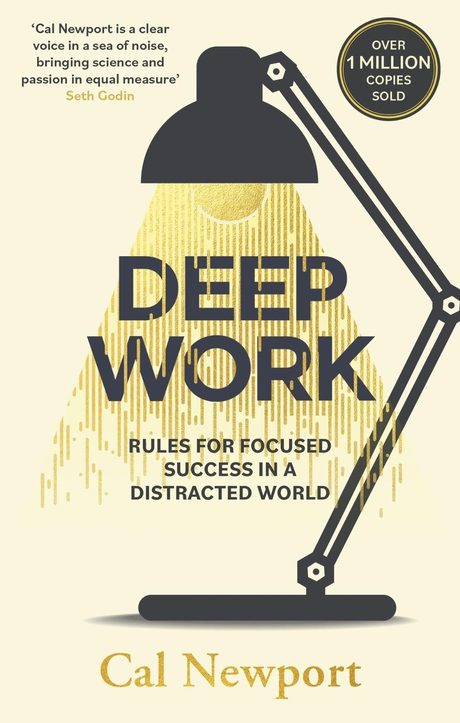
Deep Work
Cal Newport2016about 190 pages
The argument that sustained concentration has become rare, and that rare and valuable are the same thing in a career.
Newport's case is simple and mildly annoying: the work that builds a career is the work that needs uninterrupted concentration, and almost every modern job is arranged to prevent exactly that. The first half argues for the value of focused work, the second half is a set of methods, some sensible, some monastic. He is a computer science professor with a tidy life and no small children in the picture, and the advice occasionally shows it, so take what fits your real week. The central observation, that a fragmented day produces fragmented work, is hard to argue with once you have caught yourself doing it.
Why it is at 15
Fifteenth because the thirties career problem is rarely effort and almost always attention. At 25 the advice is easy to follow and barely needed, since nobody is asking much of your calendar. At 35, with meetings, a team and a family, it is harder to apply and considerably more necessary. It ranks below the fiction because it is one good idea stretched to book length.
Read it ifyour days are full and your work is not moving
Skip it ifyou have small children and no control over your calendar
blunt, useful, slightly smugBest for: attention and career plateauworkfocusproductivity
16
Question four: the work that stopped moving
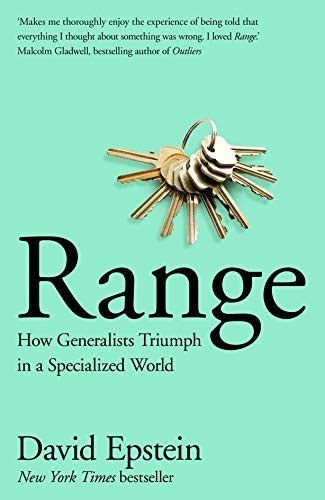
Range
David Epstein2019
The case for generalists, late switchers and detoured careers, argued against the ten thousand hours story.
Epstein takes on the belief that early specialisation is the reliable route to being good at something. He goes through sport, music, science and medicine and finds that in most fields the people doing original work later had a wandering start: several interests, late switches, an unusual mixture of skills. He separates kind learning environments, like chess and golf, where drilling works, from wicked ones, like most careers, where borrowing a pattern from one field and using it in another matters more. It is journalism rather than research, and it makes a CV that looks like a detour feel like an asset instead.
Why it is at 16
Sixteenth, and it earns a place because of a specific thirties feeling: the sense that you started late or changed direction and have therefore lost the race. Epstein gives you evidence against that without pretending every switch works out. At 25 the book can become an excuse to avoid committing to anything. At 35, with a strange mixture of skills already built, it helps you see the mixture clearly.
Read it ifyour career looks like a detour and you feel behind because of it
Skip it ifyou want a method, because this is an argument rather than a plan
reassuring, evidence ledBest for: career switchersworkcareersnon fiction
17
Question six: who am I now
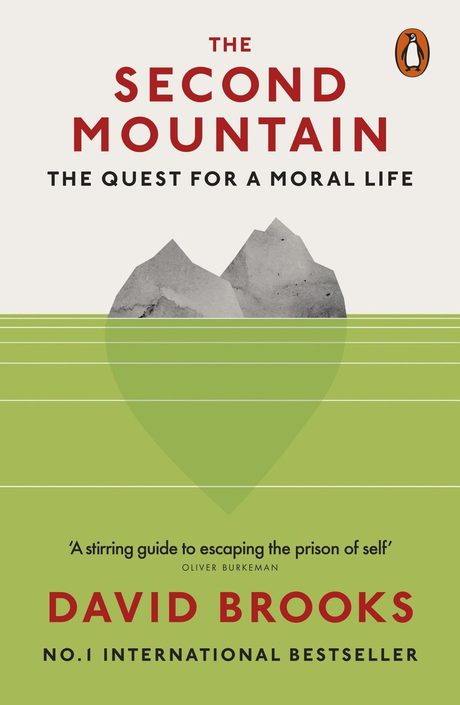
The Second Mountain
David Brooks2019about 271 pages
The idea that the first half of a life is spent building a self and the second half is spent giving it away.
Brooks describes two mountains. On the first you build a career, an identity and a reputation, and you climb it on your own behalf. Something usually knocks you off it, a failure, an illness, a divorce, and the second mountain is the one you climb afterwards, built on commitments rather than achievements: to a person, a vocation, a philosophy, a community. The strongest sections are the specific ones about how a commitment actually works over time. The weakest are where he generalises from his own circle, which is American, comfortable and unusually well connected, and where the tone tips into preaching.
Why it is at 17
Seventeenth, and the most uneven book here, kept because its central image is worth carrying through a decade full of achievement questions. At 25 it will sound like a lecture from an older man in a nice sweater. At 35 it names something real, the point where whatever motivated you at twenty five stops working and nothing has arrived to replace it. Read the first half properly and skim the rest.
Read it ifachievement has stopped feeling like enough on its own
Skip it ifyou have no patience for a moral argument in an American register
earnest, uneven, usefulBest for: post achievement flatnesspurposecommitmentnon fiction
18
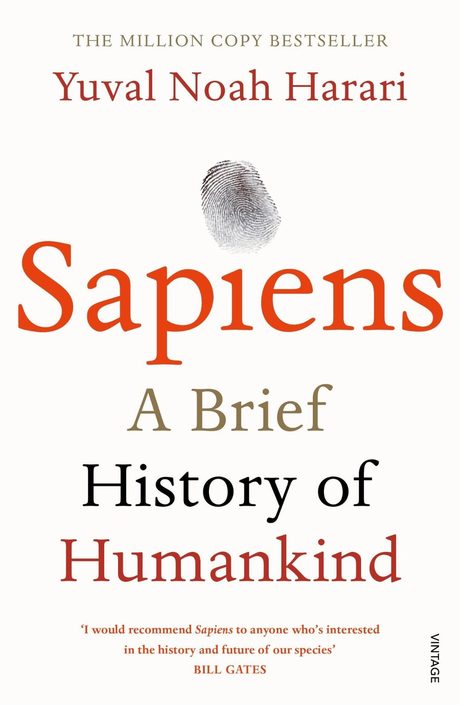
The zoom out
Sapiens
Yuval Noah Harari2011about 354 pages
A hundred thousand years of human history in one confident volume, which is the correct dose when your own decade feels enormous.
Harari runs from the arrival of our species to the present, arguing that what let humans take over the planet was the ability to believe in shared stories: money, nations, companies, rights. He is broad, quick and very confident, and the passages on agriculture, empire and capitalism are the strongest. Historians argue with plenty of it, and it is best read knowing that it compresses hard and enjoys a provocation. It came out in Hebrew in 2011 and in English three years later, and it is still the most efficient way to install a sense of scale in a hurry.
Why it is at 18
Eighteenth and last on purpose. It is here as a corrective rather than as advice. When you are thirty four and convinced that a job title or a flat purchase is the central fact of the universe, a hundred thousand years of context works as medicine. At 25 you read Sapiens to sound interesting at parties. At 35 you read it to feel small, which turns out to be a relief.
Read it ifyour own decade currently feels far too important
Skip it ifyou want careful history, because this one compresses hard
broad, confident, argumentativeBest for: a sense of scalehistorybig picturenon fiction
Worth knowing
The six questions
One: where is the time going. Two: money, now that it is a real number with consequences attached. Three: love after the beginning, when the person is familiar and the problem is not distance but flatness. Four: work that stopped moving up. Five: bodies and parents and the exit. Six: the family you came from and the family you are building, which turn out to be the same argument in two directions.
The books are ranked by how soon most people in this decade need them, not by how good they are as literature. Stoner is the best written book here and it sits at six, because a career plateau usually arrives after a parent's first bad scan. If one question is loud in your life right now, jump straight to it and ignore the number in front of the book.
Worth knowing
What actually changes between 25 and 35
The twenties are lived forward. Everything is a rehearsal for a version of you that is arriving shortly, and books about becoming somebody make sense because becoming is the whole activity. Around thirty two or thirty three that arrangement quietly ends. You are already the person, the rehearsal was the performance, and the questions turn from what next to what now and who with.
That is why several books on this list are wasted on a twenty five year old. Not because they are difficult, but because they answer questions that have not been asked yet. The Course of Love needs a few years of a shared kitchen behind it. Being Mortal needs a parent who has started to slow down. Stoner needs a job you once loved and now merely do. Read them early and they are interesting. Read them on time and they are useful.
Worth knowing
One plain thing about the hard books here
Four of these come close to illness, death or a mind that is not well: Being Mortal, When Breath Becomes Air, Em and the Big Hoom, A Fine Balance. A book is not treatment. If you are in the middle of a diagnosis, a loss, or a stretch where your own thoughts have turned frightening, a novel can be company and it is not a substitute for a doctor or a therapist, and the appointment is worth making this week rather than after you finish the book.
People also ask
Questions, answered
What books should I read in my 30s?
Start with the question that is loudest in your life right now rather than at the top of a list. If it is time and overload, read Four Thousand Weeks. If a parent has started to age, read Being Mortal. If the relationship has gone flat, read The Course of Love. If work has stopped moving, read Stoner and then Range. Two books from the right question beat ten from the wrong one.
Is it too late to start reading seriously at 35?
No, and in some ways it is the better entry point. Most of the books here need a bit of life underneath them to land properly, which is why so many of them get abandoned at twenty. Begin with something short and immediate: Ghachar Ghochar takes an evening, The Psychology of Money moves in short chapters, and Four Thousand Weeks is under three hundred pages. Two finished books build the habit better than a shelf of ambitious ones.
How is this different from a books to read in your 20s list?
The twenties list is about becoming somebody: identity, ambition, first heartbreak, first job, working out what you believe. This one is about maintaining and paying for what you built, and about the arrivals that were not on the plan, an ill parent, a flat marriage, a career that stopped climbing, friendships that went quiet. Only Sapiens really belongs on both, and even that reads differently once your own decade stops feeling enormous.
Which one should I read first if I only read one this year?
Four Thousand Weeks, because it changes what you think you are trying to do with your weeks, and everything else on this list gets easier to place afterwards. If your situation is more specific than a general feeling of being behind, then the specific book wins: Being Mortal if a parent is ill, Let's Talk Money if the finances are a mess, The Course of Love if home has gone quiet.
Do self help books still work in your 30s?
Some do, most do not, and the difference is whether the book gives you an argument or a mood. Four Thousand Weeks and Deep Work make arguments you can disagree with, which is useful. The ones that repeat a single motivational idea for two hundred pages stop working around thirty, because by then you have tested the idea against a real life and know where it breaks. Fiction often does the job better.
What should I read if my parents are getting older?
Being Mortal first, and read it before there is an emergency, because its real value is the set of questions it teaches you to ask a doctor and your parent while everybody is still calm. Follow it with When Breath Becomes Air for the view from the bed rather than the system. If the parent in question is unwell in the mind rather than the body, read Em and the Big Hoom instead.
Before you go
What to read tonight
If it is a weeknight and you want to start something now, make it Four Thousand Weeks, and read only until the arithmetic of the title lands. That is usually enough to change a decision you were about to make about your weekend. If you have an evening free and no patience for advice, read Ghachar Ghochar instead and let a novel do the work.
And if two of these questions are loud at once, which is normal at thirty five, take the one you have been avoiding. The other will still be there, and the avoided one is the one that quietly runs your year. Then tell somebody what you read. Half the value of these books shows up in the conversation afterwards, usually with the person sitting across the kitchen table from you.
Keep going
Lists that pair with this one
Mood & Life
20 Best Books to Read in Your 20s, Grouped by the Problem
Four problems run this decade, work, love, money and meaning, so the list is sorted that way instead of pretending one book fixes all four.
Mood & Life
14 Best Money Books for Indians, First Salary to First Crore
Sorted by where you are and by how much of each book you have to translate into Indian conditions before it is any use.
Mood & Life
16 Books About Existential Crisis, Gentlest to Heaviest
Ordered by how much weight each one puts on you at 2 a.m., starting with the ones that are safe to read tonight.
Mood & Life
16 Best Books on Love and Relationships (Science, Not Sermons)
Sorted by the stage you are actually in, single, dating, long-term or repair, with an honest note on which ones have research behind them and which ones only sound like they do.
Mood & Life
16 Self-Help Books That Actually Work (And 4 That Do Not)
I judged every one of these by a single test: six months after you finish, does anything change on an ordinary Tuesday?