The first money I earned was small enough to be embarrassing, and I still remember what I did with it. It sat in a savings account while I felt responsible about it, inflation took a quiet bite every month, and a family friend explained across a plate of theplas that an endowment policy was an investment. Nobody in that room was stupid. There was simply no book on the shelf that spoke about a rupee salary, a joint family and a market where half the products are sold to you rather than bought by you.
That is the trouble with most money book lists you will find: they are American books arranged by an Indian blogger. Those books are often very good, and half of what is inside them cannot be done here. The retirement accounts they build whole chapters around do not exist for you, the credit card advice is close to dangerous under Indian rules, and the tax slabs belong to another country.
So this list is sorted two ways at once. First by stage, which is about where you are rather than what is fashionable: stage one is your first salary, meaning habits, insurance and not losing money; stage two is your first investments, meaning funds and then perhaps stocks; stage three is the long game, freedom, concentration and market history. Second by conversion cost, my own measure of how much of a book you have to translate before it earns its place on your shelf. Six of the fourteen were written by Indians for Indian conditions, and those cost you nothing.
One line before you start: this is reading, not advice. I write books for a living, I am not a registered investment adviser, and nothing below is a recommendation to buy any product.
How I picked these
- Indian first. I began with the books written for a rupee salary and added global ones only where they survive the conversion, then said on each entry how much converting is needed.
- No return promises. Nothing here has a number in the title, no trading manuals, no crypto, and nothing that offers a crore in five years.
- Only books I have read and used myself, which is why a few famous titles are missing and why one book sits at fourteen with a warning taped to it.
- Cut on purpose: Think and Grow Rich, which is motivation without a method, and most Indian stock market for beginners titles, which are advertisements for a course.
- Each stage gets more than one option, because the person who has just started a job and the person sitting on twenty lakh need different books, not the same book read twice.
- Every title verified through Google Books and Open Library, with a real edition and a real cover.
The whole list at a glance
All 14 books, in order
| # | Book | Author | Year | Vibe | Best for |
|---|
| 1 | Let's Talk Money | Monika Halan | 2018 | practical, calm, no drama | your first years of earning |
| 2 | The Psychology of Money | Morgan Housel | 2020 | readable, wise, unhurried | one weekend of reading |
| 3 | You Can Be Rich Too | P V Subramanyam | 2016 | dry, numeric, honest | setting real goal amounts |
| 4 | The Richest Man in Babylon | George S. Clason | 1926 | old-fashioned, simple, sticky | a first money book at any age |
| 5 | Coffee Can Investing | Saurabh Mukherjea | 2018 | analytical, opinionated, indian | your first direct equity |
| 6 | The Little Book of Common Sense Investing | John C. Bogle | 2007 | plain, repetitive, correct | deciding about index funds |
| 7 | Your Money or Your Life | Vicki Robin | 1992 | moral, practical, partly dated | people planning to quit something |
| 8 | Stocks to Riches | Parag Parikh | 2005 | direct, local, blunt | new stock market investors |
| 9 | I Will Teach You to Be Rich | Ramit Sethi | 2009 | brash, systematic, american | automating a salary |
| 10 | Bulls, Bears and Other Beasts | Santosh Nair | 2016 | fast, novelistic, cautionary | market history and context |
| 11 | The Millionaire Next Door | Thomas J. Stanley | 1996 | plain, researched, repetitive | resisting lifestyle creep |
| 12 | The Dhandho Investor | Mohnish Pabrai | 2007 | short, clever, seductive | value investing curiosity |
| 13 | The Intelligent Investor | Benjamin Graham | 1949 | dense, foundational, dated | readers past the basics |
| 14 | Rich Dad Poor Dad | Robert T. Kiyosaki | 1997 | punchy, vague, overrated | an afternoon and some salt |
The list
The books, ranked
1
Stage 1: first salary | Conversion needed: none
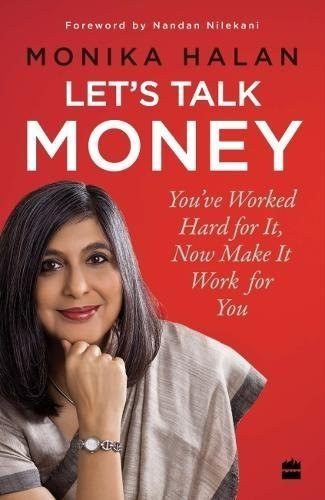
Let's Talk Money
Monika Halan2018
The one personal finance book written for an Indian salary, an Indian bank branch and the relative who sells policies.
Halan spent years as a personal finance editor watching Indians get sold the wrong products, and this book is the counter attack. She builds a system in the order you actually need it: a cash cushion first, term insurance kept strictly separate from investment, health cover before anything clever, then mutual funds, then retirement. She names the traps plainly, particularly endowment and unit linked policies dressed up as savings, and explains why the relationship manager at your branch is a salesperson with a monthly target. There is no talk of getting rich anywhere in it. There is a plan for not being broke at fifty five.
Why it is at 1
Number one because it is the only book here you can follow without translating a single thing. The instruments are Indian, the tax logic is Indian, the family pressure is Indian. If you read one book from this page and act on the first three chapters, you will be ahead of most people your age drawing the same salary.
Read it ifyou earn in rupees and have no system yet
Skip it ifyou already run term cover, an emergency fund and monthly index investments
practical, calm, no dramaBest for: your first years of earningpersonal financeindiabeginner
2

Stage 1: mindset | Conversion needed: low
The Psychology of Money
Morgan Housel2020about 256 pages
Nineteen short essays on why clever people do foolish things with money, and why plain saving beats being smart.
Housel opens with a janitor who died with a fortune and an executive who went bankrupt, then spends the book on the gap between knowing the arithmetic and living the life. The chapters are short and each holds one idea. Nobody is behaving irrationally, they are playing a different game with different memories of the world. A tiny number of events produce most of the returns. Getting wealthy and staying wealthy call for opposite skills. There are no products in here, no formulas, and nothing that requires you to open an app while reading.
Why it is at 2
Second because the biggest hole in most Indian portfolios is not the choice of fund, it is panic in March and greed in December, and this is the cheapest available cure. It sits behind Halan only because it will not tell you what to do on Monday morning. The examples are American, which costs you nothing, since none of them involve a product you would have to buy.
Read it ifyou want to understand your own behaviour before your options
Skip it ifyou want steps, tables and a checklist to follow
readable, wise, unhurriedBest for: one weekend of readingbehaviouressaysbeginner
3
Stage 2: first investments | Conversion needed: none
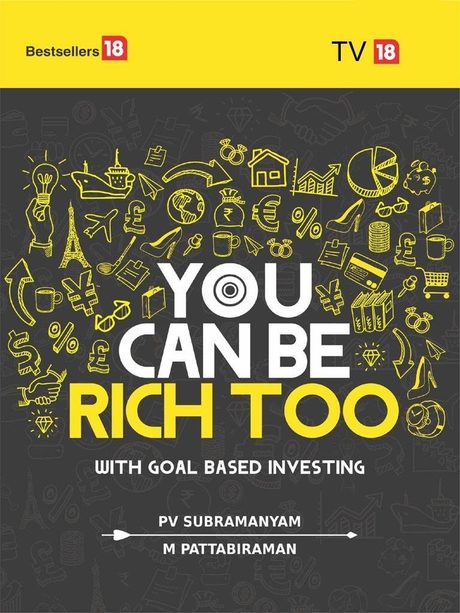
You Can Be Rich Too
P V Subramanyam2016about 171 pages
The rupee calculator book: pick the goal, work out the future cost, reverse into a monthly amount, start.
Subramanyam and his co author Pattabiraman wrote the book that most Indian money advice skips, which is the arithmetic. You choose a goal, a house deposit or a child's education or your own retirement, work out what it will cost in future rupees once inflation has had its way, and reverse into what you must invest every month. The tone is blunt about how badly people underestimate everything, particularly retirement and medical costs. It is dry in stretches and the tables want a calculator beside you, which is exactly why it works.
Why it is at 3
Third because it does the job no imported book can do: it puts Indian inflation and Indian goal costs inside the maths. Halan tells you what to buy and in what order. This one tells you how much. Read the two together and you have a working plan by the weekend. It is the least entertaining book in this top five and the most useful when you need a real number.
Read it ifyou want a number attached to each goal instead of general advice
Skip it iftables and arithmetic put you to sleep
dry, numeric, honestBest for: setting real goal amountsgoalssipindia
4

Stage 1: first salary | Conversion needed: low
The Richest Man in Babylon
George S. Clason1926about 214 pages
Parables in old fashioned English about a man in ancient Babylon who kept a tenth of everything he earned.
Clason wrote these as pamphlets for American banks in the 1920s, dressed as tales from ancient Babylon, and they have outlasted almost everything published beside them. The rules fit on your palm. Keep a tenth of what you earn before anybody else touches it. Put that tenth to work. Protect it from schemes promising too much. Own the roof over your head. Plan for the years when you cannot work. The mock biblical phrasing irritates plenty of readers, and past that it is ninety minutes of reading that fixes the one habit everything else depends on.
Why it is at 4
Fourth because saving before spending is the whole game and nobody states it more plainly. It sits here rather than higher because it stops at habits. There is nothing about instruments, tax or which fund to pick, and the advice about owning your home reads differently in a country where a metro flat can cost thirty years of salary. Give it to a teenager and they will get it.
Read it ifyou want the oldest and simplest rules, told as stories
Skip it ifthe invented ancient English will annoy you
old-fashioned, simple, stickyBest for: a first money book at any agehabitsclassicsaving
5
Stage 2: first investments | Conversion needed: none
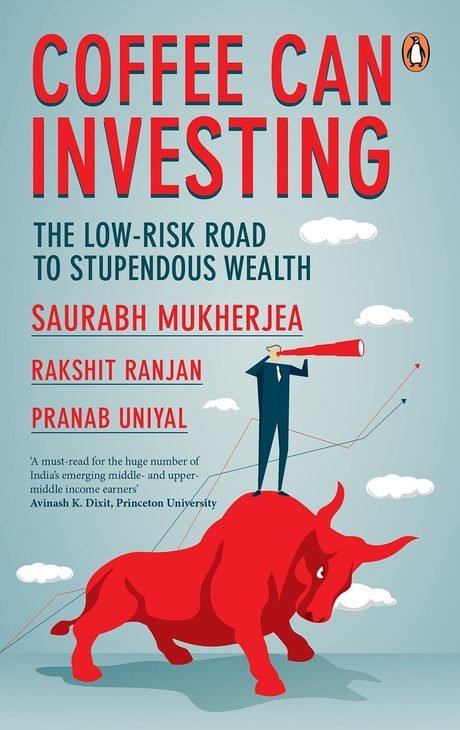
Coffee Can Investing
Saurabh Mukherjea2018about 355 pages
A rules based way to pick Indian companies and then do nothing for a decade, from a manager who shows his filters.
The idea comes from an American fund manager who told clients to buy sound stocks and forget them in a coffee can. Mukherjea and his co authors rebuild it for the Indian market with two hard filters: revenue growth of at least ten per cent and a return on capital above fifteen per cent, every single year, for ten years running. Very few listed Indian companies clear that bar, which is the entire point. The book walks through the screen, the businesses that survive it, and the reasons most active funds fail to beat their own benchmark.
Why it is at 5
Fifth because it is the best bridge available from mutual funds to individual Indian stocks, and because it hands you a filter instead of a tip sheet. Two caveats worth holding on to: he runs a firm that sells this approach, and backtested portfolios always look calmer on paper than they feel in a bad year. Take the method, not the company names, which age fast.
Read it ifyou want to buy Indian stocks by rules rather than by tips
Skip it ifyou have not yet built an emergency fund and bought term cover
analytical, opinionated, indianBest for: your first direct equitystocksindiainvesting
6
Stage 2: first investments | Conversion needed: medium
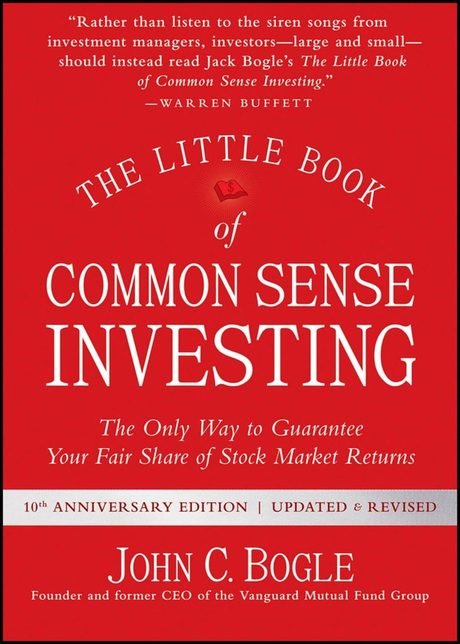
The Little Book of Common Sense Investing
John C. Bogle2007about 305 pages
The man who founded Vanguard explaining, patiently and repeatedly, that costs are the only thing you control.
Bogle's argument fits on a postcard. Investors as a group earn the market return minus what they pay in costs, so the surest way to finish ahead of most of them is to own the whole market and pay as little as possible for the privilege. He then repeats that for two hundred pages with charts, and the repetition is deliberate, because the industry arguing against him is loud and well funded. He is honest about the arithmetic that makes fund managers shift in their seats: a fee that sounds tiny compounds into a serious share of your final corpus.
Why it is at 6
Sixth because low cost index investing is now the default sensible advice for salaried Indians, and this is where the case was properly made. The conversion is real though. His numbers, funds and tax examples are American, and Indian index funds carry their own costs and tracking gaps. Take the principle, then check current Indian expense ratios yourself before you act on anything.
Read it ifyou want to understand why index funds beat most active ones
Skip it ifyou find repetition unbearable in nonfiction
plain, repetitive, correctBest for: deciding about index fundsindex fundscostsinvesting
7
Stage 3: freedom | Conversion needed: medium
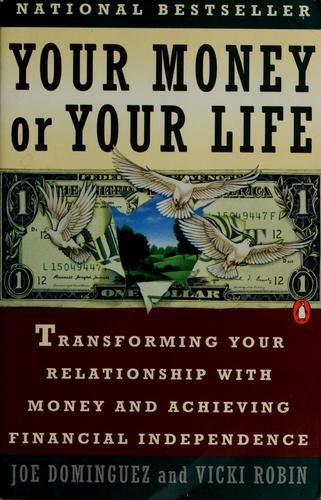
Your Money or Your Life
Vicki Robin1992about 388 pages
Money is life energy: price every purchase in the hours of your life it cost, and watch your spending rearrange itself.
Robin and Joe Dominguez built a nine step programme on one idea. Your salary is hours of your life converted into currency, so a purchase should be priced in hours rather than rupees. You calculate your real hourly rate after the commute, the clothes and the drinking you do to recover from the job, then log every rupee and ask whether the thing bought fulfilment in proportion to the life it cost. The end point is a chart where income from savings crosses monthly expenses, which the internet later rebranded as FIRE. The investment chapters are dated now.
Why it is at 7
Seventh because it is the only book here that attacks the spending side seriously, and the hourly conversion is the single most useful trick on this page for anyone stuck in a job they dislike. Ignore the specific bond advice from 1992. The Indian version of this book has not been written yet, which strikes me as a gap somebody should fill.
Read it ifyou want to spend less without a budgeting app and you resent your commute
Skip it ifyou want investment guidance rather than a philosophy of spending
moral, practical, partly datedBest for: people planning to quit somethingfirespendinghabits
8
Stage 2: first investments | Conversion needed: none
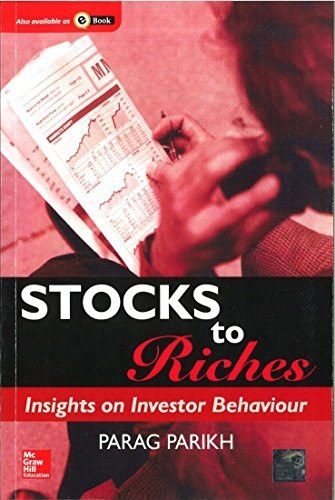
Stocks to Riches
Parag Parikh2005
An Indian fund manager on why we buy at the top, refuse to sell at a loss, and call the whole thing conviction.
Parikh took behavioural finance and wrote it for the Dalal Street investor long before that was fashionable here. Each chapter picks up one bias, loss aversion, anchoring, herding, the sunk cost trap, and shows it operating through Indian examples: the stock your neighbour bought, the IPO everyone queued for, the flat nobody will sell below the price an uncle paid in 2011. He is direct about the industry he worked inside and about how brokers earn from your activity rather than your returns. The examples come from an older market and the psychology has not aged at all.
Why it is at 8
Eighth because the mistakes it lists are the ones I watch friends repeat every quarter, in Indian settings with Indian pressure attached. Housel does the same job with better sentences and no local detail, which is why he is higher. Read Parikh if you want to see your own family's stock arguments printed on a page and explained.
Read it ifyou want behavioural finance with Indian examples
Skip it ifyou have read Housel and want entirely fresh ideas
direct, local, bluntBest for: new stock market investorsbehaviourstocksindia
9
Stage 1: first salary | Conversion needed: high
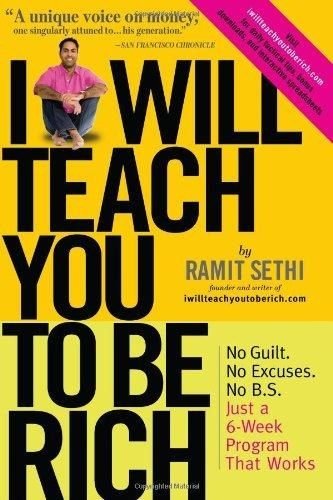
I Will Teach You to Be Rich
Ramit Sethi2009about 266 pages
A six week system for automating your money, written for a twenty five year old who wants to stop thinking about it.
Sethi's promise is automation. Set up the accounts once, route the salary the day it lands, invest what should be invested before you can see it, then go and live. He is very good on the guilt people carry about money, on negotiating a raise, and on why agonising over your daily coffee while ignoring your rent and your salary is a losing trade. He is also relentlessly American: the account types, the credit card churning, the tax shelters and the whole credit score chapter describe a system that does not exist for you.
Why it is at 9
Ninth because the automation idea alone justifies the book for a salaried Indian. A standing instruction dated the second of every month solves more than any fund choice you will agonise over. Everything around it needs converting. Read the sections on systems and negotiation, skip the account by account instructions completely, and do not try the credit card advice here.
Read it ifyou want a money system that runs without your attention
Skip it ifyou want advice you can follow line by line in India
brash, systematic, americanBest for: automating a salaryautomationsalaryhabits
10
Stage 3: context | Conversion needed: none
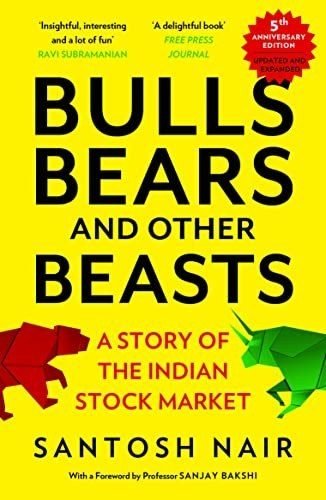
Bulls, Bears and Other Beasts
Santosh Nair2016
Thirty years of the Indian stock market told as a novel, through one small operator present at every boom and bust.
Nair covered markets as a journalist and chose fiction to tell the true story. A young man from a modest family arrives at the Bombay exchange and rides the ring through the Harshad Mehta years, the badla system, the Ketan Parekh episode, the technology bubble and the 2008 crash, with a fresh crop of retail investors flattened by each one. The scams are on the public record and the narrator is invented, which lets Nair show the trading floor from inside without accusing anyone he cannot prove. It moves like a thriller.
Why it is at 10
Tenth because it teaches you nothing about what to buy and everything about what this particular market has done to people who were certain. Every generation of Indian investors rediscovers the same three mistakes, and this is the cheapest way to watch all three happen before you make them yourself. Read it for context, not for instruction.
Read it ifyou want Indian market history delivered as a story
Skip it ifyou want practical guidance you can act on tomorrow
fast, novelistic, cautionaryBest for: market history and contextstock markethistoryindia
11
Stage 3: first crore | Conversion needed: high
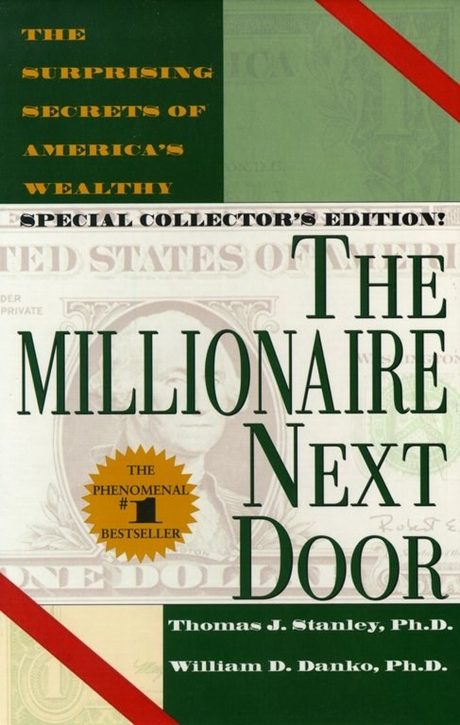
The Millionaire Next Door
Thomas J. Stanley1996about 276 pages
Researchers went looking for American millionaires and kept finding them in old cars and ordinary neighbourhoods.
Stanley and Danko surveyed people with real wealth in the United States and found that most of them did not look wealthy at all. They lived well below their income, drove used vehicles, often ran unglamorous small businesses, and quietly outsaved higher earning neighbours who were financing a look. The book separates people who accumulate from people who consume, and it is unusually good on the trap of funding adult children forever, which every Indian family will recognise under a different name and a warmer word.
Why it is at 11
Eleventh because the central finding travels perfectly: income and wealth are different things, and the man with the imported car may be one lost bonus from trouble. The research is from the nineties, the professions and dollar figures are American, and the tone gets repetitive by the middle. Take the idea and leave the survey tables where you found them.
Read it ifyou want evidence that quiet saving beats visible spending
Skip it ifyou dislike books assembled out of survey data
plain, researched, repetitiveBest for: resisting lifestyle creepwealthhabitsresearch
12
Stage 3: first crore | Conversion needed: medium
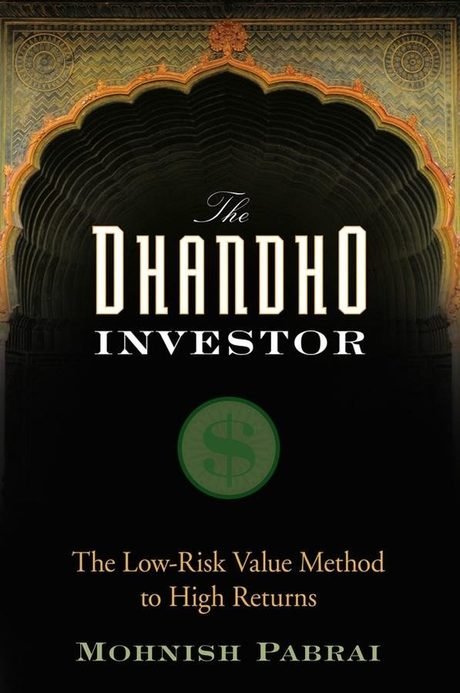
The Dhandho Investor
Mohnish Pabrai2007about 215 pages
Low risk, high return bets explained through Gujarati motel owners in America who bought when nobody else would.
Pabrai starts with the Patels who reached the United States with very little and ended up owning a large slice of its budget motel business, then turns their instinct into an investing frame: few bets, big bets, infrequent bets, and only where the downside is small and knowable. He works through the arithmetic of lopsided odds, borrows openly from Buffett and Munger, and keeps the whole thing short. As an Indian reader you get the rare pleasure of a global investing book where the worked example is a family business you have watched from the inside.
Why it is at 12
Twelfth because it is the clearest short explanation of asymmetric bets I have read, and because it will make you feel clever, which is precisely the danger. Concentrated positions need conviction that most part time investors discover they do not have around the second bad quarter. Enjoy it, then keep your monthly investments running unless you are ready to do real work on individual companies.
Read it ifyou want the value investing idea in one short sitting
Skip it ifyou might put your savings into three stocks the day you finish it
short, clever, seductiveBest for: value investing curiosityvalue investingbusinessstocks
13
Stage 3: first crore | Conversion needed: high
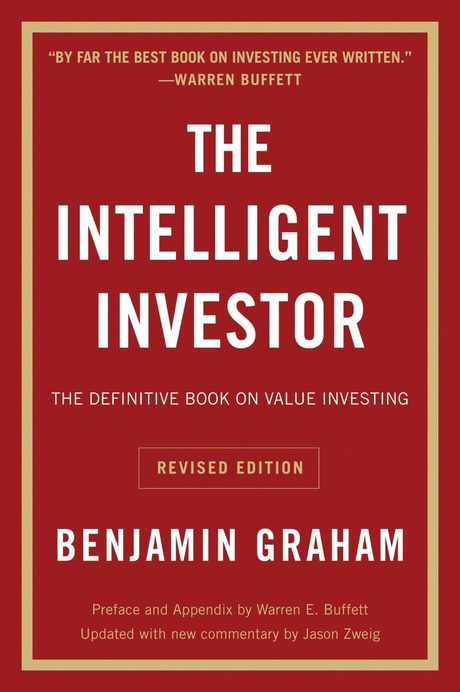
The Intelligent Investor
Benjamin Graham1949about 642 pages
The foundational value investing text, most of which you can skip, and two chapters you genuinely should not.
Graham taught Buffett and wrote the book that made security analysis respectable for ordinary investors. Two of its ideas now sit inside every serious investing conversation. Mr Market is the moody business partner who quotes you a different price every day and can simply be ignored. Margin of safety says buy at a price low enough that being wrong is survivable rather than fatal. The rest is dense, tied to an older American market with different accounting rules, and modern editions lean on added commentary to carry the reader through.
Why it is at 13
Thirteenth because everybody recommends it and almost nobody finishes it, which is a poor combination for a beginner. Read chapter eight and chapter twenty, take those two ideas seriously for a few years, and come back for the rest after you have lived through one real crash. Putting it this low is a service to you, not an insult to Graham.
Read it ifyou want the source of value investing and you have patience
Skip it ifthis would be your first or second money book
dense, foundational, datedBest for: readers past the basicsvalue investingclassicstocks
14
Stage 1 pretender | Conversion needed: very high
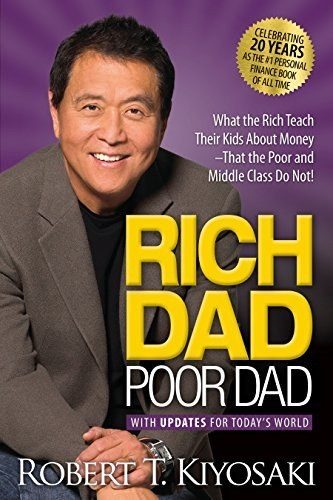
Rich Dad Poor Dad
Robert T. Kiyosaki1997about 104 pages
The book that got a generation talking about assets and liabilities, then told them almost nothing they could use.
Kiyosaki contrasts two father figures, one educated and salaried and careful, one entrepreneurial and rich, and builds everything on a single distinction: assets put money in your pocket, liabilities take it out. That one line has pushed more people from pure saving into investing than any other sentence in this genre. What follows is thin. Parables instead of numbers, property advice welded to American mortgages and tax rules, and a contempt for salaried work that sounds bracing at twenty five and reckless at forty, with no method anyone could follow on a Monday.
Why it is at 14
Last, and on the list only because somebody will recommend it to you anyway and you deserve the warning first. Read the opening sixty pages for the assets and liabilities idea, then stop without guilt. His famous line about your house not being an asset needs an Indian asterisk, because for a lot of families here the home loan is the only forced saving that survives contact with real life.
Read it ifyou want the one idea that made this book famous and nothing further
Skip it ifyou want specifics, numbers, or anything you can act on
punchy, vague, overratedBest for: an afternoon and some saltmindsetoverratedclassic
Worth knowing
How the three stages work
Stage one is your first salary and it has nothing to do with investing. It is a cash buffer of a few months in a boring bank account, term insurance if anybody depends on your income, health cover that does not come only from your employer, and the discipline of moving money out on the second of the month before it can be spent. Books one, two, four and nine live here. Most people skip this stage, buy a policy from a cousin, and spend the next decade undoing it.
Stage two is your first investments. Funds before stocks, index funds before clever funds, and a number attached to every goal so you know when you are behind. Books three, five, six and eight cover it. Stage three is the long game: freedom, concentration, market history, and the question of what money is actually for. Books seven, ten, eleven, twelve and thirteen belong there, and none of them will help a twenty three year old with no emergency fund.
Read down the stages, not across the ranking. A stage two book read at stage one is how people end up with a demat account, no health insurance and a story about how they lost money in the market.
Worth knowing
What does not transfer from American money books
The conversion cost on each entry is not a comment on quality. It is a warning about how much of the book describes a system you do not live in. The pieces that never transfer: retirement accounts with tax rules specific to that country, health savings arrangements, the thirty year fixed home loan that lets Americans plan a fixed cost for decades, the credit score industry, social security, and every tax slab example in the book.
The pieces that transfer completely: compound growth over long periods, the drag of fees, the fact that most active managers do not beat their benchmark after costs, and every single page about human behaviour, because panic reads the same in every currency.
The pieces no imported book will ever cover: provident fund and public provident fund maths, the national pension system, tax saving equity funds and their lock in, insurance mis-selling as a national sport, gold as the default family asset, property as forced saving, and the money you will hand to parents and in laws, which is not an expense line in any American budget template.
Worth knowing
Reading, not advice
Everything above is a reading list. I am a writer, not a registered investment adviser, and no book on this page knows your income, your loans, your dependants or your health history. Books are for principles and for spotting the traps. Product decisions want your own numbers on paper, and if you want personal advice, a fee only adviser registered with SEBI is the version of that which does not earn a commission from what you buy.
People also ask
Questions, answered
Which money book should an Indian read first?
Let's Talk Money by Monika Halan, because it is written for Indian products, Indian taxes and Indian family pressure, so nothing needs translating. Read The Psychology of Money next for the behaviour side, which is where most damage happens. If you want concrete numbers rather than principles, add You Can Be Rich Too, which turns each goal into a monthly amount you can actually start this month.
Is Rich Dad Poor Dad worth reading in India?
Partly, and only if you keep your expectations low. The idea that assets put money into your pocket while liabilities take it out is genuinely useful and has moved a lot of people from a savings account into investing. After that the book runs on parables rather than method, and the property and tax advice is built on American rules. Read the first sixty pages, then move to a book that gives you steps.
Do American personal finance books work in India?
The principles do and the instructions do not. Compounding, fee drag, index funds beating most active managers, and everything about human behaviour apply here exactly as written. The account types, tax shelters, credit score chapters and mortgage advice describe a system you do not live in. That is why each book on this list carries a conversion cost, so you know in advance how much of it you will have to rewrite for yourself.
Which book explains mutual funds and SIPs for Indians?
Let's Talk Money explains what a mutual fund is, why a monthly investment beats trying to time an entry, and how to keep insurance separate from investing, all in Indian terms. You Can Be Rich Too then gives you the arithmetic: what a goal will cost after inflation and what you must put in every month to reach it. Between those two you have both the what and the how much.
Should a beginner read The Intelligent Investor?
No, not as a first book. It is dense, it comes from an older American market, and most people who buy it stop somewhere in the first hundred pages and feel bad about it. Read chapter eight on Mr Market and chapter twenty on margin of safety, which is where the famous ideas live, and return to the rest once you have been through one real market crash with your own money in it.
Can books alone teach me to invest?
Books teach you the principles, the vocabulary and the traps, which is most of the protection you need early on. What they cannot do is know your income, your loans, your dependants or your risk appetite. Do the arithmetic yourself on paper, start small enough that a bad year does not scare you out of the market, and if you want personal advice, use a fee only adviser registered with SEBI rather than a distributor earning a commission.
Before you go
What to read tonight
If you are starting tonight, start at stage one and be boring about it. Read the first three chapters of Let's Talk Money, then check two things before you buy anything at all: whether your insurance is actually insurance and not a savings plan in disguise, and whether three months of expenses are sitting somewhere you can reach in a day. That single evening will do more for your money than any stock you pick this year.
If you are already past that, take The Psychology of Money to bed, then pick one stage two book and do the arithmetic in a notebook with your own numbers in it. The books that stay useful are the ones you argue with, so keep a pen nearby, write your Indian correction in the margin whenever an American chapter assumes an account you do not have, and let the rest go.
Keep going
Lists that pair with this one
Mood & Life
16 Self-Help Books That Actually Work (And 4 That Do Not)
I judged every one of these by a single test: six months after you finish, does anything change on an ordinary Tuesday?
Mood & Life
20 Best Books to Read in Your 20s, Grouped by the Problem
Four problems run this decade, work, love, money and meaning, so the list is sorted that way instead of pretending one book fixes all four.
Mood & Life
18 Books to Read in Your 30s, Not the 20s List Again
Grouped under the six questions this decade actually asks, with a line on every book about what changes if you read it at 35 instead of 25.
Books Like
15 Books Like Sapiens: Big Arguments You Can Actually Finish
Every one is real, verified and ranked by how much of the Sapiens feeling comes back, including the book that argues Harari is wrong.
Mood & Life
12 Books About Divorce That Do Not Sell You a Silver Lining
Fiction and memoir, sorted by the seat you are sitting in: the one who left, the one who was left, the children, or the one who just wants instructions.