18 Funny Books That Are Actually Funny, Ranked by Laugh Type
Three tiers, spit-your-tea, snort and chuckle, decided by what my face actually did while reading.
By Bhavik SarkhediUpdated August 2026Covers and data: Google Books, Open Library
I wrote a novel about a stand-up comedian, which people assume means I am an easy audience. My family will tell you otherwise. I smile at things politely. I say that is good and then go back to my tea, and actual out loud laughing happens maybe four times a year, usually because of something my daughter did and occasionally because of a book.
So I stopped using the word funny as a recommendation, because it tells you nothing, and built three tiers instead. Spit-your-tea means I made a noise a stranger could hear. Snort is the private nose laugh, the most common honest reaction to a good comic novel. Chuckle means I enjoyed it and my face barely moved, which is still worth your money if you know that going in.
Eighteen books below, ranked by tier and then by how reliably each one works on somebody who is not already a fan. Only four made the top tier. Two of the most recommended funny books of the last few years are sitting at the bottom, still on the list, with an explanation instead of a quiet deletion.
Funny to read, not funny people. Memoirs by comedians have their own page, so Tina Fey and Trevor Noah are not competing here even though both are funnier than half this list.
The book has to work cold. If you need to have watched the series, seen the film, or lived through the author's decade to get the jokes, it lost points.
One book per writer, and exactly one Wodehouse, because otherwise this page is nine Wodehouses and an apology.
The overrated ones stay. Deleting them would be easier and much less useful, since somebody is going to recommend them to you this month anyway.
Every title checked through Google Books and Open Library with a real cover attached, so nothing here is a ghost edition.
Ranked on laughs alone. Two books here are better novels than their rank suggests, and I say so inside the entry rather than fudging the order.
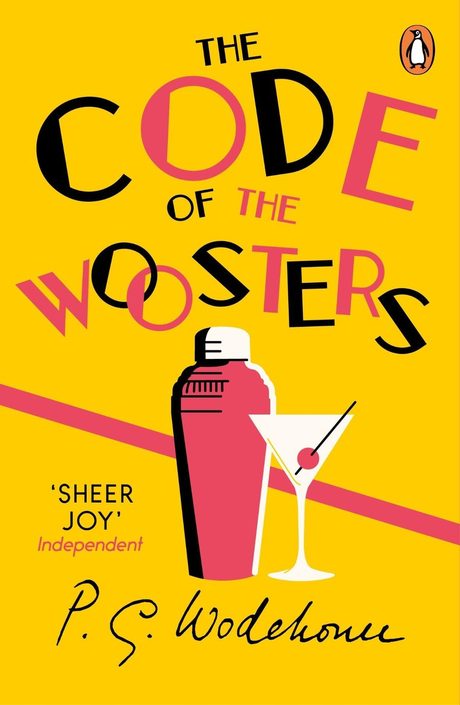
Bertie is sent to sneer at a silver cow-shaped milk jug, and ends up with a stolen policeman's helmet and a fascist in shorts.
Bertie Wooster's aunt orders him to insult a silver cow creamer so its owner will sell it cheaply, and within four chapters he is tangled up with a stolen policeman's helmet, an engagement he does not want, a notebook full of private insults, and Roderick Spode, a would-be dictator with his own line of black shorts. Jeeves sorts it out, as he does. The plot runs like a Swiss watch and the jokes live inside the grammar, where Wodehouse can hide a punchline in a subordinate clause and you never see it coming.
Why it is at 1
First because no other book here comes close on joke density. Most comic novels give you something every few pages. This gives you two a paragraph and never looks like it is trying. It is also the safest recommendation on the page: I have never met a reader who disliked it, only readers who had not started it yet.
Read it ifyou want the highest number of jokes per page in English
Skip it if1930s English aristocrats and their tiny problems sound like homework
sunny, silly, immaculateBest for: anyone who needs a mood fixedbritishjeevesclassic
Pairs with: Three Men in a Boat, which invented half the moves Wodehouse later perfected
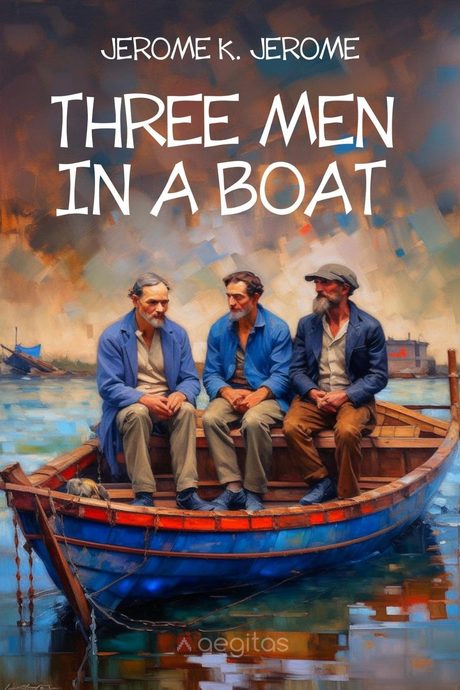
Three friends and a dog row up the Thames in 1889, fail at everything, and are still funnier than most comedy published this year.
Three hypochondriac young men decide a boating holiday will cure them of the diseases they do not have. They pack badly, quarrel over a tin of pineapple with no tin opener, get lost inside a hedge maze, and stop every few pages for a story about somebody's uncle hanging a picture. The book was commissioned as a serious travel guide to the Thames and the jokes staged a coup, which is why the odd paragraph of scenery is still sitting in there looking confused. Almost none of it has dated.
Why it is at 2
Second, and it wins the value argument on this entire page. It is a hundred and thirty-seven years old, out of copyright, free on your phone in under a minute, and it will still make you laugh on a crowded bus. It sits under Wodehouse only because the tone wanders whenever Jerome remembers he was supposed to be describing a river.
Read it ifyou want to test whether an old book can still be genuinely funny
Skip it ifyou need a plot, because there is barely one in here
warm, rambling, agelessBest for: commuters and holiday readersbritishclassictravel
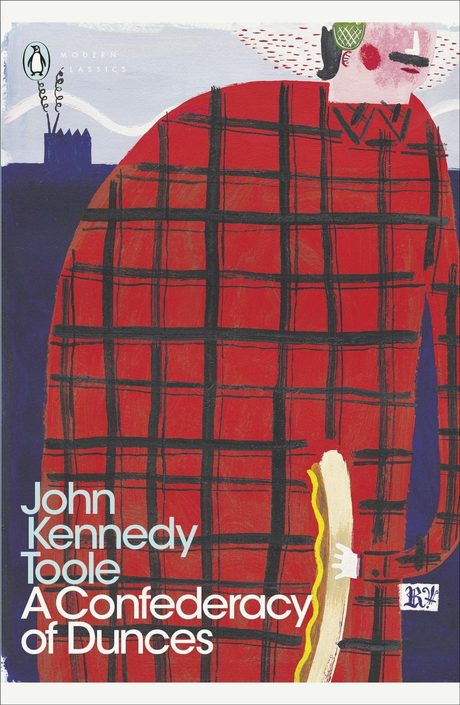
A thirty-year-old genius in a hunting cap wages war on the twentieth century from his mother's house and loses on every front, loudly.
Ignatius J. Reilly has a degree, a valve in his stomach that he blames for everything, and total contempt for the modern world. Pushed out of the house to earn money, he takes jobs at a trouser factory and a hot dog cart, organises a doomed workers' revolt, and fills notebooks with furious commentary while New Orleans carries on without him. Every side character has a scheme running too, so the comedy comes from collisions rather than gags, and those collisions land with the timing of a slammed door.
Why it is at 3
Third because the laughs here are the loudest on this page even though they are not the most frequent. Ignatius is unbearable in a way that has you reading paragraphs aloud to whoever is nearby. It ranks under Wodehouse and Jerome because it takes about sixty pages to click, and a fair number of readers never get that far.
Read it ifyou like a hero who is gloriously, permanently wrong about everything
Skip it ifyou need to like the main character even slightly
loud, baroque, unhingedBest for: readers who quote books aloudamericanfarceclassic
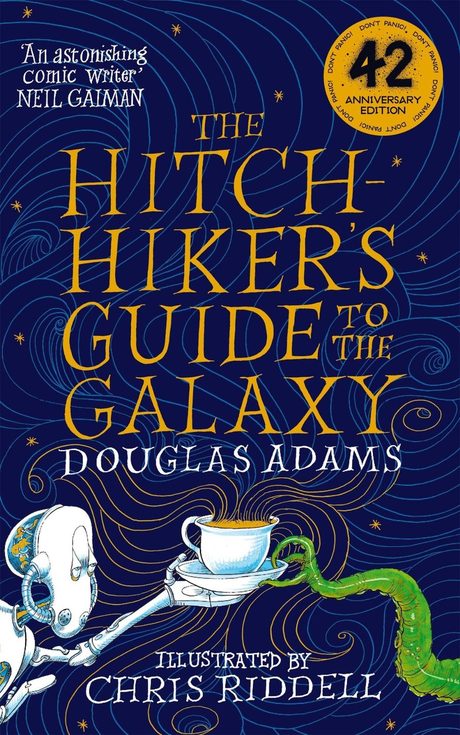
Earth is demolished before breakfast to make room for a bypass, and the last Englishman alive spends the rest of the book looking for tea.
Arthur Dent wakes to find a bulldozer outside his house, and by lunchtime the entire planet has been removed to make way for a hyperspace bypass. His friend Ford turns out to be an alien researcher and pulls him off the doomed rock, and what follows is a tour of a universe run on paperwork, bad design and worse poetry. Adams wrote it first as a radio series, which shows in the best way: the jokes are built for timing, the digressions are the point, and half of it has entered ordinary conversation.
Why it is at 4
Fourth, and it would be higher if the plot did not evaporate around the middle. Adams is the best idea generator here by some distance, and whole sentences of his are now the standard shorthand for absurd systems. What you get is a run of brilliant bits held together loosely, so you will remember scenes rather than a story.
Read it ifyou like jokes about bureaucracy, physics and general pointlessness
Skip it ifyou want a story that builds, because this one wanders on purpose
Terry Pratchett and Neil Gaiman1990about 420 pages
An angel and a demon who both like Earth too much team up to stop the apocalypse, having lost track of the Antichrist.
Aziraphale runs a bookshop and hates selling books. Crowley is a demon who claims credit for the phone menu system. Between them they have spent six thousand years on Earth and grown fond of the place, so when the apocalypse gets a date they decide to sabotage it, which is complicated by the fact that the Antichrist was swapped at birth and is currently an eleven-year-old in an English village. The footnotes carry half the comedy and the Four Horsemen have updated their job titles for the modern era.
Why it is at 5
Fifth, at the top of the snort tier. Two very funny writers wrote this together in the late eighties and you can feel them competing to make each other laugh. It misses the top four because the middle sags under the weight of subplots and because the humour is affectionate rather than lethal. The ending is a real surprise.
Read it ifyou want comedy with footnotes and an apocalypse in an English village
Skip it ifjokes about heaven and hell will bother you, because that is the whole premise
warm, clever, chaoticBest for: fantasy readers who want laughsfantasybritishapocalypse
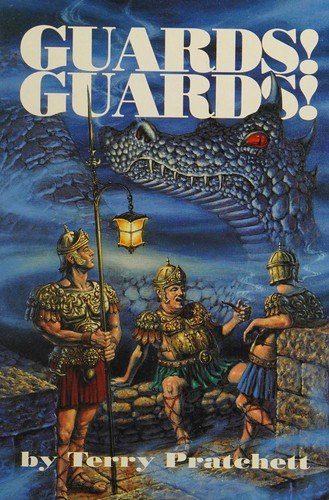
A drunk captain and the worst night watch in the city have to stop a dragon, and it is the right door into Discworld.
The City Watch of Ankh-Morpork is down to three men and a job nobody respects, until a secret society summons a dragon and somebody has to notice. Captain Vimes is a drunk with a working conscience, Carrot is a six-foot dwarf raised underground who takes every law completely literally, and the book runs on Pratchett's central move: a joke about fantasy furniture that turns, halfway through, into a serious point about power and policing. There are more than forty Discworld books and this is the sensible way in.
Why it is at 6
Sixth because Pratchett is the most dependable comic writer of the last fifty years and this is his most welcoming book. It sits just under Good Omens, since the collaboration has more surprises per chapter. What Vimes has instead is a moral spine, which is why people quietly reread this one every couple of years and never mention it.
Read it ifyou have been told to read Discworld and never knew where to start
Skip it ifdragons and dwarfs put you off before you reach page one
A pompous thirteen-year-old records his terrible poetry, his parents' collapsing marriage, and his spots, in that order of importance.
Adrian Mole keeps a diary through a year of adolescence in a small English town. He sends poems to the BBC, worries about his skin, monitors his parents who are both having affairs he only half notices, and falls for Pandora, who has better hair and much better politics. The comedy sits in the gap between what Adrian writes down and what is obviously happening around him, so you laugh at him and then feel slightly bad about it twenty pages later, because Townsend was writing about poverty the entire time.
Why it is at 7
Seventh because the diary format gives it the best reliability in this tier: every entry is short and at least one line in each will get you, so the book never has a dead stretch. It also travels well to India, since the anxious teenager who is convinced he is intellectually superior and socially doomed is a hostel corridor type we all know.
Read it ifyou were a pretentious teenager and can laugh about it now
Skip it ifyou want adult comedy, because this stays inside a schoolboy's head
deadpan, awkward, tenderBest for: teenagers and former teenagersbritishdiarycoming of age
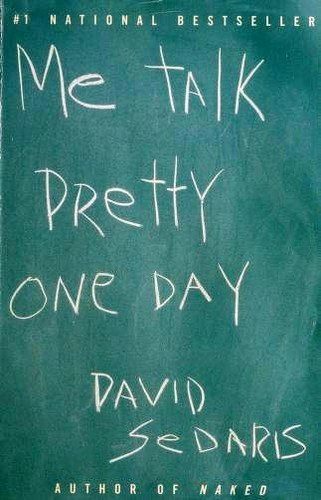
Essays about a childhood speech therapist, a conceptual art phase, and a French teacher who insults the entire class daily.
Sedaris writes short essays about his own life: the lisp that got him sent to a speech therapist, a father obsessed with jazz, a stretch of making conceptual art while extremely high, and then moving to France in his forties and being reduced to the vocabulary of a toddler. The title is what he could manage to say in French. He is the best living essayist at the slow setup and the sudden cruel detail, and he keeps most of the cruelty pointed at himself.
Why it is at 8
Eighth because essays cannot build the way a novel does, so the laughs arrive as separate hits instead of a rising line. Inside that limit he is untouchable, and three or four pieces here are the funniest things I have read in the form. The French chapters at the end are the reason to buy the book rather than borrow it.
Read it ifyou want short funny pieces you can read one at a time
Skip it ifyou need a story, because this is a set of separate ones
dry, cruel, preciseBest for: readers with ten free minutesessaysamericanmemoir
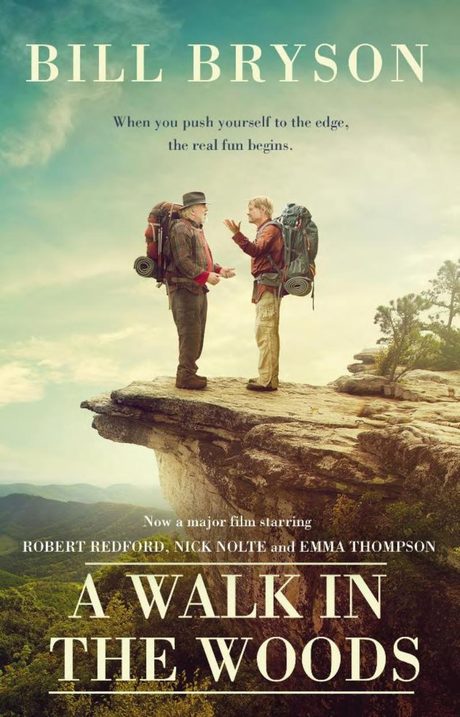
Two unfit middle-aged men attempt the Appalachian Trail, and one of them is Katz, the finest comic sidekick in travel writing.
Bryson decides to walk the two thousand mile Appalachian Trail, which he is in no shape to do, and is joined by his old friend Katz, who is in worse shape and keeps hurling supplies off cliffs to lighten his pack. Between the walking there are chapters on American forests, bears and the agency that runs the trail, and Bryson stays funny even while being informative. The friendship is the actual subject, and the book is much warmer than its reputation as a joke machine suggests.
Why it is at 9
Ninth because it is the most reliable gift on this page. People who do not read finish it, uncles enjoy it, and Katz gets a laugh out of everybody who meets him. It stays out of the higher tier because Bryson keeps stopping for genuinely interesting history, and every stop costs a little comic momentum on the way back up.
Read it ifyou like travel writing where nothing goes according to plan
Skip it ifyou want jokes without ten pages about American trees in between
grumpy, warm, easyBest for: a gift for a non-readertravelmemoiramerican
A thirty-something Londoner counts calories, cigarettes and disappointments in a diary that quietly invented a whole genre.
Bridget logs her weight, her drinking and her romantic disasters across a year of dinner parties where married friends ask why she is still single. Her mother is a menace, her boss is a bad decision waiting to happen, and Mark Darcy is standing in the corner in an unforgivable jumper. It began as a newspaper column, so it moves in short bursts, and it is far sharper about the humiliation of being interrogated about your marriage plans than the films ever managed. Rishta season readers will recognise the tone exactly.
Why it is at 10
Tenth because it is genuinely funny and gets waved away as fluff by people who never opened it. The diary entries are tight comic writing and the party set pieces are close to farce. It loses ground here because the plot deliberately borrows its skeleton from Pride and Prejudice, so the romance never once surprises you.
Read it ifyou want comedy about being single and being asked about it constantly
Skip it ifnineties calorie counting and body talk will grate on you now
self-mocking, messy, warmBest for: anyone dodging marriage questionsromcomdiarybritish
An advertising executive becomes the lucky charm of the Indian cricket team, and the country loses its mind exactly on schedule.
Zoya Solanki was born at the exact moment India lifted the 1983 World Cup, and after one chance breakfast the current team starts winning whenever she eats with them. The board takes this very seriously. The sponsors take it even more seriously. Meanwhile the captain, who believes in practice rather than superstition, cannot stand her and is obviously not going to stay that way. Chauhan came out of advertising and writes Delhi families, dressing room politics and Indian English better than almost anyone working today.
Why it is at 11
Eleventh, and the funniest Indian romantic comedy in English, which is a smaller field than it should be. The dialogue is the reason to read it, because her Punjabi families argue in a rhythm you can actually hear. It lands here because the final third settles into standard romance machinery, and the cricket satire is sharper than the love story.
Read it ifyou want Indian English comedy with real cricket and real family noise
Skip it ifyou have no patience for romance plot machinery in the last act
loud, flirty, very DelhiBest for: Indian readers who want a laughindianromcomcricket
A brilliant architect turned Seattle recluse disappears, and her daughter rebuilds the story out of emails, faxes and school newsletters.
Bernadette Fox once designed remarkable buildings and now cannot leave her crumbling house or speak to another school parent without an incident. She outsources her admin to a virtual assistant on another continent, wages a slow war with the neighbour, and then vanishes right before a family trip to Antarctica. Her daughter Bee assembles what happened from documents, which lets Semple write in the voice of passive-aggressive email, and that email is the funniest thing in the book. She wrote for television and the timing shows.
Why it is at 12
Twelfth because the found-document structure is a genuinely funny idea that runs out of fuel before the finish. The first half, with the school mothers and the corporate memos, is very sharp indeed. Once the plot heads for Antarctica the comedy turns into resolution, and resolution is almost never funny.
Read it ifyou enjoy comedy told through emails, memos and passive aggression
Skip it ifnovels assembled from documents rather than scenes annoy you
sharp, modern, satiricalBest for: readers who like format gamesamericanepistolarysatire
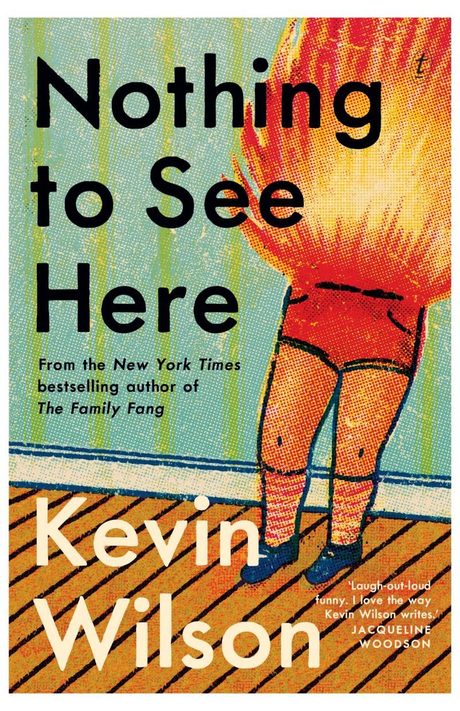
A woman is hired to look after two children who spontaneously catch fire, and the novel treats this as a childcare problem.
Lillian is broke and going nowhere when her old boarding school roommate, now married to a senator, asks her to look after two stepchildren with an unusual condition: when they get upset they burst into flame without being harmed. The household's politics require the children to stay hidden. Wilson plays the premise completely straight, which is where the comedy lives, and the book turns out to be about being the kid nobody wants in the room. It is short and it moves quickly.
Why it is at 13
Thirteenth, at the top of the chuckle tier. The concept is funnier than any single line in it, and Wilson's flat handling of the fire is amusing rather than loud, which is a deliberate choice. What lifts it above the rest of this tier is an ending that earns a real emotional hit without turning soft.
Read it ifyou want an odd premise handled with a completely straight face
Skip it ifyou want jokes on the page, because the comedy here is all situation
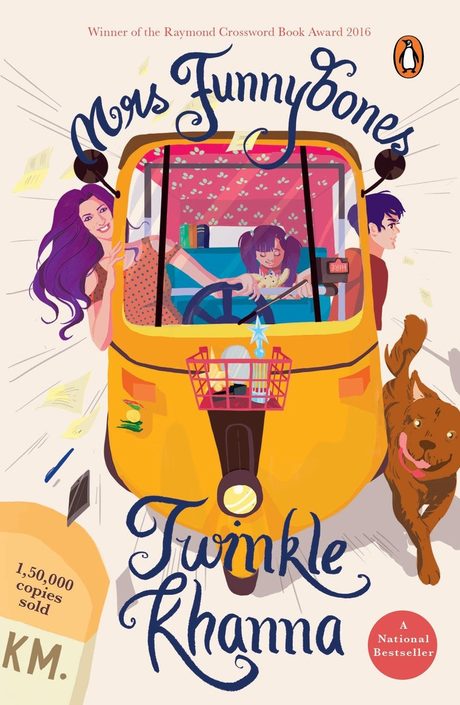
Short columns from a Mumbai household about a man-child husband, an opinionated son, and a mother who consults astrologers about everything.
Khanna writes about her own household in short pieces: the husband referred to only as the man of the house, the son with strong views, a small daughter, a mother whose phone is full of gurus, and a writer trying to get any work done in the middle of it. The pieces began as a newspaper column and they read at exactly that length, aimed at the specific comedy of urban Indian family life, from staff negotiations to school admissions to the pressure to look permanently well rested.
Why it is at 14
Fourteenth because it is the most recognisable book here for an Indian reader and the least ambitious as comic writing. Every piece is pleasant and roughly one in five is properly funny, which is a fair strike rate for a column collection. Read it on your phone in traffic rather than as a book you sit down with on a Sunday.
Read it ifyou want short Indian domestic comedy you can read in bursts
Skip it ifyou want sustained writing rather than newspaper-length pieces
breezy, domestic, self-awareBest for: phone reading between tasksindiancolumnslight read
Four residents of a retirement village solve murders on Thursdays, and Elizabeth used to do something for the government she will not discuss.
In a comfortable English retirement village, four friends meet once a week to look at cold cases for entertainment, until a real body turns up on their doorstep. Elizabeth has an intelligence background she declines to explain, Joyce keeps the diary, Ron is a retired union agitator and Ibrahim is a psychiatrist who overthinks everything including lunch. Osman spent years presenting a television quiz and writes accordingly: well paced, comfortable, funny the way a good host is funny, with real sadness about ageing running underneath.
Why it is at 15
Fifteenth because it is comfort food that happens to be very well made. The jokes are gentle and the mystery is decent, and the part that is properly funny is Joyce's diary, which carries the book. Come to it expecting a warm crime novel with jokes rather than a comedy, and you will have a good time.
Read it ifyou want cosy crime with jokes and a lot of warmth
Skip it ifgentle is not what you meant when you said funny
cosy, gentle, quietly sadBest for: readers who want comfortmysterybritishcosy
A genetics professor designs a sixteen-page questionnaire to find a wife, then falls for the applicant who fails almost every question.
Don Tillman runs his life on schedules and cannot read a room. He decides marriage is a logistics problem, designs a questionnaire to filter out unsuitable candidates, and then meets Rosie, who fails nearly every criterion and needs help identifying her biological father. The comedy comes from Don narrating disasters he has not realised are disasters, which works beautifully for about a hundred pages. It became the book everybody's colleague pressed on them for roughly two years.
Why it is at 16
Sixteenth, and this is where I part ways with the internet. The first act is genuinely funny and the premise is excellent, and then the novel repeats one joke, which is that Don is literal and other people are not. By the halfway point you can call every scene before it arrives. Worth reading, not worth the reverence.
Read it ifyou want a light romantic comedy built on one strong comic idea
Skip it ifa single running joke stretched over three hundred pages will wear you down
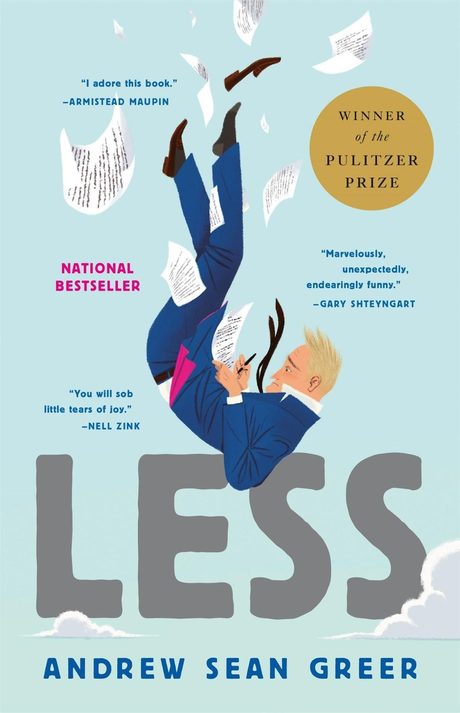
A minor novelist accepts every invitation on earth to avoid his ex-boyfriend's wedding, and circles the planet running away from it.
Arthur Less is about to turn fifty, his last book was politely received, and his former partner is marrying somebody else. Rather than attend the wedding he accepts every literary invitation in his inbox: a humiliating interview in New York, a teaching job in Berlin conducted in confidently wrong German, a residency in India, a birthday in the desert. Greer writes comic misfortune with real affection, and the German chapter is the funniest thing in it. This book took the Pulitzer Prize for fiction in 2018, which set an expectation a gentle comic novel was never built to meet.
Why it is at 17
Seventeenth because it is more charming than funny, and on a page like this the difference matters. You will smile continuously and laugh perhaps four times. The prose is the best here after Wodehouse. Judge it as a comic novel and it lands low, judge it as a novel with jokes in it and it is one of the finest of the last decade.
Read it ifyou want a comic novel that is quietly about getting older
Skip it ifyou were promised laughs and will feel cheated by smiles
rueful, elegant, gentleBest for: readers who like sad comedyamericantravelliterary
Laugh type: chuckle, and the most oversold funny book of the decade
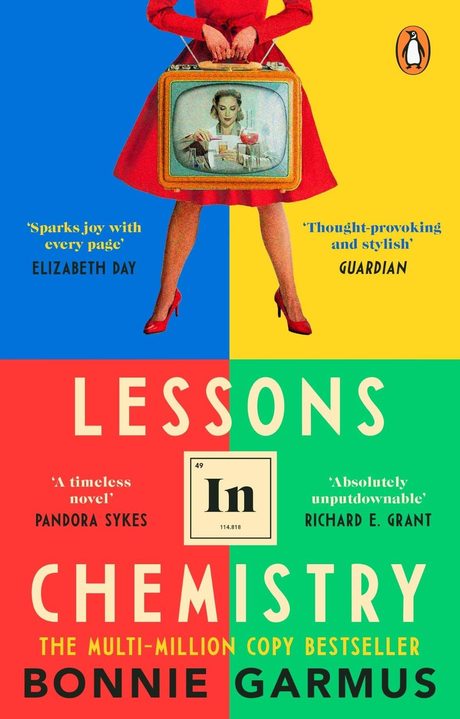
Lessons in Chemistry
Bonnie Garmus2022about 348 pages
A chemist in 1960s America is pushed out of the lab and ends up hosting a cookery show she runs like a science class.
Elizabeth Zott is a research chemist at an American institute where the men take her work and her credit as a matter of routine. Through a chain of events she ends up presenting an afternoon television cookery programme, which she treats as a chemistry lecture delivered to an audience of housewives, and it turns her into an unlikely public figure. There is a dog with an unusually large vocabulary. The book is angry about how women were treated by science, it moves fast, and readers love it for good reasons.
Why it is at 18
Eighteenth, and it is here because so many people arrive at a funny books page looking specifically for it. This is a warm, readable, fairly serious novel about workplace cruelty and grief, with humour applied as a light coat on top. Recommended honestly and ranked honestly. If what you want is to laugh, start at the top of this page instead.
Read it ifyou want a warm, fast novel about a woman refusing to shrink
Skip it ifyou came here specifically to laugh, because this one mostly does not
warm, angry, readableBest for: book club readersamericanhistoricalbook club
Spit-your-tea means a noise escaped that a stranger could hear, and it happened more than once. Only four books on this page did that to me, and the top two are older than my grandfather. Snort is the private nose laugh, the honest reaction to a good comic novel read alone at night, and it is the tier most of this list lives in. Chuckle means I enjoyed the book and my face barely moved, which is not an insult, it is a warning label so you know what you are buying.
The reason the tiers matter is that the word funny gets applied to any book with a light tone. Half the novels marketed as hilarious are warm books about difficult things, which is a fine thing to be and a poor thing to promise. If somebody hands you a book saying it is hilarious, ask them what noise they made.
Worth knowing
What I left off, and where it went instead
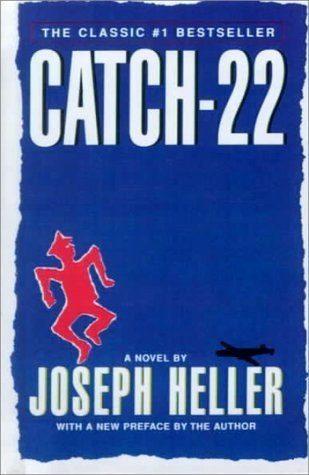
Catch-22 is one of the funniest books ever written and it is not here, because it sits at the top of my satirical novels list and I did not want the same book winning two pages. Comedian memoirs have their own list too, so Tina Fey and Norm Macdonald are not competing here. Wodehouse could have taken half of this page on his own, so he gets one entry and a separate reading order guide.
Also cut: joke collections, humour anthologies, and anything where you have to know the television show first. Two Indian books I nearly included are Serious Men by Manu Joseph, which is cruel rather than funny, and Dork by Sidin Vadukut, which is fun and slight and lives on the satire page instead.
People also ask
Questions, answered
What is the funniest book ever written?
For pure jokes per page, The Code of the Woosters by P.G. Wodehouse, and it has held that position for nearly ninety years. Three Men in a Boat is the closest challenger and has the advantage of being free. If you want a single loud laugh rather than constant small ones, A Confederacy of Dunces will get you there, though it takes about sixty pages to warm up first.
Which funny books work best for Indian readers?
The Zoya Factor by Anuja Chauhan and Mrs Funnybones by Twinkle Khanna are the two on this page written from inside Indian life, and the Chauhan is the better book by a distance. Beyond those, Three Men in a Boat and Wodehouse have been read in India for a century for a reason, and Adrian Mole lands perfectly on anyone who survived a hostel or a competitive school.
Are funny books a good idea for people who do not read much?
They are the best possible idea, because comedy gives you a reason to turn the page every few minutes instead of every few chapters. Start with A Walk in the Woods or Adrian Mole, both of which come in short pieces with natural stopping points. Avoid starting with A Confederacy of Dunces, since the slow first act will confirm every suspicion a reluctant reader already has.
Is Lessons in Chemistry actually funny?
Mildly, and much less than its reputation suggests. It is a warm and fast novel about a brilliant woman being treated badly by science and by men, with jokes layered over some genuinely painful material. People who loved it usually loved the anger and the heroine rather than the comedy. Read it for those things and you will be very happy with it.
What is the funniest book I can finish in one sitting?
Nothing to See Here by Kevin Wilson if you want fiction, since it is short, strange and lands an emotional punch at the end. If you want essays, take any four pieces from Me Talk Pretty One Day, starting with the French ones. Adrian Mole also works in one long evening, and unlike the other two it will make you nostalgic and slightly embarrassed.
Where do I start if no book has ever made me laugh?
Start with Wodehouse and give it thirty pages, because the humour is in the sentences and it either clicks for you or it does not, and you will know quickly. If that fails, try Bryson, who is funny in a conversational way that needs no adjustment. If neither works, comedy on the page may not be your form, and there is nothing wrong with that.
Before you go
What to read tonight
The practical way to use this page: pick your tier before you pick your book. If you need a loud laugh tonight, take one of the top four and accept that three of them were written before 1981. If you want a companion for a week of commutes, go to the snort tier, where Bryson and Adrian Mole will do the most work for the least effort.
And if you have been recommended one of the bottom two by somebody enthusiastic, read it anyway. Both are good books. Just know what you are getting so you do not spend three hundred pages waiting for a laugh that was never scheduled to arrive.