Every second hand bookshop I have walked into in India has a Wodehouse shelf. Ahmedabad, Kolkata, the pavement stalls near Flora Fountain in Bombay, the same yellowing Penguins with the same broken spines, priced at forty rupees and still selling. No other English comic writer has that kind of afterlife here, and the usual explanation, that our English is a bookish inheritance and his jokes are made of grammar, is only half of it. The other half is that his world is a joint family: aunts with opinions, engagements arranged by other people, a household staff who know more than anybody, and a young man in permanent trouble with his elders. We do not need a footnote for any of it.
The problem is that he wrote more than ninety books, they are all in print, and nobody tells you where to enter. Most lists hand you a ranking of his best, which is useless to a beginner, because his best books are the ones that reward knowing the characters already.
So this is a path, not a ranking. Twelve books in the order I would give them to someone who has never read a page, moving through three doors: the Jeeves short stories, the Jeeves novels, and then Blandings Castle, with one standalone at the end to show you the rest of the shelf. The single most quoted novel sits at number four on purpose. Read the three before it and it is twice as funny.
How I picked these
- Order of entry, not order of quality. Number four is the best book here and it is at four because the three below it teach you the cast.
- Short stories first. Twenty pages tells you whether this writer works on you, and a novel costs four hours to find out the same thing.
- Two worlds only, then one standalone. Jeeves and Blandings are where the jokes are densest, and the school stories and golf collections can wait for year two.
- Every edition here was checked through Google Books and Open Library so the covers are real mainstream editions, not print-on-demand scans with a blank front.
- I left out Thank You, Jeeves despite its reputation, and there is a section below explaining exactly why.
The whole list at a glance
All 12 books, in order
| # | Book | Author | Year | Vibe | Best for |
|---|
| 1 | Carry On, Jeeves | P. G. Wodehouse | 1925 | brisk, sunny, foolproof | testing whether Wodehouse works on you |
| 2 | The Inimitable Jeeves | P. G. Wodehouse | 1923 | light, repetitive, cheerful | your second Wodehouse |
| 3 | Right Ho, Jeeves | P. G. Wodehouse | 1934 | loose, brilliant, quotable | reading aloud to someone |
| 4 | The Code of the Woosters | P. G. Wodehouse | 1938 | perfect, sunny, ruthless | the one you press on friends |
| 5 | Joy in the Morning | P. G. Wodehouse | 1946 | sunny, intricate, warm | a bad week |
| 6 | Very Good, Jeeves | P. G. Wodehouse | 1930 | compact, reliable, funny | phone reading on commutes |
| 7 | The Mating Season | P. G. Wodehouse | 1949 | intricate, late, assured | readers four books in |
| 8 | Leave It to Psmith | P. G. Wodehouse | 1923 | elegant, criminal, charming | the bridge into Blandings |
| 9 | Summer Lightning | P. G. Wodehouse | 1929 | sunny, sprawling, rural | slow weekend reading |
| 10 | Something Fresh | P. G. Wodehouse | 1915 | early, farcical, warm | completists and castle converts |
| 11 | Uncle Fred in the Springtime | P. G. Wodehouse | 1939 | fast, mischievous, sharp | readers deep into the castle |
| 12 | Piccadilly Jim | P. G. Wodehouse | 1917 | farcical, transatlantic, brisk | after the series books |
The list
The books, ranked
1
Door one: the Jeeves short stories
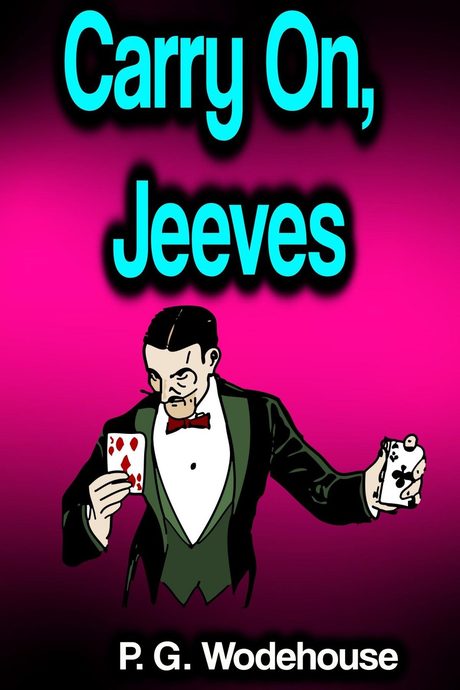
Carry On, Jeeves
P. G. Wodehouse1925about 226 pages
Ten short stories, opening with the day Jeeves arrives at the door and cures a hangover in one glass.
The first story here is the one where a valet turns up at Bertie Wooster's flat, hands him a drink that fixes his head instantly, and is hired before either of them thinks about it. The rest are self contained problems: an engagement to be broken, an aunt to be managed, a friend who has written something foolish and needs it back before it is read aloud. Each runs about twenty pages. That is the reason to start here, because you find out whether this writer works on you in one sitting, and if the first story leaves you cold you have lost half an hour and nothing else.
Why it is at 1
First because it is the cheapest experiment available. Almost every starting guide online sends a beginner to a full novel, which demands four hours before you know anything about your own taste. These stories hand you the entire machine in miniature: the voice, the disaster, the quiet fix. Everything that follows is the same pleasure at greater length.
Read it ifyou want a low commitment first taste
Skip it ifyou hate short stories and want a novel straight away
brisk, sunny, foolproofBest for: testing whether Wodehouse works on youjeevesshort storiesstarter
2
Door one: more short stories
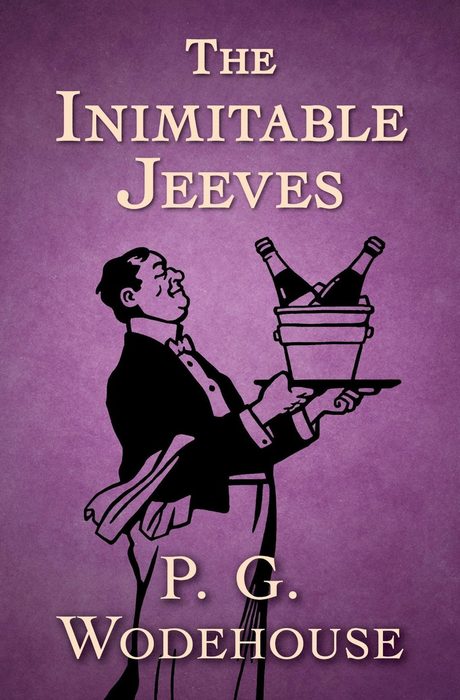
The Inimitable Jeeves
P. G. Wodehouse1923about 224 pages
Eleven linked stories about Bingo Little, who falls in love with a different woman roughly every twenty pages.
Bertie's friend Bingo Little falls in love once a chapter, with a waitress, then a revolutionary, then a popular novelist, and every time Bertie gets dragged in and Jeeves has to clear up what is left. The stories link into something close to a novel, so you get the satisfaction of a longer book while keeping the short story pace. Aunt Agatha arrives here in full terror, and this is where the Drones Club world is properly built, which matters because it is the setting for the next forty years of these books.
Why it is at 2
Second because it doubles your dose of the short form while adding a running story, and because Bingo is the funniest supporting character in the early work. Finish it and you will know whether you want the novels. It sits below Carry On, Jeeves only because that book contains the origin story, and an origin is always the better door.
Read it ifthe first collection worked and you want more of it
Skip it ifrepetition irritates you, because Bingo repeats himself endlessly
light, repetitive, cheerfulBest for: your second Wodehousejeevesshort storiesbingo little
3
Door two: the first full novel
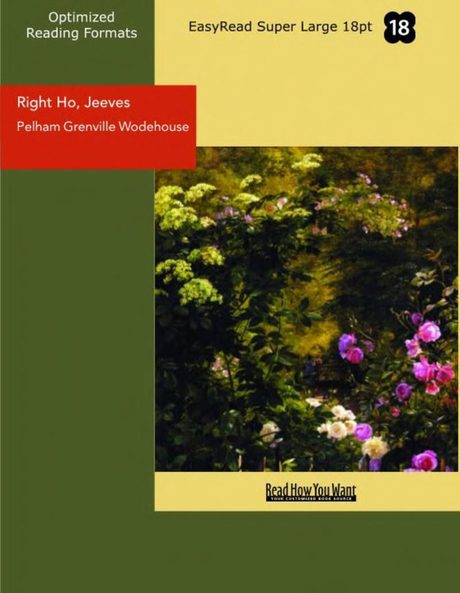
Right Ho, Jeeves
P. G. Wodehouse1934about 506 pages
Bertie decides he no longer needs Jeeves's advice, and a shy newt enthusiast has to give away school prizes while drunk.
Bertie comes back from Cannes convinced he can run his own affairs, sidelines Jeeves, and starts ruining the lives of everyone at his aunt's house in Worcestershire. His friend Gussie Fink-Nottle, who studies newts and cannot say a word to the woman he loves, is booked to hand out prizes at a grammar school, and Bertie decides the fix is alcohol. What follows is the most famous comic sequence Wodehouse ever wrote and it is worth the price of the book by itself. Around it an engagement collapses, a cook resigns, and a grown man is sent off on a long bicycle ride in the dark for no good reason.
Why it is at 3
Third because this is the novel to attempt first, and because the prize giving is the scene people quote for the rest of their lives. It is a looser book than the one that follows, with a slack patch in the middle where Bertie's plans repeat themselves, but the high points are the highest in the whole Jeeves run.
Read it ifyou are ready for a full novel and want the famous scene
Skip it ifyou want tight plotting, because the middle wanders
loose, brilliant, quotableBest for: reading aloud to someonejeevesnovelset piece
4
Door two: the peak
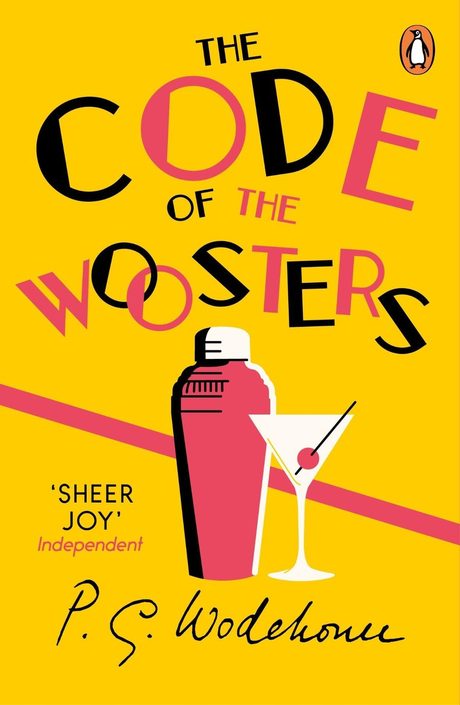
The Code of the Woosters
P. G. Wodehouse1938
The best Jeeves novel there is: a silver cow creamer, an amateur dictator in black shorts, a stolen policeman's helmet.
Bertie is sent to Totleigh Towers on a small errand about an antique jug shaped like a cow, and comes away having survived a stolen notebook, a blackmail attempt, an engagement he never asked for, and Roderick Spode, a would-be dictator who leads a group of men in black shorts. Every thread is planted in the first fifty pages and every one of them pays off. The Spode material is Wodehouse quietly laughing at the political movements around him in the nineteen thirties, and it has aged into the funniest thing in the book.
Why it is at 4
Fourth in reading order and first in quality, which is the whole argument of this page. It is the tightest plot he ever built, and by book four every character walks in carrying history, so the jokes land twice. You can start here if you want. You will simply get less out of it than the person who arrived in the right order.
Read it ifyou want the best plotted comic novel in English
Skip it ifyou have not read the three books above it yet
perfect, sunny, ruthlessBest for: the one you press on friendsjeevesnovelpeak
5
Door two: the strange one
Joy in the Morning
P. G. Wodehouse1946about 249 pages
Bertie is trapped in the one village he dreads, with an ex-fiancee, a hostile policeman and a fancy dress ball closing in.
Steeple Bumpleigh holds everything Bertie is frightened of: Florence Craye, who once tried to improve his reading habits, her formidable father, a village policeman with a grudge, and a costume he cannot get out of wearing. Jeeves has engineered the entire trip because he wants to fish nearby. What makes this one worth knowing about is the biography behind it. Wodehouse worked on the book through the war years, interned by the Germans and then stranded in Europe, and not one shadow of that reaches the page, which is either a triumph of craft or a very odd sort of refusal.
Why it is at 5
Fifth because it is the second best Jeeves novel and it is best read once the cast are old friends. The plot machinery is nearly as good as the book above it and the sentence by sentence writing may be better. It also settles the question of whether the formula wears out, since this is a late book and it is every bit as strong as the early peaks.
Read it ifyou finished the last one and want the same pleasure again
Skip it ifyou need variety, because the shape is more or less identical
sunny, intricate, warmBest for: a bad weekjeevesnovelwartime
6
A deliberate breather
Very Good, Jeeves
P. G. Wodehouse1930about 324 pages
Eleven more short stories, including the one where two grown men are trapped on a roof by an angry swan.
After two novels this is a return to the twenty page format, and these are the best of the short Jeeves. Bertie and Bingo Little stranded on the roof of a hut in a lake while a swan works itself up below them, an aunt who wants a nephew detached from an unsuitable girl, a dinner that has to be rescued. The pattern never varies and that is the pleasure, watching a familiar machine assemble itself perfectly one more time. Save this collection for a stretch of days when fifteen minutes is all the reading time you get.
Why it is at 6
Sixth as a planned pause. Two novels back to back can flatten the effect, since the shape repeats and your ear adjusts, and the short stories reset the appetite. This is also the collection to keep on your phone, because each story is self contained and fits inside a metro ride with room to spare.
Read it ifyou want Wodehouse in small portions
Skip it ifthe novels are working and you do not want to break the run
compact, reliable, funnyBest for: phone reading on commutesjeevesshort storiescommute
7
Late Jeeves at full power
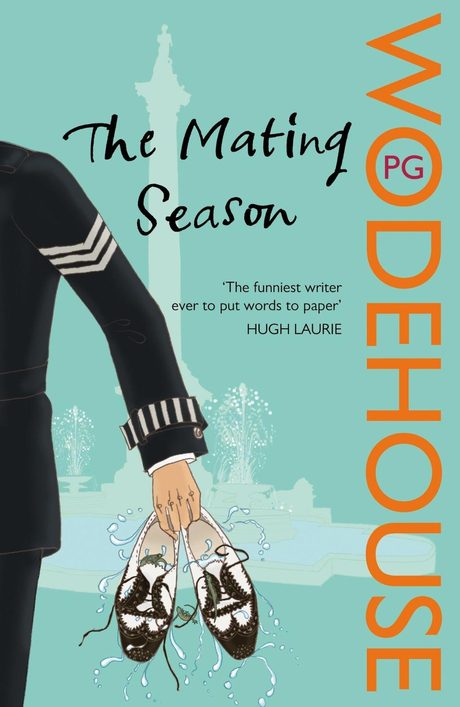
The Mating Season
P. G. Wodehouse1949about 231 pages
Bertie arrives at a house governed by five aunts pretending to be Gussie Fink-Nottle, while Gussie pretends to be him.
Deverill Hall is run by five aunts, a number Bertie regards as beyond what any man should be asked to face. Through the usual chain of favours owed he ends up there under Gussie's name while Gussie occupies his, and a village concert, a stolen helmet and a small blackmailing schoolboy complete the arrangement. This is the most complicated plot in the canon and Wodehouse keeps every strand in view without once losing you. Written a quarter of a century after the first Jeeves stories, it shows no fatigue whatsoever, which is the oddest fact about his career.
Why it is at 7
Seventh because it proves the late books hold, and because the double impersonation is his most elaborate piece of engineering. It ranks under the two great novels only because the number of moving parts makes the middle demanding, and because the jokes pay far better once these characters feel like people you know.
Read it ifyou know the cast and want the most intricate plot
Skip it ifyou want something simple, because this one is dense
intricate, late, assuredBest for: readers four books injeevesnovellate period
8
Door three: into Blandings
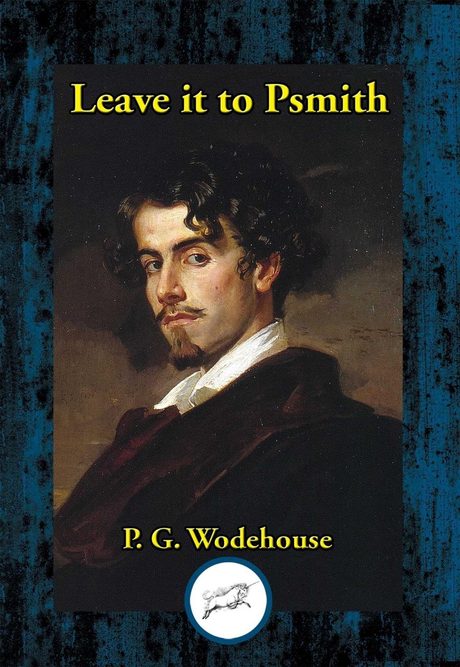
Leave It to Psmith
P. G. Wodehouse1923about 338 pages
A monocled young man who has quit the fish business advertises his willingness to do anything, including crime.
Psmith is unemployed, unbothered and permanently amused, and he places a newspaper advertisement offering to undertake any task at all, however criminal. He is promptly hired to steal a diamond necklace at Blandings Castle, where he arrives disguised as a Canadian poet. Also in the house: Lord Emsworth, who has lost interest in everything except his garden, his useless son Freddie, and Baxter, an efficient secretary who is one bad night away from throwing flowerpots through a bedroom window. It is the crossover book, half Psmith caper and half Blandings farce, and it is the easiest way into the castle.
Why it is at 8
Eighth and the perfect bridge, because you meet the Blandings household inside a plot that moves faster than the pure castle books. Psmith is the best character Wodehouse wrote outside Jeeves, a man who talks his way through every room he enters, and this is his final appearance. Finish it and you will know whether the castle books are for you.
Read it ifyou want a second world after Jeeves
Skip it ifyou would rather stay with Bertie forever
elegant, criminal, charmingBest for: the bridge into Blandingspsmithblandingsnovel
9
Blandings at its best
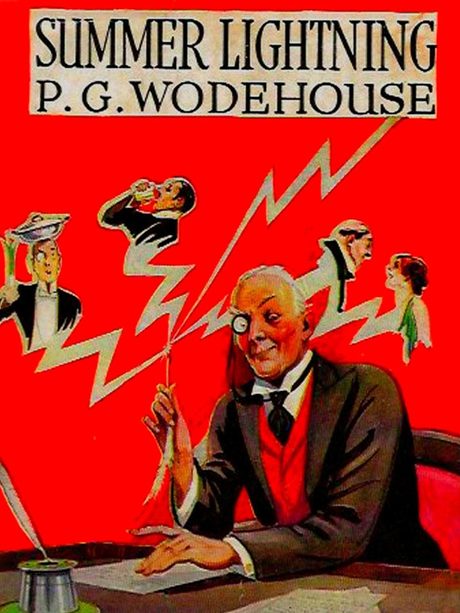
Summer Lightning
P. G. Wodehouse1929about 372 pages
A prize pig is stolen, a scandalous memoir is being written, and Lord Emsworth is no use to anybody.
The Empress of Blandings, Lord Emsworth's enormous prize pig, is stolen, an event he ranks somewhere above a death in the family. Meanwhile his brother Galahad is writing a memoir of his misspent youth that half the English aristocracy would pay to suppress, two couples are trying to get engaged against the wishes of their elders, and a secretary is investigating everyone in the house. Blandings runs on a different rhythm to Jeeves, slower and warmer and much more crowded, and the comedy comes from a large household in which nobody is listening to anybody else.
Why it is at 9
Ninth because it is the funniest Blandings novel and the one where the formula finally clicks. It is more relaxed than the Jeeves books, which some readers prefer and others find slack, and Galahad Threepwood is the best thing in it by a distance. If the castle does not work for you here it will not work anywhere, and you can return to Bertie with a clear conscience.
Read it ifyou like big houses full of people at cross purposes
Skip it ifyou need Bertie's tight first person voice
sunny, sprawling, ruralBest for: slow weekend readingblandingsnovelpig
10
Where Blandings began
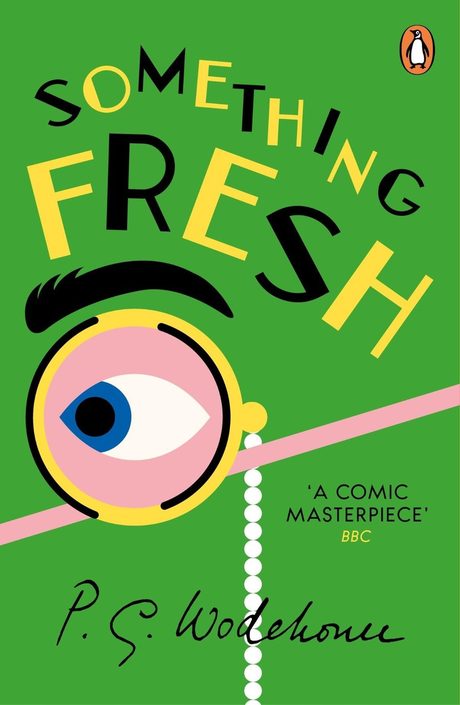
Something Fresh
P. G. Wodehouse1915about 274 pages
The first Blandings novel: two Londoners take jobs below stairs at the castle to recover a stolen Egyptian scarab.
Ashe Marson writes cheap detective serials and Joan Valentine writes for a magazine, and both take positions in service at Blandings Castle to retrieve a valuable scarab that Lord Emsworth pocketed while not paying attention. The world below stairs is the real subject: Beach the butler, the strict hierarchy of the servants' hall, the rules about who dines where, all treated with the same gravity as the family upstairs. It is an early book, so the machinery is not yet perfect and the plotting sits closer to stage farce than to the clockwork of the nineteen thirties.
Why it is at 10
Tenth, and late on purpose, because handing a new reader a book from 1915 is how you lose them. Read it after Summer Lightning and you get the pleasure of an origin instead: the castle before the formula set, Emsworth not yet fully vague, and a servants' hall story he never attempted again at this length.
Read it ifBlandings worked and you want to see the beginning
Skip it ifearly period stiffness bothers you
early, farcical, warmBest for: completists and castle convertsblandingsnovelearly
11
The most dangerous man in the canon
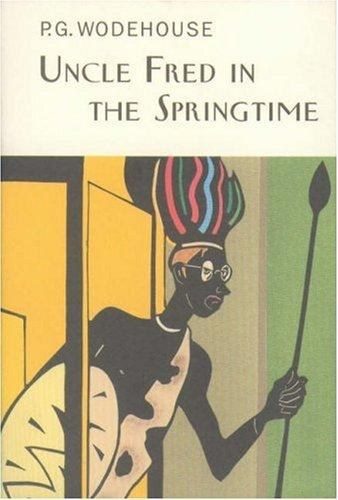
Uncle Fred in the Springtime
P. G. Wodehouse1939about 275 pages
An elderly earl with no sense of consequence talks his way into Blandings pretending to be a brain specialist.
Lord Ickenham, known to everyone as Uncle Fred, is a cheerful old man who treats every social situation as an invitation to impersonate somebody, and his nephew spends the book trying to keep him on a leash. This time he installs himself at Blandings as a distinguished nerve specialist, with a scheme involving a pig, a duke and a great deal of money. He is the only Wodehouse character who is actively dangerous, because he enjoys chaos instead of stumbling into it, and the book moves faster than any other Blandings novel because of him.
Why it is at 11
Eleventh because Uncle Fred is best met once you know the castle and can see how much damage he is doing. It is quicker and sharper than Something Fresh and funnier than most of the later Blandings books. If you have come this far in order, treat this one as the reward at the end of the corridor.
Read it ifyou want the fastest moving book at the castle
Skip it ifyou have not read a Blandings novel yet
fast, mischievous, sharpBest for: readers deep into the castleblandingsuncle frednovel
12
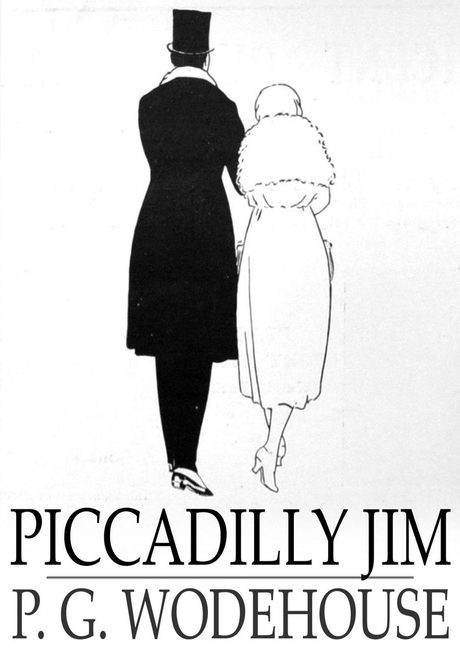
Door four: the rest of the shelf
Piccadilly Jim
P. G. Wodehouse1917about 338 pages
A young man with a bad reputation in the New York papers has to impersonate himself to win over a woman who despises him.
Jimmy Crocker has appeared in the New York gossip columns often enough that his name works as a warning, so when he wants to impress a woman who has read all of it, the only route open is to pretend to be somebody else who is pretending to be Jimmy Crocker. Add a household of Americans transplanted to England, a boy who needs kidnapping for his own good, and an explosive substance that has no business in a kitchen. No series knowledge is needed for any of it, and the book moves like the stage farces he was writing at the same time.
Why it is at 12
Twelfth because it shows you the third Wodehouse, the Broadway plot mechanic, working without Jeeves or a castle anywhere in sight. If the eleven books above have worked and you want to know whether the remaining eighty are worth your years, this answers the question. It is not his funniest book, and that is precisely the point: even off the main line, the machine runs.
Read it ifyou want to see him outside the two famous series
Skip it ifyou only care about Jeeves and Blandings
farcical, transatlantic, briskBest for: after the series booksstandalonenovelnew york
Worth knowing
The three doors, and why the order matters
Wodehouse wrote in worlds, and each world has a door. Door one is the Jeeves short stories, where the jokes come every page and the commitment is twenty pages at a time. Door two is the Jeeves novels, which are the same pleasure with a plot that clicks shut at the end. Door three is Blandings Castle, slower, more crowded, run by an earl who cares more about a pig than about any human being in the county.
The reason to move through them in order is simple. Wodehouse gets funnier the more you know, because half his comedy is a character behaving exactly as you expected and the other half is one small variation on it. A reader who meets Aunt Agatha for the fourth time laughs harder than a reader meeting her for the first. Reading his best book first is like watching the last episode of a sitcom season and wondering what the fuss was about.
Worth knowing
What to skip at the start, and one book to skip for a different reason
Leave the school stories alone at first. Mike and the early Psmith books are set in an Edwardian public school world that needs a running start, and they are not where the jokes are densest. The golf stories and the Mr Mulliner collections are wonderful in year two and confusing in week one, because they arrive with a narrator and a set of conventions you have not learned yet. Skip the omnibus editions too, at least to begin with, because a thousand page brick is the enemy of a new habit.
Now the honest one. Thank You, Jeeves, from 1934, is often recommended as a top tier Jeeves novel and it turns on a troupe of blackface minstrels, with racial slurs used freely throughout. I am not arguing for banning a ninety year old book, and plenty of readers work through it and file it under its period. But recommending it to somebody as their fifth Wodehouse without saying a word about what is inside is a bad recommendation, so it is not on this list.
One more thing worth knowing before you become a fan. In 1941, after being interned by the Germans, Wodehouse made a set of broadcasts from Berlin that caused a scandal in Britain and followed him for the rest of his life. The consensus of his biographers is political naivety rather than sympathy, and he never lived in England again. It does not change the books, and it is better learned here than from a stranger arguing with you online.
People also ask
Questions, answered
Which P. G. Wodehouse book should I read first?
Carry On, Jeeves, because it is a set of twenty page short stories and the first one is the day Jeeves is hired. You will know inside half an hour whether this writer is for you, which is a much cheaper test than committing to a novel. If you would rather begin with a novel, start with Right Ho, Jeeves, and save The Code of the Woosters until you know the characters.
Do I have to read the Jeeves books in order?
No. Each book resolves completely and Bertie never learns anything, which is the joke, so there is no continuity to protect. Order helps for a different reason: the running characters get funnier with familiarity, and a plot twist involving Aunt Agatha or Roderick Spode lands harder when you already know what they do to Bertie. Read them in any sequence you like, just do not open with his best book.
Jeeves or Blandings, which is better?
Jeeves is funnier per page and Blandings is more comfortable to live in. The Jeeves books are told by Bertie, so every sentence carries a joke in the voice, while Blandings is third person and spreads the comedy across a large cast at cross purposes. Start with Jeeves. Move to Blandings when you want something slower that you can read for an hour before sleeping without any effort at all.
Is Wodehouse hard to read if English is not your first language?
Less than you would expect. The sentences are long but the structure is clean and he almost never uses a word to show off. What does slow readers down is the period slang, the nineteen twenties English public school vocabulary, and the quotations he tosses in from Shakespeare and the Bible. None of it blocks the plot. Read past what you do not recognise and the jokes still arrive on time.
Are the television adaptations a good substitute for the books?
The Fry and Laurie series from the early nineties is a delight and it is not the same thing. The comedy in the books lives inside Bertie's narration, in his description of a face or an aunt's mood, and television has no room for that voice, so it substitutes visual farce. Watch the series after you have read four or five books. It works far better as a companion than as a shortcut.
How many books did Wodehouse write, and where does this list stop?
He published more than ninety books across a career that ran roughly seventy years, from the Edwardian period to the nineteen seventies. This list covers twelve of them, which is enough to know whether you want the other eighty. If the answer is yes, the natural next steps are the remaining Jeeves novels, the rest of the Blandings series, and then the Mulliner stories.
Before you go
What to read tonight
If you want to begin tonight, buy Carry On, Jeeves and read only the first story before deciding anything. That is the whole test, and it costs you one cup of tea worth of time.
The larger point about Wodehouse is that he is a repair kit, not a project. Nothing in these books will disturb you, nobody genuinely gets hurt, and the world resets by the last page, which is why generations of readers have kept a Jeeves novel by the bed for the bad nights. Once you have finished these twelve, you will not need a guide any more. You will pick them by the cover, the way the man at the second hand stall expects you to, and you will be right most of the time.
Keep going
Lists that pair with this one
Comedy
18 Funny Books That Are Actually Funny, Ranked by Laugh Type
Three tiers, spit-your-tea, snort and chuckle, decided by what my face actually did while reading.
Comedy
The 14 Funniest British Novels, Ranked by How Well They Travel
Dry, rude and obsessed with class, with an honest note on how much British context each one needs before the joke lands.
Mood & Life
Classic Books for Beginners: 21 Ranked Easiest to Hardest
Twenty one classics arranged on a four rung ladder, easiest first, so you finish the first one instead of abandoning it at page thirty.
Comedy
16 Best Satirical Novels That Are Still Funny and Still Right
Satire has an expiry date, so every book here is scored on two things: is it still funny, and is its target still standing.
Authors
Vikram Seth Books Ranked: 9 Books, 9 Completely Different Forms
He has never written the same kind of book twice, so I ranked all nine by what each one asks of you and what it hands back.